
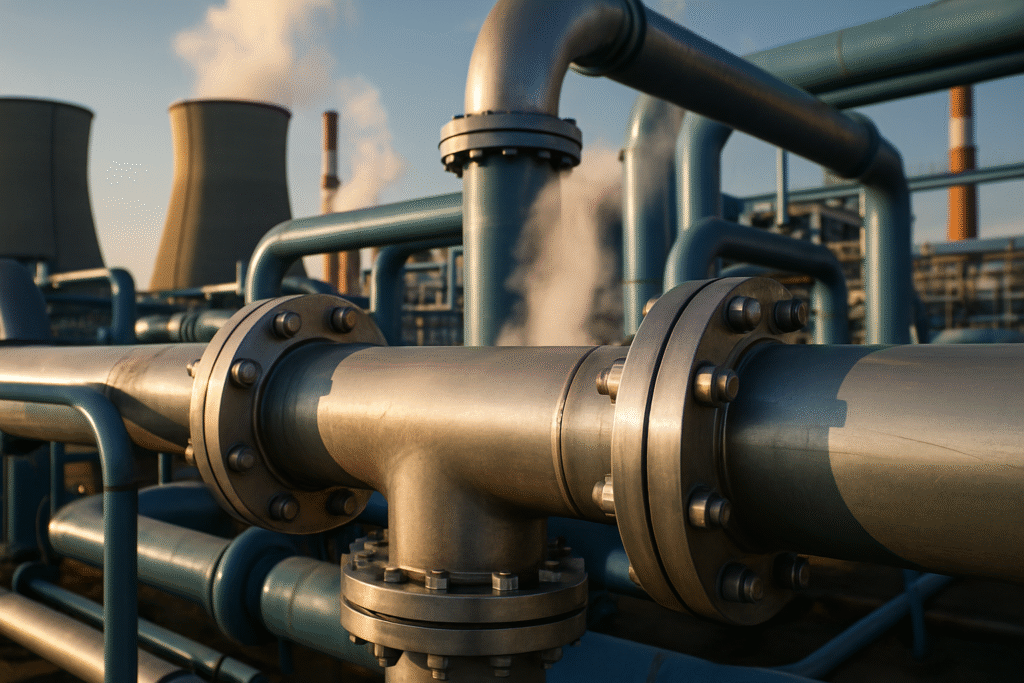
หน้าแปลนท่อสแตนเลส: ข้อมูลการตลาด, ประเภท ASME, ข้อดีที่ซ่อนอยู่, และวิธีการเลือก
หน้าแปลนท่อสแตนเลสยังคงเป็นส่วนประกอบการเชื่อมต่อที่สำคัญในระบบกระบวนการสมัยใหม่, โดยเฉพาะบริเวณที่มีการควบคุมการกัดกร่อน, ความสมบูรณ์ของความดัน, และการเข้าถึงการบำรุงรักษา. จากการวิจัยของแกรนด์วิว (2024), ตลาดหน้าแปลนอุตสาหกรรมทั่วโลกมีมูลค่าอยู่ที่ $5.8 พันล้านใน 2023 และคาดว่าจะไปถึง $7.2 พันล้านโดย 2030, which confirms sustained demand across engineered piping networks.
Procurement teams now expect more than basic Flanges and Fittings. They need verified material traceability, ASME compliance, ความแม่นยำระดับความดัน, and dependable lead times for Oil & แก๊ส, ปิโตรเคมี, พลัง, มารีน, และโครงการบำบัดน้ำ.
Global demand for stainless steel pipe flange solutions continues to rise
Industrial buyers are selecting Stainless Steel Flange products more strategically because lifecycle cost often outweighs initial purchase price. ตามสถิติของสตาติสต้า (2024), อุตสาหกรรมน้ำมันและก๊าซมีสัดส่วนประมาณ 35% ของการบริโภคหน้าแปลนทั่วโลก, which keeps pressure-rated ASME B16.5 and B16.47 products in constant demand.
Manufacturing concentration also shapes sourcing decisions. อ้างอิงจาก IBISWorld (2024), บัญชีเอเชียแปซิฟิกมีมากกว่า 45% ของการผลิตหน้าแปลนทั่วโลก, โดยจีนเป็นผู้ผลิตรายใหญ่ที่สุด, so supplier qualification and quality assurance are increasingly important.
นอกจากนี้, stainless grades continue to gain share in aggressive media and hygienic systems because they combine corrosion resistance with stable mechanical performance. ASTM A182 forged stainless materials such as F304, F304L, F316, F316L, F321, F347, ดูเพล็กซ์ 2205, และซูเปอร์ดูเพล็กซ์ 2507 are widely specified for piping assemblies that cannot tolerate premature failure.
ตามข้อมูลของ Mordor Intelligence (2024), investment in downstream petrochemical capacity in Asia and the Middle East continues to support long-term demand for alloy and stainless piping components. ดังนั้น, buyers increasingly compare not only price, but also standards compliance, การทดสอบ PMI, EN 10204 3.1 เอกสารประกอบ, และความสม่ำเสมอของเครื่องจักร.
ในฐานะวิศวกรวัสดุ ดร. เฮเลน คาร์เตอร์, ที่ปรึกษาการกัดกร่อน, รัฐ: “ในการเลือกหน้าแปลน, alloy chemistry alone is not enough; sealing face quality, forging integrity, and traceable testing determine real field performance.” That perspective is especially relevant for projects exposed to chlorides, การเปลี่ยนแปลงอุณหภูมิแบบวงจร, and repeated maintenance intervals.
ด้วยเหตุผลนั้น, reputable manufacturers must demonstrate both production breadth and process control. SASA FLANGE ให้บริการผู้ซื้ออุตสาหกรรมด้วยหน้าแปลนสแตนเลส, หน้าแปลนเหล็กคาร์บอน, หน้าแปลนโลหะผสม, และอุปกรณ์ท่อที่ผลิตตาม ANSI B16.5, ANSI B16.47, ASME B16.9, DIN, JIS, GOST, และภาษาอังกฤษ 1092 ความต้องการ.
กับ ISO 9001:2015 และการรับรอง PED 2014/68/EU, SASA FLANGE supports projects that demand documented quality and export readiness. นอกจากนี้, บริษัทผลิตหน้าแปลนใน 304, 316, 316ล, 904ล, 2205, 2507, A105, A182, อินโคเนล, โมเนล, ฮาสเตลลอย, and Titanium for a wide range of process conditions.
Many competitor pages discuss grades in isolation. อย่างไรก็ตาม, engineers usually evaluate a complete package that includes flange Types, เผชิญกับทางเลือกต่างๆ, คลาสความดัน, ขนาด, ความคลาดเคลื่อน, hydrotest requirements, and compatibility with elbows, เสื้อยืด, ตัวลด, and caps in the same piping line.
ตามการวิจัยตลาดอนาคต (2024), industrial maintenance spending for aging infrastructure is rising globally, which supports replacement demand for high-reliability flange assemblies. ส่งผลให้, buyers are giving more attention to corrosion allowances, ความเครียดที่นั่งปะเก็น, and flange-face finish before issuing RFQs.
Technical deep dive: Intriguing Stainless Steel Flanges, เกรดวัสดุ, และข้อดีที่ซ่อนอยู่
The most Intriguing aspect of stainless steel pipe flange selection is that the best alloy depends on process chemistry, อุณหภูมิ, และข้อกำหนดในการตรวจสอบ, not simply on popularity. ในทางปฏิบัติ, 304 และ 316 grades dominate general industrial service, ในขณะที่ 904L, ดูเพล็กซ์, and nickel alloys address more Hidden Advantages in severe environments.
ตามแนวทางปฏิบัติของวัสดุ ASTM และ ASME, forged flanges for pressure service are typically specified under ASTM A182 with dimensional compliance to ASME B16.5 or ASME B16.47. ดังนั้น, a correct purchase description should define material grade, ระดับความดัน, หันหน้าไปทางประเภท, ขนาด, ตารางการแข่งขัน, การทดสอบ, และข้อกำหนดด้านเอกสาร.
รับบทเป็น มาร์ค เอลลิสัน วิศวกรท่อ, Senior EPC Piping Specialist, รัฐ: “Too many buyers Choose a Flange by alloy name alone, yet gasket face, โหลดโบลต์, and pressure-temperature rating are just as important for leak-free service.” That is why technical procurement must connect metallurgy with joint design.
In many B2B applications, the most requested stainless grades include the following:
- F304/F304L for general corrosion resistance, บริการเกรดอาหาร, and moderate-temperature process lines.
- F316/F316L for chloride-bearing service, การสัมผัสทางทะเล, and chemical systems that require better pitting resistance.
- F321/F347 for elevated temperature service where stabilized grades help resist intergranular attack.
- F904L for stronger resistance in acidic environments, including some sulfuric and phosphoric service.
- F51 2205 and F53/F55 2507 duplex grades for high strength and improved resistance to chloride stress corrosion cracking.
นอกจากนี้, flange Types must align with installation method and maintenance frequency. Weld neck designs remain preferred for high-pressure and cyclic-duty systems because the tapered hub reduces stress concentration at the weld transition.
Common stainless steel flange types include:
- Weld Neck Flange for severe pressure, การปั่นจักรยานด้วยความร้อน, และบริการที่สำคัญ.
- Slip-On Flange for easier alignment and lower-cost fabrication on less severe duties.
- Blind Flange for line termination, การแยกตัว, และจุดขยายในอนาคต.
- Socket Weld Flange for smaller-bore, ระบบแรงดันสูง.
- Threaded Flange for low-pressure systems where welding is undesirable.
- Lap Joint Flange with stub end for frequent dismantling and alignment flexibility.
ASME B16.5 generally covers sizes from 1/2 นิ้วถึง 24 นิ้ว, ในขณะที่ ASME B16.47 extends to larger diameters from 26 inch through 60 inch depending on Series A or B. เพราะเหตุนี้, large-diameter pipeline, เทอร์มินัล, ทะเล, and water transmission projects often require careful review of drilling pattern, วงกลมสายฟ้า, and weight differences between the two standards.
Pressure class also changes selection. ตัวอย่างเช่น, ระดับ 150 may be adequate for low-pressure water or utility systems, ในขณะที่คลาส 300, 600, 900, 1500, หรือ 2500 may be required for hydrocarbon, ไอน้ำ, or high-temperature duties depending on design conditions and material group.
นอกจากนี้, flange-face style affects sealing reliability and gasket choice. Raised Face remains the most common in industrial service, whereas Ring Type Joint is preferred for higher-pressure applications and Flat Face is often used with cast-iron equipment or matched flat surfaces.
Buyers comparing stainless against carbon steel should also consider total installed value. According to NACE guidance and field corrosion studies, corrosion-related damage accounts for hundreds of billions in global industrial losses annually, so improved material selection often reduces shutdown cost far beyond the flange purchase price.
The Hidden Advantages of a properly specified stainless steel pipe flange include lower unplanned replacement rates, better media purity, and more predictable maintenance scheduling. นอกจากนี้, stainless assemblies often reduce coating requirements and simplify inventory where one alloy platform can cover multiple service conditions.
สำหรับโครงการที่กำหนดเอง, dimensional flexibility matters as much as metallurgy. SASA FLANGE เสนอขนาดที่กำหนดเองจาก 1/2 นิ้วถึง 60 นิ้วด้วยราคาที่แข่งขันได้จากโรงงานโดยตรง, backed by advanced CNC machining and comprehensive quality testing for forged flanges and matching ASME B16.9 ฟิตติ้ง.
That capability supports engineering teams that require:
- Special drilling and non-standard bolt patterns.
- NACE MR0175 or sour-service material review.
- PED documentation for European projects.
- EN 10204 3.1 material certificates and PMI.
- Machined RTJ grooves and controlled serrated finishes.
- ข้อศอกที่ตรงกัน, เสื้อยืด, ตัวลด, and caps in the same alloy package.
According to Fortune Business Insights (2024), corrosion-resistant alloy demand in process industries continues to grow as operators extend asset life and reduce unscheduled shutdowns. ดังนั้น, the ability to source flange, ท่อ, and fitting packages from a qualified supplier creates both technical and commercial value.
ASME, ASTM, DIN, and EN compliance for stainless steel pipe flange procurement
Standards are not a paperwork exercise. They define dimensional interchangeability, ขีดจำกัดความดัน-อุณหภูมิ, โลหะวิทยา, ข้อกำหนดการตรวจสอบ, and the practical compatibility of every Flange in a piping system.
สำหรับหน้าแปลนสเตนเลสปลอมแปลง, ASTM A182 is the key material specification, while dimensions are commonly controlled by ASME B16.5 และ ASME B16.47. ในทางตรงกันข้าม, อุปกรณ์ต่างๆ เช่น ข้อศอก, เสื้อยืด, ตัวลด, and caps are usually manufactured to ASME B16.9, which keeps the full connection assembly aligned.
European and international projects often require DIN or EN compliance in parallel with ASME requirements. EN 1092 is commonly specified for PN-rated flanges, and PED 2014/68/EU adds regulatory obligations for pressure equipment entering the European market.
ข้อมูลอ้างอิงมาตรฐานที่สำคัญ ได้แก่:
- ASME B16.5 สำหรับหน้าแปลนท่อและอุปกรณ์หน้าแปลนจาก NPS 1/2 ผ่าน 24.
- ASME B16.47 for large-diameter steel flanges from NPS 26 ผ่าน 60.
- ASTM A182 สำหรับโลหะผสมปลอมแปลงหรือรีดและหน้าแปลนสแตนเลส, ฟิตติ้ง, วาล์ว, และชิ้นส่วน.
- ASME B16.9 สำหรับอุปกรณ์เชื่อมแบบก้นดัดที่ผลิตจากโรงงาน.
- EN 1092 for flanges and their joints in PN designations.
- NACE MR0175 for materials used in H2S-containing environments in oil and gas production.
Below is a practical comparison engineers often use during procurement review:
- ASME systems typically use NPS sizes and pressure classes such as 150, 300, และ 600.
- EN systems typically use DN sizes and PN ratings such as PN10, PN16, และ PN40.
- ASTM material grades define chemistry and mechanical properties, not flange dimensions.
- เสร็จสิ้นใบหน้า, รูปแบบการเจาะ, and bolt dimensions must be checked before cross-standard substitution.
Quality documentation should be requested early in the RFQ process. That usually includes mill test certificates, การติดตามหมายเลขความร้อน, ผลการทดสอบทางเคมีและทางกล, บันทึกการตรวจสอบมิติ, and where needed, พีเอ็มไอ, การทดสอบเฟอร์ไรต์, การทดสอบความแข็ง, and non-destructive examination.
According to ISO quality management principles and procurement audits across the energy sector, suppliers with documented process control reduce non-conformance risk significantly. ส่งผลให้, buyers increasingly prioritize certified manufacturers over low-cost traders with limited traceability.
กับ ISO 9001:2015, พีอีดี 2014/68/สหภาพยุโรป, และโฆษณา 2000 ข้อมูลรับรอง, SASA FLANGE aligns its production and inspection systems with international project expectations. นอกจากนี้, บริษัทให้บริการ 50+ ประเทศทั่วน้ำมัน & แก๊ส, ปิโตรเคมี, พลัง, และอุตสาหกรรมทางทะเล, which helps global buyers standardize sourcing across multiple job sites.
For highly regulated projects, flange compliance extends beyond dimensions. Material substitution, การรับรองแบบคู่, heat treatment status, and surface finish can all affect acceptance, especially when end users require MTC 3.1, การตรวจสอบโดยบุคคลที่สาม, or project-specific approved vendor lists.
That is why engineers should always review these purchase checkpoints:
- มาตรฐานที่ถูกต้อง: ASME B16.5, บ16.47, DIN, JIS, GOST, หรือภาษาอังกฤษ 1092.
- Correct material: 304, 316ล, 904ล, 2205, 2507, or required alloy grade.
- Correct class or PN rating for design pressure and temperature.
- Correct facing: รฟ, เอฟเอฟ, RTJ, or special finish.
- Required inspection and test plan with traceable certificates.
- Compatibility with mating Pipe schedule and gasket selection.
How to choose flange types and uses by industry application
The right stainless steel pipe flange depends on service medium, อุณหภูมิ, ความดัน, erosion profile, และกลยุทธ์การบำรุงรักษา. ดังนั้น, selection should start with process data, not catalog familiarity.
ในน้ำมัน & Gas service, คลอไรด์, H2S, and pressure cycling often drive material and standard decisions. ตามสถิติของสตาติสต้า (2024), ภาคนี้กินประมาณ 35% ของหน้าแปลนทั่วโลก, เชื่อมคอมาก, RTJ, and NACE-reviewed materials are common in upstream, กลางน้ำ, and refining systems.
ในโรงงานปิโตรเคมี, 316ล, 321, 347, and 904L may be selected depending on acid concentration, อุณหภูมิ, และระบบการทำความสะอาด. นอกจากนี้, alloy upgrades can lower long-term maintenance costs when corrosion products would otherwise contaminate process streams.
ในการผลิตไฟฟ้า, thermal fatigue and steam duty often favor weld neck Flanges with strong forging quality and dimensional accuracy. สำหรับบริการที่มีอุณหภูมิสูง, engineers may specify stabilized stainless or alloy materials when creep resistance and oxidation control become critical.
In marine and shipbuilding systems, salt exposure makes pitting resistance a central concern. เพราะเหตุนี้, 316ล, ดูเพล็กซ์ 2205, และซูเปอร์ดูเพล็กซ์ 2507 are frequently reviewed for seawater, อับเฉา, and offshore utility lines.
Water treatment and desalination plants present a different challenge because chloride levels, สารเคมีทำความสะอาด, and uptime requirements can vary widely. ในกรณีเหล่านั้น, 316L may work for moderate duties, while duplex grades often offer a better balance of strength and corrosion resistance.
เพื่อเลือกให้ถูกต้อง, procurement and engineering teams should review:
- เคมีของไหล, รวมถึงคลอไรด์, ซัลไฟด์, กรด, and solids loading.
- ความดันการออกแบบและอุณหภูมิในการทำงาน, รวมถึงสภาพที่ไม่สบายใจ.
- Pipe schedule and wall thickness for matching bore and weld preparation.
- ประเภทหน้าแปลนที่ต้องการ, หันหน้าไปทาง, และความเข้ากันได้ของปะเก็น.
- มาตรฐานที่ใช้บังคับเช่น ASME B16.5, ASME B16.47, ASTM A182, และภาษาอังกฤษ 1092.
- ระดับการตรวจสอบ, ข้อกำหนดใบรับรอง, and third-party witness points.
- Project schedule, บรรจุภัณฑ์, ความพร้อมในการส่งออก, and total landed cost.
ราคายังคงเป็นสิ่งสำคัญ, especially for projects searching terms like stainless steel pipe flange price, 4 หน้าแปลนท่อสแตนเลสนิ้ว, or stainless steel pipe flange for sale. อย่างไรก็ตาม, low upfront pricing can become expensive if dimensional errors, การตัดเฉือนที่ไม่ดี, or incomplete certification delay site installation.
ตัวอย่างเช่น, ก 4 คลาสนิ้ว 150 stainless steel threaded pipe flange may suit low-pressure utility service, but a 4 inch weld neck in Class 600 could be the better option for hot hydrocarbon duty. เช่นเดียวกัน, a blind flange used for future tie-ins must account for hydrotest loads, การโบลต์, and gasket compression.
Custom manufacturing also matters when standard catalog dimensions do not solve the problem. SASA FLANGE รองรับการเจาะแบบกำหนดเอง, หันหน้าไปทางพิเศษ, เส้นผ่านศูนย์กลางใหญ่, และอุปกรณ์จับคู่, which helps EPC buyers consolidate sourcing while maintaining quality consistency.
That integrated approach is particularly useful for package skids, โมดูลนอกชายฝั่ง, and retrofit jobs where fit-up tolerances are tight. ได้รับการสนับสนุนจากเครื่องจักร CNC ขั้นสูงและการทดสอบคุณภาพที่ครอบคลุม, SASA FLANGE can support both standard and project-specific flange requirements with practical lead-time coordination.
Future outlook for stainless steel pipe flange sourcing and strategic recommendations
The market outlook remains favorable for corrosion-resistant piping components. จากการวิจัยของแกรนด์วิว (2024), the industrial flange market is projected to increase from $5.8 พันล้านใน 2023 ถึง $7.2 พันล้านโดย 2030, which reflects continued investment in energy, โครงสร้างพื้นฐาน, and processing facilities.
นอกจากนี้, regional supply chains are becoming more important. อ้างอิงจาก IBISWorld (2024), เอเชียแปซิฟิกมีสัดส่วนมากกว่าแล้ว 45% ของการผลิตหน้าแปลนทั่วโลก, so buyers that qualify reliable manufacturers in China and broader Asia can improve both cost position and supply continuity.
Digital procurement is also changing how buyers evaluate flange suppliers. They increasingly compare technical content, certification transparency, large-diameter capability, and response speed before requesting quotations.
อย่างมีกลยุทธ์, procurement managers should build a dual focus on compliance and total cost. อันดับแรก, standardize approved grades, flange Types, and documentation requirements by application. ที่สอง, work with suppliers that can provide flange-and-fitting packages, because this reduces interface risk and administrative overhead.
Engineers should also update material selection matrices regularly. For chloride service, compare 316L against 2205 หรือ 2507 by lifecycle performance, ไม่ใช่แค่ราคาซื้อเท่านั้น. For high-temperature duties, verify whether stabilized stainless or nickel alloy offers better long-term reliability.
นอกจากนี้, RFQs should specify more than size and quantity. Include ASME or EN standard, เกรดวัสดุ, ระดับความดัน, หันหน้าไปทาง, การทดสอบ, การทำเครื่องหมาย, การบรรจุ, แพคเกจเอกสาร, and any PED or NACE requirements to avoid avoidable clarification cycles.
For buyers seeking a dependable stainless steel pipe flange partner, manufacturing depth and documentation discipline remain decisive. When projects require certified flanges in 304, 316, 904ล, 2205, 2507, และเกรดพรีเมี่ยมอื่นๆ, การสนทนากับ SASA FLANGE can help convert engineering requirements into practical, factory-direct supply plans.
คำถามที่พบบ่อย
หน้าแปลนสแตนเลสใช้ทำอะไร?
●หน้าแปลนสแตนเลสใช้สำหรับเชื่อมต่อส่วนท่อ, วาล์ว, ปั๊ม, และอุปกรณ์ในระบบที่ต้องการความแข็งแกร่ง, ความต้านทานการกัดกร่อน, และเข้าถึงการบำรุงรักษาได้ง่าย.
●ตามสถิติของสตาติสต้า (2024), น้ำมันและก๊าซคิดเป็นประมาณ 35% ของการบริโภคหน้าแปลนทั่วโลก, which shows how widely these components are used in critical pressure systems.
●They are commonly specified for water treatment, การแปรรูปทางเคมี, บริการทางทะเล, การแปรรูปอาหาร, and power generation because grades like 304 และ 316 resist rust and process media better than plain carbon steel in many environments.
●Engineers usually select weld neck, ลื่นบน, ตาบอด, เกลียว, or socket weld designs based on pressure class, อุณหภูมิ, การสั่นสะเทือน, และความต้องการในการบำรุงรักษา, ในขณะที่ ASME B16.5 and B16.47 define dimensional compatibility for many industrial applications.
●For projects requiring certified materials, traceable testing, and global export support, ทำงานร่วมกับผู้ผลิตที่จัดตั้งขึ้นเช่น SASA FLANGE helps ensure fit-up accuracy and documentation compliance.
พวกเขาทำข้อต่อท่อสแตนเลสหรือไม่?
●ใช่, ผู้ผลิตผลิตอุปกรณ์ท่อสแตนเลสเช่นข้อศอก, เสื้อยืด, ตัวลด, and caps to match stainless flange systems in the same piping line.
●ASME B16.9 ครอบคลุมถึงอุปกรณ์เชื่อมแบบก้นดัดที่ทำขึ้นจากโรงงาน, and many projects specify these together with ASTM A182 stainless flanges to maintain alloy continuity and corrosion performance.
●ตามการวิจัยตลาดอนาคต (2024), maintenance-driven infrastructure upgrades are increasing demand for complete piping packages rather than isolated components, which benefits buyers who source fittings and flanges together.
●ในทางปฏิบัติ, 304/304L and 316/316L are common for general service, ในขณะที่ 904L, 2205, และ 2507 are selected for more aggressive media, น้ำทะเล, or chloride-rich duties where higher corrosion resistance is required.
●For package supply with matching materials, ขนาด, และบันทึกการตรวจสอบ, ผู้ผลิตเช่น SASA FLANGE can provide both flanges and fittings under one controlled quality system.
หน้าแปลนสามประเภทคืออะไร?
●ประเภทหน้าแปลนที่ใช้อ้างอิงกันมากที่สุดสามประเภทคือคอเชื่อม, ลื่นบน, and blind flanges because they cover many standard industrial installation needs.
●แนะนำให้ใช้หน้าแปลนคอเชื่อมสำหรับบริการแรงดันสูงหรือแบบวนรอบ, slip-on flanges are often chosen for easier alignment and lower fabrication cost, and blind flanges are used to close or isolate the end of a piping system.
●ASME B16.5 defines dimensions and pressure classes for many of these flange types up to NPS 24, ในขณะที่ ASME B16.47 covers larger diameters that are common in transmission and terminal applications.
●As piping engineer Mark Ellison states, “The correct flange type depends on stress, การปิดผนึก, and maintenance access just as much as on nominal size,” which is why service conditions must guide final selection.
●If a project needs help comparing flange types by pressure class, หันหน้าไปทาง, and alloy, consulting a qualified supplier like SASA FLANGE can shorten technical review and procurement time.
What is the difference between MS flange and SS flange?
●MS flange usually refers to mild steel flange, while SS flange refers to stainless steel flange, and the main difference is corrosion resistance, alloy composition, and long-term service behavior.
●Mild steel flanges generally cost less initially, but stainless grades such as 304 และ 316 offer better resistance to rust, สารเคมี, and washdown conditions, which can reduce replacement frequency in many industrial environments.
●จากการวิจัยของแกรนด์วิว (2024), the flange market will reach $7.2 พันล้านโดย 2030, and part of that growth reflects stronger demand for higher-performance materials in corrosive service.
●MS flanges can be suitable for non-corrosive utility service with protective coatings, whereas SS flanges are usually preferred in marine, อาหาร, ยา, การบำบัดน้ำ, and chemical applications where media purity and corrosion control matter.
●For buyers balancing price against lifecycle value, a technical comparison from an experienced manufacturer such as SASA FLANGE helps identify the most economical material for the actual duty.
รหัส ASME สำหรับหน้าแปลนสแตนเลสคืออะไร?
●รหัสมิติ ASME หลักสำหรับหน้าแปลนสแตนเลสคือ ASME B16.5 และ ASME B16.47, ในขณะที่ ASTM A182 commonly covers the forged stainless material itself.
●ASME B16.5 generally applies from 1/2 นิ้วถึง 24 นิ้วและ ASME B16.47 applies to larger sizes from 26 นิ้วถึง 60 นิ้ว, so buyers must confirm the correct standard before ordering.
●มาตรฐานเหล่านี้กำหนดมิติ, การขุดเจาะ, ความหนา, การจัดอันดับความดันอุณหภูมิ, ความคลาดเคลื่อน, และทำเครื่องหมายความคาดหวัง, which helps ensure interchangeability across approved manufacturers.
●สำหรับโครงการยุโรป, EN 1092 and PED 2014/68/EU may also be required in addition to ASME references, especially when pressure equipment must enter regulated EU markets.
●To avoid mismatch between material, ขนาด, และการให้คะแนน, procurement documents should always state the full code combination such as ASTM A182 F316L, ASME B16.5, ระดับ 300, รฟ, along with testing and certificate requirements.
ฉันจะเลือกขนาดและเกรดหน้าแปลนท่อสแตนเลสที่เหมาะสมได้อย่างไร?
●You should choose flange size and grade by matching the Pipe NPS or DN, ความหนาของผนัง, ระดับความดัน, เคมีบริการ, and operating temperature to the applicable standard and material specification.
●ตัวอย่างเช่น, ก 4 inch stainless steel pipe flange must match the pipe schedule, หันหน้าไปทางประเภท, และการให้คะแนนชั้นเรียน, while 316L may be preferred over 304L when chloride exposure or marine conditions increase pitting risk.
●อ้างอิงจาก IBISWorld (2024), เอเชียแปซิฟิกผลิตได้มากกว่า 45% ของหน้าแปลนทั่วโลก, so qualified sourcing with accurate technical review is essential when many similar-looking products are available.
●Buyers should also confirm whether they need weld neck, เกลียว, ลื่นบน, or blind designs, because connection method and maintenance requirements affect total installed reliability.
●สำหรับโครงการที่สำคัญ, request dimensional drawings, EN 10204 3.1 การรับรอง, and material traceability before purchase so the delivered flange matches both engineering and inspection expectations.
โพสต์ที่เกี่ยวข้อง
หน้าแปลนเสร็จสิ้น: อธิบาย Serrations แบบศูนย์กลางและแบบเกลียว
ฟันปลาแบบศูนย์กลางและแบบเกลียวมีทั้งการตกแต่งผิวหน้าแปลนด้วยเครื่องจักร…
ดูเพล็กซ์ 2205 เทียบกับหน้าแปลน 316L: คุณควรเลือกวัสดุใด?
ตอบด่วน: ดูเพล็กซ์ 2205 หน้าแปลนมักจะเป็นตัวเลือกที่แข็งแกร่งกว่า…

คำจำกัดความหน้าแปลนปาก, รายละเอียดและภาพรวมหน้าแปลน ASME B16.36: ข้อมูลการตลาด, คู่มือการคัดเลือกและข้อมูลเชิงลึกด้านการปฏิบัติตามข้อกำหนด
ตลาดหน้าแปลนอุตสาหกรรมทั่วโลกมีมูลค่าอยู่ที่ $5.8 พันล้าน…

คู่มือการตลาดหน้าแปลนการกำจัดสีดำ: วัสดุ, 3.5″ ความเข้ากันได้, และการจัดหาข้อมูล B2B สำหรับหน้าแปลนอ่างล้างจาน
ความต้องการหน้าแปลนกำจัดสีดำเพิ่มขึ้นเนื่องจากผู้ซื้ออุปกรณ์ติดตั้งในครัว…