
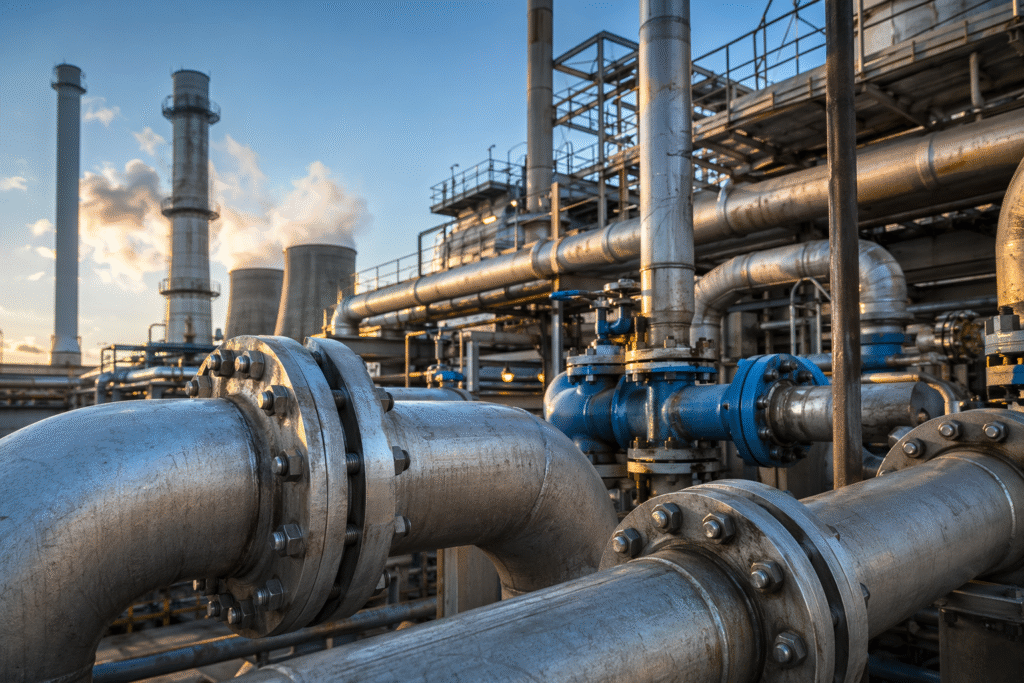
ตลาดหน้าแปลนท่อสแตนเลส: 7 ข้อดีที่ซ่อนอยู่, ประเภท, การใช้งาน, และวิธีการเลือก ASME B16.5 & B16.47 หน้าแปลน
จากการวิจัยของแกรนด์วิว (2024), ตลาดหน้าแปลนอุตสาหกรรมทั่วโลกมีมูลค่าอยู่ที่ $5.8 พันล้านใน 2023 และคาดว่าจะไปถึง $7.2 พันล้านโดย 2030. That growth highlights why the หน้าแปลนท่อสแตนเลส remains a critical component for engineers, ผู้รับเหมา EPC, และทีมจัดซื้อที่ต้องการความต้านทานการกัดกร่อน, ความสมบูรณ์ของความดัน, และอายุการใช้งานยาวนาน.
สำหรับผู้ซื้อภาคอุตสาหกรรม, ปัจจัยที่น่าสนใจที่สุดไม่ใช่แค่ราคาเท่านั้น, but also the hidden advantages of selecting the right flange material, ระดับความดัน, และมาตรฐาน. ดังนั้น, this guide explains flange types, การใช้งาน, ASME requirements, and practical selection criteria for demanding pipe systems.
Industrial Demand for Stainless Steel Pipe Flange in Global Process Markets
อ้างอิงจาก IBISWorld (2024), บัญชีเอเชียแปซิฟิกมีมากกว่า 45% ของการผลิตหน้าแปลนทั่วโลก, โดยจีนเป็นผู้ผลิตรายใหญ่ที่สุด. ส่งผลให้, sourcing strategies increasingly focus on qualified Chinese exporters that can deliver ASME, DIN, JIS, GOST, and EN compliant products with full material traceability.
ตามสถิติของสตาติสต้า (2024), อุตสาหกรรมน้ำมันและก๊าซมีสัดส่วนประมาณ 35% ของการบริโภคหน้าแปลนทั่วโลก. นอกจากนี้, การแปรรูปปิโตรเคมี, การผลิตกระแสไฟฟ้า, การต่อเรือ, and water treatment continue to drive demand for stainless steel pipe flange products in 304, 316, ดูเพล็กซ์, และเกรดโลหะผสมนิกเกิล.
These numbers matter because flange failure can shut down an entire line. ในทางตรงกันข้าม, a correctly specified flange improves joint integrity, ลดระยะเวลาการบำรุงรักษา, and supports safer operation under thermal cycling, การสั่นสะเทือน, และสื่อที่มีฤทธิ์กัดกร่อน.
ตามข้อมูลของ Mordor Intelligence (2024), industrial infrastructure investments in energy and water sectors continue to support steady growth in piping components across emerging markets. นอกจากนี้, buyers now prioritize suppliers that can combine machining precision, EN 10204 3.1 เอกสารประกอบ, และระยะเวลารอคอยสินค้าที่สั้น.
The hidden advantages of stainless steel are especially relevant in facilities handling chlorides, กรด, ไอน้ำ, and high-purity fluids. ตัวอย่างเช่น, 316L stainless steel flange products usually outperform 304 in chloride exposure because molybdenum improves pitting resistance, while low carbon content helps reduce sensitization during welding.
As John Martinez, วิศวกรท่ออาวุโส, รัฐ: “A flange is a small component in cost share, but it is a major component in reliability strategy.” That insight reflects procurement reality, because flange quality often influences inspection frequency, leak risk, and lifecycle cost more than buyers expect.
SASA FLANGE ดำเนินงานในสภาพแวดล้อมนี้ด้วย ISO 9001:2015 และการรับรอง PED 2014/68/EU. นอกจากนี้, ทางบริษัทจำหน่ายสแตนเลส, เหล็กกล้าคาร์บอน, โลหะผสม, ดูเพล็กซ์, and special material flanges and fittings for clients across Oil & แก๊ส, ปิโตรเคมี, พลัง, มารีน, และภาคการบำบัดน้ำ.
ได้รับการสนับสนุนจากเครื่องจักร CNC ขั้นสูงและการทดสอบคุณภาพที่ครอบคลุม, SASA FLANGE ผลิตสินค้าใน 304, 316, 316ล, 904ล, 2205, 2507, A105, A182, อินโคเนล, โมเนล, ฮาสเตลลอย, และเกรดไทเทเนียม. ดังนั้น, buyers can align corrosion performance, ระดับความดัน, and budget with actual service conditions instead of relying on generic substitution.
ตามการวิจัยตลาดอนาคต (2024), industrial stainless component demand is rising as operators seek longer asset life and lower maintenance costs. เพราะเหตุนี้, flange sourcing has become a technical purchasing decision rather than a simple commodity buy.
ข้อดีที่ซ่อนอยู่, Flanges Types, and Technical Factors Engineers Should Evaluate
The most intriguing aspect of a stainless steel pipe flange is its ability to combine strength, ความต้านทานการกัดกร่อน, and maintainability in one connection point. อย่างไรก็ตาม, those benefits only appear when engineers match flange type, หันหน้าไปทาง, การให้คะแนน, and metallurgy to the pipe system.
ตาม ASME B16.5, ขนาดหน้าแปลน, ความคลาดเคลื่อน, การจัดอันดับความดันอุณหภูมิ, การทำเครื่องหมาย, and materials are standardized for NPS 1/2 ผ่าน 24. ในแบบคู่ขนาน, ASME B16.47 covers larger diameter flanges from NPS 26 ผ่าน 60, ซึ่งเป็นเรื่องปกติในการถ่ายทอด, ทะเล, and large process pipelines (ASME, 2023).
ในฐานะดร. เฮเลน โจว, นักวิทยาศาสตร์วัสดุ, รัฐ: “The best flange selection is a corrosion and temperature decision first, and a price decision second.” ดังนั้น, selecting 304, 316ล, 904ล, 2205, หรือ 2507 should follow fluid chemistry, ระดับคลอไรด์, ช่วงอุณหภูมิ, และวิธีการประดิษฐ์.
ในทางปฏิบัติ, engineers often evaluate the following flange types for industrial pipe systems:
- หน้าแปลนเชื่อมคอสำหรับแรงดันสูง, การปั่นจักรยานด้วยความร้อน, and critical services.
- Slip-on flange for moderate pressure applications with easier alignment and lower fabrication cost.
- หน้าแปลนตาบอดสำหรับการแยกสาย, การทดสอบไฮโดรเทสติ้ง, และจุดขยายในอนาคต.
- หน้าแปลนเชื่อมซอคเก็ตสำหรับรูขนาดเล็ก, ท่อแรงดันสูง.
- หน้าแปลนเกลียวสำหรับระบบแรงดันต่ำที่ไม่พึงปรารถนาในการเชื่อม.
- หน้าแปลนข้อต่อตักสำหรับระบบที่ต้องรื้อบ่อยครั้ง.
Each flange type has hidden advantages. ตัวอย่างเช่น, weld neck designs distribute stress more evenly at the hub-to-pipe transition, while blind flanges provide strong end closure for pressure testing and maintenance isolation.
การเลือกใช้วัสดุก็มีความสำคัญไม่แพ้กัน. ASTM A182 โดยทั่วไปจะควบคุมหน้าแปลนเหล็กสแตนเลสและโลหะผสมปลอมแปลง, ในขณะที่ ASTM A240 covers plate materials used in related components and fabrication (ASTM, 2024).
For most chemical and utility systems, common stainless choices include:
- 304/304L for general corrosion resistance and cost-effective performance.
- 316/316L for chloride-bearing media and better pitting resistance.
- 321 และ 347 grades for elevated temperature stabilization.
- 904L for aggressive acidic environments.
- 2205 ดูเพล็กซ์และ 2507 ซูเปอร์ดูเพล็กซ์สำหรับความแข็งแรงสูงและทนต่อการกัดกร่อนจากความเค้นคลอไรด์.
According to NACE guidance used widely in sour service selection, chloride and H2S exposure can rapidly narrow acceptable alloy options (เนซ, 2023). ส่งผลให้, duplex and high-alloy stainless flange products are increasingly chosen for offshore, ผลิตน้ำ, and desalination lines.
Pressure class also changes the buying decision. ASME classes such as 150, 300, 600, 900, 1500, และ 2500 define flange strength and sealing capability under temperature-related derating.
สำหรับผู้จัดการฝ่ายจัดซื้อ, the practical comparison often includes these factors:
- Pressure-temperature rating by ASME class.
- ประเภทการหันหน้า เช่น RF, RTJ, หรือเอฟเอฟ.
- Dimensional standard such as ASME B16.5, ASME B16.47, DIN, หรือภาษาอังกฤษ 1092.
- Material standard such as ASTM A182 F304, F316L, F51, หรือ F53.
- เอกสารการตรวจสอบได้แก่ EN 10204 3.1 เอ็มทีซี.
- NDT requirements such as PMI, ปตท, ยูทาห์, and hardness testing.
According to ISO requirements referenced by many EPC specifications, traceability and documented inspection are essential for pressure equipment quality systems (ISO, 2023). ดังนั้น, a low initial unit price may become expensive if reinspection, rejection, or unplanned downtime occurs.
A well-chosen stainless steel pipe flange also simplifies maintenance planning. นอกจากนี้, stainless flanges generally support repeated disassembly better than lower-grade alternatives in clean service, การแปรรูปอาหาร, และระบบบำบัดน้ำ, where contamination control and surface condition matter.
SASA FLANGE เสนอขนาดที่กำหนดเองตั้งแต่ 1/2" ถึง 60" ด้วยราคาที่แข่งขันได้จากโรงงานโดยตรง. นอกจากนี้, the company supports RF, เอฟเอฟ, RTJ, เกลียว, เชื่อมซ็อกเก็ต, ตาบอด, and weld neck configurations manufactured to ANSI B16.5, ANSI B16.47, DIN, JIS, GOST, และภาษาอังกฤษ 1092 ความต้องการ.
เสิร์ฟ 50+ ประเทศทั่วน้ำมัน & แก๊ส, ปิโตรเคมี, พลัง, และอุตสาหกรรมทางทะเล, SASA FLANGE aligns supply with real project documentation needs. ตัวอย่างเช่น, buyers often request PMI, การตรวจสอบมิติ, hydrostatic support data, และบรรจุภัณฑ์ที่เหมาะสมกับการขนส่งเพื่อการส่งออก.
ดังเช่นมาร์ค เอลลิสัน, นักวิเคราะห์ตลาดอุตสาหกรรม, รัฐ: “Procurement leaders now value certified documentation nearly as much as they value delivered price.” That trend is especially clear in PED projects, offshore packages, and owner-approved vendor lists.
จากการวิจัยของแกรนด์วิว (2024), capital investment in industrial processing equipment remains a major support factor for connection components and maintenance demand. เพราะเหตุนี้, stainless flange buyers should focus on specification accuracy, ต้นทุนวงจรชีวิต, and supplier consistency instead of comparing only quote totals.
ASME, ASTM, DIN, and EN Requirements for Stainless Steel Flanges Compliance
Standards compliance is where many flange projects succeed or fail. ดังนั้น, engineers should distinguish clearly between dimensional standards, material standards, ข้อกำหนดการตรวจสอบ, and regional regulatory requirements.
ASME B16.5 ครอบคลุมถึงหน้าแปลนท่อและอุปกรณ์หน้าแปลนสำหรับ NPS 1/2 ผ่าน 24. ในทางตรงกันข้าม, ASME B16.47 applies to large diameter steel flanges from NPS 26 ผ่าน 60, with Series A and Series B dimensional differences that affect bolt patterns and compatibility (ASME, 2023).
ASTM A182 specifies forged or rolled alloy and stainless steel flange materials for high-temperature service. นอกจากนี้, ASTM material designations such as F304, F304L, F316, F316L, F51, and F53 help engineers define chemistry and mechanical properties more precisely.
โครงการในยุโรปมักต้องมี EN 1092 dimensional compliance and PED 2014/68/EU documentation. ในทำนองเดียวกัน, DIN legacy references remain common in maintenance and retrofit environments, especially where older installed systems must match existing components.
The following summary helps clarify the main standards landscape:
- ASME B16.5: ขนาด, ความคลาดเคลื่อน, คลาสความดัน, และเครื่องหมายสำหรับ NPS 1/2 ถึง 24.
- ASME B16.47: ขนาดหน้าแปลนเส้นผ่านศูนย์กลางใหญ่สำหรับ NPS 26 ถึง 60.
- ASME B16.9: อุปกรณ์เชื่อมชนแบบดัดที่ผลิตจากโรงงาน เช่น ข้อศอก, เสื้อยืด, ตัวลด, และหมวกแก๊ป.
- ASTM A182: Forged stainless and alloy steel materials for flanges and fittings.
- EN 1092: ขนาดหน้าแปลนยุโรปและการกำหนดแรงดัน.
- NACE MR0175/ISO 15156: คำแนะนำด้านวัสดุสำหรับสภาพแวดล้อมการบริการที่มีรสเปรี้ยว.
ตามกรอบ PED ของคณะกรรมาธิการยุโรป, pressure equipment compliance requires technical documentation, การประเมินความสอดคล้อง, and appropriate material traceability for applicable equipment categories (พีอีดี, 2014). ส่งผลให้, project buyers should verify not just the flange standard, but also the complete documentation package.
For corrosion-critical services, standards alone do not guarantee field performance. อย่างไรก็ตาม, they create the baseline for interchangeability, qualification, and quality consistency across global supply chains.
ในแง่การจัดซื้อจัดจ้างในทางปฏิบัติ, buyers should confirm these documentation points before purchase:
- ใบรับรองการทดสอบวัสดุถึง EN 10204 3.1.
- Heat number traceability on each flange.
- รายงานการตรวจสอบมิติ.
- PMI report for stainless, ดูเพล็กซ์, และเกรดโลหะผสมนิกเกิล.
- Surface finish and facing inspection.
- Packing and marking requirements by project specification.
According to DNV expectations in many marine and offshore supply chains, traceability and inspection records significantly reduce non-conformance risk during audits and installation reviews (ดีเอ็นวี, 2023). ดังนั้น, consistent QA systems matter as much as machining capacity.
SASA FLANGE รองรับข้อกำหนดเหล่านี้ด้วย ISO 9001:2015, พีอีดี 2014/68/สหภาพยุโรป, และโฆษณา 2000 การรับรอง. นอกจากนี้, the company manufactures stainless steel flanges and pipe fittings under documented quality procedures suited to EPC, ผู้จัดจำหน่าย, and end-user sourcing models.
สำหรับผู้ซื้อเปรียบเทียบผู้ขาย, one useful hidden advantage is standard flexibility. A supplier capable of ASME, DIN, JIS, GOST, and EN execution can simplify global projects, spare parts planning, and mixed-site maintenance programs.
Engineers should also review sealing face compatibility. ตัวอย่างเช่น, RF flanges dominate general industrial service, while RTJ flanges are preferred in higher pressure and critical hydrocarbon duties because the metal ring gasket offers robust sealing under severe service conditions.
For official dimensional and code references, ผู้ซื้อสามารถปรึกษาได้ ASME. That step is valuable when project teams need to verify class ratings, ขนาด, or code cross-references during design review.
วิธีการเลือกหน้าแปลนท่อสแตนเลสสำหรับน้ำมัน, แก๊ส, เคมี, พลัง, และการใช้ประโยชน์ทางทะเล
Choosing the right stainless steel pipe flange begins with the service environment, ไม่ใช่หน้าแค็ตตาล็อก. ดังนั้น, engineers should define media composition, ความดันใช้งาน, อุณหภูมิการออกแบบ, ค่าเผื่อการกัดกร่อน, and maintenance frequency before selecting a flange type or grade.
Oil and gas systems often require strong performance under pressure cycling, การสั่นสะเทือน, and corrosive exposure. In these lines, weld neck and RTJ flange options are common, while duplex or super duplex materials may be preferred for seawater, injection, and offshore splash-zone duties.
ตามสถิติของสตาติสต้า (2024), น้ำมันและก๊าซเป็นตัวแทนของ 35% ของการบริโภคหน้าแปลนทั่วโลก. เพราะเหตุนี้, project specifications in this sector tend to be highly detailed, often requiring NACE compliance, พีเอ็มไอ, การตรวจสอบความแข็ง, and strict MTC control.
Chemical processing lines usually demand corrosion resistance first. ตัวอย่างเช่น, 316ล, 904ล, ฮาสเตลลอย, or Monel flange products may be specified depending on chlorides, กรด, อุณหภูมิ, and concentration.
Power generation projects focus heavily on thermal cycles and pressure integrity. ดังนั้น, engineers may select higher class flanges, stabilized stainless grades, or alloy materials for steam, คอนเดนเสท, and high-temperature auxiliary lines.
Marine and shipbuilding applications present a different challenge because saltwater exposure accelerates pitting and crevice corrosion. ส่งผลให้, 316ล, 2205, และ 2507 often become more attractive than 304 in deck piping, อับเฉา, เครื่องฟอก, และระบบน้ำทะเล.
The following checklist helps procurement teams choose more effectively:
- Confirm pipe size, ความหนาของผนัง, and matching schedule.
- Verify design pressure, อุณหภูมิ, and ASME class.
- Select flange type based on service criticality and maintenance needs.
- Match gasket and facing style to sealing requirements.
- Review corrosion data for chlorides, กรด, H2S, or seawater.
- Specify required test certificates and inspection scope.
- Check regional standards such as ASME, EN, DIN, หรือ JIS.
Another hidden advantage is total installed cost control. A slightly higher-grade flange can reduce replacement frequency, การเปิดรับแสงปิด, and leak risk, which often delivers better economics across the asset lifecycle.
ตัวอย่างเช่น, ก 4 inch stainless steel pipe flange used in a water treatment skid may only need ASME Class 150 and 316L material. ในทางตรงกันข้าม, a similar nominal size in offshore injection service could require duplex material, RTJ เผชิญหน้า, stricter NDT, and tighter traceability controls.
ตามการวิจัยตลาดอนาคต (2024), water infrastructure upgrades continue to increase demand for corrosion-resistant piping components worldwide. ดังนั้น, municipal and industrial water projects are becoming important growth segments for stainless and duplex flange procurement.
SASA FLANGE supports custom manufacturing for non-standard drilling, หันหน้าไปทาง, and material combinations. นอกจากนี้, บริษัทสามารถจัดหาข้อศอกที่ตรงกันได้, เสื้อยืด, ตัวลด, and caps to simplify package procurement for complete piping systems.
For distributors and EPC contractors, consolidated sourcing can shorten project timelines. นอกจากนี้, factory-direct coordination helps reduce dimensional mismatch risk between the flange, ปะเก็น, สลักเกลียว, and mating pipe or fitting.
When buyers need guidance on flange types, วัสดุ, or project documentation, early technical review is essential. สำหรับโครงการที่ต้องการขนาดที่กำหนดเอง, โลหะผสมพรีเมี่ยม, or fast delivery, กำลังติดต่อ SASA FLANGE early can improve specification accuracy and purchasing efficiency.
Future Outlook for Stainless Flange Procurement and Strategic Buying Recommendations
The outlook for stainless flange demand remains positive as energy, น้ำ, ทะเล, and process industries continue upgrading aging infrastructure. จากการวิจัยของแกรนด์วิว (2024), คาดว่าจะถึงตลาดหน้าแปลนอุตสาหกรรม $7.2 พันล้านโดย 2030, which indicates stable long-term procurement activity.
ในเวลาเดียวกัน, ผู้ซื้อเริ่มเลือกสรรมากขึ้น. ดังนั้น, supplier evaluation increasingly includes not only price, but also certification status, ความสามารถในการตัดเฉือน, ประสบการณ์การส่งออก, traceability systems, and response speed.
One intriguing shift is the move toward lifecycle-based purchasing. Instead of choosing the lowest initial quote, procurement teams now compare maintenance cost, failure risk, and expected service life across 304, 316ล, ดูเพล็กซ์, and high-alloy flange options.
Digital sourcing also changes buyer behavior. ตัวอย่างเช่น, engineers often search terms like stainless steel pipe flange sizes, ประเภทหน้าแปลนสแตนเลส, หน้าแปลนท่อเกลียวสแตนเลส, and stainless steel pipe flange price before issuing RFQs.
That search behavior means supplier content must answer technical and commercial questions clearly. นอกจากนี้, pages that combine standards guidance, material comparisons, and application advice are more likely to support both SEO performance and conversion quality.
อย่างมีกลยุทธ์, buyers should follow five practical recommendations:
- Standardize approved materials for recurring services.
- คัดเลือกซัพพลายเออร์ล่วงหน้าด้วย ISO 9001:2015 and PED capabilities.
- ขอ EN 10204 3.1 certificates and PMI for critical grades.
- เปรียบเทียบมูลค่าวงจรชีวิต, ไม่ใช่แค่ราคาต่อหน่วย.
- Use suppliers that can deliver both flanges and fittings for package consistency.
อ้างอิงจาก IBISWorld (2024), China remains central to global flange manufacturing capacity. ส่งผลให้, working with experienced exporters that understand international standards and documentation can create significant cost and schedule advantages.
For companies balancing quality, จัดส่ง, และการปฏิบัติตามข้อกำหนดระดับโลก, a data-driven sourcing approach is the safest path. When your next project requires ASME B16.5, บ16.47, DIN, or EN compliant stainless steel flange solutions, discussing specifications with SASA FLANGE can help align technical needs with reliable factory supply.
คำถามที่พบบ่อย
หน้าแปลนสแตนเลสมีกี่ประเภท??
●ประเภทหน้าแปลนสแตนเลสหลักคือคอเชื่อม, ลื่นบน, ตาบอด, เชื่อมซ็อกเก็ต, เกลียว, และข้อต่อตัก, และ ASME B16.5 defines the dimensional framework for most standard sizes up to NPS 24.
●ตามสถิติของสตาติสต้า (2024), oil and gas consumes about 35% ของหน้าแปลนทั่วโลก, so weld neck and blind designs are especially common in high-integrity process lines.
●For critical pipe systems, engineers should choose flange types based on pressure class, หันหน้าไปทางสไตล์, การเข้าถึงการบำรุงรักษา, และสภาพแวดล้อมการกัดกร่อน, and established manufacturers like SASA FLANGE can support matching material and standard selection.
ซึ่งจะดีกว่า 304 หรือ 420 สแตนเลส?
●สำหรับการใช้งานหน้าแปลนท่อสแตนเลสส่วนใหญ่, 304 โดยทั่วไปจะดีกว่า 420 เพราะ 304 offers superior corrosion resistance, ความสามารถในการเชื่อม, and formability for industrial piping service.
●ASTM A182 flange grades such as F304 and F304L are widely used in pressure systems, ในขณะที่ 420 is a martensitic stainless steel more often selected for hardness and wear resistance than for corrosive process piping.
●Buyers should usually select 304 for general flange service and move to 316L or duplex for harsher environments, while consulting experienced suppliers like SASA FLANGE when chloride exposure or elevated temperatures are involved.
หน้าแปลนสามประเภทคืออะไร?
●The three most commonly referenced flange types in general industry are weld neck, ลื่นบน, and blind flanges because they cover most pressure connection, การติดตั้ง, และความต้องการการแยกตัว.
●ตาม ASME B16.5, these flange categories are standardized for dimensions, การขุดเจาะ, และพิกัดอุณหภูมิความดัน, which helps ensure interchangeability across many pipe systems.
●For most projects, weld neck suits severe service, slip-on suits moderate duty, and blind suits end closure or hydrotesting, so buyers should match the type to service risk and maintenance plans.
รหัส ASME สำหรับหน้าแปลนสแตนเลสคืออะไร?
●มาตรฐาน ASME หลักสำหรับหน้าแปลนสแตนเลสคือ ASME B16.5 สำหรับกรมอุทยานฯ 1/2 ผ่าน 24 และ ASME B16.47 สำหรับกรมอุทยานฯ 26 ผ่าน 60, ในขณะที่ ASTM A182 commonly defines the forged stainless material grade.
●These standards cover dimensions, คลาสความดัน, ความคลาดเคลื่อน, หันหน้าไปทาง, and marking, but project compliance may also require PED, EN 1092, หรือ NACE MR0175 ขึ้นอยู่กับแอปพลิเคชัน.
●Procurement teams should specify both the ASME dimensional standard and the ASTM material grade in every RFQ to avoid mismatched flange supply and documentation issues.
ฉันจะเลือกขนาดหน้าแปลนท่อสแตนเลสและระดับแรงดันที่เหมาะสมได้อย่างไร?
●ขนาดหน้าแปลนต้องตรงกับท่อ NPS และกำหนดการ, while pressure class such as 150, 300, หรือ 600 must reflect design pressure and temperature according to ASME rating tables.
●จากการวิจัยของแกรนด์วิว (2024), the flange market is growing with more complex industrial applications, which makes accurate class and material selection increasingly important for lifecycle cost control.
●Engineers should verify size, หันหน้าไปทาง, การขุดเจาะ, เกรดวัสดุ, and gasket compatibility together before ordering, especially for 2 นิ้วและ 4 inch stainless steel pipe flange requirements in mixed-standard systems.
Why are 316L and duplex stainless flanges often chosen over 304 ในการบริการทางทะเลและเคมี?
●316L and duplex stainless flanges are often preferred because they provide better resistance to pitting, การกัดกร่อนของรอยแยก, and chloride stress corrosion cracking than standard 304 in aggressive environments.
●อ้างอิงจาก IBISWorld (2024), เอเชียแปซิฟิกเป็นผู้นำด้านการผลิตหน้าแปลนระดับโลก, and marine and water infrastructure projects are increasing demand for higher-performance alloys such as 2205 และ 2507.
●สำหรับน้ำทะเล, คลอไรด์, or sour service, buyers should review full process chemistry and request PMI and EN 10204 3.1 certification before final material approval.
โพสต์ที่เกี่ยวข้อง
หน้าแปลนเสร็จสิ้น: อธิบาย Serrations แบบศูนย์กลางและแบบเกลียว
ฟันปลาแบบศูนย์กลางและแบบเกลียวมีทั้งการตกแต่งผิวหน้าแปลนด้วยเครื่องจักร…
ดูเพล็กซ์ 2205 เทียบกับหน้าแปลน 316L: คุณควรเลือกวัสดุใด?
ตอบด่วน: ดูเพล็กซ์ 2205 หน้าแปลนมักจะเป็นตัวเลือกที่แข็งแกร่งกว่า…

คำจำกัดความหน้าแปลนปาก, รายละเอียดและภาพรวมหน้าแปลน ASME B16.36: ข้อมูลการตลาด, คู่มือการคัดเลือกและข้อมูลเชิงลึกด้านการปฏิบัติตามข้อกำหนด
ตลาดหน้าแปลนอุตสาหกรรมทั่วโลกมีมูลค่าอยู่ที่ $5.8 พันล้าน…

คู่มือการตลาดหน้าแปลนการกำจัดสีดำ: วัสดุ, 3.5″ ความเข้ากันได้, และการจัดหาข้อมูล B2B สำหรับหน้าแปลนอ่างล้างจาน
ความต้องการหน้าแปลนกำจัดสีดำเพิ่มขึ้นเนื่องจากผู้ซื้ออุปกรณ์ติดตั้งในครัว…