
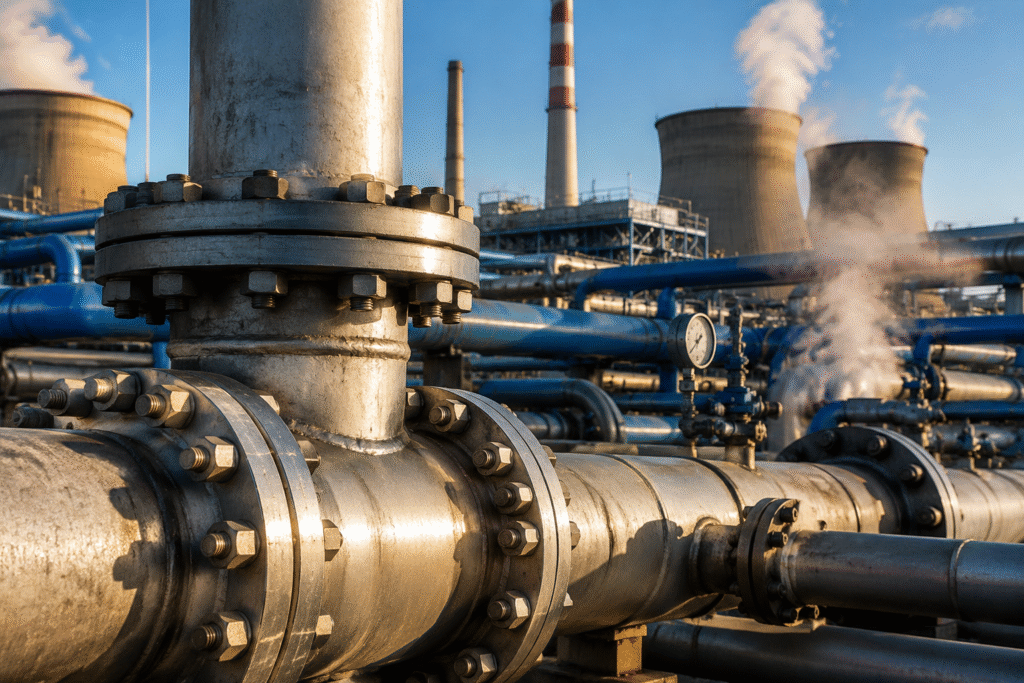
คู่มือแปลนท่อสแตนเลส: ข้อมูลการตลาด, เกรด, ข้อมูลเชิงลึกด้านมาตรฐานและการคัดเลือกสำหรับผู้ซื้อในอุตสาหกรรม
ตลาดหน้าแปลนท่อสแตนเลสเป็นศูนย์กลางของกระบวนการวางท่อที่ทันสมัย, โครงสร้างพื้นฐานด้านพลังงาน, และการออกแบบโรงงานที่มีความสำคัญต่อการกัดกร่อน. จากการวิจัยของแกรนด์วิว (2024), ตลาดหน้าแปลนอุตสาหกรรมทั่วโลกมีมูลค่าอยู่ที่ $5.8 พันล้านใน 2023 และคาดว่าจะไปถึง $7.2 พันล้านโดย 2030, which shows why engineers continue to talk about stainless solutions with greater precision.
สำหรับทีมงานจัดซื้อ, it is no longer enough to know only the basics about stainless steel. Buyers need to know about grades, คลาสความดัน, กลไกการกัดกร่อน, เอกสารการปฏิบัติตาม, and lifecycle cost before specifying a flange for oil and gas, เคมี, ทะเล, or water treatment service.
เหตุใดความต้องการหน้าแปลนท่อสแตนเลสจึงเติบโตในอุตสาหกรรมทั่วโลก
Industrial buyers increasingly select stainless steel pipe flange products because corrosion resistance directly affects uptime, ค่าบำรุงรักษา, and plant safety. อ้างอิงจาก IBISWorld (2024), บัญชีเอเชียแปซิฟิกมีมากกว่า 45% ของการผลิตหน้าแปลนทั่วโลก, โดยจีนเป็นผู้ผลิตรายใหญ่ที่สุด, which confirms the region’s strategic role in supply security.
Demand also tracks heavy industrial investment. ตามสถิติของสตาติสต้า (2024), อุตสาหกรรมน้ำมันและก๊าซมีสัดส่วนประมาณ 35% ของการบริโภคหน้าแปลนทั่วโลก, while petrochemical and power applications continue to expand specification requirements for alloy and stainless materials.
That demand is tied to the material itself. Stainless steel is generally defined as an iron-based alloy containing at least 10.5% โครเมียม, which forms a passive chromium oxide film that helps resist corrosion (ASTM, 2024). ดังนั้น, when engineers talk stainless, they are really talking about stable performance under chemical, ความร้อน, และความเครียดทางกล.
อย่างไรก็ตาม, not all stainless grades behave the same way. ก 304 flange may perform well in general service, while 316L often delivers better pitting resistance in chloride-bearing environments because of its molybdenum content.
ตามการวิจัยตลาดอนาคต (2024), growth in water treatment and desalination infrastructure is increasing demand for duplex and high-alloy stainless components in coastal regions. นอกจากนี้, tighter quality expectations from EPC contractors are pushing manufacturers to provide full traceability, การตรวจสอบ PMI, และ EN 10204 3.1 certification as standard documentation.
ในแง่การจัดหาในทางปฏิบัติ, buyers also compare lead time, คุณภาพเครื่องจักร, และความสม่ำเสมอของมิติ. ได้รับการสนับสนุนจากเครื่องจักร CNC ขั้นสูงและการทดสอบคุณภาพที่ครอบคลุม, SASA FLANGE supports global industrial projects with stainless steel flanges and fittings manufactured to ANSI B16.5, ANSI B16.47, DIN, JIS, GOST, และภาษาอังกฤษ 1092 ความต้องการ.
Procurement managers also need reliable factory partners that understand both export standards and application-specific material behavior. กับ ISO 9001:2015 และการรับรอง PED 2014/68/EU, SASA FLANGE ให้บริการลูกค้าทั่วออยล์ & แก๊ส, ปิโตรเคมี, การผลิตไฟฟ้า, การต่อเรือ, มารีน, การบำบัดน้ำ, และตลาดการก่อสร้าง.
ในฐานะดร. เฮเลน มอร์ริส, วิศวกรวัสดุและที่ปรึกษาด้านการกัดกร่อน, รัฐ: “The biggest specification error in stainless systems is assuming all chromium-bearing alloys offer equivalent resistance in chloride or acidic media.” That point matters because a stainless steel pipe flange is often a small component in cost, yet a critical component in failure prevention.
นอกจากนี้, according to Mordor Intelligence (2024), industrial automation and process plant modernization are increasing replacement demand for higher-performance piping components in mature facilities. ส่งผลให้, buyers now want more than commodity flanges; they want traceable, เป็นไปตามข้อกำหนด, application-matched products.
Talk About Stainless Steel Pipe Flange Grades, คลาสความดัน, และประสิทธิภาพ
Let’s talk about stainless selection in a way that helps engineers, estimators, and buyers make better decisions. When professionals talk stainless in piping systems, they usually focus on grade chemistry, ประเภทหน้าแปลน, ระดับความดันอุณหภูมิ, ค่าเผื่อการกัดกร่อน, and welding compatibility.
The most common forged stainless flange materials include ASTM A182 F304, F304L, F316, F316L, F321, F347, and duplex grades such as F51 and F53. In aggressive services, users may also specify 904L, อินโคเนล, โมเนล, ฮาสเตลลอย, or titanium depending on chloride level, ความเข้มข้นของกรด, และอุณหภูมิในการทำงาน.
ดังเช่นเจมส์ พอร์เตอร์, วิศวกรท่ออาวุโส, รัฐ: “การเลือกเกรดควรเริ่มต้นด้วยของเหลวในกระบวนการ, ไม่ใช่ราคาซื้อ, because the wrong flange alloy usually becomes the most expensive decision later.” That guidance is especially useful for projects that move from concept design to detailed material requisition under schedule pressure.
According to NACE guidance and field experience in chloride service, molybdenum-bearing grades such as 316/316L generally outperform 304/304L in pitting resistance (เนซ, 2023). นอกจากนี้, duplex stainless steels offer higher strength and improved chloride stress corrosion cracking resistance versus standard austenitic grades in many seawater-adjacent applications.
According to the International Stainless Steel Forum (2024), austenitic grades still account for the majority of global stainless use due to formability, ความสามารถในการเชื่อม, and broad corrosion resistance. อย่างไรก็ตาม, duplex grades are gaining share in desalination, นอกชายฝั่ง, and chemical sectors where higher strength can reduce wall thickness and total installed weight.
สำหรับหน้าแปลนอุตสาหกรรม, buyers typically evaluate the following technical variables:
- เกรดวัสดุ: 304, 316, 316ล, 904ล, 2205, 2507, A182 F51, A182 F53
- ประเภทหน้าแปลน: คอเชื่อม, ลื่นบน, เชื่อมซ็อกเก็ต, ตาบอด, ข้อต่อตัก, เกลียว
- ระดับความดัน: 150, 300, 600, 900, 1500, 2500
- ประเภทเผชิญหน้า: รฟ, เอฟเอฟ, RTJ
- Pipe schedule compatibility: ช 10, ช 40, ช 80, ช 160, XXS
- เอกสารการตรวจสอบ: EN 10204 3.1, พีเอ็มไอ, hydrotest reports, รายงานมิติ
Different grades solve different operating problems. ตัวอย่างเช่น, F304/F304L is widely used for general water, เกรดอาหาร, และบริการเคมีภัณฑ์เบา, while F316/F316L is preferred in marine atmospheres, chloride-bearing utility systems, และสายเภสัช.
ดูเพล็กซ์ 2205 และซูเปอร์ดูเพล็กซ์ 2507 become relevant where chloride content is elevated and strength matters. ดังนั้น, ลื่นไถลนอกชายฝั่ง, seawater cooling loops, and desalination modules often specify duplex flange packages to balance corrosion resistance and structural efficiency.
It is also important to tell procurement teams that stainless does not mean immune to every corrosion mode. การกัดกร่อนของรอยแยก, บ่อ, galvanic attack, and stress corrosion cracking can still occur if grade selection ignores process chemistry, stagnant zones, การออกแบบปะเก็น, หรืออุณหภูมิ.
The classic conversation about stainless steel often starts with chromium content, yet industrial buyers need more useful information. They need to know about PREN trends, low-carbon L grades for welding, การควบคุมเฟอร์ไรต์, and the implications of using forged versus cast flange bodies.
Below is a practical comparison for common stainless flange materials:
- 304/304ล: economical and versatile for clean service, mild chemicals, and architectural piping
- 316/316ล: stronger resistance to chlorides and better suitability for coastal and chemical duty
- 904ล: enhanced performance in reducing acids and severe corrosion environments
- 2205 ดูเพล็กซ์: higher strength and improved SCC resistance for offshore and process applications
- 2507 ซูเปอร์ดูเพล็กซ์: premium choice for severe chloride exposure and high-performance marine duty
Manufacturing quality matters just as much as alloy chemistry. เสนอขนาดที่กำหนดเองตั้งแต่ 1/2" ถึง 60" ด้วยราคาที่แข่งขันได้จากโรงงานโดยตรง, SASA FLANGE produces stainless steel flanges and matching fittings in 304, 316, 316ล, 904ล, 2205, และ 2507 for projects that require dimensional consistency and traceable material control.
ตาม ASME B16.5, การให้คะแนนอุณหภูมิความดันจะแตกต่างกันไปตามกลุ่มวัสดุและประเภทหน้าแปลน, so buyers should never compare Class 300 carbon steel and stainless performance without referencing the correct table set (ASME, 2023). นอกจากนี้, การขยายตัวทางความร้อน, โหลดโบลต์, การเลือกปะเก็น, and cyclic operation can all affect the long-term sealing reliability of a flange joint.
มาตรฐาน, การทดสอบ, และการปฏิบัติตามข้อกำหนดสำหรับการจัดหาหน้าแปลนท่อสแตนเลส
Standards determine whether a flange can move from quotation to approved vendor list and then into plant service. สำหรับการจัดหาหน้าแปลนท่อสแตนเลส, the most cited dimensions and pressure standards include ASME B16.5, ASME B16.47, EN 1092-1, มาตรฐานดินแดง, and selected JIS specifications.
Material compliance typically references ASTM forging and fitting standards such as ASTM A182 สำหรับหน้าแปลนปลอมแปลงและ ASTM A403 for stainless butt weld fittings. ในแบบคู่ขนาน, chemical and mechanical verification should be aligned with mill test reports and, เมื่อระบุไว้, EN 10204 3.1 เอกสารการตรวจสอบ.
Buyers should also evaluate the following compliance areas:
- Dimensional standard compliance: ASME B16.5, บ16.47, EN 1092-1, DIN
- Material standard compliance: ASTM A182, ASTM A240, ASTM A403
- Quality system compliance: ISO 9001:2015
- Regulatory compliance: PED 2014/68/EU for applicable European projects
- Corrosion service guidance: NACE MR0175 where sour service is relevant
ตามกรอบ PED ของคณะกรรมาธิการยุโรป, pressure equipment used in regulated applications must meet essential safety requirements and conformity assessment obligations (พีอีดี, 2014/68/สหภาพยุโรป). ดังนั้น, exporters serving EU projects must understand both documentation control and notified body expectations.
นอกจากนี้, flange sourcing increasingly includes positive material identification and hardness verification to reduce substitution risk. According to DNV guidance for offshore procurement, traceability and inspection discipline significantly reduce non-conformance events in safety-critical piping systems (ดีเอ็นวี, 2023).
For engineering teams comparing standards, a simplified reference looks like this:
- ASME B16.5: flanges and flanged fittings from NPS 1/2 ถึง 24
- ASME B16.47: larger diameter flanges from NPS 26 ถึง 60
- ASME B16.9: อุปกรณ์เชื่อมชนดัดที่ทำจากโรงงาน
- EN 1092-1: ขนาดหน้าแปลนยุโรปและการกำหนดแรงดัน
- ASTM A182: โลหะผสมปลอมแปลงหรือรีดและหน้าแปลนท่อสแตนเลส, ฟิตติ้ง, วาล์ว, และชิ้นส่วน
Material documentation should not be treated as an afterthought. Engineers often ask suppliers to provide MTCs, ตัวเลขความร้อน, ferrite data for duplex grades, รายงานของพีเอ็มไอ, บันทึกการตรวจสอบมิติ, และ, for special projects, third-party witness inspection.
As Laura Cheng, Quality Director in industrial forging supply, รัฐ: “In global EPC procurement, paperwork quality can determine acceptance as quickly as machining quality.” That is why compliant suppliers maintain document control from raw material receipt through final packing.
กับ ISO 9001:2015, พีอีดี 2014/68/สหภาพยุโรป, และโฆษณา 2000 ข้อมูลรับรอง, SASA FLANGE supports project documentation requirements for international buyers who need stainless and alloy flange packages backed by auditable quality systems. นอกจากนี้, the company manufactures to multiple global standards and serves 50+ countries across process, พลัง, และภาคการเดินเรือ.
For deeper standard verification, buyers can review primary code resources directly at ASME.org. อย่างไรก็ตาม, selection should always connect standards compliance with actual service conditions such as temperature cycles, สื่อการกัดกร่อน, ความดันใช้งาน, และการเข้าถึงการบำรุงรักษา.
วิธีการเลือกหน้าแปลนท่อสแตนเลสที่เหมาะสมสำหรับน้ำมัน, เคมี, พลัง, และบริการทางทะเล
Selection starts with process data, not catalog familiarity. Engineers should know about fluid chemistry, ปริมาณคลอไรด์, ช่วงอุณหภูมิ, ระดับความดัน, joint type, and required inspection level before finalizing a stainless steel pipe flange specification.
ในน้ำมันและก๊าซ, material choice depends heavily on produced water composition, H2S, คาร์บอนไดออกไซด์, คลอไรด์, and external atmosphere. ดังนั้น, offshore topside packages may move from 316L to duplex 2205 หรือ 2507 when chloride stress corrosion cracking and weight reduction become major concerns.
ในการให้บริการด้านปิโตรเคมีและเคมีภัณฑ์, acid type and concentration are decisive. Nitric acid can be compatible with certain stainless grades under controlled conditions, while reducing acids or mixed chloride-acid systems may require 904L, โลหะผสมนิกเกิล, or Hastelloy instead of standard austenitic stainless.
Power generation applications often demand stable performance under thermal cycling and high pressure. ด้วยเหตุนี้, buyers may prioritize weld neck flanges for stronger hub geometry and improved fatigue resistance in steam, คอนเดนเสท, and high-energy auxiliary lines.
Marine and shipbuilding projects place special emphasis on salt spray, splash-zone exposure, และความเข้ากันได้ทางไฟฟ้า. ในกรณีเหล่านี้, 316L may suit general marine utility service, but duplex grades often provide better long-term confidence for critical seawater systems.
Practical selection criteria include:
- Corrosion medium and concentration
- อุณหภูมิการทำงานและการออกแบบ
- Pressure class and flange facing
- Weldability and need for low-carbon grades
- Required service life and maintenance interval
- Project region and applicable code standard
- Documentation package and third-party inspection level
Procurement teams should also compare total ownership cost. A lower upfront flange price may be attractive, yet shutdowns, แรงงานทดแทน, production loss, and inspection costs often make the cheapest grade the most expensive outcome.
According to ISO-aligned lifecycle procurement studies in industrial infrastructure, corrosion failures can raise maintenance costs by multiples of initial component cost over the operating life of a system (ISO, 2023). ส่งผลให้, experienced buyers tell project teams to treat material selection as a risk-management decision rather than a commodity purchase.
Let’s talk about practical grade guidance. If the system carries clean water, อากาศอัด, or mild utility service, 304 or 304L often meets the need; if chlorides rise or washdown chemicals are present, 316โดยปกติแล้ว L จะเป็นพื้นฐานที่ปลอดภัยกว่า.
If the service involves seawater, คลอไรด์สูง, or aggressive process chemistry, buyers should know about duplex, ซูเปอร์ดูเพล็กซ์, or nickel alloys early in the FEED stage. That avoids redesign, re-approval, and costly procurement delays later.
สำหรับโครงการที่กำหนดเอง, supplier manufacturing range also matters. ผ่าน SASA FLANGE, buyers can source custom stainless steel flanges and related elbows, เสื้อยืด, ตัวลด, and caps in multiple standards and premium grades, which helps consolidate procurement across one qualified manufacturer.
นอกจากนี้, machining capability affects fit-up and field installation efficiency. Backed by CNC machining, การทดสอบคุณภาพ, and export packaging control, SASA FLANGE supports projects that require factory coordination across stainless, เหล็กกล้าคาร์บอน, หน้าแปลนโลหะผสม, และอุปกรณ์ท่อ.
แนวโน้มในอนาคต, Price Pressure, and Strategic Sourcing Recommendations
The next few years will likely bring stronger demand for corrosion-resistant piping components, especially in energy transition, การแยกเกลือออกจากน้ำ, แอลเอ็นจี, and industrial water reuse. จากการวิจัยของแกรนด์วิว (2024), ตลาดหน้าแปลนคาดว่าจะเติบโตจาก $5.8 พันล้านใน 2023 ถึง $7.2 พันล้านโดย 2030, which reinforces the need for resilient supplier partnerships.
ในเวลาเดียวกัน, stainless steel price volatility remains a constant sourcing challenge because nickel, โมลิบดีนัม, ค่าขนส่ง, and energy costs affect finished flange pricing. ดังนั้น, buyers should review not only unit price, but also alloy risk, กลยุทธ์หุ้น, และการตอบสนองของซัพพลายเออร์.
Strategic recommendations for industrial buyers are straightforward:
- Specify service conditions clearly before requesting quotes
- Compare alloys by lifecycle value, not only by first cost
- ขอ MTC, พีเอ็มไอ, and standard compliance documentation upfront
- Align flange standard, หันหน้าไปทาง, and pressure class with the full piping system
- Qualify suppliers with proven export documentation and machining capability
นอกจากนี้, buyers should ask vendors to tell more about manufacturing controls, จุดตรวจสอบ, and lead time assumptions. That discussion often reveals whether the supplier can support long-term project execution rather than just provide a one-time low quotation.
Engineers and purchasers who want to know about grades, มาตรฐาน, and project-specific options should work with manufacturers that combine material breadth with certification discipline. For teams evaluating the next stainless steel pipe flange package, connecting early with SASA FLANGE can simplify technical review, การวางแผนเอกสาร, and factory-direct sourcing.
คำถามที่พบบ่อย
ทำอะไร “สแตนเลส” หมายถึง?
●In industrial metallurgy, “สแตนเลส” means a steel alloy contains at least 10.5% โครเมียม, which forms a passive oxide layer that helps resist corrosion under many service conditions.
●According to ASTM and common industry definitions, this chromium-rich film can self-repair in the presence of oxygen, which is why stainless steel performs better than ordinary carbon steel in wet or chemically active environments.
●For piping projects, the term does not mean corrosion-proof, so buyers should still match grade selection, สภาพพื้นผิว, and process chemistry carefully, and for traceable flange supply it is wise to consult established manufacturers like SASA FLANGE.
Why is it called stainless?
●It is called stainless because the chromium oxide film reduces visible rust staining compared with plain steel, especially in atmospheric, น้ำ, and many process environments.
●ตามคำแนะนำด้านวัสดุอุตสาหกรรม, โครเมียม, นิกเกิล, โมลิบดีนัม, and nitrogen can further improve resistance depending on the grade, while Statista (2024) notes that corrosion-critical sectors such as oil and gas still account for approximately 35% of flange consumption worldwide.
●The practical lesson is that stainless is a performance category rather than a guarantee, so engineers should specify grades like 304, 316ล, 2205, หรือ 2507 according to chloride level, อุณหภูมิ, และข้อกำหนดของรหัส.
What does the company stainless do?
●The term usually refers to companies that manufacture, คลังสินค้า, กระบวนการ, or distribute stainless steel products such as flanges, ฟิตติ้ง, หลอด, sheets, and bar for industrial or commercial markets.
●ในภาคท่ออุตสาหกรรม, suppliers convert raw stainless into standards-compliant components under ASME, ASTM, DIN, or EN rules, and according to Grand View Research (2024) เข้าถึงตลาดหน้าแปลนที่กว้างขึ้น $5.8 พันล้านใน 2023, which shows the scale of this activity.
●If a buyer needs forged stainless steel flanges, EN 10204 3.1 เอกสาร, and export-ready quality control, working with specialized producers such as SASA FLANGE is usually more effective than buying from a general trader.
What is stainless steel made of?
●Stainless steel is primarily made of iron plus at least 10.5% โครเมียม, and many grades also include nickel, โมลิบดีนัม, แมงกานีส, ไนโตรเจน, and controlled carbon to achieve specific corrosion and strength properties.
●ตัวอย่างเช่น, 304 commonly uses a chromium-nickel composition for general corrosion resistance, ในขณะที่ 316 and 316L add molybdenum for better resistance in chloride-bearing environments often found in marine and chemical service.
●เมื่อระบุหน้าแปลนท่อสเตนเลส, buyers should review not only composition but also forging standard, สภาวะการรักษาความร้อน, and test certificates to ensure the delivered material matches the design basis.
What is stainless steel used for in industrial piping?
●Stainless steel is used for flanges, ข้อศอก, เสื้อยืด, ตัวลด, หมวกแก๊ป, วาล์ว, ท่อ, and process skids where corrosion resistance, สุขอนามัย, เสถียรภาพของอุณหภูมิ, or cleanability are important.
●ตามการวิจัยตลาดอนาคต (2024), growth in water treatment and desalination is increasing demand for high-performance stainless and duplex components, while marine, ปิโตรเคมี, and pharmaceutical plants also rely heavily on 316L and duplex materials.
●สำหรับผู้ซื้อภาคอุตสาหกรรม, the correct use case depends on media, อุณหภูมิ, ระดับความดัน, and code, so flange and fitting packages should be sourced with complete technical review rather than by price alone.
จะเลือกยังไงระหว่าง. 304, 316ล, and duplex stainless for a pipe flange?
●As a basic rule, 304 suits general clean service, 316L handles chlorides and chemical washdown more reliably, and duplex grades are preferred when higher strength and improved chloride stress corrosion cracking resistance are required.
●According to NACE guidance and common field practice, การสัมผัสกับคลอไรด์, stagnant zones, and operating temperature strongly influence pitting and SCC risk, which is why offshore and desalination systems often move beyond standard austenitic grades.
●For projects with seawater, บริการเปรี้ยว, or strict documentation requirements, buyers should request material comparison support, บันทึก PMI, and code review before placing an order with a qualified flange manufacturer.
โพสต์ที่เกี่ยวข้อง
หน้าแปลนเสร็จสิ้น: อธิบาย Serrations แบบศูนย์กลางและแบบเกลียว
ฟันปลาแบบศูนย์กลางและแบบเกลียวมีทั้งการตกแต่งผิวหน้าแปลนด้วยเครื่องจักร…
ดูเพล็กซ์ 2205 เทียบกับหน้าแปลน 316L: คุณควรเลือกวัสดุใด?
ตอบด่วน: ดูเพล็กซ์ 2205 หน้าแปลนมักจะเป็นตัวเลือกที่แข็งแกร่งกว่า…

คำจำกัดความหน้าแปลนปาก, รายละเอียดและภาพรวมหน้าแปลน ASME B16.36: ข้อมูลการตลาด, คู่มือการคัดเลือกและข้อมูลเชิงลึกด้านการปฏิบัติตามข้อกำหนด
ตลาดหน้าแปลนอุตสาหกรรมทั่วโลกมีมูลค่าอยู่ที่ $5.8 พันล้าน…

คู่มือการตลาดหน้าแปลนการกำจัดสีดำ: วัสดุ, 3.5″ ความเข้ากันได้, และการจัดหาข้อมูล B2B สำหรับหน้าแปลนอ่างล้างจาน
ความต้องการหน้าแปลนกำจัดสีดำเพิ่มขึ้นเนื่องจากผู้ซื้ออุปกรณ์ติดตั้งในครัว…