
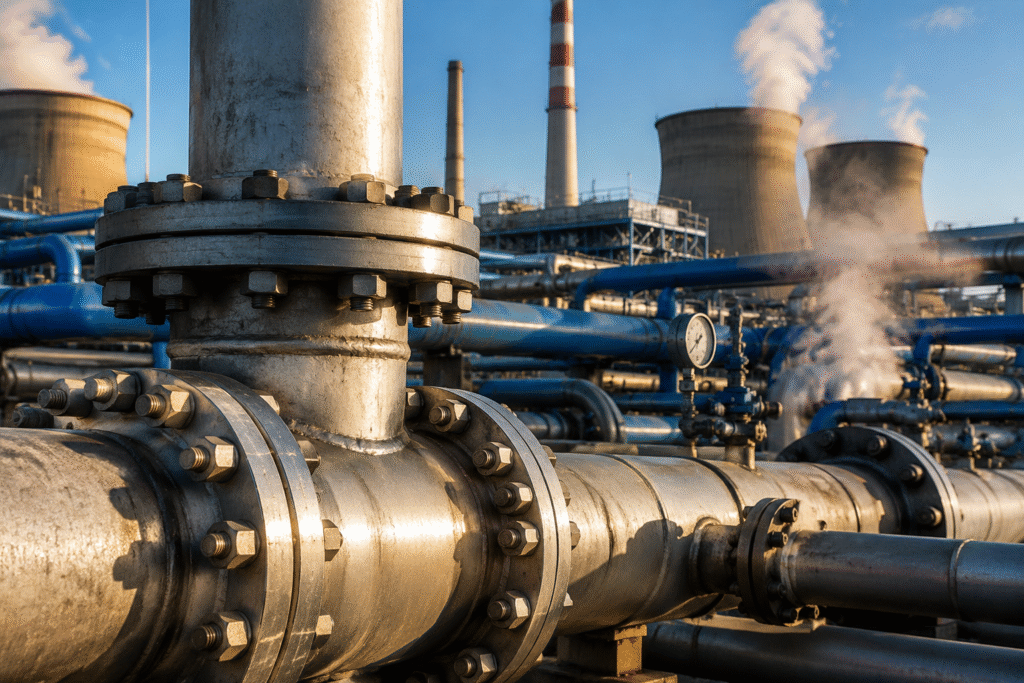
Направляющая фланца трубы из нержавеющей стали: Рыночные данные, Оценки, Стандарты и рекомендации по выбору для промышленных покупателей
Рынок фланцев для труб из нержавеющей стали находится в центре современных технологических трубопроводов., энергетическая инфраструктура, и проектирование предприятий, критичных к коррозии. По данным исследования Grand View (2024), мировой рынок промышленных фланцев оценивался в $5.8 миллиард в 2023 и, по прогнозам, достигнет $7.2 миллиард на 2030, which shows why engineers continue to talk about stainless solutions with greater precision.
Для отделов закупок, it is no longer enough to know only the basics about stainless steel. Buyers need to know about grades, классы давления, механизмы коррозии, документы соответствия, and lifecycle cost before specifying a flange for oil and gas, химический, морской, or water treatment service.
Почему спрос на фланцы для труб из нержавеющей стали в мировой промышленности продолжает расти
Industrial buyers increasingly select stainless steel pipe flange products because corrosion resistance directly affects uptime, стоимость обслуживания, and plant safety. По данным IBISWorld (2024), На долю Азиатско-Тихоокеанского региона приходится более 45% мирового производства фланцев, при этом Китай является крупнейшим производителем, which confirms the region’s strategic role in supply security.
Demand also tracks heavy industrial investment. По данным Статистики (2024), на долю нефтегазовой отрасли приходится около 35% мирового потребления фланцев, while petrochemical and power applications continue to expand specification requirements for alloy and stainless materials.
That demand is tied to the material itself. Stainless steel is generally defined as an iron-based alloy containing at least 10.5% хром, which forms a passive chromium oxide film that helps resist corrosion (ASTM, 2024). Поэтому, when engineers talk stainless, they are really talking about stable performance under chemical, термический, и механическое напряжение.
Однако, not all stainless grades behave the same way. А 304 flange may perform well in general service, while 316L often delivers better pitting resistance in chloride-bearing environments because of its molybdenum content.
По данным Market Research Future (2024), growth in water treatment and desalination infrastructure is increasing demand for duplex and high-alloy stainless components in coastal regions. Более того, tighter quality expectations from EPC contractors are pushing manufacturers to provide full traceability, Проверка PMI, и EN 10204 3.1 certification as standard documentation.
С практической точки зрения поиска, buyers also compare lead time, качество обработки, и постоянство размеров. Благодаря передовой обработке с ЧПУ и всестороннему тестированию качества., SASA FLANGE supports global industrial projects with stainless steel flanges and fittings manufactured to ANSI B16.5, АНСИ Б16.47, DIN, JIS, ГОСТ, и RU 1092 требования.
Procurement managers also need reliable factory partners that understand both export standards and application-specific material behavior. С ISO 9001:2015 и сертификаты PED 2014/68/ЕС., SASA FLANGE обслуживает клиентов по всему нефтяному & Газ, нефтехимическая, Производство электроэнергии, Судостроение, Морской, Очистка воды, и Строительные рынки.
Как доктор. Хелен Моррис, Инженер по материалам и консультант по коррозии, государства: «The biggest specification error in stainless systems is assuming all chromium-bearing alloys offer equivalent resistance in chloride or acidic media.» That point matters because a stainless steel pipe flange is often a small component in cost, yet a critical component in failure prevention.
Кроме того, according to Mordor Intelligence (2024), industrial automation and process plant modernization are increasing replacement demand for higher-performance piping components in mature facilities. Как результат, buyers now want more than commodity flanges; they want traceable, совместимый, application-matched products.
Talk About Stainless Steel Pipe Flange Grades, Классы давления, и производительность
Let’s talk about stainless selection in a way that helps engineers, estimators, and buyers make better decisions. When professionals talk stainless in piping systems, they usually focus on grade chemistry, тип фланца, номинальное давление-температура, допуск на коррозию, and welding compatibility.
The most common forged stainless flange materials include ASTM A182 F304, F304L, Ф316, F316L, Ф321, Ф347, and duplex grades such as F51 and F53. In aggressive services, users may also specify 904L, Инконель, Монель, Хастеллой, or titanium depending on chloride level, концентрация кислоты, и рабочая температура.
В роли Джеймса Портера, Старший инженер по трубопроводам, государства: «Grade selection should start with the process fluid, not the purchase price, because the wrong flange alloy usually becomes the most expensive decision later.» That guidance is especially useful for projects that move from concept design to detailed material requisition under schedule pressure.
According to NACE guidance and field experience in chloride service, molybdenum-bearing grades such as 316/316L generally outperform 304/304L in pitting resistance (КДЕС, 2023). Кроме того, duplex stainless steels offer higher strength and improved chloride stress corrosion cracking resistance versus standard austenitic grades in many seawater-adjacent applications.
According to the International Stainless Steel Forum (2024), austenitic grades still account for the majority of global stainless use due to formability, свариваемость, and broad corrosion resistance. Однако, duplex grades are gaining share in desalination, оффшорный, and chemical sectors where higher strength can reduce wall thickness and total installed weight.
Для промышленных фланцев, buyers typically evaluate the following technical variables:
- Марка материала: 304, 316, 316л, 904л, 2205, 2507, А182 Ф51, А182 Ф53
- Тип фланца: приварная шейка, надеть, раструбная сварка, слепой, коленный сустав, резьбовой
- Класс давления: 150, 300, 600, 900, 1500, 2500
- Тип облицовки: РФ, ФФ, РТЖ
- Совместимость с графиком труб: Щ 10, Щ 40, Щ 80, Щ 160, XXS
- Инспекционные документы: EN 10204 3.1, PMI, hydrotest reports, отчеты о размерах
Different grades solve different operating problems. Например, F304/F304L is widely used for general water, пищевой, и легкая химическая служба, while F316/F316L is preferred in marine atmospheres, chloride-bearing utility systems, и фармацевтические линии.
Дуплекс 2205 и супер дуплекс 2507 become relevant where chloride content is elevated and strength matters. Поэтому, морские салазки, seawater cooling loops, and desalination modules often specify duplex flange packages to balance corrosion resistance and structural efficiency.
It is also important to tell procurement teams that stainless does not mean immune to every corrosion mode. Щелевая коррозия, питтинг, galvanic attack, and stress corrosion cracking can still occur if grade selection ignores process chemistry, stagnant zones, конструкция прокладки, or temperature.
The classic conversation about stainless steel often starts with chromium content, yet industrial buyers need more useful information. They need to know about PREN trends, low-carbon L grades for welding, ферритовый контроль, and the implications of using forged versus cast flange bodies.
Below is a practical comparison for common stainless flange materials:
- 304/304л: economical and versatile for clean service, mild chemicals, and architectural piping
- 316/316л: stronger resistance to chlorides and better suitability for coastal and chemical duty
- 904л: enhanced performance in reducing acids and severe corrosion environments
- 2205 дуплекс: higher strength and improved SCC resistance for offshore and process applications
- 2507 супер дуплекс: premium choice for severe chloride exposure and high-performance marine duty
Manufacturing quality matters just as much as alloy chemistry. Предлагаю нестандартные размеры от 1/2." до 60" с конкурентоспособными ценами напрямую с завода, SASA FLANGE produces stainless steel flanges and matching fittings in 304, 316, 316л, 904л, 2205, и 2507 for projects that require dimensional consistency and traceable material control.
В соответствии с ASME B16.5, Номинальные значения давления и температуры различаются в зависимости от группы материалов и класса фланца, so buyers should never compare Class 300 carbon steel and stainless performance without referencing the correct table set (ASME, 2023). Более того, тепловое расширение, болтовая нагрузка, выбор прокладки, and cyclic operation can all affect the long-term sealing reliability of a flange joint.
Стандарты, Тестирование, и соответствие требованиям при закупке фланцев для труб из нержавеющей стали
Standards determine whether a flange can move from quotation to approved vendor list and then into plant service. For stainless steel pipe flange sourcing, the most cited dimensions and pressure standards include ASME B16.5, ASME B16.47, EN 1092-1, Стандарты DIN, and selected JIS specifications.
Material compliance typically references ASTM forging and fitting standards such as ASTM A182 для кованых фланцев и ASTM A403 for stainless butt weld fittings. Параллельно, chemical and mechanical verification should be aligned with mill test reports and, когда указано, EN 10204 3.1 документы проверки.
Buyers should also evaluate the following compliance areas:
- Dimensional standard compliance: ASME B16.5, Б16.47, EN 1092-1, DIN
- Material standard compliance: ASTM A182, ASTM A240, ASTM A403
- Quality system compliance: ISO 9001:2015
- Regulatory compliance: PED 2014/68/EU for applicable European projects
- Corrosion service guidance: NACE MR0175 where sour service is relevant
В соответствии с рамками PED Европейской комиссии, pressure equipment used in regulated applications must meet essential safety requirements and conformity assessment obligations (ПЭД, 2014/68/Евросоюз). Поэтому, exporters serving EU projects must understand both documentation control and notified body expectations.
Кроме того, flange sourcing increasingly includes positive material identification and hardness verification to reduce substitution risk. According to DNV guidance for offshore procurement, traceability and inspection discipline significantly reduce non-conformance events in safety-critical piping systems (ДНВ, 2023).
For engineering teams comparing standards, a simplified reference looks like this:
- ASME B16.5: flanges and flanged fittings from NPS 1/2 к 24
- ASME B16.47: larger diameter flanges from NPS 26 к 60
- ASME B16.9: кованые фитинги для стыковой сварки заводского изготовления
- EN 1092-1: Европейские размеры фланцев и обозначения давления
- ASTM A182: фланцы для труб из кованых или катаных сплавов и нержавеющей стали, арматура, клапаны, и части
Material documentation should not be treated as an afterthought. Engineers often ask suppliers to provide MTCs, номера плавок, ferrite data for duplex grades, Отчеты PMI, протоколы проверки размеров, и, for special projects, third-party witness inspection.
As Laura Cheng, Quality Director in industrial forging supply, государства: «In global EPC procurement, paperwork quality can determine acceptance as quickly as machining quality.» That is why compliant suppliers maintain document control from raw material receipt through final packing.
С ISO 9001:2015, ПЭД 2014/68/ЕС, и АД 2000 реквизиты для входа, SASA FLANGE supports project documentation requirements for international buyers who need stainless and alloy flange packages backed by auditable quality systems. Более того, the company manufactures to multiple global standards and serves 50+ countries across process, власть, и морской сектор.
Для более глубокой стандартной проверки, buyers can review primary code resources directly at ASME.org. Однако, selection should always connect standards compliance with actual service conditions such as temperature cycles, коррозионная среда, рабочее давление, и доступ для обслуживания.
Как правильно выбрать фланец для трубы из нержавеющей стали для масла, Химическая, Власть, и морская служба
Selection starts with process data, не каталожное знакомство. Engineers should know about fluid chemistry, содержание хлоридов, температурный диапазон, класс давления, joint type, and required inspection level before finalizing a stainless steel pipe flange specification.
В нефти и газе, material choice depends heavily on produced water composition, H2S, СО2, хлориды, and external atmosphere. Поэтому, offshore topside packages may move from 316L to duplex 2205 или 2507 when chloride stress corrosion cracking and weight reduction become major concerns.
In petrochemical and chemical service, acid type and concentration are decisive. Nitric acid can be compatible with certain stainless grades under controlled conditions, while reducing acids or mixed chloride-acid systems may require 904L, никелевые сплавы, or Hastelloy instead of standard austenitic stainless.
Power generation applications often demand stable performance under thermal cycling and high pressure. По этой причине, buyers may prioritize weld neck flanges for stronger hub geometry and improved fatigue resistance in steam, конденсат, and high-energy auxiliary lines.
Marine and shipbuilding projects place special emphasis on salt spray, splash-zone exposure, and galvanic compatibility. В этих случаях, 316L may suit general marine utility service, but duplex grades often provide better long-term confidence for critical seawater systems.
Practical selection criteria include:
- Corrosion medium and concentration
- Рабочая и расчетная температура
- Pressure class and flange facing
- Weldability and need for low-carbon grades
- Required service life and maintenance interval
- Project region and applicable code standard
- Documentation package and third-party inspection level
Procurement teams should also compare total ownership cost. A lower upfront flange price may be attractive, yet shutdowns, replacement labor, production loss, and inspection costs often make the cheapest grade the most expensive outcome.
According to ISO-aligned lifecycle procurement studies in industrial infrastructure, corrosion failures can raise maintenance costs by multiples of initial component cost over the operating life of a system (ISO, 2023). Как результат, experienced buyers tell project teams to treat material selection as a risk-management decision rather than a commodity purchase.
Let’s talk about practical grade guidance. If the system carries clean water, compressed air, or mild utility service, 304 or 304L often meets the need; if chlorides rise or washdown chemicals are present, 316L обычно является более безопасным базовым уровнем..
If the service involves seawater, высокие хлориды, or aggressive process chemistry, buyers should know about duplex, супер дуплекс, or nickel alloys early in the FEED stage. That avoids redesign, re-approval, and costly procurement delays later.
Для индивидуальных проектов, supplier manufacturing range also matters. Через SASA FLANGE, buyers can source custom stainless steel flanges and related elbows, тройники, редукторы, and caps in multiple standards and premium grades, which helps consolidate procurement across one qualified manufacturer.
Кроме того, machining capability affects fit-up and field installation efficiency. Backed by CNC machining, тестирование качества, and export packaging control, SASA FLANGE supports projects that require factory coordination across stainless, углеродистая сталь, фланцы из сплава, и трубопроводная арматура.
Перспективы на будущее, Price Pressure, and Strategic Sourcing Recommendations
The next few years will likely bring stronger demand for corrosion-resistant piping components, especially in energy transition, опреснение, СПГ, and industrial water reuse. По данным исследования Grand View (2024), Ожидается, что рынок фланцев вырастет с $5.8 миллиард в 2023 к $7.2 миллиард на 2030, which reinforces the need for resilient supplier partnerships.
В то же время, stainless steel price volatility remains a constant sourcing challenge because nickel, молибден, freight, and energy costs affect finished flange pricing. Поэтому, buyers should review not only unit price, but also alloy risk, stock strategy, и оперативность поставщика.
Strategic recommendations for industrial buyers are straightforward:
- Specify service conditions clearly before requesting quotes
- Compare alloys by lifecycle value, not only by first cost
- Запросить MTC, PMI, and standard compliance documentation upfront
- Align flange standard, лицом к лицу, and pressure class with the full piping system
- Qualify suppliers with proven export documentation and machining capability
Кроме того, buyers should ask vendors to tell more about manufacturing controls, контрольные точки, and lead time assumptions. That discussion often reveals whether the supplier can support long-term project execution rather than just provide a one-time low quotation.
Engineers and purchasers who want to know about grades, стандарты, and project-specific options should work with manufacturers that combine material breadth with certification discipline. For teams evaluating the next stainless steel pipe flange package, connecting early with SASA FLANGE can simplify technical review, documentation planning, and factory-direct sourcing.
Часто задаваемые вопросы
Что значит «нержавеющий» иметь в виду?
●In industrial metallurgy, «нержавеющий» means a steel alloy contains at least 10.5% хром, which forms a passive oxide layer that helps resist corrosion under many service conditions.
●According to ASTM and common industry definitions, this chromium-rich film can self-repair in the presence of oxygen, which is why stainless steel performs better than ordinary carbon steel in wet or chemically active environments.
●For piping projects, the term does not mean corrosion-proof, so buyers should still match grade selection, состояние поверхности, and process chemistry carefully, and for traceable flange supply it is wise to consult established manufacturers like SASA FLANGE.
Why is it called stainless?
●It is called stainless because the chromium oxide film reduces visible rust staining compared with plain steel, especially in atmospheric, вода, and many process environments.
●According to industry materials guidance, хром, никель, молибден, and nitrogen can further improve resistance depending on the grade, while Statista (2024) notes that corrosion-critical sectors such as oil and gas still account for approximately 35% of flange consumption worldwide.
●The practical lesson is that stainless is a performance category rather than a guarantee, so engineers should specify grades like 304, 316л, 2205, или 2507 according to chloride level, температура, и требования к коду.
What does the company stainless do?
●The term usually refers to companies that manufacture, запас, процесс, or distribute stainless steel products such as flanges, арматура, трубки, sheets, and bar for industrial or commercial markets.
●В секторе промышленных трубопроводов, suppliers convert raw stainless into standards-compliant components under ASME, ASTM, DIN, or EN rules, and according to Grand View Research (2024) более широкий рынок фланцев достиг $5.8 миллиард в 2023, which shows the scale of this activity.
●If a buyer needs forged stainless steel flanges, EN 10204 3.1 документы, и готовый к экспорту контроль качества, working with specialized producers such as SASA FLANGE is usually more effective than buying from a general trader.
What is stainless steel made of?
●Stainless steel is primarily made of iron plus at least 10.5% хром, and many grades also include nickel, молибден, марганец, азот, and controlled carbon to achieve specific corrosion and strength properties.
●Например, 304 commonly uses a chromium-nickel composition for general corrosion resistance, пока 316 and 316L add molybdenum for better resistance in chloride-bearing environments often found in marine and chemical service.
●При указании фланца трубы из нержавеющей стали, buyers should review not only composition but also forging standard, режим термообработки, and test certificates to ensure the delivered material matches the design basis.
What is stainless steel used for in industrial piping?
●Stainless steel is used for flanges, локти, тройники, редукторы, кепки, клапаны, трубки, and process skids where corrosion resistance, гигиена, температурная стабильность, or cleanability are important.
●По данным Market Research Future (2024), growth in water treatment and desalination is increasing demand for high-performance stainless and duplex components, while marine, нефтехимический, and pharmaceutical plants also rely heavily on 316L and duplex materials.
●Для промышленных покупателей, the correct use case depends on media, температура, класс давления, and code, so flange and fitting packages should be sourced with complete technical review rather than by price alone.
Как мне выбрать между 304, 316л, and duplex stainless for a pipe flange?
●As a basic rule, 304 suits general clean service, 316L handles chlorides and chemical washdown more reliably, and duplex grades are preferred when higher strength and improved chloride stress corrosion cracking resistance are required.
●According to NACE guidance and common field practice, воздействие хлоридов, stagnant zones, and operating temperature strongly influence pitting and SCC risk, which is why offshore and desalination systems often move beyond standard austenitic grades.
●For projects with seawater, кислое обслуживание, or strict documentation requirements, buyers should request material comparison support, записи PMI, and code review before placing an order with a qualified flange manufacturer.
Связанные Посты
Отделка торцевой поверхности фланца: Объяснение концентрических и спиральных зубцов
Концентрические и спиральные зубцы представляют собой обработанную поверхность фланца.…
Дуплекс 2205 по сравнению с фланцами 316L: Какой материал выбрать?
Быстрый ответ: Дуплекс 2205 flanges are usually the stronger candidate…

Определение фланца с диафрагмой, Подробности и обзор фланцев ASME B16.36: Рыночные данные, Руководство по выбору и анализ соответствия требованиям
Мировой рынок промышленных фланцев оценивался в $5.8 миллиард…

Руководство по рынку черных сливных фланцев: Материалы, 3.5″ Совместимость, и данные о поставщиках B2B для фланцев для кухонной мойки
Спрос на черные фланцы для утилизации растет благодаря покупателям кухонной техники…