
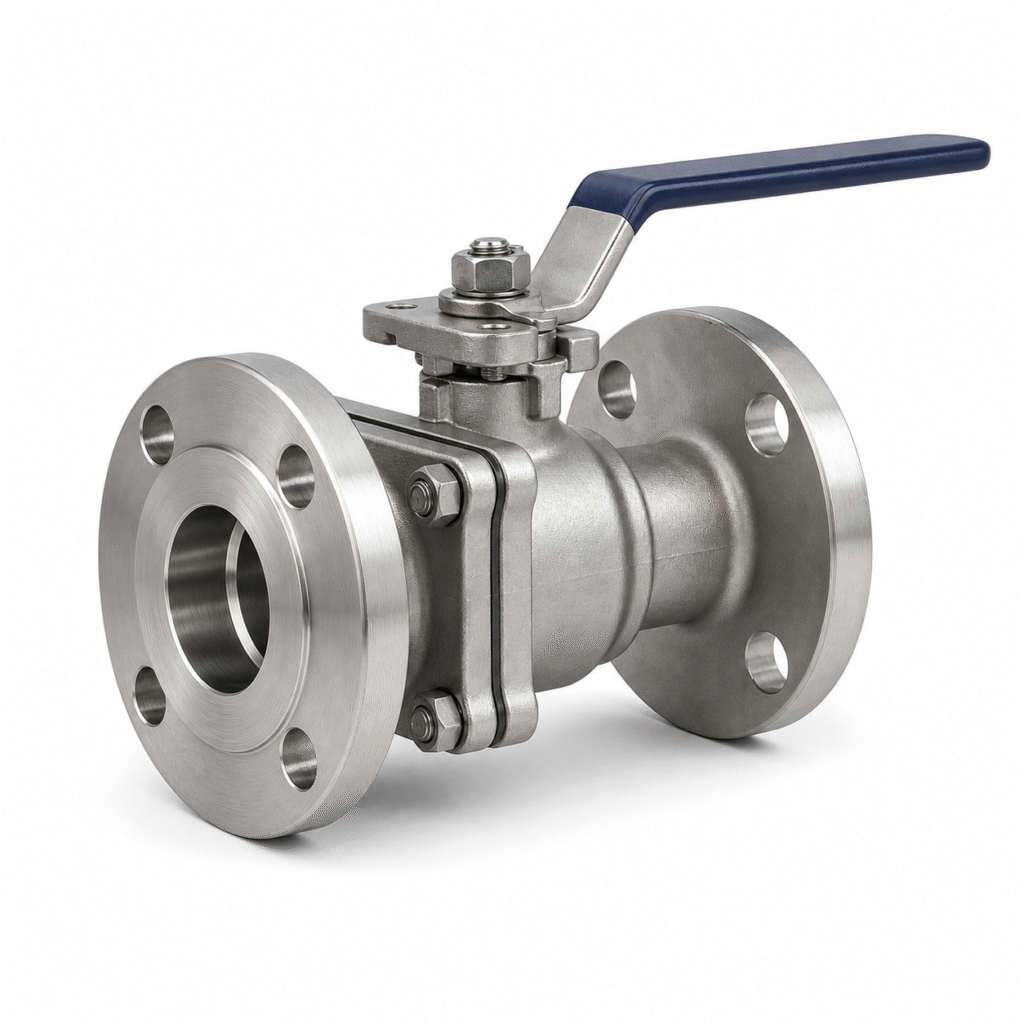
Yüksek Kaliteli ve Düşük Kaliteli Valf Gövdeleri: Temel Farklılıklar
Doğrudan cevap
A high-quality valve body uses verified material, controlled casting or forging, accurate machining and documented inspection to maintain pressure-boundary integrity under its specified service conditions. A low-quality body may look acceptable from the outside yet contain material substitutions, porosity, kapanımlar, cracks or dimensional errors that raise the risk of leakage, deformation and premature failure.
In oil and gas, kimyasal işleme, power generation and other demanding industries, the valve body is the principal pressure-containing part of a valve. It supports the bonnet or cover, contains the internal trim and connects the valve to the piping system. Its quality directly influences safety, operating stability, maintenance frequency and lifecycle cost.
Comparing a high-quality valve body with a low-quality alternative therefore requires more than checking price, weight or surface finish. Buyers should evaluate the complete evidence package: material identity, üretim rotası, ısıl işlem, basınç derecesi, dimensional conformity, nondestructive examination, pressure-test records and traceability.
Temel çıkarımlar
- Material certificates and heat-number traceability are more reliable than appearance alone.
- Pressure-boundary quality and closure tightness are related but separate acceptance questions.
- A higher purchase price can produce a lower total cost when it prevents leaks, shutdowns and early replacement.
- The valve must comply with the exact product standard, design basis and project specification stated in the purchase order.
High-quality vs low-quality valve bodies at a glance
| Evaluation point | High-quality valve body | Low-quality valve body | Operational consequence |
|---|---|---|---|
| Malzeme | Specified grade with verified chemistry, properties and heat traceability | Unverified, substituted or recycled feedstock with inconsistent properties | Corrosion, cracking or loss of pressure capability |
| Üretme | Controlled casting, forging, heat treatment and machining | Poor process control, rough machining or concealed repairs | Porosity, kapanımlar, distortion and dimensional mismatch |
| Sealing interfaces | Accurate seat pockets, gasket faces and body-bonnet geometry | Rough, misaligned or unstable interfaces | Seat leakage or external leakage |
| Pressure and temperature | Rated and tested to the specified standard and service envelope | Unsupported rating claims or incomplete testing | Deformation, leakage or pressure-boundary failure |
| Dokümantasyon | MTC, inspection records, test reports and permanent marking | Generic certificates, missing records or broken traceability | Uncertain compliance and difficult root-cause analysis |
| Lifecycle cost | Predictable maintenance and longer reliable service | Frequent repair, shutdown or early replacement | Higher total ownership cost |
1. Material quality and manufacturing process
A quality valve body begins with the correct material specification. Carbon steel, paslanmaz çelik, low-alloy steel, duplex stainless steel and nickel alloys each have different strength, corrosion, temperature and fabrication characteristics. The best material is not simply the most expensive grade; it is the material approved for the process medium, design pressure, design temperature and damage mechanisms.
For cast bodies, foundry controls should address melting practice, pouring temperature, mold quality, solidification and heat treatment. Visual appearance cannot reveal internal shrinkage, gaz gözenekliliği, nonmetallic inclusions or hot tears. Critical castings may therefore require radiographic or ultrasonic examination in addition to surface examination. For forged bodies, the forging reduction, grain flow, heat treatment and machining route affect soundness and mechanical performance.
Low-quality bodies may use an incorrect grade, mixed scrap or poorly controlled heat treatment. They can also contain weld repairs that were not qualified, documented or approved. Even when a body passes a basic chemistry check, it may still have unacceptable mechanical properties, microstructure or internal defects. Material identification is one part of verification, not the entire quality decision.
2. Sealing performance depends on body accuracy
Valve leakage is often discussed as a seat or packing problem, but body geometry is fundamental. Seat pockets, guide surfaces, body-bonnet joints, cover gasket lands and stem alignment must be machined within the specified tolerances. If these interfaces are rough, distorted or out of alignment, even good trim and gaskets may not deliver stable sealing.
A high-quality body supports repeatable assembly and maintains alignment as pressure and temperature change. Surface finish and dimensional inspection should match the design drawing and applicable standard. Closure testing then checks the completed valve’s seat tightness, while shell testing evaluates the pressure boundary. One test should not be presented as proof of the other.
On a low-quality valve, initial leakage may be hidden by excessive tightening, temporary sealant or an optimistic test record. In service, termal bisiklet, vibration, corrosion and fluid erosion can expose the underlying misalignment or weak material. The result may be internal bypass, fugitive emissions or an external leak with safety and environmental consequences.
3. Pressure and temperature capability
A credible pressure rating comes from the valve design, body material group, duvar kalınlığı, end connection, temperature and governing standard considered together. A class or PN designation is not a universal pressure value. As operating temperature changes, the available pressure rating may also change.
High-quality valves are tested under a documented procedure using calibrated equipment, suitable test fluid, defined hold time and acceptance criteria. ASME B16.34 addresses pressure-temperature ratings and other construction requirements within its scope, sırasında API 598 Ve ISO 5208 are commonly referenced for valve inspection and pressure testing. The purchase order must identify the applicable standard, edition and any project-specific additions.
The frequently repeated claim that every valve body must be tested at exactly 1.5 times its rated pressure is too broad. Test pressure depends on the applicable valve standard, malzeme, rating basis and test type. Buyers should request the actual test procedure and report instead of accepting an unsupported multiplier or a vague “hydro tested” statement.
4. Service life, reliability and total ownership cost
A properly selected and manufactured valve body can provide many years of reliable service, but no responsible supplier should promise a universal lifespan. Corrosion rate, erosion, fatigue cycles, creep exposure, thermal shock, vibration, operating frequency and maintenance quality all affect durability.
High-quality bodies are designed with appropriate wall thickness, transition geometry and corrosion allowance where required. Controlled heat treatment and defect acceptance reduce the chance of early cracking or distortion. Complete records also make future inspection and maintenance decisions more reliable.
Low-cost bodies sometimes appear economical because the initial purchase price is visible while the risk cost is hidden. A leaking or seized valve can require scaffolding, isolation, decontamination, iş gücü, spare parts and lost production. In continuous-process plants, even one unplanned shutdown can exceed the price difference between qualified and questionable equipment.
Total ownership cost should therefore include inspection, installation, energy loss, maintenance, downtime, environmental exposure and replacement—not only the supplier’s quotation. A high-quality valve body creates value by making performance more predictable across the operating life of the system.
5. Why valve body quality matters in real applications
Safety in hazardous service
In flammable, toxic, high-pressure or corrosive service, pressure-boundary integrity is a primary safeguard. A sound body, correctly selected material and verified body-bonnet joint help reduce the likelihood of loss of containment. Fire-safe or fugitive-emission claims, where required, must apply to the tested valve configuration rather than the body material alone.
Reliability in continuous production
Refineries, chemical plants and power stations often depend on valves that remain available between planned turnarounds. Dimensional stability, corrosion resistance and traceable manufacturing reduce the probability of sticking, leakage and emergency maintenance. Reliable valve performance also helps the wider process control and isolation strategy function as intended.
Compliance and auditability
Conformity is more than printing API, ASME, ISO or GB/T on a nameplate. The valve should match the specific product standard, malzeme özellikleri, basınç sınıfı, end connection, test requirement and project data sheet. A complete quality dossier allows the purchaser, inspector and operator to confirm what was supplied and how it was accepted.
How to evaluate valve body quality before purchase
- Define the service: state the medium, design and operating pressure, temperature range, corrosion allowance, cycling and applicable line class.
- Specify the body material completely: include the material standard, exact grade, ürün formu, heat treatment and any sour-service or low-temperature requirements.
- Confirm the manufacturing route: identify cast, forged or fabricated construction and require approval for repairs or deviations where appropriate.
- Review traceability: match the heat number and permanent marking to the material test certificate and manufacturing records.
- Set inspection requirements: define visual, dimensional, surface and volumetric examination based on the valve type, material and service criticality.
- Verify pressure testing: request the applicable standard, calibrated gauge records, test pressure, duration, medium and acceptance result.
- Check the complete valve: body quality does not compensate for unsuitable trim, seats, stem, packing, cıvatalama, actuator or end connections.
- Evaluate the supplier: review manufacturing capability, kalite yönetimi, previous performance and responsiveness to technical questions.
Warning signs include a certificate that cannot be tied to the body marking, a rating without a stated design standard, reluctance to disclose the manufacturing route, unusually low weight, unexplained weld repairs and a price that cannot support the specified inspection plan.
Sık sorulan sorular
Can visual inspection identify a high-quality valve body?
Visual inspection can find surface cracks, poor finish, damaged flange faces, irregular marking and some repair evidence, but it cannot confirm chemistry, mechanical properties or internal soundness. Documentation and the specified tests are also required.
Is a forged valve body always better than a cast body?
HAYIR. Forging can provide a dense worked structure, while casting enables complex and large shapes. A qualified cast body may be entirely suitable. The decision depends on the valve design, boyut, malzeme, service, inspection level and governing standard.
Does a pressure test prove the valve will never leak?
HAYIR. A pressure test verifies defined acceptance criteria at the test conditions. It does not guarantee future performance under corrosion, termal bisiklet, vibration, erosion, incorrect installation or operation outside the design envelope.
Why can a premium valve have a lower lifecycle cost?
Reliable construction can reduce unplanned maintenance, leakage, production loss and replacement frequency. Lifecycle evaluation should consider the consequence of failure and operating cost as well as purchase price.
Explore related industrial valve products
Compare body materials, valve construction, basınç sınıfı, end connections, seats, trim and inspection requirements against your project data sheet before requesting a quotation.
Paslanmaz Çelik Yüzer Küresel VanaPaslanmaz Çelik Kamalı Sürgülü Vana
İlgili Mesajlar
ASTM A182 F51 vs F60 Flanşlar: S31803 ve S32205'in Açıklaması
ASTM A182 F51 ve F60 dubleks flanşları karşılaştırın, S31803/S32205 dahil…
UNS S32750 ve S32760 Flanşları: ASTM A182 F53 veya F55?
S32750 ve S32760 süper dubleks flanşları karşılaştırın, ASTM A182 dahil…

ASME Sınıfıyla PN16 Flanş Montajı Yapılabilir mi? 150 Vana?
PN16 flanş cıvatası ASME Sınıfı 150'ye bağlanabilir mi?…
TR 1092-1 ASME Yükseltilmiş Yüz Flanşlı Tip B1/B2 Mate?
TR 1092-1 B1 veya B2 tipi eş ile…