
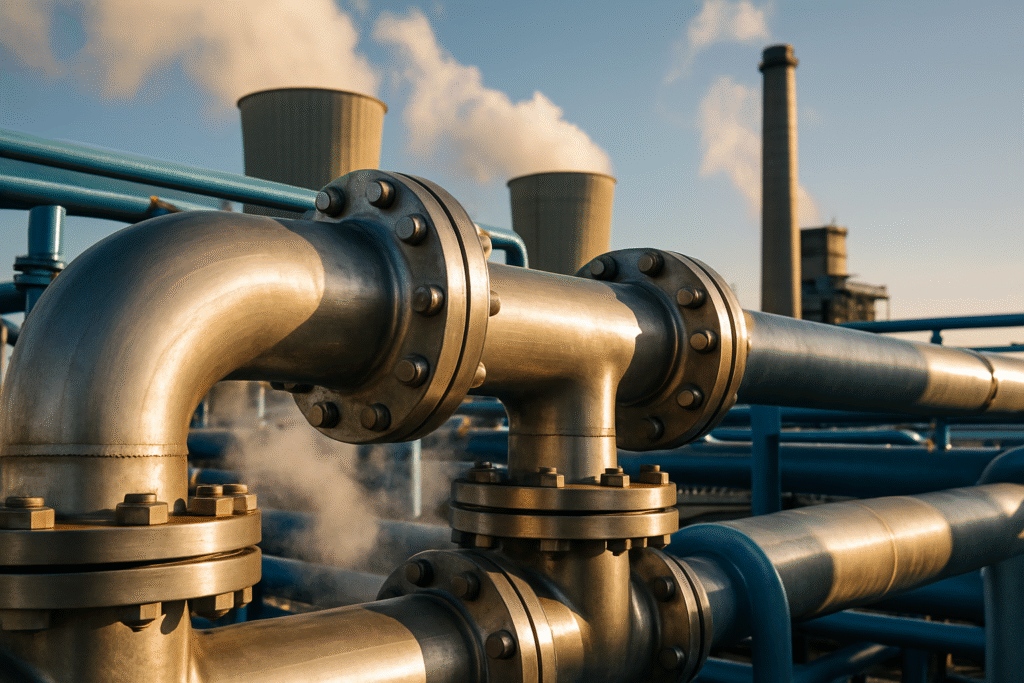
Paslanmaz Çelik Boru Flanş Pazarı 2024: Gizli Avantajlar, Türler, Kullanım Alanları, ve Farklı Flanşlar Nasıl Seçilir?
Grand View Araştırmasına göre (2024), küresel endüstriyel flanş pazarı şu şekilde değerlendi: $5.8 milyar 2023 ulaşılması öngörülüyor ve $7.2 milyar tarafından 2030. That growth is one reason the stainless steel pipe flange remains a critical component for industrial use, especially where reliability, korozyon direnci, and code compliance drive procurement decisions.
Mühendisler ve alıcılar için, the hidden advantages of stainless steel pipe flange selection go beyond corrosion performance alone. Farklı flanş tipleri, basınç sınıfları, alloys, and manufacturing controls directly affect lifecycle cost, kapanma riski, and long-term pipe system safety.
Why the Stainless Steel Pipe Flange Market Keeps Expanding Across Industrial Sectors
Industrial demand for stainless steel pipe flange products continues to rise because operators need longer service life in aggressive media. Statista'ya göre (2024), Petrol ve gaz endüstrisi yaklaşık olarak 35% küresel flanş tüketiminin, which shows how strongly energy projects shape flange demand.
Dahası, regional manufacturing concentration matters for sourcing strategy. IBISWorld'e göre (2024), Asya-Pasifik'in hesapları 45% küresel flanş üretimi, Çin'in en büyük üretici olduğu.
That production scale gives buyers wider access to ASTM A182 forged stainless grades, larger size ranges, and shorter replenishment cycles. Fakat, procurement teams still need to verify traceability, ısıl işlem kontrolü, PMI testi, and dimensional compliance against ASME B16.5, ASME B16.47, DIN, JIS, GOST, ve TR 1092 gereksinimler.
The stainless steel pipe flange is widely specified in Oil & Gaz, petrokimya, deniz, su arıtma, and power generation because stainless grades perform well in humid, klorür taşıyan, and cyclic-temperature environments. Tersine, lower-cost carbon steel options may require coating systems, more frequent maintenance, or replacement in corrosive duty.
Mordor İstihbaratına göre (2024), industrial processing investments in energy, su altyapısı, and chemicals continue to support steady demand for corrosion-resistant piping components. Öyleyse, buyers increasingly compare total installed cost rather than only initial flange price.
As material engineer Dr. Helen Morris, Korozyon Uzmanı, eyaletler: “The most economical flange is rarely the cheapest forged piece; it is the component that minimizes leakage risk, maintenance exposure, and unplanned shutdown over the asset life.” That view is especially relevant when comparing 304, 316L, 904L, dubleks 2205, ve süper dubleks 2507 for different media.
Pratik açıdan, different flanges serve different mechanical and maintenance priorities. Weld neck flange designs handle severe cyclic service well, slip-on flanges support less critical systems economically, and blind flanges isolate lines safely during testing or maintenance.
Buyers also look beyond material to supplier capability. SASA FLANGE, serving 50+ Petrol genelindeki ülkeler & Gaz, Petrokimya, Güç, ve Denizcilik endüstrileri, supports projects requiring forged stainless steel flanges, alaşım flanşlar, and matching pipe fittings in standards such as ANSI B16.5, ANSI B16.47, ASME B16.9, DIN, JIS, GOST, ve TR 1092.
İle ISO 9001:2015 ve PED 2014/68/EU sertifikaları, manufacturers can better align with documentation-heavy projects in Europe and export markets. Ek olarak, EN 10204 3.1 malzeme sertifikaları, hidrostatik test kayıtları, PMI raporları, and dimensional inspection reports help reduce approval delays.
Kaynak açısından bakıldığında, the hidden advantages of a high-quality stainless steel pipe flange include reduced corrosion allowance, more predictable maintenance planning, stronger resale value of plant assets, and easier compliance with owner specifications. Sonuç olarak, technical procurement teams increasingly prioritize qualified suppliers over spot-price vendors.
Teknik Derinlemesine İnceleme: Intriguing Stainless Steel Pipe Flange Advantages, Türler, ve Malzeme Seçimi
The stainless steel pipe flange family includes many forged and plate-based configurations, each suited to different pipe layouts and pressure classes. Buna göre ASME B16.5, flanş boyutları, bakan türleri, sondaj, and pressure-temperature ratings must match the designated class and material group (ASME, 2023).
In engineering practice, material choice usually begins with media, klorür konsantrasyonu, çalışma sıcaklığı, and expected maintenance interval. Fakat, designers must also consider gasket compatibility, cıvata yükü, external vibration, and whether the joint will be disassembled frequently.
As piping consultant James Ortega, Kıdemli Boru Mühendisi, eyaletler: “Most flange failures begin with a mismatch between service conditions and selection assumptions, not with the forging itself.” Öyleyse, the best way to choose different flanges is to align alloy, karşı karşıya, sınıf, and connection type with the actual process envelope.
Common stainless steel grades used in a stainless steel pipe flange include 304, 304L, 316, 316L, 321, 347, 904L, dubleks 2205, ve süper dubleks 2507. ASTM A182 covers many forged or rolled alloy and stainless steel pipe flanges, dövme bağlantı parçaları, vanalar, ve yüksek sıcaklıkta servis için parçalar (ASTM, 2024).
Among these grades, 304 and 304L are popular for general industrial use because they balance cost, şekillendirilebilirlik, ve korozyon direnci. Tersine, 316 and 316L include molybdenum, which improves pitting resistance in chloride-bearing environments.
For higher chloride content or sour service, duplex and super duplex alloys often provide better strength-to-weight ratio and stronger resistance to stress corrosion cracking. NACE MR0175 Ve ISO 15156 should guide material acceptance for H2S-containing environments where sulfide stress cracking risks increase (NACE, 2023).
- 304/304L: general utility systems, hafif kimyasal servisi, gıda işleme, and indoor water lines.
- 316/316L: deniz, kıyı, ilaç, and chloride-exposed piping.
- 904L: stronger resistance in sulfuric and aggressive chemical environments.
- 2205 dubleks: higher strength and improved chloride stress corrosion cracking resistance.
- 2507 süper dubleks: severe offshore and high-salinity applications.
Different flange types also influence fatigue performance and assembly efficiency. The most common types include weld neck, bağcıksız, kör, soket kaynağı, dişli, ve bindirme bağlantı flanşları.
- Kaynak boyunlu flanş: yüksek basınç için tercih edilir, yüksek sıcaklık, ve döngüsel hizmet.
- Geçmeli flanş: easier alignment and lower fabrication cost for moderate duty.
- Kör flanş: used for line blanking, test, ve bakım izolasyonu.
- Soket kaynak flanşı: common in small-bore, yüksek basınçlı sistemler.
- Dişli flanş: useful where welding is impractical or restricted.
- Bindirme flanşı: supports systems requiring frequent dismantling.
Pazar Araştırması Geleceğine Göre (2024), corrosion-resistant alloys are gaining share in process industries because operators seek longer maintenance intervals and lower leak probability. Üstelik, alloy upgrades can reduce replacement frequency in lines exposed to seawater, kostikler, or mixed chemical streams.
Pressure class is another key variable. İçinde ASME B16.5 sistemler, ortak derecelendirmeler Sınıf'ı içerir 150, 300, 600, 900, 1500, Ve 2500, daha büyük çaplar ise ASME B16.47 Series A or B depending on project specification.
Procurement managers should not assess price by diameter alone. A 4 316L Sınıfında inç paslanmaz çelik boru flanşı 300, RF finish, ile EN 10204 3.1 certification and PMI testing, differs significantly in cost from a 304 slip-on flange of the same nominal size.
Gelişmiş CNC işleme ve kapsamlı kalite testleri ile desteklenmektedir, SASA FLANGE flanşlar üretmektedir 304, 316, 316L, 904L, 2205, 2507, A105, A182, İnkonel, Monel, Hastelloy, ve Titanyum. That range helps EPC contractors consolidate sourcing across both corrosion-resistant and high-temperature alloy systems.
Birçok projede, buyers also need elbows, tişört, redüktörler, and caps from the same source to avoid dimensional mismatch. O zamandan beri ASME B16.9 governs many butt weld fitting dimensions, pairing flanges and fittings from a supplier familiar with the same tolerances simplifies fit-up on site.
ISO'ya göre (2023), quality management discipline lowers nonconformance risk when production, denetleme, and documentation follow controlled procedures. Sonuç olarak, a certified system such as ISO 9001:2015 often matters as much as nominal material grade.
Another hidden advantage of the stainless steel pipe flange is cleanliness. Stainless surfaces are easier to maintain in pharmaceutical, yiyecek, ultra saf su, and high-spec process systems where contamination control matters.
As metallurgist Dr. Aaron Patel, Malzeme Bilimcisi, eyaletler: “Selecting a stainless flange is an exercise in balancing chemistry, metalurji, basınç tasarımı, and fabrication practicality.” That is why experienced manufacturers evaluate not just different flanges, but the whole piping envelope.
Standartlar, Test, and Compliance Requirements for Stainless Steel Pipe Flange Procurement
Compliance is often the difference between a smooth project release and a delayed shipment. For a stainless steel pipe flange, the most referenced standards include ASME B16.5, ASME B16.47, ASTM A182, ASTM A240, EN 1092-1, DIN standartları, and project-specific specifications from API, NORVEÇ, DNV, or end users.
ASME B16.5 covers flanges and flanged fittings for NPS 1/2 başından sonuna kadar 24. ASME B16.47 applies to larger steel flanges from NPS 26 başından sonuna kadar 60, depending on series and pressure class (ASME, 2023).
ASTM A182 addresses forged or rolled alloy and stainless steel components for high-temperature service. ASTM A240, aksine, is usually referenced for chromium and chromium-nickel stainless plate, çarşaf, and strip used for vessels and general applications (ASTM, 2024).
European projects may require EN 1092-1 boyutsal uyumluluk ve PED 2014/68/EU belgeleri. Öyleyse, manufacturers supplying to EU-regulated pressure equipment markets must maintain material traceability and conformity assessment records carefully.
- Boyutsal standartlar: ASME B16.5, ASME B16.47, EN 1092-1, DIN, JIS, GOST.
- Malzeme standartları: ASTM A182, ASTM A240, ASTM A276, customer-approved MDS.
- Test ve dokümantasyon: PMI, sertlik, hidrotest, ferrit kontrolü, intergranular corrosion test, EN 10204 3.1.
- Service-specific requirements: NACE MR0175, ISO 15156, PED 2014/68/AB, Reklam 2000.
Below is a practical comparison used by many buyers during technical review.
| Standart | Main Focus | Tipik Kullanım |
|---|---|---|
| ASME B16.5 | Boyutlar, derecelendirmeler, karşı karşıya | NPS'ler 1/2 ile 24 proses boruları |
| ASME B16.47 | Large diameter flange dimensions | NPS'ler 26 ile 60 boru hatları |
| ASTM A182 | Forged stainless and alloy materials | Forged flange procurement |
| EN 1092-1 | Avrupa flanş boyutları ve PN değerleri | EU projects and PED scope |
| NACE MR0175 | Sour service material suitability | H2S-containing environments |
DNV'ye göre (2023), offshore and marine projects increasingly demand stricter documentation, izlenebilirlik, and corrosion-resistance validation due to lifecycle safety requirements. Ek olarak, many owners request positive material identification for all critical alloy flanges before installation.
When buyers compare different flanges, they should verify both manufacturing and inspection scope. A compliant flange should meet dimensional tolerances, kaplama kaplama, bolt-hole alignment, marking rules, and required test frequency.
İle ISO 9001:2015, PED 2014/68/AB, ve AD 2000 kimlik bilgileri, SASA FLANGE supports projects that require controlled quality systems and export documentation. Flanş imalatı 304, 316, 904L, 2205, 2507 ve diğer birinci sınıf kaliteler, the company serves buyers who need certified materials for energy, su, deniz, ve kimya servisi.
Kritik uygulamalar için, documentation should include heat number traceability, raw material certificates, boyutsal inceleme raporları, Ve EN 10204 3.1 sertifikalar. Dahası, yüzey durumu, tırtıklı bitiş, and flange facing type must match gasket design to ensure leak-tight assembly.
Buyers should also confirm whether the supplier can produce custom sizes from 1/2 inç ila 60 inç, standart dışı sondaj, and special alloy combinations. That flexibility is valuable when revamps must interface with legacy DIN, ANSI, and mixed-spec piping systems.
For formal code reference, engineers can review current requirements at ASME. That step is helpful when project documents cite the latest edition rather than a generic standard name.
Başvuru Kılavuzu: How to Choose Different Flanges for Oil, Gaz, Kimyasal, Güç, ve Deniz Sistemleri
Choosing the right stainless steel pipe flange starts with service conditions rather than catalog habit. Engineers should define pressure, sıcaklık, akışkan kimyası, korozyon payı, bakım sıklığı, and installation method before selecting a type.
Yağda & Gaz, flange selection often prioritizes pressure containment, ekşi servis uygunluğu, and fatigue performance. Öyleyse, weld neck designs in ASTM A182 F316L, F51, or higher-alloy materials are common in upstream, orta akıntı, and refinery process units.
Statista'ya göre (2024), yaklaşık olarak 35% of global flange consumption comes from oil and gas. That share explains why API-aligned project documentation, mill traceability, and NACE compatibility frequently shape purchasing requirements.
Petrokimya ve kimyasal işlemlerde, the hidden advantages of stainless and duplex flanges appear in corrosive media handling. 316L may suit moderate chloride and solvent service, 904L ise, Hastelloy, or duplex alloys are often chosen for stronger acid or mixed-chemistry exposure.
Power generation applications focus on thermal cycling, buhar servisi, ve kapatma güvenilirliği. Sonuç olarak, engineers often specify forged flange materials with stable mechanical properties and verified heat treatment records.
Marine and shipbuilding systems need strong pitting resistance in saline environments. Öyleyse, 316L, 2205 dubleks, Ve 2507 super duplex often outperform standard materials in seawater-adjacent pipe systems, balast hatları, and deck utility services.
- For corrosive water lines, prioritize 316L or duplex over 304 where chlorides are elevated.
- For high-pressure cyclic service, choose weld neck over slip-on whenever design permits.
- For shutdown blinds and hydrotest points, specify blind flanges with correct facing and bolt load.
- For small-bore high-pressure service, evaluate socket weld flanges carefully.
- For maintenance-intensive systems, lap joint assemblies may simplify dismantling.
Procurement teams should also compare fabrication and field installation cost. Although slip-on flanges can reduce initial machining and fit-up complexity, weld neck flanges often provide better long-term performance in demanding service.
Different flange faces affect gasket choice and leak integrity. Yükseltilmiş yüz proses tesislerinde yaygındır, ring type joint is used in higher-pressure critical service, and flat face appears in certain low-pressure or cast equipment connections.
When buyers ask how to choose a pipe flange for industrial use, these criteria usually matter most.
- Material grade and corrosion resistance.
- Basınç sınıfı ve sıcaklık derecesi.
- Flange type and connection method.
- Applicable standards and project approvals.
- Testing scope, sertifikalar, ve izlenebilirlik.
- Kurşun zamanı, Adedi, and logistics capability.
Özel boyutlar sunan 1/2 inç ila 60 rekabetçi fabrika doğrudan fiyatlandırmasıyla inç, SASA FLANGE supports standard and custom production for EPC contractors and distributors. Ek olarak, şirket dirsek tedarik ediyor, tişört, redüktörler, and caps to simplify package procurement for complete pipe systems.
Örneğin, a water treatment plant may use 304L slip-on flanges in non-chlorinated utility lines, while specifying 316L or duplex flanges in higher-chloride process areas. Benzer şekilde, an offshore skid may require 2205 kaynak boyunlu flanşlar, ASME B16.5 Sınıf 600, NACE-compliant, ile EN 10204 3.1 ve PMI kayıtları.
If your project requires mixed materials, özel sondaj, or rapid technical review, iletişim kurmak SASA FLANGE early can shorten approval cycles. Early supplier engagement also helps avoid mismatches between pipe schedule, bore dimension, and flange hub geometry.
Future Outlook for Stainless Steel Pipe Flange Sourcing and Strategic Recommendations for Buyers
The outlook for stainless steel pipe flange demand remains positive because industrial operators continue investing in resilience, korozyon kontrolü, and longer asset life. Grand View Araştırmasına göre (2024), pazarın büyüyeceği tahmin ediliyor $5.8 milyar 2023 ile $7.2 milyar tarafından 2030.
That trend is reinforced by infrastructure modernization, water treatment expansion, and energy transition projects that still require robust pipe connections. Dahası, stricter leakage prevention and documentation expectations favor qualified manufacturers with established testing systems.
IBISWorld'e göre (2024), Asia-Pacific maintains over 45% küresel flanş üretimi, so supply chain strategy should combine cost advantage with quality verification. Öyleyse, buyers should prequalify suppliers based on certification, alloy capability, inspection resources, ve ihracat tecrübesi.
Stratejik olarak, B2B buyers should standardize flange selection logic across sites. A clear matrix for media, sıcaklık, basınç sınıfı, and approved materials reduces engineering variation and simplifies inventory planning.
They should also request lifecycle-based comparisons instead of unit-price-only quotes. Birçok durumda, the hidden advantages of upgraded stainless or duplex flanges include fewer failures, lower coating cost, and reduced downtime exposure.
Recommended actions for procurement and engineering teams include the following.
- Create an approved materials list tied to service conditions and standards.
- Gerekmek EN 10204 3.1 certificates and PMI for critical alloys.
- Boyut standardını onaylayın, bakan tip, and schedule compatibility before PO release.
- Review supplier capability for both flanges and matching ASME B16.9 bağlantı parçaları.
- Assess total cost across maintenance, yenisiyle değiştirme, and outage risk.
For buyers evaluating different flanges, a capable manufacturing partner should offer metallurgical depth, işleme doğruluğu, ve dokümantasyon disiplini. That is why many global projects prefer suppliers that can combine stainless, dubleks, nikel alaşımı, and custom flange production under one controlled system.
For upcoming tenders involving stainless steel flanges and fittings, early technical coordination with an experienced manufacturer can improve bid accuracy and delivery confidence. Sertifikalı malzeme gerektiren projeler için, özel boyutlar, veya dışa aktarmaya hazır belgeler, working with SASA FLANGE pratik bir sonraki adımdır.
Sıkça Sorulan Sorular
Paslanmaz çelik flanşlar ne için kullanılır??
●Boruyu bağlamak için paslanmaz çelik flanşlar kullanılır, vanalar, pompalar, Korozyona dayanıklılık gerektiren sistemlerde ve basınçlı ekipmanlarda, kullanışlılık, and pressure-tight sealing.
●Statista'ya göre (2024), petrol ve gaz hesapları yaklaşık 35% küresel flanş tüketiminin, which shows how common these components are in critical process lines.
●Petrokimya tesislerinde yaygın olarak kullanılırlar., deniz boruları, su arıtma kızakları, food processing systems, and power generation units because grades such as 304, 316L, Ve 2205 handle moisture, kimyasallar, and temperature changes better than many coated carbon steel options.
●Common use points include pump suction and discharge nozzles, tank connections, enstrüman dalları, yardımcı başlıklar, and removable spool joints where maintenance access matters.
●Engineers usually select the flange by matching material, basınç sınıfı, karşı karşıya, and type to the process fluid and piping code, örneğin ASME B16.5 veya TR 1092-1.
●For projects requiring corrosion-resistant forged flanges with EN 10204 3.1 dokümantasyon, gibi yerleşik üreticilerle çalışmak SASA FLANGE helps ensure dimensional consistency and traceability.
Paslanmaz çelik boru bağlantı parçaları yapıyorlar mı?
●Evet, manufacturers make stainless steel pipe fittings such as elbows, tişört, redüktörler, büyük harfler, kaplinler, and stub ends for both welded and threaded piping systems.
●Buna göre ASME B16.9, many butt weld fittings follow standardized dimensions that help maintain fit-up consistency across process piping systems (ASME, 2023).
●These fittings are commonly produced in grades like 304, 304L, 316, 316L, 904L, 2205, Ve 2507, depending on corrosion level, basınç, sıcaklık, ve sahibin özellikleri.
●pratikte, buyers often source flanges and fittings together because mixed suppliers can create tolerance conflicts, weld-end mismatch, or documentation gaps during inspection and site assembly.
●Industries such as petrochemical, deniz, eczacılık, and water treatment typically require stainless fittings where corrosion control, hijyen, or long service life matter more than the lowest initial purchase price.
●For buyers who need coordinated supply of stainless steel flanges and fittings under one quality system, üreticiler beğeniyor SASA FLANGE can simplify procurement and inspection planning.
En güçlü boru flanşı türü nedir?
●Kaynak boyunlu flanş genellikle yüksek basınç için en güçlü boru flanşı türü olarak kabul edilir., yüksek sıcaklık, ve döngüsel hizmet.
●Its tapered hub improves stress distribution between the flange and pipe, which is why it is widely specified in refinery units, açık deniz kızakları, and power plant systems where vibration or pressure cycling is severe.
●ASME B16.5 includes weld neck flanges across multiple pressure classes, Sınıf dahil 150 başından sonuna kadar 2500, and that range supports both moderate and very demanding process conditions.
●Blind flanges can also be very robust for line closure, but they serve a different function because they isolate the end of a piping run rather than connect two piping components.
●Strength still depends on more than flange style because material grade, duvar kalınlığı, cıvata yükü, bakan tip, conta seçimi, and operating temperature all affect joint integrity.
●Kritik uygulamalar için, engineers should verify design conditions and choose forged code-compliant products from experienced suppliers such as SASA FLANGE.
What is the difference between MS flange and SS flange?
●The main difference is that an MS flange is made from mild steel, while an SS flange is made from stainless steel with chromium-based corrosion resistance.
●Stainless steel typically contains at least 10.5% krom, which forms a passive film that helps protect the surface in wet or chemically active environments (ASTM, 2024).
●MS flanges usually cost less at the start, but they often need painting, galvanizleme, or other corrosion protection in outdoor or process service where rusting can occur quickly.
●SS flanges such as 304 or 316L cost more initially, yet they often deliver lower lifecycle cost in marine, kimyasal, hijyenik, and water-treatment systems because they need less maintenance and replacement.
●Another practical difference is cleanliness because stainless steel is often preferred where contamination control, washdown durability, or aesthetic appearance matters.
●For buyers comparing lifecycle performance instead of unit price alone, gibi yerleşik tedarikçiler SASA FLANGE can help evaluate the right option by media, basınç sınıfı, ve proje standardı.
Paslanmaz çelik flanşlar için ASME kodu nedir?
●The most common ASME dimensional code for stainless steel flanges is ASME B16.5, while large-diameter steel flanges are commonly covered by ASME B16.47.
●ASME B16.5 applies to NPS 1/2 başından sonuna kadar 24 and defines dimensions, basınç-sıcaklık değerleri, kaplamalar, toleranslar, and marking for many flanged connections (ASME, 2023).
●Material itself is usually specified separately under ASTM standards, Ve ASTM A182 is one of the most common specifications for forged stainless steel pipe flanges and forged fittings.
●That means a complete purchase order often references both a dimensional standard and a material standard, örneğin ASME B16.5 plus ASTM A182 F316L.
●European projects may instead reference EN 1092-1, and mixed-standard systems must be reviewed carefully because bolt patterns, kalınlık, and pressure ratings may differ.
●For technical procurement, it is best to confirm the latest code edition and project note set with a qualified flange manufacturer before finalizing production.
How do I choose the right stainless steel pipe flange?
●You should choose the right stainless steel pipe flange by matching material grade, flanş tipi, basınç sınıfı, karşı karşıya, and inspection scope to the actual process conditions.
●Grand View Araştırmasına göre (2024), endüstriyel flanş pazarının şu seviyeye ulaşması bekleniyor: $7.2 milyar tarafından 2030, which reflects how much industrial spending depends on reliable and application-specific flange selection.
●Örneğin, 304 genel hizmet hizmetine uygun olabilir, 316L is often preferred for chloride exposure, Ve 2205 veya 2507 may be better for offshore or high-salinity systems where stronger corrosion resistance is required.
●Weld neck flanges are usually chosen for high-pressure or cyclic service, while slip-on and threaded designs may suit less severe duties or installation constraints.
●Buyers should also review ASME B16.5 veya TR 1092-1 uyumluluk, rica etmek EN 10204 3.1 sertifikalar, and confirm pipe schedule compatibility to avoid fit-up errors in fabrication.
●For projects with custom dimensions, özel alaşımlar, veya katı dokümantasyon gereksinimleri, experienced suppliers like SASA FLANGE can provide practical selection support.
İlgili Mesajlar
Flanş Yüzü Kaplaması: Eşmerkezli ve Spiral Tırtıkların Açıklaması
Eşmerkezli ve spiral tırtılların her ikisi de işlenmiş flanş yüzeyidir…
Dubleks 2205 316L Flanşlara Karşı: Hangi Malzemeyi Seçmelisiniz?
Hızlı cevap: Dubleks 2205 flanşlar genellikle daha güçlü adaydır…

Orifis Flanşı Tanımı, Ayrıntılar ve ASME B16.36 Flanşlara Genel Bakış: Piyasa Verileri, Seçim Kılavuzu ve Uyumluluk Bilgileri
Küresel endüstriyel flanş pazarı şu şekilde değerlendi: $5.8 milyar…

Siyah Bertaraf Flanşı Pazar Rehberi: Malzemeler, 3.5″ Uyumluluk, Mutfak Lavabo Flanşları için B2B Kaynak Verileri
Mutfak armatürü alıcıları nedeniyle siyah atık flanş talebi artıyor…