
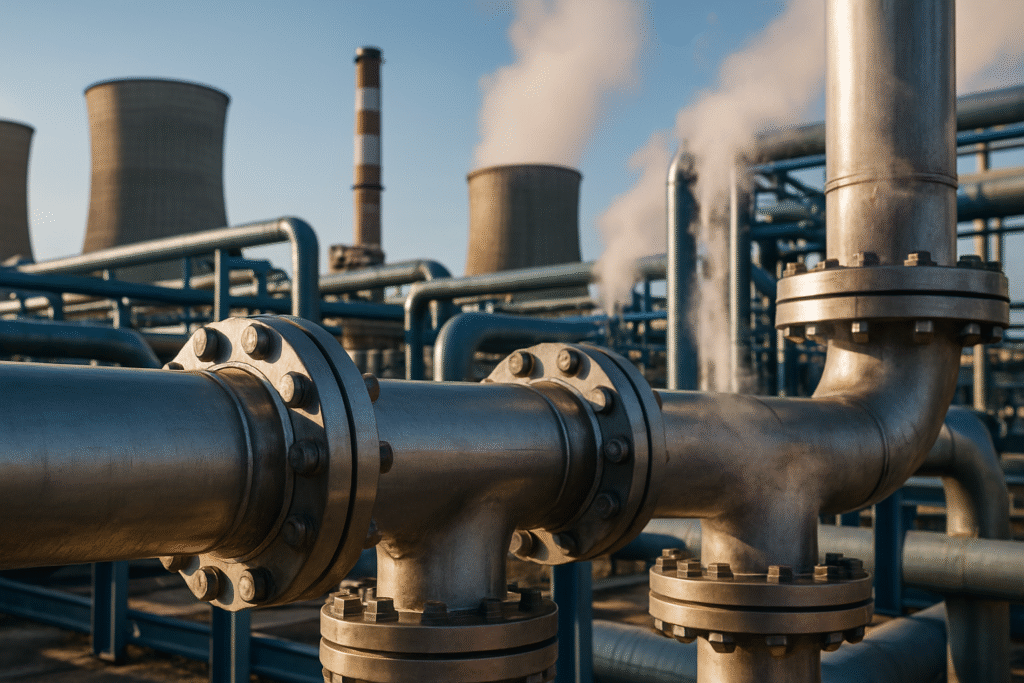
Paslanmaz Çelik Flanş Testi ve Uygunluk Gereksinimleri
Grand View Araştırmasına göre (2024), küresel endüstriyel flanş pazarı şu şekilde değerlendi: $5.8 milyar 2023 ulaşılması öngörülüyor ve $7.2 milyar tarafından 2030. That growth highlights why the stainless steel pipe flange has become a critical component for reliability, korozyon kontrolü, and lifecycle cost management across industrial applications.
Tedarik yöneticileri ve boru mühendisleri için, the real value is not only in material grade selection. It also lies in understanding the hidden advantages, basınç değerleri, standartlara uygunluk, and manufacturing quality behind every flange used in demanding pipe systems.
Stainless Steel Pipe Flange Demand Is Rising Across Global Industrial Applications
IBISWorld'e göre (2024), Asya-Pasifik'in hesapları 45% küresel flanş üretimi, Çin'in en büyük üretici olduğu. Öyleyse, buyers increasingly evaluate not just product type, but also factory capability, ihracat uyumluluğu, and supply chain resilience.
Statista'ya göre (2024), Petrol ve gaz endüstrisi yaklaşık olarak 35% küresel flanş tüketiminin. This concentration explains why stainless steel pipe flange procurement often prioritizes corrosion resistance, basınç bütünlüğü, and full traceability for upstream, orta akıntı, and downstream applications.
Dahası, stainless steel continues to gain share in projects where maintenance costs are under scrutiny. Sonuç olarak, engineers often choose 304, 316, and duplex grades for systems exposed to chlorides, sıcaklık döngüsü, or aggressive media.
Competitor pages in this segment often focus heavily on material lists. Fakat, buyers usually need more practical guidance on pressure class, bakan tip, boyutsal standartlar, muayene belgeleri, and long-term service performance.
That gap matters because flange failure rarely comes from a single factor. Birçok durumda, leakage or cracking results from a mismatch between material grade, conta seçimi, cıvata yükü, korozyon payı, ve çalışma sıcaklığı.
Mordor İstihbaratına göre (2024), process industry capital spending remains strong in energy, kimyasallar, ve su altyapısı. Sonuç olarak, demand for stainless steel pipe flange assemblies is expanding in both replacement projects and new-build plants.
Küresel alıcılar için, supplier qualification has become more technical. They want EN 10204 3.1 sertifikasyon, PMI yeteneği, hydrostatic or pneumatic test coordination, ve ASME'ye uyum, ASTM, DIN, JIS, GOST, and EN dimensional systems.
SASA FLANGE bu ortamda faaliyet göstermektedir ISO 9001:2015 ve PED 2014/68/EU sertifikaları. Şirket paslanmaz çelik flanşlar üretmektedir, karbon çelik flanşlar, alaşım flanşlar, ve boru bağlantı parçaları 304, 316, 316L, 904L, 2205, 2507, A105, A182, İnkonel, Monel, Hastelloy, ve Titanyum kaliteleri.
Ek olarak, purchasing teams increasingly compare total installed cost instead of only unit price. A lower-cost flange can become expensive if machining tolerance, kaplama kaplama, or material verification is inconsistent.
Pazar Araştırması Geleceğine Göre (2024), industrial flow-control and piping component demand is supported by expansion in water treatment and power generation. Öyleyse, stainless steel pipe flange products are now specified well beyond traditional petrochemical use.
Pratik açıdan, this means buyers should assess more than the catalog description. They should review flange type, nominal boyut, basınç sınıfı, program uyumluluğu, kaynak hazırlığı, and end-user documentation before issuing a purchase order.
Gizli Avantajlar, Türler, and Uses of Stainless Steel Pipe Flange Systems
The hidden advantages of a stainless steel pipe flange are often economic as well as technical. Stainless grades can reduce unplanned shutdowns, support easier maintenance access, and maintain mechanical integrity in corrosive pipe services.
John Breen olarak, Kıdemli Boru Mühendisi, eyaletler: “Flange selection is never just about pressure class; it is about the interaction of metallurgy, cıvatalama, conta gerilimi, ve hizmet ortamı.” That observation reflects why engineered flange selection delivers better plant reliability than commodity-based purchasing.
According to ASTM material specifications such as ASTM A182, forged stainless flanges are widely used for high-pressure and high-temperature service (ASTM, 2024). Ek olarak, ASME B16.5 remains the primary dimensional standard for NPS 1/2 başından sonuna kadar 24, sırasında ASME B16.47 daha büyük çapları kapsar (ASME, 2023).
Different flange types serve different mechanical and operational purposes. Öyleyse, understanding the main types helps buyers choose flanges that balance installation speed, yorulma direnci, and maintenance accessibility.
- Kaynak boyunlu flanşlar: yüksek basınç için tercih edilir, döngüsel, or elevated-temperature service because the tapered hub reduces stress concentration.
- Geçmeli flanşlar: common in lower-pressure systems where easier alignment and lower initial cost matter.
- Kör flanşlar: used to terminate a pipe line, valve outlet, or equipment nozzle for testing or future expansion.
- Soket kaynaklı flanşlar: suited for smaller bore, high-pressure lines where internal leakage paths must be minimized.
- Dişli flanşlar: useful where welding is not practical, especially in utility or hazardous areas with installation constraints.
- Bindirmeli flanşlar: selected when frequent dismantling or alloy stub-end optimization improves maintenance economics.
The most common stainless grades each offer distinct performance advantages. Örneğin, 304 and 304L provide broad corrosion resistance and good formability, sırasında 316 and 316L improve pitting resistance in chloride-bearing services.
For severe environments, engineers often move to 904L, dubleks 2205, veya süper dubleks 2507. These grades improve resistance to pitting, çatlak korozyonu, and stress corrosion cracking in many offshore, kimyasal, and seawater applications.
Dr. olarak. Elena Morris, Malzeme Bilimcisi, eyaletler: “The correct stainless flange grade can extend service life by years, but only when the metallurgy matches the chloride level, sıcaklık, and process chemistry.” That point is especially important in marine and petrochemical applications.
NACE rehberliğine göre, chloride concentration and temperature strongly influence stainless steel corrosion behavior in sour and saline environments (NACE, 2023). Öyleyse, 316L may perform well in mild plant water systems, while duplex grades are often chosen for offshore skids and desalination units.
Procurement teams also ask how to choose flanges by pressure class. pratikte, ASME Sınıfı 150, 300, 600, 900, 1500, Ve 2500 ratings determine the pressure-temperature envelope, but the allowable service depends on material group and design temperature under ASME rules.
- Low to moderate pressure utility service often uses Class 150 veya 300.
- Refining and process lines frequently specify Class 300 ile 900.
- Critical high-pressure systems may require Class 1500 veya 2500 with tighter QA controls.
Kaplama tipi aynı zamanda sızdırmazlık performansını da etkiler. Raised face flanges are the most common for process plants, while ring type joint flanges are favored for high-pressure hydrocarbon service because they provide a metal-to-metal sealing configuration with RTJ gaskets.
Yüzey kalitesi, cıvata torku, and gasket compatibility are equally important. Even a premium stainless steel pipe flange can leak if the serration finish does not match gasket type or if bolt stress is not applied evenly.
According to ISO-aligned quality studies in industrial manufacturing, dimensional consistency and material traceability significantly reduce field rejection rates (ISO, 2023). Sonuç olarak, factory machining capability now matters as much as raw material origin.
Gelişmiş CNC işleme ve kapsamlı kalite testleri ile desteklenmektedir, SASA FLANGE özel boyutlar sunuyor 1/2 inç ila 60 rekabetçi fabrika doğrudan fiyatlandırmasıyla inç. The company supports oil and gas, petrokimya, enerji üretimi, gemi yapımı, deniz, su arıtma, and construction projects in more than 50 ülkeler.
Buyers looking at stainless steel flanges and fittings should also align the flange bore with the mating pipe schedule. A mismatch between Schedule 40, 80, or XXS wall thickness and flange bore can create flow disruption or welding complications.
Öyleyse, technical review should include these details before order release.
- Malzeme kalitesi ve ısıl işlem durumu.
- Uygulanabilir standart ASME B16.5, ASME B16.47, DIN, JIS, veya TR 1092.
- Basınç sınıfı veya PN derecesi.
- RF gibi bakan tip, RTJ, veya FF.
- Bore to match pipe schedule.
- Inspection requirements including PMI, UT, PT, Ve EN 10204 3.1 belgeler.
Standartlar, Uyumluluk, and Testing Requirements for Stainless Steel Pipe Flange Supply
Standards compliance is one of the most important differentiators in B2B flange sourcing. Engineers need proof that dimensions, malzeme kimyası, basınç-sıcaklık derecesi, and marking all align with project specifications.
ASME B16.5 boyutları kapsar, toleranslar, basınç sınıfları, and marking for pipe flanges and flanged fittings from NPS 1/2 ile 24. ASME B16.47 extends coverage to larger diameters, which is essential for tank farms, boru hatları, and major utility headers (ASME, 2023).
Malzeme standartları da aynı derecede önemlidir. ASTM A182 genellikle dövme paslanmaz ve alaşımlı çelik flanşları yönetir, sırasında ASTM A240 applies to plate products used in some flange-related fabrication contexts (ASTM, 2024).
Avrupa projeleri sıklıkla EN gerektirir 1092 boyutsal uyumluluk ve PED 2014/68/EU belgeleri. Tersine, German or broader EU customers may also request AD 2000 alignment depending on end-use equipment classification.
For corrosion-sensitive service, specifications may also refer to NACE MR0175 veya ISO 15156. These requirements matter where sour service or sulfide stress cracking risks affect metallurgy selection.
- ASME B16.5: flange dimensions and ratings for common sizes.
- ASME B16.47: larger diameter flange standards.
- ASTM A182: dövme veya haddelenmiş alaşımlı ve paslanmaz çelik boru flanşları.
- ASME B16.9: factory-made wrought buttwelding fittings that often mate with flange systems.
- EN 1092: Avrupa flanş boyutları ve basınç tanımları.
- PED 2014/68/AB: regulatory compliance for pressure equipment in the EU.
Inspection and documentation are where many suppliers either build trust or lose it. Öyleyse, serious buyers usually require positive material identification, boyutsal muayene, görsel muayene, marking verification, and full mill traceability.
Typical quality documents requested in industrial flange orders include the following.
- EN 10204 3.1 malzeme test sertifikaları.
- PMI reports for stainless, dubleks, ve nikel alaşımları.
- Hardness or ferrite measurements where applicable.
- Dimensional inspection reports for bore, kalınlık, and bolt circle accuracy.
- Surface finish verification for serrated raised face or RTJ groove profiles.
Denizcilik ve açık deniz bileşenleri için DNV kılavuzuna göre, documented material traceability and inspection control are critical for safety-related pressure parts (DNV, 2023). Sonuç olarak, marine buyers often scrutinize marking, korozyon payı, and certificate completeness before shipment approval.
There is also a commercial advantage to dealing with a supplier that understands both global and regional standards. A flange manufactured to ASME dimensions may not automatically satisfy EN project expectations unless the documentation and design basis are aligned from the start.
ASME publishes the principal dimensional framework used in many international projects. Fakat, project specifications may also override default tolerances, test kapsamı, or marking details, so quote review should always include the final client datasheet.
İle ISO 9001:2015, PED 2014/68/AB, ve AD 2000 sertifikalar, SASA FLANGE supports documentation-driven procurement for export projects. Şirket aynı zamanda dirsek de tedarik ediyor, tişört, redüktörler, ve altındaki kapaklar ASME B16.9, which helps buyers consolidate sourcing for complete pipe system packages.
In high-value orders, compliance should be verified before production starts. This approach reduces NCRs, shipping delays, and costly field modifications after the flanges arrive on site.
Yağ İçin Flanş Nasıl Seçilir, Gaz, Kimyasal, Güç, ve Deniz Boru Sistemleri
To choose flanges correctly, engineers must start with service conditions rather than catalog familiarity. Orta, sıcaklık, basınç, corrosion potential, assembly frequency, and inspection class all influence the right configuration.
Petrol ve gaz uygulamalarında, 316L'de kaynak boyunlu flanşlar, dubleks 2205, or alloy grades are often selected for pressure cycling and corrosive fluids. Statista'ya göre (2024), petrol ve gaz yaklaşık olarak temsil eder 35% küresel flanş tüketiminin, so this sector strongly shapes design preferences.
For petrochemical units, stainless steel pipe flange assemblies are commonly specified where organic acids, çözücüler, or chloride-bearing streams threaten carbon steel performance. Bu durumlarda, 316L or 904L may offer lower lifecycle cost despite a higher initial purchase price.
Power generation projects create a different selection challenge. Termal bisiklet, buhar servisi, and larger nominal diameters often push buyers toward stronger forged materials, precise machining, and tighter dimensional control.
Marine and shipbuilding applications demand close attention to salt exposure and crevice corrosion. Öyleyse, 316L, dubleks 2205, ve süper dubleks 2507 are regularly evaluated for ballast, deniz suyu, ateş suyu, ve tuzdan arındırma sistemleri.
Water treatment plants also benefit from stainless solutions, especially where chloride content, disinfection chemicals, or maintenance access matter. Dahası, corrosion-resistant flanges can reduce leakage risk and support cleaner long-term operation.
These selection criteria help procurement teams compare options more accurately.
- Material grade based on corrosion mechanism and media composition.
- Pressure class or PN rating based on design pressure and temperature.
- Flange type based on welding method, bakım ihtiyaçları, and pipe stress.
- Facing type based on gasket compatibility and leak-tightness requirement.
- Size and bore based on nominal pipe size and schedule.
- Certification and testing based on project specification and destination market.
- Lead time and lot traceability based on shutdown or construction schedule.
A practical example illustrates the difference. A 4 inç paslanmaz çelik boru flanşı 304 may be acceptable for general water service, but the same size in offshore chloride exposure could require 316L or 2205 to avoid premature corrosion.
Aynı şekilde, stainless steel threaded pipe flange products may suit utility systems where welding is difficult. Fakat, for vibration-prone or high-temperature lines, weld neck or socket weld configurations generally provide better structural integrity.
Michael Trent olarak, Endüstriyel Pazar Analisti, eyaletler: “Procurement performance improves when buyers compare total cost of ownership rather than headline price per flange.” That means freight, test, dokümantasyon, yeniden çalışma riski, and service life all belong in the buying decision.
Grand View Araştırmasına göre (2024), industrial infrastructure expansion continues to support long-term demand for critical piping components. Öyleyse, buyers should build qualified supplier relationships before urgent outages or project peaks occur.
Özel projeler için, dimensional flexibility can be decisive. SASA FLANGE manufactures standard and non-standard flanges in stainless steel, karbon çeliği, alaşımlı çelik, ve özel alaşımlar, supporting custom drawings, özel sondaj, and multiple facing configurations.
That flexibility is especially useful when a project combines ASME lines with DIN or EN equipment nozzles. Instead of forcing field adaptation, buyers can source application-specific flanges that simplify fit-up and reduce installation labor.
Ek olarak, factory coordination between flanges and fittings creates procurement efficiency. Buyers can combine elbows, tişört, redüktörler, büyük harfler, and matching flanges into one quality-controlled package, which reduces vendor management complexity.
Paslanmaz Çelik Boru Flanş Tedarikinde Geleceğe Bakış ve Stratejik Satın Alma Önerileri
The market outlook remains positive as industrial investment continues in energy, kimyasallar, tuzdan arındırma, ve altyapı. Grand View Araştırmasına göre (2024), the flange market is projected to reach $7.2 milyar tarafından 2030, indicating stable long-term demand.
Dahası, buyers are moving toward higher-specification procurement. Instead of ordering only by generic description, they increasingly request alloy verification, project-specific documentation, and manufacturer quality records.
Digital procurement is also changing buyer behavior. Engineers now expect quick access to drawings, pressure class information, MTC support, and response time that matches shutdown schedules.
Sonuç olarak, suppliers that combine technical support with manufacturing discipline will win more global projects. This is especially true for stainless steel pipe flange orders tied to export documentation, PED requirements, or offshore service conditions.
Stratejik olarak, alıcılar dört işlem yapmalı. Birinci, standardize approved grades for recurring applications so replacement purchases are faster and more consistent.
Saniye, verify standards and documentation during quotation review rather than after production. Üçüncü, compare total installed cost, not just ex-works unit price.
Dördüncü, qualify suppliers that can support both standard and custom requirements across flanges and fittings. gerektiren projeler için 304, 316, 904L, 2205, 2507, or nickel alloy solutions, working with SASA FLANGE helps procurement teams secure factory-direct supply backed by advanced machining, muayene kontrolü, and export-ready certification.
Sıkça Sorulan Sorular
Hangisi daha iyi 304 veya 420 paslanmaz çelik?
●304 stainless steel is generally better for stainless steel pipe flange applications because it offers stronger corrosion resistance and broader industrial process compatibility than 420.
●According to ASTM and common industrial material practice, 420 is a martensitic stainless grade valued for hardness, sırasında 304 is an austenitic grade preferred for weldability, dayanıklılık, and corrosion performance in pipe systems.
●Flanş servisi için, engineers usually choose 304 or 304L for general chemical, su, and food-related applications, halbuki 420 is more common in tools, blades, and wear components than pressure-retaining flanges.
Paslanmaz çelik flanşlar için ASME Kodu nedir?
●The main ASME dimensional code for stainless steel pipe flange products is ASME B16.5 NPS için 1/2 başından sonuna kadar 24 Ve ASME B16.47 daha büyük boyutlar için.
●ASTM A182 commonly covers forged stainless flange material requirements, while pressure-temperature ratings and dimensions are controlled by the applicable ASME standard.
●Buyers should confirm both the ASME dimensional code and the ASTM material specification on every RFQ to avoid mismatched manufacturing, denetleme, or documentation.
Paslanmaz çelik flanşlar ne için kullanılır??
●Boruyu bağlamak için paslanmaz çelik flanşlar kullanılır, vanalar, pompalar, and equipment nozzles in systems that require strength, korozyon direnci, and maintainable joints.
●Statista'ya göre (2024), petrol ve gaz hesapları yaklaşık 35% küresel flanş tüketiminin, but stainless flanges are also widely used in petrochemical, deniz, su arıtma, ve güç uygulamaları.
●For chloride exposure, hygiene-sensitive service, or high-maintenance environments, stainless flange systems often provide better lifecycle value than carbon steel alternatives.
Üç tip flanş nedir?
●En sık başvurulan üç flanş tipi kaynak boyunludur, bağcıksız, ve kör flanşlar, although many plants also use threaded, soket kaynağı, ve bindirme eklemi tasarımları.
●Kaynak boyunlu flanşlar yüksek basınç ve yüksek sıcaklıkta hizmete uygundur, slip-on flanges support easier installation in lower-pressure systems, ve kör flanşlar bir hattın veya nozulun ucunu kapatır.
●Selection should always match the pipe schedule, basınç sınıfı, conta düzenlemesi, and maintenance condition rather than relying only on price.
Paslanmaz çelik boru flanşı fiyatını neler etkiler??
●Paslanmaz çelik boru flanşı fiyatı esas olarak alaşım derecesine bağlıdır, boyut, basınç sınıfı, bakan tip, test kapsamı, ve sertifikasyon gereksinimleri.
●Grand View Araştırmasına göre (2024), endüstriyel flanş pazarına ulaştı $5.8 milyar 2023, and that scale reflects ongoing demand pressure on raw materials, işleme kapasitesi, and supply lead times.
●To compare offers accurately, buyers should request a clear quotation covering material origin, EN 10204 3.1 sertifikasyon, denetleme, paketleme, and delivery terms.
How do I choose the right flange diameter and size?
●Flange diameter and size must match the nominal pipe size, duvar programı, basınç sınıfı, ve boyutsal standart gibi ASME B16.5 veya TR 1092.
●A 4 inç paslanmaz çelik boru flanşı, Örneğin, can vary in bore and outside dimensions depending on schedule, basınç derecesi, and facing design.
●Kritik projeler için, buyers should send the pipe specification, tasarım basıncı, and drawing to an experienced manufacturer like SASA FLANGE to confirm fit-up before production.
İlgili Mesajlar
Flanş Yüzü Kaplaması: Eşmerkezli ve Spiral Tırtıkların Açıklaması
Eşmerkezli ve spiral tırtılların her ikisi de işlenmiş flanş yüzeyidir…
Dubleks 2205 316L Flanşlara Karşı: Hangi Malzemeyi Seçmelisiniz?
Hızlı cevap: Dubleks 2205 flanşlar genellikle daha güçlü adaydır…

Orifis Flanşı Tanımı, Ayrıntılar ve ASME B16.36 Flanşlara Genel Bakış: Piyasa Verileri, Seçim Kılavuzu ve Uyumluluk Bilgileri
Küresel endüstriyel flanş pazarı şu şekilde değerlendi: $5.8 milyar…

Siyah Bertaraf Flanşı Pazar Rehberi: Malzemeler, 3.5″ Uyumluluk, Mutfak Lavabo Flanşları için B2B Kaynak Verileri
Mutfak armatürü alıcıları nedeniyle siyah atık flanş talebi artıyor…