
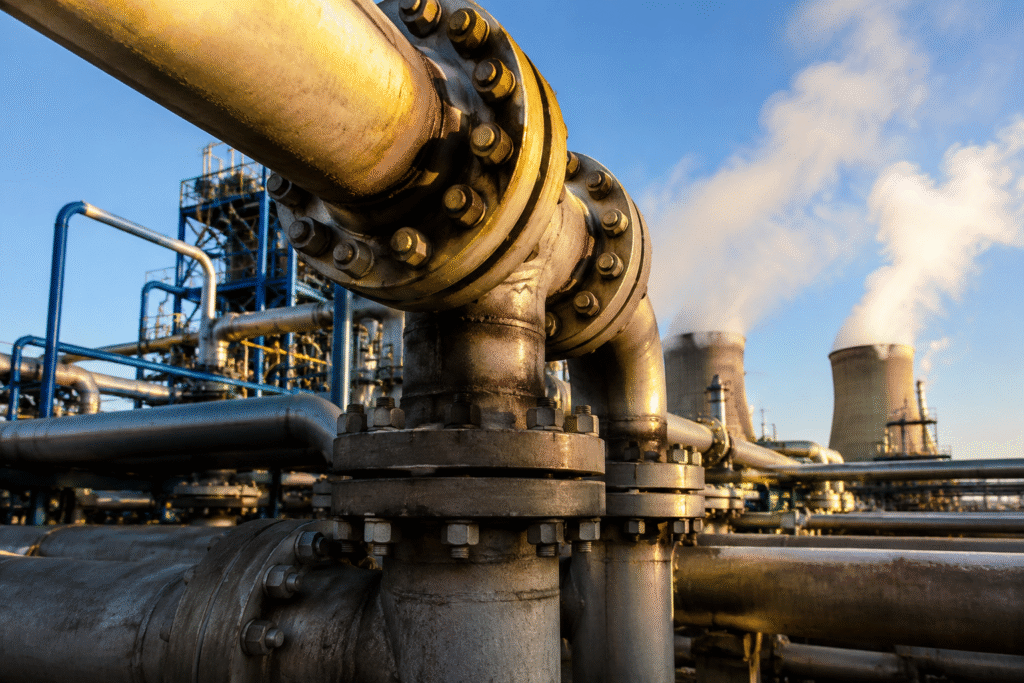
Paslanmaz Çelik Boru Flanşları: Türler, Standartlar ve Seçim Kılavuzu
Endüstriyel sistemler daha güçlü korozyon direnci gerektirdiğinden, paslanmaz çelik boru flanşı talebi artmaya devam ediyor, daha temiz proses performansı, ve daha uzun servis ömrü. Grand View Araştırmasına göre (2024), küresel endüstriyel flanş pazarı şu şekilde değerlendi: $5.8 milyar 2023 ulaşılması öngörülüyor ve $7.2 milyar tarafından 2030, which makes flange selection a strategic purchasing decision rather than a simple commodity buy.
Mühendisler ve satın alma yöneticileri için, en sık karşılaşılan zorluk flanş bulamamaktır. It is choosing the right grade, basınç sınıfı, karşı karşıya, and standard for each pipe system. This guide explains the intriguing and often hidden advantages, türleri, and uses of stainless steel flanges, while showing how to choose products that meet technical and commercial goals.
Küresel Endüstride Paslanmaz Çelik Boru Flanş Talebi Neden Artmaya Devam Ediyor?
Industrial buyers increasingly specify stainless steel because downtime now costs more than initial material savings. Statista'ya göre (2024), Petrol ve gaz endüstrisi yaklaşık olarak 35% küresel flanş tüketiminin, which highlights how critical reliable piping connections remain in severe service.
Üretim düzeyinde, supply concentration also matters. IBISWorld'e göre (2024), Asya-Pasifik'in hesapları 45% küresel flanş üretimi, Çin'in en büyük üretici olduğu, so buyers often evaluate both production scale and export quality systems before issuing purchase orders.
This market shift favors suppliers that combine metallurgy knowledge with process control. Öyleyse, ISO 9001:2015 dokümantasyon, PED 2014/68/EU compliance, EN 10204 3.1 muayene kayıtları, and traceable heat numbers have become practical procurement requirements rather than optional extras.
Many end users now move from carbon steel to stainless grades in water treatment, petrokimya, ve deniz sistemleri. Ek olarak, life-cycle cost analysis often shows that corrosion-related failures, gasket leaks, and unplanned shutdowns outweigh the higher upfront price of stainless steel components.
Sonuç olarak, a stainless steel pipe flange is now specified not only for corrosion resistance, but also for hygiene, termal kararlılık, fabrication flexibility, and maintenance reduction. This is especially true where chlorides, temizlik kimyasalları, or fluctuating temperatures shorten the life of lower-grade materials.
Pazar Araştırması Geleceğine Göre (2024), industrial process equipment demand in emerging economies continues to expand at a moderate single-digit CAGR, supporting steady consumption of flanges, dövme bağlantı parçaları, and pipe accessories. Dahası, water infrastructure upgrades and power generation retrofits are adding new demand outside traditional oil and gas sectors.
B2B alıcıları için, this means product selection should align with operating conditions, not generic catalog descriptions. A 304 slip on flange may be cost-effective in mild service, whereas 316L, 2205 dubleks, or 904L may be necessary in chloride-bearing or aggressive chemical environments.
Manufacturers with broad grade coverage can reduce sourcing complexity. İle ISO 9001:2015 ve PED 2014/68/EU sertifikaları, SASA FLANGE paslanmaz çelik flanşlar sağlar, karbon çelik flanşlar, alaşım flanşlar, ve boru bağlantı parçaları 304, 316, 316L, 904L, 2205, 2507, A182, İnkonel, Monel, Hastelloy, and Titanium grades for international industrial projects.
That breadth matters because many projects mix standards and materials in one package. Örneğin, a refinery expansion may require ASME B16.5 kaynak boyunlu flanşlar, ASME B16.9 dirsekler, EN 1092 plaka flanşları, and corrosion-resistant reducers with matching mill test reports.
John Reynolds olarak, danışmanlık malzeme mühendisi, eyaletler: “The hidden advantage of stainless steel flanges is not only corrosion resistance. It is process reliability under combined thermal, mekanik, and chemical stress.” That principle explains why experienced EPC contractors assess total system compatibility before confirming a flange vendor.
Paslanmaz Çelik Boru Flanş Çeşitleri, Malzemeler, and Hidden Advantages for Industrial Use
The most common stainless steel pipe flange materials are ASTM A182 F304, F304L, F316, F316L, F321, F347, çift yönlü F51, and super duplex F53. Fakat, the correct choice depends on temperature, orta kompozisyon, kaynak yöntemi, basınç sınıfı, ve bakım erişimi.
ASTM and ASME standards remain central to selection. ASTM A182 dövme veya haddelenmiş alaşımlı ve paslanmaz çelik boru flanşlarını kapsar, dövme bağlantı parçaları, ve yüksek sıcaklıkta servis için valfler, sırasında ASME B16.5 boyutları tanımlar, toleranslar, basınç-sıcaklık değerleri, and marking requirements for flanges from NPS 1/2 başından sonuna kadar 24 (ASME).
Stainless grade selection starts with corrosion behavior. 304 and 304L offer good general corrosion resistance and competitive cost, sırasında 316 and 316L include molybdenum for better pitting resistance in chloride-containing environments. Öyleyse, 316L is often preferred in offshore, kimyasal, ve su arıtma uygulamaları.
Higher alloy stainless grades solve more severe problems. 321 Ve 347 provide stabilization for elevated temperature service, while 904L improves resistance in sulfuric and phosphoric acid conditions. Tersine, dubleks 2205 ve süper dubleks 2507 daha yüksek mukavemet ve gelişmiş klorür stresli korozyon çatlama direnci sağlar.
Mordor İstihbaratına göre (2024), demand for corrosion-resistant alloys in industrial fluid handling is rising as operators extend asset life and reduce maintenance costs. Ek olarak, NACE guidance continues to influence material choices in sour service and corrosive hydrocarbon environments (NACE, 2024).
Buyers should also understand flange type because geometry affects installation cost, kaynak kalitesi, and service integrity. The most common flange designs include:
- Yüksek basınç için kaynak boyunlu flanş, yüksek sıcaklık, ve döngüsel yükleme.
- Slip on flange for moderate pressure systems and easier alignment.
- Hat sonlandırma için kör flanş, test, ve gelecekteki genişleme noktaları.
- Küçük çap için soket kaynaklı flanş, yüksek basınçlı borular.
- Threaded flange where welding is impractical or restricted.
- Sık sık sökülmesi gereken sistemler için bindirmeli flanş.
Each type has distinct engineering value. Örneğin, weld neck flanges transfer stress more effectively through the tapered hub, while slip on flanges reduce fabrication complexity and can lower installed labor cost in utility service.
Facing selection is equally important. Raised face is the most common in process plants, ring type joint is preferred in higher pressure hydrocarbon service, and flat face is often used where mating equipment or cast iron components require uniform compression.
Dr. olarak. Helen Carter, malzeme bilimcisi, eyaletler: “Procurement errors usually happen when buyers compare stainless grades by price alone, rather than by chloride level, sıcaklık, and welding demands.” That observation is especially relevant in desalination, deniz egzozu, ve agresif kimyasal servisi.
The hidden advantages of a well-selected stainless steel pipe flange include more than simple leak containment. They also include lower cleaning frequency, improved appearance in hygienic systems, easier passivation, better compatibility with stainless pipe fittings, and longer service intervals under thermal cycling.
Engineers should match material and flange style to the service envelope. A useful short checklist includes:
- Süreç ortamı: su, buhar, hidrokarbonlar, asitler, klorürler, slurry.
- Operating temperature and design pressure.
- Boru boyutu, takvim, and flange class such as 150, 300, 600, veya daha yüksek.
- Welding requirement and available site fabrication controls.
- Applicable standards such as ASME B16.5, ASME B16.47, DIN, JIS, GOST, veya TR 1092.
- gibi muayene belgeleri EN 10204 3.1, PMI, hidrotest, and NDT reports.
According to ISO guidance and common project specifications, traceability and repeatability are now essential for critical piping components (ISO, 2024). Sonuç olarak, quality assurance should include dimensional checks, malzeme doğrulaması, yüzey muayenesi, işaretleme, ve ihracat lojistiğine uygun ambalajlama.
Gelişmiş CNC işleme ve kapsamlı kalite testleri ile desteklenmektedir, SASA FLANGE özel boyutlar sunuyor 1/2 inç ila 60 inç boyunca paslanmaz, dubleks, nikel alaşımı, and carbon steel ranges. This helps EPC contractors consolidate sourcing for flanges, dirsekler, tişört, redüktörler, and caps under one supplier review process.
Satın alma ekipleri için, this broader capability can reduce lead-time risk. It also simplifies technical alignment between flange and fitting materials, especially where complete line packages require the same heat treatment, muayene seviyesi, and document set.
ASME, ASTM, DIN, and EN Requirements That Govern Stainless Steel Pipe Flange Quality
Standards determine whether a flange fits, mühürler, and performs under design conditions. Öyleyse, buyers should confirm both dimensional standard and material standard before requesting quotations or approving drawings.
In ASME systems, B16.5 covers NPS 1/2 ile 24, while B16.47 addresses larger diameter flanges. ASTM A182 governs forged stainless flange materials, Ve ASTM A240 often supports plate material references used in related stainless components. Avrupa projelerinde, EN 1092 is a key flange standard, while DIN legacy references may still appear in plant documentation.
Tedarik verimliliği için, the following comparison is useful:
- ASME B16.5: basınç-sıcaklık değerleri, boyutlar, toleranslar, karşı karşıya, marking for common process flanges.
- ASME B16.47: large-diameter flange dimensions for major pipeline and plant applications.
- ASTM A182: forged stainless and alloy flange material requirements.
- ASME B16.9: Flanş bağlantılı sistemlerde kullanılan fabrika yapımı dövme alın kaynak bağlantı parçaları.
- EN 1092: European flange dimensions and PN pressure classes.
- NACE MR0175: materials guidance for sour service environments.
Compliance is not only a paperwork issue. It directly affects interchangeability, bolt alignment, conta sıkıştırma, and safe operation over time. Sonuç olarak, even a small mismatch in drilling pattern, karşı karşıya, or pressure class can cause expensive field delays.
According to DNV project guidance and PED requirements, pressure equipment for regulated markets must demonstrate conformity, dokümantasyon, and traceable production control (PED 2014/68/AB; DNV, 2024). That is why serious buyers ask for MTCs, boyutsal muayene kayıtları, and third-party witness options before shipment.
Certification also influences supplier selection. İle ISO 9001:2015, PED 2014/68/AB, ve AD 2000 kimlik bilgileri, SASA FLANGE supports export-oriented industrial buyers who require structured quality systems for Oil & Gaz, Petrokimya, Güç Üretimi, Gemi yapımı, Su Arıtma, ve İnşaat sektörleri.
In stainless steel pipe flange procurement, quality details should be verified in writing. Recommended checkpoints include:
- Material grade and ASTM designation.
- Flanş tipi, karşı karşıya, basınç sınıfı, and size range.
- Uygulanabilir standart ASME B16.5 veya TR 1092.
- Testing scope including PMI, sertlik, hydrostatic test, and NDT if required.
- Document package including EN 10204 3.1 certificate and heat traceability.
- İşaretleme, ambalajlama, and export preservation requirements.
Ek olarak, buyers should confirm whether the flange is forged, plate-cut, or special machined. Forged stainless flanges usually offer superior grain flow and mechanical consistency for critical service, whereas plate flanges can be economical in selected low-pressure applications when project specifications allow them.
Mark Ellison olarak, kıdemli boru mühendisi, eyaletler: “Standards compliance is the first filter, but real quality comes from repeatable manufacturing and verification at every stage.” That is why capable flange manufacturers invest in CNC equipment, kalibre edilmiş göstergeler, material traceability systems, and documented inspection workflows.
For teams comparing flange manufacturers or a flange vendor for long-term supply, the most useful question is simple. Can the supplier consistently deliver the same dimensions, metalurji, yüzey kalitesi, and documents across repeat orders and multiple project locations?
Buyers can review more capabilities through SASA FLANGE ürün kaynakları ve şirket geçmişi üretici profili. That extra visibility helps qualify suppliers before RFQ release, especially for approved vendor list processes.
How to Choose the Most Common Flanges for Oil, Gaz, Kimyasal, Güç, ve Deniz Sistemleri
Seçim hizmet koşullarıyla başlar, not catalog popularity. The most common flanges are weld neck, giymek, kör, soket kaynağı, dişli, ve kucak eklemi, but each one suits different pressure, Bakım, and fabrication needs.
Petrol ve gazda, weld neck flanges often lead because they handle vibration, basınç dalgalanması, and thermal cycling well. Statista'ya göre (2024), petrol ve gaz yaklaşık olarak temsil edilir 35% küresel flanş tüketiminin, which explains why API-related project requirements influence buying patterns across the market.
Petrokimya ve kimya tesislerinde, stainless grade choice becomes more critical than flange shape alone. Örneğin, 316L, 904L, 2205, veya 2507 klorürlerin olduğu yerde seçilebilir, asitler, or mixed chemical streams challenge standard 304 malzeme.
Power generation applications often combine elevated temperature and pressure. Öyleyse, engineers frequently evaluate 321, 347, alaşımlı çelik, veya ASTM A182 material options depending on steam service, thermal fatigue exposure, ve kod gereksinimleri.
Marine and shipbuilding systems add salt exposure, nem, and space constraints. Bu durumlarda, duplex stainless can offer an excellent balance of strength and chloride resistance, while compact dimensional control remains important for prefabricated piping modules.
The practical selection criteria below help reduce material mismatch and field rework:
- Match flange material to pipe and fitting metallurgy where galvanic and corrosion issues matter.
- Basınç sınıfını tasarım basıncı ve sıcaklığına göre doğrulayın, not ambient operating assumptions.
- Choose facing type based on gasket design and leak-tightness requirement.
- Review flange type against weld access, inspection feasibility, and expected maintenance frequency.
- Rica etmek EN 10204 3.1 certificates for traceability in critical service.
- Specify dimensions and standards clearly for global projects using ASME, DIN, JIS, GOST, or EN systems.
Size also influences purchasing behavior. Paslanmaz çelik boru flanşı boyutlarını arar, 4 inç paslanmaz çelik boru flanşı, Paslanmaz Çelik Flanş 2, and Stainless Steel Threaded Pipe Flange typically reflect users moving from information gathering to product comparison and quoting.
Fakat, unit price alone should not drive selection. Stainless steel pipe flange price varies by grade, dövme rotası, basınç sınıfı, karşı karşıya, miktar, test kapsamı, and market nickel costs. Sonuç olarak, the lowest quote may not deliver the lowest installed cost.
For custom packages, buyers often need elbows, tişört, redüktörler, and caps together with matching flanges. Offering custom manufacturing capabilities and a broad material portfolio, SASA FLANGE can support coordinated supply for standard and non-standard projects across 50+ ülkeler.
That matters when projects require mixed sizes from 1/2 inç ila 60 inç, kısa teslimat süreleri, or special grades like Inconel, Monel, Hastelloy, veya Titanyum. It also supports OEMs and EPC contractors who prefer fewer vendors, clearer accountability, and more stable quality records.
When evaluating a flange manufacturer, procurement teams should also ask about MOQ, production capacity, CNC işleme yeteneği, coating or pickling treatment, and document lead time. These details affect schedule performance as much as nominal manufacturing lead time.
Öyleyse, a robust sourcing process combines engineering review, supplier qualification, denetim planlaması, ve lojistik koordinasyonu. That approach is especially important when buying stainless steel flanges and fittings for shutdown windows, skid fabrication, or export projects with strict document submission milestones.
Paslanmaz Çelik Flanşların Geleceğe Bakışı ve Stratejik Kaynak Kullanımı Önerileri
The flange market will likely remain resilient because replacement demand, infrastructure upgrades, and corrosion-control spending continue to support industrial investment. Grand View Araştırmasına göre (2024), pazarın bundan sonra büyümesi bekleniyor $5.8 milyar 2023 ile $7.2 milyar tarafından 2030, which signals stable long-term demand for qualified suppliers.
Aynı zamanda, buyers are becoming more data-driven. They increasingly compare total cost of ownership, lead-time reliability, uyumluluk kayıtları, and failure risk rather than focusing only on spot pricing for the most common flanges.
Several trends are shaping future procurement. These include broader use of duplex and super duplex materials, stronger demand for PED-compliant documentation, and greater emphasis on traceability, PMI, and digital inspection records. Üstelik, projects now expect faster technical responses during the RFQ stage.
For sourcing managers, three recommendations stand out:
- Standardize approved grades and flange types by service category to reduce specification drift.
- Prequalify flange manufacturers with proven CNC machining, muayene yeteneği, ve ihracat belgeleri.
- Compare quotes on total delivered value, including certification, test, ambalajlama, and schedule confidence.
Mühendisler için, material selection should remain tied to corrosion mechanism, sıcaklık, and operating pressure. Tedarik ekipleri için, supplier evaluation should include communication speed, technical clarity, and repeat-order consistency.
Companies planning upcoming refinery, su arıtma, deniz, or power projects can benefit from early technical discussion before finalizing the bill of materials. Birçok durumda, this avoids costly overspecification in mild service and prevents dangerous underspecification in chloride-rich or high-temperature duty.
With manufacturing expertise in stainless steel pipe flange products, dövme bağlantı parçaları, ve özel boyutlar, SASA FLANGE remains a practical partner for industrial buyers seeking traceable quality and factory-direct supply. Teams that need project support, technical clarification, or current production schedules can start the conversation through direct contact with SASA FLANGE.
Sıkça Sorulan Sorular
Paslanmaz çelik flanşlar ne için kullanılır??
●Boruyu bağlamak için paslanmaz çelik flanşlar kullanılır, vanalar, pompalar, Güç gerektiren sistemlerde ekipman ve ekipmanlar, korozyon direnci, ve basınç altında güvenilir sızdırmazlık.
●Statista'ya göre (2024), petrol ve gaz hesapları yaklaşık 35% küresel flanş tüketiminin, which shows how essential flanged connections remain in critical industrial service.
●Su arıtımında yaygın olarak kullanılırlar, petrokimya, deniz, gıda işleme, and power plants because grades such as 304, 316L, 2205, Ve 2507 can handle different chemical and temperature conditions.
●Common uses include line connection points, bakım erişimi, ekipman nozulları, inspection spools, and blind ends for testing or future expansion.
●For projects requiring traceable materials, correct pressure class, and standards like ASME B16.5 veya TR 1092, gibi yerleşik üreticilerle çalışmak SASA FLANGE helps ensure dependable performance.
Paslanmaz çelik boru bağlantı parçaları yapıyorlar mı?
●Evet, üreticiler dirsek gibi paslanmaz çelik boru bağlantı parçaları üretiyor, tişört, redüktörler, and caps to match stainless flanges in the same piping system.
●ASME B16.9 is the key standard for factory-made wrought butt welding fittings, and many industrial projects specify these fittings together with ASTM A182 stainless flanges for material consistency.
●Using matching stainless fittings and flanges improves corrosion compatibility, kaynak bütünlüğü, ve denetim izlenebilirliği, özellikle kimyada, açık deniz, and hygienic process lines.
●Ortak malzemeler şunları içerir: 304, 316, 316L, 904L, 2205, Ve 2507, while the right choice depends on chloride level, çalışma sıcaklığı, ve tasarım baskısı.
●For buyers who need flanges and fittings in one coordinated package, SASA FLANGE kaynak bulma ve dokümantasyon kontrolünü basitleştirebilir.
Hangi flanşlar paslanmaz çelikten yapılmıştır??
●Most major industrial flange types can be made from stainless steel, kaynak boynu dahil, giymek, kör, soket kaynağı, dişli, ve bindirme eklemi tasarımları.
●ASTM A182 commonly covers forged stainless steel flange materials such as F304, F304L, F316, F316L, F321, F347, and duplex grades for more demanding service.
●The most common stainless choices are 304 ve 316L, but higher alloy materials like 904L, 2205, Ve 2507 are often selected where chloride resistance or higher strength is required.
●Buyers should also confirm facing type, basınç sınıfı, and standard because a stainless flange must fit the full piping specification rather than just the material grade.
●For technical support on stainless steel flange types, boyutlar, and mill certification requirements, it is advisable to work with an experienced flange vendor.
Üç tip flanş nedir?
●Temel endüstriyel tartışmalarda en sık başvurulan üç flanş tipi kaynak boyunludur, giymek, ve kör flanşlar.
●Weld neck flanges are preferred for high-pressure or high-temperature service, slip on flanges are popular for moderate-duty systems with easier installation, and blind flanges close the end of a piping line or vessel nozzle.
●pratikte, engineers also use socket weld, dişli, ve bindirme bağlantı flanşları, so the final selection should reflect process conditions, inspection needs, ve bakım stratejisi.
●Buna göre ASME B16.5, these flange types must meet strict dimensional and rating requirements to ensure interchangeability and sealing reliability.
●Kritik sistemler için, it is best to review flange type selection with the manufacturer before ordering, especially when project standards, schedule numbers, and facing details are tightly controlled.
Paslanmaz çelik flanşlar için ASME Kodu nedir?
●The main ASME standard for most stainless steel pipe flange dimensions and ratings is ASME B16.5, sırasında ASME B16.47 applies to many larger diameter flanges.
●Material specification is usually handled by ASTM A182 dövme paslanmaz flanşlar için, so buyers should verify both the ASME dimensional standard and the ASTM material standard together.
●ASME B16.5 genellikle NPS'yi kapsar 1/2 başından sonuna kadar 24 and includes pressure-temperature ratings, toleranslar, karşı karşıya, işaretleme, and bolt dimensions needed for proper fit-up.
●European or mixed-standard projects may also reference EN 1092 or DIN systems, so technical review is important before manufacturing begins.
●If your project requires PED documentation, EN 10204 3.1 sertifikasyon, or custom machining beyond standard catalog items, a qualified supplier such as SASA FLANGE can help align the specification package.
arasında nasıl seçim yapabilirim? 304 Ve 316 paslanmaz çelik boru flanş malzemeleri?
●Seçmek 304 for general industrial service with moderate corrosion exposure, ve seç 316 veya klorürler olduğunda 316L, kimyasallar, or marine conditions increase the risk of pitting and crevice corrosion.
●316 contains molybdenum, which improves resistance in more aggressive environments, and that is why it is often preferred for coastal facilities, kimyasal işleme, ve su arıtma sistemleri.
●The price difference can be justified when reduced maintenance, daha az sızıntı, and longer equipment life lower total ownership cost over time.
●According to industry practice and materials guidance, 316L is especially valuable when welding is required because its lower carbon content helps reduce sensitization risk.
●For uncertain service conditions, buyers should submit process media, sıcaklık, basınç, and chloride data to the supplier before final material approval.
İlgili Mesajlar
Flanş Yüzü Kaplaması: Eşmerkezli ve Spiral Tırtıkların Açıklaması
Eşmerkezli ve spiral tırtılların her ikisi de işlenmiş flanş yüzeyidir…
Dubleks 2205 316L Flanşlara Karşı: Hangi Malzemeyi Seçmelisiniz?
Hızlı cevap: Dubleks 2205 flanşlar genellikle daha güçlü adaydır…

Orifis Flanşı Tanımı, Ayrıntılar ve ASME B16.36 Flanşlara Genel Bakış: Piyasa Verileri, Seçim Kılavuzu ve Uyumluluk Bilgileri
Küresel endüstriyel flanş pazarı şu şekilde değerlendi: $5.8 milyar…

Siyah Bertaraf Flanşı Pazar Rehberi: Malzemeler, 3.5″ Uyumluluk, Mutfak Lavabo Flanşları için B2B Kaynak Verileri
Mutfak armatürü alıcıları nedeniyle siyah atık flanş talebi artıyor…