
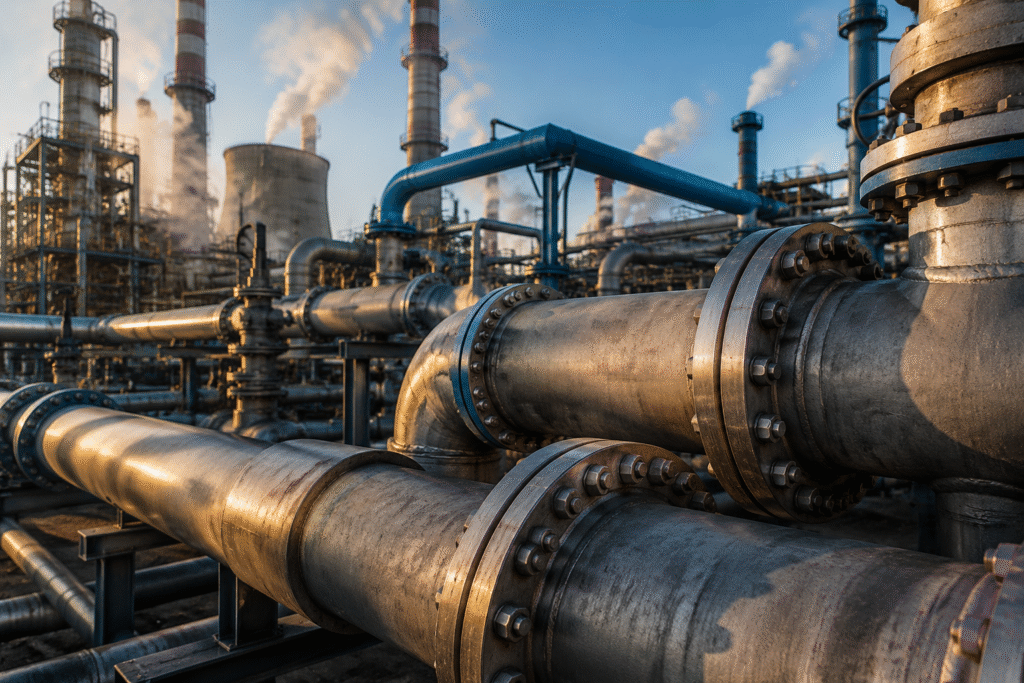
Paslanmaz Çelik Boru Flanş Kılavuzu: Türler, Kullanım Alanları, 5,8 Milyar Dolarlık Bir Pazarda Flanşlar Nasıl Seçilir?
Endüstriyel sistemler daha güçlü korozyon direnci gerektirdiğinden, paslanmaz çelik boru flanşı talebi artmaya devam ediyor, daha sıkı sızdırmazlık performansı, ve daha uzun servis ömrü. Grand View Araştırmasına göre (2024), küresel endüstriyel flanş pazarı şu şekilde değerlendi: $5.8 milyar 2023 ulaşılması öngörülüyor ve $7.2 milyar tarafından 2030, which highlights how critical flanges are for modern piping infrastructure.
Mühendisler ve satın alma yöneticileri için, en sık karşılaşılan zorluk flanş bulamamaktır, but choosing the right stainless steel pipe flange for pressure class, korozyon ortamı, imalat yöntemi, ve kod uyumluluğu. Öyleyse, this guide explains the intriguing material options, ortak flanş türleri, kullanır, standartlar, and buying criteria that matter in real projects.
Market Demand, Manufacturing Trends, and Why Stainless Steel Pipe Flange Selection Matters
Industrial buyers are sourcing more stainless steel components because downtime costs continue to increase across oil and gas, kimyasal işleme, güç, ve denizcilik sektörleri. Statista'ya göre (2024), Petrol ve gaz endüstrisi yaklaşık olarak 35% küresel flanş tüketiminin, which makes flange reliability a direct operational priority.
Regional supply dynamics also influence sourcing strategy. IBISWorld'e göre (2024), Asya-Pasifik'in hesapları 45% küresel flanş üretimi, Çin'in en büyük üretici olduğu, so buyers increasingly evaluate supplier quality systems alongside price and lead time.
These numbers matter because flange failure is rarely an isolated event. A wrong material grade, poor facing finish, or incorrect pressure-temperature rating can trigger leakage, planlanmamış kapanmalar, and expensive maintenance work.
Sonuç olarak, purchasing teams now ask deeper technical questions about ASTM grades, EN compatibility, muayene belgeleri, ve izlenebilirlik. This shift favors manufacturers that combine material range, işleme hassasiyeti, ve ihracat uyumluluğu.
SASA FLANGE operates in this quality-focused segment with stainless steel flanges, karbon çelik flanşlar, alaşım flanşlar, and pipe fittings for demanding industrial systems. İle ISO 9001:2015 ve PED 2014/68/EU sertifikaları, the company supplies projects that require verified dimensional accuracy, malzeme izlenebilirliği, and international code alignment.
Ek olarak, stainless grades remain attractive because they support a wide range of service conditions. Ortak malzemeler şunları içerir: 304, 316, 316L, 904L, dubleks 2205, süper dubleks 2507, and high-performance nickel alloys for aggressive media.
Mordor İstihbaratına göre (2024), global investment in water treatment and process infrastructure continues to expand, increasing demand for corrosion-resistant piping assemblies. In contrast to commodity carbon steel components, stainless steel pipe flange products often reduce lifecycle cost in wet, klorür taşıyan, or hygienic applications.
Procurement professionals should also consider the broader cost equation. Initial unit price is important; Yine de, değiştirme sıklığı, bakım işçiliği, medya uyumluluğu, and inspection burden often have a greater long-term impact.
That is why the most common specification packages now include flange standard, malzeme standardı, bakan tip, basınç sınıfı, test gereksinimleri, and certificate level. Örneğin, birçok alıcı talep ediyor EN 10204 3.1 sertifikalar, PMI, hidrostatik test kayıtları, Ve NACE MR0175 compliance for sour service projects.
Manufacturing capability is another differentiator. Gelişmiş CNC işleme ve kapsamlı kalite testleri ile desteklenmektedir, SASA FLANGE supports custom sizes from 1/2" 60'a kadar" across ANSI B16.5, ANSI B16.47, DIN, JIS, GOST, ve TR 1092 konfigürasyonlar.
Tedarikçileri karşılaştıran alıcılar için, this means fewer sourcing gaps between design intent and delivered product. It also means faster alignment when projects require mixed standards, özel sondaj, or non-standard dimensions.
Paslanmaz Çelik Boru Flanş Çeşitleri, Malzemeler, and Uses Engineers Most Commonly Compare
The most common buying question is simple: which flange type and grade fit the service conditions best. pratikte, the answer depends on pressure, sıcaklık, akışkan kimyası, boru programı, kaynak yöntemi, ve bakım erişimi.
As John Rezai, Kıdemli Boru Mühendisi, eyaletler: “A flange should never be selected by material alone; the sealing face, basınç sınıfı, and joint design are just as important as corrosion resistance.” This is why engineers evaluate the entire joint assembly, not only the stainless designation.
Material selection starts with understanding environment severity. ASTM A182 F304 and F304L are widely used for general process service, while F316 and F316L are preferred where chlorides, mild acids, or marine exposure increase corrosion risk.
Pazar Araştırması Geleceğine Göre (2024), stainless and alloy flanges are gaining share in high-spec process systems due to stricter safety and maintenance standards. Dahası, duplex and super duplex materials continue to expand in offshore and desalination applications where high strength and chloride resistance matter.
For many projects, these are the stainless steel pipe flange material options buyers most often compare:
- 304 and 304L for general corrosion resistance, iyi kaynaklanabilirlik, and broad availability.
- 316 and 316L for improved pitting resistance due to molybdenum addition.
- 904L for severe chemical service with enhanced resistance in acidic environments.
- 2205 duplex for higher strength and better chloride stress corrosion cracking resistance.
- 2507 super duplex for aggressive offshore, deniz suyu, ve yüksek klorür koşulları.
- İnkonel, Monel, Hastelloy, and Titanium for highly specialized process duties.
The intriguing part of stainless selection is that higher alloy content does not automatically mean better value. Yerine, the correct grade is the one that meets corrosion allowance, kod uyumluluğu, and service life targets without unnecessary cost escalation.
Engineers also compare flange designs based on connection type and maintenance strategy. Slip-on flanges are common in lower-pressure systems because they are easier to align, while weld neck flanges are preferred for cyclic loading, termal şok, and high-pressure service.
Soket kaynağı, dişli, kucak eklemi, and blind flanges serve more specific uses. Öyleyse, understanding the mechanical behavior of each design is essential before final procurement.
- Kaynak boyunlu flanş: yüksek basınç için en iyisi, yüksek sıcaklık, ve kritik süreç hatları.
- Geçmeli flanş: economical for moderate service and easier shop fit-up.
- Kör flanş: used to terminate, izole etmek, or future-proof line ends.
- Soket kaynak flanşı: suitable for small-bore high-pressure piping.
- Dişli flanş: practical where welding is restricted or field work is limited.
- Bindirme flanşı: useful when frequent dismantling and stub end rotation are needed.
Buna göre ASME B16.5, flanş boyutları, toleranslar, basınç-sıcaklık değerleri, and facing requirements must align with designated class and material groups (ASME, 2023). Sonuç olarak, the same nominal size can perform very differently depending on class 150, 300, 600, or higher ratings.
Dr. olarak. Meera Khanna, Materials Consultant, eyaletler: “Klorür içeren sistemlerde, moving from 304L to 316L or duplex can dramatically improve reliability, but only if fabrication and welding controls are equally robust.” That observation is especially relevant for water treatment, deniz, ve kimyasal hatlar.
SASA FLANGE flanşlar üretmektedir 304, 316, 904L, 2205, 2507 and other premium grades for industrial users that need consistency across large procurement packages. Üstelik, the company can match flange supply with elbows, tişört, redüktörler, and caps to simplify sourcing and inspection.
Procurement teams should also verify dimensional series and mating compatibility before ordering. A stainless steel pipe flange built to EN 1092 may not directly interchange with an ASME B16.5 mating flange without careful review of drilling, kalınlık, and pressure designation.
For buyers handling mixed-project requirements, SASA FLANGE ürün yetenekleri support standard and custom manufacturing for oil and gas, petrokimya, enerji üretimi, gemi yapımı, deniz, su arıtma, ve inşaat. This flexibility helps engineers choose flanges based on service conditions rather than supplier limitations.
ASME, ASTM, DIN, and EN Standards That Define Stainless Steel Flanges Compliance
Standards determine whether a flange is acceptable for design, denetleme, and plant operation. Öyleyse, every serious purchase order should reference both dimensional and material standards, not just a generic stainless description.
The most common dimensional standards include ASME B16.5 NPS için 1/2 başından sonuna kadar 24 Ve ASME B16.47 daha büyük çaplar için. Avrupa'da ve birçok ihracat projesinde, EN 1092 and DIN flange standards remain common, while JIS and GOST apply in specific regional markets.
Malzeme standartları da aynı derecede önemlidir. ASTM A182 dövme veya haddelenmiş alaşımlı ve paslanmaz çelik boru flanşlarını kapsar, dövme bağlantı parçaları, vanalar, ve yüksek sıcaklıkta servis için parçalar, sırasında ASTM A240 covers stainless plate, çarşaf, basınçlı kaplar ve genel uygulamalar için şerit ve şeritler (ASTM, 2024).
In corrosive upstream service, buyers may also require NACE MR0175 veya ISO 15156 compliance for sour environments. Ek olarak, PED 2014/68/EU may apply where pressure equipment enters regulated European markets.
Below is a practical comparison of the most common standards engineers review:
- ASME B16.5: boyutlar, derecelendirmeler, toleranslar, and facings for common flange sizes.
- ASME B16.47: large-diameter flanges for larger pipeline systems.
- ASME B16.9: dimensions for buttweld pipe fittings used with flange-connected systems.
- ASTM A182: stainless and alloy forged flange material specification.
- EN 1092-1: Avrupa flanş boyutları ve basınç tanımları.
- DIN standartları: legacy and application-specific metric flange systems.
- NACE MR0175: material requirements for H2S-containing environments.
- EN 10204 3.1: inspection certificate confirming test results and traceability.
ISO'ya göre (2023), traceability and documented quality controls are central to risk reduction in pressure equipment supply chains. That is why top-tier projects increasingly request heat number traceability, PMI, hardness reports, and third-party inspection releases.
Facing type is another critical area that buyers sometimes underestimate. Yükseltilmiş yüz, düz yüz, halka tipi eklem, and tongue-and-groove arrangements all influence gasket performance and bolt load distribution.
As Michael Turner, Piping Systems Analyst, eyaletler: “Most flange leakage events are not caused by one defect; they result from small errors in standard selection, gasket choice, and installation torque stacking together.” Sonuç olarak, technical review before ordering often prevents expensive commissioning delays.
SASA FLANGE bu gereksinimi desteklemektedir ISO 9001:2015, PED 2014/68/AB, ve AD 2000 aligned manufacturing documentation for export-oriented projects. Dahası, buyers can request material certificates, boyutsal inceleme raporları, and other quality records based on project scope.
Tedarik yöneticileri için, a useful rule is to specify at least these data points on every RFQ:
- Flange type and nominal size.
- Basınç sınıfı veya PN derecesi.
- Material grade and standard.
- Facing type and surface finish requirement.
- Miktar, application medium, and design temperature.
- Required certificates such as EN 10204 3.1, PED, or NACE.
- Testing such as PMI, hidrotest desteği, sertlik, or dye penetrant when applicable.
Detailed specifications reduce quotation ambiguity. They also help manufacturers provide the correct stainless steel pipe flange solution without repeated clarification cycles.
Daha derin standart referansı için, engineers can review official dimensional requirements directly at ASME.org. Fakat, many buyers prefer working with suppliers that can interpret those standards and convert them into production-ready deliverables.
Yağ İçin Flanş Nasıl Seçilir & Gaz, Kimyasal, Güç, Deniz, and Water Treatment Projects
Choosing flanges begins with the process environment, katalog sayfası değil. The right selection balances corrosion resistance, basınç bütünlüğü, fabrication practicality, inspection needs, ve yaşam döngüsü maliyeti.
Petrol ve gaz sistemlerinde, yüksek basınç, titreşim, and sour media often push designers toward weld neck flanges in ASTM A182 F316L, dubleks 2205, or higher alloy grades. Statista'ya göre (2024), this sector represents around 35% küresel flanş talebinin, so proven reliability under cyclic service remains a top concern.
Petrokimya ve kimya hizmetinde, fluid chemistry usually drives grade selection. 316L works well in many moderate chloride environments, 904L ise, Hastelloy, or other high-performance alloys may be necessary for more aggressive acids or mixed chemical streams.
Power generation projects often prioritize thermal stability and pressure capability. Öyleyse, engineers frequently choose forged flanges with controlled metallurgy and strict dimensional tolerances for steam, yoğunlaşma, ve yardımcı proses hatları.
Marine and shipbuilding applications bring a different challenge because seawater exposure increases the risk of pitting and crevice corrosion. In these uses, 2205 Ve 2507 duplex grades often deliver a stronger strength-to-corrosion-resistance balance than standard austenitic stainless options.
Water treatment plants typically need dependable corrosion resistance, temizlenebilirlik, ve maliyet verimliliği. Sonuç olarak, 304L, 316L, and duplex materials are common depending on chloride content, dezenfeksiyon kimyası, and system pressure.
Buyers should evaluate these criteria before they choose flanges:
- Operating pressure, sıcaklık, and pressure cycling frequency.
- Sıvı bileşimi, klorür seviyesi, pH, and contamination risk.
- Gerekli flanş tipi, karşı karşıya, and mating component compatibility.
- Pipe schedule and welding procedure compatibility.
- Denetleme, sertifikasyon, and regional compliance requirements.
- Maintenance access and disassembly frequency.
- Kurşun zamanı, total installed cost, ve beklenen hizmet ömrü.
According to DNV guidance for marine and offshore systems (DNV, 2023), material selection should account for both nominal design conditions and upset scenarios. This is important because localized corrosion often accelerates when actual operating chemistry differs from design assumptions.
Örneğin, A 4 Sınıfta inç paslanmaz çelik boru flanşı 150 may suit a utility water header, while the same line in a chloride-rich marine skid may require 316L or duplex with a different facing and gasket arrangement. Benzer şekilde, a large-diameter process line may demand ASME B16.47 dimensions rather than B16.5.
Custom manufacturing becomes especially valuable when projects combine non-standard drilling, special wall thickness transitions, or mixed international standards. SASA FLANGE supports custom sizes from 1/2" 60'a kadar" with factory-direct supply for projects that need tailored dimensions, alloy matching, or special documentation.
Ek olarak, combining flanges and fittings from one source can reduce mismatch risk during site assembly. Buyers handling EPC packages often prefer this approach because it simplifies quality control, lojistik, ve son muayene.
For companies comparing stainless steel flange price against lifecycle performance, the best decision is usually evidence-based rather than purely budget-based. A slightly higher-grade flange can reduce replacement frequency and leakage exposure, which often delivers a stronger total cost position over time.
That is why many project teams involve engineering, KG, and procurement in the same supplier evaluation. When material expertise and manufacturing capability are aligned, the flange selection process becomes faster and more accurate.
Paslanmaz Çelik Flanşların Geleceğe Bakışı ve Stratejik Satın Alma Önerileri
The market outlook remains positive as infrastructure renewal, energy projects, and water treatment investment continue to expand. Grand View Araştırmasına göre (2024), endüstriyel flanş pazarının büyümesi bekleniyor $5.8 milyar 2023 ile $7.2 milyar tarafından 2030, indicating sustained purchasing activity across multiple sectors.
Aynı zamanda, specification complexity is increasing. Buyers now expect traceability, global standard compatibility, and material options that can handle more aggressive process conditions with fewer maintenance events.
Mordor İstihbaratına göre (2024), industrial processing growth in Asia and the Middle East is increasing demand for corrosion-resistant piping components. Öyleyse, suppliers that offer broad material coverage, ihracat belgeleri, and precision machining will gain a larger share of high-value projects.
Stratejik olarak, buyers should standardize approved flange grades and dimensions wherever possible. This reduces spare part complexity, improves installation consistency, and shortens future procurement cycles.
It is also wise to qualify suppliers beyond unit price alone. Review certification scope, işleme yeteneği, inspection resources, delivery reliability, and responsiveness to technical deviations.
For many procurement teams, the most common mistake is under-specifying critical details during RFQ release. Tersine, detailed technical inquiry packages improve quote accuracy and make supplier comparison much easier.
SASA FLANGE hizmet ediyor 50+ Petrol genelindeki ülkeler & Gaz, Petrokimya, Güç, and Marine industries with stainless steel flanges and fittings built for international project requirements. For buyers seeking a dependable manufacturing partner with premium grades, global standard coverage, ve duyarlı teknik destek, ile bağlantı kurmak SASA FLANGE early in the design or bidding stage can simplify both selection and supply planning.
Sıkça Sorulan Sorular
Farklı paslanmaz çelik flanş türleri nelerdir??
●Buna göre ASME B16.5 (ASME, 2023), the most common stainless steel flange designs include weld neck, bağcıksız, kör, soket kaynağı, dişli, ve bindirme eklemi türleri.
●Each type serves a different mechanical purpose, because weld neck flanges suit high-pressure and thermal cycling service while slip-on flanges are often chosen for easier alignment and lower-cost fabrication.
●For projects requiring exact type selection, basınç sınıfı incelemesi, Ve EN 10204 3.1 dokümantasyon, gibi yerleşik üreticilerle çalışmak SASA FLANGE helps ensure the flange matches the piping duty and standard requirement.
Hangisi daha iyi 304 veya 420 paslanmaz çelik?
●For flange applications, 304 stainless steel is usually the better option because it offers stronger corrosion resistance and broader use in process piping than 420, which is a martensitic grade more often selected for hardness.
●According to ASTM material classifications and common industry practice, ASTM A182 F304 is widely used in flange manufacturing, sırasında 420 is less common for pressure piping flanges due to lower corrosion performance in many wet industrial environments.
●If the service includes moisture, kimyasallar, or outdoor exposure, buyers should generally specify 304, 316, or duplex grades rather than 420, and they should confirm suitability with a qualified supplier such as SASA FLANGE.
Üç tip flanş nedir?
●The three flange types most commonly referenced in basic piping discussions are weld neck, bağcıksız, and blind flanges because they cover the majority of standard connection and isolation needs.
●Weld neck flanges perform best in critical service, slip-on flanges are common in moderate-duty lines, and blind flanges are used to close pipe ends or provide future expansion points.
●Although these three are the most common, engineers should also consider socket weld, dişli, and lap joint designs when operating pressure, bakım sıklığı, or installation restrictions make another option more suitable.
Paslanmaz çelik flanşlar için ASME Kodu nedir?
●Paslanmaz çelik flanşlar için birincil ASME boyut kodu ASME B16.5 for sizes NPS 1/2 başından sonuna kadar 24, sırasında ASME B16.47 covers many larger-diameter flange dimensions.
●Material compliance is usually specified separately through ASTM standards such as ASTM A182 dövme paslanmaz çelik flanşlar için, so buyers should reference both the ASME and ASTM standards on the purchase order.
●To avoid mismatch between dimensions, basınç sınıfı, ve malzeme kalitesi, procurement teams should request complete technical quotations from manufacturers that understand ASME, ASTM, DIN, ve EN gereklilikleri.
What stainless steel pipe flange sizes are most common in industrial projects?
●Industrial projects most commonly use stainless steel pipe flange sizes from 1/2 inç ila 24 inç altında ASME B16.5, although larger sizes are widely used in transmission, fayda, and process systems under ASME B16.47.
●According to ASME standard scope and common market demand, small and mid-size flanges dominate facility maintenance and skid fabrication, while larger diameters are more common in water, deniz, and major process infrastructure.
●Buyers should always confirm nominal pipe size, basınç sınıfı, and facing type together, because a 4 inch stainless steel pipe flange can vary significantly in thickness, cıvata deseni, and weight depending on the governing standard.
How do I choose the right stainless steel pipe flange for corrosive service?
●Choosing the right flange for corrosive service starts with fluid chemistry, klorür konsantrasyonu, çalışma sıcaklığı, ve basınç, because these factors determine whether 304L, 316L, 904L, 2205, veya 2507 uygun.
●DNV'ye göre (2023) and common materials engineering guidance, chloride-rich and marine environments often require 316L or duplex grades instead of 304L to reduce pitting and crevice corrosion risk.
●For corrosive applications, buyers should request material traceability, standart uyumluluk, and quality documents such as EN 10204 3.1, and they should consult an experienced manufacturer before finalizing the grade and flange type.
İlgili Mesajlar
Flanş Yüzü Kaplaması: Eşmerkezli ve Spiral Tırtıkların Açıklaması
Eşmerkezli ve spiral tırtılların her ikisi de işlenmiş flanş yüzeyidir…
Dubleks 2205 316L Flanşlara Karşı: Hangi Malzemeyi Seçmelisiniz?
Hızlı cevap: Dubleks 2205 flanşlar genellikle daha güçlü adaydır…

Orifis Flanşı Tanımı, Ayrıntılar ve ASME B16.36 Flanşlara Genel Bakış: Piyasa Verileri, Seçim Kılavuzu ve Uyumluluk Bilgileri
Küresel endüstriyel flanş pazarı şu şekilde değerlendi: $5.8 milyar…

Siyah Bertaraf Flanşı Pazar Rehberi: Malzemeler, 3.5″ Uyumluluk, Mutfak Lavabo Flanşları için B2B Kaynak Verileri
Mutfak armatürü alıcıları nedeniyle siyah atık flanş talebi artıyor…