
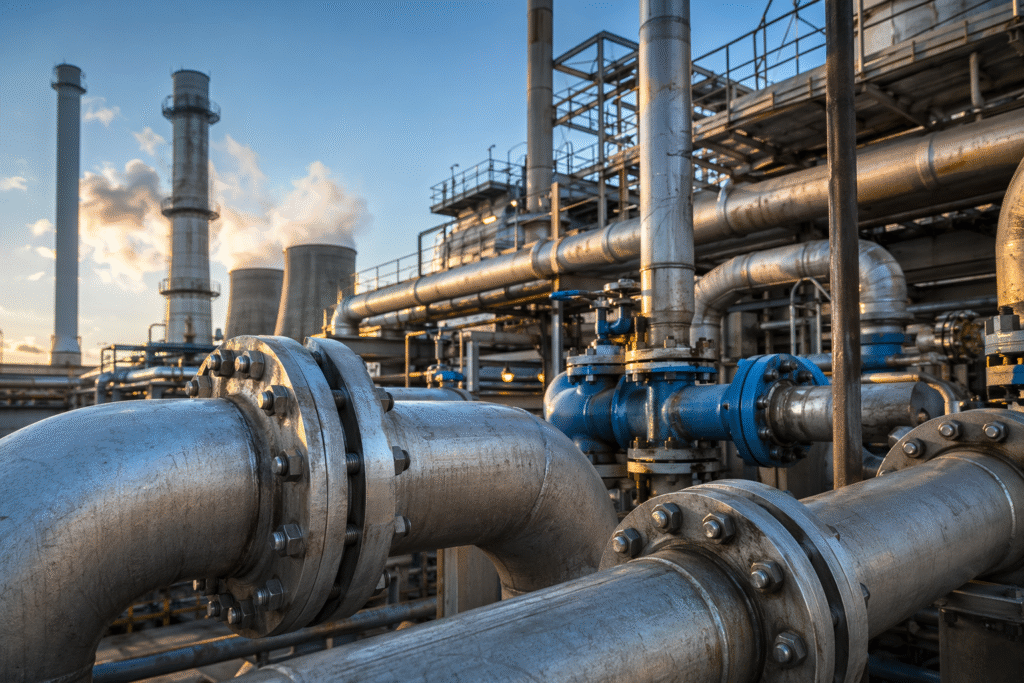
Thị trường mặt bích ống thép không gỉ: 7 Ưu điểm tiềm ẩn, Các loại, Công dụng, và Cách chọn ASME B16.5 & Mặt bích B16.47
Theo nghiên cứu của Grand View (2024), thị trường mặt bích công nghiệp toàn cầu được định giá ở mức $5.8 tỷ trong 2023 và dự kiến sẽ đạt $7.2 tỷ bởi 2030. Sự tăng trưởng đó nêu bật lý do tại sao mặt bích ống thép không gỉ remains a critical component for engineers, Nhà thầu EPC, and procurement teams seeking corrosion resistance, tính toàn vẹn áp lực, và tuổi thọ dài.
Đối với người mua công nghiệp, yếu tố hấp dẫn nhất không chỉ là giá cả, but also the hidden advantages of selecting the right flange material, lớp áp lực, và tiêu chuẩn. Vì thế, this guide explains flange types, công dụng, ASME requirements, and practical selection criteria for demanding pipe systems.
Industrial Demand for Stainless Steel Pipe Flange in Global Process Markets
Theo IBISWorld (2024), Châu Á - Thái Bình Dương chiếm hơn 45% sản xuất mặt bích toàn cầu, với Trung Quốc là nhà sản xuất lớn nhất. Kết quả là, sourcing strategies increasingly focus on qualified Chinese exporters that can deliver ASME, DIN, JIS, GOST, and EN compliant products with full material traceability.
Theo Statista (2024), ngành dầu khí chiếm khoảng 35% tiêu thụ mặt bích toàn cầu. Hơn thế nữa, chế biến hóa dầu, phát điện, đóng tàu, and water treatment continue to drive demand for stainless steel pipe flange products in 304, 316, hai mặt, và các loại hợp kim niken.
These numbers matter because flange failure can shut down an entire line. Ngược lại, a correctly specified flange improves joint integrity, reduces maintenance intervals, and supports safer operation under thermal cycling, rung động, và phương tiện ăn mòn.
Theo Mordor Intelligence (2024), industrial infrastructure investments in energy and water sectors continue to support steady growth in piping components across emerging markets. Hơn nữa, buyers now prioritize suppliers that can combine machining precision, EN 10204 3.1 tài liệu, và thời gian thực hiện ngắn.
The hidden advantages of stainless steel are especially relevant in facilities handling chlorides, axit, hơi nước, and high-purity fluids. Ví dụ, 316L stainless steel flange products usually outperform 304 in chloride exposure because molybdenum improves pitting resistance, while low carbon content helps reduce sensitization during welding.
As John Martinez, Kỹ sư đường ống cao cấp, tiểu bang: “A flange is a small component in cost share, but it is a major component in reliability strategy.” That insight reflects procurement reality, because flange quality often influences inspection frequency, leak risk, and lifecycle cost more than buyers expect.
SASA FLANGE hoạt động trong môi trường này với ISO 9001:2015 và chứng nhận PED 2014/68/EU. Ngoài ra, công ty cung cấp inox, thép cacbon, hợp kim, hai mặt, and special material flanges and fittings for clients across Oil & Khí đốt, hóa dầu, Quyền lực, Hàng hải, và xử lý nước.
Được hỗ trợ bởi gia công CNC tiên tiến và kiểm tra chất lượng toàn diện, SASA FLANGE sản xuất sản phẩm ở 304, 316, 316L, 904L, 2205, 2507, A105, A182, Inconel, Monel, Hastelloy, và lớp Titan. Vì thế, buyers can align corrosion performance, đánh giá áp lực, and budget with actual service conditions instead of relying on generic substitution.
Theo Nghiên cứu thị trường Tương lai (2024), industrial stainless component demand is rising as operators seek longer asset life and lower maintenance costs. Do đó, flange sourcing has become a technical purchasing decision rather than a simple commodity buy.
Ưu điểm tiềm ẩn, Flanges Types, and Technical Factors Engineers Should Evaluate
The most intriguing aspect of a stainless steel pipe flange is its ability to combine strength, chống ăn mòn, and maintainability in one connection point. Tuy nhiên, those benefits only appear when engineers match flange type, đối mặt, đánh giá, and metallurgy to the pipe system.
Theo ASME B16.5, kích thước mặt bích, dung sai, xếp hạng nhiệt độ áp suất, đánh dấu, and materials are standardized for NPS 1/2 bởi vì 24. Song song, ASME B16.47 covers larger diameter flanges from NPS 26 bởi vì 60, thường gặp trong truyền tải, hàng hải, and large process pipelines (ASME, 2023).
Như Tiến sĩ. Helen Chu, Nhà khoa học vật liệu, tiểu bang: “The best flange selection is a corrosion and temperature decision first, and a price decision second.” Vì thế, lựa chọn 304, 316L, 904L, 2205, hoặc 2507 should follow fluid chemistry, mức độ clorua, phạm vi nhiệt độ, và phương pháp chế tạo.
Trong thực tế, engineers often evaluate the following flange types for industrial pipe systems:
- Mặt bích cổ hàn cho áp suất cao, đạp xe nhiệt, and critical services.
- Slip-on flange for moderate pressure applications with easier alignment and lower fabrication cost.
- Mặt bích mù để cách ly đường dây, thử thủy lực, và các điểm mở rộng trong tương lai.
- Socket weld flange for small bore, đường ống cao áp.
- Threaded flange for low-pressure systems where welding is undesirable.
- Mặt bích khớp nối cho các hệ thống cần tháo dỡ thường xuyên.
Each flange type has hidden advantages. Ví dụ, weld neck designs distribute stress more evenly at the hub-to-pipe transition, while blind flanges provide strong end closure for pressure testing and maintenance isolation.
Lựa chọn chất liệu cũng quan trọng không kém. ASTM A182 thường chi phối mặt bích thép không gỉ và hợp kim giả mạo, trong khi ASTM A240 covers plate materials used in related components and fabrication (ASTM, 2024).
For most chemical and utility systems, common stainless choices include:
- 304/304L for general corrosion resistance and cost-effective performance.
- 316/316L for chloride-bearing media and better pitting resistance.
- 321 Và 347 grades for elevated temperature stabilization.
- 904L for aggressive acidic environments.
- 2205 song công và 2507 super duplex for high strength and chloride stress corrosion resistance.
According to NACE guidance used widely in sour service selection, chloride and H2S exposure can rapidly narrow acceptable alloy options (NACE, 2023). Kết quả là, duplex and high-alloy stainless flange products are increasingly chosen for offshore, nước sản xuất, and desalination lines.
Pressure class also changes the buying decision. ASME classes such as 150, 300, 600, 900, 1500, Và 2500 define flange strength and sealing capability under temperature-related derating.
Dành cho người quản lý mua sắm, the practical comparison often includes these factors:
- Pressure-temperature rating by ASME class.
- Đối mặt với loại như RF, RTJ, hoặc FF.
- Dimensional standard such as ASME B16.5, ASME B16.47, DIN, hoặc VN 1092.
- Tiêu chuẩn vật liệu như ASTM A182 F304, F316L, F51, hoặc F53.
- Inspection documents including EN 10204 3.1 MTC.
- NDT requirements such as PMI, PT, UT, và kiểm tra độ cứng.
According to ISO requirements referenced by many EPC specifications, traceability and documented inspection are essential for pressure equipment quality systems (ISO, 2023). Vì thế, a low initial unit price may become expensive if reinspection, rejection, or unplanned downtime occurs.
A well-chosen stainless steel pipe flange also simplifies maintenance planning. Hơn thế nữa, stainless flanges generally support repeated disassembly better than lower-grade alternatives in clean service, chế biến thực phẩm, và hệ thống xử lý nước, where contamination control and surface condition matter.
SASA FLANGE cung cấp kích thước tùy chỉnh từ 1/2" đến 60" với giá cả cạnh tranh trực tiếp tại nhà máy. Ngoài ra, the company supports RF, FF, RTJ, xâu chuỗi, ổ cắm hàn, mù, and weld neck configurations manufactured to ANSI B16.5, ANSI B16.47, DIN, JIS, GOST, và VN 1092 yêu cầu.
Phục vụ 50+ các quốc gia trên khắp dầu mỏ & Khí đốt, hóa dầu, Quyền lực, và ngành hàng hải, SASA FLANGE aligns supply with real project documentation needs. Ví dụ, buyers often request PMI, kiểm tra chiều, hydrostatic support data, và đóng gói phù hợp cho hậu cần xuất khẩu.
Như Mark Ellison, Nhà phân tích thị trường công nghiệp, tiểu bang: “Procurement leaders now value certified documentation nearly as much as they value delivered price.” That trend is especially clear in PED projects, offshore packages, and owner-approved vendor lists.
Theo nghiên cứu của Grand View (2024), capital investment in industrial processing equipment remains a major support factor for connection components and maintenance demand. Do đó, stainless flange buyers should focus on specification accuracy, chi phí vòng đời, and supplier consistency instead of comparing only quote totals.
ASME, ASTM, DIN, and EN Requirements for Stainless Steel Flanges Compliance
Standards compliance is where many flange projects succeed or fail. Vì thế, engineers should distinguish clearly between dimensional standards, material standards, yêu cầu kiểm tra, and regional regulatory requirements.
ASME B16.5 bao gồm mặt bích ống và phụ kiện mặt bích cho NPS 1/2 bởi vì 24. Ngược lại, ASME B16.47 applies to large diameter steel flanges from NPS 26 bởi vì 60, with Series A and Series B dimensional differences that affect bolt patterns and compatibility (ASME, 2023).
ASTM A182 specifies forged or rolled alloy and stainless steel flange materials for high-temperature service. Ngoài ra, ASTM material designations such as F304, F304L, F316, F316L, F51, and F53 help engineers define chemistry and mechanical properties more precisely.
Các dự án châu Âu thường yêu cầu EN 1092 dimensional compliance and PED 2014/68/EU documentation. Tương tự, DIN legacy references remain common in maintenance and retrofit environments, especially where older installed systems must match existing components.
The following summary helps clarify the main standards landscape:
- ASME B16.5: Kích thước, dung sai, lớp áp lực, and marking for NPS 1/2 ĐẾN 24.
- ASME B16.47: Kích thước mặt bích đường kính lớn cho NPS 26 ĐẾN 60.
- ASME B16.9: Các phụ kiện hàn mông do nhà máy sản xuất như khuỷu tay, áo thun, bộ giảm tốc, và mũ.
- ASTM A182: Forged stainless and alloy steel materials for flanges and fittings.
- EN 1092: Kích thước mặt bích châu Âu và ký hiệu áp suất.
- NACE MR0175/ISO 15156: Hướng dẫn vật liệu cho môi trường dịch vụ chua.
Theo khuôn khổ PED của Ủy ban Châu Âu, pressure equipment compliance requires technical documentation, đánh giá sự phù hợp, and appropriate material traceability for applicable equipment categories (PED, 2014). Kết quả là, project buyers should verify not just the flange standard, but also the complete documentation package.
For corrosion-critical services, standards alone do not guarantee field performance. Tuy nhiên, they create the baseline for interchangeability, qualification, and quality consistency across global supply chains.
Trong điều kiện mua sắm thực tế, buyers should confirm these documentation points before purchase:
- Giấy chứng nhận kiểm tra vật liệu EN 10204 3.1.
- Heat number traceability on each flange.
- Báo cáo kiểm tra kích thước.
- PMI report for stainless, hai mặt, và các loại hợp kim niken.
- Surface finish and facing inspection.
- Packing and marking requirements by project specification.
According to DNV expectations in many marine and offshore supply chains, traceability and inspection records significantly reduce non-conformance risk during audits and installation reviews (DNV, 2023). Vì thế, consistent QA systems matter as much as machining capacity.
SASA FLANGE hỗ trợ các yêu cầu này với ISO 9001:2015, PED 2014/68/EU, và AD 2000 chứng chỉ. Hơn thế nữa, the company manufactures stainless steel flanges and pipe fittings under documented quality procedures suited to EPC, nhà phân phối, and end-user sourcing models.
Dành cho người mua so sánh nhà cung cấp, one useful hidden advantage is standard flexibility. A supplier capable of ASME, DIN, JIS, GOST, and EN execution can simplify global projects, spare parts planning, and mixed-site maintenance programs.
Engineers should also review sealing face compatibility. Ví dụ, RF flanges dominate general industrial service, while RTJ flanges are preferred in higher pressure and critical hydrocarbon duties because the metal ring gasket offers robust sealing under severe service conditions.
For official dimensional and code references, người mua có thể tham khảo ASME. That step is valuable when project teams need to verify class ratings, kích thước, or code cross-references during design review.
Cách chọn mặt bích ống thép không gỉ cho dầu, Khí đốt, Hóa chất, Quyền lực, và sử dụng hàng hải
Choosing the right stainless steel pipe flange begins with the service environment, không phải trang danh mục. Vì thế, engineers should define media composition, áp suất vận hành, nhiệt độ thiết kế, trợ cấp ăn mòn, and maintenance frequency before selecting a flange type or grade.
Oil and gas systems often require strong performance under pressure cycling, rung động, and corrosive exposure. In these lines, weld neck and RTJ flange options are common, while duplex or super duplex materials may be preferred for seawater, injection, and offshore splash-zone duties.
Theo Statista (2024), dầu khí đại diện cho khoảng 35% tiêu thụ mặt bích toàn cầu. Do đó, project specifications in this sector tend to be highly detailed, often requiring NACE compliance, PMI, xác minh độ cứng, and strict MTC control.
Chemical processing lines usually demand corrosion resistance first. Ví dụ, 316L, 904L, Hastelloy, or Monel flange products may be specified depending on chlorides, axit, nhiệt độ, and concentration.
Power generation projects focus heavily on thermal cycles and pressure integrity. Vì thế, engineers may select higher class flanges, stabilized stainless grades, or alloy materials for steam, ngưng tụ, and high-temperature auxiliary lines.
Marine and shipbuilding applications present a different challenge because saltwater exposure accelerates pitting and crevice corrosion. Kết quả là, 316L, 2205, Và 2507 often become more attractive than 304 in deck piping, vật dằn, máy chà sàn, và hệ thống nước biển.
The following checklist helps procurement teams choose more effectively:
- Confirm pipe size, độ dày của tường, and matching schedule.
- Verify design pressure, nhiệt độ, and ASME class.
- Select flange type based on service criticality and maintenance needs.
- Match gasket and facing style to sealing requirements.
- Review corrosion data for chlorides, axit, H2S, or seawater.
- Specify required test certificates and inspection scope.
- Check regional standards such as ASME, EN, DIN, hoặc JIS.
Another hidden advantage is total installed cost control. A slightly higher-grade flange can reduce replacement frequency, tắt máy, and leak risk, which often delivers better economics across the asset lifecycle.
Ví dụ, Một 4 inch stainless steel pipe flange used in a water treatment skid may only need ASME Class 150 and 316L material. Ngược lại, a similar nominal size in offshore injection service could require duplex material, đối mặt với RTJ, stricter NDT, and tighter traceability controls.
Theo Nghiên cứu thị trường Tương lai (2024), water infrastructure upgrades continue to increase demand for corrosion-resistant piping components worldwide. Vì thế, municipal and industrial water projects are becoming important growth segments for stainless and duplex flange procurement.
SASA FLANGE supports custom manufacturing for non-standard drilling, đối mặt, and material combinations. Ngoài ra, công ty có thể cung cấp khuỷu tay phù hợp, áo thun, bộ giảm tốc, and caps to simplify package procurement for complete piping systems.
For distributors and EPC contractors, consolidated sourcing can shorten project timelines. Hơn thế nữa, factory-direct coordination helps reduce dimensional mismatch risk between the flange, miếng đệm, bu lông, and mating pipe or fitting.
When buyers need guidance on flange types, nguyên vật liệu, or project documentation, early technical review is essential. Đối với các dự án yêu cầu kích thước tùy chỉnh, hợp kim cao cấp, or fast delivery, liên lạc SASA FLANGE early can improve specification accuracy and purchasing efficiency.
Future Outlook for Stainless Flange Procurement and Strategic Buying Recommendations
The outlook for stainless flange demand remains positive as energy, Nước, hàng hải, and process industries continue upgrading aging infrastructure. Theo nghiên cứu của Grand View (2024), thị trường mặt bích công nghiệp dự kiến sẽ đạt $7.2 tỷ bởi 2030, which indicates stable long-term procurement activity.
Đồng thời, người mua đang trở nên chọn lọc hơn. Vì thế, supplier evaluation increasingly includes not only price, but also certification status, khả năng gia công, kinh nghiệm xuất khẩu, traceability systems, and response speed.
One intriguing shift is the move toward lifecycle-based purchasing. Instead of choosing the lowest initial quote, procurement teams now compare maintenance cost, failure risk, and expected service life across 304, 316L, hai mặt, and high-alloy flange options.
Digital sourcing also changes buyer behavior. Ví dụ, engineers often search terms like stainless steel pipe flange sizes, các loại mặt bích thép không gỉ, mặt bích ống ren bằng thép không gỉ, and stainless steel pipe flange price before issuing RFQs.
That search behavior means supplier content must answer technical and commercial questions clearly. Hơn thế nữa, pages that combine standards guidance, so sánh vật chất, and application advice are more likely to support both SEO performance and conversion quality.
Về mặt chiến lược, buyers should follow five practical recommendations:
- Standardize approved materials for recurring services.
- Sơ tuyển các nhà cung cấp với ISO 9001:2015 và khả năng PED.
- Lời yêu cầu EN 10204 3.1 certificates and PMI for critical grades.
- So sánh giá trị vòng đời, không chỉ đơn giá.
- Use suppliers that can deliver both flanges and fittings for package consistency.
Theo IBISWorld (2024), China remains central to global flange manufacturing capacity. Kết quả là, working with experienced exporters that understand international standards and documentation can create significant cost and schedule advantages.
For companies balancing quality, vận chuyển, và tuân thủ toàn cầu, a data-driven sourcing approach is the safest path. When your next project requires ASME B16.5, B16.47, DIN, or EN compliant stainless steel flange solutions, discussing specifications with SASA FLANGE can help align technical needs with reliable factory supply.
Câu hỏi thường gặp
Các loại mặt bích thép không gỉ khác nhau là gì?
●Các loại mặt bích inox chính là cổ hàn, trượt trên, mù, ổ cắm hàn, xâu chuỗi, và khớp nối, Và ASME B16.5 defines the dimensional framework for most standard sizes up to NPS 24.
●Theo Statista (2024), oil and gas consumes about 35% của mặt bích toàn cầu, so weld neck and blind designs are especially common in high-integrity process lines.
●For critical pipe systems, engineers should choose flange types based on pressure class, đối mặt với phong cách, quyền truy cập bảo trì, và môi trường ăn mòn, and established manufacturers like SASA FLANGE can support matching material and standard selection.
Cái nào tốt hơn 304 hoặc 420 thép không gỉ?
●Đối với hầu hết các ứng dụng mặt bích ống thép không gỉ, 304 nói chung là tốt hơn 420 bởi vì 304 offers superior corrosion resistance, khả năng hàn, and formability for industrial piping service.
●ASTM A182 flange grades such as F304 and F304L are widely used in pressure systems, trong khi 420 is a martensitic stainless steel more often selected for hardness and wear resistance than for corrosive process piping.
●Buyers should usually select 304 for general flange service and move to 316L or duplex for harsher environments, while consulting experienced suppliers like SASA FLANGE when chloride exposure or elevated temperatures are involved.
Ba loại mặt bích là gì?
●The three most commonly referenced flange types in general industry are weld neck, trượt trên, and blind flanges because they cover most pressure connection, cài đặt, và nhu cầu cách ly.
●Theo ASME B16.5, these flange categories are standardized for dimensions, khoan, và xếp hạng nhiệt độ áp suất, which helps ensure interchangeability across many pipe systems.
●For most projects, weld neck suits severe service, slip-on suits moderate duty, and blind suits end closure or hydrotesting, so buyers should match the type to service risk and maintenance plans.
Mã ASME cho mặt bích thép không gỉ là gì?
●Các tiêu chuẩn ASME chính cho mặt bích bằng thép không gỉ là ASME B16.5 cho NPS 1/2 bởi vì 24 Và ASME B16.47 cho NPS 26 bởi vì 60, trong khi ASTM A182 commonly defines the forged stainless material grade.
●These standards cover dimensions, lớp áp lực, dung sai, mặt đối mặt, và đánh dấu, but project compliance may also require PED, EN 1092, hoặc NACE MR0175 tùy thuộc vào ứng dụng.
●Procurement teams should specify both the ASME dimensional standard and the ASTM material grade in every RFQ to avoid mismatched flange supply and documentation issues.
Làm cách nào để chọn đúng kích thước mặt bích ống thép không gỉ và cấp áp suất?
●Kích thước mặt bích phải phù hợp với NPS của ống và tiến độ, while pressure class such as 150, 300, hoặc 600 must reflect design pressure and temperature according to ASME rating tables.
●Theo nghiên cứu của Grand View (2024), the flange market is growing with more complex industrial applications, which makes accurate class and material selection increasingly important for lifecycle cost control.
●Engineers should verify size, đối mặt, khoan, lớp vật liệu, and gasket compatibility together before ordering, đặc biệt là đối với 2 inch và 4 inch stainless steel pipe flange requirements in mixed-standard systems.
Why are 316L and duplex stainless flanges often chosen over 304 in marine and chemical service?
●316L and duplex stainless flanges are often preferred because they provide better resistance to pitting, ăn mòn kẽ hở, and chloride stress corrosion cracking than standard 304 in aggressive environments.
●Theo IBISWorld (2024), Asia-Pacific leads global flange production, and marine and water infrastructure projects are increasing demand for higher-performance alloys such as 2205 Và 2507.
●Đối với nước biển, clorua, or sour service, buyers should review full process chemistry and request PMI and EN 10204 3.1 certification before final material approval.
bài viết liên quan
Mặt bích hoàn thiện: Giải thích về răng cưa đồng tâm và xoắn ốc
Các răng cưa đồng tâm và xoắn ốc đều được gia công hoàn thiện mặt bích…
song công 2205 so với mặt bích 316L: Bạn nên chọn chất liệu nào?
Trả lời nhanh: song công 2205 mặt bích thường là ứng cử viên mạnh hơn…

Định nghĩa mặt bích lỗ, Chi tiết và tổng quan về mặt bích ASME B16.36: Dữ liệu thị trường, Hướng dẫn lựa chọn và thông tin chi tiết về tuân thủ
Thị trường mặt bích công nghiệp toàn cầu được định giá ở mức $5.8 tỷ…

Hướng dẫn thị trường mặt bích xử lý màu đen: Nguyên vật liệu, 3.5″ Khả năng tương thích, và dữ liệu tìm nguồn cung ứng B2B cho mặt bích bồn rửa nhà bếp
Nhu cầu mặt bích xử lý màu đen đang tăng lên khi người mua đồ đạc nhà bếp…