
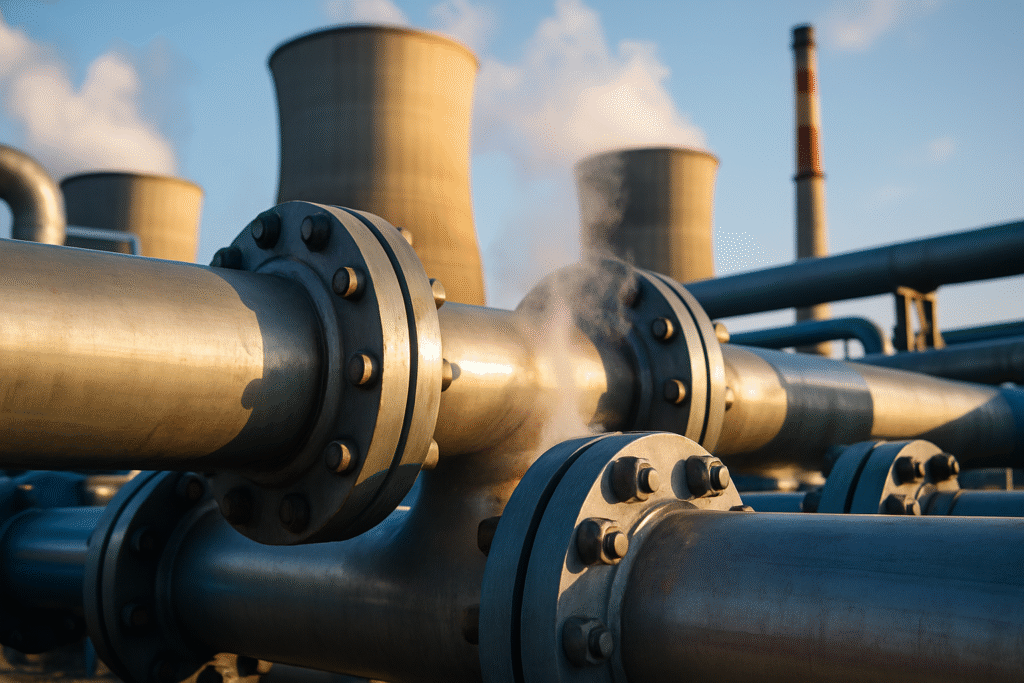
금속 플랜지 시장 가이드: 2024 데이터, ANSI와 AWWA C207의 차이점, 사양 및 선택
그만큼 metal flange market remains critical to industrial Pipe systems, 특히 석유에서 & 가스, 상수도, 및 전력 프로젝트. 그랜드뷰 리서치에 따르면 (2024), 전 세계 산업용 플랜지 시장의 가치는 다음과 같습니다. $5.8 10억 2023 도달할 것으로 예상됩니다. $7.2 10억 단위로 2030.
That growth reflects rising demand for reliable Flanges across ANSI, 아와, DIN, EN 시스템. For procurement teams comparing Texas suppliers or global sources, the key Differences Between standards, 재료, and flange specifications directly affect lifecycle cost.
Global metal flange demand, production trends, and procurement context
Industrial buyers now expect more than a vast selection of catalog parts. They need documented compliance, 추적성, 짧은 리드타임, and suppliers that can offer engineering support with accurate Quotes.
IBISWorld에 따르면 (2024), 아시아 태평양 계정은 이상입니다. 45% 글로벌 플랜지 생산량의, 중국이 가장 큰 제조사이기 때문에. 결과적으로, international sourcing has become standard for EPC contractors, 유통업체, and OEMs seeking certified Flange supply.
스태티스타에 따르면 (2024), 석유 및 가스 산업은 대략적으로 35% 글로벌 플랜지 소비량. 그러므로, product performance under pressure, 부식, and cyclic loading remains the main purchasing driver in upstream, 내의 한복판, and downstream projects.
Water infrastructure also drives strong demand for AWWA and C207 products. In contrast to many refinery systems that rely on ANSI pressure-temperature ratings, municipal and raw-water pipelines often specify AWWA classes and large-diameter Pipe connections.
모르도르 정보국에 따르면 (2024), global investment in water and wastewater infrastructure continues to rise as utilities modernize aging networks. That trend increases demand for steel ring flanges, 블라인드 플랜지, and custom drilling patterns for pumps, 밸브, and treatment skids.
For buyers comparing a Texas Flange distributor with an export manufacturer, the sourcing model often comes down to inventory depth, 자재 가용성, 품질 보증. 하지만, the lowest upfront price rarely delivers the best total value if documentation or dimensional consistency falls short.
처럼 John Reynolds, Senior Materials Engineer, 주: “A flange is not a commodity when the service is severe, the medium is corrosive, or shutdown costs are high.” That view aligns with current procurement practice in petrochemical, 담수화, and power-generation projects.
Standards compliance is also under closer scrutiny. ASME B16.5 governs flanges and flanged fittings for NPS 1/2 ~을 통해 24, ~하는 동안 ASME B16.47 더 큰 직경을 커버, and AWWA C207 addresses steel Pipe flanges for waterworks service (ASME, 2023; 아와, 2024).
이 환경에서는, SASA FLANGE supports global buyers with stainless steel flanges, 탄소강 플랜지, 합금 플랜지, 그리고 파이프 피팅 304, 316, 316엘, 904엘, 2205, 2507, A105, A182, 인코넬, 모넬, 하스텔로이, 그리고 티타늄. 와 함께 ISO 9001:2015 및 PED 2014/68/EU 인증, 회사는 석유를 제공합니다 & 가스, 석유화학, 힘, 선박, 수처리, 및 건설시장.
추가적으로, buyers increasingly want a supplier that can handle both standard and project-specific needs. You can review manufacturing support and discuss project requirements with SASA FLANGE when your RFQ includes mixed standards, special alloys, 또는 EN 10204 3.1 검사 서류.
상업적인 관점에서, the best suppliers combine technical confidence with responsiveness. That means they can offer a vast selection, clarify flange specifications, and explain the Differences Between ANSI and AWWA requirements without delaying procurement cycles.
Metal flange specifications, 재료 등급, and expert selection insights
A metal flange connects Pipe, 밸브, 슬리퍼, and pressure equipment into a sealed, maintainable system. Its design must match pressure class, 직면 유형, 부식 허용량, 개스킷 호환성, 볼트 체결 하중, 및 서비스 온도.
시장 조사 미래에 따르면 (2024), industrial maintenance budgets continue to shift toward reliability-centered asset strategies, which favor components with proven dimensional accuracy and traceable metallurgy. 그러므로, flange selection now influences both uptime and audit compliance.
처럼 박사. Priya Menon, 부식 공학의 재료 과학자, 주: “The wrong alloy choice usually costs more than the wrong geometry because corrosion failures accelerate silently.” For that reason, engineers must balance mechanical requirements with media chemistry and operating cycles.
실용적인 측면에서, metal flange selection starts with several core variables. Each one affects both initial fit-up and long-term field performance.
- 기준: ANSI/ASME, AWWA C207, DIN, EN 1092, JIS, 또는 GOST
- 유형: 용접 목, 미끄러지다, 눈이 먼, 소켓 용접, 스레드, 랩 조인트, or orifice
- 재료: 탄소강, 스테인레스 스틸, 듀플렉스, 니켈 합금, or titanium
- Pressure rating or class: 수업 150 에게 2500, or AWWA classes such as B, 디, 이자형, 그리고 F
- 깃 달기: RF, FF, RTJ, 혀와 그루브, or special facings
- 검사서류: EN 10204 3.1, PMI, 수압시험, 경도, 페라이트, or NACE verification
Carbon steel options such as ASTM A105 remain common in refinery, 공익사업, and general industrial service. Stainless grades such as 304, 316, and 316L suit corrosive or hygienic environments, ~하는 동안 2205 그리고 2507 duplex grades support chloride-rich systems and offshore duty.
Nickel alloys also matter in severe service. ASTM A182 F44, 인코넬, 모넬, and Hastelloy grades are often specified where temperature extremes, 신맛이 나는 서비스, or aggressive chemicals exceed the limits of standard stainless steel.
According to NACE guidance and common project practice, material compatibility is essential in sour or chloride-containing service. 그러므로, the best Flange choice is often the one that minimizes corrosion risk over a 10- to 20-year operating window, not simply the lowest-cost forged item.
The most common flange types serve different installation and stress conditions. Their differences are technical, not cosmetic.
- 웰드 넥 플랜지: 고압에 가장 적합, 순환 로딩, and thermal stress because the tapered hub improves stress distribution.
- 플랜지에 미끄러짐: easier to align and often lower in initial cost, but usually less robust under fatigue and severe service.
- 블라인드 플랜지: closes the end of a piping system and is widely used for hydrotesting, maintenance isolation, 그리고 향후 확장 포인트.
- 소켓 용접 플랜지: common in smaller bore, high-pressure lines where leak integrity is important.
- 스레드 플랜지: useful where welding is impractical, though pressure and vibration conditions must be evaluated carefully.
- 랩 조인트 플랜지: paired with a stub end and preferred where frequent dismantling or expensive alloy pipe economics justify its use.
According to ASME design practice, weld neck flanges generally outperform slip on designs in demanding service because they reduce stress concentration at the hub. 하지만, for low-pressure water service, many buyers prioritize simpler fabrication and lower installed cost.
This is where the Differences Between AWWA and ANSI systems become important. AWWA designs often target large-diameter water transmission and lower pressure ranges, while ANSI and ASME flanges support broader pressure-temperature applications in industrial process plants.
Engineers should also review drilling patterns and mating compatibility before ordering. A C207 Flange may not interchange with an ANSI B16.5 part, even when nominal sizes appear similar.
SASA FLANGE manufactures flanges in sizes from 1/2" 60"까지, 고급 CNC 가공 및 포괄적인 품질 테스트를 통해 뒷받침됨. That matters when a project requires mixed materials, custom drilling, or close dimensional tolerances across multiple line classes.
Buyers often ask whether one supplier can support both standard fittings and custom assemblies. 많은 프로젝트에서, that reduces approval cycles and logistics complexity.
Along with Flanges, SASA FLANGE supplies elbows, 티셔츠, 감속기, 그리고 대문자 ASME B16.9 및 관련 표준. You can explore broader product scope at the product page when building a consolidated sourcing package.
Procurement managers should also ask for real documentation, not just marketing claims. Typical review points include heat number traceability, 치수 검사 기록, 선교사 훈련원, coating details where applicable, and export packaging controls.
According to ISO-aligned quality practices, dimensional nonconformity remains one of the most avoidable causes of field rework. 그러므로, supplier capability in machining, 점검, and packing is as important as raw forging availability.
ANSI, AWWA C207, ASME, ASTM, DIN, and EN flange standards that buyers must compare
Flange standards define dimensions, 공차, 교련, 세부 사항에 직면, and pressure-related performance. They also shape procurement risk because a mismatch can stop installation, delay hydrotests, and trigger costly replacement orders.
ASME B16.5 applies to pipe flanges and flanged fittings from NPS 1/2 에게 24. ASME B16.47 더 큰 직경을 커버, while ASTM standards define material chemistry and mechanical properties rather than interchange dimensions.
AWWA C207 focuses on steel Pipe flanges for waterworks service. 대조적으로, ANSI is commonly used in purchasing language as shorthand, although buyers should verify the actual governing ASME dimensional standard in project documents.
ASME에 따르면 (2023), flange pressure-temperature ratings depend on material group and class designation. 그러므로, 클래스 150 stainless flange and a Class 150 carbon steel flange do not share identical pressure-temperature limits.
The following comparison helps clarify common purchasing confusion.
- ASME B16.5 / B16.47: industrial process piping, broad pressure-temperature framework, common in refineries, 화학공장, 그리고 발전소
- AWWA C207: large-diameter waterworks applications, lower pressure classes, common in treatment plants, 펌프장, and municipal transmission lines
- ASTM: material specification system such as A105, A182, and A516, not a dimensional interchange standard
- DIN / EN 1092: European dimensional systems used across industrial and utility applications
- JIS / 고스트: regional standards used in Japan, CIS markets, and related export projects
Key Differences Between AWWA and ANSI/ASME often include bolt-hole patterns, outside diameters, 두께, and intended service conditions. 결과적으로, teams should never assume direct interchangeability based only on Pipe size.
예를 들어, AWWA flange classes such as Class D or Class E are often specified in water transmission work. 그 동안에, ASME pressure classes such as 150, 300, 600, 900, 1500, 그리고 2500 dominate process piping and high-integrity plant systems.
재료 표준도 똑같이 중요합니다. ASTM A105 covers forged carbon steel fittings and flanges, ~하는 동안 ASTM A182 covers forged alloy and stainless grades such as F304, F316, F316L, F51, 그리고 F53.
Corrosion-critical projects may also require NACE MR0175 또는 ISO 15156 compliance in sour environments. 추가적으로, PED 2014/68/EU documentation can be necessary for pressure equipment placed on the EU market.
SASA FLANGE supports projects requiring ANSI B16.5, ANSI B16.47, ASME B16.9, DIN, JIS, 고스트, 그리고 EN 1092 규정 준수. 와 함께 ISO 9001:2015, PED 2014/68/EU, 그리고 광고 2000 인증, the company aligns with the quality and documentation expectations of global EPC and OEM buyers.
When comparing vendors, buyers should ask for more than generic conformity statements. They should request standard references on quotations, flange specifications, 세부 사항에 직면, 테스트 보고서, and country-of-origin clarity.
For deeper company and manufacturing background, 방문하다 그만큼 SASA FLANGE company profile. That step helps procurement teams validate long-term supply support, not just spot pricing.
추가적으로, engineers should review the authoritative standards directly when finalizing design decisions. Official references are available from ASME and related standards bodies.
How to select metal flange solutions for Oil & 가스, 상수도, 힘, 선박, 및 화학 서비스
Application always determines the right Flange strategy. A metal flange used on a desalination header faces very different conditions than one installed on a refinery steam line or a cooling-water manifold.
기름에 & 가스, 온도 사이클링, 진동, and aggressive media often favor weld neck or RTJ designs. 스태티스타에 따르면 (2024), 해당 부문은 약 소비합니다. 35% 글로벌 플랜지의, so product reliability directly affects a large share of the total market.
For chemical service, alloy choice usually drives success. 316L may suit moderate corrosive duty, 904L 동안, 듀플렉스, 슈퍼 듀플렉스, 인코넬, 모넬, or Hastelloy can be necessary for chlorides, 산, or mixed process streams.
발전에 있어서, 압력 등급, thermal fatigue resistance, and documentation matter most. 그러므로, buyers often prioritize ASME-compliant forged products with stable lead times and full material traceability.
Marine and shipbuilding projects add another layer of complexity. 염분 노출, 진동, and space constraints often make compact but corrosion-resistant flange assemblies more attractive than generic commodity parts.
Waterworks and municipal Pipe systems frequently specify AWWA or C207 Flanges in larger diameters. 여기, the Differences Between drilling standards and face types can create fit-up issues if procurement teams substitute parts without engineering review.
For practical sourcing, engineers should evaluate the following criteria before they request Quotes.
- Confirm medium, 압력, 온도, and corrosion profile
- Verify standard and class, ~와 같은 ASME B16.5 수업 300 or AWWA C207 Class E
- Match face type to gasket design and required leak tightness
- Check wall thickness and schedule of mating Pipe
- Review welding method, PWHT needs, 및 검사 계획
- Confirm documentation package, 포함 EN 10204 3.1 and PMI if required
- Assess packaging, 마킹, 수출 규정 준수, and delivery schedule
Custom manufacturing becomes important when projects need oversized diameters, nonstandard drilling, 또는 특수 합금 조합. This is especially true in retrofits, 스키드 패키지, 해양 모듈, and imported equipment tie-ins.
SASA FLANGE 1/2부터 사용자 정의 크기 제공" 60까지" 경쟁력 있는 공장 직거래 가격으로. 고급 CNC 가공 및 포괄적인 품질 테스트를 통해 뒷받침됨, the company supports both standard line items and engineered Flange requirements.
Procurement teams also benefit when one supplier can support multiple industries. SASA FLANGE 서브하다 50+ 석유를 건너는 나라들 & 가스, 석유화학, 힘, 해양산업, which helps buyers consolidate vendor qualification across projects.
예를 들어, a contractor building a pump station may need AWWA blind flanges, 감속기, and stainless stub ends in one package. 비슷하게, a petrochemical turnaround may require ASTM A182 F316L 웰드 넥 플랜지, 모자, and elbows delivered against tight shutdown windows.
The best suppliers can offer technical clarification early, before rework appears in the field. That means answering specification gaps, checking mating standards, and identifying the Differences Between legacy drawings and current codes.
게다가, buyers should distinguish industrial metal flange requirements from consumer searches such as toilet flange repair or 1-1/2 flange PVC products. Those terms appear in search behavior, but they do not reflect the pressure, 야금, and compliance demands of process-industry sourcing.
Future outlook for metal flange sourcing, digital procurement, and strategic buying recommendations
The industrial Flange market will likely grow steadily through the decade as energy, 물, and infrastructure spending continues. 그랜드뷰 리서치에 따르면 (2024), 시장에 도달할 것으로 예상됩니다. $7.2 10억 단위로 2030, indicating durable demand for certified flange manufacturers.
Regional sourcing patterns will also continue to evolve. Because Asia-Pacific already accounts for more than 45% 글로벌 플랜지 생산량의 (IBIS월드, 2024), buyers will keep balancing cost advantages with logistics, 점검, and trade-risk considerations.
Digital procurement is changing buyer expectations. Engineers and sourcing managers increasingly want fast Quotes, complete flange specifications, downloadable drawings, and clear confirmation of standards before they issue a purchase order.
처럼 Michael Trent, Industrial Supply Analyst, 주: “The winners in B2B piping supply are the companies that remove uncertainty from technical purchasing.” That means transparent documentation, 반응형 의사소통, and realistic lead-time commitments.
전략적으로, buyers should qualify suppliers on four dimensions. Price matters, but it should not outweigh fit-up reliability and documentation control.
- Technical compliance with ASME, ASTM, 아와, DIN, 및 EN 요구사항
- Material range and ability to support stainless, 듀플렉스, 및 니켈 합금
- Manufacturing quality, 추적성, 및 제3자 검사 준비
- Commercial responsiveness, 수출 포장, and after-order support
Companies that can offer a vast selection and explain the Differences Between standards create measurable value for project teams. They reduce delays, simplify approval workflows, and improve total installed cost.
For buyers comparing Texas sourcing channels with international manufacturers, the right decision depends on service level, compliance needs, and total procurement risk. If your project requires certified metal flange supply, 맞춤형 가공, or support across ANSI, 아와, 및 EN 표준, it makes sense to discuss specifications early with SASA FLANGE.
자주 묻는 질문
What is a metal flange?
●A metal flange is a forged, 깁스, or machined connection component that joins Pipe, 밸브, 슬리퍼, and equipment with bolting and a gasketed sealing surface.
●그랜드뷰 리서치에 따르면 (2024), 세계 산업용 플랜지 시장 진출 $5.8 10억 2023, which shows how essential metal flange products are across process and infrastructure systems.
●In industrial service, a metal flange is not defined only by shape because standards such as ASME B16.5, ASME B16.47, and AWWA C207 control dimensions, 교련, 깃 달기, and application range.
●일반적인 재료는 다음과 같습니다 ASTM A105 탄소강, ASTM A182 F304 and F316 stainless steel, 듀플렉스 2205 그리고 2507, and high-performance alloys such as Inconel or Monel for aggressive chemical duty.
●Engineers usually select a metal flange by checking nominal Pipe size, 압력 등급, 온도, 얼굴형, 부식 위험, and compatibility with mating equipment and gasket design.
What is the purpose of a flange?
●The purpose of a flange is to create a secure, serviceable, and inspectable joint between sections of Pipe or between piping and mechanical equipment.
●스태티스타에 따르면 (2024), 석유와 가스는 약 35% 글로벌 플랜지 소비량, which reflects how critical flange joints are in systems that require routine maintenance, 격리, and safe disassembly.
●Unlike a permanent welded-only connection, a flange allows crews to open a line, replace a valve, inspect internals, install blinds, or modify a system during shutdowns.
●Its sealing function depends on proper bolt load, 플랜지 평탄도, 직면 상태, 개스킷 선택, and operating conditions such as pressure cycling and thermal expansion.
●산업용 구매자를 위한, the practical purpose of a flange is therefore both mechanical and operational because it supports assembly, 신뢰할 수 있음, 유지 보수 액세스, and future system flexibility.
세 가지 유형의 플랜지는 무엇입니까?
●The three most widely referenced flange types in industrial purchasing are weld neck, 미끄러지다, and blind flanges because they cover many common piping and equipment connection needs.
●ASME B16.5 identifies these and other designs, and engineering practice generally favors weld neck flanges for severe pressure and temperature service due to their stronger stress transition at the hub.
●Slip on flanges are often selected for lower-pressure systems because they simplify alignment and can reduce fabrication cost, although they are usually less robust in fatigue-sensitive applications.
●Blind flanges do not connect to a Pipe bore because they close the end of a line or nozzle, which makes them useful for hydrotesting, 격리, future expansion points, and maintenance planning.
●In actual projects, buyers should not limit selection to only three categories because socket weld, 스레드, 랩 조인트, 구멍, and specialty flanges may be better matched to the service conditions.
What are steel flanges?
●Steel flanges are flanged connection components manufactured from carbon steel, 스테인레스 스틸, 합금강, or duplex stainless materials for use in pressurized or structural piping systems.
●IBISWorld에 따르면 (2024), 아시아태평양 지역은 그 이상을 대표합니다. 45% 글로벌 플랜지 생산량의, so a large share of steel flange supply comes from major manufacturing bases in China and the wider region.
●In specification terms, steel flanges are typically ordered by material grade such as ASTM A105, ASTM A182 F316L, or duplex F51, together with standard, 크기, 압력 등급, and facing requirement.
●Carbon steel flanges are common for general industrial service, while stainless and duplex grades are preferred where corrosion resistance, 청결, or chloride performance becomes more important.
●조달용, the term steel flanges should always be tied to exact standards and inspection documents because generic naming alone does not confirm interchangeability or quality level.
What is the difference between AWWA flange and ANSI flange?
●The main difference between an AWWA flange and an ANSI flange is that AWWA C207 is designed primarily for waterworks service, while ANSI language in most industrial purchasing usually refers to ASME-based process piping flange dimensions and ratings.
●AWWA flanges are commonly used on larger-diameter water Pipe systems and often follow classes such as B, 디, 이자형, 그리고 F, 반면 ASME B16.5 and B16.47 use pressure classes such as 150, 300, 600, 900, 1500, 그리고 2500.
●These systems can differ in bolt circle, bolt-hole count, 외경, 두께, and intended pressure-temperature framework, so they should never be assumed interchangeable by nominal size alone.
●According to AWWA and ASME practice, material requirements and dimensional references must be reviewed together because an ASTM steel grade alone does not resolve mating compatibility.
●If a drawing mentions AWWA C207 Flange dimensions PDF or asks about AWWA flange classes, the safest approach is to verify the exact standard edition and mating equipment before ordering.
How do buyers choose the right metal flange specifications for industrial projects?
●Buyers choose the right metal flange specifications by matching process conditions, standard requirements, 재료 등급, 크기, 압력 등급, 깃 달기, and inspection documentation to the project service.
●As materials experts often note, corrosion mismatch is one of the costliest specification errors, which is why alloy selection can be more important than simple dimensional fit in chemical, 난바다 쪽으로 부는, or sour service applications.
●A complete RFQ should normally include the governing standard such as ASME B16.5 or AWWA C207, the material such as ASTM A105 또는 A182 F316L, the class, 깃 달기, 수량, and any test requirements.
●그랜드뷰 리서치에 따르면 (2024), flange demand will continue growing toward 2030, so suppliers that can offer technical support, fast Quotes, and documented compliance will remain strategically valuable.
●For projects needing certified export supply, custom drilling, or a vast selection across stainless, 탄소, and alloy grades, 같은 기존 제조업체 SASA FLANGE can reduce procurement risk and clarification time.
관련 게시물

오리피스 플랜지 정의, 세부 정보 및 ASME B16.36 플랜지 개요: 시장 데이터, 선택 가이드 및 규정 준수 통찰력
전 세계 산업용 플랜지 시장의 가치는 다음과 같습니다. $5.8 10억…
