
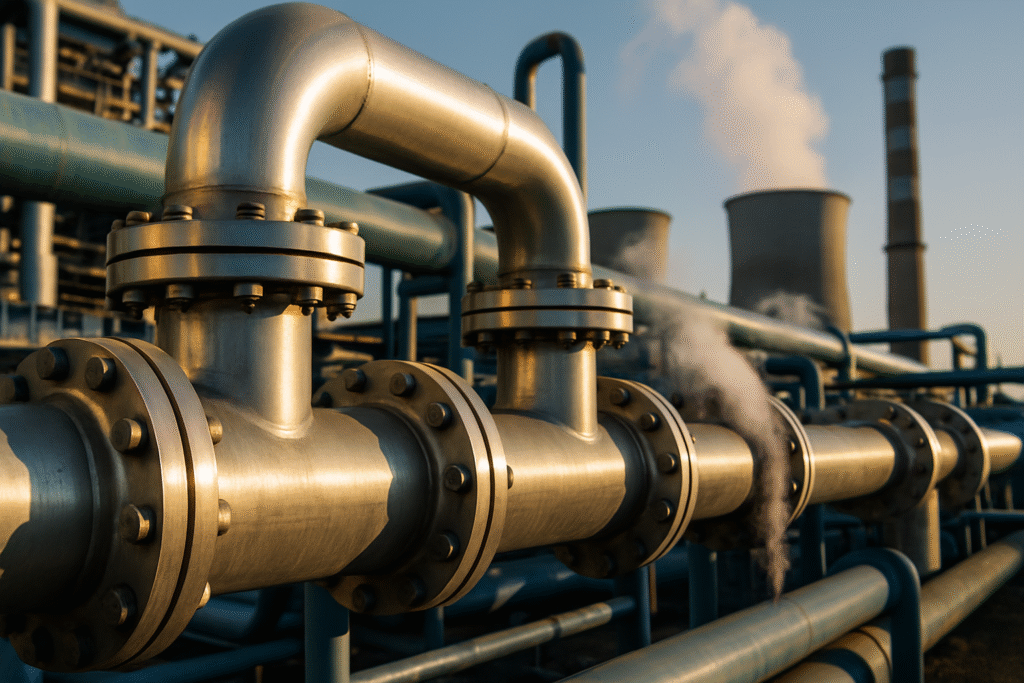
스테인레스 스틸 파이프 플랜지 시장: 58억 달러: 숨겨진 장점, 유형, 용도, 및 플랜지 선택 방법
그랜드뷰 리서치에 따르면 (2024), 전 세계 산업용 플랜지 시장의 가치는 다음과 같습니다. $5.8 10억 2023 도달할 것으로 예상됩니다. $7.2 10억 단위로 2030. That growth highlights why stainless steel pipe flange selection has become a strategic decision for engineers, EPC 계약자, and industrial buyers managing corrosion, 온도, 및 수명주기 비용.
For industrial systems, the intriguing value of Stainless Steel Hidden Advantages lies in durability, 청결, and pressure integrity. 게다가, the right Steel flange design improves safety, reduces leakage risk, and supports long-term Pipe system reliability across demanding applications.
Industrial Demand for Stainless Steel Pipe Flange Solutions Is Rising Across Global Applications
IBISWorld에 따르면 (2024), 아시아 태평양 계정은 이상입니다. 45% 글로벌 플랜지 생산량의, 중국이 가장 큰 제조사이기 때문에. 그러므로, procurement teams increasingly compare regional manufacturing capabilities, certification strength, and lead-time performance before approving stainless steel pipe flange suppliers.
스태티스타에 따르면 (2024), 석유 및 가스 산업은 대략적으로 35% 글로벌 플랜지 소비량. That figure is significant because upstream, 내의 한복판, and downstream assets all require high-integrity flange joints for pressure-containing service.
병렬로, 수처리, 조선, 발전, and petrochemical projects continue to expand their use of Stainless and alloy Flanges. 결과적으로, buyers now expect broader material availability, ~에서 304 and 316L to duplex 2205, 슈퍼 듀플렉스 2507, 904엘, 인코넬, 모넬, 하스텔로이, 그리고 티타늄.
모르도르 정보국에 따르면 (2024), global investment in industrial process infrastructure remains strong in energy transition and water sectors. 따라서, demand for stainless steel pipe flange products is shifting toward corrosion-resistant grades that can lower maintenance frequency and extend operating life.
Material selection also reflects operating media and temperature. 예를 들어, 304 and 304L remain common for general service, ~하는 동안 316 and 316L are often preferred for chloride exposure, 해양 대기, 그리고 공격적인 화학물질 취급.
For elevated temperature service, engineers may specify stabilized or heat-resistant grades such as 321, 347, or higher alloy materials. 대조적으로, duplex grades like 2205 can provide a valuable balance of strength and pitting resistance in offshore and process applications.
처럼 [박사. 헬렌 모리스], 재료 엔지니어, 주: “Flange reliability is not determined by alloy alone; it depends on the full interaction between material grade, 압력 등급, 마무리를 향함, 탈당, and service environment.” That point matters because many failures originate from poor specification alignment rather than from obvious manufacturing defects.
오늘, B2B buyers need more than a price list. They need traceability, 치수 정확도, pressure-class compliance, EN 10204 3.1 선적 서류 비치, and confidence that the supplier understands ASME, ASTM, DIN, JIS, 고스트, 및 EN 요구사항.
SASA FLANGE supports that expectation with ISO 9001:2015 및 PED 2014/68/EU 인증, broad export experience, and manufacturing coverage across stainless steel flanges, 탄소강 플랜지, 합금 플랜지, 및 파이프 피팅. 추가적으로, 회사는 석유를 제공합니다 & 가스, 석유화학, 발전, 조선 & 선박, 수처리, and Construction sectors in more than 50 국가.
For procurement teams comparing Flanges? by lifecycle value, supplier capability matters as much as metallurgy. 그러므로, buyers should evaluate machining accuracy, PMI 가용성, 수압 테스트 지원, marking control, and documentation discipline before issuing a final PO.
Technical Insights on Stainless Steel Pipe Flange Types, 평가, 그리고 숨겨진 장점
The most important step in choosing stainless steel pipe flange products is matching type, 재료, and pressure class to the service condition. 하지만, many buyers still focus on unit price first, even though rework, 중단 시간, and leakage costs often far exceed the initial component cost.
시장 조사 미래에 따르면 (2024), industrial process operators are prioritizing components that reduce maintenance and unplanned shutdown risk. 그러므로, the Hidden Advantages of premium Stainless Steel flanges include lower corrosion-related replacement frequency, better cleanability, and stronger value in critical applications.
에 따르면 ASME B16.5, standard flange dimensions, 깃 달기, 교련, and pressure-temperature ratings vary by class and material group (ASME, 2023). 결과적으로, 클래스 150 flange and a Class 600 flange may share nominal pipe size but perform very differently under pressure and temperature loads.
처럼 [Michael Trent], 수석 배관 엔지니어, 주: “Selecting the wrong facing or pressure class can negate the benefits of even the best alloy.” That is why experienced sourcing teams review gasket compatibility, 플랜지 마감, 볼트 하중, and thermal cycling conditions together.
Common stainless steel pipe flange Types and Uses include the following:
- Weld neck flanges for high-pressure and high-temperature service requiring strong stress distribution.
- Slip-on flanges for moderate service where easier alignment and lower installed cost are priorities.
- Blind flanges for end closures, system isolation, and hydrostatic test points.
- Socket weld flanges for smaller bore, high-pressure piping systems.
- Threaded flanges for low-pressure systems where welding is undesirable.
- Lap joint flanges for systems needing frequent dismantling or alignment flexibility.
In many refinery and chemical applications, 316L is specified because molybdenum improves resistance to pitting and crevice corrosion. 대조적으로, 304L often remains a cost-effective option for non-chloride environments and general industrial service.
듀플렉스 2205 deserves special attention for offshore, 담수화, and chloride-bearing media. NACE 지침에 따르면, duplex stainless steels can offer improved chloride stress corrosion cracking resistance compared with common austenitic grades in suitable conditions (NACE, 2023).
Pressure performance depends on more than alloy choice. It also depends on flange standard, 벽 두께, 설계 온도, 직면 유형, and bolting system. 그러므로, buyers asking about stainless steel pipe flange sizes or 4 inch stainless steel pipe flange options should always specify NPS, 일정, 압력 등급, 깃 달기, and standard together.
Typical specification points include:
- 표준: ANSI B16.5, ANSI B16.47, EN 1092-1, DIN, JIS, 고스트.
- 재료: ASTM A182 F304, F304L, F316, F316L, F904L, F51, F53, 티탄, 니켈 합금.
- 압력 등급: 150, 300, 600, 900, 1500, 2500.
- 직면 옵션: RF, FF, RTJ.
- 크기 범위: 1/2 인치에서 60 인치, depending on type and standard.
- 검사서류: EN 10204 3.1, PMI, 차원 보고서, 경도, NDE as required.
ASTM 재료 사양에 따르면, forged stainless steel flanges commonly fall under ASTM A182, while plate products often reference ASTM A240 (ASTM, 2024). 게다가, fittings such as elbows, 티셔츠, 감속기, and caps often follow ASME B16.9 치수 및 공차.
SASA FLANGE 플랜지를 제조합니다. 304, 316, 316엘, 904엘, 2205, 2507, A105, A182, 인코넬, 모넬, 하스텔로이, and Titanium for global industrial projects. 고급 CNC 가공 및 포괄적인 품질 테스트를 통해 뒷받침됨, the company supports standard and custom orders with factory-direct pricing and export documentation.
For buyers evaluating stainless steel flange types, it is practical to compare not just material cost but installed performance. A slightly higher-grade flange may reduce gasket failures, cut maintenance intervals, and improve total cost of ownership over years of continuous operation.
게다가, lead time and dimensional consistency affect project execution. 그러므로, working with an established manufacturer such as SASA FLANGE can simplify sourcing for mixed-material packages that include flanges plus elbows, 티셔츠, 감속기, 그리고 모자.
ASME, ASTM, DIN, and EN Standards That Govern Stainless Steel Pipe Flange Compliance
Industrial flange purchasing should begin with standards compliance, not only with catalog dimensions. That approach reduces mismatch risk, supports inspection planning, and protects system integrity during commissioning and operation.
The most frequently referenced standard for many imperial flange dimensions is ASME B16.5. It covers dimensions, 공차, 압력 온도 등급, 마킹, and materials for flanges and flanged fittings within specified size ranges (ASME, 2023).
더 큰 직경의 경우, 구매자는 종종 지정합니다 ASME B16.47. In Europe and international projects, EN 1092-1 and DIN flange standards are also common, especially where project specifications, PED 준수, or legacy equipment require those systems.
Material and manufacturing standards remain equally important. ASTM A182 governs forged or rolled alloy and stainless steel pipe flanges, 단조 피팅, 및 고온 서비스용 밸브, ~하는 동안 ASTM A240 covers chromium and chromium-nickel stainless steel plate, 시트, 그리고 스트립 (ASTM, 2024).
부식성 서비스용, procurement teams should also review NACE requirements where sour service or corrosion cracking risk exists. 뿐만 아니라, PED 2014/68/EU may apply for pressure equipment entering the European market, making traceability and documentation non-negotiable.
A practical compliance checklist includes:
- Dimensional standard confirmation, ~와 같은 ASME B16.5 또는 EN 1092-1.
- Material specification confirmation, ~와 같은 ASTM A182 F316L.
- Pressure class or PN rating verification at design temperature.
- Facing type and gasket compatibility review.
- Heat number traceability and marking inspection.
- Mill test certificate and EN 10204 3.1 선적 서류 비치.
- 선택적 PMI, ferrite testing, 경도, or NDE for critical service.
ISO 품질 관리 지침에 따르면, consistent process control reduces quality variability and strengthens customer confidence (ISO, 2024). That is one reason international buyers often prefer suppliers with audited systems and documented inspection workflows.
SASA FLANGE operates with ISO 9001:2015, PED 2014/68/EU, 그리고 광고 2000 신임장, which are highly relevant for regulated export projects. 게다가, the company can support custom manufacturing for sizes from 1/2 인치에서 60 인치, including RF, FF, and RTJ facings across multiple standards.
For buyers balancing cost and compliance, documentation quality should not be treated as an afterthought. 사실은, incomplete test records can delay project approvals more than minor price differences ever will.
That is especially true in Oil & 가스, 힘, and Marine work, where class societies, EPC, and end users often perform rigorous material verification. 그러므로, flange sourcing should align with both the technical datasheet and the project ITP from the start.
오일용 플랜지를 선택하는 방법, 가스, 화학적인, 힘, 선박, and Water Applications
Choosing the right stainless steel pipe flange requires a service-based approach. Buyers should begin with fluid type, 염화물 수준, 온도, 압력, 부식 허용량, code requirement, 및 유지 보수 액세스.
석유용 & Gas systems, weld neck flanges are frequently preferred for high-pressure lines, separators, and process piping. Their geometry improves stress transition, which helps under cyclic loads and elevated temperatures.
석유화학 및 화학 처리 공장에서, 316엘, 904엘, and higher alloys often become necessary as media aggressiveness increases. 게다가, gasket chemistry and bolt material must match the corrosion environment to avoid weak points in the assembly.
발전용, steam conditions and temperature drive the selection. 탄소강, 합금강, or stainless may all be appropriate depending on pressure rating, oxidation risk, and code design limits.
Marine and shipbuilding systems often face salt spray and chloride exposure. 그러므로, 316엘, 듀플렉스 2205, 또는 슈퍼 듀플렉스 2507 can provide stronger long-term resistance than basic grades in many seawater-adjacent applications.
Water treatment and desalination projects bring a different challenge. Corrosion resistance remains vital, but buyers must also consider cleanliness, 소독화학, 및 유지보수 간격.
When engineers Choose Flanges, these criteria should be reviewed together:
- Operating pressure and temperature versus ASME or EN rating tables.
- 공정 매체, 염화물 함량, 부식 메커니즘.
- 필요한 플랜지 유형, 용접 목과 같은, 눈이 먼, 슬립온, 또는 스레드.
- Compatibility with Pipe schedule, 벽 두께, and fitting geometry.
- Facing style, 개스킷 선택, and bolting material.
- 검사 수준, 문서 패키지, and project certification needs.
- 총 설치 비용, not only initial purchase price.
처럼 [Laura Cheng], 산업 시장 분석가, 주: “Procurement success comes from matching flange specification to operational risk, not from choosing the cheapest line item.” That perspective is especially relevant when shutdown costs can exceed component cost by several orders of magnitude.
해양 및 해양 시스템에 대한 DNV 지침에 따름, material selection in corrosive environments should consider both design life and inspection accessibility (DNV, 2023). 그러므로, more durable alloys may be economically justified where replacement access is difficult.
SASA FLANGE supports project-specific manufacturing for stainless steel flanges and pipe fittings, 팔꿈치를 포함하여, 티셔츠, 감속기, 그리고 대문자 ASME B16.9 및 관련 표준. 추가적으로, the company offers custom sizes, mixed-material orders, and export support for buyers needing consolidated sourcing.
For projects requiring certified and responsive supply, buyers can discuss dimensions, 재료, and documents directly through SASA FLANGE. This is particularly useful for clients comparing stainless steel pipe flange price, 유효성, and quality records before tender submission.
스테인레스 스틸 파이프 플랜지 조달에 대한 향후 전망 및 전략적 구매 권장 사항
스테인레스 스틸 파이프 플랜지 수요에 대한 전망은 여전히 긍정적입니다., 물, and industrial infrastructure investment continues worldwide. 그랜드뷰 리서치에 따르면 (2024), the market is expected to reach $7.2 10억 단위로 2030, which indicates sustained long-term demand for qualified manufacturers.
동시에, buyers face more complex specifications, tighter compliance expectations, and pressure to reduce lifecycle cost. 그러므로, strategic sourcing now requires earlier technical engagement between engineering, 품질보증, 및 조달팀.
Several trends are shaping future buying decisions:
- Greater use of duplex and super duplex alloys in chloride-rich environments.
- Higher demand for documentation transparency and digital traceability.
- Supplier consolidation for flanges and fittings under one quality system.
- Stronger preference for PED-ready and export-compliant production.
- Increased evaluation of total cost of ownership rather than piece price alone.
스태티스타에 따르면 (2024), energy-sector flange demand remains a primary market driver, while water and process industries add diversification. 결과적으로, suppliers able to combine alloy range, 가공 정밀도, and quality documentation will hold a stronger position.
Procurement teams should standardize approved material lists, define inspection requirements clearly, and confirm standards before RFQ release. 게다가, they should request MTCs, 열 추적성, pressure class confirmation, and dimensional details in the quotation stage, not after award.
For organizations buying stainless steel flanges and Fittings across multiple projects, supplier consistency can reduce approval time and expedite logistics. Buyers seeking dependable technical support, 맞춤형 제조, and certified export supply can review options through SASA FLANGE 제품 성능 and discuss project details directly with the team.
자주 묻는 질문
스테인레스 스틸 플랜지는 무엇에 사용됩니까??
●Stainless steel flanges are used to connect Pipe sections, 밸브, 슬리퍼, and equipment in pressurized systems across oil and gas, 석유화학, 힘, 선박, 및 수처리 응용 분야.
●스태티스타에 따르면 (2024), 석유 및 가스 산업은 대략적으로 35% 글로벌 플랜지 소비량, which shows how critical flange joints are in process infrastructure.
●They are selected when buyers need corrosion resistance, 힘, 청결성, and reliable sealing performance under varying temperature and pressure conditions.
●For projects requiring certified materials and EN 10204 3.1 선적 서류 비치, 다음과 같은 기존 제조업체와 협력 SASA FLANGE helps ensure compliance and traceability.
스테인레스 스틸로 만들어진 플랜지?
●일반적인 스테인레스 스틸 플랜지에는 용접 넥이 포함됩니다., 슬립온, 눈이 먼, 스레드, 소켓 용접, 및 다음과 같은 등급으로 생산되는 랩 조인트 디자인 304, 304엘, 316, 316엘, 904엘, 2205, 그리고 2507.
●ASTM A182 is the most common forged material specification for stainless steel flanges, ~하는 동안 ASME B16.5 그리고 ASME B16.47 define many standard dimensions and pressure classes.
●Different grades serve different applications because 316L performs better than 304L in chloride-bearing environments, 이중으로 하는 동안 2205 offers higher strength and improved corrosion resistance in many process conditions.
●Buyers should match flange type and alloy to service media, 온도, and maintenance strategy before issuing a final purchase order.
스테인레스 스틸 파이프 플랜지의 압력 등급은 얼마입니까??
●스테인레스 스틸 파이프 플랜지의 압력 등급은 관리 표준에 따라 다릅니다., 소재 그룹, 플랜지 클래스, and operating temperature rather than on size alone.
●아래에 ASME B16.5, common ratings include Class 150, 300, 600, 900, 1500, 그리고 2500, and allowable pressure decreases as temperature rises.
●에이 4 클래스의 인치 스테인레스 스틸 파이프 플랜지 300 does not have the same allowable pressure as a 4 클래스의 인치 플랜지 600, even if both are made from similar stainless material.
●Engineering teams should verify the exact pressure-temperature table in the applicable standard and confirm gasket, 탈당, and facing compatibility before selection.
그들은 스테인레스 스틸 파이프 피팅을 만드나요??
●예, 제조업체는 엘보우와 같은 스테인레스 스틸 파이프 피팅을 생산합니다., 티셔츠, 감속기, 모자, 그루터기 끝, and special fabricated components for industrial piping systems.
●ASME B16.9 is a key dimensional standard for many butt weld fittings, and ASTM specifications define the applicable stainless steel material grades used in production.
●그랜드뷰 리서치에 따르면 (2024), industrial flange demand is growing steadily, and that trend also supports broader demand for matching stainless steel flanges and Fittings in integrated packages.
●조달 효율성을 위해, many buyers prefer a supplier that can provide both flanges and fittings under one quality system with consistent documentation.
다음 중에서 어떻게 선택하나요? 304, 316엘, 그리고 2205 for stainless steel pipe flange applications?
●304 일반 서비스에 널리 사용됩니다., 316L is preferred for stronger corrosion resistance in chloride exposure, 그리고 2205 is often selected when higher strength and improved pitting resistance are required.
●NACE guidance indicates duplex grades can offer better resistance to chloride stress corrosion cracking than common austenitic grades in suitable service conditions.
●비용, 미디어 화학, fabrication requirements, and inspection needs should all be evaluated together because the lowest alloy cost may not produce the lowest lifecycle cost.
●중요한 애플리케이션용, it is best to request technical review, 선교사 훈련원, and material traceability before confirming the grade.
What factors affect stainless steel pipe flange price and lead time?
●Stainless steel pipe flange price and lead time depend on alloy grade, 플랜지형, 크기, 압력 등급, 원자재 시장 상황, 가공 복잡성, and document requirements.
●IBISWorld에 따르면 (2024), 아시아 태평양 계정은 이상입니다. 45% 글로벌 플랜지 생산량의, which means regional manufacturing capacity strongly influences availability and export pricing.
●Custom sizes, RTJ facings, PMI 테스트, PED 문서, and nickel alloy or duplex materials typically increase both cost and delivery time compared with standard 304 or 316L flanges.
●Buyers can reduce delays by issuing complete RFQs that specify standard, 크기, 수업, 깃 달기, 재료 등급, 수량, and inspection requirements from the start.
관련 게시물

오리피스 플랜지 정의, 세부 정보 및 ASME B16.36 플랜지 개요: 시장 데이터, 선택 가이드 및 규정 준수 통찰력
전 세계 산업용 플랜지 시장의 가치는 다음과 같습니다. $5.8 10억…
