
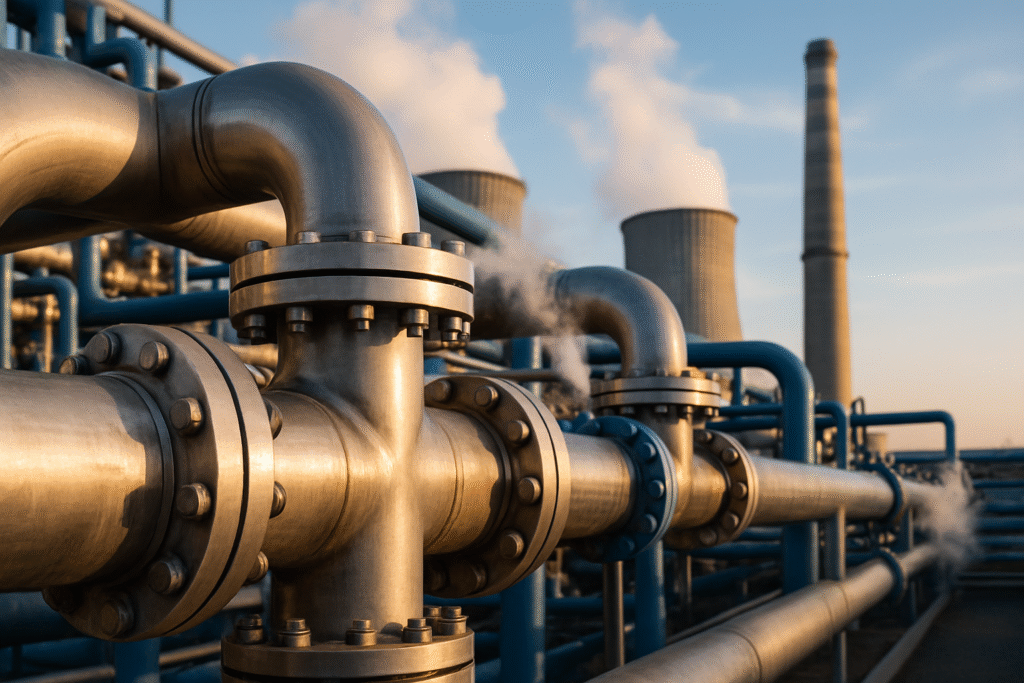
스테인레스 스틸 파이프 플랜지: 숨겨진 장점에 대한 데이터 기반 가이드, 유형, 용도, 가장 일반적인 플랜지를 선택하는 방법
그만큼 스테인레스 스틸 파이프 플랜지 market sits at the center of industrial piping reliability. 그랜드뷰 리서치에 따르면 (2024), 전 세계 산업용 플랜지 시장의 가치는 다음과 같습니다. $5.8 10억 2023 도달할 것으로 예상됩니다. $7.2 10억 단위로 2030, which shows why engineers keep comparing the hidden advantages, 종류, 용도, and how to choose the most common flanges.
조달팀용, this is not just a component decision. It affects pressure integrity, 부식 수명, 유지보수 빈도, and total installed cost across oil and gas, 석유화학, 힘, 선박, 및 수처리 시스템.
Global demand trends shaping stainless steel pipe flange sourcing
Demand for the stainless steel pipe flange continues to expand because process plants now require longer service life and tighter compliance. IBISWorld에 따르면 (2024), 아시아 태평양 계정은 이상입니다. 45% 글로벌 플랜지 생산량의, 중국이 가장 큰 제조사이기 때문에.
That production concentration matters for buyers. It influences lead time, 가격, 가공능력, and access to stainless grades such as 304, 316, 316엘, 904엘, 2205, 그리고 2507.
스태티스타에 따르면 (2024), 석유 및 가스 산업은 대략적으로 35% 글로벌 플랜지 소비량. 그러므로, manufacturers that supply upstream, 내의 한복판, and downstream projects usually build stronger expertise in pressure classes, 부식 허용량, and documentation control.
실제로, buyers rarely choose by price alone. They compare raw material traceability, forging quality, CNC machining accuracy, EN 10204 3.1 인증, and dimensional compliance with ASME B16.5 또는 ASME B16.47.
모르도르 정보국에 따르면 (2024), global investments in water infrastructure and industrial processing continue to support demand for corrosion-resistant piping components. 추가적으로, duplex and super duplex materials gain share where chloride exposure and lifecycle cost drive procurement decisions.
This is where supplier capability becomes strategic. SASA FLANGE 이상의 방식으로 고객에게 서비스를 제공합니다. 50 countries and manufactures stainless steel flanges, 탄소강 플랜지, 합금 플랜지, and pipe fittings for demanding industrial service.
와 함께 ISO 9001:2015 및 PED 2014/68/EU 인증, SASA FLANGE aligns production with global project requirements. 게다가, the company supplies materials including 304, 316, 316엘, 904엘, 2205, 2507, A105, A182, 인코넬, 모넬, 하스텔로이, 그리고 티타늄.
시장 조사 미래에 따르면 (2024), corrosion-resistant alloys are among the fastest-growing material categories in process industries because operators are under pressure to reduce unplanned shutdowns. 결과적으로, the stainless steel pipe flange has become a lifecycle asset rather than a commodity item.
The competitor landscape often focuses on long grade lists. 하지만, buyers usually need more than a catalog. They need a clear framework that explains intriguing material differences, 압력 등급, 일반적인 플랜지 유형, and the hidden advantages of choosing the right flange for each service condition.
Stainless steel pipe flange selection: intriguing material advantages, 종류, and expert insights
The first step in selecting a stainless steel pipe flange is to match metallurgy to media, 온도, 압력, 및 제작방법. In many industrial systems, the most common flanges are weld neck, 미끄러지다, 눈이 먼, 소켓 용접, 스레드 디자인.
에 따르면 ASME B16.5, 플랜지 치수, 공차, 압력 온도 등급, 마킹, and testing requirements must remain consistent across standardized classes such as 150, 300, 600, 900, 1500, 그리고 2500 (ASME, 2023). 그러므로, geometry and rating selection are just as important as material grade.
존 레이놀즈처럼, corrosion specialist and former chief engineer, 주: “Most flange failures are not caused by the flange alone. They result from a mismatch between material, 탈당, 틈 메우는 물건, and process conditions.”
That insight explains why 304 그리고 316 do not solve every problem. Although both are common austenitic stainless grades, 염화물 함량, 황 화합물, high temperature cycling, and cleaning chemistry can change the correct choice quickly.
에 따르면 ASTM A182/A182M, forged or rolled alloy and stainless steel pipe flanges must meet chemical composition, 기계적 성질, 열처리, 및 마킹 요구 사항 (ASTM, 2024). Buyers should therefore verify whether a stainless steel pipe flange is supplied to ASTM A182 F304/F304L, F316/F316L, F321, F347, or duplex grades such as F51 and F53.
The most common stainless grades for industrial flange service include the following:
- 304/304엘: Strong general corrosion resistance and excellent weldability for water, 음식, 및 가벼운 화학물질 의무.
- 316/316엘: Added molybdenum improves resistance to chlorides and aggressive media in marine and chemical service.
- 904엘: Higher nickel and molybdenum support better resistance in sulfuric and high-corrosion environments.
- 2205 듀플렉스: Higher strength and improved pitting resistance for offshore, 담수화, 및 공정 라인.
- 2507 슈퍼 듀플렉스: Premium performance for severe chloride and high-pressure applications.
Sour 서비스 선택을 위한 NACE 지침에 따름, corrosion cracking risk rises sharply when chloride concentration, 온도, and tensile stress interact inappropriately (NACE, 2023). 따라서, duplex and nickel alloys often outperform basic austenitic grades in severe service.
박사로서. Karen Vernon, 산업용 합금 재료 과학자, 주: “The hidden advantages of duplex flange materials are not limited to corrosion resistance. Their higher yield strength can also reduce wall thickness and support lighter system designs.”
엔지니어용, flange type matters as much as alloy. A weld neck flange usually performs best in high-pressure and thermal cycling service because the tapered hub reduces stress concentration.
대조적으로, slip on flanges may reduce fabrication cost in moderate service. 하지만, they generally provide lower fatigue resistance than weld neck designs in demanding duty.
Threaded flanges work where welding is not desirable. 아직, they are usually limited to smaller sizes and lower-risk systems, especially where vibration or cyclic service can loosen threaded joints.
Common selection criteria include:
- Pressure class and operating temperature.
- Pipe schedule and outside diameter compatibility.
- 부식 메커니즘, 구멍을 포함하여, 갈라진 틈, SCC, or general attack.
- 공동 디자인, 개스킷 스타일, and bolt loading requirements.
- Inspection needs, PMI를 포함한, 수압 테스트 지원, and surface finish.
- Documentation requirements such as EN 10204 3.1 and PED traceability.
고급 CNC 가공 및 포괄적인 품질 테스트를 통해 뒷받침됨, SASA FLANGE 사용자 정의 크기를 제공합니다 1/2 인치에서 60 inches across ANSI, DIN, JIS, 고스트, 및 EN 표준. This manufacturing breadth helps buyers consolidate sourcing for both standard and project-specific piping packages.
ISO 품질 관리 벤치마크에 따르면, certified process control lowers documentation errors and improves repeatability in industrial supply chains (ISO, 2023). That is one reason many EPC buyers prefer producers with stable material traceability, calibrated inspection systems, and export experience.
실용적인 측면에서, choosing the most common flanges should never mean choosing the simplest answer. 대신에, it means selecting the flange design and stainless grade that best fit lifecycle cost, fabrication constraints, and compliance obligations.
표준, 치수, and compliance for stainless steel pipe flange procurement
International projects demand rigorous compliance because flange interchangeability depends on exact dimensional standards. The stainless steel pipe flange used in a refinery, offshore module, or power plant must match both line class requirements and local regulatory expectations.
The core standards usually include ASME B16.5 NPS용 1/2 ~을 통해 24 그리고 ASME B16.47 더 큰 직경의 경우, ~하는 동안 ASME B16.9 covers buttweld fittings such as elbows, 티셔츠, 감속기, 그리고 모자 (ASME, 2023). In Europe, EN 1092 is widely applied for PN-rated flanges.
Material standards and regional standards work together. ASTM A182 governs forged stainless and alloy flanges, while DIN and JIS systems define alternative dimensional frameworks for global installations.
Buyers should compare standards carefully because a pressure class 150 flange is not the same as a PN16 flange in every detail. 게다가, facing types such as raised face, 평평한 얼굴, RTJ, and tongue-and-groove affect gasket selection and bolting loads.
- ASME B16.5: Standard for pipe flanges and flanged fittings up to NPS 24.
- ASME B16.47: NPS의 대구경 강철 플랜지 26 에게 60.
- ASTM A182: Forged or rolled alloy and stainless steel flange material standard.
- EN 1092: 유럽 플랜지 치수 및 압력 지정.
- DIN: German dimensional tradition still used in many industrial projects.
- NACE MR0175/ISO 15156: Material selection reference for sour service resistance.
유럽연합 집행위원회 PED 프레임워크에 따르면, pressure equipment suppliers must maintain conformity assessment procedures where applicable under PED 2014/68/EU (European Commission, 2024). 그러므로, documentation is not optional for many export projects.
Key compliance documents typically requested by EPCs include:
- EN 10204 3.1 재료 테스트 인증서.
- Heat number traceability and PMI records.
- 치수 검사 보고서.
- Hardness and mechanical test results.
- PED declarations, 필요한 경우.
- ISO 9001:2015 품질 기록.
많은 구매자들에게, supplier auditability is now a major selection factor. 와 함께 ISO 9001:2015, PED 2014/68/EU, 그리고 광고 2000 신임장, SASA FLANGE supports projects that demand documented process control and export-ready quality files.
The company also manufactures flanges and fittings in stainless, 탄소강, 합금강, 듀플렉스, 슈퍼 듀플렉스, and high-performance nickel alloys. That broad capability simplifies multi-material packages for offshore, 석유화학, 및 전력 프로젝트.
When buyers compare flange manufacturers, they should also review machining tolerance control and facing finish consistency. Even a premium stainless steel pipe flange can underperform if serration finish, bore alignment, or drilling accuracy falls outside tolerance.
For authoritative reference, procurement teams can cross-check dimensional and materials requirements at ASME. This step helps avoid mismatches between purchase orders, 검사 계획, and field installation realities.
How to choose stainless steel pipe flange designs for oil, 가스, 화학적인, 힘, 해양 서비스
Application context determines whether a stainless steel pipe flange delivers value or risk. The same flange that performs well in clean water may fail early in chlorides, 산성 가스, 열충격, or acidic washdown duty.
석유 및 가스 분야, pressure class and corrosion mechanism drive most decisions. 스태티스타에 따르면 (2024), oil and gas accounts for around 35% 글로벌 플랜지 소비량, so this sector sets many of the market’s technical expectations.
For upstream and midstream systems, buyers often select weld neck flanges in ASTM A182 F316/F316L, F51, or F53 where pressure cycling and corrosion threats are significant. Where sour service applies, engineers should check NACE MR0175 compatibility and hardness limits.
석유화학공장에서, gasket seating reliability and media compatibility matter greatly. 게다가, 플랜지 직면, 탈당, and gasket material must work as a complete sealing system.
발전용, temperature stability becomes critical. 스팀 라인, 응축수 시스템, and heat recovery units may require stainless grades or alloy materials that maintain mechanical integrity under thermal cycles.
Marine and shipbuilding projects often move toward 316L, 2205, 또는 2507 because seawater and splash-zone exposure accelerate pitting and crevice corrosion. 그러므로, initial flange price should be weighed against dry-dock maintenance cost and replacement intervals.
Water treatment and desalination plants also demand careful selection. Duplex grades frequently offer a better balance of strength and chloride resistance than standard 304 또는 316 in aggressive saline service.
When evaluating stainless steel flange types, engineers typically compare:
- 웰드 넥 플랜지: 고압에 가장 적합, 고온, and cyclic service.
- 플랜지에 미끄러짐: Lower fabrication cost for moderate pressure applications.
- 블라인드 플랜지: Used to terminate lines, headers, and pressure vessel nozzles.
- 소켓 용접 플랜지: Common in smaller bore, high-pressure piping systems.
- 스레드 플랜지: Useful where welding must be avoided.
- 랩 조인트 플랜지: Supports systems needing frequent dismantling.
Useful selection questions include:
- What is the exact process medium and chloride content?
- What are the design and upset temperatures?
- What pressure class is required under the applicable code?
- Will the joint face vibration, shock, or frequent maintenance cycles?
- Does the project require ASME, DIN, EN, JIS, or mixed compliance?
- Are custom bore, 교련, or facing modifications necessary?
Offering custom manufacturing and factory-direct pricing, SASA FLANGE supports project buyers needing tailored drilling patterns, 특수재료, and mixed-standard packages. This is especially useful when standard catalog parts do not align with EPC specifications.
As Michael Porter, senior piping engineer in refinery projects, 주: “The best flange is the one that minimizes risk at installation and throughout operation, not simply the one with the lowest unit cost.” That is why experienced buyers evaluate machining quality, MTC completeness, and after-sales responsiveness alongside material grade.
예를 들어, 에이 4 inch stainless steel pipe flange for marine cooling duty may need 316L or duplex construction, raised face geometry, and class 150 또는 300 rating depending on the line design. 대조적으로, a stainless steel threaded pipe flange for utility service may prioritize installation convenience over maximum fatigue resistance.
그러므로, the way to choose flanges is always application-first. The intriguing hidden advantages come from matching flange design, 재료화학, 검사 범위, and total lifecycle economics.
Market outlook, strategic sourcing advice, and next steps for industrial buyers
The outlook for stainless steel pipe flange demand remains positive because process industries continue to invest in reliability, 부식 제어, and energy infrastructure. 그랜드뷰 리서치에 따르면 (2024), 산업용 플랜지 시장은 다음과 같이 성장할 것으로 예상됩니다. $5.8 10억 2023 에게 $7.2 10억 단위로 2030.
IBISWorld에 따르면 (2024), Asia-Pacific remains the dominant production center with more than 45% 글로벌 생산량의. 따라서, buyers that establish strong supplier relationships in China can often secure better lead times and broader material availability.
하지만, strategic sourcing is about more than geography. It requires balancing compliance, 가공 품질, logistics resilience, and communication speed across every purchase order.
Procurement teams can reduce risk by following several practical steps:
- Standardize approved materials by service category.
- Specify ASME, ASTM, DIN, or EN dimensions clearly on RFQs.
- 요구 EN 10204 3.1 certificates and PMI for critical lines.
- Confirm flange facing, 교련, and bore details before production.
- Audit supplier quality systems and export documentation workflows.
- Compare total installed cost rather than ex-works price alone.
These actions matter because even common flanges can create delays when documentation is incomplete or dimensions are mismatched. 뿐만 아니라, rework at site usually costs far more than tighter purchasing controls at the source.
SASA FLANGE combines broad materials coverage, 고급 CNC 가공, and international certifications to support project-driven purchasing. For buyers needing stainless steel flanges and fittings in 304, 316, 904엘, 2205, 2507, 및 특수 합금, discussing technical requirements early can improve both compliance and lead time through direct engineering support.
자주 묻는 질문
어느 것이 더 낫습니까? 304 또는 420 스테인레스 스틸?
●304 is generally better for a stainless steel pipe flange because it offers stronger corrosion resistance and weldability than 420 in most industrial piping systems.
●According to ASTM material classifications, 304 is an austenitic stainless grade while 420 is a martensitic grade that prioritizes hardness over corrosion performance in many wet or chemical environments.
●For flange service, engineers usually prefer 304 또는 316 because sealing surfaces, bolting loads, and welded joints demand toughness and fabrication stability rather than knife-grade hardness.
스테인레스 스틸 플랜지에 대한 ASME 코드는 무엇입니까?
●The primary ASME code for stainless steel pipe flange dimensions is ASME B16.5 NPS용 1/2 ~을 통해 24 그리고 ASME B16.47 for larger diameters up to 60 신장.
●Material requirements are commonly specified under ASTM A182 for forged stainless steel flanges, which works alongside ASME dimensional and pressure-temperature standards.
●Buyers should always match the required ASME standard, 압력 등급, 직면 유형, and ASTM grade on the purchase order to avoid interchangeability problems during installation.
무엇입니까? 5 스테인레스 스틸의 종류?
●다섯 가지 주요 스테인리스강 계열은 오스테나이트계입니다., 페라이트계, 마르텐사이트, 듀플렉스, and precipitation-hardening grades.
●In industrial flange manufacturing, 오스테나이트계 등급과 같은 304 그리고 316 are the most common, 다음과 같은 이중 등급 2205 are chosen for higher strength and chloride resistance.
●For projects requiring corrosion control, 압력 무결성, and certified traceability, 다음과 같은 기존 제조업체와 협력 SASA FLANGE supports more accurate material selection.
스테인레스 스틸을 가장 많이 사용하는 산업은 무엇입니까??
●Oil and gas is one of the largest end-use sectors for flanges, 그리고 Statista에 따르면 (2024), that industry accounts for approximately 35% 글로벌 플랜지 소비량.
●하지만, stainless steel is also heavily used in petrochemical, 선박, 수처리, 식품 가공, 건설, and power generation applications because of its corrosion resistance and long service life.
●Buyers should evaluate actual media, 온도, and code requirements rather than choosing stainless purely by industry habit.
What are the most common stainless steel flange types?
●가장 일반적인 스테인레스 스틸 플랜지 유형은 용접 넥입니다., 미끄러지다, 눈이 먼, 소켓 용접, 스레드, 및 랩 조인트 플랜지.
●에 따르면 ASME B16.5, these flange types are standardized for dimensions and ratings, which helps engineers maintain compatibility across classes such as 150, 300, 그리고 600.
●Weld neck flanges are usually recommended for high-pressure or cyclic service, while slip on and threaded flanges are more suitable for moderate-duty installations.
How do I choose the right stainless steel pipe flange size and grade?
●You should choose flange size by matching nominal pipe size, 일정, 구경, 압력 등급, and facing details to the piping specification and applicable standard.
●Grade selection should then follow service conditions, ~와 함께 304 또는 316 for common corrosion duty and 2205, 2507, or 904L for more severe chloride or chemical exposure.
●For project-specific requirements such as custom drilling, 혼합 표준, 또는 특수합금, consulting SASA FLANGE can help prevent costly specification errors.
관련 게시물

오리피스 플랜지 정의, 세부 정보 및 ASME B16.36 플랜지 개요: 시장 데이터, 선택 가이드 및 규정 준수 통찰력
전 세계 산업용 플랜지 시장의 가치는 다음과 같습니다. $5.8 10억…
