
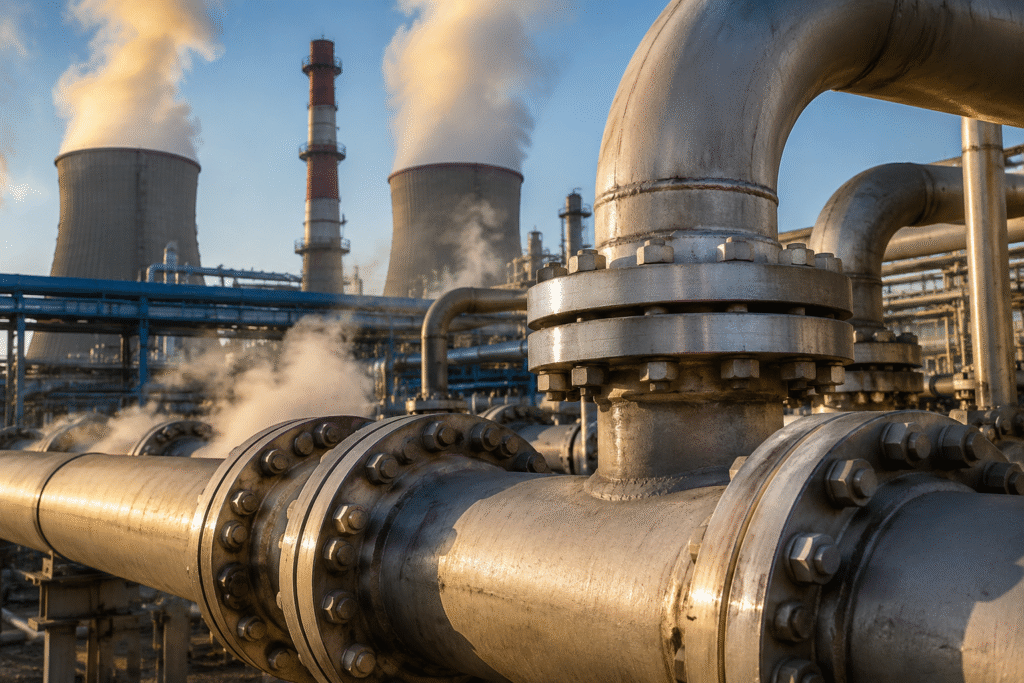
스테인레스 스틸 파이프 플랜지 시장: 58억 달러: 숨겨진 장점, 유형, 용도, 올바른 플랜지를 선택하는 방법
그랜드뷰 리서치에 따르면 (2024), 전 세계 산업용 플랜지 시장의 가치는 다음과 같습니다. $5.8 10억 2023 도달할 것으로 예상됩니다. $7.2 10억 단위로 2030. That growth makes stainless steel pipe flange selection more strategic for engineers and procurement teams who need durability, 내식성, and long-term lifecycle value.
산업용 배관에서, the hidden advantages of stainless steel pipe flange products go far beyond basic connection points. Intriguing material versatility, 압력 무결성, and maintenance savings now influence how buyers choose flange types, 크기, and standards across Oil & 가스, 힘, 수처리, and Marine systems.
Industrial Demand for Stainless Steel Pipe Flange Solutions Is Accelerating
Global demand remains strong because industrial plants continue to expand capacity, replace aging infrastructure, and tighten compliance requirements. IBISWorld에 따르면 (2024), 아시아 태평양 계정은 이상입니다. 45% 글로벌 플랜지 생산량의, 중국이 가장 큰 제조사이기 때문에.
That production concentration matters for procurement strategy. Buyers increasingly evaluate not only price, but also mill traceability, 검사 문서, 배송 신뢰성.
The oil and gas sector remains the largest consuming industry. 스태티스타에 따르면 (2024), 석유 및 가스 산업은 대략적으로 35% 글로벌 플랜지 소비량, which explains the heavy demand for ASME-rated stainless, 탄소강, and alloy flange products.
동시에, 수처리, 석유화학, and shipbuilding projects keep expanding stainless specifications. 모르도르 정보국 (2024) notes that corrosion-resistant materials continue gaining share in aggressive media applications because downtime costs often exceed initial component premiums.
For buyers comparing industrial flanges, stainless steel pipe flange products offer a strong balance of corrosion resistance, 기계적 강도, and fabrication flexibility. 일반적인 등급은 다음과 같습니다 ASTM A182 F304, F304L, F316, F316L, 듀플렉스 F51, and super duplex F53 for higher chloride exposure and improved pitting resistance.
박사로서. James Hollis, Materials Engineer and corrosion consultant, 주: “A flange is rarely a commodity in aggressive service. 재료 등급, forging quality, and compliance documentation determine whether the joint will perform for years or fail early.”
This is where supplier capability becomes critical. 와 함께 ISO 9001:2015 및 PED 2014/68/EU 인증, SASA FLANGE supports international projects that require dimensional accuracy, EN 10204 3.1 인증, and dependable export execution.
게다가, factory capability affects lead time and consistency. 시장 조사 미래에 따르면 (2024), industrial buyers increasingly favor suppliers that combine machining, 테스트, and documentation under one quality system because this reduces project coordination risk.
For EPC contractors and distributors, stainless flange sourcing is no longer only about available stock. It is about choosing a partner that understands standards, 압력 등급, 야금, and end-use risk.
플랜지 제조 304, 316, 904엘, 2205, 2507 그리고 다른 프리미엄 등급, SASA FLANGE serves projects across 50+ countries in Oil & 가스, 석유화학, 힘, 선박, 및 건설. 그러므로, buyers can align material selection with both project specifications and long-term operating performance.
기술 심층 분석: 숨겨진 장점, 다재, 내구성, and Flange Types
The strongest case for a stainless steel pipe flange lies in lifecycle economics. Stainless materials usually cost more upfront than carbon steel, yet they often reduce repainting, corrosion failures, and replacement frequency in wet, 화학적인, or saline service.
According to NACE guidance on corrosion control and materials selection, corrosion-related costs consume a meaningful share of industrial maintenance budgets worldwide (NACE, 2023). 그러므로, selecting the right stainless flange grade can directly reduce total cost of ownership.
Engineers usually start with grade selection, then match pressure class, 깃 달기, and flange type to service conditions. ASTM A182 단조 또는 압연 합금 및 스테인리스강 파이프 플랜지를 덮습니다., 단조 피팅, 및 고온 서비스용 밸브, ~하는 동안 ASME B16.5 차원을 관리합니다., 공차, 평가, NPS 표시 1/2 ~을 통해 24.
더 큰 직경의 경우, ASME B16.47 applies. 유럽 프로젝트에서, DIN 및 EN 1092 standards often define dimensions, 교련, and pressure designations, so interchangeability must be checked carefully.
마이클 트렌트 역, 수석 배관 엔지니어, 주: “The wrong flange type can undermine a good material choice. A 316L flange in the wrong facing or pressure class still creates leakage and maintenance risk.”
The main types of stainless flanges each serve different piping priorities. Slip on flanges simplify alignment and installation. Weld neck flanges deliver superior stress distribution. Blind flanges terminate systems for testing, 격리, 아니면 향후 확장.
- 용접 목 플랜지: 고압에 가장 적합, 순환 로딩, 및 중요 공정 라인.
- 슬립온 플랜지: Common for lower pressure utility systems and cost-sensitive fabrication.
- 소켓 용접 플랜지: 소구경에 적합, 고압 서비스.
- 스레드 플랜지: Useful where welding is restricted or field assembly must remain simple.
- 랩 조인트 플랜지: Preferred where frequent dismantling is required.
- 블라인드 플랜지: Used for closure, hydrotesting, and maintenance isolation.
Material choice then determines hidden advantages in specific environments. F304/F304L remains widely used for general process service because it offers good corrosion resistance and weldability. F316/F316L adds molybdenum, which improves resistance in chloride-bearing media and marine-adjacent environments.
Duplex and super duplex stainless grades raise performance further. Their higher strength can support wall-thickness optimization, while superior resistance to chloride stress corrosion cracking makes them attractive in offshore and desalination systems.
According to ASTM and industry application data, 316L is commonly specified where lower carbon content helps reduce sensitization after welding (ASTM, 2024). That makes it a practical choice for process plants with extensive field welding and post-installation inspection requirements.
Pressure class also matters when buyers choose pipe flanges. ASME 수업 150, 300, 600, 900, 1500, 그리고 2500 define pressure-temperature capabilities, but exact limits depend on material group and operating temperature under ASME rules.
Face type affects sealing performance. Raised Face remains the most common general industrial option. Ring Type Joint supports higher pressure and more severe service. Flat Face is often selected for cast iron or low-bolt-load mating equipment.
에 따르면 ASME B16.5, 탈당, 개스킷 호환성, and surface finish all influence final joint integrity (ASME, 2024). 그러므로, flange selection must always consider the full assembly, not only the forged component.
고급 CNC 가공 및 포괄적인 품질 테스트를 통해 뒷받침됨, SASA FLANGE 1/2부터 사용자 정의 크기 제공" 60까지" 스테인레스 스틸로, 탄소강, 합금, 니켈 합금, and titanium grades. This capability helps buyers consolidate sourcing for flanges and pipe fittings such as elbows, 티셔츠, 감속기, 그리고 모자.
Procurement teams also look at practical manufacturing details. These include heat treatment, PMI, 치수검사, hydrostatic test support, ferrite control where required, and traceable raw material records.
- Common stainless grades: 304, 304엘, 316, 316엘, 904엘, 2205, 2507.
- Relevant forged flange specs: ASTM A182, ASME B16.5, ASME B16.47, EN 1092.
- Typical documentation: EN 10204 3.1, pressure test records, PMI 보고서, dimension reports.
- Common face types: RF, FF, RTJ.
- Typical end industries: 기름 & 가스, 석유화학, 힘, 수처리, 선박.
That combination of versatility, 내구성, and standards compliance explains why stainless steel flanges remain essential in severe service piping. 대조적으로, selecting purely on unit price can create hidden costs through leakage, 계획되지 않은 폐쇄, or faster replacement cycles.
표준, 규정 준수, and Quality Assurance for Stainless Steel Pipe Flange Procurement
Industrial buyers rarely approve flanges without standards compliance. ASME, ASTM, DIN, EN, API, ISO, and PED references define how the flange is designed, 서서히 나아가는, 기계로 가공된, marked, 테스트를 거쳤습니다, and documented.
ASTM A182 is one of the most important material standards for forged stainless steel flange products. It covers chemical composition, 기계적 성질, heat treatment requirements, and grade identification for forged flanges and fittings.
ASME B16.5 governs dimensions and pressure-temperature ratings for pipe flanges and flanged fittings from NPS 1/2 ~을 통해 24. ASME B16.47 extends dimensional requirements to larger diameters, typically from NPS 26 ~을 통해 60.
유럽 프로젝트에서는 EN을 자주 지정합니다. 1092 flange dimensions and pressure classes such as PN10, PN16, PN25, and PN40. 그러므로, engineers must verify drilling patterns and thickness compatibility before mixing ASME and EN components.
ISO에 따르면 (2024), documented quality systems improve consistency in manufacturing and traceability for pressure equipment supply chains. That is why ISO 9001:2015 certification remains a strong baseline for approved vendor evaluation.
Pressure equipment regulation also matters in export markets. PED 2014/68/EU applies to pressure equipment supplied into the European Economic Area, and proper conformity assessment is essential for compliant project delivery.
For sour service or sulfide stress environments, material review may also include NACE MR0175 and related project-specific requirements. In offshore projects, DNV and NORSOK references may further define inspection, 테스트, and documentation expectations.
Image alt text: stainless steel pipe flange manufacturing and inspection under ASME standards.
Below is a practical compliance checklist used by many engineering teams when evaluating flange suppliers.
- Material standard confirmation: ASTM A182, ASTM A105, or project-specified equivalent.
- Dimensional standard confirmation: ASME B16.5, ASME B16.47, DIN, JIS, 고스트, 또는 EN 1092.
- Pressure class verification: 150 에게 2500 or project-specific PN rating.
- Traceability documents: 열 번호, MTC, EN 10204 3.1.
- 검사범위: PMI, 경도, 치수, 시각적, NDE if required.
- Marking and packaging: standard stamping, 수출용 포장, moisture protection.
As Laura Mendel, 산업 시장 분석가, 주: “Compliance documentation now influences award decisions almost as much as price. Buyers want fewer surprises during inspection and commissioning.”
That is especially true in multinational projects with third-party inspections. Procurement teams often need fast access to drawings, 선교사 훈련원, PED declarations, and coating or preservation details before shipment approval.
와 함께 ISO 9001:2015, PED 2014/68/EU, 그리고 광고 2000 인증, SASA FLANGE aligns production and documentation with demanding project environments. 뿐만 아니라, the company supports materials including 304, 316, 316엘, 904엘, 2205, 2507, A105, A182, 인코넬, 모넬, 하스텔로이, 그리고 티타늄.
Buyers should also compare dimensional capability. 대구경 플랜지, custom bores, 비표준 드릴링, RTJ 홈, and special facing finishes all require machining expertise, not just material availability.
이러한 이유로, many project teams prefer manufacturers that integrate forging coordination, CNC 가공, 테스트, and export packaging under one system. You can review capabilities or discuss project drawings through SASA FLANGE when complex compliance requirements apply.
더 깊은 표준 참조, buyers should also verify the latest dimensional and pressure guidance directly from ASME. Current editions always take precedence over secondary summaries.
신청안내: How to Choose Stainless Steel Pipe Flange Types for Real-World Uses
Choosing the right stainless steel pipe flange starts with service conditions, 카탈로그 선호가 아님. Engineers must evaluate media chemistry, 온도, 압력, 순환 부하, 부식 허용량, and inspection access before specifying a flange.
기름에 & Gas systems, 316L의 용접 넥 플랜지, 듀플렉스, or super duplex grades often support process, 난바다 쪽으로 부는, and produced-water lines. Higher pressure classes and RTJ facings become common in severe hydrocarbon service.
석유화학공장에서, 304L and 316L flanges often serve utility and process lines depending on chloride level and media concentration. 하지만, stronger acids or chlorides may justify 904L, 하스텔로이, or nickel alloy options.
Power generation systems present a different profile. 열 순환, 스팀 서비스, and pressure fluctuations push designers toward forged materials with strong dimensional accuracy and reliable bolting performance.
Marine and shipbuilding applications place a premium on chloride resistance. 그러므로, 316엘, 듀플렉스 2205, 그리고 슈퍼 듀플렉스 2507 often outperform standard austenitic grades in splash zones, 해수 시스템, and deck piping.
Water treatment and desalination systems also benefit from stainless selection. According to industry desalination case data summarized by DNV-related technical references, duplex materials often deliver improved resistance in chloride-rich water systems where lower-alloy materials deteriorate faster (DNV, 2023).
Below are practical selection criteria that help engineers and purchasing teams choose pipe flanges more accurately.
- Media: 물, 증기, 탄화수소, 산, 염화물, 산성 가스, 바닷물.
- 온도: 주변, 높은, or cyclic thermal service.
- 압력 등급: ASME 150 에게 2500 or EN PN rating.
- 플랜지형: 용접 목, 미끄러지다, 눈이 먼, 소켓 용접, 스레드, 랩 조인트.
- Face type: RF, FF, RTJ.
- 재료 등급: 304/304엘, 316/316엘, 904엘, 2205, 2507, 니켈 합금.
- 선적 서류 비치: EN 10204 3.1, PMI, 경도, 임사체험, PED as required.
- Project logistics: 리드타임, 포장, 검사 보류 지점, export readiness.
There are also hidden advantages in supplier coordination. When a manufacturer can provide both flange and fittings, dimensional matching becomes easier and procurement administration becomes faster.
That matters in shutdowns and brownfield modifications where schedule risk is high. 1/2부터 맞춤형 크기 제공" 60까지" 경쟁력 있는 공장 직거래 가격으로, SASA FLANGE helps buyers consolidate flanges, 팔꿈치, 티셔츠, 감속기, and caps under one sourcing plan.
Common buying scenarios illustrate how selection changes by application.
- Offshore seawater header: 2205 또는 2507 weld neck flange with RF or RTJ depending on design pressure.
- Chemical transfer line: 316L or 904L slip on or weld neck based on corrosion study and operating pressure.
- Power plant steam line: forged alloy or stainless weld neck flange in suitable ASME pressure class.
- Water treatment skid: 304L or 316L slip on flange where fabrication efficiency and corrosion resistance both matter.
- Maintenance isolation point: blind flange with correct gasket and bolting set for hydrotest or shutdown control.
Procurement managers should ask suppliers a few direct questions before placing orders. Can they provide MTCs quickly. Can they support third-party inspection. Can they machine special bores or RTJ grooves. Can they maintain traceability through packing and shipment.
Those questions often reveal more than a price sheet. 실제로, a capable manufacturer reduces risk long before the flange arrives on site.
스테인레스 스틸 플랜지에 대한 향후 전망 및 전략적 구매 권장 사항
Market fundamentals remain positive for stainless and alloy flange products. 그랜드뷰 리서치에 따르면 (2024), 시장에 도달할 것으로 예상됩니다. $7.2 10억 단위로 2030, driven by energy, industrial processing, and infrastructure upgrades.
동시에, buyers face pressure from volatile alloy costs, compliance expectations, and tighter project schedules. 그러므로, strategic sourcing should balance price with corrosion performance, 품질 보증, 및 공급업체 대응.
One clear trend is the shift toward lifecycle-based procurement. Engineers increasingly justify better stainless grades by showing lower replacement rates, 누출이 적다, and better reliability in corrosive systems.
Another trend is documentation digitization. Manufacturers that provide fast access to MTCs, 그림, 검사 기록, and PED or ISO certificates can accelerate approval cycles and reduce site delays.
시장 조사 미래에 따르면 (2024), industrial procurement teams are placing greater value on supplier transparency and integrated manufacturing support. 결과적으로, producers with strong quality systems and technical communication are better positioned in global tenders.
For buyers evaluating intriguing stainless steel flanges for industrial use, the best approach is straightforward. Match flange type to load condition. Match grade to corrosion risk. Match supplier capability to project documentation and schedule requirements.
실용적인 측면에서, that means avoiding generic substitutions without engineering review. It also means confirming standards, 압력 등급, 깃 달기, 검사 범위, and country-specific compliance before order release.
When projects demand stainless steel pipe flange products in 304, 316, 904엘, 2205, 2507, 또는 특수합금, working with experienced exporters improves execution. For detailed quotations, custom drawings, or urgent project support, engineers and sourcing teams can connect with SASA FLANGE to align specifications, 선적 서류 비치, and lead time early in the procurement cycle.
자주 묻는 질문
다양한 유형의 스테인레스 스틸 플랜지는 무엇입니까?
●가장 일반적인 스테인레스 스틸 플랜지 유형은 용접 넥입니다., 미끄러지다, 눈이 먼, 소켓 용접, 스레드, 그리고 랩 조인트, ~와 함께 ASME B16.5 covering standard dimensions for NPS 1/2 ~을 통해 24.
●Each flange type suits a different piping requirement because weld neck flanges handle higher stress, slip on flanges simplify fabrication, and blind flanges isolate or terminate a line.
●For projects requiring correct type selection, 재료 추적성, 및 표준 준수, 다음과 같은 기존 제조업체와 협력 SASA FLANGE helps ensure the flange matches pressure class, 깃 달기, 및 서비스 조건.
어느 것이 더 낫습니까? 304 또는 420 스테인레스 스틸?
●For most industrial stainless steel pipe flange applications, 304 is usually the better choice because it offers stronger corrosion resistance and better weldability than 420.
●등급 420 is a martensitic stainless steel used more often where hardness and wear resistance matter, ~하는 동안 ASTM A182 F304 is widely specified for forged flange service in piping systems.
●If the application involves corrosive media, fabrication welding, or process piping standards, buyers should generally prioritize 304 또는 316 grades and confirm suitability with a qualified supplier such as SASA FLANGE.
스테인레스 스틸을 가장 많이 사용하는 산업은 무엇입니까??
●스태티스타에 따르면 (2024), 석유 및 가스 산업은 대략적으로 35% 글로벌 플랜지 소비량, making it one of the largest industrial users of stainless and alloy flange products.
●하지만, 석유화학, 수처리, 선박, 식품 가공, and power generation also use significant volumes of stainless steel because corrosion resistance and hygiene or durability requirements are critical.
●When buyers serve multiple end-use sectors, selecting a manufacturer that supports broad material grades, 표준, and export documentation improves sourcing flexibility and long-term supply consistency.
세 가지 유형의 플랜지는 무엇입니까?
●The three flange types most commonly referenced in general industrial purchasing are weld neck, 미끄러지다, and blind flanges because they cover most process piping, 제작, 그리고 격리 요구.
●Weld neck flanges perform best in high-pressure or cyclic service, slip on flanges support easier installation in lower-pressure systems, and blind flanges close the end of a pipe or vessel nozzle.
●Procurement teams should still review full operating conditions because threaded, 랩 조인트, and socket weld designs may be better choices in specialized service or small-bore systems.
스테인레스 스틸 파이프 플랜지 가격에 영향을 미치는 것은 무엇입니까??
●스테인레스 스틸 파이프 플랜지 가격은 주로 재료 등급에 따라 다릅니다., 크기, 압력 등급, 플랜지형, 가공 복잡성, 테스트 범위, and required documentation such as EN 10204 3.1.
●그랜드뷰 리서치에 따르면 (2024), continued market growth and alloy demand are influencing industrial flange sourcing, which means 316L, 듀플렉스, and super duplex products typically cost more than standard 304 성적.
●To control total cost, buyers should compare not only unit price but also compliance, 리드타임, inspection support, and lifecycle durability before finalizing a purchase decision.
How do I choose a stainless steel slip on flange or threaded pipe flange?
●A stainless steel slip on flange is usually chosen for easier alignment and economical fabrication, while a threaded pipe flange is selected where welding is impractical or restricted by site conditions.
●ASME B16.5 dimensions and project pressure-temperature requirements should be checked carefully because installation convenience does not replace proper mechanical or sealing performance.
●For applications involving aggressive media, unusual bore sizes, or custom machining, a technical review with an experienced flange manufacturer is the safest way to confirm the correct design.
관련 게시물

오리피스 플랜지 정의, 세부 정보 및 ASME B16.36 플랜지 개요: 시장 데이터, 선택 가이드 및 규정 준수 통찰력
전 세계 산업용 플랜지 시장의 가치는 다음과 같습니다. $5.8 10억…
