
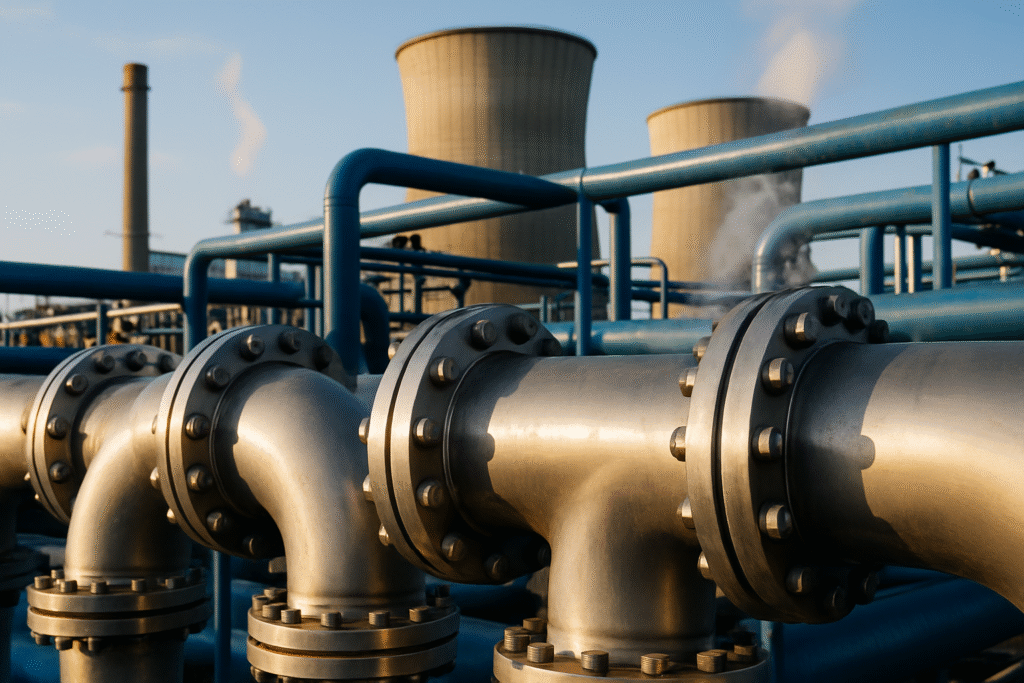
스테인레스 스틸 파이프 플랜지 시장 2025: 숨겨진 장점, 프리미엄 유형, 용도, 및 선택 데이터
그만큼 스테인레스 스틸 파이프 플랜지 remains a critical component in modern process piping, 특히 석유 전반에 걸쳐 신뢰성 요구가 증가함에 따라, 가스, 물, 및 전력 프로젝트. 그랜드뷰 리서치에 따르면 (2024), 전 세계 산업용 플랜지 시장의 가치는 다음과 같습니다. $5.8 10억 2023 도달할 것으로 예상됩니다. $7.2 10억 단위로 2030.
That growth reflects more than volume. It shows the hidden advantages of premium stainless solutions, including corrosion resistance, 내구성, 수명주기 비용 관리, and broad versatility across aggressive service conditions.
스테인레스 스틸 파이프 플랜지 시장이 계속 확장되는 이유
Industrial buyers no longer evaluate flanges as simple connection hardware. They evaluate performance over years of pressure cycling, thermal loading, 화학물질 노출, and maintenance downtime.
스태티스타에 따르면 (2024), 석유 및 가스 산업은 대략적으로 35% 글로벌 플랜지 소비량. 그러므로, materials that reduce leakage risk and unplanned shutdowns have become strategically important.
IBISWorld에 따르면 (2024), 아시아 태평양 계정은 이상입니다. 45% 글로벌 플랜지 생산량의, 중국이 가장 큰 제조사이기 때문에. 결과적으로, procurement teams increasingly compare not only price, 추적성도, 표준 준수, and factory quality systems.
This shift favors manufacturers with certified systems and broad machining capabilities. 와 함께 ISO 9001:2015 및 PED 2014/68/EU 인증, SASA FLANGE supports buyers who need consistent documentation, 치수 정확도, and export-ready quality control.
실용적인 측면에서, a stainless steel pipe flange offers several commercial benefits over lower-grade alternatives. It often delivers longer service life in chloride-bearing media, lower maintenance frequency, and better compatibility with hygienic or high-purity systems.
모르도르 정보국에 따르면 (2024), global investment in downstream petrochemical and industrial processing infrastructure continues to support steady demand for corrosion-resistant piping components. 게다가, replacement spending in mature plants is driving recurring flange purchases, 특히 ASTM A182 F304/F304L and F316/F316L grades.
Engineers also prioritize joint integrity under changing pressure classes. ASME B16.5 그리고 ASME B16.47 플랜지 치수, facing tolerances, and pressure-temperature ratings remain central to safe piping design (ASME, 2023).
That is why specification language has become more precise. Buyers increasingly request ASTM material grades, EN 10204 3.1 검사 증명서, PMI 테스트, and heat number traceability before approving a supplier.
In contrast with commodity sourcing, premium projects demand complete manufacturing accountability. 이러한 이유로, many EPC contractors prefer suppliers that can produce stainless, 탄소강, 합금, 듀플렉스, 니켈 합금, and titanium flanges under one quality system.
SASA FLANGE serves this requirement by manufacturing flanges in 304, 316, 316엘, 904엘, 2205, 2507, A105, A182, 인코넬, 모넬, 하스텔로이, 그리고 티타늄. 추가적으로, the company supplies pipe fittings such as elbows, 티셔츠, 감속기, and caps for integrated project purchasing.
조달 관리자용, this broader supply scope reduces coordination risk. It can also shorten purchasing cycles when projects require multiple materials, 압력 등급, and standards such as ANSI, DIN, JIS, 고스트, 그리고 EN 1092.
스테인레스 스틸 파이프 플랜지 유형에 대한 기술 가이드, 용도, and Premium Material Choices
The best stainless steel pipe flange specification depends on media chemistry, 온도, 설계압력, 부식 허용량, 및 제작방법. 하지만, 304/304L and 316/316L still dominate general industrial demand because they balance cost, 용접성, 부식 성능.
According to ASTM and common industry practice, 304/304L is widely selected for water, 식품 등급, and general chemical service, while 316/316L adds molybdenum for improved resistance to chlorides and more aggressive corrosive environments (ASTM, 2023). 그러므로, 316/316L often becomes the preferred choice for marine, 난바다 쪽으로 부는, 및 화학 처리 시스템.
As John Butterfield, a senior piping engineer, 주: “Flange failures rarely start with dimensions alone; they start when the material grade does not match the corrosion mechanism of the service.” That point is especially relevant in chloride service, 신맛이 나는 서비스, and high-temperature cycling applications.
Stainless grades are not interchangeable in every duty. Buyers should match metallurgy to actual process conditions, not only to initial budget.
- 304/304엘: General-purpose stainless for moderate corrosion environments and good fabrication performance.
- 316/316엘: Improved pitting and crevice corrosion resistance in chloride-bearing applications.
- 904엘: Better resistance in strong reducing acids and selected severe chemical environments.
- 2205 듀플렉스: Higher strength and better chloride stress corrosion cracking resistance than standard austenitic grades.
- 2507 슈퍼 듀플렉스: Premium option for highly aggressive offshore, 바닷물, and high-chloride service.
- 티탄: Strong choice for seawater and highly corrosive media where weight and corrosion resistance matter.
Material selection also affects wall thickness transitions and welding procedures. 예를 들어, low-carbon L grades help reduce sensitization risk after welding, especially in fabricated systems that may later face corrosive process streams.
시장 조사 미래에 따르면 (2024), demand for corrosion-resistant alloys in process industries is expected to outpace standard carbon steel categories in several high-growth applications. 게다가, duplex and super duplex flanges are gaining share where operators need higher strength-to-weight performance.
Not all flange Types serve the same piping condition. Face type, bore geometry, and installation method directly influence sealing reliability and maintenance accessibility.
- 웰드 넥 플랜지: Preferred for high-pressure and high-temperature service because the tapered hub reduces stress concentration.
- 슬립온 플랜지: Often selected for moderate service where fabrication speed and lower installed cost matter.
- 블라인드 플랜지: 줄 끝을 닫는 데 사용됩니다., 용기 노즐, 또는 향후 확장 지점.
- 소켓 용접 플랜지: Suitable for smaller bore high-pressure lines.
- 스레드 플랜지: Used where welding is impractical or restricted.
- 랩 조인트 플랜지: 빈번한 분해 및 정렬 유연성이 필요한 시스템에 유용합니다..
에 따르면 ASME B16.5 (2023), flange ratings from Class 150 수업에 2500 provide standardized pressure-temperature guidance. 결과적으로, a correct class selection must consider not only operating pressure but also material group and service temperature.
박사로서. 엘레나 모리스, a materials scientist in corrosion engineering, 주: “The hidden advantages of stainless are most visible over time, because durability, 유지 보수 감소, and reduced contamination often outweigh higher upfront cost.” This lifecycle view is increasingly shaping industrial procurement decisions.
Dimensional compatibility matters just as much as metallurgy. Common requests include 2 인치, 4 inch stainless steel pipe flange products, large-diameter ASME B16.47 pieces, and custom-drilled flanges for replacement work.
고급 CNC 가공 및 포괄적인 품질 테스트를 통해 뒷받침됨, SASA FLANGE 사용자 정의 크기를 제공합니다 1/2 인치에서 60 경쟁력 있는 공장 직접 가격의 인치. 뿐만 아니라, the company supports RF, FF, RTJ, and custom facing requirements for project-specific applications.
Procurement teams should also review these specification points before ordering:
- Material grade and dual certification, 304/304L 또는 316/316L과 같은.
- 적용규격, 포함 ASME B16.5, ASME B16.47, DIN, JIS, 또는 EN 1092-1.
- Pressure rating and service temperature.
- 직면 유형, 올라간 얼굴과 같은, 평평한 얼굴, 또는 링형 조인트.
- Testing scope, PMI를 포함한, 수압 테스트 지원, 경도, 및 치수검사.
- Documentation requirements, 포함 EN 10204 3.1 and heat traceability.
- Corrosion risks, 특히 염화물, 산, sour media, or marine exposure.
These details influence performance, inspection acceptance, 및 총 설치 비용. 많은 프로젝트에서, the right premium flange specification prevents expensive rework later.
ASME, ASTM, DIN, and EN Compliance Requirements for Industrial Flanges
Standards compliance separates dependable industrial supply from generic metal trading. For a stainless steel pipe flange, engineers usually begin with dimensional standards, then confirm material standards, 압력 등급, 및 검사 요구 사항.
The most common dimensional references are ASME B16.5 NPS용 1/2 ~을 통해 24 그리고 ASME B16.47 더 큰 크기의 경우. 유럽 프로젝트에서, EN 1092-1 자주 지정됨, while DIN legacy references still appear in maintenance and retrofit work.
재료 표준도 똑같이 중요합니다. ASTM A182 governs forged or rolled alloy and stainless steel pipe flanges and forged fittings for high-temperature service, ~하는 동안 ASTM A240 covers stainless steel plate, 시트, 압력 용기 및 일반 응용 분야용 스트립 (ASTM, 2023).
For buyers comparing international projects, the following framework is useful:
- ASME B16.5: 치수, 공차, 압력 온도 등급, 표시, and testing for common flanges.
- ASME B16.47: Large diameter steel flanges.
- ASME B16.9: 공장에서 제작한 단조 맞댐용접 피팅.
- ASTM A182: Forged stainless and alloy flange materials.
- EN 1092-1: European flange dimensions and PN rating system.
- DIN/JIS/GOST: Regional dimensional systems for specific installed bases.
- NACE MR0175/ISO 15156: 열악한 서비스 환경을 위한 자재 지침.
According to NACE and ISO guidance, material compatibility in H2S-containing systems requires careful review of hardness, 화학, 열처리, and environmental severity (NACE, 2023). 그러므로, stainless selection in sour service must never rely on catalog descriptions alone.
Compliance also extends beyond dimensions and chemistry. PED 2014/68/EU, 테스트 인증서, and traceability records are often mandatory for exported pressure equipment packages.
For many European and international buyers, documented quality systems reduce approval time. 와 함께 ISO 9001:2015, PED 2014/68/EU, 그리고 광고 2000 인증, SASA FLANGE aligns with the documentation expectations common in regulated industrial supply chains.
Inspection scope should be agreed before production starts. That usually includes raw material review, forging controls, machining inspection, marking verification, 치수 검사, and final release documentation.
A practical compliance checklist often includes:
- Correct standard edition listed on PO and drawings.
- 재료 등급, 열 번호, and traceability markings.
- Pressure class or PN rating verification.
- Facing finish and serration confirmation.
- EN 10204 3.1 or project-specific MTC requirements.
- 선택적 PMI, 페라이트, 경도, or NDE reports.
해양 시스템에 대한 DNV 지침에 따름, documentation quality and traceability can be as important as material strength because verification supports long-term operational integrity (DNV, 2024). 결과적으로, buyers should treat quality documents as part of the product, not as an afterthought.
For engineers managing mixed-standard projects, early technical clarification prevents expensive mismatch issues. Bolt circle differences, face dimensions, and drilling patterns can create installation failures even when nominal Pipe size appears identical.
That is why experienced manufacturers review drawings and standards before production release. Buyers can explore broader product options through SASA FLANGE 제품 성능 when applications require both flange and fitting packages under one supplier.
How to Choose Stainless Steel Pipe Flanges for Oil, 가스, 화학적인, 힘, 해양 서비스
Selection should start with operating data, 카탈로그 편의성이 아님. 미디어 구성, 염화물, 압력 등급, flow regime, and shutdown economics all affect the right stainless steel pipe flange choice.
석유 및 가스 시스템, 부식 위험, 압력 사이클링, and sour service conditions often drive stricter specifications. 스태티스타에 따르면 (2024), 이 부문은 약 35% 글로벌 플랜지 소비량, so specification discipline remains high.
For upstream and midstream lines, engineers frequently prefer weld neck Flanges in ASTM A182 F316/L, 듀플렉스 2205, 또는 슈퍼 듀플렉스 2507 depending on chloride level and pressure conditions. 어디 NACE MR0175 applies, metallurgy review becomes even more important.
석유화학 및 화학공장에서, media compatibility often determines whether 304/304L is sufficient or whether 316L, 904엘, 하스텔로이, or titanium is necessary. 그러므로, corrosion data and process temperature should be reviewed together.
발전용, thermal fatigue and pressure integrity matter more than simple atmospheric corrosion resistance. High-temperature applications may require alloy grades and carefully controlled forging quality, especially for critical steam or condensate systems.
Marine and shipbuilding projects create a different challenge. 바닷물 노출, splash zones, and long maintenance intervals often push engineers toward 316L, 2205, 2507, or titanium depending on budget and design life.
Use this practical selection approach:
- 기름 & 가스: Prioritize pressure class, NACE 검토, and leak-tight sealing performance.
- 화학 처리: Match alloy to acid concentration, 염화물, 및 작동 온도.
- 발전: Focus on temperature, 피로 저항, 및 규정 준수.
- 선박: Select grades with proven seawater and chloride resistance.
- 수처리: Balance corrosion resistance with lifecycle cost and hygienic requirements.
- Construction and Utilities: Consider standard availability, 설치 속도, and maintenance accessibility.
Price still matters, especially in large tenders. 하지만, stainless steel pipe flange price should be evaluated against service life, 유지 보수 노동, production downtime, 및 교체 빈도.
마이클 트렌트 역, an industrial procurement analyst, 주: “The cheapest flange on day one can become the most expensive connection in the plant if documentation, 야금, or machining quality is inconsistent.” That is why serious buyers compare total cost of ownership rather than unit price alone.
According to ISO-aligned procurement practices across process industries, approved vendors increasingly need consistent QC records and repeatable dimensional control (ISO, 2023). 따라서, purchasing teams often shortlist factories with proven export experience and broad standards coverage.
SASA FLANGE supports custom manufacturing for standard and non-standard requirements, including stainless, 탄소, 합금, 듀플렉스, and nickel alloy flanges. 피복재 50+ 석유를 건너는 나라들 & 가스, 석유화학, 힘, 해양산업, the company also supplies matching elbows, 티셔츠, 감속기, and caps for coordinated sourcing.
When evaluating a supplier, buyers should ask:
- Can the manufacturer supply from 1/2 인치에서 60 인치?
- Can it meet ASME, DIN, JIS, 고스트, 그리고 EN 1092 요구 사항?
- Can it provide EN 10204 3.1 certificates and PMI results?
- Can it machine special facings or custom drillings?
- Can it support urgent shutdown or replacement schedules?
These questions help separate a premium manufacturing partner from a simple reseller. In critical applications, that distinction directly affects project risk.
Future Outlook for Premium Stainless Flanges and Strategic Buying Recommendations
Demand for corrosion-resistant piping components is expected to stay firm as refinery upgrades, LNG investment, 물 인프라 확장, and marine replacement cycles continue. 그랜드뷰 리서치에 따르면 (2024), the flange market is projected to grow from $5.8 10억 2023 에게 $7.2 10억 단위로 2030.
That growth will likely favor suppliers with strong quality systems, 수출 문서, and material range. 추가적으로, buyers are showing greater interest in duplex, 슈퍼 듀플렉스, and nickel alloy options where hidden advantages justify higher upfront spend.
Procurement strategy should therefore combine technical review with supply-chain resilience. Buyers should lock down standards, 검사 범위, 리드타임, and traceability before purchase order release.
These actions improve purchasing outcomes:
- Standardize approved material grades for recurring service conditions.
- Specify ASME or EN dimensional standards clearly on RFQs.
- Request MTCs, PMI, 중요 라인에 대한 추적성.
- Evaluate total lifecycle cost, not only unit price.
- Use suppliers with integrated machining and testing capability.
In a market where durability, 다재, and compliance increasingly shape buying decisions, the right stainless steel pipe flange supplier becomes part of project risk management. For teams seeking premium materials, 맞춤 크기, and certified export support, connecting with SASA FLANGE is a practical next step in sourcing with greater confidence.
자주 묻는 질문
스테인레스 스틸 플랜지에 대한 ASME 코드는 무엇입니까?
●The main ASME dimensional code for a stainless steel pipe flange is ASME B16.5 for sizes from NPS 1/2 ~을 통해 24, ~하는 동안 ASME B16.47 더 큰 직경의 플랜지를 커버합니다..
●ASTM A182 is commonly used with ASME dimensions because it defines forged stainless and alloy material requirements for many industrial flange applications.
●For projects requiring verified compliance, 다음과 같은 기존 제조업체와 협력 SASA FLANGE helps ensure correct dimensional standards, 재료 추적성, 그리고 EN 10204 3.1 certification support.
스테인레스 스틸 플랜지는 무엇에 사용됩니까??
●파이프 연결에는 스테인레스 스틸 플랜지가 사용됩니다., 밸브, 슬리퍼, and equipment in systems that require corrosion resistance, 압력 무결성, 유지보수 접근이 더 쉬워졌습니다..
●스태티스타에 따르면 (2024), 석유 및 가스 부문이 약 35% 글로벌 플랜지 소비량, which shows how essential flanges are in critical industrial service.
●They are especially useful in chemical processing, 선박, 수처리, and hygienic systems where durability and leak-tight sealing matter over long operating periods.
세 가지 유형의 플랜지는 무엇입니까?
●The three most commonly referenced flange types in general industrial discussions are weld neck flanges, 슬립온 플랜지, 및 블라인드 플랜지.
●Weld neck flanges suit high-pressure service, slip-on flanges simplify fabrication in moderate conditions, and blind flanges close line ends or future tie-in points.
●Selection should still follow ASME B16.5 rating rules and service conditions, especially when temperature, 압력, or corrosive media could affect joint reliability.
어느 것이 더 낫습니까? 304 또는 420 스테인레스 스틸?
●대부분의 플랜지 적용 분야, 304 stainless is better than 420 because it offers stronger corrosion resistance and better weldability in process piping service.
●등급 420 is a martensitic stainless more often associated with hardness and wear resistance, ~하는 동안 304 remains one of the most widely specified stainless materials for industrial flanges and fittings.
●Buyers should choose 304 or 316-series forged flange grades for most piping systems unless a specific hardness-driven application requires an alternative metallurgy.
What factors affect stainless steel pipe flange price?
●스테인레스 스틸 파이프 플랜지 가격은 주로 재료 등급에 따라 다릅니다., 크기, 압력 등급, 원자재 시장 상황, 가공 복잡성, 및 테스트 요구 사항.
●IBISWorld에 따르면 (2024), 아시아 태평양 계정은 이상입니다. 45% 글로벌 플랜지 생산량의, so regional manufacturing capacity and export logistics have a direct effect on pricing competitiveness.
●견적을 정확하게 비교하려면, buyers should evaluate certification, 검사 범위, 리드타임, and lifecycle value rather than unit price alone.
How do I choose the right flange diameter and size?
●Flange diameter and size should match the pipe nominal size, 일정, 압력 등급, 직면 유형, and applicable dimensional standard such as ASME B16.5 또는 EN 1092-1.
●에이 4 인치 스테인레스 스틸 파이프 플랜지, 예를 들어, can differ in outside diameter, 볼트 서클, and bore details depending on class and standard, so nominal pipe size alone is not enough.
●For replacement and project-critical work, sharing drawings and operating data with a qualified manufacturer like SASA FLANGE reduces mismatch risk and speeds technical confirmation.
관련 게시물

오리피스 플랜지 정의, 세부 정보 및 ASME B16.36 플랜지 개요: 시장 데이터, 선택 가이드 및 규정 준수 통찰력
전 세계 산업용 플랜지 시장의 가치는 다음과 같습니다. $5.8 10억…
