
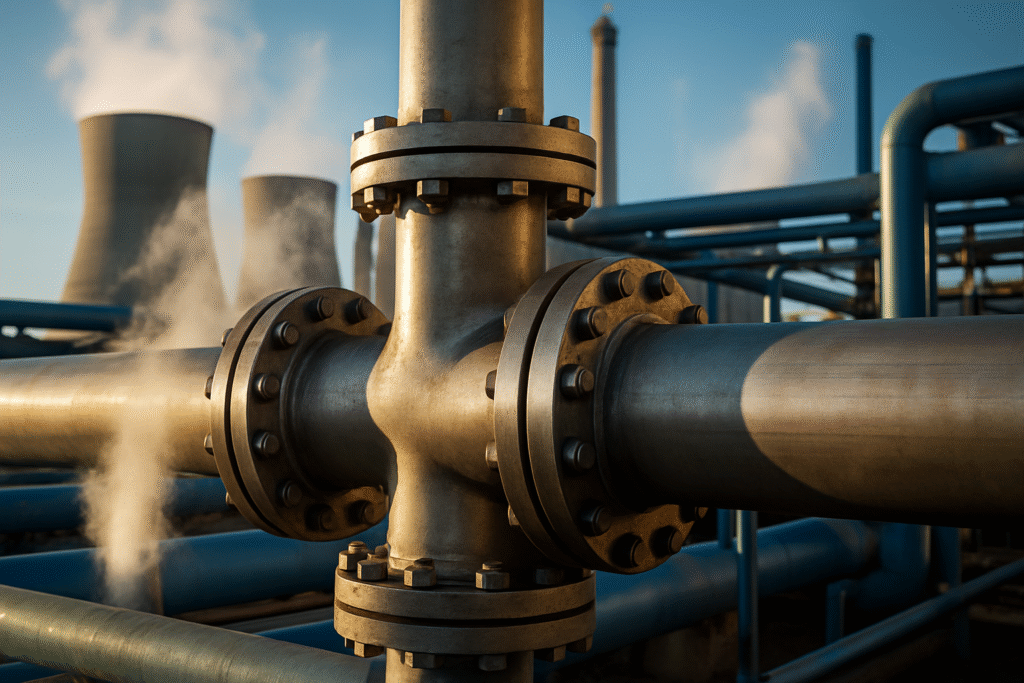
스테인레스 스틸 파이프 플랜지 시장 가이드: 숨겨진 장점, 유형, 용도, 및 선택 방법 2025
그랜드뷰 리서치에 따르면 (2024), 전 세계 산업용 플랜지 시장의 가치는 다음과 같습니다. $5.8 10억 2023 도달할 것으로 예상됩니다. $7.2 10억 단위로 2030. That growth makes the stainless steel pipe flange a critical procurement category for engineers, EPC 계약자, and industrial buyers who need corrosion resistance, 치수 정확도, 및 규정 준수.
For buyers comparing intriguing stainless steel flanges for industrial use, the hidden advantages often come down to material grade, 압력 등급, 깃 달기, 추적 가능한 품질 문서. 그러므로, selecting the right pipe flange is not only a pricing decision, but also a lifecycle reliability decision.
Industrial Demand Trends Shaping Stainless Steel Pipe Flange Procurement
IBISWorld에 따르면 (2024), 아시아 태평양 계정은 이상입니다. 45% 글로벌 플랜지 생산량의, 중국이 여전히 최대 제조 기지로 남아 있음. 결과적으로, global sourcing teams increasingly evaluate Chinese flange producers on machining precision, metallurgical traceability, and export certifications rather than on price alone.
스태티스타에 따르면 (2024), 석유 및 가스 산업은 대략적으로 35% 글로벌 플랜지 소비량. 게다가, 석유화학, 발전, 선박, and water treatment projects continue to drive demand for stainless steel flange types in pressure classes from 150 에게 2500.
Stainless steel pipe flange demand is expanding because operators want lower maintenance costs in corrosive and high-moisture environments. In contrast with basic carbon steel solutions, 다음과 같은 스테인레스 등급 304, 316, 316엘, 904엘, 2205, 그리고 2507 offer longer service life under chloride exposure, cyclic temperature changes, and aggressive media.
모르도르 정보국에 따르면 (2024), growth in process industries and infrastructure upgrades is increasing global demand for corrosion-resistant piping components at a CAGR above 4%. 뿐만 아니라, buyers now expect mill test certificates, PMI 검증, 그리고 EN 10204 3.1 documentation as standard procurement requirements.
데이비드 쿠마르 역, 수석 배관 엔지니어, 주: “Flange selection failures usually come from overlooking media chemistry, 개스킷 호환성, and bolt loading rather than from the flange itself.” That insight matters because many hidden advantages of stainless steel flanges appear only when material, 깃 달기, and installation conditions are aligned.
이 환경에서는, SASA FLANGE serves global B2B buyers with stainless steel flanges, 탄소강 플랜지, 합금 플랜지, and pipe fittings for demanding industrial applications. 와 함께 ISO 9001:2015 및 PED 2014/68/EU 인증, the company supports procurement teams that require both technical consistency and export-ready compliance.
플랜지 제조 304, 316, 316엘, 904엘, 2205, 2507 그리고 다른 프리미엄 등급, SASA FLANGE also supplies elbows, 티셔츠, 감속기, and caps to simplify package sourcing. 추가적으로, advanced CNC machining and comprehensive quality testing help maintain dimensional tolerances across ANSI B16.5, ANSI B16.47, DIN, JIS, 고스트, 그리고 EN 1092 요구 사항.
For buyers exploring intriguing stainless steel flanges for industrial use, supplier depth matters as much as catalog breadth. 그러므로, factory capability, inspection controls, and pressure-class experience should be reviewed before finalizing any vendor list.
스테인레스 스틸 파이프 플랜지 유형, 재료, and Hidden Advantages in Service
The most common stainless steel pipe flange types include weld neck, 미끄러지다, 눈이 먼, 소켓 용접, 스레드, 및 랩 조인트 디자인. 하지만, the best choice depends on pressure cycling, line size, 부식 메커니즘, 용접성, 및 유지 보수 액세스.
에 따르면 ASME B16.5, 플랜지 치수, 압력 온도 등급, 공차, and marking requirements must meet standardized design rules for NPS 1/2 ~을 통해 24. 더 큰 직경의 경우, ASME B16.47 covers many steel flanges from NPS 26 ~을 통해 60, which is especially relevant in marine, LNG, and bulk water systems (ASME, 2023).
박사로서. 엘레나 모리스, 재료 과학자, 주: “Grade selection should start with the process fluid, not the purchase price, because chloride concentration and temperature together can change corrosion performance dramatically.” 그러므로, 304 그리고 316 are not interchangeable in every service, even when both satisfy general stainless specifications.
ASTM A182 is commonly specified for forged or rolled alloy and stainless steel pipe flanges, 단조 피팅, 및 고온 서비스용 밸브. 게다가, ASTM A240 typically applies to plate, 시트, and strip materials, which becomes relevant when buyers compare forged flanges with plate flanges for large diameters (ASTM, 2024).
The hidden advantages of stainless steel pipe flange selection often appear in lifecycle cost analysis rather than in initial purchase orders. 시장 조사 미래에 따르면 (2024), industrial asset owners increasingly prioritize maintenance reduction and corrosion management, with reliability-led procurement programs rising across energy and chemical sectors.
- 304/304엘: 우수한 일반 내식성, solid weldability, and broad availability for water, 음식, 공조, 경화학 서비스.
- 316/316엘: Better resistance to chlorides and pitting due to molybdenum content, making it a preferred choice in marine and chemical applications.
- 904엘: Strong resistance in sulfuric and reducing environments, often selected for specialized chemical process systems.
- 2205 듀플렉스: Higher strength and improved chloride stress corrosion cracking resistance compared with austenitic grades.
- 2507 슈퍼 듀플렉스: Excellent pitting resistance equivalent numbers and high strength for offshore, 담수화, and severe chloride duty.
Different flange types also influence performance and total installed cost. 예를 들어, weld neck flanges provide superior stress distribution under thermal cycling, while slip on flanges can reduce fabrication cost in lower-pressure utility lines.
- 웰드 넥 플랜지: 고압에 가장 적합, 고온, and cyclic service due to hub geometry and butt-weld connection.
- 플랜지에 미끄러짐: Easier alignment and lower fabrication cost, commonly used in moderate-pressure systems.
- 블라인드 플랜지: Used to terminate or isolate pipelines, 밸브, and pressure vessel nozzles.
- 스레드 플랜지: Suitable where welding is restricted, though pressure and vibration limits must be evaluated carefully.
- 소켓 용접 플랜지: Often used in small-bore high-pressure piping, especially in utility and instrumentation lines.
- 랩 조인트 플랜지: Useful where frequent dismantling is required and corrosion-resistant stub ends justify the design.
According to NACE guidance for sour and corrosive service, material hardness, metallurgical condition, and fluid chemistry should be checked carefully when hydrogen sulfide is present (NACE, 2023). 게다가, stainless steel pipe flange procurement for offshore and upstream assets often requires review against NACE MR0175 and project-specific operator standards.
SASA FLANGE supports custom sizes from 1/2 인치에서 60 inches with competitive factory-direct pricing for project, MRO, and OEM orders. 고급 CNC 가공 및 포괄적인 품질 테스트를 통해 뒷받침됨, the company can supply raised face, 평평한 얼굴, and ring type joint configurations across multiple standards.
That flexibility helps buyers match pipe flange designs to actual line conditions rather than relying on generic catalog assumptions. For detailed project support, procurement teams can 연락하다 SASA FLANGE for material recommendations, 도면 검토, and quotation support.
표준, 테스트, 및 스테인레스 스틸 플랜지에 대한 규정 준수 요구 사항
Standards compliance is the foundation of safe flange performance. 그러므로, any stainless steel pipe flange should be verified against dimensional, 재료, 압력, and testing requirements before shipment.
The most commonly referenced standards include ASME B16.5, ASME B16.47, ASTM A182, EN 1092-1, DIN 표준, JIS 규격, and project-specific client specifications. In Europe, PED 2014/68/EU compliance may also be required when flanges are supplied as pressure equipment components.
ISO에 따르면 (2023), standardized quality management and traceability reduce process variation and improve supplier consistency across industrial manufacturing sectors. That is why certified quality systems and batch traceability are especially important for stainless steel flanges used in critical service.
- ASME B16.5: 치수, 공차, 압력 온도 등급, and marking for NPS 1/2 에게 24.
- ASME B16.47: NPS용 대구경 강철 플랜지 26 에게 60.
- ASTM A182: Material requirements for forged stainless and alloy flanges.
- ASME B16.9: Dimensions and tolerances for butt-welding fittings such as elbows and tees.
- EN 1092-1: European flange standard covering PN ratings, 직면 유형, 및 치수.
- NACE MR0175: Material guidance for sour service and H2S-containing environments.
Inspection requirements vary by project, but most serious buyers request mill test certificates, 열수 추적성, 및 치수 보고서. 추가적으로, PMI, 경도 테스트, 페라이트 측정, hydrostatic test review, and visual examination are often added for duplex, 슈퍼 듀플렉스, or high-alloy grades.
마이클 트렌트 역, 산업 시장 분석가, 주: “The market increasingly rewards suppliers that can document conformance quickly, because late-stage paperwork gaps delay project release more often than production bottlenecks.” That is especially true in EPC and export projects where documentation packages are reviewed before payment milestones are released.
조달 전문가용, the difference between forged flanges and plate flanges should also be understood early. Forged stainless steel pipe flange products under ASTM A182 generally offer stronger grain flow and are preferred for demanding pressure and temperature service, while plate flanges may fit lower-stress applications depending on design approval.
According to DNV and offshore project practice, 부식 허용량, bolt material compatibility, 개스킷 선택, and coating interfaces around flange joints also affect service life (DNV, 2023). 그러므로, flange selection should be integrated with the full joint assembly rather than treated as an isolated component decision.
SASA FLANGE operates with ISO 9001:2015, PED 2014/68/EU, 그리고 광고 2000 credentials for global industrial supply. 피복재 50+ 석유를 건너는 나라들 & 가스, 석유화학, 힘, 해양산업, the company aligns production and documentation with the needs of international buyers.
Buyers evaluating compliance details can also review product scope and manufacturing capabilities at 그만큼 SASA FLANGE 제품 페이지. For technical standards reference, engineers may consult ASME for the latest code and dimensional guidance.
오일용 스테인레스 스틸 파이프 플랜지 솔루션을 선택하는 방법, 가스, 화학적인, 힘, 해양 프로젝트
Choosing the right stainless steel pipe flange starts with the service condition. 하지만, the final decision should also consider welding method, 검사 범위, 리드타임, and total joint reliability.
석유 및 가스 시스템, 압력 등급, sulfide exposure, and temperature cycling are major concerns. 그러므로, 용접 목 플랜지 ASTM A182 F316/F316L, 듀플렉스, or super duplex are often preferred for upstream, 내의 한복판, and offshore piping.
석유화학 및 화학공장에서, media concentration and corrosion mechanism determine whether 304L, 316엘, 904엘, or nickel alloy options are suitable. 예를 들어, chloride-bearing streams can quickly shift the recommendation from standard austenitic stainless to duplex or higher-alloy materials.
Power generation projects often focus on temperature, 피로, and shutdown reliability. 결과적으로, flange geometry, gasket seating stress, and bolt selection become as important as base material selection.
Marine and shipbuilding environments require careful attention to chloride exposure, splash zones, and galvanic compatibility. 따라서, 316엘, 2205, 그리고 2507 are frequently considered where standard carbon steel flanges would require heavier maintenance or coating repair schedules.
- Confirm the fluid composition, 염화물 수준, 온도, and pressure range.
- Match the flange standard to the project specification, ~와 같은 ASME B16.5 또는 EN 1092-1.
- Choose the correct facing, including RF, FF, 또는 RTJ, based on gasket and sealing requirements.
- 재료 등급 확인, forged or plate construction, and required ASTM specification.
- Check corrosion allowance, NACE requirements, and client-approved material lists.
- 요구 EN 10204 3.1 인증서, PMI, and dimensional inspection records.
- Review machining tolerances, 지루한 일정, and compatibility with mating pipe and fittings.
- Compare delivery time, packaging quality, and export documentation readiness.
Many buyers also compare stainless steel flange types by installation cost rather than by unit cost. 대조적으로, experienced engineering teams calculate welding hours, inspection effort, maintenance intervals, and shutdown risk before selecting a final pipe flange design.
According to industry procurement benchmarks summarized by IBISWorld (2024), buyers increasingly consolidate sourcing with manufacturers that can provide both flanges and fittings to reduce logistics complexity. That approach lowers supplier count and often improves document control for large projects.
SASA FLANGE provides custom manufacturing for stainless steel flanges and fittings in 304, 316, 316엘, 904엘, 2205, 2507, A105, A182, 인코넬, 모넬, 하스텔로이, 그리고 티타늄. This broader material range helps EPC contractors and OEMs standardize sourcing across utility, 신랄한, and high-performance process lines.
The company also supports elbows, 티셔츠, 감속기, and caps to align flange packages with complete piping BOM requirements. For project-specific sizing, 깃 달기, 및 인증 요구 사항, 구매자는 할 수 있습니다 연락하다 SASA FLANGE for tailored technical and commercial support.
스테인레스 스틸 파이프 플랜지 공급에 대한 향후 전망, 가격, and Strategic Buying
스테인레스 스틸 파이프 플랜지 수요에 대한 전망은 여전히 긍정적입니다., 물, 선박, and process infrastructure investment continues worldwide. 그랜드뷰 리서치에 따르면 (2024), market expansion to $7.2 10억 단위로 2030 will keep capacity, raw material pricing, and lead times under close watch.
니켈, 크롬, 몰리브덴, and energy costs will continue to influence stainless steel flange pricing. 그러므로, buyers should treat price offers as time-sensitive and should confirm alloy surcharge assumptions before approving purchase orders.
스태티스타에 따르면 (2024), oil and gas remains the largest end-use segment at roughly 35% 글로벌 플랜지 소비량. 뿐만 아니라, 담수화, 수처리, and offshore maintenance are creating additional opportunities for duplex and corrosion-resistant pipe flange products.
전략적으로, buyers should prequalify manufacturers that combine standard range, 맞춤형 가공, and export documentation discipline. 게다가, framework agreements can protect delivery schedules when project demand rises or alloy markets tighten.
The most effective procurement programs typically follow three steps. 첫 번째, standardize approved grades and flange types by service class. 두번째, qualify manufacturers against certifications, 검사, and real production capability. 제삼, compare quotations on total technical value rather than unit price alone.
For companies seeking intriguing stainless steel flanges for industrial use, the hidden advantages are durability, 유지 관리 감소, and code-backed reliability. When those factors are supported by traceable manufacturing and responsive engineering service, the result is a stronger long-term sourcing strategy.
That is why many industrial buyers prefer experienced manufacturers with broad standards coverage and fast quotation support. For current projects involving stainless steel pipe flange supply, SASA FLANGE offers a practical path to align material performance, 선적 서류 비치, and factory-direct value.
자주 묻는 질문
스테인레스 스틸 플랜지에 대한 ASME 코드는 무엇입니까?
●ASME B16.5 is the primary code for most stainless steel pipe flange dimensions, 평가, 세부 사항에 직면, and tolerances from NPS 1/2 에게 24.
●더 큰 직경의 경우, ASME B16.47 is commonly used, ~하는 동안 ASTM A182 usually governs forged stainless material requirements for grades such as F304, F304L, F316, and F316L.
●Buyers should verify both the dimensional standard and the material specification on every drawing, 인용, and mill certificate before placing an order.
세 가지 유형의 플랜지는 무엇입니까?
●The three most commonly specified flange types in industrial piping are weld neck, 미끄러지다, and blind flanges because they cover most pressure, 제작, and isolation requirements.
●According to ASME application practice, weld neck flanges are preferred for severe service, slip on flanges suit many general-purpose systems, and blind flanges close or isolate line ends safely.
●Engineers should choose among these flange types based on pressure class, 검사 범위, and lifecycle maintenance needs rather than on purchase price alone.
무엇입니까? 5 스테인레스 스틸의 종류?
●다섯 가지 주요 스테인리스강 계열은 오스테나이트계입니다., 페라이트계, 마르텐사이트, 듀플렉스, 석출경화 스테인리스강, each with different strength and corrosion profiles.
●For flange manufacturing, 오스테나이트계 등급과 같은 304 그리고 316 and duplex grades such as 2205 are the most common because they balance corrosion resistance, 용접성, and industrial availability.
●Procurement teams should match the stainless family to the service media, 온도, and mechanical loading instead of relying only on generic stainless terminology.
어느 것이 더 낫습니까? 304 또는 420 스테인레스 스틸?
●304 stainless steel is generally better for pipe flange service because it offers stronger corrosion resistance and weldability, ~하는 동안 420 is a harder martensitic grade often used for wear-oriented components.
●In most industrial piping systems, 420 is not the default flange material because its corrosion performance is lower than 304 in wet and chloride-containing environments.
●If the application includes pressure service, 용접, 또는 부식성 매체, buyers should usually evaluate 304, 316, or duplex grades before considering 420.
How do I choose stainless steel pipe flange sizes and pressure classes?
●Stainless steel pipe flange sizes are selected by matching nominal pipe size, 일정, 깃 달기, and pressure class to the mating pipe and design code requirements.
●ASME B16.5 다음과 같은 일반적인 클래스를 다룹니다. 150, 300, 600, 900, 1500, 그리고 2500, and each class has specific pressure-temperature limits based on material group.
●To avoid fit-up and sealing problems, buyers should confirm bore, 볼트 서클, 얼굴 높이를 높인, and gasket compatibility before approving production.
스테인레스 스틸 파이프 플랜지 가격에 영향을 미치는 것은 무엇입니까??
●스테인레스 스틸 파이프 플랜지 가격은 주로 합금 등급에 영향을 받습니다., forging method, 압력 등급, 크기, 수량, 검사 범위, and current nickel and molybdenum market conditions.
●그랜드뷰 리서치에 따르면 (2024), sustained market growth is increasing demand for corrosion-resistant flange products, which can influence lead times and pricing during peak project cycles.
●Buyers should compare quotations using total value criteria that include certification, 가공 정확도, packaging quality, and delivery reliability as well as unit price.
관련 게시물

오리피스 플랜지 정의, 세부 정보 및 ASME B16.36 플랜지 개요: 시장 데이터, 선택 가이드 및 규정 준수 통찰력
전 세계 산업용 플랜지 시장의 가치는 다음과 같습니다. $5.8 10억…
