
스테인레스 스틸 파이프 플랜지: 시장 데이터, ASME 유형, 숨겨진 장점, 및 선택 방법
스테인레스 스틸 파이프 플랜지는 현대 공정 시스템에서 여전히 중요한 연결 구성 요소로 남아 있습니다., 특히 부식 관리가 필요한 곳, 압력 무결성, 및 유지보수 접근 문제. 그랜드뷰 리서치에 따르면 (2024), 전 세계 산업용 플랜지 시장의 가치는 다음과 같습니다. $5.8 10억 2023 도달할 것으로 예상됩니다. $7.2 10억 단위로 2030, which confirms sustained demand across engineered piping networks.
Procurement teams now expect more than basic Flanges and Fittings. They need verified material traceability, ASME compliance, pressure-class accuracy, and dependable lead times for Oil & 가스, 석유화학, 힘, 선박, and Water Treatment projects.
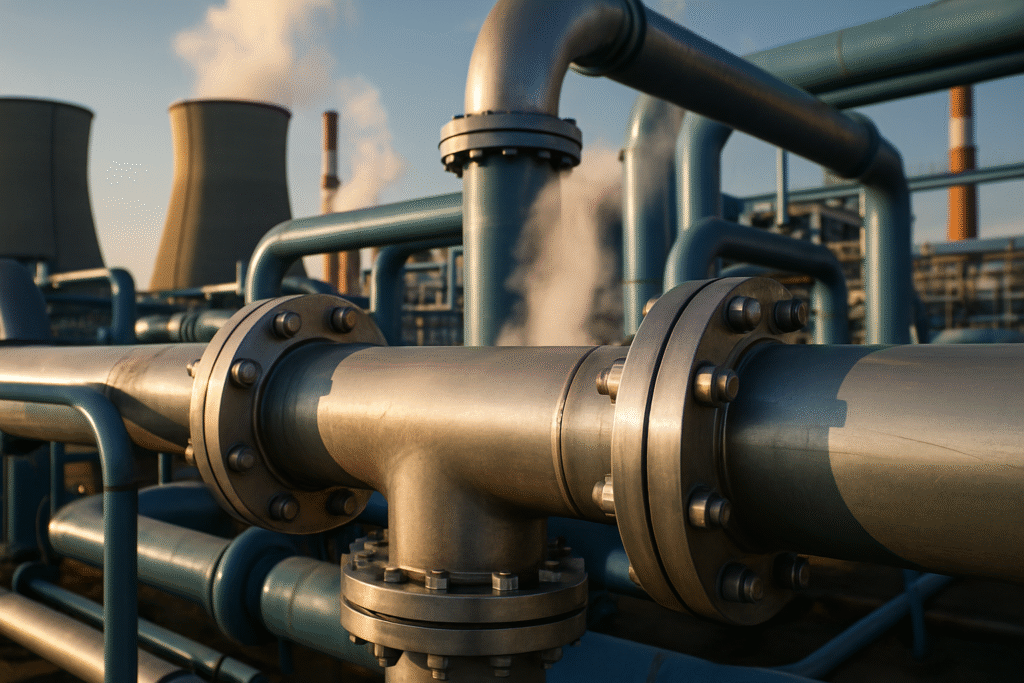
Global demand for stainless steel pipe flange solutions continues to rise
Industrial buyers are selecting Stainless Steel Flange products more strategically because lifecycle cost often outweighs initial purchase price. 스태티스타에 따르면 (2024), 석유 및 가스 산업은 대략적으로 35% 글로벌 플랜지 소비량, which keeps pressure-rated ASME B16.5 and B16.47 products in constant demand.
Manufacturing concentration also shapes sourcing decisions. IBISWorld에 따르면 (2024), 아시아 태평양 계정은 이상입니다. 45% 글로벌 플랜지 생산량의, 중국이 가장 큰 제조사이기 때문에, so supplier qualification and quality assurance are increasingly important.
게다가, stainless grades continue to gain share in aggressive media and hygienic systems because they combine corrosion resistance with stable mechanical performance. ASTM A182 forged stainless materials such as F304, F304L, F316, F316L, F321, F347, 듀플렉스 2205, 그리고 슈퍼 듀플렉스 2507 are widely specified for piping assemblies that cannot tolerate premature failure.
모르도르 정보국에 따르면 (2024), investment in downstream petrochemical capacity in Asia and the Middle East continues to support long-term demand for alloy and stainless piping components. 그러므로, buyers increasingly compare not only price, but also standards compliance, PMI 테스트, EN 10204 3.1 선적 서류 비치, and machining consistency.
재료공학 박사로서. 헬렌 카터, 부식 컨설턴트, 주: “플랜지 선택 시, alloy chemistry alone is not enough; sealing face quality, forging integrity, and traceable testing determine real field performance.” That perspective is especially relevant for projects exposed to chlorides, cyclic temperature changes, and repeated maintenance intervals.
그런 이유로, reputable manufacturers must demonstrate both production breadth and process control. SASA FLANGE 스테인레스 스틸 플랜지로 산업 구매자에게 서비스 제공, 탄소강 플랜지, 합금 플랜지, and pipe fittings produced to ANSI B16.5, ANSI B16.47, ASME B16.9, DIN, JIS, 고스트, 그리고 EN 1092 요구 사항.
와 함께 ISO 9001:2015 및 PED 2014/68/EU 인증, SASA FLANGE supports projects that demand documented quality and export readiness. 추가적으로, 회사는 다음에서 플랜지를 제조합니다. 304, 316, 316엘, 904엘, 2205, 2507, A105, A182, 인코넬, 모넬, 하스텔로이, and Titanium for a wide range of process conditions.
Many competitor pages discuss grades in isolation. 하지만, engineers usually evaluate a complete package that includes flange Types, 직면 옵션, 압력 등급, 치수, 공차, hydrotest requirements, and compatibility with elbows, 티셔츠, 감속기, and caps in the same piping line.
시장 조사 미래에 따르면 (2024), industrial maintenance spending for aging infrastructure is rising globally, which supports replacement demand for high-reliability flange assemblies. 결과적으로, buyers are giving more attention to corrosion allowances, gasket seating stress, and flange-face finish before issuing RFQs.
Technical deep dive: Intriguing Stainless Steel Flanges, 재료 등급, and hidden advantages
The most Intriguing aspect of stainless steel pipe flange selection is that the best alloy depends on process chemistry, 온도, 및 검사 요구 사항, not simply on popularity. 실제로, 304 그리고 316 grades dominate general industrial service, 904L 동안, 듀플렉스, and nickel alloys address more Hidden Advantages in severe environments.
According to ASTM and ASME material practice, forged flanges for pressure service are typically specified under ASTM A182 with dimensional compliance to ASME B16.5 or ASME B16.47. 그러므로, a correct purchase description should define material grade, 압력 등급, 직면 유형, 크기, schedule match, 테스트, and document requirements.
배관 엔지니어 Mark Ellison으로서, Senior EPC Piping Specialist, 주: “Too many buyers Choose a Flange by alloy name alone, yet gasket face, 볼트 하중, and pressure-temperature rating are just as important for leak-free service.” That is why technical procurement must connect metallurgy with joint design.
In many B2B applications, the most requested stainless grades include the following:
- F304/F304L for general corrosion resistance, food-grade service, and moderate-temperature process lines.
- F316/F316L for chloride-bearing service, marine exposure, and chemical systems that require better pitting resistance.
- F321/F347 for elevated temperature service where stabilized grades help resist intergranular attack.
- F904L for stronger resistance in acidic environments, including some sulfuric and phosphoric service.
- F51 2205 and F53/F55 2507 duplex grades for high strength and improved resistance to chloride stress corrosion cracking.
추가적으로, flange Types must align with installation method and maintenance frequency. Weld neck designs remain preferred for high-pressure and cyclic-duty systems because the tapered hub reduces stress concentration at the weld transition.
Common stainless steel flange types include:
- Weld Neck Flange for severe pressure, 열 순환, 그리고 중요한 서비스.
- Slip-On Flange for easier alignment and lower-cost fabrication on less severe duties.
- Blind Flange for line termination, 격리, 그리고 향후 확장 포인트.
- Socket Weld Flange for smaller-bore, 고압 시스템.
- Threaded Flange for low-pressure systems where welding is undesirable.
- Lap Joint Flange with stub end for frequent dismantling and alignment flexibility.
ASME B16.5 generally covers sizes from 1/2 인치에서 24 인치, ~하는 동안 ASME B16.47 extends to larger diameters from 26 인치를 통해 60 inch depending on Series A or B. 따라서, large-diameter pipeline, 단말기, 선박, and water transmission projects often require careful review of drilling pattern, 볼트 서클, and weight differences between the two standards.
Pressure class also changes selection. 예를 들어, 수업 150 may be adequate for low-pressure water or utility systems, 수업하는 동안 300, 600, 900, 1500, 또는 2500 may be required for hydrocarbon, 증기, or high-temperature duties depending on design conditions and material group.
게다가, flange-face style affects sealing reliability and gasket choice. Raised Face remains the most common in industrial service, whereas Ring Type Joint is preferred for higher-pressure applications and Flat Face is often used with cast-iron equipment or matched flat surfaces.
Buyers comparing stainless against carbon steel should also consider total installed value. According to NACE guidance and field corrosion studies, corrosion-related damage accounts for hundreds of billions in global industrial losses annually, so improved material selection often reduces shutdown cost far beyond the flange purchase price.
The Hidden Advantages of a properly specified stainless steel pipe flange include lower unplanned replacement rates, better media purity, and more predictable maintenance scheduling. 뿐만 아니라, stainless assemblies often reduce coating requirements and simplify inventory where one alloy platform can cover multiple service conditions.
맞춤형 프로젝트의 경우, dimensional flexibility matters as much as metallurgy. SASA FLANGE 사용자 정의 크기를 제공합니다 1/2 인치에서 60 경쟁력 있는 공장 직접 가격의 인치, backed by advanced CNC machining and comprehensive quality testing for forged flanges and matching ASME B16.9 피팅.
That capability supports engineering teams that require:
- Special drilling and non-standard bolt patterns.
- NACE MR0175 or sour-service material review.
- PED documentation for European projects.
- EN 10204 3.1 material certificates and PMI.
- Machined RTJ grooves and controlled serrated finishes.
- Matching elbows, 티셔츠, 감속기, and caps in the same alloy package.
According to Fortune Business Insights (2024), corrosion-resistant alloy demand in process industries continues to grow as operators extend asset life and reduce unscheduled shutdowns. 그러므로, the ability to source flange, 파이프, and fitting packages from a qualified supplier creates both technical and commercial value.
ASME, ASTM, DIN, and EN compliance for stainless steel pipe flange procurement
Standards are not a paperwork exercise. They define dimensional interchangeability, 압력-온도 한계, 야금, 검사 요구 사항, and the practical compatibility of every Flange in a piping system.
For forged stainless flanges, ASTM A182 is the key material specification, while dimensions are commonly controlled by ASME B16.5 그리고 ASME B16.47. 대조적으로, fittings such as elbows, 티셔츠, 감속기, and caps are usually manufactured to ASME B16.9, which keeps the full connection assembly aligned.
European and international projects often require DIN or EN compliance in parallel with ASME requirements. EN 1092 is commonly specified for PN-rated flanges, and PED 2014/68/EU adds regulatory obligations for pressure equipment entering the European market.
주요 표준 참고자료는 다음과 같습니다.:
- ASME B16.5 for pipe flanges and flanged fittings from NPS 1/2 ~을 통해 24.
- ASME B16.47 for large-diameter steel flanges from NPS 26 ~을 통해 60.
- ASTM A182 for forged or rolled alloy and stainless steel flanges, 피팅, 밸브, 및 부품.
- ASME B16.9 공장에서 제작한 단조 맞대기 용접 피팅용.
- EN 1092 for flanges and their joints in PN designations.
- NACE MR0175 for materials used in H2S-containing environments in oil and gas production.
Below is a practical comparison engineers often use during procurement review:
- ASME systems typically use NPS sizes and pressure classes such as 150, 300, 그리고 600.
- EN systems typically use DN sizes and PN ratings such as PN10, PN16, and PN40.
- ASTM material grades define chemistry and mechanical properties, not flange dimensions.
- 페이스 마무리, 드릴링 패턴, and bolt dimensions must be checked before cross-standard substitution.
Quality documentation should be requested early in the RFQ process. That usually includes mill test certificates, 열수 추적성, chemical and mechanical test results, 치수 검사 기록, and where needed, PMI, ferrite testing, 경도 테스트, and non-destructive examination.
According to ISO quality management principles and procurement audits across the energy sector, suppliers with documented process control reduce non-conformance risk significantly. 결과적으로, buyers increasingly prioritize certified manufacturers over low-cost traders with limited traceability.
와 함께 ISO 9001:2015, PED 2014/68/EU, 그리고 광고 2000 신임장, SASA FLANGE aligns its production and inspection systems with international project expectations. 게다가, 회사는 봉사한다 50+ 석유를 건너는 나라들 & 가스, 석유화학, 힘, 해양산업, which helps global buyers standardize sourcing across multiple job sites.
For highly regulated projects, flange compliance extends beyond dimensions. Material substitution, 이중 인증, heat treatment status, and surface finish can all affect acceptance, especially when end users require MTC 3.1, 제3자 검사, or project-specific approved vendor lists.
That is why engineers should always review these purchase checkpoints:
- 올바른 표준: ASME B16.5, B16.47, DIN, JIS, 고스트, 또는 EN 1092.
- Correct material: 304, 316엘, 904엘, 2205, 2507, or required alloy grade.
- Correct class or PN rating for design pressure and temperature.
- Correct facing: RF, FF, RTJ, or special finish.
- Required inspection and test plan with traceable certificates.
- Compatibility with mating Pipe schedule and gasket selection.
How to choose flange types and uses by industry application
The right stainless steel pipe flange depends on service medium, 온도, 압력, erosion profile, 유지관리 전략. 그러므로, selection should start with process data, not catalog familiarity.
기름에 & Gas service, 염화물, H2S, and pressure cycling often drive material and standard decisions. 스태티스타에 따르면 (2024), 이 부문은 약 소비합니다. 35% 글로벌 플랜지의, 그래서 용접 목, RTJ, and NACE-reviewed materials are common in upstream, 내의 한복판, and refining systems.
석유화학공장에서, 316엘, 321, 347, and 904L may be selected depending on acid concentration, 온도, 그리고 청소 체제. 추가적으로, alloy upgrades can lower long-term maintenance costs when corrosion products would otherwise contaminate process streams.
발전에 있어서, thermal fatigue and steam duty often favor weld neck Flanges with strong forging quality and dimensional accuracy. 고온 서비스용, engineers may specify stabilized stainless or alloy materials when creep resistance and oxidation control become critical.
In marine and shipbuilding systems, salt exposure makes pitting resistance a central concern. 따라서, 316엘, 듀플렉스 2205, 그리고 슈퍼 듀플렉스 2507 are frequently reviewed for seawater, 안정기, and offshore utility lines.
Water treatment and desalination plants present a different challenge because chloride levels, 청소용 화학물질, and uptime requirements can vary widely. 그런 경우에는, 316L may work for moderate duties, while duplex grades often offer a better balance of strength and corrosion resistance.
올바르게 선택하려면, procurement and engineering teams should review:
- 유체화학, 염화물을 포함하여, 황화물, 산, and solids loading.
- 설계 압력 및 작동 온도, including upset conditions.
- Pipe schedule and wall thickness for matching bore and weld preparation.
- 필요한 플랜지 유형, 깃 달기, 개스킷 호환성.
- 다음과 같은 적용 가능한 표준 ASME B16.5, ASME B16.47, ASTM A182, 그리고 EN 1092.
- 검사 수준, certificate requirements, and third-party witness points.
- Project schedule, 포장, export readiness, and total landed cost.
가격은 여전히 중요하다, especially for projects searching terms like stainless steel pipe flange price, 4 인치 스테인레스 스틸 파이프 플랜지, or stainless steel pipe flange for sale. 하지만, low upfront pricing can become expensive if dimensional errors, 가공 불량, or incomplete certification delay site installation.
예를 들어, 에이 4 인치급 150 stainless steel threaded pipe flange may suit low-pressure utility service, but a 4 inch weld neck in Class 600 could be the better option for hot hydrocarbon duty. 비슷하게, a blind flange used for future tie-ins must account for hydrotest loads, 탈당, and gasket compression.
Custom manufacturing also matters when standard catalog dimensions do not solve the problem. SASA FLANGE supports custom drilling, 특별한 외장, 큰 직경, and matching fittings, which helps EPC buyers consolidate sourcing while maintaining quality consistency.
That integrated approach is particularly useful for package skids, 해양 모듈, and retrofit jobs where fit-up tolerances are tight. 고급 CNC 가공 및 포괄적인 품질 테스트를 통해 뒷받침됨, SASA FLANGE can support both standard and project-specific flange requirements with practical lead-time coordination.
Future outlook for stainless steel pipe flange sourcing and strategic recommendations
The market outlook remains favorable for corrosion-resistant piping components. 그랜드뷰 리서치에 따르면 (2024), the industrial flange market is projected to increase from $5.8 10억 2023 에게 $7.2 10억 단위로 2030, which reflects continued investment in energy, 하부 구조, and processing facilities.
게다가, regional supply chains are becoming more important. IBISWorld에 따르면 (2024), 아시아 태평양 지역은 이미 45% 글로벌 플랜지 생산량의, so buyers that qualify reliable manufacturers in China and broader Asia can improve both cost position and supply continuity.
Digital procurement is also changing how buyers evaluate flange suppliers. They increasingly compare technical content, certification transparency, large-diameter capability, and response speed before requesting quotations.
전략적으로, procurement managers should build a dual focus on compliance and total cost. 첫 번째, standardize approved grades, flange Types, and documentation requirements by application. 두번째, work with suppliers that can provide flange-and-fitting packages, because this reduces interface risk and administrative overhead.
Engineers should also update material selection matrices regularly. For chloride service, compare 316L against 2205 또는 2507 by lifecycle performance, 구매 가격뿐만 아니라. For high-temperature duties, verify whether stabilized stainless or nickel alloy offers better long-term reliability.
게다가, RFQs should specify more than size and quantity. Include ASME or EN standard, 재료 등급, 압력 등급, 깃 달기, 테스트, 마킹, 포장, 문서 패키지, and any PED or NACE requirements to avoid avoidable clarification cycles.
For buyers seeking a dependable stainless steel pipe flange partner, manufacturing depth and documentation discipline remain decisive. When projects require certified flanges in 304, 316, 904엘, 2205, 2507, 그리고 다른 프리미엄 등급, a discussion with SASA FLANGE can help convert engineering requirements into practical, factory-direct supply plans.
자주 묻는 질문
스테인레스 스틸 플랜지는 무엇에 사용됩니까??
●Stainless steel flanges are used to connect Pipe sections, 밸브, 슬리퍼, 강도가 필요한 시스템의 장비 및 장비, 내식성, 유지보수 접근이 용이함.
●스태티스타에 따르면 (2024), 석유와 가스는 약 35% 글로벌 플랜지 소비량, which shows how widely these components are used in critical pressure systems.
●They are commonly specified for water treatment, 화학 처리, 해양 서비스, 식품 가공, and power generation because grades like 304 그리고 316 resist rust and process media better than plain carbon steel in many environments.
●Engineers usually select weld neck, 슬립온, 눈이 먼, 스레드, or socket weld designs based on pressure class, 온도, 진동, 및 유지 관리 요구 사항, ~하는 동안 ASME B16.5 and B16.47 define dimensional compatibility for many industrial applications.
●For projects requiring certified materials, traceable testing, and global export support, 다음과 같은 기존 제조업체와 협력 SASA FLANGE helps ensure fit-up accuracy and documentation compliance.
그들은 스테인레스 스틸 파이프 피팅을 만드나요??
●예, 제조업체는 엘보우와 같은 스테인레스 스틸 파이프 피팅을 생산합니다., 티셔츠, 감속기, and caps to match stainless flange systems in the same piping line.
●ASME B16.9 공장에서 제작한 단조 맞대기 용접 피팅을 커버합니다., and many projects specify these together with ASTM A182 stainless flanges to maintain alloy continuity and corrosion performance.
●시장 조사 미래에 따르면 (2024), maintenance-driven infrastructure upgrades are increasing demand for complete piping packages rather than isolated components, which benefits buyers who source fittings and flanges together.
●실제로, 304/304L and 316/316L are common for general service, 904L 동안, 2205, 그리고 2507 are selected for more aggressive media, 바닷물, or chloride-rich duties where higher corrosion resistance is required.
●For package supply with matching materials, 치수, and inspection records, 다음과 같은 제조업체 SASA FLANGE can provide both flanges and fittings under one controlled quality system.
세 가지 유형의 플랜지는 무엇입니까?
●가장 일반적으로 참조되는 세 가지 플랜지 유형은 용접 넥입니다., 슬립온, and blind flanges because they cover many standard industrial installation needs.
●고압 또는 주기적인 서비스에는 웰드 넥 플랜지가 선호됩니다., slip-on flanges are often chosen for easier alignment and lower fabrication cost, and blind flanges are used to close or isolate the end of a piping system.
●ASME B16.5 defines dimensions and pressure classes for many of these flange types up to NPS 24, ~하는 동안 ASME B16.47 covers larger diameters that are common in transmission and terminal applications.
●As piping engineer Mark Ellison states, “The correct flange type depends on stress, 밀봉, and maintenance access just as much as on nominal size,” which is why service conditions must guide final selection.
●If a project needs help comparing flange types by pressure class, 깃 달기, 그리고 합금, consulting a qualified supplier like SASA FLANGE can shorten technical review and procurement time.
What is the difference between MS flange and SS flange?
●MS flange usually refers to mild steel flange, while SS flange refers to stainless steel flange, and the main difference is corrosion resistance, alloy composition, and long-term service behavior.
●Mild steel flanges generally cost less initially, but stainless grades such as 304 그리고 316 offer better resistance to rust, 약, and washdown conditions, which can reduce replacement frequency in many industrial environments.
●그랜드뷰 리서치에 따르면 (2024), the flange market will reach $7.2 10억 단위로 2030, and part of that growth reflects stronger demand for higher-performance materials in corrosive service.
●MS flanges can be suitable for non-corrosive utility service with protective coatings, whereas SS flanges are usually preferred in marine, 음식, 제약, 수처리, and chemical applications where media purity and corrosion control matter.
●For buyers balancing price against lifecycle value, a technical comparison from an experienced manufacturer such as SASA FLANGE helps identify the most economical material for the actual duty.
스테인레스 스틸 플랜지에 대한 ASME 코드는 무엇입니까?
●The main ASME dimensional codes for stainless steel flanges are ASME B16.5 그리고 ASME B16.47, ~하는 동안 ASTM A182 commonly covers the forged stainless material itself.
●ASME B16.5 generally applies from 1/2 인치에서 24 인치와 ASME B16.47 applies to larger sizes from 26 인치에서 60 인치, so buyers must confirm the correct standard before ordering.
●이러한 표준은 치수를 정의합니다., 교련, 두께, 압력 온도 등급, 공차, 그리고 기대를 표시, which helps ensure interchangeability across approved manufacturers.
●유럽 프로젝트의 경우, EN 1092 and PED 2014/68/EU may also be required in addition to ASME references, especially when pressure equipment must enter regulated EU markets.
●To avoid mismatch between material, 크기, and rating, procurement documents should always state the full code combination such as ASTM A182 F316L, ASME B16.5, 수업 300, RF, along with testing and certificate requirements.
How do I choose the right stainless steel pipe flange size and grade?
●You should choose flange size and grade by matching the Pipe NPS or DN, 벽 두께, 압력 등급, service chemistry, and operating temperature to the applicable standard and material specification.
●예를 들어, 에이 4 inch stainless steel pipe flange must match the pipe schedule, 직면 유형, 그리고 수업 평가, while 316L may be preferred over 304L when chloride exposure or marine conditions increase pitting risk.
●IBISWorld에 따르면 (2024), 아시아 태평양 지역은 45% 글로벌 플랜지의, so qualified sourcing with accurate technical review is essential when many similar-looking products are available.
●Buyers should also confirm whether they need weld neck, 스레드, 슬립온, or blind designs, because connection method and maintenance requirements affect total installed reliability.
●중요한 프로젝트의 경우, request dimensional drawings, EN 10204 3.1 인증, and material traceability before purchase so the delivered flange matches both engineering and inspection expectations.
관련 게시물

오리피스 플랜지 정의, 세부 정보 및 ASME B16.36 플랜지 개요: 시장 데이터, 선택 가이드 및 규정 준수 통찰력
전 세계 산업용 플랜지 시장의 가치는 다음과 같습니다. $5.8 10억…
