
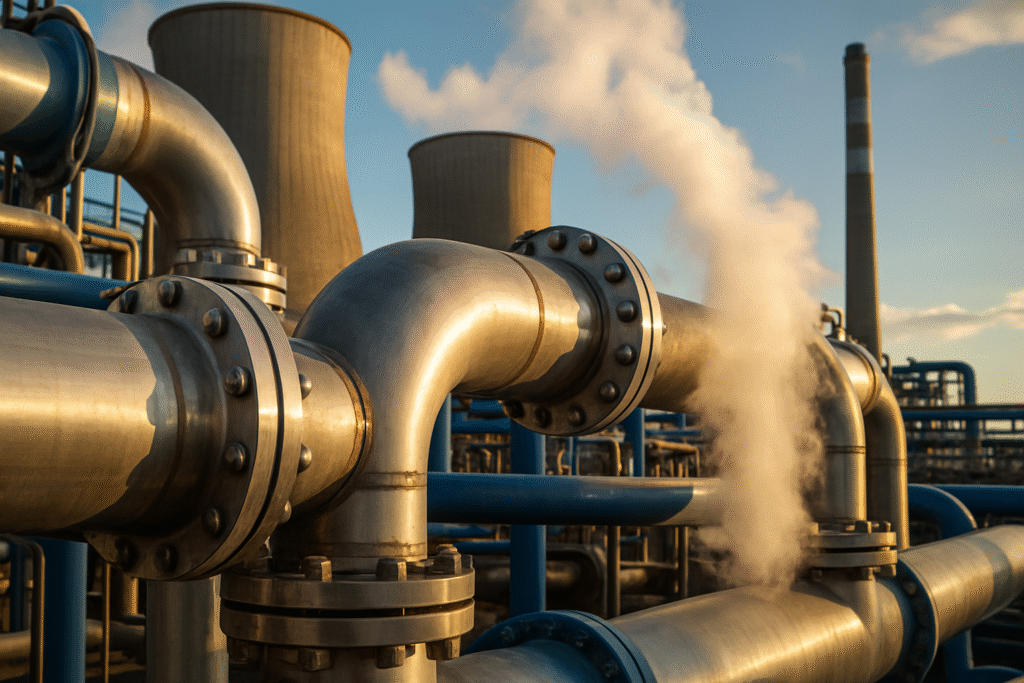
스테인레스 스틸 파이프 플랜지 가이드: 시장 데이터, ASME B16.5/B16.47 유형, 숨겨진 장점 및 용도
그랜드뷰 리서치에 따르면 (2024), 전 세계 산업용 플랜지 시장의 가치는 다음과 같습니다. $5.8 10억 2023 도달할 것으로 예상됩니다. $7.2 10억 단위로 2030. That growth is one reason the stainless steel pipe flange remains a critical component for engineers who need corrosion resistance, 힘, and reliable sealing in demanding Pipe systems.
조달팀용, the real challenge is not simply finding Flanges. It is learning how to Choose the right Flange material, 압력 등급, 깃 달기, and standard for project life, 규정 준수, 및 총 설치 비용.
This guide explains the Hidden Advantages, 유형, and Uses of stainless steel pipe flange products across Oil & 가스, 석유화학, 힘, 선박, and Water Treatment projects. It also shows how suppliers such as SASA FLANGE support international buyers with ASME, ASTM, DIN, and EN compliant manufacturing.
스테인레스 스틸 파이프 플랜지 조달을 형성하는 글로벌 수요 동향
The industrial flange business is expanding because global process industries continue to invest in new capacity, 유지, and plant upgrades. IBISWorld에 따르면 (2024), 아시아 태평양 계정은 이상입니다. 45% 글로벌 플랜지 생산량의, 중국이 가장 큰 제조사이기 때문에.
That regional scale matters for buyers seeking stable output, broad material availability, and shorter lead times. It also helps explain why China-based manufacturers increasingly serve EPC contractors, OEM, and distributors worldwide.
End-use demand remains concentrated in heavy industry. 스태티스타에 따르면 (2024), 석유 및 가스 산업은 대략적으로 35% 글로벌 플랜지 소비량.
게다가, 석유화학, 발전, 담수화, and shipbuilding keep specification requirements high. 이들 부문에서는, flange failure can create unplanned shutdowns, safety incidents, and expensive rework.
A stainless steel pipe flange is often chosen where corrosion resistance and lifecycle value outweigh a lower upfront carbon steel cost. 다음과 같은 등급 304, 316, 316엘, 904엘, 2205, 그리고 2507 support different chloride levels, 온도, and pressure conditions.
모르도르 정보국에 따르면 (2024), global water treatment infrastructure spending continues to rise as municipalities upgrade aging assets and industrial reuse systems. 결과적으로, demand for corrosion-resistant Stainless components, including Flange and fitting assemblies, is increasing in saline and chemically treated services.
Industry standards also shape purchasing behavior. ASME B16.5 NPS의 파이프 플랜지 및 플랜지 피팅을 포함합니다. 1/2 NPS를 통해 24, ~하는 동안 ASME B16.47 addresses larger sizes from NPS 26 NPS를 통해 60 (ASME, 2023).
이러한 표준은 치수를 정의합니다., 공차, 교련, 외장, 및 압력 온도 등급. 그러므로, engineers rely on them to maintain interchangeability across global projects.
As supply chains become more quality-driven, buyers look for manufacturers that combine scale with traceability. 와 함께 ISO 9001:2015 및 PED 2014/68/EU 인증, SASA FLANGE aligns production with documented quality control and export-oriented compliance.
추가적으로, modern buyers want more than a catalog. They want machining accuracy, EN 10204 3.1 검사 서류, PMI, 수중 테스트 지원, and material traceability from raw stock to final dispatch.
That is where experienced manufacturers create value beyond simple production. 고급 CNC 가공 및 포괄적인 품질 테스트를 통해 뒷받침됨, SASA FLANGE supplies stainless steel flanges and fittings in standard and custom configurations for projects across more than 50 국가.
공급자를 비교하는 구매자의 경우, the key is to assess total procurement risk. Price matters, 하지만, 문서 품질, 차원 일관성, and delivery reliability often determine the real project outcome.
스테인레스 스틸 파이프 플랜지 유형을 선택하는 방법, 재료, and Ratings
The most effective way to Choose Flanges is to begin with process conditions, not price. 중간 구성, 설계 온도, 압력 등급, 부식 허용량, 용접 방법, and inspection scope should drive the final selection.
존 레이놀즈처럼, corrosion specialist and former chief engineer, 주: “Material selection errors usually start when teams focus on nominal alloy names instead of the actual service environment.” That principle is especially relevant when comparing 304, 316엘, 듀플렉스, and nickel alloy options.
In many industrial systems, 304 and 304L are the most common starting grades because they offer solid general corrosion resistance and good fabrication performance. 하지만, 316 and 316L are often preferred for chloride-bearing media because molybdenum improves pitting resistance.
According to ASTM and ASME material practice, 단조 스테인레스 스틸 플랜지는 일반적으로 다음과 같이 공급됩니다. ASTM A182 requirements when pressure-containing performance is required (ASTM, 2023). 실제 조달 측면에서, ASTM A182 F304, F304L, F316, and F316L remain standard choices for many refinery, food process, 및 물 시스템.
Where chloride stress, sour service risk, or aggressive seawater exposure exists, duplex grades may offer better performance. NACE 지침에 따르면, higher alloyed stainless and duplex materials can significantly improve resistance in corrosive environments when correctly matched to service conditions (NACE, 2023).
박사로서. Frank Cheng, 재료 과학자, 주: “Duplex stainless is often selected because it balances strength and corrosion resistance, which can reduce wall thickness and weight in engineered piping systems.” 그러므로, 듀플렉스 2205 그리고 슈퍼 듀플렉스 2507 can be strategic choices in offshore and desalination projects.
The most common Flange Types include the following.
- 고압용 웰드 넥 플랜지, 순환, 및 고온 서비스.
- Slip-on flange for lower pressure systems and easier alignment during installation.
- Blind flange for line blanking, 격리, 그리고 향후 확장 포인트.
- Socket weld flange for small-bore high-pressure applications.
- Threaded flange for non-welded assembly in certain utility or hazardous areas.
- Lap joint flange for systems requiring frequent dismantling and alignment flexibility.
Each Flange type has a different installation logic. 예를 들어, a weld neck flange provides smooth stress transition from flange hub to Pipe wall, while a slip-on flange can reduce fabrication complexity in less severe service.
압력 등급 선택도 마찬가지로 중요합니다.. ASME B16.5 stainless flanges are commonly available in Class 150, 300, 600, 900, 1500, 그리고 2500, depending on size and design requirements (ASME, 2023).
Facing selection also affects sealing performance. Raised face is common in industrial piping, ring type joint is preferred in severe pressure service, and flat face is used where mating components require uniform contact.
Buyers should also review wall schedule and bore compatibility. A mismatch between flange bore and Pipe schedule can increase turbulence, welding difficulty, and inspection issues.
When comparing materials for industrial use, the following summary is useful.
- 304/304엘: economical and versatile for general process service.
- 316/316엘: stronger resistance to chlorides, 소금물, 그리고 화학적 노출.
- 904엘: enhanced resistance in sulfuric and highly corrosive media.
- 2205: higher strength and improved pitting resistance for offshore and chemical plants.
- 2507: premium super duplex option for severe seawater and chloride conditions.
- 인코넬, 모넬, 하스텔로이, 티탄: selected for extreme temperature or highly aggressive chemistry.
시장 조사 미래에 따르면 (2024), corrosion-related maintenance and replacement costs remain a major driver for alloy upgrades in process industries. 결과적으로, engineers increasingly evaluate lifecycle value rather than only initial material cost.
That shift creates Hidden Advantages for stainless steel pipe flange adoption. 더 긴 서비스 수명, 유지 관리 감소, cleaner internal surfaces, and stronger media compatibility often lower total ownership cost over time.
Manufacturing capability matters just as much as alloy choice. 맞춤형 크기 제공 1/2 인치에서 60 경쟁력 있는 공장 직접 가격의 인치, SASA FLANGE supports standard ANSI, DIN, JIS, 고스트, and EN projects as well as tailored dimensional requirements.
게다가, buyers should assess available documentation before issuing a PO. 선교사 훈련원, 경도 검사, PMI, 차원 보고서, and third-party inspection support can reduce acceptance risk at site.
ASME, ASTM, DIN, 및 스테인레스 스틸 파이프 플랜지 준수에 대한 EN 표준
Standards define whether a flange fits, 물개, and performs as intended. 그러므로, any serious stainless steel pipe flange sourcing plan should start with the applicable code, 재료 표준, and inspection document requirements.
ASME B16.5 is the core dimensional standard for flanges and flanged fittings from NPS 1/2 NPS에 24. ASME B16.47 NPS의 더 큰 직경을 포괄합니다. 26 NPS에 60 and is commonly referenced in large-bore pipeline and terminal systems (ASME, 2023).
재료 표준도 똑같이 중요합니다. ASTM A182 단조 또는 압연 합금 및 스테인리스강 파이프 플랜지를 덮습니다., 단조 피팅, 및 고온 서비스용 밸브, while ASME material specifications often mirror ASTM requirements for design code integration (ASTM, 2023).
European projects frequently require DIN or EN compliance. EN 1092-1 provides flange dimensions, 압력 등급, facing forms, and designation structures used across many EU-regulated installations.
For PED-governed equipment in Europe, compliance documentation is not optional. The Pressure Equipment Directive 2014/68/EU establishes conformity obligations for pressure-containing equipment placed on the EU market (European Commission, 2024).
실제로, procurement teams often compare the following standards during technical review.
- ASME B16.5: standard for NPS 1/2 에게 24 플랜지 및 피팅.
- ASME B16.47: standard for NPS 26 에게 60 대구경 플랜지.
- ASME B16.9: standard for factory-made wrought buttwelding fittings.
- ASTM A182: 단조 스테인레스 및 합금 플랜지 재질 사양.
- EN 1092-1: 유럽 플랜지 치수 및 압력 지정.
- DIN and JIS standards: region-specific dimensional systems for international compatibility.
Engineers should also note that dimensional compatibility is not always interchangeable across ASME, DIN, EN 시스템. 볼트 원 직경, 교련, 플랜지 두께, and facing details can differ even when nominal pipe size appears similar.
As Peter Bock, 수석 배관 엔지니어, 주: “Most field fit-up problems come from standard mismatches rather than obvious material defects.” That is why cross-checking mating dimensions before procurement is essential.
Documentation should be defined in the purchase order. Common requests include EN 10204 3.1 인증, 긍정적인 물질 식별, ferrite testing where required, and hydro or pneumatic test records for assembled systems.
Stainless flange compliance often extends into corrosion and service-specific rules. NACE MR0175 또는 ISO 15156 may apply in sour environments, while DNV or NORSOK requirements can influence offshore and marine projects.
From a quality perspective, certified production systems create consistency. 와 함께 ISO 9001:2015, PED 2014/68/EU, 그리고 광고 2000 신임장, SASA FLANGE supports buyers who need traceable manufacturing and export-ready compliance for critical service applications.
뿐만 아니라, many projects combine flange and fitting supply to simplify sourcing. Through its broader range of elbows, 티셔츠, 감속기, 그리고 캡은 다음과 같이 제조되었습니다. ASME B16.9 및 관련 표준, SASA FLANGE helps buyers consolidate procurement and inspection activities.
For deeper standard verification, engineers can also review the official ASME reference pages at ASME.org. That step is useful when project specifications call for the latest edition or add code case references.
신청안내: Stainless Steel Pipe Flange Selection for Oil, 화학적인, 힘, 해양 시스템
Application-based selection prevents overengineering and underperformance. The best flange is not simply the highest alloy grade, but the one that matches pressure, 온도, 메디아, and maintenance expectations.
기름에 & 가스, stainless steel pipe flange assemblies often appear in utility lines, 해양 모듈, 생산된 물 시스템, and selected process services. 스태티스타에 따르면 (2024), 이 부문은 약 35% 글로벌 플랜지 소비량, so reliability and standard compliance remain decisive.
For offshore or coastal installations, chloride exposure pushes many projects toward 316L, 2205, 또는 2507. 대조적으로, low-corrosion utility service may still justify 304L when the process envelope is controlled.
석유화학 및 화학공장에서, media compatibility drives selection. 산, 용매, 염화물, and elevated temperatures can quickly eliminate general-purpose grades from consideration.
Typical chemical industry priorities include the following.
- Pitting and crevice corrosion resistance.
- Weldability and post-fabrication inspection access.
- Compatibility with gaskets and bolting materials.
- Resistance to intergranular attack after welding.
- Availability of forged ASTM A182 material in project sizes.
Power generation creates a different profile. 증기 시스템, condensate lines, FGD 장치, and cooling water applications require a balance of pressure rating, temperature endurance, and long-term maintenance control.
According to the International Energy Agency trend reporting cited by market analysts in 2024, grid modernization and plant efficiency upgrades continue to support replacement demand for high-integrity piping components. 그러므로, utilities increasingly prioritize suppliers with repeatable machining quality and documented heat traceability.
Marine and shipbuilding sectors favor corrosion-resistant materials because salt-laden atmospheres accelerate degradation. Stainless and duplex Flanges are frequently chosen for ballast systems, scrubber lines, 바닷물 냉각, and deck piping.
Water treatment is another strong growth area. 모르도르 정보국에 따르면 (2024), municipal and industrial water reuse investments are increasing globally, which supports demand for stainless pipe flange products in desalination, filtration, and chemical dosing systems.
Engineers evaluating a project should review these selection criteria before issuing drawings or RFQs.
- 미디어 구성, 염화물을 포함하여, H2S, and acid content.
- 작동 및 설계 온도.
- System pressure and required flange class.
- 다음과 같은 적용 가능한 표준 ASME B16.5, B16.47, DIN, 또는 EN 1092-1.
- 파이프 일정과 플랜지 보어 일치.
- 직면 유형, 개스킷 선택, and bolting compatibility.
- Required inspection documents such as EN 10204 3.1.
- Need for custom drilling, 비표준 두께, or special alloy sourcing.
Procurement managers should also consider packaging, 마킹, 수출 지원. Poor preservation during transit can compromise machined surfaces and create installation delays at destination.
Manufacturing flexibility is often the deciding factor on complex projects. 플랜지 제조 304, 316, 904엘, 2205, 2507 그리고 다른 프리미엄 등급, SASA FLANGE supports custom dimensions, 특별한 외장, and integrated fitting packages for EPC and MRO orders.
For large or mixed-material packages, supplier experience matters. Buyers can review production capabilities and company background at SASA FLANGE before moving into detailed technical discussion.
추가적으로, custom manufacturing can reduce field modification risk. That advantage becomes significant when projects require non-standard drilling, oversized bores, special bevels, or matching to legacy site equipment.
Future Outlook for Stainless Steel Pipe Flange Supply Chains and Strategic Buying Decisions
Over the next several years, the stainless steel pipe flange market should benefit from infrastructure renewal, 에너지 전환 프로젝트, and stricter corrosion management standards. 그랜드뷰 리서치에 따르면 (2024), 시장은 내년부터 확대될 것으로 예상된다. $5.8 10억 2023 에게 $7.2 10억 단위로 2030.
That projected growth suggests continued competition for high-spec alloy capacity and machining resources. 그러므로, strategic buyers should build approved vendor lists before urgent shutdown or expansion projects begin.
Another major trend is the shift toward total lifecycle thinking. 시장 조사 미래에 따르면 (2024), asset owners increasingly favor materials that reduce corrosion-driven downtime, 특히 화학 처리에서, 선박, and water infrastructure.
Digital procurement is also changing supplier selection. Buyers now compare lead times, certification readiness, 차원 제어, and responsiveness with the same intensity once reserved for pricing.
실용적인 측면에서, engineers and sourcing teams should follow a few actions.
- Standardize flange specifications by service category.
- Prequalify suppliers for material traceability and inspection reporting.
- Request clear confirmation of ASME, ASTM, DIN, or EN dimensional compliance.
- Evaluate lifecycle cost, not just initial unit price.
- Bundle flanges and fittings where quality consistency is critical.
As industry projects become more demanding, the Hidden Advantages of strong supplier partnerships become clearer. Faster technical clarification, consistent machining quality, and complete documentation often save more money than a marginally lower quoted rate.
For buyers seeking ASME B16.5, B16.47, and custom stainless steel pipe flange solutions, working with an experienced manufacturer can reduce both technical and commercial risk. For detailed project support, 재료 추천, or a formal quotation, procurement teams can contact SASA FLANGE 애플리케이션별 지침.
자주 묻는 질문
스테인레스 스틸 플랜지는 무엇에 사용됩니까??
●A stainless steel flange is used to connect Pipe sections, 밸브, 슬리퍼, and equipment while creating a secure and maintainable joint in pressurized systems.
●스태티스타에 따르면 (2024), 석유와 가스는 대략적으로 35% 글로벌 플랜지 소비량, which shows how essential flanged connections are in critical industrial infrastructure.
●Engineers typically select stainless steel flanges when they need corrosion resistance, 치수 안정성, and long service life in water, 화학적인, 선박, 음식, 및 전력 애플리케이션.
●Common Uses include line isolation with blind flanges, equipment tie-ins with weld neck or slip-on Flanges, and small-bore utility connections with threaded or socket weld designs.
●Material grade determines suitability for service because 304 and 304L handle many general media, ~하는 동안 316 and 316L perform better in chloride-containing environments.
●Standards also matter because ASME B16.5 governs dimensions and ratings for many flanges from NPS 1/2 ~을 통해 24, which helps buyers maintain interchangeability across systems (ASME, 2023).
●존 레이놀즈처럼, corrosion specialist, 주: “A flange joint is not just a connector, it is a pressure boundary that must match both chemistry and mechanics.” That is why material choice, 직면 유형, 개스킷 선택, and bolting must be reviewed together.
●조달팀용, the practical value of stainless steel is lower maintenance and better media compatibility over time. 많은 경우, that creates lower lifecycle cost than repeated replacement of lower-grade alternatives.
●Buyers should also confirm bore size, 수업 평가, and inspection documents before ordering. For projects requiring traceable stainless Flange supply and technical support, 다음과 같은 기존 제조업체와 협력 SASA FLANGE helps ensure compliance and fit-up reliability.
스테인레스 스틸 플랜지의 표준은 무엇입니까?
●The main standard for stainless steel flanges in many industrial projects is ASME B16.5, ~하는 동안 ASME B16.47 covers larger diameter Flanges used in major pipeline and terminal applications.
●ASME B16.5 applies to flanges and flanged fittings from NPS 1/2 NPS에 24, 그리고 ASME B16.47 applies from NPS 26 NPS에 60, according to ASME (2023).
●These standards define key dimensional requirements such as outside diameter, 플랜지 두께, bolt hole layout, 외장, 및 압력 온도 등급. 그러므로, they are central to fit-up, 밀봉, and replacement planning.
●Material compliance is usually addressed separately through ASTM specifications, 특히 ASTM A182 단조 스테인리스 및 합금강 플랜지용. Buyers commonly specify grades such as F304, F304L, F316, and F316L under this standard.
●European projects may also require EN 1092-1, while some legacy or regional jobs still reference DIN, JIS, or GOST dimensions. 대조적으로, these systems are not automatically interchangeable with ASME dimensions, so engineers must verify mating compatibility.
●Where sour service, 난바다 쪽으로 부는, or PED-regulated applications are involved, additional requirements can apply. These may include NACE MR0175 또는 ISO 15156, PED 2014/68/EU conformity, 그리고 EN 10204 3.1 검사 증명서.
●As Peter Bock, 수석 배관 엔지니어, 주: “A flange standard is only complete when the dimensional code, 재료 등급, and inspection scope are aligned.” That guidance reflects real field experience.
●For purchasing, the safest approach is to state the flange type, 크기, 수업, 깃 달기, 재료 등급, 스탠다드 에디션, and documentation package in one RFQ. For projects needing certified ASME, ASTM, DIN, or EN compliant supply, 다음과 같은 제조업체 SASA FLANGE can help confirm the full specification before production.
그들은 스테인레스 스틸 파이프 피팅을 만드나요??
●예, manufacturers produce a full range of stainless steel pipe fittings, 팔꿈치를 포함하여, 티셔츠, 감속기, 모자, and stub ends for welded and fabricated piping systems.
●에 따르면 ASME B16.9, 공장에서 제작한 단조 맞대기 용접 피팅은 치수 및 공차가 표준화되어 있습니다., which helps maintain consistency across engineered Pipe installations (ASME, 2023).
●These fittings are often supplied in the same grades used for flanges, ~와 같은 304, 304엘, 316, 316엘, 904엘, 2205, 그리고 2507. 결과적으로, buyers can match fittings and Flanges for corrosion resistance and welding compatibility.
●In process industries, stainless steel fittings are selected for many of the same reasons as stainless flanges. They resist corrosion, support hygienic or clean service, and perform well in moisture, 염화물, and chemical exposure when the correct grade is specified.
●모르도르 정보국에 따르면 (2024), water treatment and industrial reuse investment is rising worldwide, which supports growing demand for corrosion-resistant stainless piping components beyond just Flange products.
●Procurement teams usually prefer sourcing flanges and fittings from the same supplier when dimensions, 선교사 훈련원, and inspection records must align. This approach simplifies quality control and can reduce coordination issues during fabrication.
●Available fitting forms generally include 45-degree and 90-degree elbows, equal and reducing tees, concentric and eccentric reducers, and end caps. Wall thicknesses and schedules should match the connected Pipe to avoid weld mismatch and turbulence.
●For demanding projects, buyers should request ASTM material compliance, EN 10204 3.1 인증, PMI where needed, and clear marking on each item. If a project needs flanges and fittings in one package, 같은 공급 업체 SASA FLANGE can support coordinated manufacturing and documentation.
세 가지 유형의 플랜지는 무엇입니까?
●가장 일반적으로 참조되는 세 가지 플랜지 유형은 웰드 넥 플랜지입니다., 슬립온 플랜지, 및 블라인드 플랜지, 스레드이지만, 랩 조인트, and socket weld designs are also widely used.
●Weld neck flanges are preferred for high-pressure and high-temperature service because the tapered hub improves stress distribution at the weld transition. This makes them a strong choice for critical process lines and cyclic service.
●Slip-on flanges are easier to align and can reduce fabrication cost in lower severity applications. 하지만, they are usually not the first choice for severe pressure, 진동, or thermal cycling conditions.
●Blind flanges seal the end of a Pipe, 대통 주둥이, 또는 선박 개방. They are widely used for future system expansion, hydrotesting, and line isolation.
●에 따르면 ASME B16.5 (2023), these flange types are standardized by dimensions, 압력 등급, 외장, and tolerances for NPS 1/2 ~을 통해 24. That standardization helps engineers replace components without custom redesign in many systems.
●박사로서. Frank Cheng, 재료 과학자, 주: “The best flange type depends on the joint stress profile and maintenance strategy, not only on the media.” That is why type selection should consider process duty and inspection accessibility.
●실제 조달에 있어서, buyers should compare installation complexity, welding requirements, access for maintenance, and total lifecycle performance. A low-cost slip-on choice may not be economical if the system later experiences fatigue or leakage problems.
●When projects require help choosing among standard or custom Flanges, it is wise to share the line class, 중간, 압력, 온도, and Pipe schedule with the manufacturer. For technical support on weld neck, 눈이 먼, 슬립온, 스레드, or custom stainless designs, 구매자는 상담할 수 있습니다 SASA FLANGE.
How do I choose the right stainless steel pipe flange size and pressure class?
●You choose the right stainless steel pipe flange by matching nominal Pipe size, 일정, 깃 달기, 압력 등급, and applicable standard to the actual process design conditions.
●ASME B16.5 covers standard dimensions and pressure classes for NPS 1/2 ~을 통해 24, including Class 150, 300, 600, 900, 1500, 그리고 2500, according to ASME (2023).
●Size selection starts with the connected Pipe outside diameter and schedule because the flange bore must match the piping geometry for proper welding and flow transition. A mismatch can complicate installation and increase turbulence.
●Pressure class should be selected from the design pressure and temperature, not from line size alone. Stainless material grade also matters because pressure-temperature ratings vary with alloy and code tables.
●예를 들어, 에이 4 클래스의 인치 스테인레스 스틸 파이프 플랜지 150 may suit a moderate-pressure utility line, while a critical hydrocarbon or steam service may require Class 300 이상. Buyers should always confirm the exact rating tables in the applicable code edition.
●그랜드뷰 리서치에 따르면 (2024), the flange market is expanding as industrial modernization continues, which means buyers have many sourcing options. 하지만, dimensional accuracy and documentation quality still determine whether the product will fit and pass inspection.
●Engineers should also confirm facing type, 개스킷 스타일, and bolting compatibility before ordering. 올려진 얼굴, 평평한 얼굴, and ring type joint options each serve different sealing conditions.
●A practical RFQ should list size, 수업, 기준, 재료 등급, 깃 달기, 수량, and required certification. For projects needing custom sizes from 1/2 인치에서 60 inch or guidance on B16.5 and B16.47 selection, 다음과 같은 제조업체 SASA FLANGE can help verify the specification before production.
스테인레스 스틸 파이프 플랜지 가격에 영향을 미치는 것은 무엇입니까??
●스테인레스 스틸 파이프 플랜지 가격은 주로 합금 등급에 영향을 받습니다., 크기, 압력 등급, 가공 복잡성, 검사 범위, 수량, and current raw material market conditions.
●그랜드뷰 리서치에 따르면 (2024), 세계 산업용 플랜지 시장 진출 $5.8 10억 2023, and rising demand across energy and infrastructure sectors continues to influence procurement competition and pricing.
●Material grade is usually the biggest cost driver. A 316L flange typically costs more than 304L, 이중으로 하는 동안 2205, 2507, and nickel alloys can be significantly higher because of alloy chemistry and production complexity.
●Size and pressure class also matter because larger diameters and higher classes require more material, tighter machining, and stricter dimensional control. 에이 4 인치급 150 flange will not be priced like a 24 인치급 600 플랜지.
●Additional requirements can raise the final quote. These include PMI, 제3자 검사, EN 10204 3.1 또는 3.2 선적 서류 비치, 특별한 외장, custom drilling, 수출 포장, and urgent lead times.
●IBISWorld에 따르면 (2024), 아시아 태평양 지역은 45% 글로벌 플랜지 생산량의, 중국을 최대 생산국으로. This concentration often creates competitive sourcing advantages for buyers who work directly with capable factories.
●하지만, the lowest unit price is not always the best value. 재작업, late delivery, or incomplete certification can make an initially cheap Flange far more expensive at site.
●가장 정확한 가격을 위해, buyers should submit a complete inquiry with grade, 크기, 기준, 수업, 깃 달기, 수량, 그리고 배송지. For projects that need factory-direct quotations and traceable documentation, sourcing from established manufacturers like SASA FLANGE can improve both price clarity and procurement reliability.
관련 게시물

오리피스 플랜지 정의, 세부 정보 및 ASME B16.36 플랜지 개요: 시장 데이터, 선택 가이드 및 규정 준수 통찰력
전 세계 산업용 플랜지 시장의 가치는 다음과 같습니다. $5.8 10억…
