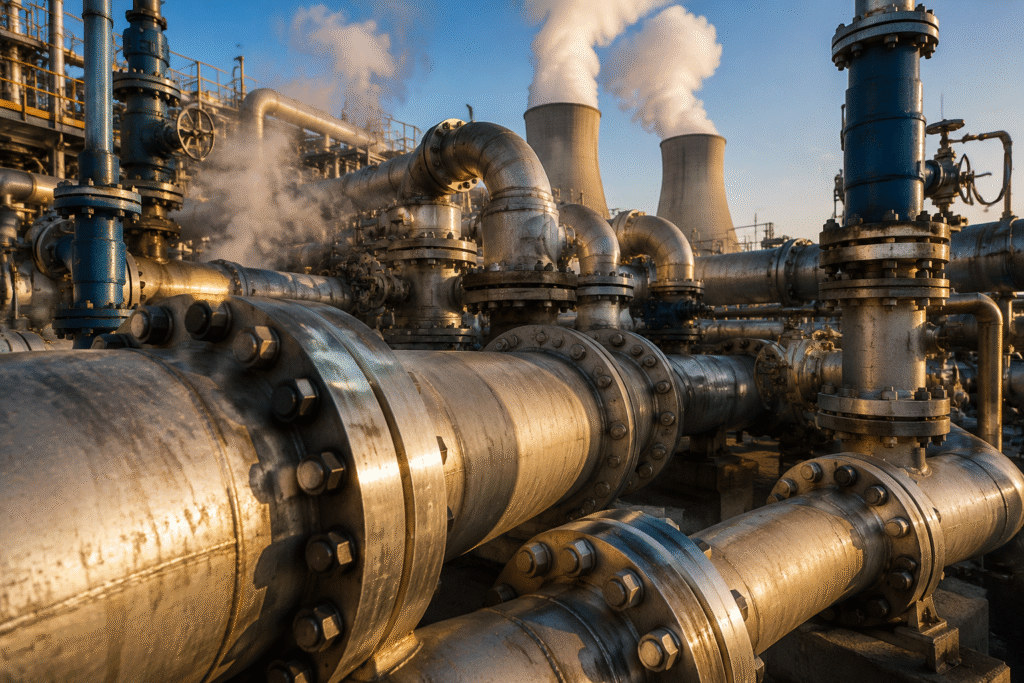
스테인레스 스틸 파이프 플랜지 시장: 7 유형에 대한 데이터 기반 통찰력, 용도, 올바른 플랜지를 선택하는 방법
그랜드뷰 리서치에 따르면 (2024), 전 세계 산업용 플랜지 시장의 가치는 다음과 같습니다. $5.8 10억 2023 도달할 것으로 예상됩니다. $7.2 10억 단위로 2030. That growth makes 스테인레스 스틸 파이프 플랜지 selection more important for EPC contractors, OEMs, and industrial buyers who need corrosion resistance, 추적성, and stable long-term performance.
For procurement teams, the intriguing and sometimes hidden advantages of stainless steel pipe flange products go beyond corrosion resistance alone. 재료 등급, 플랜지 유형, 압력 등급, 깃 달기, 검사 범위, and compliance all influence lifecycle cost, shutdown risk, and project approval speed.
As a manufacturer serving Oil & 가스, 석유화학, 발전, 선박, 수처리, and Construction sectors, SASA FLANGE supplies stainless steel flanges, 합금 플랜지, 탄소강 플랜지, and pipe fittings in 304, 316, 316엘, 904엘, 2205, 2507, A182, 인코넬, 모넬, 하스텔로이, 및 티타늄 등급. 와 함께 ISO 9001:2015 및 PED 2014/68/EU 인증, the company supports buyers who need technical consistency and export-ready documentation.
Industrial Demand Trends Shaping Stainless Steel Pipe Flange Procurement
IBISWorld에 따르면 (2024), 아시아 태평양 계정은 이상입니다. 45% 글로벌 플랜지 생산량의, 중국이 가장 큰 제조사이기 때문에. 그러므로, sourcing strategy increasingly depends on supplier qualification, machining capability, and documentation control rather than geography alone.
스태티스타에 따르면 (2024), 석유 및 가스 산업은 대략적으로 35% 글로벌 플랜지 소비량. That concentration keeps demand strong for ASME B16.5 용접 목, 미끄러지다, 눈이 먼, 스레드, and socket weld configurations in stainless and duplex grades.
In practical terms, buyers now compare more than price per piece. They assess mill traceability, PMI coverage, EN 10204 3.1 인증서, corrosion performance, and readiness for project specifications such as ASTM A182 F304/F304L, F316/F316L, F51, and F53.
Market growth also reflects infrastructure modernization and replacement demand. Mordor Intelligence (2024) notes that process industries continue investing in corrosion-resistant piping systems as operators seek longer service intervals and lower maintenance costs.
That trend explains why stainless materials remain attractive in aggressive media. In chloride-bearing, 선박, and chemically exposed systems, the hidden advantages of a properly specified stainless steel pipe flange include lower leak risk, stronger oxidation resistance, and more predictable inspection outcomes.
하지만, not all Stainless Steel Flanges? perform equally in service. Engineers must choose flange geometry, material chemistry, and class rating based on temperature, 압력, 부식 메커니즘, and welding practice.
예를 들어, 304 and 304L often work well in general industrial service, food processing, and moderate atmospheric environments. In contrast, 316 and 316L usually offer better pitting resistance because molybdenum improves performance in chlorides and chemical service.
시장 조사 미래에 따르면 (2024), industrial stainless demand continues to expand with energy, 담수화, and process plant investment, especially where corrosion-related downtime carries high economic impact. 결과적으로, buyers increasingly ask for total installed cost comparisons rather than headline pricing only.
That procurement behavior favors manufacturers with broad standards coverage and stable output. 고급 CNC 가공 및 포괄적인 품질 테스트를 통해 뒷받침됨, SASA FLANGE 1/2부터 사용자 정의 크기 제공" 60까지" and supports ANSI, DIN, JIS, 고스트, 그리고 EN 1092 requirements for export projects.
Additionally, short documentation cycles matter in global bidding. ISO 9001:2015, PED 2014/68/EU, and AD 2000 alignment can reduce approval friction for EPC packages that require strict supplier prequalification.
Stainless Steel Pipe Flange Types, 재료, and Hidden Advantages in Service
The most effective way to choose a stainless steel pipe flange is to match flange design to loading condition and corrosion environment. 유형, 재료, and facing details must work together, otherwise even premium material can underperform.
As John Butterfield, 수석 배관 엔지니어, 주: “Most flange failures start with a specification mismatch, not a metal defect.” His point is practical because the wrong facing, 틈 메우는 물건, or schedule transition often creates leakage before corrosion becomes critical.
에 따르면 ASME B16.5, flange dimensions, 교련, 외장, and pressure-temperature ratings must follow controlled tolerances for NPS 1/2 ~을 통해 24. Larger diameters often move into ASME B16.47 Series A or Series B, which directly affects bolt load, interchangeability, and procurement planning (ASME, 2023).
From a materials standpoint, ASTM A182 remains a core forged flange specification for austenitic, 듀플렉스, and alloy grades. ASTM requirements support mechanical properties, 화학, 열처리, and identification practices that buyers use to verify compliance (ASTM, 2024).
Common stainless steel pipe flange material choices include the following:
- ASTM A182 F304/F304L for general corrosion resistance and good weldability.
- ASTM A182 F316/F316L for improved chloride resistance and wider chemical service.
- ASTM A182 F904L for strong resistance in aggressive acidic environments.
- ASTM A182 F51 and F53 for duplex and super duplex service requiring higher strength and chloride stress corrosion resistance.
- Nickel alloy options such as Inconel, 모넬, and Hastelloy for severe corrosive or high-temperature conditions.
Each grade has intriguing performance differences. 예를 들어, 316L often becomes the preferred choice in offshore skids and water treatment units, ~하는 동안 2205 duplex can reduce wall thickness in some pressure applications because its yield strength exceeds austenitic grades.
박사로서. Elena Varga, 재료 과학자, 주: “Selecting stainless by corrosion mechanism is more reliable than selecting by brand familiarity.” That means engineers should review pitting resistance, crevice corrosion behavior, temperature range, and weldability before they choose a Flange or matching Pipe component.
Different flange types also solve different installation and maintenance needs:
- Weld neck flange: Best for high pressure, cyclic service, and severe temperature changes.
- Slip on flange: Cost-effective and easier to align for low to moderate pressure service.
- Blind flange: Used to close line ends, nozzles, or pressure vessel openings.
- Threaded flange: Useful where welding is restricted or field hot work should be minimized.
- Socket weld flange: Common in small-bore high-pressure piping systems.
- 랩 조인트 플랜지: Helpful where frequent dismantling and alignment flexibility matter.
In many projects, weld neck remains the strongest type of piping flange because its tapered hub transfers stress smoothly into the pipe wall. 그러므로, refineries, 발전소, and offshore modules often specify weld neck flanges for critical service, especially in higher classes and fatigue-prone lines.
Price, 하지만, should not be judged by material alone. Stainless steel pipe flange price changes with forging route, raw material volatility, machining complexity, facing type, NDT scope, 수량, and whether testing includes PMI, hydrotest support, ferrite check, or third-party witness inspection.
According to NACE guidance, chloride exposure, H2S presence, and temperature all influence alloy suitability in sour and corrosive systems (NACE, 2023). 그러므로, procurement teams should not assume 304, 316, and duplex grades are interchangeable.
Buyers also ask about size coverage. Standard stainless steel pipe flange sizes typically run from 1/2" through 24" 아래에 ASME B16.5, while larger diameters are available under B16.47 and EN systems, 포함 4 inch stainless steel pipe flange, 2 인치, and custom drilling patterns for project packages.
With manufacturing capability in 304, 316, 904엘, 2205, 2507 and other premium grades, SASA FLANGE supports both standard and custom orders for flanges and fittings. 피복재 50+ 석유를 건너는 나라들 & 가스, 석유화학, 힘, 해양산업, the company aligns product supply with engineering drawings, MTC 요구 사항, and export packaging needs.
ASME, ASTM, DIN, and EN Compliance Requirements for Stainless Steel Flanges
Standards control interchangeability, 압력 무결성, and inspection acceptance. 구매자를 위한, compliance is not a paperwork exercise because incorrect standard selection can stop installation or trigger costly NCRs.
ASME B16.5 covers dimensions, 공차, 압력 온도 등급, markings, and facings for pipe flanges and flanged fittings within its scope (ASME, 2023). ASME B16.47 extends coverage to larger diameter flanges, ~하는 동안 ASME B16.9 applies to factory-made wrought butt welding fittings.
ASTM standards define material requirements. ASTM A182 is widely used for forged or rolled alloy and stainless steel flanges, 단조 피팅, 밸브, and parts for high-temperature service, ~하는 동안 ASTM A240 커버 플레이트, sheet, and strip products for pressure-containing components (ASTM, 2024).
European and international projects often specify DIN, EN 1092, PED 2014/68/EU, and AD 2000 requirements. 그러므로, export suppliers must manage dimensional differences, marking rules, and certificate expectations across regions.
The following comparison helps procurement teams review common standard frameworks:
- ASME B16.5: Common for NPS 1/2 에게 24, 수업 150 에게 2500, RF/RTJ/FF facings.
- ASME B16.47: Common for larger diameters, Series A and Series B configurations.
- ASTM A182: Material specification for forged stainless and alloy flanges.
- EN 1092-1: European dimensional and pressure designation system using PN ratings.
- DIN: Legacy German dimensional practices still used in many replacement systems.
- NACE MR0175/ISO 15156: Material guidance for sour service environments.
For formal reference, engineers often verify standard requirements directly through ASME. That is especially important when project specifications call for specific facing finishes, 볼트 체결 재료, or temperature derating rules.
In regulated sectors, documentation quality often determines whether goods clear inspection on first submission. EN 10204 3.1 인증서, 열수 추적성, 치수 검사 보고서, and PMI records support acceptance for critical packages.
According to ISO guidance and PED practice, pressure equipment components require traceability and conformity processes that match intended service category and market destination (ISO, 2023; 소아과, 2014/68/EU). 결과적으로, material mix-up prevention and clear marking become essential for stainless and duplex orders.
SASA FLANGE operates with ISO 9001:2015, PED 2014/68/EU, and AD 2000 credentials, which strengthens confidence for buyers who need controlled manufacturing and export compliance. Backed by advanced machining and quality testing, the company can support flange ratings, facing options, and project documentation aligned to engineering requisitions.
Additionally, stainless steel flanges and fittings should be ordered as a system, not as isolated components. Matching schedule, bevel preparation, 부식 허용량, and gasket compatibility improves joint performance and simplifies site assembly.
That is why experienced buyers request technical review before issuing final purchase orders. For projects requiring traceable stainless steel pipe flange supply, buyers can coordinate specifications directly through SASA FLANGE to confirm standards, 크기, and test documents before production begins.
How to Choose the Right Stainless Steel Pipe Flange for Oil, 가스, 화학적인, 힘, and Marine Systems
Application defines material choice more than catalog familiarity. Engineers should first identify pressure class, 설계 온도, 부식 메커니즘, media composition, inspection level, and installation method.
In Oil & Gas systems, weld neck and RTJ flanges commonly appear in high-pressure hydrocarbon service. The oil and gas sector consumes about 35% of global flanges, according to Statista (2024), so specification discipline remains critical for upstream, 내의 한복판, and refinery projects.
For petrochemical and chemical processing lines, 316엘, 904엘, and nickel alloys often outperform standard 304 in chloride-rich or acidic service. 그러므로, buyers should compare corrosion data, not only nominal stainless designation.
Power generation projects frequently combine thermal cycling with pressure loading. In these cases, forged stainless or alloy weld neck flanges usually offer better fatigue resistance and joint reliability than simpler types.
Shipbuilding and marine systems create a different challenge because salt spray, 습기, and crevice conditions accelerate localized corrosion. Duplex grades such as 2205 그리고 2507 are often chosen where higher strength and chloride resistance justify the added material cost.
Water treatment and desalination facilities often evaluate 316L, 듀플렉스, and super duplex materials for pumps, skids, and pipe headers. According to industry analysts at Mordor Intelligence (2024), desalination and industrial water reuse continue to increase demand for corrosion-resistant piping components.
When buyers choose a flange, they should review the following criteria:
- Pressure rating and temperature range.
- Material grade and corrosion allowance.
- Flange type such as weld neck, 미끄러지다, 눈이 먼, 스레드, or socket weld.
- Facing type including raised face, flat face, and ring type joint.
- Pipe schedule compatibility and bore alignment.
- Applicable standards such as ASME B16.5, ASTM A182, EN 1092, or DIN.
- Required testing, including PMI, 치수검사, 그리고 EN 10204 3.1 인증.
- Project lead time, quantity breakpoints, and packaging for export delivery.
예를 들어, 에이 4 inch stainless steel pipe flange in Class 150 may suit a low-pressure utility header, while a similar nominal size in Class 600 weld neck design may be required for hot process service. The size looks similar, but the application demands a different forging, wall transition, gasket style, and bolting load.
비슷하게, Stainless Steel Threaded Pipe Flange designs work well where welding is not preferred, but they are rarely the best answer for severe vibration or high cyclic stress. 결과적으로, engineering review should always precede a cost-driven substitution.
Custom manufacturing also matters in replacement and brownfield work. Offering custom sizes from 1/2" 60까지" with competitive factory-direct pricing, SASA FLANGE can support non-standard drilling, 특별한 외장, and material combinations that align with legacy systems and retrofit constraints.
Procurement teams should also compare flange manufacturers on response quality. A supplier that clarifies material dual certification, origin traceability, and test scope early will usually reduce project risk more effectively than a supplier that only offers the lowest quote.
미래 전망, Pricing Strategy, and Recommendations for Industrial Buyers
The flange market outlook remains positive because energy, 물, and process industries continue replacing aging infrastructure. 그랜드뷰리서치 (2024) projects the market to reach $7.2 10억 단위로 2030, which indicates sustained demand for high-integrity stainless and alloy components.
동시에, buyers should expect continued pricing pressure from alloy surcharges, freight volatility, and project-specific inspection requirements. 그러므로, strategic sourcing should focus on total value, not only initial stainless steel pipe flange price.
IBISWorld에 따르면 (2024), Asia-Pacific holds over 45% 글로벌 플랜지 생산량의, which means supplier selection in the region can significantly influence lead time and competitiveness. 하지만, documentation reliability and machining consistency should remain primary screening factors.
As Mark Ellison, 산업 시장 분석가, 주: “The best industrial purchase order is the one that prevents rework in the field.” That quote reflects a simple truth for EPC and MRO buyers: verified compliance, accurate machining, and responsive technical support create measurable savings.
조달 관리자용, several practical steps improve outcomes:
- Standardize approved grades such as F304L, F316L, F51, and F53 by service condition.
- Request EN 10204 3.1 certificates and PMI for critical stainless and duplex orders.
- Confirm ASME, ASTM, DIN, or EN dimensional systems before RFQ release.
- Align flange type with maintenance access, welding constraints, and fatigue exposure.
- Evaluate suppliers on quality records, export experience, and responsiveness to technical clarifications.
Ultimately, the hidden advantages of stainless steel pipe flange selection appear over the full operating life of the system. Better corrosion resistance, stronger dimensional control, and reliable compliance reduce leakage events, shutdown exposure, and replacement cycles.
For buyers comparing stainless steel flange types, 파이프 피팅, and project documentation options, a technical discussion early in the sourcing cycle can prevent specification drift. Manufacturers with broad material capability, international standards coverage, and proven quality systems, ~와 같은 SASA FLANGE, can support more accurate decisions before the RFQ becomes a costly field issue.
자주 묻는 질문
What are stainless steel flanges used for?
●Stainless steel flanges are used to connect pipe, 밸브, 슬리퍼, and equipment in systems that require corrosion resistance, 압력 무결성, and easy maintenance access.
●스태티스타에 따르면 (2024), the oil and gas sector accounts for approximately 35% 글로벌 플랜지 소비량, which shows how important flanged joints remain in critical industrial piping.
●They are widely used in oil and gas, 석유화학, 발전, 선박, 수처리, food processing, and pharmaceutical plants because they simplify assembly, 점검, and replacement.
●Common uses include line terminations, branch connections, 용기 노즐, pump suction and discharge points, and isolation points that need gasketed, bolted joints.
●For projects requiring ASME B16.5 or EN 1092 compliance and traceable material certification, working with established manufacturers like SASA FLANGE helps ensure dimensional accuracy and document control.
What flanges are made of stainless steel?
●Many flange types are made of stainless steel, 웰드넥 포함, 미끄러지다, 눈이 먼, 스레드, 소켓 용접, and lap joint designs in grades such as 304, 316, 316엘, 904엘, 2205, 그리고 2507.
●ASTM A182 is one of the key specifications for forged stainless steel flanges, and it covers widely used grades for pressure piping and high-temperature service (ASTM, 2024).
●The right type depends on service conditions because weld neck flanges perform well in severe duty, while slip on flanges often suit less demanding applications with easier installation needs.
●Engineers also choose stainless flanges by facing type, 압력 등급, and corrosion environment, not by material grade alone.
●When buyers need stainless steel flange types matched to pipe schedule, gasket style, and project standards, they should confirm technical details with suppliers before placing the order.
Do they make stainless steel pipe fittings?
●예, manufacturers produce stainless steel pipe fittings such as elbows, 티셔츠, 감속기, and caps to match stainless piping systems and flange assemblies.
●에 따르면 ASME B16.9, butt welding fittings must meet dimensional requirements that support proper alignment and weld preparation in process piping systems (ASME, 2023).
●These fittings are commonly available in 304, 316, 316엘, 듀플렉스, and nickel alloy grades for industries that need corrosion resistance and clean internal flow paths.
●Matching flange and fitting material helps maintain corrosion performance and simplifies documentation, especially when buyers need EN 10204 3.1 certificates or PMI records.
●For integrated packages of stainless steel flanges and fittings, sourcing from an experienced manufacturer like SASA FLANGE can reduce compatibility issues and lead-time fragmentation.
What is the strongest type of piping flange?
●In most industrial piping applications, the weld neck flange is considered the strongest type because its tapered hub distributes stress more evenly into the pipe wall.
●ASME B16.5 weld neck flanges are widely specified for high-pressure, 고온, and cyclic service because they offer strong fatigue performance when properly welded and aligned (ASME, 2023).
●They are especially common in refineries, 화학공장, and power stations where vibration, thermal expansion, and pressure cycling increase the importance of joint reliability.
●하지만, the strongest practical choice still depends on class rating, 재료 등급, 깃 달기, 및 서비스 조건, so strength should be evaluated as a system requirement rather than a catalog label.
●For critical lines, buyers should request technical review, material certification, and dimensional verification before approving a flange substitution.
How do I choose between 304 그리고 316 stainless steel pipe flange grades?
●선택하다 304 or 304L for general service and choose 316 or 316L when chloride exposure, chemical severity, or marine conditions require better corrosion resistance.
●According to industry materials guidance, molybdenum in 316 improves pitting and crevice corrosion resistance compared with 304, which makes it a common upgrade in coastal and chemical applications (ASTM, 2024).
●304 often provides a lower initial cost, but 316 can deliver lower lifecycle cost when corrosion risk would otherwise shorten service intervals or increase maintenance demands.
●Buyers should also compare weldability, temperature range, product availability, and inspection requirements before finalizing the grade.
●For projects with uncertain service chemistry, a supplier with broad material capability can help review the application and avoid under-specification.
What standards apply to stainless steel pipe flange sizes and pricing?
●Stainless steel pipe flange sizes usually follow ASME B16.5, ASME B16.47, DIN, or EN 1092 표준, while pricing depends on grade, 크기, 압력 등급, 깃 달기, 테스트, and quantity.
●그랜드뷰 리서치에 따르면 (2024), 전 세계 산업용 플랜지 시장의 가치는 다음과 같습니다. $5.8 10억 2023, and that demand level continues to influence raw material cost and manufacturing lead times.
●에이 2 inch or 4 inch stainless steel pipe flange may vary greatly in price depending on whether it is slip on, 용접 목, or blind, and whether the material is 304L, 316엘, 2205, 또는 2507.
●Additional cost factors include CNC machining time, forged blank availability, special drilling, PMI, third-party inspection, and export packaging.
●To compare quotes accurately, buyers should submit the exact standard, 등급, 크기, 수업, 깃 달기, and documentation requirements with the RFQ.
관련 게시물
오리피스 플랜지 정의, 세부 정보 및 ASME B16.36 플랜지 개요: 시장 데이터, 선택 가이드 및 규정 준수 통찰력
전 세계 산업용 플랜지 시장의 가치는 다음과 같습니다. $5.8 10억…
플랜지 유형 가이드: 2024 데이터, 표준, 산업용 배관에 대한 모범 선택 사례 및 모범 사례
플랜지 유형의 세계 시장은 다음과 같이 계속해서 확장되고 있습니다.…