
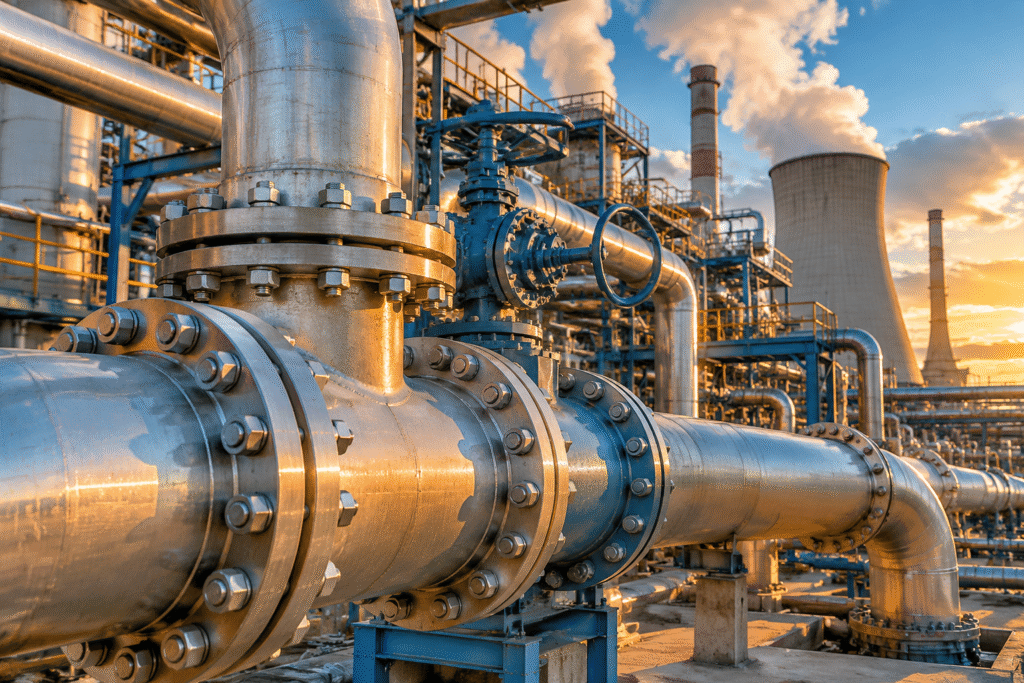
스테인레스 스틸 플랜지 공급망 및 구매 우선순위
그만큼 스테인레스 스틸 파이프 플랜지 market is expanding with industrial capex, 공장 업그레이드, 더욱 엄격한 신뢰성 목표. 그랜드뷰 리서치에 따르면 (2024), 전 세계 산업용 플랜지 시장의 가치는 다음과 같습니다. $5.8 10억 2023 도달할 것으로 예상됩니다. $7.2 10억 단위로 2030, which makes stainless steel pipe flange sourcing a strategic decision for engineers and procurement teams.
For buyers comparing the most common materials, hidden advantages often come from corrosion performance, 용접성, inspection traceability, and standards compliance rather than unit price alone. 그러므로, this guide explains intriguing stainless steel pipe flange types, 용도, selection criteria, and compliance requirements for industrial service.
스테인레스 스틸 파이프 플랜지 수요, 시장 성장, and Procurement Priorities
Global demand remains strong because flanges sit at every critical junction of pressure piping, 회전 장비, and field assembly. IBISWorld에 따르면 (2024), 아시아 태평양 계정은 이상입니다. 45% 글로벌 플랜지 생산량의, 중국이 가장 큰 제조사이기 때문에.
That supply concentration matters for B2B buyers because lead time, mill source stability, and testing capability directly affect project schedules. 결과적으로, qualified manufacturers with export experience and documented quality systems are gaining share.
End-use concentration is equally important. 스태티스타에 따르면 (2024), 석유 및 가스 산업은 대략적으로 35% 글로벌 플랜지 소비량, while petrochemical, 발전, 선박, and water treatment remain major buyers.
이들 부문에서는, downtime is expensive and leakage risk is unacceptable. 따라서, engineers usually prioritize correct pressure class, 개스킷 호환성, and material chemistry over the lowest quote.
The most common stainless grades for a stainless steel pipe flange are 304, 304엘, 316, 그리고 316L. 하지만, aggressive chloride, 시큼한, or high-temperature service often pushes specifications toward 904L, 듀플렉스 2205, 슈퍼 듀플렉스 2507, or nickel alloys such as Inconel, 모넬, and Hastelloy.
시장 조사 미래에 따르면 (2024), corrosion-resistant alloy demand in process industries is increasing at over 5% annually due to harsher media and longer design life targets. 게다가, 구매자가 점점 더 많은 요청을 하고 있습니다. EN 10204 3.1 선적 서류 비치, PMI, and third-party inspection before release.
Standards also shape buying behavior. ASME B16.5 NPS를 커버 1/2 ~을 통해 24, ~하는 동안 ASME B16.47 더 큰 직경을 다룹니다, 그리고 ASTM A182 defines forged alloy and stainless flange materials for high-temperature service (ASME; ASTM, 2023).
Because project teams work across global specifications, many RFQs now include ANSI, DIN, JIS, 고스트, 그리고 EN 1092 requirements in the same package. 그러므로, suppliers need machining flexibility and strong document control.
와 함께 ISO 9001:2015 및 PED 2014/68/EU 인증, SASA FLANGE supports international buyers that need stainless steel flanges, 탄소강 플랜지, 합금 플랜지, and pipe fittings under recognized compliance frameworks. 추가적으로, 회사는 다음에서 제조합니다. 304, 316, 316엘, 904엘, 2205, 2507, A105, A182, 티탄, 기타 프리미엄 등급의 오일 & 가스, 석유화학, 힘, 선박, and Water Treatment projects.
조달 관리자용, this means supplier evaluation should go beyond brochures. It should include machining capacity, 열 추적성, NDT availability, 치수검사, and responsiveness on custom drawings.
스테인레스 스틸 파이프 플랜지 유형에 대한 기술 가이드, 재료, 그리고 숨겨진 장점
The most intriguing aspect of a stainless steel pipe flange is that the visible geometry tells only part of the story. The hidden advantages usually come from metallurgy, flange facing accuracy, bore finish, and how well the flange matches the actual process condition.
존 브린으로서, 수석 배관 엔지니어, 주: “A flange that is correct on paper can still fail in service if material selection ignores chlorides, 열 순환, or bolt load retention.” That is why serious buyers compare pressure class, alloy chemistry, 개스킷 디자인, and installation method together.
Among the most common types, weld neck flanges provide superior stress distribution because the tapered hub transitions load into the pipe wall. Slip on flanges reduce fabrication cost and simplify alignment, while blind flanges isolate systems for testing, 유지, or future tie-ins.
Threaded flanges remain useful where welding is restricted, especially on small-bore utility lines. Socket weld flanges are also common in high-pressure small-diameter piping, although crevice-sensitive services may require careful review.
- 용접 목: 고압에 선호, 순환 로딩, 및 중요 공정 라인.
- 슬립온: economical for low to moderate pressure systems and easier field fit-up.
- 눈이 먼: 라인 폐쇄에 사용, hydrotesting, 그리고 향후 확장 포인트.
- 스레드: suitable for non-weld installations on small sizes.
- 소켓 용접: selected for small-bore high-pressure service.
- 랩조인트: useful where frequent dismantling and rotational alignment are required.
Material selection drives long-term performance. 등급 304 and 304L remain the most common austenitic options for general industrial service because they balance cost, 성형성, 및 내식성.
등급 316 and 316L add molybdenum, which improves pitting resistance in chloride environments. 그러므로, 316L is often preferred for coastal plants, 수처리 스키드, 식품 가공, and many chemical services.
For more aggressive conditions, 904L improves resistance to reducing acids and chlorides. 듀플렉스 2205 그리고 슈퍼 듀플렉스 2507 deliver higher strength and better chloride stress corrosion resistance, which can reduce wall thickness in selected services.
모르도르 정보국에 따르면 (2024), stainless and duplex materials are gaining share in desalination and offshore systems due to longer maintenance intervals and corrosion control benefits. 게다가, NACE MR0175 그리고 ISO 15156 remain key references where sour service is involved (NACE/ISO, 2023).
Surface finish and sealing face matter as much as alloy choice. Raised face is the most common facing in ASME B16.5 프로세스 배관, while RTJ is selected for high-pressure, 고온, and hydrocarbon containment duties.
Flat face flanges are used where mating equipment, such as cast iron valves or pumps, cannot tolerate bending loads from raised face assembly. 따라서, the wrong facing can create leakage or equipment stress even when the metal grade is correct.
According to ASME guidance and industry field data, bolted joint integrity issues account for a significant portion of fugitive emissions events in process plants (ASME, 2023). 그러므로, 치수 정확도, serration finish, and proper bolt preload are critical quality attributes.
박사로서. 엘레나 모리스, 재료 과학자, 주: “The best flange choice is not the highest alloy by default; it is the alloy that matches chloride content, 온도, pH, and fabrication method without overengineering the asset.” That principle helps buyers control lifecycle cost instead of simply chasing premium grades.
고급 CNC 가공 및 포괄적인 품질 테스트를 통해 뒷받침됨, SASA FLANGE 1/2부터 사용자 정의 크기 제공" 60까지" ANSI B16.5 전체, ANSI B16.47, DIN, JIS, 고스트, 그리고 EN 1092 요구 사항. 게다가, the company supports elbows, 티셔츠, 감속기, and caps for buyers who prefer consolidated piping packages.
For project teams comparing types and uses, the following technical checkpoints usually determine whether a flange will perform as intended:
- 압력 등급 및 설계 온도.
- Pipe schedule and bore matching.
- Corrosion allowance and media composition.
- 직면 유형: RF, FF, RTJ, or special finish.
- Welding procedure compatibility and HAZ sensitivity.
- Inspection scope including PMI, 유타, PT, 그리고 치수 확인.
- Documentation such as EN 10204 3.1, MTC, and hydrotest records.
According to ISO and PED compliance practice, traceability and material identification become more important as service severity rises (ISO; 소아과, 2024). 결과적으로, established manufacturers that can manage heat numbers, 테스트 보고서, and export packaging reduce project risk substantially.
ASME, ASTM, DIN, and EN Standards That Define Stainless Steel Pipe Flange Quality
A stainless steel pipe flange should never be purchased on dimensions alone. It must align with the applicable manufacturing, 재료, 압력-온도, 점검, and certification standards for the intended service.
ASME B16.5 is the primary dimensional standard for flanges from NPS 1/2 ~을 통해 24. ASME B16.47 extends coverage to larger diameters, ~하는 동안 ASME B16.9 governs many associated butt weld fittings used in the same piping package.
Material compliance often starts with ASTM A182 for forged stainless and alloy flanges. In plate-based or fabricated applications, specifications may also reference ASTM A240 or project-specific mill requirements.
European projects frequently require EN 1092 flange dimensions and PED 2014/68/EU conformity. 대조적으로, mixed international projects may combine ASME design with EN documentation and customer-specific QA plans.
- ASME B16.5: dimensional standard for most common flange sizes and classes.
- ASME B16.47: large diameter flange dimensions.
- ASTM A182: forged or rolled alloy and stainless materials for flanges.
- ASME B16.9: butt weld fitting dimensions for elbows, 티셔츠, 감속기, 그리고 모자.
- EN 1092: European flange standard for PN-rated systems.
- NACE MR0175 / ISO 15156: sour service material requirements.
According to ASTM and ASME standard frameworks, 치수 공차, 마킹, and material traceability are not optional extras. They are core compliance requirements that affect fit-up, 안전, and client acceptance (ASTM; ASME, 2023).
해양용, 선박, and energy infrastructure, additional owner specifications may invoke DNV, 노르웨이, or project-specific corrosion allowances. 그러므로, procurement teams should verify the full data sheet before comparing quotations.
When evaluating vendors, engineers should request clear confirmation of these items:
- Material grade and dual certification, 304/304L 또는 316/316L과 같은.
- 압력 등급, 직면 유형, 그리고 보어 일정.
- Heat treatment and corrosion testing scope where required.
- PMI availability for stainless, 듀플렉스, 및 니켈 합금.
- EN 10204 3.1 또는 3.2 검사 서류.
- 마킹, 포장, 수출 규정 준수.
마이클 트렌트 역, 산업 시장 분석가, 주: “The quality gap between flange suppliers is rarely visible in a catalog; it appears in documentation discipline, 차원 일관성, and response to nonconformance.” That observation aligns with how EPC buyers actually score vendors.
와 함께 ISO 9001:2015, PED 2014/68/EU, 그리고 광고 2000 신임장, SASA FLANGE is positioned for buyers that need documented quality assurance and export-ready support. 뿐만 아니라, serving 50+ 석유를 건너는 나라들 & 가스, 석유화학, 힘, and Marine industries demonstrates familiarity with international specifications and third-party inspection expectations.
Buyers can also review supplier capability directly through SASA FLANGE 지원팀에 문의 when RFQs include nonstandard drilling, custom forgings, or mixed-material packages. 많은 프로젝트에서, that early technical review prevents costly mismatches between flange class, 개스킷 유형, and actual operating envelope.
For authoritative reference, engineers can consult the applicable dimensions and pressure-temperature rules at ASME. 하지만, the final procurement decision should always align with the project piping class, client specification, and approved vendor list.
석유 및 가스용 플랜지를 선택하는 방법, 화학적인, 힘, 선박, 및 물 시스템
Choosing the right stainless steel pipe flange starts with the service condition, 카탈로그 사진이 아닌. 압력, 온도, 염화물 함량, 유지 관리 철학, and installation method determine whether the most common option is also the correct one.
In oil and gas facilities, weld neck and RTJ flanges dominate critical hydrocarbon service because they handle pressure, 열 순환, and sealing integrity well. 스태티스타에 따르면 (2024), this sector uses about 35% 글로벌 플랜지 볼륨, so specification discipline remains especially important.
석유화학 및 화학공장에서, 316엘, 904엘, or alloy grades may be needed where media includes chlorides, 산, or mixed-phase streams. 그러므로, corrosion review should include upset conditions and cleaning chemicals, not only normal operation.
Power generation systems often require high-pressure classes, controlled bolting, and repeatable gasket seating. In steam or thermal cycling service, flange alignment and weld quality can affect long-term reliability as much as base material selection.
Marine and shipbuilding applications demand strong resistance to seawater exposure, splash zones, and atmospheric corrosion. 따라서, 316엘, 듀플렉스 2205, 그리고 슈퍼 듀플렉스 2507 frequently appear in desalination, 안정기, 난바다 쪽으로 부는, and deck piping systems.
Water treatment systems may use slip on, 스레드, or weld neck flanges depending on pipe size, 유지 보수 액세스, and media chemistry. Although the process pressure may be lower, chloride concentration and disinfection chemistry can still drive alloy upgrades.
- Choose 304/304L for general utility and mild corrosive service.
- Choose 316/316L for chloride exposure, coastal environments, and broader chemical resistance.
- Choose 904L for stronger acid and chloride resistance in specialized plants.
- 선택하다 2205 또는 2507 when higher strength and SCC resistance are required.
- Choose weld neck for critical process piping and cyclic service.
- Choose slip on where economy and easier installation are priorities.
- Choose blind flanges for isolation, 테스트, and expansion planning.
그랜드뷰 리서치에 따르면 (2024), industrial investment in energy, 물, and process infrastructure continues to support flange demand across both replacement and greenfield projects. 결과적으로, buyers increasingly seek suppliers that can deliver flanges and fittings together, reducing interface risk.
SASA FLANGE supports custom manufacturing for unusual drilling patterns, 특별한 두께, and project-specific dimensions, 팔꿈치도 공급하면서, 티셔츠, 감속기, and caps in matching materials. 추가적으로, the company can support 304, 316, 316엘, 904엘, 2205, 2507, A182, 티탄, and other alloys for integrated package procurement.
For buyers comparing price, the cheapest flange may become the costliest if it causes weld repairs, 누출, or delayed inspection release. 그러므로, total installed cost should include machining quality, test records, logistics reliability, and after-sales technical response.
When RFQs involve custom sizes from 1/2" 60까지" 경쟁력 있는 공장 직거래 가격으로, early discussion improves manufacturability and lead time. Procurement teams can coordinate directly through SASA FLANGE to align dimensions, 표준, and documentation before order placement.
Future Outlook for Stainless Steel Pipe Flange Supply Chains and Strategic Buying
The outlook for the stainless steel pipe flange market remains positive because industrial operators continue to replace aging piping assets and invest in corrosion-resistant systems. 그랜드뷰 리서치에 따르면 (2024), 시장은 다음과 같이 성장할 것으로 예상됩니다. $5.8 10억 2023 에게 $7.2 10억 단위로 2030.
동시에, 공급망이 더욱 선택적으로 변하고 있습니다.. Buyers now expect shorter lead times, stronger QA documentation, and better visibility into raw material sourcing.
IBISWorld에 따르면 (2024), 아시아 태평양 지역은 45% 글로벌 플랜지 출력의, which means supplier qualification in China and the wider region will remain strategically important. 하지만, procurement teams should balance price advantage with verification of certification scope, 가공 품질, and export experience.
Digital procurement is also changing vendor evaluation. More RFQs now request full technical submittals, drawing confirmation, PMI 보고서, and shipping milestones before payment approval.
엔지니어링 주도 구매자의 경우, several recommendations stand out:
- Standardize approved flange types by service category.
- Use lifecycle cost instead of piece price as the comparison basis.
- Require EN 10204 3.1 and heat traceability for stainless and alloy orders.
- Audit suppliers on machining, 점검, and packaging practices.
- Bundle flanges and fittings where possible to reduce interface errors.
게다가, hidden advantages increasingly come from supplier responsiveness and technical clarity. A manufacturer that flags a bore mismatch or facing conflict before production can save weeks of rework at site.
That is why experienced exporters remain valuable partners, especially for EPC packages and shutdown-critical replacements. For projects requiring certified stainless steel pipe flange supply, custom forgings, 또는 혼합 재료 패키지, engaging with SASA FLANGE early can support faster technical alignment and cleaner procurement execution.
자주 묻는 질문
다양한 유형의 스테인레스 스틸 플랜지는 무엇입니까?
●The different types of stainless steel flanges include weld neck, 미끄러지다, 눈이 먼, 스레드, 소켓 용접, 및 랩 조인트 디자인, ~와 함께 ASME B16.5 covering the most common industrial dimensions.
●Weld neck flanges suit high-pressure and cyclic service, while slip on flanges are often chosen for easier alignment and lower fabrication cost in moderate-duty pipe systems.
●For projects requiring the right mix of types, 표준, and material grades such as 304, 316, 316엘, 2205, 또는 2507, 다음과 같은 기존 제조업체와 협력 SASA FLANGE helps ensure dimensional accuracy and traceable documentation.
어느 것이 더 낫습니까? 304 또는 420 스테인레스 스틸?
●등급 304 is generally better for stainless steel pipe flange applications because it offers stronger corrosion resistance and weldability than 420 in most industrial piping environments.
●등급 420 is a martensitic stainless steel that provides higher hardness, but it is far less common for process flanges because bolted piping service usually values corrosion resistance over blade-like wear properties.
●플랜지 구매자를 위한, 304 또는 316 grades are the most common choices under ASTM A182 and related specifications, and material selection should be confirmed against media, 온도, and fabrication requirements.
스테인레스 스틸을 가장 많이 사용하는 산업은 무엇입니까??
●Process industries and infrastructure sectors consume very large stainless volumes, but oil and gas remains the biggest flange end-user, accounting for about 35% Statista에 따른 전 세계 플랜지 소비량 (2024).
●Stainless steel is also widely used in petrochemical, 식품 가공, 수처리, 선박, 제약, and power generation applications because it combines corrosion resistance with good fabricability.
●If your project serves corrosive or regulated environments, selecting a supplier that can provide EN 10204 3.1 보고서, 소아과 지원, and correct flange facing options is the most practical approach.
세 가지 유형의 플랜지는 무엇입니까?
●The three types of flanges most commonly referenced in general industrial discussions are weld neck, 미끄러지다, and blind flanges because they cover most pressure piping assembly needs.
●가혹한 서비스에는 웰드 넥 플랜지가 선호됩니다., slip on flanges are used for easier installation and cost control, and blind flanges are installed to close line ends or isolate equipment during testing.
●In actual procurement, engineers should also review threaded, 소켓 용접, and lap joint options because the correct stainless steel pipe flange type depends on service pressure, 유지 보수 액세스, 및 코드 요구 사항.
스테인레스 스틸 파이프 플랜지 가격에 영향을 미치는 것은 무엇입니까??
●스테인레스 스틸 파이프 플랜지 가격은 주로 합금 등급에 영향을 받습니다., 크기, 압력 등급, 직면 유형, raw material costs, machining time, 그리고 인증 요구사항은 다음과 같습니다. EN 10204 3.1 or PED documentation.
●예를 들어, 316L 웰드 넥 플랜지는 일반적으로 304 slip on flange because molybdenum alloying, heavier machining, and more demanding service conditions increase total production cost.
●To get an accurate quotation, buyers should provide size, 일정, 기준, 수업, 재료, 깃 달기, 수량, 및 테스트 요구 사항, 그리고 그들은 연락할 수 있어요 SASA FLANGE 프로젝트 기반 가격 책정.
How do I choose a flange manufacturer or flange vendor for industrial projects?
●A reliable flange manufacturer should demonstrate ISO 9001:2015 품질 관리, standards compliance such as ASME B16.5 또는 EN 1092, and documented capability in the materials your piping class requires.
●IBISWorld에 따르면 (2024), 아시아 태평양 지역은 45% 글로벌 플랜지 출력의, so vendor selection should focus on traceability, inspection discipline, 수출 포장, and lead-time reliability rather than geography alone.
●중요한 프로젝트의 경우, choose a vendor that can supply flanges and fittings together, support custom sizes from 1/2 인치에서 60 인치, and respond quickly to technical clarifications before production starts.
관련 게시물

오리피스 플랜지 정의, 세부 정보 및 ASME B16.36 플랜지 개요: 시장 데이터, 선택 가이드 및 규정 준수 통찰력
전 세계 산업용 플랜지 시장의 가치는 다음과 같습니다. $5.8 10억…
