
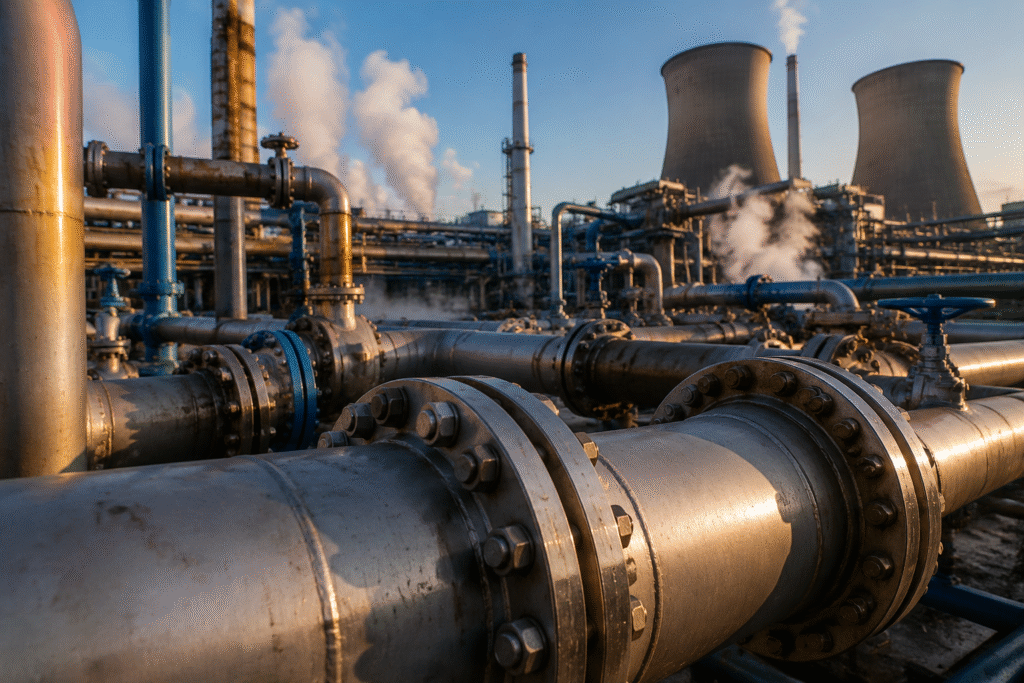
스테인레스 스틸 파이프 플랜지: 7 데이터 기반 이점, 유형, 용도, 및 산업 바이어를 위한 선택 가이드
스테인레스 스틸 파이프 플랜지는 현대 공정 배관의 핵심 구성 요소로 남아 있습니다., 시장 중요성은 에너지 전반에 걸쳐 계속 확대되고 있습니다., 화학적인, 선박, 및 물 시스템. 그랜드뷰 리서치에 따르면 (2024), 전 세계 산업용 플랜지 시장의 가치는 다음과 같습니다. $5.8 10억 2023 도달할 것으로 예상됩니다. $7.2 10억 단위로 2030, confirming strong long-term demand for engineered flange solutions.
조달팀용, the intriguing and often hidden advantages of stainless steel pipe flange products include corrosion resistance, 내구성, 압력 무결성, 및 수명주기 가치. 그러므로, engineers increasingly choose stainless, 강철, and alloy flange systems based not only on initial cost, but also on reliability, 표준 준수, and total operating risk.
스테인레스 스틸 파이프 플랜지 수요를 뒷받침하는 산업 시장 동인
Global infrastructure investment and plant modernization are reshaping the flange supply chain. IBISWorld에 따르면 (2024), 아시아 태평양 계정은 이상입니다. 45% 글로벌 플랜지 생산량의, 중국이 가장 큰 제조사이기 때문에, which directly affects lead times, 소싱 전략, and price competitiveness.
Demand concentration also matters for buyers. 스태티스타에 따르면 (2024), 석유 및 가스 산업은 대략적으로 35% 글로벌 플랜지 소비량, making energy projects one of the strongest demand drivers for stainless steel pipe flange manufacturing.
These numbers explain why buyers now require stronger documentation, more predictable metallurgy, and better delivery performance. 결과적으로, qualified suppliers must provide traceability, pressure-class compliance, and consistent machining quality across standard and custom flange orders.
In industrial service, a flange is not a simple connector. It is a pressure-retaining component that affects sealing, 유지 보수 액세스, inspection frequency, and shutdown risk throughout the life of a piping system.
모르도르 정보국에 따르면 (2024), 담수화의 성장, LNG, and chemical processing is increasing demand for corrosion-resistant piping materials worldwide. 게다가, 다음과 같은 스테인레스 등급 304, 316, 316엘, 904엘, 2205, 그리고 2507 are gaining wider use where chloride exposure, 세척주기, or mixed media create long-term corrosion concerns.
For buyers comparing flange manufacturers, technical breadth now matters more than catalog size alone. A capable supplier should cover ASME B16.5, ANSI B16.47, DIN, JIS, 고스트, 그리고 EN 1092 dimensions while supporting forged materials under ASTM and ASME specifications.
That requirement is especially relevant in EPC procurement and MRO replacement work. In those environments, size mismatch, incorrect facing, or incomplete mill documentation can delay projects faster than raw material shortages.
SASA FLANGE operates in this market with a factory-focused model that aligns with engineering and procurement priorities. 와 함께 ISO 9001:2015 및 PED 2014/68/EU 인증, SASA FLANGE supports projects requiring stainless steel flanges, 탄소강 플랜지, 합금 플랜지, and pipe fittings in global industrial applications.
고급 CNC 가공 및 포괄적인 품질 테스트를 통해 뒷받침됨, 회사는 다음에서 플랜지를 제조합니다. 304, 316, 316엘, 904엘, 2205, 2507, A105, A182, 인코넬, 모넬, 하스텔로이, 그리고 티타늄. 추가적으로, buyers can review the company profile at https://sasaflange.com/about-us/ and product scope at https://sasaflange.com/products/.
시장 조사 미래에 따르면 (2024), industrial stainless demand continues to rise in processing environments that require low maintenance and long service intervals. 그러므로, the versatility of stainless flange systems is becoming a strategic procurement factor rather than a premium option.
For buyers evaluating hidden advantages, one of the most important is lifecycle predictability. A correctly selected stainless steel pipe flange can reduce corrosion-related replacement frequency, lower leakage risk, and simplify inspection planning over years of operation.
스테인레스 스틸 파이프 플랜지 유형에 대한 기술 가이드, 재료, 그리고 숨겨진 장점
The main types of stainless steel pipe flange products include weld neck, 미끄러지다, 눈이 먼, 소켓 용접, 스레드, 랩 조인트, 긴 웰드넥 디자인. Each flange type serves a different purpose based on pressure class, 열 순환, 배관 응력, 및 유지 보수 요구 사항.
ASME B16.5 covers dimensions, 공차, 압력 온도 등급, 마킹, and testing for flanges up to NPS 24, ~하는 동안 ASME B16.47 extends coverage for larger diameters (ASME, 2023). 그러므로, flange selection should start with design code and service condition, not just price or availability.
As Gary Haws, piping engineer and refinery consultant, 주: “A flange failure rarely begins at the gasket alone; it usually begins with a poor match between material, 깃 달기, 탈당, and service condition.” That observation remains highly relevant in corrosive service and high-cycle thermal systems.
The most common stainless grades for industrial flange applications are 304/304L and 316/316L. 하지만, more severe conditions may require 904L, 듀플렉스 2205, 슈퍼 듀플렉스 2507, or nickel alloys where chlorides, 산, or crevice corrosion risk exceed austenitic steel limits.
According to ASTM material guidance and common process industry practice, 304 offers good general corrosion resistance and cost efficiency. 대조적으로, 316 and 316L add molybdenum, which improves resistance in chloride-containing environments and many chemical services (ASTM, 2023).
NACE 부식 지침에 따르면, chloride stress corrosion cracking risk increases significantly as temperature and chloride concentration rise (NACE, 2023). 그러므로, engineers often choose duplex or higher-alloy grades instead of standard 304 in offshore, brackish, or aggressive water applications.
- 304 / 304엘: general industrial use, food process systems, low to moderate corrosion exposure.
- 316 / 316엘: 화학 처리, marine-adjacent service, pharmaceutical and higher chloride environments.
- 904엘: strong resistance in certain acidic and chloride-rich applications.
- 2205 듀플렉스: higher strength, 향상된 내공식성, good option for offshore and produced water systems.
- 2507 슈퍼 듀플렉스: severe chloride service, subsea-related systems, high pitting resistance equivalent requirements.
압력 등급 선택도 마찬가지로 중요합니다.. Common ratings include Class 150, 300, 600, 900, 1500, 그리고 2500, and the allowable pressure changes with temperature and material group as defined by ASME B16.5 (ASME, 2023).
Facing choice affects sealing performance and maintenance behavior. Raised face remains common in process plants, while ring type joint is preferred in high-pressure and high-temperature services where metal-to-metal gasket seating is required.
박사로서. 헬렌 모리스, materials scientist specializing in process metallurgy, 주: “The durability of a stainless flange depends less on the word stainless and more on alloy chemistry, fabrication quality, and the real chemistry of the process stream.” That quote highlights why buyers should request application-based material review.
실용적인 측면에서, a stainless steel pipe flange should be evaluated against several engineering variables. These variables determine whether the flange will perform well over long operating cycles.
- 유체화학, 염화물을 포함하여, 황 화합물, 산, and cleaning agents.
- 작동 및 설계 온도.
- Design pressure and surge conditions.
- Piping vibration, 외부 하중, and thermal expansion.
- 필수 표준, ~와 같은 ASME B16.5, EN 1092, or DIN flange dimensions.
- Documentation level, 포함 EN 10204 3.1 재료 인증서.
ISO 품질 관리 원칙에 따르면, documented process control improves consistency in repeat manufacturing (ISO, 2023). 따라서, suppliers with CNC machining, PMI 기능, 치수검사, and hydro or NDT support provide stronger risk control for project buyers.
SASA FLANGE supports this requirement through a broad material range and custom manufacturing capability. 1/2부터 맞춤형 크기 제공" 60까지" 경쟁력 있는 공장 직거래 가격으로, the company serves projects in Oil & 가스, 석유화학, 힘, 조선 & 선박, 수처리, 및 건설.
For buyers who need technical review, 그림, or project quotations, direct communication is often the fastest route to specification clarity. 그러므로, project teams can contact SASA FLANGE for dimensional confirmation, grade selection, 배송 계획.
표준, 규정 준수, and Quality Requirements for Stainless Steel Pipe Flange Supply
산업 조달에서, compliance is not optional. A stainless steel pipe flange must match the governing dimensional standard, 재료 사양, 압력 등급, 직면 세부 사항, and testing requirements before it reaches site.
The most frequently referenced dimensional standards include ASME B16.5, ASME B16.47, DIN, 그리고 EN 1092. Material specifications often align with ASTM A182 단조 플랜지 및 ASTM A240 for plate products, depending on component type and manufacturing route (ASTM, 2023).
국제 프로젝트의 경우, regional code alignment can drive supplier selection. EN 1092 is commonly required in European and export projects, while PED 2014/68/EU applies to pressure equipment placed on the EU market under defined conformity rules.
PED에 대한 유럽 위원회 프레임워크에 따르면, pressure-retaining components must meet essential safety requirements and conformity procedures where applicable (소아과, 2014). 그러므로, 선적 서류 비치, 추적성, and marking are critical procurement checkpoints.
Buyers should also understand that standard compliance does not eliminate the need for project-specific requirements. End users may add NACE MR0175, DNV, 노르웨이, or customer inspection clauses for sour service, offshore use, or critical process systems.
- ASME B16.5: flanges and flanged fittings up to NPS 24.
- ASME B16.47: 대구경 강철 플랜지.
- ASME B16.9: factory-made wrought buttwelding fittings.
- ASTM A182: 단조 또는 압연 합금 및 스테인레스 스틸 파이프 플랜지, 피팅, 밸브, 및 부품.
- EN 1092: 유럽 플랜지 치수 및 압력 지정.
- NACE MR0175: material requirements for sour service environments.
Material certificates also influence buyer confidence. EN 10204 3.1 certification provides inspection documentation linked to heat number and test records, which supports traceability and auditability during project execution.
According to DNV practice for offshore procurement, material traceability and manufacturing control are foundational to pressure component reliability (DNV, 2023). 결과적으로, quality assurance systems should include heat traceability, 치수 확인, and where required, PMI and NDT review.
SASA FLANGE integrates these expectations into its export-oriented production model. 와 함께 ISO 9001:2015, PED 2014/68/EU, 그리고 광고 2000 신임장, the company supports industrial buyers seeking compliant flange and fitting supply for regulated markets.
Quality also depends on manufacturing discipline. Machining accuracy for bolt holes, 허브 치수, bore finish, and facing serration directly affects fit-up and sealing, especially when flange assemblies are installed across multiple vendor packages.
엔지니어용, the hidden advantages of working with a qualified flange vendor include fewer NCRs, better fit-up control, and improved document readiness for client inspection. Those factors are often more valuable than small unit-price differences on critical path projects.
Buyers evaluating manufacturers can also review recognized industry sources such as https://www.asme.org/ for current standards guidance. 병렬로, they can request technical support and quotations through https://sasaflange.com/contact-us/.
오일에 적합한 스테인레스 스틸 파이프 플랜지를 선택하는 방법, 가스, 화학적인, 힘, 해양 용도
Choosing the correct stainless steel pipe flange requires a structured review of service conditions, 코드 요구 사항, 유지관리 전략. 하지만, many procurement delays begin when teams compare only nominal size and price without checking metallurgy, 깃 달기, and pressure-temperature limits.
석유 및 가스 분야, flange choice often depends on pressure class, sour service exposure, and corrosion allowance philosophy. For upstream and midstream lines, engineers may specify forged ASTM A182 F316/F316L, 듀플렉스 2205, or higher-alloy materials where chlorides and CO2 create aggressive conditions.
스태티스타에 따르면 (2024), 석유와 가스는 주변을 나타냅니다. 35% 글로벌 플랜지 소비량, so this sector heavily influences stocking patterns and lead-time planning. 그러므로, buyers serving energy projects should align their RFQs with actual service chemistry and inspection requirements from the start.
석유화학 및 화학공장에서, media compatibility drives most decisions. 316L often performs well in moderate corrosive service, 904L 동안, 하스텔로이, 모넬, or other high-alloy options may be necessary for stronger acids, mixed chlorides, 또는 온도가 상승함.
Power generation creates different demands. High-temperature cycling, 스팀 서비스, and shutdown maintenance schedules can shift preference toward weld neck flange designs that better manage stress at the pipe-to-flange transition.
Marine and shipbuilding applications prioritize seawater resistance, compact maintenance planning, and dependable supply. 결과적으로, duplex stainless and carefully selected 316L flanges are common where washdown, salt exposure, and confined installation conditions increase corrosion risk.
- Confirm design code and flange standard before sourcing.
- Match material grade to actual media, not just industry habit.
- Check pressure class against design temperature.
- Select the correct facing for gasket type and leak-tightness target.
- 요구 EN 10204 3.1 certificates for traceable projects.
- Verify whether NACE MR0175, 소아과, or client inspection applies.
- Review required quantity, delivery window, and packaging method.
Another important factor is system maintenance philosophy. Slip on flanges may suit lower-pressure utility systems and certain fabrication preferences, while weld neck flanges are usually selected for critical process service with higher stress and fatigue concerns.
Threaded flanges remain useful where welding is restricted, although their use should follow project engineering review. 블라인드 플랜지, meanwhile, are essential for isolation points, future tie-ins, hydrotesting, and maintenance shutdown planning.
마이클 트렌트 역, senior piping procurement advisor, 주: “The best flange choice is the one that fits the code, the media, and the maintenance plan at the same time.” This practical view helps buyers avoid over-specification in low-risk systems and under-specification in corrosive service.
Custom manufacturing also matters when project dimensions, non-standard bores, or special facings are required. SASA FLANGE supports custom flange production and matching pipe fittings, 팔꿈치를 포함하여, 티셔츠, 감속기, 그리고 모자, which helps simplify package sourcing for EPC and distributor buyers.
플랜지 제조 304, 316, 904엘, 2205, 2507 그리고 다른 프리미엄 등급, SASA FLANGE 서브하다 50+ 석유를 건너는 나라들 & 가스, 석유화학, 힘, 해양산업. Buyers can use https://sasaflange.com/contact-us/ to discuss drawings, material options, and factory-direct supply planning.
미래 전망, Strategic Sourcing, and Long-Term Value from Stainless Steel Pipe Flange Procurement
The flange market outlook remains positive because industrial upgrades continue across energy, 물, and processing sectors. 그랜드뷰 리서치에 따르면 (2024), 시장은 다음과 같이 성장할 것으로 예상됩니다. $5.8 10억 2023 에게 $7.2 10억 단위로 2030, which signals stable long-term demand.
That growth will likely increase pressure on lead times for forged stainless materials and larger-diameter projects. 게다가, buyers may see greater separation between low-cost catalog trading and manufacturers with verified quality systems, 수출 문서, and machining control.
IBISWorld에 따르면 (2024), 아시아 태평양 지역은 45% 글로벌 플랜지 출력의, 중국은 여전히 가장 큰 제조 기지로 남아있습니다.. 그러므로, strategic sourcing should focus on supplier qualification, not only regional origin or short-term price movement.
Procurement teams can improve outcomes by building approved vendor lists around measurable criteria. Those criteria should include certification scope, material range, dimensional standards, documentation capability, quality control methods, and communication speed.
예를 들어, buyers should ask whether a supplier can provide forged stainless and alloy flanges, project-specific dimensions, EN 10204 3.1 인증서, and support for DIN, EN, and ASME designs in one package. If the answer is yes, sourcing becomes faster and commercial risk becomes lower.
The hidden advantages of a strong flange supply partner are often operational rather than promotional. Better fit-up, fewer site modifications, clearer certificates, and more predictable lead times can reduce total project cost far more effectively than a marginal unit-price discount.
앞으로 몇 년 안에, corrosion-resistant materials will become more important as plants face harsher media, tighter emission control, and higher uptime expectations. 따라서, the versatility and durability of stainless steel pipe flange solutions will remain central to piping reliability strategy.
For industrial buyers who need compliant, custom, and export-ready flange supply, SASA FLANGE offers a practical path forward through certified manufacturing, broad material coverage, and responsive technical support. Teams planning upcoming projects can review products at https://sasaflange.com/products/ or connect directly through https://sasaflange.com/contact-us/ for specification-based quotations.
자주 묻는 질문
다양한 유형의 스테인레스 스틸 플랜지는 무엇입니까?
●가장 일반적인 스테인레스 스틸 플랜지 유형은 용접 넥입니다., 미끄러지다, 눈이 먼, 소켓 용접, 스레드, 랩 조인트, and long weld neck, ~와 함께 ASME B16.5 covering many standard dimensions up to NPS 24.
●Each type suits a different duty because weld neck flanges handle higher stress more effectively, while slip on and threaded options are often chosen for easier fabrication in less severe service.
●For projects requiring exact flange type selection, 압력 등급 복습, and certified materials such as 304, 316엘, 2205, 또는 2507, 다음과 같은 기존 제조업체와 협력 SASA FLANGE helps ensure dimensional accuracy and compliance.
어느 것이 더 낫습니까? 304 또는 420 스테인레스 스틸?
●대부분의 스테인레스 스틸 파이프 플랜지 적용 분야에 적합, 304 is usually better than 420 because it provides stronger corrosion resistance and is more widely used under ASTM A182 and related industrial specifications.
●등급 420 offers higher hardness after heat treatment, but it is generally less suitable for corrosive piping duties where moisture, 약, or chlorides affect flange performance over time.
●If your project involves process piping, 수처리, petrochemical service, or marine exposure, 304 or 316-based flange solutions are typically the safer recommendation and can be reviewed with SASA FLANGE.
세 가지 유형의 플랜지는 무엇입니까?
●The three flange types most commonly discussed in basic piping practice are weld neck, 미끄러지다, and blind flanges because they cover many connection, 이행, and isolation needs in industrial systems.
●Weld neck flanges are preferred for higher-pressure or cyclic services, slip on flanges are often used in lower-pressure fabrication-friendly systems, and blind flanges seal line ends or nozzle openings for isolation.
●Buyers should still confirm design code, 깃 달기, and class rating before ordering because the correct stainless steel pipe flange depends on pressure, 메디아, and maintenance requirements rather than a simple three-type summary.
스테인레스 스틸 플랜지에 대한 ASME 코드는 무엇입니까?
●The primary ASME dimensional code for stainless steel flanges is ASME B16.5, ~하는 동안 ASME B16.47 applies to larger-diameter steel flanges and ASTM A182 commonly defines forged stainless material requirements.
●These standards control dimensions, 압력 온도 등급, 공차, 마킹, 그리고 테스트, which means buyers must check both geometry and material specification before approving a flange order.
●수출 또는 규제 대상 프로젝트의 경우, it is wise to confirm whether EN 1092, PED 2014/68/EU, NACE MR0175, or client-specific inspection requirements also apply alongside ASME standards.
How do I choose between a stainless steel slip on flange and a weld neck flange?
●A weld neck flange is generally the better choice for high-pressure, 고온, or cyclic service because its tapered hub improves stress distribution at the pipe connection point.
●A stainless steel slip on flange can be more economical and easier to align in lower-pressure systems, but it usually offers less fatigue resistance than a properly specified weld neck design.
●When uptime, 피로 생활, and critical process integrity matter, engineers should compare service loads, 수업 평가, and inspection requirements before finalizing the flange type.
스테인레스 스틸 파이프 플랜지 가격과 리드 타임에 영향을 미치는 요소?
●Stainless steel pipe flange price and delivery depend mainly on grade, 크기, 압력 등급, 단조 루트, 가공 복잡성, 인증 수준, 수량, with duplex and nickel alloys typically costing more than 304 또는 316L.
●IBISWorld에 따르면 (2024), Asia-Pacific supplies over 45% 글로벌 플랜지 생산량의, so regional manufacturing concentration can influence export lead times and sourcing strategy for large project packages.
●To reduce commercial risk, buyers should request quotations that clearly state material grade, 기준, 테스트 인증서, 깃 달기, delivery terms, and inspection scope before comparing offers from any flange vendor or manufacturer.
관련 게시물

오리피스 플랜지 정의, 세부 정보 및 ASME B16.36 플랜지 개요: 시장 데이터, 선택 가이드 및 규정 준수 통찰력
전 세계 산업용 플랜지 시장의 가치는 다음과 같습니다. $5.8 10억…
