
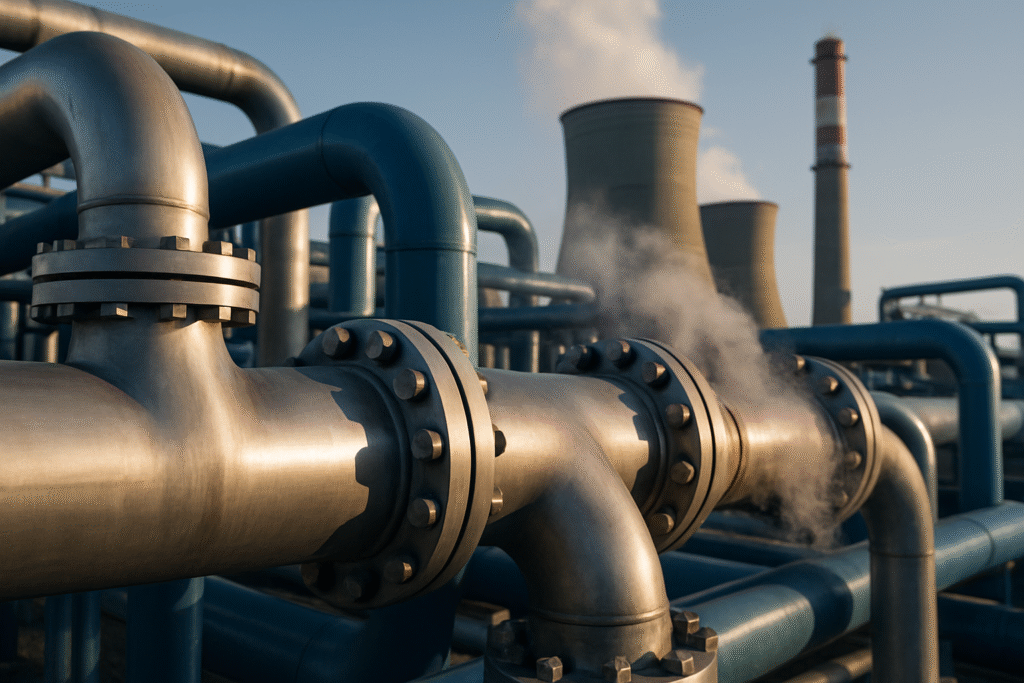
스테인레스 스틸 파이프 플랜지 가이드: 데이터 기반 이점, 유형, 용도, 및 선택 방법 2025
Demand for the 스테인레스 스틸 파이프 플랜지 continues to rise as industrial buyers prioritize corrosion resistance, 수명주기 가치, 및 규정 준수. 그랜드뷰 리서치에 따르면 (2024), 전 세계 산업용 플랜지 시장의 가치는 다음과 같습니다. $5.8 10억 2023 도달할 것으로 예상됩니다. $7.2 10억 단위로 2030.
That growth is not accidental. Engineers in oil and gas, 석유화학, 선박, and power sectors increasingly choose stainless and alloy flanges because hidden maintenance costs often exceed the initial purchase price of lower-grade components.
메타 설명: Explore the best stainless steel pipe flange options, 종류, 표준, and buying tips. Compare materials and contact SASA FLANGE for expert support.
스테인레스 스틸 파이프 플랜지 시장이 계속 확장되는 이유
Industrial piping systems operate under higher pressure, tighter inspection requirements, and more aggressive media than they did a decade ago. 그러므로, procurement teams now evaluate flanges not only by unit price, but also by leakage risk, 서비스 수명, 추적성, and downtime exposure.
IBISWorld에 따르면 (2024), 아시아 태평양 계정은 이상입니다. 45% 글로벌 플랜지 생산량의, 중국이 가장 큰 제조사이기 때문에. That concentration has reshaped global sourcing, especially for buyers seeking factory-direct production, 짧은 리드타임, and broad standards coverage.
동시에, sector demand remains highly concentrated. 스태티스타에 따르면 (2024), 석유 및 가스 산업은 대략적으로 35% 글로벌 플랜지 소비량, which explains why pressure class verification, NACE compatibility, and material certification remain top purchasing criteria.
These market shifts reveal several intriguing and often hidden advantages of stainless steel flanges. 첫 번째, 다음과 같은 스테인레스 등급 304, 316, 316엘, 2205, 그리고 2507 support lower maintenance frequency in corrosive service. 두번째, they offer a strong balance of weldability, 인성, and clean surface performance for regulated industries.
결과적으로, buyers increasingly compare total installed cost instead of only the ex-works price. In many plants, a failed pipe flange can trigger shutdowns, hot work permits, secondary inspections, and unplanned labor costs that far exceed the flange itself.
Standards also drive the market. ASME B16.5 그리고 ASME B16.47 define critical dimensions and pressure-temperature ratings for many industrial flanges, ~하는 동안 ASTM A182 covers forged alloy and stainless materials used in pressure service (ASME, 2023; ASTM, 2024).
게다가, European and export projects often require DIN and EN 1092 규정 준수, especially where EPC contractors work across multiple regulatory regions. This is why manufacturers with multi-standard production capability hold a clear advantage in cross-border procurement.
B2B 구매자의 경우, supplier capability matters as much as material choice. SASA FLANGE 스테인리스 스틸 플랜지를 사용한 프로젝트 지원, 탄소강 플랜지, 합금 플랜지, and pipe fittings in grades including 304, 316, 316엘, 904엘, 2205, 2507, A105, A182, 인코넬, 모넬, 하스텔로이, 그리고 티타늄.
와 함께 ISO 9001:2015 및 PED 2014/68/EU 인증, the company aligns with the documentation and inspection expectations common in refinery, 난바다 쪽으로 부는, and power generation procurement. 추가적으로, EN 10204 3.1 material certification and dimensional inspection help reduce approval delays during project execution.
Many buyers still focus narrowly on visible features like flange face or nominal size. 하지만, the hidden advantages often come from heat treatment control, PMI 검증, 가공 공차, and gasket seating accuracy, which directly affect bolting performance and leak integrity.
재료 과학자 Dr. Lena Hofmann, Corrosion Specialist, 주: “The lowest flange cost rarely delivers the lowest system cost, because corrosion allowance, 표면 마무리, and metallurgy determine service life more than purchase price.” That principle is especially relevant in chloride-bearing, 시큼한, and cyclic temperature applications.
숨겨진 장점, 유형, and Technical Criteria for Choosing a Stainless Steel Pipe Flange
엔지니어가 스테인레스 스틸 파이프 플랜지를 선택할 때, they usually compare pressure class, 직면 유형, 파이프 일정, 재료 등급, and joint design. 하지만, long-term reliability also depends on weld integrity, galvanic compatibility, and media-specific corrosion behavior.
모르도르 정보국에 따르면 (2024), industrial process infrastructure spending continues to favor premium materials in high-corrosion environments, with stainless and duplex gaining share in brownfield upgrades. 게다가, 시장 조사 미래 (2024) reports that process industries are increasing investment in longer-life piping components to reduce lifecycle maintenance costs.
Those trends explain why stainless steel flange types remain central to piping design. The most common options support different loads, inspection methods, and installation priorities.
- 웰드 넥 플랜지: 고압에 선호, 고온, and cyclic service because the tapered hub distributes stress efficiently.
- 슬립온 플랜지: Easier to align and often lower in cost, but less suitable for severe fatigue and critical process lines.
- 블라인드 플랜지: 줄 끝을 닫는 데 사용됩니다., 장비를 분리하다, or permit future expansion.
- 소켓 용접 플랜지: Common for small-bore, high-pressure service where socket alignment supports installation.
- 스레드 플랜지: Used when welding must be avoided, although pressure and vibration limits must be reviewed carefully.
- 랩 조인트 플랜지: Suitable where frequent dismantling is needed and stub-end rotation simplifies alignment.
재료 선택도 마찬가지로 중요합니다. 등급 304 offers good general corrosion resistance and cost efficiency, ~하는 동안 316 and 316L improve pitting resistance due to molybdenum content. For more aggressive chloride or sour environments, 듀플렉스 2205 그리고 슈퍼 듀플렉스 2507 often provide higher strength and better resistance to localized corrosion.
ASTM A182 F304/F304L and F316/F316L remain standard forged material choices for pressure service. 그 동안에, duplex grades used for forged flanges must be verified for chemistry, ferrite balance, 기계적 성질, and heat treatment consistency in accordance with applicable ASTM requirements.
Pressure class and dimensions must match the design code. ASME B16.5 NPS를 커버 1/2 ~을 통해 24 in Classes 150, 300, 400, 600, 900, 1500, 그리고 2500, ~하는 동안 ASME B16.47 applies to larger diameters (ASME, 2023).
Buyers should also verify raised face, 평평한 얼굴, and RTJ configurations against the mating equipment. A mismatch in facing can compromise gasket seating and create avoidable leak paths, even when the metallurgy is correct.
배관 엔지니어 Mark Ellison으로서, 수석 배관 컨설턴트, 주: “Selecting flange type without considering thermal cycles, bolt load retention, and gasket compatibility is one of the most common specification errors in process plants.” 그러므로, engineers should review the complete joint assembly, not the flange alone.
The hidden advantages of stainless steel flanges become clearer when evaluated in real service. Stainless materials generally offer cleaner surface behavior, stronger resistance to atmospheric corrosion, and better performance in washdown or humid environments than many carbon steel alternatives.
In sectors such as food-adjacent utilities, pharmaceutical support systems, 담수화, and marine skids, that advantage can reduce repainting, coating repair, and corrosion monitoring. Although not every service requires premium alloys, many facilities find that stainless lowers intervention frequency over the asset life.
Manufacturing quality also determines field performance. 고급 CNC 가공 및 포괄적인 품질 테스트를 통해 뒷받침됨, SASA FLANGE 1/2부터 사용자 정의 크기 제공" 60까지" in ANSI, DIN, JIS, 고스트, and EN configurations for diverse pipe flange projects.
Capability breadth matters when an EPC project spans multiple packages. 예를 들어, one order may include weld neck flanges in ASTM A182 F316L, blind flanges in 904L, and mating fittings such as elbows, 티셔츠, 감속기, 그리고 캡은 다음과 같이 제조되었습니다. ASME B16.9.
To simplify technical comparison, procurement teams should review these core selection points:
- Design code and standard: ASME B16.5, B16.47, EN 1092, DIN, JIS, 또는 GOST.
- 재료 등급: 304, 316엘, 904엘, 2205, 2507, 니켈 합금, or titanium.
- Pressure class and schedule: match flange bore to pipe wall and service rating.
- 직면 유형: RF, FF, RTJ, 혀와 그루브, or custom machining.
- Inspection requirements: PMI, 유타, PT, 경도, 수압시험, 그리고 EN 10204 3.1.
- Application risks: 염화물, H2S, 온도 사이클링, 부식, 그리고 진동.
게다가, lead time and traceability should influence vendor choice. A competitively priced flange loses value if it arrives without heat numbers, test records, or dimensional conformity required for project release.
피복재 50+ 석유와 가스를 넘나드는 국가들, 석유화학, 힘, 해양 산업, SASA FLANGE supports buyers who need both standard and custom manufacturing. For project-specific inquiries, buyers can coordinate drawings, MTC 요구 사항, and delivery schedules through SASA FLANGE.
표준, 테스트, and Compliance for Stainless Steel Flanges
Compliance is not a paperwork exercise. 산업용 배관에서, standards determine interchangeability, 압력 무결성, inspection acceptance, and legal eligibility for regulated equipment.
The core dimensional standards include ASME B16.5, ASME B16.47, EN 1092, DIN flange norms, and selected JIS or GOST specifications depending on project geography. Material standards often include ASTM A182 단조 플랜지용, ASTM A240 for plate products, and related ASTM specifications for mechanical and corrosion testing.
ISO에 따르면 (2023), traceability and documented quality management significantly improve consistency in industrial manufacturing environments. That is why ISO 9001:2015 certification remains a practical procurement filter, not merely a marketing claim.
PED 2014/68/EU is especially important for pressure equipment entering European markets. 뿐만 아니라, marine and offshore buyers may request compliance with DNV, 노르웨이, or client-specific quality plans depending on service severity.
For sour service and H2S exposure, material review should include NACE MR0175 / ISO 15156 해당되는 경우. Although not every stainless grade qualifies automatically for every sour condition, the standard helps engineers assess cracking risk and environmental limits.
- ASME B16.5: Pipe flanges and flanged fittings for smaller nominal sizes and common pressure classes.
- ASME B16.47: Large diameter steel flanges for major process and transmission systems.
- ASTM A182: Forged or rolled alloy and stainless materials for high-temperature pressure service.
- ASME B16.9: 팔꿈치와 같은 공장에서 제작된 단조 맞대기 피팅, 티셔츠, 감속기, 그리고 모자.
- EN 1092: European flange dimensions and pressure designations used widely in export projects.
- NACE MR0175: Material guidance for sulfide stress cracking resistance in sour environments.
Dimensional conformance should be checked against bolt circle, 두께, 구경, 허브 치수, and facing finish. 실제로, even small deviations can slow site installation or force unplanned rework in spool fabrication.
Typical documentation packages may include:
- EN 10204 3.1 밀 테스트 인증서.
- 히트 번호 추적성.
- PMI reports for alloy verification.
- Dimensional inspection records.
- Pressure rating and standard confirmation.
- Surface treatment or passivation records where specified.
Buyers should also review acceptance criteria for visual defects, machining marks, and flange facing finish. For raised face and RTJ flanges, surface integrity directly affects gasket compression and sealing performance.
이미지 대체: stainless steel pipe flange dimensional inspection and quality control in industrial manufacturing
다국적 프로젝트의 경우, cross-standard comparison is often required. A buyer may need ANSI Class 150 dimensions in one package, EN PN16 in another, and DIN-based mating components in a third.
That complexity makes supplier versatility valuable. 와 함께 ISO 9001:2015, PED 2014/68/EU, 그리고 광고 2000 신임장, SASA FLANGE supports qualification needs for regulated and export-oriented industrial projects while maintaining a broad material portfolio.
According to ASTM International (2024), material standard adherence improves repeatability in pressure-containing components across supply chains. 그러므로, a compliant flange program reduces technical disputes during inspection and improves first-pass approval rates.
Procurement teams should ask five practical compliance questions before placing a purchase order:
- Does the supplier manufacture to the exact flange standard and pressure class listed on the datasheet?
- Are MTCs, PMI, and inspection reports available before shipment?
- Can the supplier meet PED, EN, or client-specific documentation requirements?
- Is the material grade suitable for chlorides, 신맛이 나는 서비스, or elevated temperature?
- Can flange dimensions and facing be matched precisely to existing pipe and equipment?
For further specification review or document alignment, 엔지니어는 상담할 수 있습니다 SASA FLANGE during pre-order evaluation. Early technical clarification often prevents later NCRs, site delays, and replacement costs.
응용, 선택 기준, and How to Choose the Right Pipe Flange
Different industries use stainless steel flanges for different reasons. 그러므로, the best flange choice depends on process media, 온도, pressure cycles, 유지 보수 액세스, and regulatory obligations.
석유 및 가스 분야, buyers often prioritize weld neck flanges in 316L, 2205, 또는 2507 for corrosive lines, 생산된 물 시스템, and offshore skids. 섹터가 약을 나타내기 때문에 35% 글로벌 플랜지 소비량, robust quality assurance remains essential for every high-risk joint (정치가, 2024).
석유화학공장에서, material compatibility with acids, 용매, and chlorides typically drives grade selection. 예를 들어, 904엘, 하스텔로이, or Monel may be specified where standard austenitic stainless grades face localized corrosion risk.
발전에 있어서, high-temperature service and thermal fatigue influence flange type and bolt load retention. Weld neck designs often outperform lighter alternatives in cyclic steam and condensate systems because they manage stress more effectively at the hub transition.
Marine and shipbuilding applications create another set of demands. Salt-laden air, 바닷물 노출, and limited maintenance windows make corrosion resistance a strategic requirement rather than a premium option.
Water treatment and desalination systems frequently require 316L, 듀플렉스, or super duplex materials to address chloride attack. 이들 시스템에서는, the hidden advantages of stainless steel flanges include reduced coating dependence and improved long-term cleanliness.
To choose the right flange, engineers should evaluate:
- 유체화학, 특히 염화물, 황화물, 산, and oxygen content.
- 작동 및 설계 온도 범위.
- 압력 등급, 서지 조건, and fatigue loading.
- 파이프 크기, 일정, and connection method.
- 검사 수준, 선적 서류 비치, and customer approval process.
- 수명주기 비용, not just initial piece price.
Flange type selection should also match installation realities. A threaded pipe flange may suit utility lines where welding is restricted, while a blind flange may support hydrotest isolation, maintenance closure, or future expansion planning.
예를 들어, 에이 4 클래스의 인치 스테인레스 스틸 파이프 플랜지 150 may be suitable for low-pressure utility water, but the same nominal size in a hot chloride process line may require Class 300 이상, plus a more resistant alloy. 따라서, specification cannot rely on size alone.
Buyers often search by product phrase instead of engineering criteria, using terms like stainless steel pipe flange sizes, stainless steel threaded pipe flange, or stainless steel flange price. 하지만, the correct buying process should begin with service conditions, 표준, and mating component requirements.
리드타임, MOQ, and customization can also affect supplier selection. 1/2부터 맞춤형 크기 제공" 60까지" 경쟁력 있는 공장 직거래 가격으로, SASA FLANGE helps project buyers source standard and non-standard flanges along with matching elbows, 티셔츠, 감속기, 그리고 모자.
When custom machining is required, procurement teams should send detailed drawings with tolerance notes, 세부 사항에 직면, drilling requirements, and material callouts. This shortens review cycles and improves quotation accuracy.
As industry analyst Robert Chen, Energy Infrastructure Research Director, 주: “The best-performing flange suppliers win not by offering the cheapest unit cost, but by delivering documentation accuracy, 차원 일관성, and predictable lead times.” That observation aligns with how major EPC and MRO buyers now evaluate vendors.
실용적인 측면에서, buyers should compare suppliers on more than product range. They should assess machining capability, 테스트 범위, 수출 포장, response speed, and experience across oil and gas, 석유화학, 힘, 선박, and construction applications.
For stainless, 듀플렉스, 니켈 합금, and titanium projects, it is wise to request clear confirmation of heat treatment, 추적성, and inspection coverage before order release. This is especially important when flange failure could shut down a process unit or compromise safety barriers.
스테인레스 스틸 플랜지에 대한 향후 전망 및 전략적 구매 권장 사항
The outlook for stainless steel flanges remains positive because industrial operators continue to modernize piping assets and improve reliability targets. 그랜드뷰 리서치에 따르면 (2024), 산업용 플랜지 시장은 다음과 같이 성장할 것으로 예상됩니다. $5.8 10억 2023 에게 $7.2 10억 단위로 2030.
That projection suggests sustained demand for compliant, 부식 방지, and globally standardized flange solutions. 게다가, increasing investment in water treatment, LNG, offshore upgrades, and process decarbonization will likely support premium alloy demand.
Asia-Pacific will remain central to supply chains because the region already accounts for over 45% 글로벌 플랜지 생산량의 (IBIS월드, 2024). 그러므로, buyers should build sourcing strategies around qualified manufacturers with strong documentation, flexible standards support, and reliable export execution.
조달 관리자용, three strategic recommendations stand out. 첫 번째, standardize technical data sheets to avoid mismatched dimensions and incomplete inspection scopes. 두번째, qualify vendors by certifications and track record, not only by price. 제삼, evaluate lifecycle cost in corrosive or high-maintenance environments.
엔지니어용, the priority is specification discipline. 재료 등급, 압력 등급, 깃 달기, 코드 준수, and test documentation should be defined together, because one weak input can undermine an otherwise correct flange package.
For project teams facing mixed standards or custom dimensions, early supplier engagement saves time. By aligning drawings, MTC expectations, and delivery windows in advance, buyers reduce rework and protect commissioning schedules.
That is where experienced manufacturers add value beyond production alone. For organizations sourcing a stainless steel pipe flange for demanding service, 함께 일하다 SASA FLANGE can streamline technical review, documentation planning, and custom manufacturing from the quotation stage onward.
자주 묻는 질문
What are the main stainless steel flange types?
●주요 스테인레스 스틸 플랜지 유형은 용접 넥입니다., 슬립온, 눈이 먼, 소켓 용접, 스레드, 그리고 랩 조인트, 그리고 ASME B16.5 covers many of these configurations for NPS 1/2 ~을 통해 24.
●Each type serves a different duty, because weld neck flanges suit high-pressure and cyclic service while slip-on and threaded designs usually fit less severe installation conditions.
●For critical process piping, buyers should match flange type to pressure class, 깃 달기, and pipe schedule, and projects needing certified stainless options can be reviewed with established manufacturers like SASA FLANGE.
What stainless steel pipe flange sizes are commonly available?
●Common stainless steel pipe flange sizes typically range from 1/2 인치에서 24 인치 아래 ASME B16.5, while larger diameters are usually supplied under ASME B16.47.
●Actual availability depends on flange type, 압력 등급, 표준, 왜냐하면 4 클래스의 인치 스테인레스 스틸 파이프 플랜지 150 differs dimensionally from the same size in Class 600 or EN PN-rated formats.
●Buyers should confirm bore, schedule match, and bolt circle details before ordering, especially for replacement work or mixed-standard systems.
다음 중에서 어떻게 선택하나요? 304 그리고 316 스테인레스 스틸 플랜지?
●등급 304 일반 서비스에 널리 사용됩니다., 하지만 316 and 316L provide better corrosion resistance in chloride-containing and more aggressive chemical environments because of their molybdenum content.
●According to ASTM material usage patterns in industrial pressure components, 304 그리고 316 remain among the most common forged stainless choices, yet the correct grade still depends on media, 온도, 그리고 청소 체제.
●For seawater-adjacent, 화학적인, or higher-risk service, buyers should request a full material review rather than choosing by price alone.
What standards apply to stainless steel flanges and fittings?
●Stainless steel flanges commonly follow ASME B16.5, ASME B16.47, EN 1092, and DIN dimensional standards, while stainless fittings often follow ASME B16.9 for buttweld products.
●Material requirements are frequently specified under ASTM A182 for forged flanges and related ASTM standards for chemistry, 기계적 성질, 그리고 테스트.
●To avoid site mismatch or documentation rejection, procurement teams should ensure the purchase order states both the dimensional standard and the material standard clearly.
스테인레스 스틸 파이프 플랜지 가격에 영향을 미치는 것은 무엇입니까??
●스테인레스 스틸 파이프 플랜지 가격은 주로 합금 등급에 따라 다릅니다., 크기, 압력 등급, 가공 복잡성, 검사 범위, 및 주문량, with duplex and nickel alloys usually costing more than standard 304 또는 316 성적.
●그랜드뷰 리서치에 따르면 (2024), rising industrial demand and quality requirements continue to influence value across the flange market, so the cheapest offer may not provide the lowest installed cost.
●Buyers should compare quotations by documentation, 테스트, 리드타임, and compliance level, not just by piece price.
When should I use a stainless steel threaded pipe flange or welded flange?
●Threaded flanges are useful where welding is impractical or prohibited, but welded flanges such as weld neck or socket weld usually perform better in high-pressure, 고온, or vibration-prone systems.
●As piping experts regularly note, flange selection must consider thermal cycling, gasket load, and fatigue risk, because connection method affects long-term joint integrity as much as the material itself.
●For safety-critical or corrosive service, engineers should review the full piping condition and select the flange design that best supports leak-free operation.
관련 게시물

오리피스 플랜지 정의, 세부 정보 및 ASME B16.36 플랜지 개요: 시장 데이터, 선택 가이드 및 규정 준수 통찰력
전 세계 산업용 플랜지 시장의 가치는 다음과 같습니다. $5.8 10억…
