
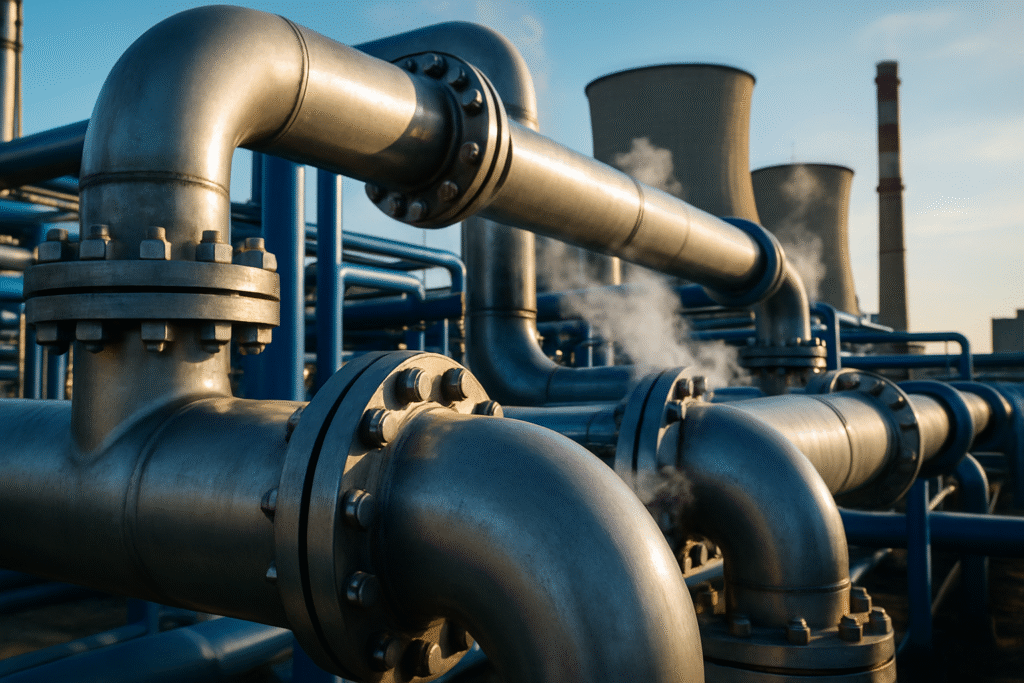
스테인레스 스틸 파이프 플랜지: 유형에 대한 완전한 가이드, 용도, 숨겨진 장점 및 ASME B16.5/B16.47 선택
스테인레스 스틸 파이프 플랜지 시장은 에너지 전반에 걸쳐 부식 방지 배관 부품에 대한 전 세계적인 수요로 확대되고 있습니다., 화학적인, 해양 부문. 그랜드뷰 리서치에 따르면 (2024), 전 세계 산업용 플랜지 시장의 가치는 다음과 같습니다. $5.8 10억 2023 도달할 것으로 예상됩니다. $7.2 10억 단위로 2030, which makes technical selection more important for buyers.
조달팀 및 배관 엔지니어용, the challenge is not simply to buy Stainless Steel flanges. The real task is to Choose the right material, 압력 등급, 깃 달기, and standard for Different operating conditions while controlling lifecycle cost.
Industrial Market Trends Driving Stainless Steel Pipe Flange Demand
Demand for stainless steel pipe flange products continues to rise because operators want longer service life, 유지 보수 감소, and stronger compliance in aggressive environments. IBISWorld에 따르면 (2024), 아시아 태평양 계정은 이상입니다. 45% 글로벌 플랜지 생산량의, 중국이 가장 큰 제조사이기 때문에.
That regional concentration matters for international sourcing strategies. It affects lead times, raw material pricing, quality planning, and supplier qualification for EPC contractors and OEM buyers.
End-use concentration is equally significant. 스태티스타에 따르면 (2024), 석유 및 가스 산업은 대략적으로 35% 글로벌 플랜지 소비량, which explains why ASME pressure-temperature performance and material traceability remain top purchasing criteria.
게다가, stainless grades are gaining share in water treatment, 선박, and chemical processing because corrosion failures cost far more than the initial component premium. 모르도르 정보국에 따르면 (2024), corrosion-related maintenance can represent a high single-digit share of plant operating cost in process industries, especially in chloride-bearing systems.
결과적으로, buyers increasingly prefer Complete supply partners that can provide flanges and fittings under one quality system. This is where SASA FLANGE stands out, ~와 함께 ISO 9001:2015 및 PED 2014/68/EU 인증, 고급 CNC 가공, and manufacturing capability across 304, 316, 316엘, 904엘, 2205, 2507, A182, 인코넬, 모넬, 하스텔로이, 및 티타늄 등급.
시장 조사 미래에 따르면 (2024), 담수화의 성장, 해양 플랫폼, and high-purity industrial processing is supporting above-average demand for stainless and duplex flange assemblies. 그러므로, buyers should review not only purchase price but also corrosion allowance, welding compatibility, 그리고 다음과 같은 문서 요구 사항 EN 10204 3.1 인증서.
Many competitor pages focus only on material names. 하지만, experienced buyers need dimensions, 압력 등급, standard references, testing details, and practical Uses by sector.
게다가, international projects increasingly require harmonized compliance across ASME, DIN, 및 EN 사양. 그런 이유로, suppliers serving export markets must demonstrate reliable dimensional control, PMI 지원, and inspection discipline from raw material receipt to final marking.
SASA FLANGE 서브하다 50+ 석유를 건너는 나라들 & 가스, 석유화학, 힘, 수처리, 건설, 해양산업. 뿐만 아니라, the company offers custom sizes from 1/2 인치에서 60 inch with factory-direct pricing, which supports both MRO replenishment and project procurement programs.
스테인레스 스틸 파이프 플랜지 유형, 재료, and Technical Selection Insights
A stainless steel pipe flange may look simple, yet flange performance depends on several combined factors. Material chemistry, 압력 등급, 직면 유형, bore alignment, 개스킷 호환성, and bolt load all influence leakage risk and total service life.
박사로서. John Sedriks, corrosion specialist and metallurgical author, 주: “Stainless steels perform best when alloy selection matches the environment, especially chloride level, 온도, 및 제작방법.” That principle is central when deciding between 304, 316, 321, 347, 904엘, or duplex Stainless grades.
According to ASTM and ASME material practice, forged stainless flanges are commonly supplied under ASTM A182 for pressure-containing applications, while dimensions typically follow ASME B16.5 또는 ASME B16.47 depending on size range and configuration (ASME, 2023). 그러므로, engineering teams should not evaluate material grade in isolation.
NACE 부식 지침에 따르면, chloride-rich service, sour media, and elevated temperature can sharply reduce the safe operating window of standard austenitic grades if specification is incomplete (NACE, 2023). 대조적으로, duplex and high-alloy stainless options often deliver lower lifecycle cost despite a higher initial unit price.
As piping engineer Gareth O’Brien, Senior Mechanical Consultant, 주: “The Hidden Advantages in flange selection usually come from preventing one shutdown, not saving a few dollars on the purchase order.” That is especially true in offshore platforms, refinery turnaround work, and high-purity process lines.
Common stainless steel pipe flange Types include the following:
- Weld neck flange for high-pressure, 고온, and cyclic service.
- Slip-on flange for moderate pressure systems with easier alignment during installation.
- 소구경 고압 배관용 소켓 용접 플랜지.
- Threaded flange for low-pressure or non-weldable field conditions.
- 라인 절연용 블라인드 플랜지, 수압시험, 그리고 향후 확장 포인트.
- Lap joint flange for systems needing frequent dismantling.
Material selection should match the actual fluid and service envelope. The Different grades below are often specified for industrial piping projects:
- 304/304엘: 일반 내식성, good formability, and wide availability.
- 316/316엘: Added molybdenum improves pitting resistance in chlorides and marine environments.
- 321 그리고 347: Stabilized grades for elevated temperature service and reduced sensitization risk.
- 904엘: Strong resistance in aggressive acids and severe chloride exposure.
- 2205 듀플렉스: Higher strength and improved chloride stress corrosion cracking resistance.
- 2507 슈퍼 듀플렉스: Preferred for offshore, 바닷물, and severe corrosion duty.
From a specification standpoint, 304 그리고 316 remain the most frequently requested materials for commercial and industrial service. 하지만, they should not be treated as interchangeable when chloride concentration, 온도, or required PREN value becomes critical.
According to industry pricing benchmarks tracked by procurement analysts, 316/316L flanges often carry a material premium of roughly 15% 에게 30% over 304/304L depending on nickel and molybdenum market movement (IBIS월드, 2024). 그럼에도 불구하고, that premium can be justified quickly in coastal or chemical environments.
Pressure class also affects performance and project cost. ASME B16.5 NPS를 커버 1/2 ~을 통해 24 with pressure classes from 150 에게 2500, ~하는 동안 ASME B16.47 generally covers larger diameter flanges from NPS 26 ~을 통해 60 in Series A and Series B configurations (ASME, 2023).
For engineers comparing ASME B16.5 및 B16.47, the most practical Difference is size range and bolt pattern. Series A usually has thicker, heavier flanges with fewer larger bolts, while Series B is often optimized for lower weight and legacy compatibility.
Facing choice is another key decision. Raised Face is common for steel piping systems, Ring Type Joint is preferred for high-pressure critical service, and Flat Face is often used when mating to cast iron or flat-faced equipment nozzles.
Buyers also need to verify welding and inspection requirements early. 예를 들어, projects may require ferrite control, PMI, 경도 테스트, 수압 테스트 지원, or surface finish confirmation for gasket seating performance.
고급 CNC 가공 및 포괄적인 품질 테스트를 통해 뒷받침됨, SASA FLANGE supplies stainless steel flanges and matching elbows, 티셔츠, 감속기, and caps to simplify package sourcing. 게다가, the company supports ANSI B16.5, ANSI B16.47, ASME B16.9, DIN, JIS, 고스트, 그리고 EN 1092 dimensions for export-focused buyers.
When a project requires custom drilling, 비표준 두께, or alloy upgrades, supplier flexibility matters as much as catalog range. 그러므로, buyers should confirm raw material traceability, machining tolerance capability, and final documentation before issuing the purchase order.
ASME, ASTM, DIN, 및 스테인레스 스틸 파이프 플랜지 준수에 대한 EN 표준
표준 준수는 안전한 플랜지 조달의 기초입니다. Without correct dimensional, 재료, and test references, even a well-machined flange can create installation mismatch or pressure integrity problems.
The most frequently cited dimensional standard in global industrial piping is ASME B16.5 for NPS 1/2 에게 24. 더 큰 직경의 경우, ASME B16.47 차원을 정의합니다, 공차, 외장, 교련, and pressure classes for large-size flanges.
ASTM 사양은 재료의 화학 및 기계적 특성을 정의합니다.. For forged stainless flanges, ASTM A182 일반적이다, ~하는 동안 ASTM A240 often applies to plate products used in some fabricated components.
European and international projects may call for DIN or EN 1092 flange dimensions instead of ASME patterns. 그러므로, engineering teams must verify drilling, 압력 지정, and face compatibility before mixing systems.
Key standards and compliance references include:
- ASME B16.5: 파이프 플랜지 및 플랜지 피팅, NPS 1/2 에게 24.
- ASME B16.47: Large diameter steel flanges, NPS 26 에게 60.
- ASME B16.9: 공장에서 제작한 단조 맞대기 용접 피팅.
- ASTM A182: 단조 또는 압연 합금 및 스테인리스강 파이프 플랜지 및 단조 피팅.
- EN 1092: Flanges and their joints for European applications.
- NACE MR0175/ISO 15156: Materials for H2S-containing environments in oil and gas production.
- PED 2014/68/EU: Pressure Equipment Directive for EU market compliance.
Comparison points buyers should confirm before placing orders:
- Nominal size and schedule bore match.
- 압력 등급 또는 PN 등급.
- RF와 같은 외장형, FF, RTJ, or tongue and groove.
- Bolt hole quantity, 지름, and pitch circle.
- Material grade and heat treatment status.
- Certificate package including EN 10204 3.1.
ISO 품질 관리 지침에 따르면, documented control of traceability, 구경 측정, and inspection records directly improves repeatability in pressure equipment manufacturing (ISO, 2023). That is why procurement teams increasingly prefer suppliers with formal quality systems and export compliance experience.
For projects entering the EU, PED documentation can be as important as the flange itself. 비슷하게, sour service or offshore packages may require NACE, DNV, or client-specific inspection plans for material approval.
SASA FLANGE 통합하다 ISO 9001:2015, PED 2014/68/EU, 그리고 광고 2000 credentials into production and inspection workflows. 게다가, the company can support MTCs, 치수검사, PMI coordination, and project documentation for EPC and distributor customers through direct technical inquiry.
Procurement managers should also review the country of use and end-client specification before finalizing standards. A flange that meets ASTM chemistry but misses the required drilling pattern, pressure series, or inspection note can still fail project acceptance.
As materials engineer Robert Baboian, corrosion authority, 주: “Correct material selection and specification detail prevent most premature corrosion problems before the plant ever starts up.” In flange sourcing, that means standards, paperwork, and machining discipline must align from the start.
How to Choose the Right Stainless Steel Pipe Flange for Different Industrial Uses
Choosing the correct stainless steel pipe flange starts with service conditions, 카탈로그 선호가 아님. Engineers should evaluate fluid chemistry, 설계압력, 설계 온도, 부식 허용량, 유지 보수 액세스, and expected shutdown cost.
석유 및 가스 서비스 분야, flange selection often centers on pressure class, sour service compatibility, and reliability under thermal cycling. 스태티스타에 따르면 (2024), 석유와 가스는 대략적으로 35% 글로벌 플랜지 소비량, so flange failure prevention has clear commercial impact.
석유화학 플랜트용, 316엘, 321, 347, 904엘, or duplex grades may be selected depending on acid exposure, 염화물 수준, and process temperature. 뿐만 아니라, weld neck flanges are often preferred for critical lines because they improve stress distribution at the hub-to-pipe transition.
발전에 있어서, steam conditions and thermal fatigue can drive the need for stabilized or high-temperature alloys. 그러므로, buyers must check not only material grade but also gasket system, 볼트 재질, and mating flange surface condition.
Marine and shipbuilding applications demand strong resistance to seawater splash, salt atmosphere, and intermittent wet-dry cycling. 이러한 환경에서는, 316L is often a practical baseline, ~하는 동안 2205 또는 2507 may be justified for severe chloride service or long design life.
Water treatment and desalination projects often evaluate life-cycle economics very closely. 시장 조사 미래에 따르면 (2024), desalination infrastructure investment is expanding steadily, which supports stronger demand for duplex stainless flanges and fittings in coastal markets.
선택 기준에는 다음이 포함되어야 합니다.:
- 공정 매체, 염화물을 포함하여, 산, 황화물, 및 고형분 함량.
- Operating and upset temperature range.
- Pressure class and code design margin.
- 파이프 크기, 일정, 및 플랜지 유형.
- Required standards such as ASME, EN, DIN, 또는 JIS.
- Inspection and documents including MTC, PMI, 경도, and NDE.
- 리드타임, 포장, and export marking requirements.
Practical guidance for common applications:
- Refinery high-pressure line: 서서히 나아가는 ASTM A182 F316L 웰드 넥 플랜지, ASME B16.5 수업 600 or above, RF or RTJ depending on service severity.
- 화학물질 투여 스키드: slip-on or weld neck in 316L or 904L depending on chemical concentration and maintenance philosophy.
- Offshore seawater line: 2205 또는 2507 flange with strict PMI and traceability.
- Food and beverage process line: 304L or 316L with surface finish considerations and hygienic design compatibility.
- Large water transmission system: ASME B16.47 또는 EN 1092 large-diameter flange with coating, 패시베이션, and transport protection plan.
Many buyers also ask about price by size, especially for a 4 inch stainless steel pipe flange or a stainless steel threaded pipe flange. Unit price varies by grade, 압력 등급, 깃 달기, 가공 복잡성, 그리고 필수 서류, so technical equivalence must be confirmed before comparison.
The Hidden Advantages of working with a capable manufacturer include consolidated sourcing, shorter clarification cycles, and better fit-up accuracy in the field. Those benefits reduce installation delays, gasket waste, and rework costs.
맞춤형 프로젝트의 경우, SASA FLANGE can produce flanges, 팔꿈치, 티셔츠, 감속기, and caps in coordinated materials and dimensions. That makes it easier for buyers to standardize metallurgy and paperwork across one package instead of splitting procurement among multiple suppliers.
게다가, custom manufacturing support helps when a project needs non-standard bores, drilled blinds, 특별한 외장, or alloy upgrades. Buyers can 연락하다 SASA FLANGE for technical review on dimensions, 재료, and delivery planning before finalizing RFQs.
Future Outlook for Stainless Steel Pipe Flange Procurement and Strategic Recommendations
The outlook for stainless steel pipe flange demand remains positive as industrial operators invest in safer, 오래 지속되는 배관 시스템. 그랜드뷰 리서치에 따르면 (2024), 시장은 다음과 같이 성장할 것으로 예상됩니다. $5.8 10억 2023 에게 $7.2 10억 단위로 2030, 에너지로 지원, 하부 구조, and process industry expansion.
게다가, sourcing behavior is changing. Buyers increasingly prioritize quality documentation, 안정적인 리드타임, 합금 가용성, and technical support over headline unit price alone.
모르도르 정보국에 따르면 (2024), digital procurement and supplier consolidation are accelerating across industrial projects. 결과적으로, flange manufacturers that can provide Complete packages, material versatility, and export documentation will gain a competitive edge.
Strategic recommendations for procurement and engineering teams include:
- Standardize approved grades for each service environment.
- 지정하다 ASME B16.5 or B16.47 clearly, including facing and class.
- Require ASTM material references and EN 10204 3.1 인증.
- Confirm PMI, 경도, or NACE needs before order placement.
- Compare lifecycle cost, 구매 가격뿐만 아니라.
- Qualify suppliers on machining, 추적성, 그리고 반응성.
In the near term, duplex and high-alloy flanges should see stronger adoption in offshore, 담수화, 공격적인 화학 서비스. 하지만, 304L and 316L will remain core commercial grades because of their broad availability and proven fabrication performance.
B2B 구매자의 경우, the best results come from aligning engineering specifications with a manufacturer that understands Different global standards and project documentation. 광범위한 소재 적용 범위, 맞춤 크기, and certified quality systems, SASA FLANGE is well positioned to support both routine replenishment and complex project orders through its engineering sales team.
자주 묻는 질문
어느 것이 더 낫습니까? 304 또는 420 스테인레스 스틸?
●304 stainless steel is generally better for a stainless steel pipe flange because it offers stronger corrosion resistance and broader process-industry acceptance than 420, which is a martensitic grade used more often for hardness and wear applications.
●According to ASTM alloy classifications and common industrial material practice, 304 is an austenitic Stainless grade with excellent fabrication and welding performance, ~하는 동안 420 is selected when hardness is more important than corrosion resistance.
●For piping, 화학적인, 물, and marine-adjacent Uses, most engineers Choose 304 또는 316 rather than 420 because flange reliability depends on corrosion behavior, gasket seating stability, and weld integrity under service conditions.
What is better, 304 또는 316 스테인레스 스틸?
●316 stainless steel is usually better than 304 in chloride-bearing or marine environments because its molybdenum addition improves resistance to pitting and crevice corrosion.
●According to procurement cost tracking cited by IBISWorld (2024), 316 and 316L often cost roughly 15% 에게 30% more than 304 그리고 304L, but that premium may be justified by longer service life.
●For general indoor industrial service, 304 can be a cost-effective choice, while projects involving seawater, 약, or aggressive cleaning agents should often Choose 316 or 316L for a stainless steel pipe flange.
How can I tell if my stainless steel is 304 또는 316?
●The most reliable way to identify whether a flange is 304 또는 316 is to review the material test certificate and confirm the chemistry against ASTM A182 or the applicable material specification.
●Portable PMI testing is also widely used because it can quickly verify alloy composition and detect the molybdenum content that distinguishes 316 ~에서 304 in many field situations.
●중요한 프로젝트의 경우, buyers should avoid visual identification alone and request traceability, 열 숫자, and inspection records from an established manufacturer such as SASA FLANGE.
온도는 얼마나 될까요? 304 스테인레스 스틸 견딜?
●304 stainless steel can handle high intermittent temperatures, but exact limits depend on pressure, 로드 중, oxidation conditions, and whether the application risks sensitization during prolonged exposure.
●In many industrial references, 304 is used effectively below about 800°F for general service, while elevated-temperature duty may call for 304H or other alloys better suited to sustained heat exposure.
●Engineers should verify both temperature and environment together because a stainless steel pipe flange exposed to heat, 염화물, and cyclic loading may require a Different grade than one used in dry service.
What are the main stainless steel flange types used in industrial piping?
●The main stainless steel flange Types are weld neck, 슬립온, 소켓 용접, 스레드, 랩 조인트, 그리고 장님, and each design serves Different installation and pressure requirements.
●ASME B16.5 covers many of these configurations for NPS 1/2 ~을 통해 24, ~하는 동안 ASME B16.47 applies to larger diameters that are common in water transmission and process plants.
●For critical pressure service, buyers typically Choose weld neck designs, while blind flanges are used for isolation and threaded flanges are often selected for small-bore or non-welded connections.
What standards apply to stainless steel pipe flange dimensions and materials?
●ASME B16.5 그리고 ASME B16.47 are the key dimensional standards for steel flanges, ~하는 동안 ASTM A182 is one of the most common material standards for forged Stainless flanges.
●European projects may also require EN 1092 or DIN dimensions, so bolt pattern, 압력 지정, and face type must be checked carefully before mixing standards.
●수출 또는 규제 대상 프로젝트의 경우, buyers should specify the exact code, 등급, 수업, 깃 달기, and documentation package at the RFQ stage to avoid mismatch and approval delays.
관련 게시물

오리피스 플랜지 정의, 세부 정보 및 ASME B16.36 플랜지 개요: 시장 데이터, 선택 가이드 및 규정 준수 통찰력
전 세계 산업용 플랜지 시장의 가치는 다음과 같습니다. $5.8 10억…
