
Камера воздушного клапана против камеры промывки: Ключевые различия
Прямой ответ
An air valve chamber houses equipment that releases accumulated air from a pressurized pipeline and, depending on the valve type, admits air during draining or negative-pressure events. A washout chamber—also called a drain, scour or blow-off chamber—houses the branch valve and pipework used to drain, flush or remove sediment from the main. Air valves are normally associated with hydraulic high points; washouts are normally associated with low points or locations selected for effective flushing.
Air valve chambers and washout chambers are both access structures for buried pipeline equipment, but they solve different hydraulic and maintenance problems. Confusing them can lead to trapped air, inadequate drainage, unsafe discharge, contamination risk or a chamber that cannot be maintained properly.
The Chinese term pa ni is often translated literally as “sludge discharge.” In water-main engineering, however, washout chamber, drain valve chamber, scour valve chamber или blow-off chamber is usually more natural, depending on regional terminology and the actual design. The chamber may remove settled material during flushing, but it is not simply a pit containing a generic hydraulic control valve.
Key takeaways
- Air valve chambers manage air; washout chambers manage water discharge and pipeline flushing.
- Air valves are commonly placed at high points, while washout connections are commonly placed at low points.
- An air valve chamber needs a controlled airflow path; below-ground portions still need protection against water ingress and contamination.
- A washout installation needs a safe, approved discharge route with backflow, erosion and environmental controls.
Air valve chamber vs washout chamber at a glance
| Точка сравнения | Air valve chamber | Washout or drain valve chamber |
|---|---|---|
| Primary purpose | Release air during filling and operation; admit air during draining or vacuum conditions when the selected valve provides that function | Drain the main, flush the pipeline and discharge settled solids or stagnant water |
| Typical pipeline position | Hydraulic high points, changes in gradient and other locations identified by surge and air-management analysis | Hydraulic low points, dead ends and other locations selected for drainage or flushing |
| Connection orientation | Branch normally rises from the top of the main | Branch normally takes water from the bottom or low side of the main |
| Core equipment | Air-release, air/vacuum or combination air valve; isolating valve; riser or branch connection; ventilation and drainage provisions | Washout or isolating valve; low-level branch; discharge pipe; outlet, sump or pumping connection; energy-dissipation and backflow controls |
| Normal operating state | Usually remains in service automatically, with the isolating valve open | Usually remains closed and is opened intentionally for draining or flushing |
| Main design risk | Flooding, blocked air path, contamination, odor release on wastewater mains or an undersized air valve | Uncontrolled discharge, erosion, flooding, backflow contamination or insufficient flushing velocity |
1. Different purposes in the pipeline system
What an air valve chamber does
Air can enter a pipeline during filling, draining, maintenance or pump operation. It can also come out of solution as pressure changes. Accumulated air pockets may reduce hydraulic capacity, disrupt metering, increase energy consumption and contribute to pressure transients. An air valve chamber provides accessible housing for the air-management valve and its isolating connection.
The exact function depends on the valve selected. A small-orifice air-release valve expels small quantities of accumulated air while the line is pressurized. An air/vacuum valve handles larger air volumes during filling and draining. A combination air valve integrates both functions. The designer must size the device using the filling, draining, break, pump-trip and surge scenarios rather than selecting it from pipe diameter alone.
What a washout chamber does
A washout chamber provides controlled access to a low-level branch used to remove water from the main. Operators may open the washout to drain an isolated section, flush stagnant water, remove loose sediment or support cleaning and commissioning. The discharged water must travel to an approved receiving point, tanker, sump or pumping arrangement.
Washout effectiveness depends on hydraulic capacity. A branch that is too small may empty the main very slowly or fail to generate adequate flushing velocity. A large branch without proper control may cause flooding, ground erosion, downstream scour or an excessive pressure change in the network. The washout valve, discharge route and operating procedure must therefore be designed as one system.
2. Different locations and connection details
Air naturally collects at local high points and changes in pipeline profile. Air valves are therefore commonly considered at summits, long rising or falling sections, changes in gradient, pump discharges and other locations identified by hydraulic or surge analysis. The branch generally comes from the top of the main so that air can reach the valve.
Washout connections are commonly placed at low points where water and loose sediment can collect and where a section can drain by gravity. They may also be provided at dead ends or strategic flushing locations. The branch is taken from the lowest practical part of the main, subject to pipe material, арматура, thrust restraint and access constraints.
“High point” and “low point” are useful rules of thumb, not a complete design method. Pipeline profile, operating pressure, flow direction, isolation-valve locations, surge behavior, topography and the availability of a safe discharge outlet all affect the final positions. A washout at a geometric low point is of little value if the outlet is higher and no pumping provision exists.
3. Different equipment and chamber arrangements
Typical air valve chamber components
- Air-release, air/vacuum or combination air valve selected for the hydraulic duty
- Branch tee, saddle or fabricated connection from the top of the main
- Riser pipe and isolating valve for maintenance
- Dismantling joint, flange adaptor or other removable connection where required
- Ventilated cover, vent stack or odor-control connection as applicable
- Floor drainage or sump arrangement that does not create a contamination route
- Structural chamber, access cover, steps or safe access system and corrosion protection
Potable-water and wastewater rising-main air valve chambers can have different ventilation and hygiene requirements. On foul rising mains, odor control and a remote vent stack may be necessary. On drinking-water systems, the layout should minimize the risk that contaminated floodwater could enter the main through an air-admission event.
Typical washout chamber components
- Bottom or low-side branch from the pipeline
- Washout, scour or isolating valve with suitable operating access
- Flanged pipework, арматура, dismantling allowance and thrust restraint
- Discharge pipe leading to a safe outlet, sump, tanker connection or pump pit
- Non-return or air-gap arrangement where required to prevent backflow
- Energy-dissipation, erosion protection and dechlorination provisions where applicable
- Chamber drainage, access, lifting and confined-space safety provisions
Some authorities separate the valve chamber from the discharge or pump pit. This keeps the valve and operator away from standing water and provides a clearer hydraulic separation from the receiving system. The governing utility standard drawing should determine the accepted arrangement.
4. Different design and construction requirements
Airflow and flood protection
An air valve cannot operate correctly without a path for air to enter or leave the chamber. The cover or vent system must provide adequate airflow while preventing debris, animals, deliberate interference and unacceptable water entry. A chamber may therefore be ventilated above grade while its walls, joints and pipe penetrations remain resistant to groundwater and surface-water infiltration.
The designer should consider the highest anticipated flood level, groundwater uplift, traffic loading, коррозия, condensation, freezing, odor and noise. The air valve outlet should not terminate where expelled water or air can injure personnel or damage equipment. The chamber needs enough clearance to isolate, remove and lift the valve safely.
Safe washout discharge
A washout chamber must control the water released from the pressurized or isolated main. The discharge route should have adequate capacity and should not flood roads, property or the chamber itself. Direct connection to a sewer, drain or watercourse may be prohibited or may require approval, sampling, dechlorination, flow control and backflow protection.
High-velocity discharge can erode soil and damage the outlet. Energy dissipation, a splash pad, riprap, headwall or a throttled operating procedure may be required. If the discharge cannot flow by gravity, the design needs a pump sump, tanker connection or temporary pumping plan sized for the intended operation.
Requirements shared by both chambers
Both structures need adequate strength for earth, groundwater and traffic loads; resistance to uplift; durable materials; secure covers; safe maintenance access; and space for dismantling and lifting. Pipe penetrations should limit leakage without transferring damaging settlement loads to the pipework. Flanged joints and buried metallic components require appropriate corrosion protection.
5. Different operating and maintenance practices
Air valves normally operate automatically. Maintenance focuses on confirming that the isolating valve is open, the air valve is not blocked, floats and seals move freely, the vent path is clear and the chamber is not flooded. Operators should investigate repeated water discharge, unusual noise, odor, corrosion or evidence of pressure transients rather than simply cleaning the valve and returning it to service.
Washout valves normally stay closed until an authorized flushing or draining operation. Before opening, operators should isolate or reconfigure the network, confirm the receiving capacity, control traffic and public access, and verify environmental requirements. The valve should be opened gradually according to the approved procedure, with discharge condition, pressure and water quality monitored as required.
Both chamber types are confined or restricted spaces in many jurisdictions. Entry, ventilation, gas testing, rescue planning, lifting and pressure isolation must follow the site safety system. Personnel should not enter a flooded chamber or loosen pressurized fittings merely because the main valve appears closed.
Design and procurement checklist
- Confirm the service: drinking water, raw water, wastewater rising main, oil or another fluid system.
- Obtain the pipeline profile: identify hydraulic high and low points, isolation boundaries and available outlets.
- Complete the hydraulic analysis: check filling, draining, normal flow, pump trip, surge, flushing velocity and discharge duration.
- Select the valve function: air release, air/vacuum, combination air valve, washout isolation or controlled discharge.
- Specify materials and ratings: body and trim material, класс давления, end connections, coatings, seals and potable-water approvals where applicable.
- Design ventilation and drainage: prevent chamber flooding and contamination without blocking the required air path.
- Approve the washout destination: confirm outlet ownership, capacity, dechlorination, backflow and environmental conditions.
- Check structural loads: soil, traffic, groundwater, uplift, settlement, cover class and thrust restraint.
- Plan maintenance access: operating clearance, removal path, lifting points, cover size and safe access.
- Follow the local standard drawing: utility and project requirements govern chamber geometry, арматура, testing and acceptance.
Часто задаваемые вопросы
Can an air valve chamber and washout chamber be combined?
They may be near each other on some layouts, but their hydraulic connections and operating functions are different. Any combined structure must be specifically engineered so that discharge water cannot flood or contaminate the air valve and all equipment remains accessible.
Why is an air valve usually installed at a high point?
Air tends to collect at local summits and changes in profile. A top connection at a hydraulically appropriate high point allows accumulated air to reach the valve. Final locations should be confirmed by pipeline and surge analysis.
Why is a washout normally installed at a low point?
A low-level branch allows water and loose sediment to drain from an isolated section. Gravity drainage works only when the discharge route is lower; otherwise a pump or tanker arrangement is required.
Should every valve chamber be completely sealed?
Walls and penetrations should resist unwanted water ingress, but an air valve chamber requires designed ventilation or an air path. Chamber design must balance drainage, flood protection, hygiene, airflow and access.
Explore related pipeline isolation valves
Air-valve and washout arrangements often require dependable isolation. Confirm pressure class, body and trim material, end connection, оператор, coating and project-standard requirements before selecting a valve.
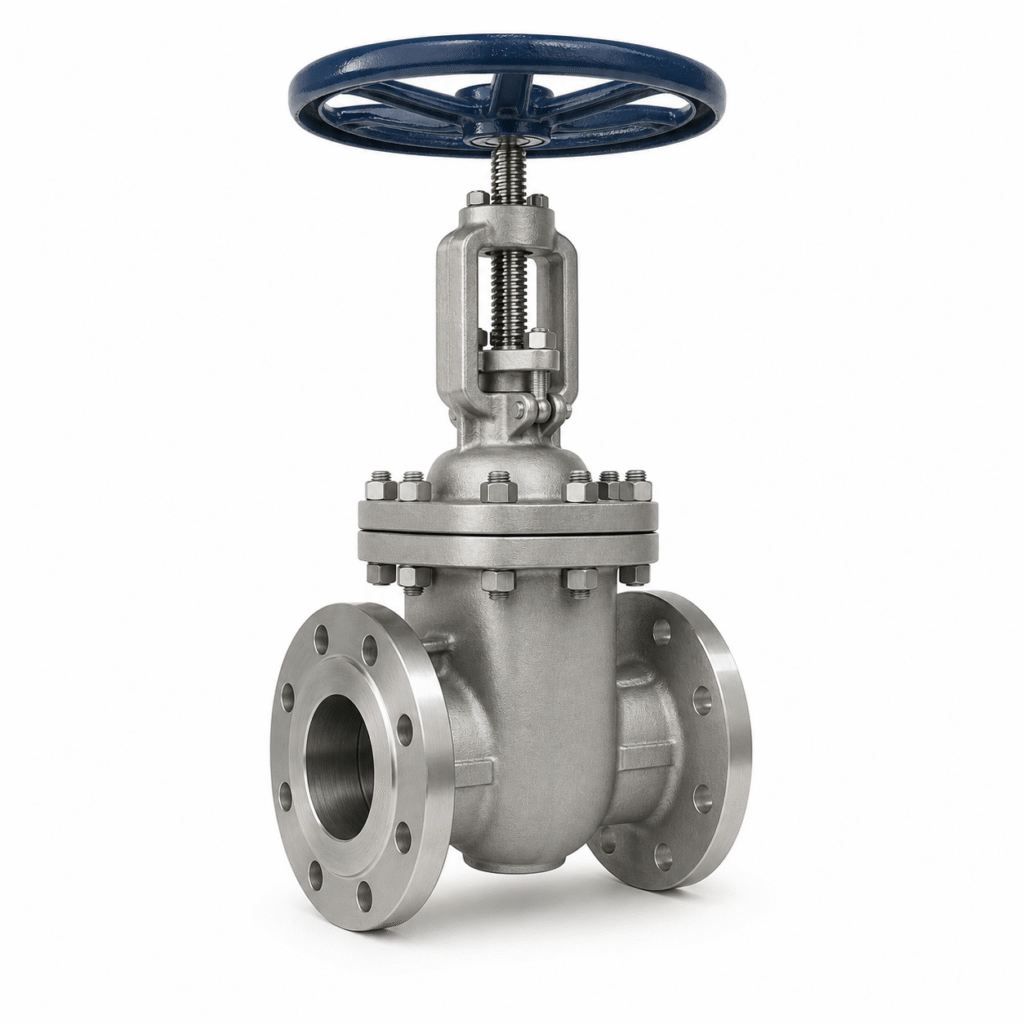
Клиновая задвижка из нержавеющей сталиКлапан-бабочка с тройным смещением из нержавеющей стали
Связанные Посты
ASTM A182 F51 против фланцев F60: Объяснение S31803 и S32205
Сравнить дуплексные фланцы ASTM A182 F51 и F60, including S31803/S32205…
UNS S32750 и фланцы S32760: АСТМ А182 Ф53 или Ф55?
Сравнить супердуплексные фланцы S32750 и S32760, включая ASTM A182…

Может ли фланцевое соединение PN16 соответствовать классу ASME? 150 Клапан?
Может ли фланец PN16 соответствовать стандарту ASME класса 150?…
Может RU 1092-1 Сопряжение типа B1/B2 с фланцами с выступом по ASME?
Может RU 1092-1 Сопряжение типа B1 или B2 с…