
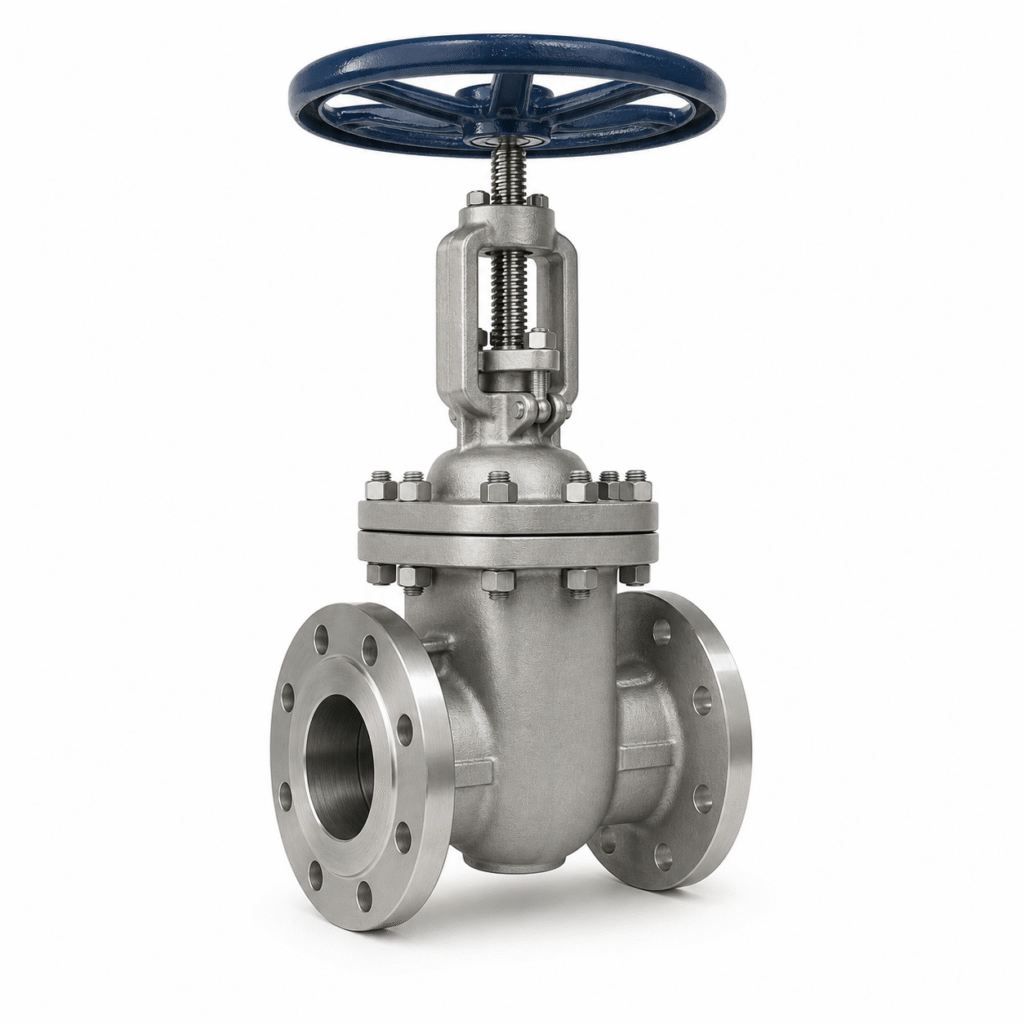
Шесть причин повреждения уплотнительной поверхности клапана
Прямой ответ
The six main causes of valve sealing surface damage are poor manufacturing quality, incorrect valve selection or operation, chemical and electrochemical corrosion, erosion or cavitation, mechanical damage, and fatigue or material aging. These mechanisms often interact, so a reliable investigation must review the valve design, материал, process conditions, operating history and inspection evidence together.
Valve sealing surfaces control isolation, regulation and flow direction by forming a closure between the disc, ball, plug, wedge or other closure member and its seat. Because these surfaces are directly exposed to the process medium and repeatedly loaded during operation, they can suffer corrosion, erosion, adhesive wear, indentation, cracking and loss of finish. Even a small damaged area can increase leakage and operating torque or prevent the valve from shutting off as intended.
Valve sealing surface damage can be divided broadly into avoidable damage and service-related deterioration. Avoidable damage may result from unsuitable design, poor manufacturing, incorrect material selection, improper installation, operation outside the intended duty or inadequate maintenance. Service-related deterioration develops under normal exposure to pressure, температура, fluid chemistry, suspended solids and operating cycles. Normal deterioration is expected, but its rate can often be reduced through better specification and control.
Key takeaways
- A valve selected for isolation should not automatically be used for throttling.
- Seat leakage can result from body or trim geometry, not only from the seat material itself.
- Corrosion, erosion and mechanical wear frequently reinforce one another.
- A pressure test verifies defined acceptance criteria at the test conditions; it does not guarantee unlimited service life.
Valve sealing surface damage at a glance
| Damage mechanism | Typical evidence | Common contributing factor | Useful verification |
|---|---|---|---|
| Manufacturing defect | Cracks, porosity, inclusions, uneven hardfacing or incorrect hardness | Poor welding, термическая обработка, machining or process control | Visual inspection, PT/MT, hardness checks, dimensional records and material traceability |
| Incorrect selection or operation | Wire drawing, localized washout, distorted seat or repeated impact marks | Throttling with an isolation valve, excessive closing force or unstable flow | Valve data sheet, operating history, actuator settings and process review |
| Corrosion | Pitting, general metal loss, selective attack or deposits | Incompatible alloy, galvanic couple or changing fluid chemistry | Проверка материала, corrosion analysis and fluid sampling |
| Erosion or cavitation | Directional grooves, roughened surface, honeycomb pitting or sharp-edged metal loss | High velocity, solids, flashing or collapsing vapor bubbles | Flow calculation, pressure profile, valve sizing and damage morphology |
| Mechanical damage | Scratches, galling, dents, scoring or embedded debris | Misalignment, trapped particles, poor finish or inadequate lubrication | Disassembly inspection, alignment and surface-finish measurement |
| Fatigue or aging | Cracks, spalling, delamination, hardening or loss of elasticity | Cyclic loads, thermal cycling or polymer degradation | Cycle history, crack examination and material-condition assessment |
1. Poor sealing-surface manufacturing quality
Manufacturing defects may be introduced during casting, forging, hardfacing, welding, термическая обработка, grinding, lapping or final assembly. Cracks, pores, slag inclusions and lack of fusion can interrupt the sealing band or create initiation points for corrosion and fatigue. Dimensional errors may prevent uniform seat contact even when the surface initially appears smooth.
Hardfaced seats require particular control. The deposited alloy, процедура сварки, preheat, interpass temperature, heat input and post-weld treatment influence hardness, dilution and cracking risk. Excessive dilution can reduce the corrosion and wear resistance of the hardfacing. Incorrect heat treatment can make a sealing surface too soft to resist wear or too hard and brittle for the applied loading.
Surface finish must be appropriate for the seat design and material pair. Roughness that is too high can create leakage paths and accelerate adhesive wear; an unsuitable polishing method can round critical geometry or conceal defects. Manufacturers should verify the actual contact band, concentricity, flatness or spherical geometry as applicable rather than relying only on a generic machining tolerance.
2. Incorrect selection, installation or operation
A common cause of premature damage is using a valve outside its intended function. A wedge gate valve is generally designed for fully open or fully closed isolation. Holding it partially open can expose the wedge and seat to high local velocity, vibration and unstable loading. A properly engineered globe or control valve is usually more suitable where continuous throttling is required, but its trim, падение давления, cavitation risk and actuator must still be sized for the process.
Excessive closing thrust does not necessarily improve tightness. It may indent soft seats, distort components, overload stems or create high contact stress on a narrow sealing band. Closing too quickly can also increase hydraulic transients or impact. Наоборот, insufficient travel, incorrect limit-switch settings or trapped debris may prevent complete closure and produce a high-velocity leakage jet across the seat.
Installation errors such as flange misalignment, pipe strain, incorrect flow direction, dirty piping or poor welding practice can deform the valve or contaminate the sealing surfaces. Maintenance errors—including incorrect lapping, mixed trim parts, unsuitable lubricants and reused damaged gaskets—can return a valve to service with the original failure mechanism still active.
3. Chemical and electrochemical corrosion
Chemical corrosion occurs when the process medium reacts directly with the sealing-surface material. General attack can gradually remove the finish, while pitting, crevice corrosion or selective attack can create localized leakage paths. Temperature, концентрация, загрязняющие вещества, аэрация, deposits and shutdown conditions can change the corrosion rate significantly.
Electrochemical corrosion involves anodic and cathodic areas in the presence of an electrolyte. Dissimilar materials in the seat, closure member and body can create a galvanic couple. Oxygen-concentration cells, щели, deposits and differences in local chemistry can also produce potential differences, causing preferential attack at the anodic area.
Material selection must consider the complete trim system rather than the nominal body grade alone. A corrosion-resistant body does not guarantee that the seat overlay, ball, disc, stem, spring or fasteners are compatible with the medium. Positive material identification helps confirm alloy identity but does not replace a corrosion assessment, heat-treatment review or verification of surface condition.
4. Erosion, flashing and cavitation
Erosion is the progressive removal of material by moving fluid, entrained solids or droplets. Suspended particles can strike the sealing band and create directional grooves or localized pits. A small initial leak may concentrate velocity through a narrow gap, producing wire drawing that enlarges the leakage path each time the valve is exposed to differential pressure.
Flashing and cavitation are related to vapor formation but produce different downstream conditions. Flashing occurs when liquid pressure falls below vapor pressure and remains low enough for vapor to continue downstream. Cavitation occurs when vapor bubbles form in a low-pressure zone and then collapse after pressure recovers. Bubble collapse near metal surfaces can create intense local impacts and the characteristic rough, pitted appearance associated with cavitation damage.
Chemical corrosion and erosion can act together. Corrosion removes a protective film, exposing fresh metal, while erosion prevents the film from reforming. The combined metal-loss rate can be much higher than either mechanism considered separately. Correct valve sizing, staged pressure reduction, suitable trim geometry and compatible hardfacing are common mitigation routes, subject to a full process review.
5. Mechanical damage and adhesive wear
During opening and closing, sealing surfaces can be scratched, bruised, scored or compressed. Hard particles trapped between the surfaces may produce a deep radial scratch or embed in a softer seat. Misalignment can concentrate load on one edge, while loose guides, bearings or hinge components may allow the closure member to strike the seat unevenly.
At high contact pressure, two metallic surfaces may experience adhesive wear or galling. Microscopic junctions form between surface asperities and tear as the parts move relative to each other. Higher roughness, poor material pairing, inadequate surface treatment and unsuitable lubrication can increase the risk. Severe galling can raise operating torque and transfer material from one sealing surface to the other.
Check valves are particularly sensitive to impact and disc dynamics. Негабаритность, low flow velocity, rapid flow reversal or an unsuitable installation orientation can cause unstable motion and slam. The resulting repeated impact may dent the seating band, loosen components or initiate fatigue cracking. Hydraulic behavior should therefore be considered during selection, not after damage appears.
6. Fatigue damage and material aging
Repeated pressure, temperature and mechanical loads can initiate fatigue cracks even when each individual load is below the material’s short-term strength. Cracks often start at stress concentrations, hardfacing defects, sharp geometry, corrosion pits or previously repaired areas. Continued cycling may produce spalling or delamination of an overlay and gradual loss of the sealing band.
Thermal cycling can create differential expansion between the base material and hardfacing or between different trim materials. If the valve is operated before temperatures stabilize, the sealing geometry and required operating force may differ from cold conditions. Thermal binding and repeated hot-to-cold transitions deserve special attention in high-temperature isolation service.
Elastomeric and polymeric seats age differently from metallic seats. Heat, кислород, radiation, decompression, chemical exposure and time can cause hardening, swelling, softening, cracking or permanent compression set. The material may appear acceptable during a static inspection yet lose resilience or strength in service. Storage life and operating life should follow the qualified material and supplier recommendations.
How to prevent valve sealing surface damage
- Define the real duty: record fluid composition, solids, давление, температура, differential pressure, minimum and maximum flow, cycling and required leakage performance.
- Select the correct valve type: distinguish isolation, throttling, non-return and control duties instead of choosing by line size alone.
- Specify compatible materials: review the body, seat, closure member, hardfacing, stem, packing and fasteners as one material system.
- Control manufacturing: define welding, термическая обработка, твердость, dimensional, surface-finish and nondestructive-examination requirements where applicable.
- Keep the piping clean: flush fabrication debris and protect open ends during storage and installation.
- Set the actuator correctly: verify travel stops, limit switches, torque or thrust settings, closing speed and fail action.
- Test to the specified standard: shell and closure testing should follow the ordered valve standard, edition and acceptance criteria using a safe approved procedure.
- Inspect damage morphology: document the location, direction and appearance of damage before grinding, lapping or cleaning removes evidence.
- Correct the root cause: repairing the seat without addressing corrosion, cavitation, misalignment or operating practice will often lead to recurrence.
Часто задаваемые вопросы
Can a damaged valve sealing surface be repaired by lapping?
Minor finish defects may sometimes be corrected by an approved lapping process, but deep pitting, cracks, distortion, severe galling or loss of hardfacing requires engineering assessment. Lapping must not remove material beyond dimensional or contact-band limits.
Why should a gate valve not be used for throttling?
Partial opening can expose the wedge and seats to concentrated velocity, vibration and uneven loading. These conditions may cause erosion, wire drawing and guide damage. Use the valve only for duties covered by its qualified design.
What is the difference between shell testing and seat testing?
Shell testing evaluates the integrity of the pressure-containing boundary under defined conditions. Closure or seat testing evaluates leakage across the closed obturator. Passing one does not automatically demonstrate compliance with the other.
How can cavitation damage be distinguished from corrosion?
Cavitation often creates rough, closely spaced pits in pressure-recovery zones, while corrosion morphology depends on the material and environment. Because mechanisms can overlap, confirm the diagnosis with flow conditions, metallurgy, deposits and laboratory evidence.
Explore related industrial valve products
Review the intended isolation or throttling duty, класс давления, body and trim material, seat design, leakage requirement and inspection plan before requesting a quotation.
Клиновая задвижка из нержавеющей сталиШаровой клапан из нержавеющей стали
Связанные Посты
ASTM A182 F51 против фланцев F60: Объяснение S31803 и S32205
Сравнить дуплексные фланцы ASTM A182 F51 и F60, including S31803/S32205…
UNS S32750 и фланцы S32760: АСТМ А182 Ф53 или Ф55?
Сравнить супердуплексные фланцы S32750 и S32760, включая ASTM A182…

Может ли фланцевое соединение PN16 соответствовать классу ASME? 150 Клапан?
Может ли фланец PN16 соответствовать стандарту ASME класса 150?…
Может RU 1092-1 Сопряжение типа B1/B2 с фланцами с выступом по ASME?
Может RU 1092-1 Сопряжение типа B1 или B2 с…