
Paslanmaz Çelik Boru Flanş Pazarı: 7 Türlere İlişkin Veriye Dayalı Bilgiler, Kullanım Alanları, ve Gizli Avantajlar
Paslanmaz çelik boru flanşı, modern proses borularında kritik bir bileşen olmaya devam ediyor, especially as reliability, korozyon direnci, and compliance demands rise across global industry. Grand View Araştırmasına göre (2024), küresel endüstriyel flanş pazarı şu şekilde değerlendi: $5.8 milyar 2023 ulaşılması öngörülüyor ve $7.2 milyar tarafından 2030, which makes flange selection a strategic procurement decision rather than a routine commodity purchase.
For engineers and buyers, the most intriguing stainless steel flange discussion is no longer just about material cost. It is about lifecycle value, basınç bütünlüğü, weld performance, and how to choose the right flange for a specific pipe system, standart, and service condition.
Industrial Demand for Stainless Steel Pipe Flange Solutions Is Accelerating
Industrial operators continue to shift toward longer-life piping components because shutdowns are expensive and unplanned leakage creates direct operational risk. Statista'ya göre (2024), Petrol ve gaz endüstrisi yaklaşık olarak 35% küresel flanş tüketiminin, which highlights how strongly critical-service sectors influence flange purchasing trends.
Bölgesel üretim kapasitesi kaynak bulma stratejisini de şekillendiriyor. IBISWorld'e göre (2024), Asya-Pasifik'in hesapları 45% küresel flanş üretimi, Çin'in en büyük üretici olduğu, which gives global buyers access to broad size ranges, custom machining, and competitive lead times.
These numbers explain why procurement teams increasingly compare not only price but also testing capability, raw material traceability, ve ihracat belgeleri. In high-consequence industries such as petrochemical and power generation, a flange failure can stop production lines and trigger costly reinspection programs.
Dahası, stainless steel continues to gain preference where chloride exposure, hijyenik hizmet, or elevated temperature performance matter. Mordor İstihbaratı (2024) reports that demand for corrosion-resistant alloys in industrial processing is growing steadily as operators extend plant life and reduce maintenance intervals.
That trend supports the Hidden advantages of Stainless Steel over lower-cost alternatives. Stainless grades such as 304, 316, 316L, 904L, 2205, Ve 2507 deliver a strong balance of corrosion resistance, dayanıklılık, and weldability when matched correctly to service media and temperature.
As materials scientist Dr. Helen Carter, a corrosion consultant, eyaletler: “Selecting a flange only by initial cost ignores the full economics of corrosion, replacement labor, and process interruption.” Her point reflects what many EPC contractors already know. Material selection errors often cost far more than the original component price.
At the supplier level, capability matters as much as catalog breadth. SASA FLANGE serves buyers in Oil & Gaz, Petrokimya, Güç, Deniz, Su Arıtma, and Construction with stainless steel flanges and fittings produced to ANSI B16.5, ANSI B16.47, ASME B16.9, DIN, JIS, GOST, ve TR 1092 gereksinimler.
İle ISO 9001:2015 ve PED 2014/68/EU sertifikaları, SASA FLANGE supports export-oriented projects that require controlled quality systems and pressure-equipment compliance. Ek olarak, the company offers materials from standard 304 and 316L to duplex, nikel alaşımı, titanyum, and specialty corrosion-resistant grades.
For buyers evaluating Flanges? supply partners, the market increasingly rewards manufacturers that combine CNC machining, PMI, dimensional control, Ve EN 10204 3.1 dokümantasyon. Öyleyse, supplier assessment should include not only price and stock but also metallurgical consistency and responsiveness to custom drawings.
Paslanmaz Çelik Boru Flanş Çeşitleri Nasıl Seçilir, Malzemeler, ve Basınç Değerleri
The best way to Choose a stainless steel pipe flange is to start with service conditions, not product category names. Basınç sınıfı, corrosion medium, sıcaklık, flanş kaplama, connection method, and mating Pipe specification all influence which Flange design will actually perform.
Buna göre ASME B16.5, standard flange dimensions, basınç-sıcaklık değerleri, toleranslar, and marking requirements create the baseline for safe interchangeability in NPS 1/2 başından sonuna kadar 24. For larger diameters, ASME B16.47 becomes the governing dimensional standard for many heavy industrial systems (ASME, 2023).
Material grade is the next selection gate. ASTM A182 covers forged or rolled alloy and stainless steel pipe flanges and forged fittings for high-temperature service, sırasında ASTM A240 addresses plate, sheet, and strip for pressure vessels and general applications (ASTM, 2023).
Pazar Araştırması Geleceğine Göre (2024), corrosion-related maintenance still accounts for billions of dollars in annual industrial spending worldwide. Öyleyse, correct grade selection is one of the clearest Hidden advantages available to owners seeking lower lifecycle cost.
As piping engineer Mark Ellison, PE, eyaletler: “A 316L flange is not automatically the right answer; chloride concentration, crevice conditions, and weld procedure determine whether duplex or higher-alloy materials are more appropriate.” That quote captures the reality behind Stainless Steel selection in modern process plants.
The most common stainless steel flange Types include:
- Weld neck flange for high pressure, yüksek sıcaklık, and cyclic duty.
- Slip-on flange for moderate service where easier alignment and lower fabrication cost are preferred.
- Socket weld flange for smaller bore, high-pressure systems.
- Threaded flange for low-pressure or non-weld applications.
- Blind flange for isolation, test, ve gelecekteki genişleme noktaları.
- Lap joint flange for systems requiring frequent dismantling.
Material options also vary by corrosion environment and design code:
- 304 and 304L for general corrosion resistance and cost-effective utility service.
- 316 and 316L for better pitting resistance in chloride-bearing environments.
- 904L for aggressive acid service and enhanced corrosion resistance.
- 2205 duplex for higher strength and improved chloride stress corrosion cracking resistance.
- 2507 super duplex for severe offshore and seawater applications.
- İnkonel, Monel, Hastelloy, and Titanium for specialized chemical and high-temperature service.
Pressure class selection requires equal discipline. Common ASME classes include 150, 300, 600, 900, 1500, Ve 2500, but the allowable pressure depends on material group and temperature. A Class 300 stainless steel pipe flange does not perform identically across all alloys at elevated temperature, so buyers should verify pressure-temperature tables rather than rely on naming alone.
Facing style also affects leak integrity. Yükseltilmiş yüz, düz yüz, and ring type joint geometries serve different gasket systems and bolt-loading strategies, especially in refinery and high-pressure hydrocarbon service.
Surface finish, concentric serration, and dimensional tolerance directly influence gasket seating. According to NACE guidance and field experience, improper flange finish can accelerate leakage risk in corrosive environments even when the alloy itself is adequate (NACE, 2023).
In practical sourcing terms, buyers should request the following before release:
- Material test certificates to EN 10204 3.1.
- Heat number traceability and positive material identification.
- Dimensional inspection reports.
- Pressure class and standard confirmation.
- Face finish verification and marking details.
- Any required NACE MR0175 or project-specific compliance.
SASA FLANGE supports these procurement requirements with manufacturing in 304, 316, 316L, 904L, 2205, 2507 ve diğer birinci sınıf kaliteler. Gelişmiş CNC işleme ve kapsamlı kalite testleri ile desteklenmektedir, the company can supply standard and custom Flanges from 1/2 inç ila 60 inch for international industrial projects.
Another intriguing point for buyers is that fittings and flanges should be sourced as a coordinated package when possible. Matching metallurgy, boyut standardı, and documentation across elbows, tişört, redüktörler, büyük harfler, and flanges reduces mismatch risk during fabrication and site installation.
Standartlar, Uyumluluk, and Inspection Requirements for Stainless Steel Pipe Flange Procurement
Compliance is not paperwork after production. It is a design and manufacturing framework that begins with the specification stage and continues through forging, işleme, denetleme, işaretleme, paketleme, and final shipment.
For most international projects, the core standards matrix includes ASME dimensional standards, ASTM malzeme standartları, and regional references such as DIN and EN 1092. In Europe, PED 2014/68/EU compliance often becomes essential for pressure equipment placed on the market within the EU.
The main standards relevant to stainless steel pipe flange procurement include:
- ASME B16.5 for pipe flanges and flanged fittings.
- ASME B16.47 for large diameter steel flanges.
- ASME B16.9 for factory-made wrought buttwelding fittings.
- ASTM A182 for forged stainless and alloy flanges.
- ASTM A240 for stainless steel plate products.
- EN 1092 for European flange dimensions and pressure designations.
- DIN and JIS standards for regional compatibility requirements.
- NACE MR0175 for sour service material considerations.
According to ISO (2023), certified quality systems improve process consistency by standardizing control points from purchasing through final inspection. That is why many EPC firms prefer suppliers with ISO 9001:2015 certification and documented nonconformance procedures.
For critical service, buyers often compare standards and documentation in a structured way:
- ASME and ASTM dominate North American and many global energy projects.
- DIN and EN are common in European and export-driven process systems.
- JIS is frequently specified for Japanese industrial installations and related supply chains.
- NORSOK and DNV references may apply in offshore and marine environments.
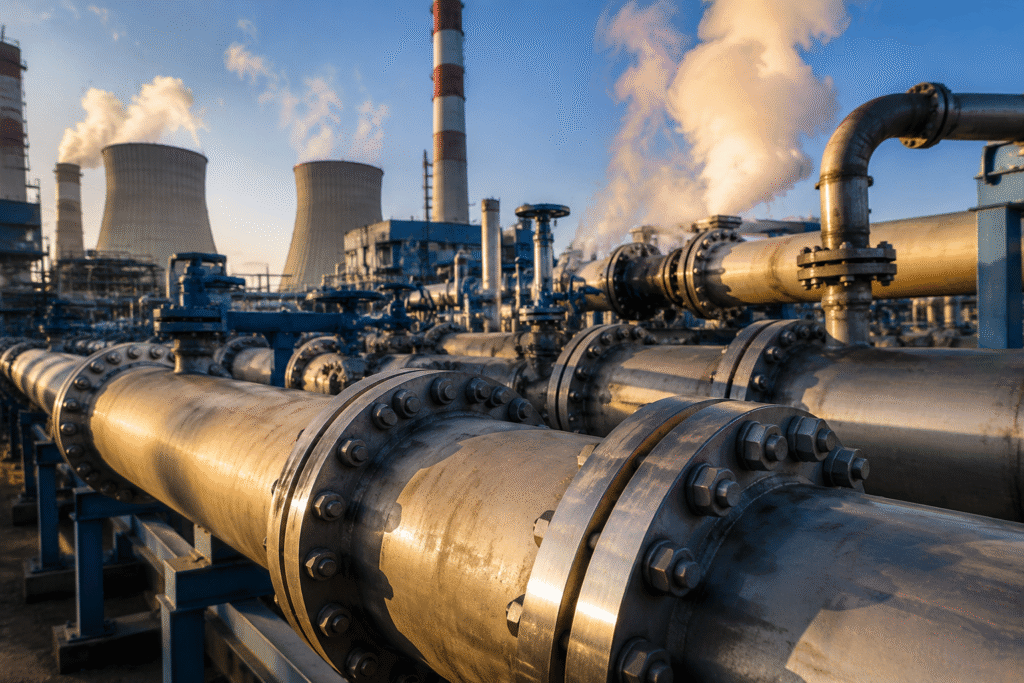
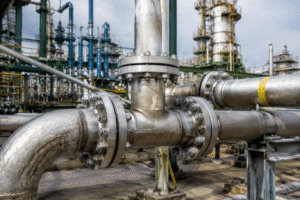
Image alt text recommendation: stainless steel pipe flange dimensions and inspection under ASME standards.
Inspection scope should reflect service criticality. Standard checks usually include chemical composition review, mekanik özellikler, visual inspection, dimensional verification, and marking validation, while high-specification orders may also require PMI, ferrite testing, hardness testing, ultrasonik test, or third-party witness inspection.
According to DNV guidance for offshore components, documentation quality and traceability are as important as nominal material strength because offshore maintenance and replacement costs are disproportionately high (DNV, 2023). Öyleyse, marine and offshore buyers often specify enhanced traceability and corrosion-resistant grades such as 2205 veya 2507.
For chemical processing and sour service, NACE compatibility should be checked early. While not every stainless steel pipe flange falls directly under sour-service criteria, the environment can quickly eliminate otherwise common grades if chlorides, H2S, or temperature combine unfavorably.
SASA FLANGE integrates ISO 9001:2015, PED 2014/68/AB, ve AD 2000 quality frameworks into export production. This supports procurement teams that need not only compliant Flanges but also inspection reports, MTC'ler, and technical responsiveness during project execution.
Because many competitor pages stop at general material descriptions, compliance depth becomes a real differentiator. A supplier that can discuss ASTM grades, flange pressure classes, welding implications, and EN shipment documentation adds measurable value during bid qualification and vendor approval.
Uygulamalar, Kullanım Alanları, and Selection Criteria Across Oil, Gaz, Kimyasal, Güç, and Marine Systems
Understanding actual Uses helps buyers avoid over-specification and under-specification at the same time. The strongest selection strategy links alloy grade, flanş tipi, and standard to a specific process condition rather than treating all Stainless components as interchangeable.
Petrol ve gazda, weld neck and blind flanges dominate critical service because they offer strong structural performance and reliable gasket loading. Statista'ya göre (2024), this sector represents about 35% küresel flanş tüketiminin, so lessons from upstream, orta akıntı, and refining projects strongly shape best practices.
In petrochemical plants, 316L often becomes the starting point for moderate chloride service, while 904L, dubleks, or nickel alloys may be necessary for more aggressive media. Enerji üretiminde, thermal cycling and pressure swings place a premium on forged quality, bolt loading consistency, and weld integrity.
Marine and shipbuilding projects create a different decision path. Seawater exposure, splash zones, and high humidity can push buyers toward duplex or super duplex options where standard austenitic grades may suffer pitting or crevice corrosion over time.
Common application examples include:
- Oil and gas gathering lines, separators, and process skids.
- Petrochemical transfer lines and reactor support systems.
- Power plant steam, yoğunlaşma, and auxiliary systems.
- Shipbuilding ballast, cooling, and process piping.
- Water treatment and desalination systems.
- Construction and industrial utility piping.
When buyers ask what Hidden advantages stainless steel flanges offer, the answer usually includes reduced maintenance, cleaner internal surfaces, stable mechanical performance, and stronger resistance to oxidation or corrosion compared with carbon steel in the right service. Fakat, the right service condition is the key qualifier.
Selection criteria should include:
- Akışkan kimyası, klorürler dahil, asitler, and sulfides.
- Operating and design temperature.
- Operating and design pressure.
- Pipe size, duvar kalınlığı, and schedule compatibility.
- Flange class, karşı karşıya, and gasket system.
- Weld procedure and fabrication environment.
- Required standards, sertifikalar, and inspection level.
- Target service life and maintenance philosophy.
Örneğin, a 2-inch utility water line may only need a Class 150 slip-on stainless steel pipe flange in 304L. Tersine, an offshore chemical injection line may require a weld neck flange in 2205 veya 2507 with project-specific testing, PMI, and third-party witness inspection.
According to a 2024 industrial maintenance survey cited by Market Research Future, operators increasingly prioritize total cost of ownership over lowest bid price for corrosion-sensitive components. Sonuç olarak, procurement teams are more willing to specify premium alloys when downtime and replacement labor outweigh initial savings.
Custom manufacturing capability also affects project outcomes. SASA FLANGE offers custom sizes, özel malzemeler, and coordinated supply of flanges plus buttweld fittings such as elbows, tişört, redüktörler, ve büyük harfler, which simplifies sourcing for packaged systems and multi-line projects.
Serving 50+ Petrol genelindeki ülkeler & Gaz, Petrokimya, Güç, ve Denizcilik endüstrileri, SASA FLANGE supports both standard and drawing-based orders. That matters when buyers need non-standard bores, drilled patterns, özel kaplamalar, or alloy combinations outside commodity stock programs.
Geleceğe Bakış, Pricing Logic, and Strategic Buying Recommendations
The near-term outlook for stainless steel pipe flange demand remains positive because infrastructure renewal, energy investment, tuzdan arındırma, and process modernization continue to support flange-intensive projects. Grand View Araştırmasına göre (2024), the market is expected to reach $7.2 milyar tarafından 2030, which indicates sustained procurement activity across global industrial sectors.
Aynı zamanda, pricing will remain sensitive to nickel, molibden, and alloy surcharge fluctuations. Öyleyse, buyers should review not only the base quote but also material validity periods, substitute restrictions, machining tolerances, and required certification scope.
As industry analyst Robert Hayes notes: “The most resilient sourcing programs combine qualified suppliers, clear standards, and early engineering review rather than waiting until fabrication is already delayed.” That recommendation is especially relevant for engineered Flanges where project deviations create costly rework.
Strategic recommendations for buyers include:
- Standardize preferred materials by service category.
- Prequalify suppliers by certification, test, and export capability.
- Bundle flange and fitting packages to reduce compatibility risk.
- Confirm standards and face types before PO release.
- Request EN 10204 3.1 certificates and PMI for critical alloys.
- Consider lifecycle cost, not only ex-works price.
There is also a content lesson hidden in competitor analysis. Many suppliers discuss Stainless Steel broadly, but fewer explain how to Choose among flange Types, basınç sınıfları, and alloy grades in practical project terms. Buyers increasingly reward suppliers who provide technically credible guidance with fast commercial response.
For procurement managers seeking a reliable source of stainless steel pipe flange products, technical documentation, and custom manufacturing support, early engagement shortens sourcing cycles and reduces risk. For projects that require ASME, ASTM, DIN, or EN-compliant Flanges and fittings, iletişim kurmak SASA FLANGE during specification review can improve both technical clarity and purchasing efficiency.
Sıkça Sorulan Sorular
Paslanmaz çelik flanşlar ne için kullanılır??
●Boruyu bağlamak için paslanmaz çelik flanşlar kullanılır, vanalar, pompalar, and pressure equipment in systems that require corrosion resistance, basınç bütünlüğü, and reliable maintenance access.
●Statista'ya göre (2024), Petrol ve gaz endüstrisi yaklaşık olarak 35% küresel flanş tüketiminin, which shows how important flanged joints are in critical process applications.
●They are commonly specified in petrochemical, deniz, su arıtma, gıda işleme, and power generation systems where carbon steel may corrode too quickly.
●Common uses include line connection, ekipman izolasyonu, blind end closure, muayene erişimi, and transitions between piping components built to ASME B16.5 veya TR 1092 boyutlar.
●For projects requiring certified materials, boyutsal tutarlılık, ve ihracat belgeleri, gibi yerleşik üreticilerle çalışmak SASA FLANGE helps ensure the flange matches the service duty and applicable standard.
Hangi flanşlar paslanmaz çelikten yapılmıştır??
●The main stainless steel flange types are weld neck, bağcıksız, kör, soket kaynağı, dişli, and lap joint flanges, and each serves a different mechanical or installation purpose.
●ASME B16.5 defines the dimensions and pressure-temperature framework for many stainless steel flanges from NPS 1/2 başından sonuna kadar 24, sırasında ASTM A182 commonly governs forged stainless materials.
●These flanges can be produced in 304, 304L, 316, 316L, 904L, 2205, 2507, and specialty alloys depending on corrosion level, çalışma sıcaklığı, and design pressure.
●Weld neck flanges are usually preferred for high-pressure or cyclic service, whereas slip-on flanges are often chosen for lower-cost fabrication in less severe conditions.
●If a project includes custom drilling, non-standard bores, or higher-alloy materials, sourcing from a manufacturer such as SASA FLANGE can simplify specification matching and quality control.
Do they make stainless steel pipe fittings?
●Evet, manufacturers produce stainless steel pipe fittings such as elbows, tişört, redüktörler, and caps to match piping systems that use stainless steel flanges and welded pipe.
●ASME B16.9 is the key dimensional standard for many factory-made wrought buttwelding fittings, and ASTM material standards define the applicable stainless grades for service conditions.
●IBISWorld'e göre (2024), Asya-Pasifik'in hesapları 45% küresel flanş üretimi, and that same manufacturing ecosystem strongly supports large-scale stainless fitting supply as well.
●Coordinating fittings and flanges in the same alloy family reduces mismatch risk during welding, imalat, and final inspection, especially on multi-line industrial packages.
●For buyers who need a combined supply of stainless steel flanges and fittings with EN 10204 3.1 sertifikalar, it is practical to work with integrated suppliers like SASA FLANGE.
What is the strongest type of piping flange?
●In most industrial piping systems, the weld neck flange is considered the strongest standard flange type because its tapered hub distributes stress more effectively than simpler designs.
●Its strength also depends on the material grade, duvar kalınlığı, weld quality, and pressure class, so a duplex weld neck flange can outperform an austenitic slip-on flange by a wide margin in demanding service.
●ASME B16.5 pressure classes such as 600, 900, 1500, Ve 2500 are commonly used where elevated pressure and temperature require stronger flange construction and tighter bolting control.
●As piping engineer Mark Ellison, PE, eyaletler: “Geometry, alloy strength, and welding practice together determine flange reliability, not type name alone.”
●For critical hydrocarbon, açık deniz, or high-temperature duties, engineers should verify code compliance, malzeme sertifikası, and design calculations before selecting the strongest practical flange option.
How do I choose between 304, 316, 904L, and duplex stainless steel flanges?
●Seçmek 304 or 304L for general industrial service, 316 or 316L for better chloride resistance, 904L for aggressive chemical environments, and duplex grades for higher strength plus improved resistance to chloride stress corrosion cracking.
●Pazar Araştırması Geleceğine Göre (2024), corrosion-related maintenance continues to drive significant industrial spending, so selecting the right alloy at the start often lowers total ownership cost.
●Factors such as chloride concentration, proses sıcaklığı, acidity, crevice conditions, and fabrication method should guide final alloy choice rather than price alone.
●In seawater, açık deniz, or sour environments, duplex grades such as 2205 Ve 2507 are often more suitable than standard austenitic stainless steel, although project conditions must still be reviewed carefully.
●For specification support on alloy selection, basınç sınıfı, and documentation requirements, buyers should consult a qualified manufacturer before issuing the purchase order.
What standards and certificates should I request when buying stainless steel pipe flanges?
●En azından, buyers should request the applicable dimensional standard, malzeme özellikleri, basınç sınıfı, Ve EN 10204 3.1 material test certificate for each stainless steel pipe flange order.
●Common references include ASME B16.5, ASME B16.47, ASTM A182, ASTM A240, EN 1092, and project-specific requirements such as NACE MR0175 or PED 2014/68/EU compliance.
●According to ISO (2023), certified quality systems improve process consistency by standardizing inspection and traceability controls across production stages.
●For critical service, it is also wise to request PMI, dimensional inspection reports, heat number traceability, and any third-party witness records required by the project or end user.
●When the application involves export compliance, ekşi servis, or offshore duty, a certified supplier with ISO 9001:2015 and PED experience can reduce documentation risk and approval delays.
İlgili Mesajlar
Orifis Flanşı Tanımı, Ayrıntılar ve ASME B16.36 Flanşlara Genel Bakış: Piyasa Verileri, Seçim Kılavuzu ve Uyumluluk Bilgileri
Küresel endüstriyel flanş pazarı şu şekilde değerlendi: $5.8 milyar…
Siyah Bertaraf Flanşı Pazar Rehberi: Malzemeler, 3.5″ Uyumluluk, Mutfak Lavabo Flanşları için B2B Kaynak Verileri
Mutfak armatürü alıcıları nedeniyle siyah atık flanş talebi artıyor…
Flanş Çeşitleri Kılavuzu: 2024 Veri, Standartlar, Endüstriyel Borular için En İyi Seçim Uygulamaları
Flanş türleri için küresel pazar genişlemeye devam ediyor…
3 inç flanş Satın Alma Rehberi: Piyasa Verileri, Boyutlar, Basınç Değerleri, ve Dişli Flanş Seçimi
The 3 inç flanş endüstriyel uygulamalarda kritik bir bileşen olmaya devam ediyor…