
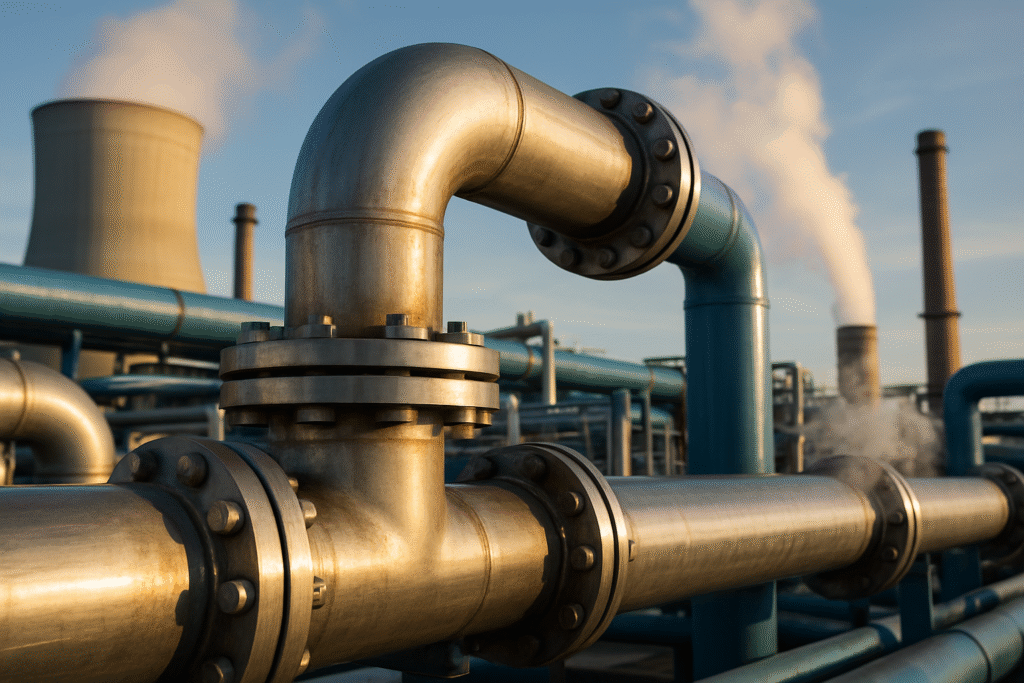
Paslanmaz Çelik Boru Flanş Pazarına Ulaşılacak $7.2 Milyar 2030: İlgi Çekici Gizli Avantajlar, Türler, Kullanım Alanları, ve Farklı Flanşlar Nasıl Seçilir?
Paslanmaz çelik boru flanşı, proses borularında en çok belirtilen bağlantı bileşenlerinden biri olmayı sürdürüyor, önemi küresel sanayi yatırımlarıyla artmaya devam ediyor. Grand View Araştırmasına göre (2024), küresel endüstriyel flanş pazarı şu şekilde değerlendi: $5.8 milyar 2023 ulaşılması öngörülüyor ve $7.2 milyar tarafından 2030.
Tedarik yöneticileri ve boru mühendisleri için, büyümenin pratik bir gerçeği yansıttığı. Paslanmaz, korozyona dayanıklı, pressure-rated flanges are still the most common choice for critical services across oil and gas, petrokimya, güç, deniz, ve su arıtma sistemleri.
Global demand trends shaping stainless steel pipe flange procurement
Industrial buyers are purchasing more engineered flange solutions because project specifications are becoming stricter. IBISWorld'e göre (2024), Asya-Pasifik'in hesapları 45% küresel flanş üretimi, Çin'in en büyük üretici olduğu.
That regional concentration matters for sourcing strategy. Teslim sürelerini etkiler, hammadde erişimi, işleme kapasitesi, and factory-direct pricing for standard and custom stainless steel pipe flange orders.
End-use demand also remains strong in heavy industry. Statista'ya göre (2024), Petrol ve gaz endüstrisi yaklaşık olarak 35% küresel flanş tüketiminin, which explains why ASME-rated forged flanges dominate many project specifications.
Dahası, corrosion management is now a board-level concern in refining, açık deniz, ve kimyasal işleme. NACE guidance continues to influence material selection where chloride attack, ekşi servis, or crevice corrosion can shorten asset life (NACE, 2023).
Sonuç olarak, buyers increasingly compare not only price, ama aynı zamanda izlenebilirlik, sertifikasyon, ve metalurji. Paslanmaz çelik boru flanşı basit görünebilir, yet the wrong grade or facing can cause leakage, bolt relaxation, or accelerated corrosion.
Many EPC contractors now favor suppliers that combine broad standards coverage with documented quality systems. İle ISO 9001:2015 ve PED 2014/68/EU sertifikaları, SASA FLANGE supports these requirements with controlled manufacturing and inspection procedures.
Ek olarak, buyers need suppliers that can support global standards without delaying project schedules. SASA FLANGE manufactures flanges in ANSI B16.5, ANSI B16.47, DIN, JIS, GOST, ve TR 1092 configurations for diverse plant and export requirements.
Market growth is also linked to infrastructure modernization. Mordor İstihbaratına göre (2024), global investment in water and wastewater treatment equipment continues to rise at more than 6% CAGR, increasing demand for stainless steel flanges and fittings in corrosion-prone systems.
Procurement teams therefore need a supplier that can align metallurgy, basınç sınıfı, ve dokümantasyon. Gelişmiş CNC işleme ve kapsamlı kalite testleri ile desteklenmektedir, SASA FLANGE serves projects requiring EN 10204 3.1 dokümantasyon, PMI, hidrostatik doğrulama, ve boyutsal kontroller.
Genel tüccarların aksine, qualified manufacturers can also advise on hidden advantages such as service life, maintenance reduction, ve çiftleşme bileşenleriyle uyumluluk. That technical support often reduces total installed cost even when the unit price is not the lowest.
Intriguing stainless steel pipe flange types, malzemeler, and hidden performance advantages
The most common flange materials are 304, 304L, 316, and 316L because they balance corrosion resistance, kaynaklanabilirlik, and commercial availability. Fakat, different services demand different grades, and engineers should never assume that all stainless flanges perform the same.
ASTM ve ASME malzeme uygulamalarına göre, forged stainless flanges are commonly supplied to ASTM A182 requirements for pressure parts, while related plate products may reference ASTM A240 for chemistry and mechanical properties (ASTM, 2024). Öyleyse, buyers should verify whether the project calls for forged or plate-derived components.
John Breen olarak, Kıdemli Boru Mühendisi, eyaletler: “A flange failure is rarely just a flange issue; it is usually a mismatch between material, basınç sınıfı, karşı karşıya, and actual process conditions.” That is why technical review should precede every bulk purchase.
The hidden advantages of a properly specified stainless steel pipe flange include lower maintenance frequency, stronger oxidation resistance, better compatibility with hygienic cleaning, and improved reliability in wet or chloride-laden service. Birçok bitkide, those gains outweigh initial material premiums within one shutdown cycle.
Material selection usually begins with corrosion mechanism and temperature range. 304 and 304L are widely used in general industrial, yiyecek, ve su uygulamaları, sırasında 316 and 316L add molybdenum for improved resistance in chloride-containing environments.
Higher-alloy grades serve more demanding conditions. Örneğin, 904L, 2205, Ve 2507 are selected for aggressive media, deniz suyuna maruz kalma, or higher strength demands, while nickel alloys such as Inconel, Monel, and Hastelloy support severe chemical and thermal service.
- 304/304L: economical and widely available for general corrosion service.
- 316/316L: better pitting resistance in chloride-bearing environments.
- 904L: stronger resistance to reducing acids and severe corrosion.
- 2205 dubleks: higher strength and improved chloride stress corrosion resistance.
- 2507 süper dubleks: preferred for marine, açık deniz, and high-chloride systems.
Flange type matters as much as material. Weld neck flanges perform best in cyclic pressure and temperature service because the tapered hub distributes stress more evenly.
Slip-on flanges are easier to align and often cost less to install, although they are generally less fatigue-resistant than weld neck designs. Threaded flanges suit low-pressure systems where welding is undesirable, while blind flanges close off line ends or vessel nozzles.
Socket weld flanges are often chosen for smaller bore, higher-pressure piping. Bindirmeli flanşlar, by comparison, help where frequent dismantling or expensive alloy stub ends justify easier alignment.
- Kaynak boyunlu flanş: yüksek basınç için en iyisi, yüksek sıcaklık, and vibration service.
- Geçmeli flanş: common for utility lines and moderate service conditions.
- Kör flanş: used for isolation, bakım erişimi, ve hidrotest.
- Dişli flanş: useful where welding is restricted or impractical.
- Soket kaynak flanşı: suitable for small-bore high-pressure systems.
- Bindirme flanşı: preferred for systems requiring frequent inspection or disassembly.
Pazar Araştırması Geleceğine Göre (2024), corrosion-resistant alloy components are seeing above-average growth in offshore and chemical processing segments due to stricter lifecycle cost analysis. That trend supports broader use of duplex and high-alloy flange grades in new projects.
Dr. olarak. Elena Markoviç, Malzeme Bilimcisi, eyaletler: “The true value of stainless selection lies in matching alloy chemistry to the process environment, not simply choosing the highest chromium number.” Başka bir deyişle, intelligent specification delivers better economics than over-specification.
Dimensions and pressure classes must also match the code design basis. ASME B16.5 covers many flanges from NPS 1/2 başından sonuna kadar 24, sırasında ASME B16.47 addresses larger diameters typically from NPS 26 başından sonuna kadar 60 (ASME, 2024).
Face type directly affects sealing performance. Raised face remains the most common in industrial service, while ring type joint is preferred for high-pressure and high-temperature applications that require a metal-to-metal seal.
For hygienic or low-pressure systems, flat face or specific gasket arrangements may be more appropriate. Öyleyse, flange selection should always be evaluated together with gasket material, cıvata kalitesi, torque procedure, and flange finish.
Manufacturing quality is another differentiator. SASA FLANGE manufactures stainless steel flanges in 304, 316, 316L, 904L, 2205, Ve 2507, along with carbon steel and alloy grades, 1/2'den başlayan özel boyutlar sunuyor" 60'a kadar" rekabetçi fabrika doğrudan fiyatlandırmasıyla.
Ek olarak, serious buyers should assess machining tolerances, eğim hazırlığı, PMI yeteneği, and heat number traceability. These details become critical when supplying refinery shutdowns, açık deniz kızakları, tuzdan arındırma tesisleri, or PED-governed export projects.
ASME, ASTM, DIN, and EN requirements for stainless steel pipe flange compliance
Standards are not optional in industrial procurement. They define dimensions, basınç-sıcaklık değerleri, toleranslar, malzemeler, işaretleme, and inspection requirements that protect safety and interchangeability.
For North American and many international projects, ASME B16.5 Ve ASME B16.47 remain the key dimensional standards for flanges. Material compliance often references ASTM A182 dövme paslanmaz ve alaşımlı çelik flanşlar için, while pipe fittings commonly follow ASME B16.9.
European projects frequently reference EN 1092 for flange dimensions and pressure designations. German and broader continental applications may also require DIN-based practices, while marine and project export packages can include DNV, PED, or AD 2000 dokümantasyon.
Avrupa Komisyonu PED çerçevesine göre, pressure equipment placed on the EU market must meet essential safety requirements and conformity assessment obligations (PED 2014/68/AB). Öyleyse, documentation discipline is as important as machining accuracy for international shipments.
- ASME B16.5: flange dimensions and ratings for smaller nominal pipe sizes.
- ASME B16.47: larger diameter flange dimensions and ratings.
- ASTM A182: forged or rolled alloy and stainless steel pipe flanges and fittings.
- ASME B16.9: fabrika yapımı dövme alın kaynak bağlantı parçaları.
- EN 1092: European flange system with PN designations.
- NACE MR0175: material guidance for sour service environments where applicable.
Engineers should also review corrosion-service requirements when hydrogen sulfide or chlorides are present. NACE MR0175 and related project specifications can limit hardness, alaşım seçimi, and heat treatment route for wetted components.
That is especially important in upstream oil and gas, where sour service can rapidly expose poor material decisions. Statista'ya göre (2024), oil and gas still accounts for roughly 35% küresel flanş tüketiminin, which keeps NACE and ASME compliance central to purchasing decisions.
Standartları karşılaştırırken, buyers should understand that pressure classes and PN ratings are not directly interchangeable without engineering review. Bir Sınıf 150 ASME flange is not simply the same as a PN16 or PN20 flange in every duty case.
The following comparison points help clarify specification logic:
- ASME Class system uses ratings such as 150, 300, 600, 900, 1500, Ve 2500.
- EN systems use PN designations such as PN10, PN16, PN25, ve PN40.
- Facing forms, delme desenleri, and thicknesses vary by standard.
- Material naming conventions differ between ASTM, EN, and DIN systems.
Quality documents should also be checked before order release. Tipik gereksinimler şunları içerir: EN 10204 3.1 değirmen test sertifikaları, boyutlu raporlar, PMI sonuçları, sertlik kontrolleri, hydrotest records where applicable, and coating or marking verification.
İle ISO 9001:2015, PED 2014/68/AB, ve AD 2000 sertifikalar, SASA FLANGE supports customers that require traceable documentation for global projects. Dahası, its production scope includes stainless steel flanges, karbon çelik flanşlar, alaşım flanşlar, ve dirsekler gibi boru bağlantı parçaları, tişört, redüktörler, ve büyük harfler.
Authoritative standard references should always be consulted during specification review, especially for critical lines. Buyers can verify current dimensional and code requirements directly through ASME and related standards bodies before issuing purchase orders.
How to choose the right stainless steel pipe flange for different industrial uses
The right flange choice depends on fluid chemistry, sıcaklık, basınç sınıfı, piping code, maintenance philosophy, ve toplam kurulu maliyet. Sonuç olarak, engineers should evaluate the full operating envelope instead of focusing only on material price.
Petrol ve gaz hizmetinde, 316L'de kaynak boyunlu flanşlar, dubleks, or specified alloy grades are often preferred for vibration resistance and stronger fatigue performance. Sour service or offshore duty may require NACE review, higher alloy content, and stricter testing protocols.
Petrokimya tesislerinde, media compatibility drives selection. Klorürler, kükürt bileşikleri, organik asitler, and elevated temperatures can quickly eliminate lower-grade materials from consideration.
Enerji üretimi için, thermal cycling is often the dominant factor. Öyleyse, flanş tipi, cıvata yükleme, and creep or oxidation behavior become as important as baseline corrosion resistance.
In marine and shipbuilding systems, seawater exposure often pushes engineers toward 316L, 2205, veya 2507 depending on chloride concentration and design life targets. According to DNV practice, seawater systems require careful corrosion management and material pairing to reduce galvanic and pitting risks (DNV, 2023).
Water treatment and desalination projects also demand careful alloy selection. Duplex and super duplex options often deliver better lifecycle performance in brine handling, reverse osmosis skids, and coastal installations.
- Confirm process fluid, klorür seviyesi, and pH before selecting grade.
- Match flange standard to piping code and mating component standard.
- Choose pressure class based on design pressure and temperature.
- Verify facing type with gasket design and bolt load requirements.
- Kaynak yöntemini gözden geçirin, PWHT ihtiyaçları, ve kurulum kısıtlamaları.
- Specify documentation such as EN 10204 3.1, PMI, ve sertlik testi.
Size availability is another practical consideration, especially for shutdown work and OEM production schedules. Buyers often search for stainless steel pipe flange sizes, 4 inç paslanmaz çelik boru flanşı seçenekleri, and stainless steel threaded pipe flange configurations because project timing depends on stock and machining responsiveness.
Custom manufacturing can solve unusual specification challenges. Örneğin, plants may need non-standard drilling, reducing flanges, özel kaplamalar, long weld necks, or mixed-material packages that include matching elbows, tişört, redüktörler, ve büyük harfler.
SASA FLANGE supports these requirements through flexible production and broad material coverage. Servis 50+ Petrol genelindeki ülkeler & Gaz, Petrokimya, Güç, ve Denizcilik endüstrileri, the company also provides support for forged stainless, karbon çeliği, alaşım, nikel alaşımı, and titanium flange requirements.
Procurement teams should also compare inspection capability when reviewing stainless steel pipe flange suppliers. Competitive offers are valuable, yet rework, nonconformance, and late documents can erase any apparent savings.
A disciplined sourcing process usually includes supplier qualification, çizim incelemesi, hammadde doğrulaması, sample approval where needed, and final release documentation. Buyers can review manufacturing scope and product categories at SASA FLANGE ürünler ve şirket geçmişi SASA FLANGE Hakkımızda.
Future outlook for stainless steel pipe flange buyers and strategic sourcing recommendations
The future of the stainless steel pipe flange market is closely tied to energy transition, su altyapısı, petrochemical upgrades, and regional reshoring strategies. Grand View Araştırmasına göre (2024), the market is expected to expand from $5.8 milyar 2023 ile $7.2 milyar tarafından 2030.
That trajectory means procurement pressure will remain high. Buyers should expect continued volatility in stainless input costs, longer lead times for premium alloys, and greater emphasis on traceable quality records.
IBISWorld'e göre (2024), Asia-Pacific already accounts for more than 45% küresel flanş üretimi, so supplier diversification and early scheduling are becoming more important. Dahası, material demand from oil and gas, deniz, and water treatment remains resilient across many regions.
Stratejik olarak, the most effective buyers standardize specifications where possible and reserve exotic alloys for truly demanding services. This approach reduces unnecessary cost while protecting reliability in the lines that matter most.
- Tedarikçileri ön yeterliliğe tabi tutun ISO 9001:2015 and relevant export certifications.
- Request clear compliance to ASME, ASTM, DIN, EN, ve projeye özel standartlar.
- Flanşı hizalayın, conta, cıvatalama, and pipe materials during technical review.
- Plan long-lead alloy purchases earlier than commodity stainless items.
- Yaşam döngüsü maliyetini kullan, yalnızca birim fiyat değil, for final vendor evaluation.
As industrial systems become more data-driven, sourcing decisions are becoming more evidence-based as well. Öyleyse, manufacturers that combine technical advice, broad standards coverage, and dependable documentation will gain a stronger share of global project business.
For buyers comparing different flange suppliers, the most practical next step is a technical-commercial review with an experienced manufacturer. For projects requiring certified stainless steel flanges, özel boyutlar, and responsive export support, working with SASA FLANGE can simplify qualification and procurement.
Sıkça Sorulan Sorular
Hangisi daha iyi 304 veya 420 paslanmaz çelik?
●304 stainless steel is generally better for a stainless steel pipe flange because it offers stronger corrosion resistance and broader industrial acceptance than 420 in wet and chemical environments.
●According to ASTM material practice and common industrial usage, 304 is the most common austenitic stainless grade for general piping components, sırasında 420 is a martensitic grade used more often where hardness and wear resistance are priorities.
●Engineers should choose 304 for most flange applications and request expert support from established manufacturers like SASA FLANGE when corrosion resistance, kaynaklanabilirlik, and code compliance are required.
Paslanmaz çelik flanşlar için ASME Kodu nedir?
●The main ASME dimensional standards for stainless steel flanges are ASME B16.5 Ve ASME B16.47, while material requirements are commonly linked to ASTM A182 for forged flanges.
●ASME B16.5 genellikle NPS'yi kapsar 1/2 başından sonuna kadar 24 Ve ASME B16.47 daha büyük çapları kapsar, so buyers must match the correct standard to the project size range and pressure class.
●Procurement teams should verify dimensions, karşı karşıya, basınç derecesi, and material compliance before purchase, especially for export projects that also require EN 1092 or PED documentation.
Paslanmaz çelik flanşlar ne için kullanılır??
●Boruları bağlamak için paslanmaz çelik flanşlar kullanılır, vanalar, pompalar, and equipment in systems that require leak-tight assembly, bakım erişimi, and pressure-rated performance.
●Statista'ya göre (2024), petrol ve gaz sektörü yaklaşık olarak 35% küresel flanş tüketiminin, which shows how important flanges are in critical process industries.
●Buyers should select flange type, malzeme kalitesi, and pressure class based on media, sıcaklık, and maintenance requirements to achieve safe long-term performance.
Neler var? 5 paslanmaz çelik türleri?
●Beş ana paslanmaz çelik ailesi östenitiktir, ferritik, martensitik, dubleks, and precipitation-hardening stainless steel.
●Austenitic grades such as 304 Ve 316 are the most common for industrial flange applications because they combine corrosion resistance, dayanıklılık, ve kaynaklanabilirlik.
●For chloride-rich or high-strength service, engineers should evaluate duplex or higher-alloy options and confirm the final choice against project standards and process data.
En yaygın paslanmaz çelik flanş türleri nelerdir??
●En yaygın paslanmaz çelik flanş türleri kaynak boyunludur, bağcıksız, kör, dişli, soket kaynağı, ve bindirme bağlantı flanşları.
●Weld neck and slip-on designs are the most common in industrial piping because they balance performance, kurulum pratikliği, and market availability across many sizes.
●Engineers should match flange type to pressure, döngüsel yükleme, bakım ihtiyaçları, and fabrication method before placing an order.
How do I choose stainless steel pipe flange sizes and pressure ratings?
●Stainless steel pipe flange sizes and ratings should be selected by matching nominal pipe size, takvim, tasarım basıncı, tasarım sıcaklığı, and the governing dimensional standard.
●ASME B16.5 pressure classes commonly include 150, 300, 600, 900, 1500, Ve 2500, and each class has different pressure-temperature limits depending on the material group.
●Kritik projeler için, buyers should confirm dimensional compatibility, conta oturma yeri, and certification requirements with a qualified manufacturer before final approval.
İlgili Mesajlar
Flanş Yüzü Kaplaması: Eşmerkezli ve Spiral Tırtıkların Açıklaması
Eşmerkezli ve spiral tırtılların her ikisi de işlenmiş flanş yüzeyidir…
Dubleks 2205 316L Flanşlara Karşı: Hangi Malzemeyi Seçmelisiniz?
Hızlı cevap: Dubleks 2205 flanşlar genellikle daha güçlü adaydır…

Orifis Flanşı Tanımı, Ayrıntılar ve ASME B16.36 Flanşlara Genel Bakış: Piyasa Verileri, Seçim Kılavuzu ve Uyumluluk Bilgileri
Küresel endüstriyel flanş pazarı şu şekilde değerlendi: $5.8 milyar…

Siyah Bertaraf Flanşı Pazar Rehberi: Malzemeler, 3.5″ Uyumluluk, Mutfak Lavabo Flanşları için B2B Kaynak Verileri
Mutfak armatürü alıcıları nedeniyle siyah atık flanş talebi artıyor…