
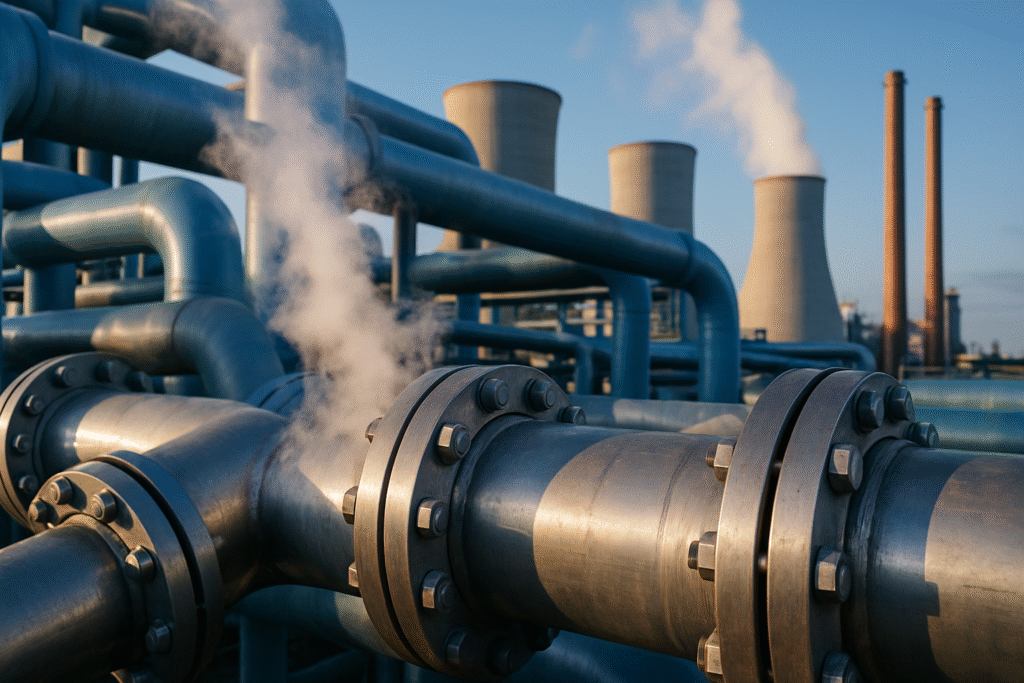
Paslanmaz Çelik Boru Flanşı Piyasa Verileri: Gizli Avantajlar, Türler, Kullanım Alanları, ve En Yaygın Flanş Nasıl Seçilir?
Grand View Araştırmasına göre (2024), küresel endüstriyel flanş pazarı şu şekilde değerlendi: $5.8 milyar 2023 ulaşılması öngörülüyor ve $7.2 milyar tarafından 2030. That growth highlights why the stainless steel pipe flange remains a strategic component for engineers and buyers who need corrosion resistance, basınç bütünlüğü, ve uzun servis ömrü.
Tedarik ekipleri için, the most intriguing question is no longer whether to use Stainless Steel Flanges, but which hidden advantages, türleri, and uses deliver the best lifecycle value. Öyleyse, understanding the most common flange materials, standartlar, and selection criteria can reduce maintenance risk and improve total installed cost.
Paslanmaz Çelik Boru Flanş Tedarikini Şekillendiren Küresel Talep Trendleri
The flange market is expanding because industrial infrastructure spending continues across energy, su, ve süreç sektörleri. IBISWorld'e göre (2024), Asya-Pasifik'in hesapları 45% küresel flanş üretimi, Çin'in en büyük üretici olduğu.
That production concentration affects lead times, hammadde tedariki, and price stability for buyers worldwide. Dahası, it explains why manufacturers with strong export systems and traceable quality procedures have gained preference in international sourcing.
End-use demand also remains highly concentrated in critical-service industries. Statista'ya göre (2024), Petrol ve gaz endüstrisi yaklaşık olarak 35% küresel flanş tüketiminin.
This figure matters because Oil & Gas projects often specify higher-grade stainless and alloy materials, sıkı test, ve tam malzeme izlenebilirliği. Sonuç olarak, buyers increasingly compare suppliers on standards compliance rather than price alone.
Paralel olarak, corrosion-driven replacement cycles are supporting stainless steel demand in coastal, kimyasal, ve su arıtma tesisleri. Mordor İstihbaratı (2024) notes that industrial stainless applications continue to grow as operators seek lower maintenance and longer operating life.
That trend favors 304, 316, 316L, dubleks, and super duplex grades in aggressive environments. Tersine, carbon steel often remains attractive for dry, non-corrosive, and cost-sensitive systems.
The most common flange choices still include weld neck, giymek, kör, soket kaynağı, dişli, ve bindirme eklemi tasarımları. Fakat, selection now depends more heavily on media chemistry, döngüsel yükleme, and inspection requirements than on simple initial cost.
Örneğin, A 4 inch stainless steel pipe flange used in offshore chlorides will require a different alloy logic than a similar size in building services. Öyleyse, technical evaluation must cover pressure class, bakan tip, sıcaklık sınırları, and corrosion allowances.
Buna göre ASME B16.5, dimensional standardization remains essential for interchangeability in NPS 1/2 başından sonuna kadar 24 flanşlar (ASME, 2023). Daha büyük çaplar için, ASME B16.47 governs many dimensions and drilling patterns.
Buyers also need to align material specifications with forged or plate-based production routes. ASTM A182 commonly applies to forged stainless steel flanges, sırasında ASTM A240 covers stainless plate products used in related fabrication (ASTM, 2024).
Manufacturers that combine machining precision with broad material availability can support faster project execution. Gelişmiş CNC işleme ve kapsamlı kalite testleri ile desteklenmektedir, SASA FLANGE supplies stainless steel flanges and fittings in 304, 316, 316L, 904L, 2205, 2507, ve diğer birinci sınıf kaliteler.
İle ISO 9001:2015 ve PED 2014/68/EU sertifikaları, SASA FLANGE supports projects requiring EN 10204 3.1 belgeler, boyutsal muayene, PMI, and hydrostatic or NDT verification where applicable. Ek olarak, the company serves buyers across Oil & Gaz, Petrokimya, Güç, Deniz, Su Arıtma, and Construction sectors in 50+ ülkeler.
Gizli Avantajlar, Yaygın Türler, and Technical Selection of Stainless Steel Pipe Flange
The hidden advantages of stainless steel pipe flange systems extend beyond basic corrosion resistance. They also include cleaner internal surfaces, daha düşük kirlenme riski, reliable weldability in common grades, and stronger long-term value in harsh service.
Pazar Araştırması Geleceğine Göre (2024), industrial buyers increasingly prioritize lifecycle cost over purchase price when specifying piping components. Öyleyse, a higher-grade stainless flange can often lower shutdown frequency and replacement expense over time.
Dr. olarak. Michael Trent, Malzeme Mühendisi ve korozyon danışmanı, eyaletler: “In chloride-bearing or cyclic-temperature service, the wrong flange alloy can fail long before the pipe does, so material matching is not optional.” That insight is especially relevant when comparing 304/304L with 316/316L or duplex grades.
The most common Stainless Steel Flanges for industrial use are well understood, yet each design has distinct mechanical and installation implications. Dahası, each flange type affects welding procedure, alignment tolerance, muayene erişimi, and pressure performance.
- Kaynak boyunlu flanş: Yüksek basınç için en iyisi, termal bisiklet, ve kritik servis çünkü konik göbek stres konsantrasyonunu azaltır.
- Flanş üzerinde kayma: Easier to align and often lower in fabrication cost, but less preferred for severe fatigue duty.
- Kör flanş: Satır sonlarını kapatmak için kullanılır, sistemleri izole et, or allow future expansion and maintenance access.
- Soket kaynak flanşı: Common in smaller bore high-pressure piping where bore alignment is controlled.
- Dişli flanş: Kaynağın kısıtlı olduğu yerlerde kullanışlıdır, though service conditions must suit threaded joints.
- Bindirme flanşı: Favored when frequent dismantling is required or when using expensive corrosion-resistant stub ends selectively.
Material grade selection is equally important because not all stainless steels perform the same way. The most common flange materials include 304, 304L, 316, 316L, 321, 347, 904L, 2205, Ve 2507.
Seviye 304 offers balanced strength, şekillendirilebilirlik, and cost for general industrial service. Fakat, seviye 316 or 316L is usually chosen when chlorides, deniz maruziyeti, or more aggressive chemical media are present because molybdenum improves pitting resistance.
For higher temperature service, stabilized or heat-resistant grades may be preferable. ASTM and ASME material rules should always be checked against actual service conditions, especially when sensitization, stres korozyon çatlaması, or sulfide exposure are possible.
NACE rehberliğine göre, chloride stress corrosion cracking risk rises materially with temperature and tensile stress in austenitic stainless steels (NACE, 2023). Öyleyse, duplex or super duplex options can be more suitable in offshore and produced-water systems.
Laura Jensen olarak, Kıdemli Boru Mühendisi, eyaletler: “The best way to Choose a flange is to treat it as a system component, not a commodity, because facing finish, cıvata yükü, conta seçimi, and metallurgy work together.” This is why experienced buyers assess the full joint assembly rather than only the flange drawing.
Pressure class and facing type must also align with the gasket and bolting package. Raised face remains the most common flange facing in refinery and process piping, while ring type joint facings serve higher-pressure, higher-integrity services.
- Common pressure classes: Sınıf 150, 300, 600, 900, 1500, 2500.
- Ortak kaplamalar: Yükseltilmiş Yüz (RF), Düz Yüz (FF), Halka Tipi Bağlantı (RTJ).
- Common inspections: PMI, dimensional check, hardness test, UT, PT, MT, hydro test review.
- Ortak belgeler: MTC EN 10204 3.1, paket listesi, ısıl işlem kayıtları, NDT raporları.
Pratik satın almada, stainless steel pipe flange sizes must be checked against nominal pipe size, takvim, delik bitişi, and drilling compatibility. Even a standard 2 inç veya 4 inch stainless steel pipe flange can create site delays if wall thickness, karşı karşıya, or bolt circle is mismatched.
ISO'ya göre (2023), dimensional and quality consistency reduces assembly deviation and leakage risk in regulated systems. Sonuç olarak, buyers should confirm not only standard numbers, but also tolerances, işaretleme, and traceability requirements before purchase.
Manufacturing capability strongly influences final product consistency. 1/2'den başlayan özel boyutlar sunar″ 60'a kadar″ rekabetçi fabrika doğrudan fiyatlandırmasıyla, SASA FLANGE supports forged and machined flange supply for standard and project-specific applications.
That capability matters for buyers sourcing Stainless, Çelik, alaşım, and duplex flanges together with elbows, tişört, redüktörler, ve büyük harfler. It simplifies vendor qualification and improves package consistency across complete piping systems.
ASME, ASTM, DIN, and EN Compliance for Stainless Steel Pipe Flange Quality
Standards compliance is the clearest dividing line between commodity supply and reliable industrial performance. Öyleyse, procurement teams should evaluate every stainless steel pipe flange against dimensional, malzeme, test, ve belge gereksinimleri.
The primary dimensional standard for most industrial flanges is ASME NPS için B16.5 1/2 ile 24. Daha büyük çaplar için, ASME B16.47 Series A or B commonly applies, particularly in process plants and transmission systems.
Material compliance usually references ASTM or ASME material specifications. ASTM A182 covers forged or rolled alloy and stainless flanges, bağlantı parçaları, vanalar, ve yüksek sıcaklıkta servis için parçalar, sırasında ASTM A240 krom ve krom-nikel paslanmaz levhalar için geçerlidir, çarşaf, ve soyun.
European and international projects often require DIN, EN 1092, or PED-linked conformity. Bu durumlarda, işaretleme, basınç tanımı, malzeme izlenebilirliği, and declaration procedures must align with the purchasing code and end-user specification.
Avrupa Komisyonu PED 2014/68/EU çerçevesine göre, pressure equipment placed on the EU market must meet essential safety requirements and applicable conformity assessment routes. That is why PED documentation can be a decisive factor in export-oriented flange procurement.
For engineers comparing standards, the following framework is practical and widely used. Dahası, it reduces errors during supplier evaluation and technical bid clarification.
- ASME B16.5: Boru flanşları ve flanşlı bağlantı parçaları, NPS'ler 1/2 ile 24.
- ASME B16.47: Büyük çaplı çelik flanşlar, tipik olarak NPS 26 ile 60.
- ASME B16.9: Factory-made wrought buttwelding fittings such as elbows and tees.
- ASTM A182: Forged stainless and alloy materials for flanges and fittings.
- EN 1092: Avrupa flanş boyutları ve basınç sınıfları.
- NACE MR0175 / ISO 15156: Material guidance for sour service in oil and gas.
Technical buyers should also verify whether additional project clauses apply. Örneğin, offshore and marine specifications may reference DNV or NORSOK requirements, while refinery work may add hardness control, ferrite limits, or specific corrosion testing.
Documentation quality affects inspection efficiency and downstream compliance. Öyleyse, reliable suppliers provide heat number traceability, chemical and mechanical test results, boyutlu raporlar, and packing methods that protect raised face serrations.
Buna göre ISO 9001 auditing data, controlled process documentation significantly improves manufacturing consistency across repeat production lots (ISO, 2023). That matters in framework contracts where interchangeability and repeatability are essential.
İle ISO 9001:2015, PED 2014/68/AB, ve AD 2000 kimlik bilgileri, SASA FLANGE supports projects requiring controlled quality systems and international documentation packages. Üstelik, the company can coordinate supply of Stainless Steel Flanges and ASME B16.9 fittings from a single source via its product range.
Buyers often ask whether lower-cost alternatives can substitute for fully certified material. In most critical services, the answer is no, because leakage, plansız kapanma, and compliance failures cost far more than the initial savings.
As Robert Hale, Industrial market analyst, eyaletler: “Certification and traceability are no longer premium extras in energy and process projects; they are baseline procurement requirements.” That shift has pushed manufacturers to invest more heavily in testing, dokümantasyon, ve ihracat uyumluluğu.
How to Choose the Most Common Flange for Oil, Gaz, Kimyasal, Güç, ve Denizcilik Hizmeti
Choosing the most common flange for a project starts with service conditions, not catalog availability. Öyleyse, mühendisler basıncı tanımlamalıdır, sıcaklık, orta kompozisyon, korozyon riski, temizlik rejimi, and inspection access before selecting design and alloy.
Yağ için & Gas lines, kaynak boyunlu flanşlar ASTM A182 F316/L, dubleks 2205, veya süper dubleks 2507 are often preferred for high integrity service. This is especially true in offshore, üretilen su, and sour service systems where mechanical loading and corrosion interact.
For petrochemical and chemical processing, the key issue is compatibility with acids, çözücüler, klorürler, ve temizlik kimyasalları. Sonuç olarak, 316L, 904L, Monel, Hastelloy, or titanium may be specified depending on the fluid and temperature envelope.
Power generation applications frequently prioritize pressure class, thermal cycling resistance, ve boyutsal kararlılık. Öyleyse, flange selection must consider startup and shutdown cycles, steam chemistry, and gasket seating stress.
Marine and shipbuilding systems add salinity, splash-zone corrosion, and vibration concerns. Bu ortamlarda, 316L, dubleks 2205, Ve 2507 often provide stronger lifecycle performance than general-purpose austenitic grades.
- 304/304L'yi seçin for general industrial service with moderate corrosion exposure and good weldability.
- 316/316L'yi seçin for chlorides, deniz atmosferleri, and more aggressive water chemistry.
- 904L'yi seçin for stronger acid resistance where standard austenitic grades may be insufficient.
- Seçmek 2205 dubleks for a balance of strength and chloride resistance.
- Seçmek 2507 süper dubleks for highly aggressive offshore or desalination conditions.
Dimensional selection is equally practical. Paslanmaz çelik boru flanş boyutları, içermek 2 inç, 4 inç, and large-diameter variants, should be checked against line class, sondaj programı, cıvata yükü, and available installation space.
Raised face flanges remain the most common flange option for industrial process piping because they balance sealing performance and broad gasket compatibility. Fakat, flat face flanges may be required on cast equipment nozzles to avoid damage from bolt-induced bending.
Buyers should also evaluate delivery risk and package consolidation. Procuring flanges together with elbows, tişört, redüktörler, büyük harfler, and buttweld fittings reduces coordination issues and can simplify inspection and shipping.
This is particularly important for EPC contractors and overseas distributors who need mixed-material orders under one documentation set. Özel sondaj gerektiren projeler için, standart dışı kalınlık, veya karışık standartlar, SASA FLANGE can support custom manufacturing and technical review.
Grand View Araştırmasına göre (2024), infrastructure and industrial reinvestment will continue supporting flange demand across water treatment, güç, and petrochemical segments. Sonuç olarak, procurement teams that standardize approved vendors now will be better positioned for future schedule pressure.
Future Outlook for Stainless Steel Pipe Flange Supply and Strategic Buying Decisions
The outlook for stainless steel pipe flange demand remains positive because asset owners continue upgrading aging pipelines, process plants, ve yardımcı sistemler. Grand View Araştırmasına göre (2024), pazarın ulaşması bekleniyor $7.2 milyar tarafından 2030, indicating sustained purchasing activity across industrial sectors.
Aynı zamanda, buyers face greater scrutiny on documentation, sürdürülebilirlik, and supply resilience. Öyleyse, the best sourcing strategy combines technical qualification, regional logistics planning, and material optimization rather than chasing the lowest unit price.
One important trend is the move toward higher-performance alloys in corrosive service. In contrast to earlier buying patterns, more operators now specify duplex or premium austenitic grades where downtime costs justify the upgrade.
Another trend is tighter integration between fittings and flange procurement. Sonuç olarak, vendors that can supply Stainless Steel Flanges, alın kaynaklı bağlantı parçaları, and custom machined items under the same QA system offer a clear commercial advantage.
Procurement managers should take four actions now. Birinci, standardize approved flange types and material grades by service class. Saniye, prequalify suppliers for ASME, ASTM, EN, and PED documentation. Üçüncü, compare lifecycle cost, not only quoted price. Dördüncü, confirm traceability, muayene kapsamı, and packing before order release.
For distributors and EPC buyers, supplier responsiveness also matters because schedule certainty can outweigh small price differences. Gelişmiş CNC işlemeyle desteklenir, geniş malzeme kapasitesi, and export support, SASA FLANGE remains a practical manufacturing partner for projects requiring standard and custom stainless steel pipe flange solutions.
Whether the requirement involves the Most Common Flange in 304/316 or project-grade 2205, 2507, İnkonel, Monel, Hastelloy, veya titanyum, the priority is technical fit and verified quality. Buyers who want deeper specification support, çizimler, or quotations can review details through SASA FLANGE as part of a structured sourcing process.
Sıkça Sorulan Sorular
Paslanmaz çelik flanşlar ne için kullanılır??
●Stainless steel pipe flange components are used to connect pipe, vanalar, pompalar, ve montaja izin verirken basınçlı ekipman, denetleme, and future maintenance in industrial piping systems.
●Statista'ya göre (2024), Petrol ve gaz sektörü yaklaşık olarak 35% küresel flanş tüketiminin, which shows how critical flanges are in high-integrity process networks.
●They are commonly selected for water treatment, petrokimya, enerji üretimi, deniz, and food-grade applications because stainless alloys offer corrosion resistance, good mechanical stability, and cleanable surfaces.
●The exact Uses depend on media chemistry, sıcaklık, basınç sınıfı, ve bakım stratejisi, so weld neck, giymek, kör, dişli, and lap joint designs are chosen for different operating conditions.
●For projects requiring traceable ASTM A182 malzeme, ASME B16.5 boyutlar, Ve EN 10204 3.1 sertifikasyon, gibi yerleşik üreticilerle çalışmak SASA FLANGE helps ensure consistent quality and specification control.
Paslanmaz çelik flanşlar için ASME Kodu nedir?
●The main ASME dimensional code for stainless steel pipe flange products is ASME B16.5 for sizes NPS 1/2 başından sonuna kadar 24, sırasında ASME B16.47 genellikle daha büyük çaplar için kullanılır.
●ASME standards define dimensions, sondaj, toleranslar, basınç-sıcaklık değerleri, ve yüzleşme ayrıntıları, but the material itself is often specified under ASTM A182 dövme paslanmaz flanşlar için.
●ASME'ye göre (2023), standardization improves interchangeability and helps reduce installation errors in multi-vendor piping systems.
●Buyers should also check whether related codes such as ASME B31.3, EN 1092, PED 2014/68/AB, or project specifications apply, especially for export, rafineri, or high-pressure service.
●Tedarik doğruluğu için, confirm the flange type, basınç sınıfı, karşı karşıya, delik, and material grade before ordering, and consider qualified suppliers like SASA FLANGE when certified documentation is required.
What are stainless steel flange types?
●The most common Stainless Steel Flange types are weld neck, giymek, kör, soket kaynağı, dişli, ve kucak eklemi, and each type serves a different installation and loading condition.
●Weld neck flanges are preferred for higher pressure and cyclic service, while slip on flanges are easier to align and blind flanges are used to close line ends or isolate sections.
●According to industrial piping practice under ASME B16.5 ve B16.47, flange type selection affects stress distribution, kaynak yöntemi, conta oturma yeri, and long-term leak resistance.
●Raised face is the Most Common facing for process service, whereas RTJ is widely used in higher-pressure applications that demand stronger sealing integrity.
●If you need help to Choose between common and custom flange Types, including duplex, 904L, or large-diameter options, a technical review with a manufacturer such as SASA FLANGE can shorten the selection cycle.
arasında nasıl seçim yapabilirim? 304 Ve 316 paslanmaz çelik boru flanş malzemeleri?
●Seviye 304 is usually the most economical choice for general industrial service, sırasında 316 offers stronger resistance to chlorides and corrosive media because it contains molybdenum.
●According to corrosion guidance referenced by NACE (2023), chloride-bearing environments can significantly increase pitting and stress corrosion risk for standard austenitic stainless grades at elevated temperatures.
●Bunun anlamı 304 often suits indoor utility, temiz su, and non-aggressive service, sırasında 316 or 316L is a stronger option for marine, kıyı, kimyasal, and higher-purity systems.
●You should compare process fluid, çalışma sıcaklığı, temizlik kimyasalları, expected service life, and replacement cost instead of comparing alloy price alone.
●For demanding applications, request material certificates, PMI, and expert support before buying, especially when evaluating whether a standard Stainless or higher-performance alloy is the better long-term fit.
What are common stainless steel pipe flange sizes and dimensions?
●Common stainless steel pipe flange sizes start at 1/2 inç ve uzayabilir 60 inç, although ASME B16.5 genellikle NPS'yi kapsar 1/2 başından sonuna kadar 24 Ve ASME B16.47 covers many larger sizes.
●Dimensions vary by nominal pipe size, basınç sınıfı, bakan tip, and bore schedule, yani bir 4 Sınıfta inç paslanmaz çelik boru flanşı 150 will differ significantly from a 4 inç Sınıfı 600 flanş.
●According to ASME dimensional rules, dış çap, cıvata dairesi, bolt hole count, kalınlık, and raised face height must all match the selected standard and class.
●Buyers should verify schedule compatibility because bore mismatch can create turbulence, welding issues, and fit-up delays during fabrication or site installation.
●Pratik satın alma için, send the NPS, takvim, standart, basınç sınıfı, malzeme, and facing details together so the supplier can quote accurately and avoid dimensional mismatch.
Paslanmaz çelik boru flanşı fiyatını ve teslim süresini neler etkiler??
●Paslanmaz çelik boru flanşı fiyatı esas olarak alaşım derecesine bağlıdır, boyut, basınç sınıfı, dövme rotası, işleme karmaşıklığı, muayene kapsamı, ve sertifikasyon gereksinimleri.
●IBISWorld'e göre (2024), Asya-Pasifik'in hesapları 45% küresel flanş üretimi, so regional manufacturing concentration can influence raw material access, export logistics, and delivery timing.
●Lead time also changes with quantity, özel sondaj, standart dışı boyutlar, NDT requirements, and whether documentation such as EN 10204 3.1 or PED compliance is required.
●Birçok projede, the hidden cost is not unit price but delay, yeniden işlemek, or failed inspection, so buyers should compare total procurement risk rather than only the initial quotation.
●To improve value, request a complete technical and commercial offer covering material certificate, denetleme, ambalajlama, and shipment schedule before final supplier selection.
İlgili Mesajlar
Flanş Yüzü Kaplaması: Eşmerkezli ve Spiral Tırtıkların Açıklaması
Eşmerkezli ve spiral tırtılların her ikisi de işlenmiş flanş yüzeyidir…
Dubleks 2205 316L Flanşlara Karşı: Hangi Malzemeyi Seçmelisiniz?
Hızlı cevap: Dubleks 2205 flanşlar genellikle daha güçlü adaydır…

Orifis Flanşı Tanımı, Ayrıntılar ve ASME B16.36 Flanşlara Genel Bakış: Piyasa Verileri, Seçim Kılavuzu ve Uyumluluk Bilgileri
Küresel endüstriyel flanş pazarı şu şekilde değerlendi: $5.8 milyar…

Siyah Bertaraf Flanşı Pazar Rehberi: Malzemeler, 3.5″ Uyumluluk, Mutfak Lavabo Flanşları için B2B Kaynak Verileri
Mutfak armatürü alıcıları nedeniyle siyah atık flanş talebi artıyor…