
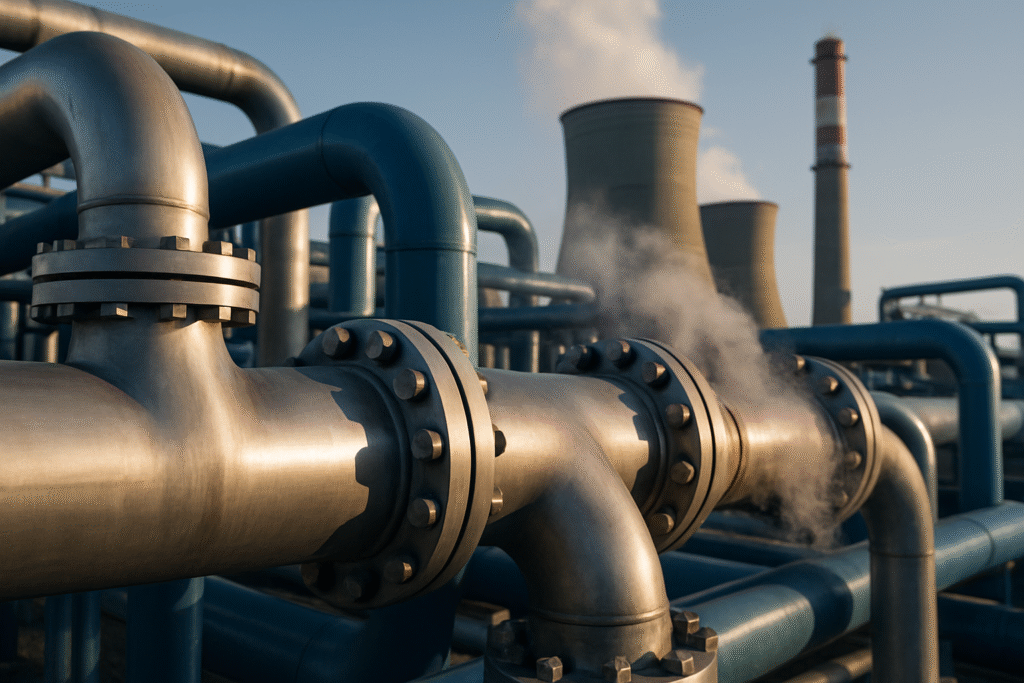
Paslanmaz Çelik Boru Flanş Kılavuzu: Veriye Dayalı Avantajlar, Türler, Kullanım Alanları, ve Nasıl Seçilir? 2025
Demand for the paslanmaz çelik boru flanşı continues to rise as industrial buyers prioritize corrosion resistance, yaşam döngüsü değeri, ve uyumluluk. Grand View Araştırmasına göre (2024), küresel endüstriyel flanş pazarı şu şekilde değerlendi: $5.8 milyar 2023 ulaşılması öngörülüyor ve $7.2 milyar tarafından 2030.
That growth is not accidental. Engineers in oil and gas, petrokimya, deniz, and power sectors increasingly choose stainless and alloy flanges because hidden maintenance costs often exceed the initial purchase price of lower-grade components.
Meta açıklaması: Explore the best stainless steel pipe flange options, türleri, standartlar, and buying tips. Compare materials and contact SASA FLANGE for expert support.
Paslanmaz Çelik Boru Flanş Pazarı Neden Genişliyor?
Industrial piping systems operate under higher pressure, tighter inspection requirements, and more aggressive media than they did a decade ago. Öyleyse, procurement teams now evaluate flanges not only by unit price, but also by leakage risk, servis ömrü, izlenebilirlik, and downtime exposure.
IBISWorld'e göre (2024), Asya-Pasifik'in hesapları 45% küresel flanş üretimi, Çin'in en büyük üretici olduğu. That concentration has reshaped global sourcing, especially for buyers seeking factory-direct production, kısa teslimat süreleri, and broad standards coverage.
Aynı zamanda, sector demand remains highly concentrated. Statista'ya göre (2024), Petrol ve gaz endüstrisi yaklaşık olarak 35% küresel flanş tüketiminin, which explains why pressure class verification, NACE compatibility, and material certification remain top purchasing criteria.
These market shifts reveal several intriguing and often hidden advantages of stainless steel flanges. Birinci, gibi paslanmaz kaliteler 304, 316, 316L, 2205, Ve 2507 support lower maintenance frequency in corrosive service. Saniye, they offer a strong balance of weldability, dayanıklılık, and clean surface performance for regulated industries.
Sonuç olarak, buyers increasingly compare total installed cost instead of only the ex-works price. Birçok bitkide, a failed pipe flange can trigger shutdowns, hot work permits, secondary inspections, and unplanned labor costs that far exceed the flange itself.
Standards also drive the market. ASME B16.5 Ve ASME B16.47 define critical dimensions and pressure-temperature ratings for many industrial flanges, sırasında ASTM A182 covers forged alloy and stainless materials used in pressure service (ASME, 2023; ASTM, 2024).
Dahası, European and export projects often require DIN and EN 1092 uyumluluk, especially where EPC contractors work across multiple regulatory regions. This is why manufacturers with multi-standard production capability hold a clear advantage in cross-border procurement.
B2B alıcıları için, supplier capability matters as much as material choice. SASA FLANGE supports projects with stainless steel flanges, karbon çelik flanşlar, alaşım flanşlar, and pipe fittings in grades including 304, 316, 316L, 904L, 2205, 2507, A105, A182, İnkonel, Monel, Hastelloy, ve Titanyum.
İle ISO 9001:2015 ve PED 2014/68/EU sertifikaları, the company aligns with the documentation and inspection expectations common in refinery, açık deniz, and power generation procurement. Ek olarak, EN 10204 3.1 material certification and dimensional inspection help reduce approval delays during project execution.
Many buyers still focus narrowly on visible features like flange face or nominal size. Fakat, the hidden advantages often come from heat treatment control, PMI doğrulaması, işleme toleransı, and gasket seating accuracy, which directly affect bolting performance and leak integrity.
Malzeme bilimcisi Dr.. Lena Hofmann, Korozyon Uzmanı, eyaletler: “The lowest flange cost rarely delivers the lowest system cost, because corrosion allowance, yüzey kalitesi, and metallurgy determine service life more than purchase price.” That principle is especially relevant in chloride-bearing, ekşi, and cyclic temperature applications.
Gizli Avantajlar, Türler, and Technical Criteria for Choosing a Stainless Steel Pipe Flange
When engineers choose a stainless steel pipe flange, they usually compare pressure class, bakan tip, boru programı, malzeme kalitesi, and joint design. Fakat, long-term reliability also depends on weld integrity, galvanic compatibility, and media-specific corrosion behavior.
Mordor İstihbaratına göre (2024), industrial process infrastructure spending continues to favor premium materials in high-corrosion environments, with stainless and duplex gaining share in brownfield upgrades. Ek olarak, Pazar Araştırmasının Geleceği (2024) reports that process industries are increasing investment in longer-life piping components to reduce lifecycle maintenance costs.
Those trends explain why stainless steel flange types remain central to piping design. The most common options support different loads, inspection methods, and installation priorities.
- Kaynak boyunlu flanş: Yüksek basınç için tercih edilir, yüksek sıcaklık, and cyclic service because the tapered hub distributes stress efficiently.
- Geçmeli flanş: Easier to align and often lower in cost, but less suitable for severe fatigue and critical process lines.
- Kör flanş: Satır sonlarını kapatmak için kullanılır, ekipmanı izole et, or permit future expansion.
- Soket kaynak flanşı: Common for small-bore, high-pressure service where socket alignment supports installation.
- Dişli flanş: Used when welding must be avoided, basınç ve titreşim sınırlarının dikkatli bir şekilde gözden geçirilmesi gerekmesine rağmen.
- Bindirme flanşı: Suitable where frequent dismantling is needed and stub-end rotation simplifies alignment.
Malzeme seçimi de aynı derecede önemlidir. Seviye 304 iyi bir genel korozyon direnci ve maliyet verimliliği sunar, sırasında 316 and 316L improve pitting resistance due to molybdenum content. For more aggressive chloride or sour environments, dubleks 2205 ve süper dubleks 2507 often provide higher strength and better resistance to localized corrosion.
ASTM A182 F304/F304L and F316/F316L remain standard forged material choices for pressure service. Bu sırada, duplex grades used for forged flanges must be verified for chemistry, ferrite balance, mekanik özellikler, and heat treatment consistency in accordance with applicable ASTM requirements.
Pressure class and dimensions must match the design code. ASME B16.5 NPS'yi kapsar 1/2 başından sonuna kadar 24 in Classes 150, 300, 400, 600, 900, 1500, Ve 2500, sırasında ASME B16.47 daha büyük çaplar için geçerlidir (ASME, 2023).
Buyers should also verify raised face, düz yüz, and RTJ configurations against the mating equipment. A mismatch in facing can compromise gasket seating and create avoidable leak paths, even when the metallurgy is correct.
Boru mühendisi Mark Ellison olarak, Kıdemli Borulama Danışmanı, eyaletler: “Selecting flange type without considering thermal cycles, cıvata yükü tutma, and gasket compatibility is one of the most common specification errors in process plants.” Öyleyse, engineers should review the complete joint assembly, not the flange alone.
The hidden advantages of stainless steel flanges become clearer when evaluated in real service. Stainless materials generally offer cleaner surface behavior, stronger resistance to atmospheric corrosion, and better performance in washdown or humid environments than many carbon steel alternatives.
In sectors such as food-adjacent utilities, pharmaceutical support systems, tuzdan arındırma, and marine skids, that advantage can reduce repainting, coating repair, and corrosion monitoring. Although not every service requires premium alloys, many facilities find that stainless lowers intervention frequency over the asset life.
Manufacturing quality also determines field performance. Gelişmiş CNC işleme ve kapsamlı kalite testleri ile desteklenmektedir, SASA FLANGE 1/2'den itibaren özel boyutlar sunar" 60'a kadar" in ANSI, DIN, JIS, GOST, and EN configurations for diverse pipe flange projects.
Capability breadth matters when an EPC project spans multiple packages. Örneğin, one order may include weld neck flanges in ASTM A182 F316L, blind flanges in 904L, and mating fittings such as elbows, tişört, redüktörler, ve kapaklar üretildi ASME B16.9.
To simplify technical comparison, procurement teams should review these core selection points:
- Design code and standard: ASME B16.5, B16.47, EN 1092, DIN, JIS, veya GOST.
- Malzeme kalitesi: 304, 316L, 904L, 2205, 2507, nikel alaşımı, veya titanyum.
- Basınç sınıfı ve programı: match flange bore to pipe wall and service rating.
- Kaplama tipi: RF, FF, RTJ, dil ve oluk, veya özel işleme.
- Inspection requirements: PMI, UT, PT, sertlik, hidrotest, Ve EN 10204 3.1.
- Application risks: klorürler, H2S, sıcaklık döngüsü, erozyon, ve titreşim.
Ek olarak, lead time and traceability should influence vendor choice. A competitively priced flange loses value if it arrives without heat numbers, test records, or dimensional conformity required for project release.
Servis 50+ Petrol ve gazdaki ülkeler, petrokimya, güç, ve denizcilik endüstrileri, SASA FLANGE supports buyers who need both standard and custom manufacturing. For project-specific inquiries, buyers can coordinate drawings, MTC gereksinimleri, and delivery schedules through SASA FLANGE.
Standartlar, Test, Paslanmaz Çelik Flanşlara Uygunluk ve Uyumluluk
Compliance is not a paperwork exercise. Endüstriyel borularda, standards determine interchangeability, basınç bütünlüğü, inspection acceptance, and legal eligibility for regulated equipment.
The core dimensional standards include ASME B16.5, ASME B16.47, EN 1092, DIN flange norms, and selected JIS or GOST specifications depending on project geography. Material standards often include ASTM A182 for forged flanges, ASTM A240 plaka ürünleri için, and related ASTM specifications for mechanical and corrosion testing.
ISO'ya göre (2023), traceability and documented quality management significantly improve consistency in industrial manufacturing environments. Bu yüzden ISO 9001:2015 certification remains a practical procurement filter, not merely a marketing claim.
PED 2014/68/EU is especially important for pressure equipment entering European markets. Üstelik, marine and offshore buyers may request compliance with DNV, NORVEÇ, or client-specific quality plans depending on service severity.
For sour service and H2S exposure, material review should include NACE MR0175 / ISO 15156 uygun olduğu yerde. Although not every stainless grade qualifies automatically for every sour condition, the standard helps engineers assess cracking risk and environmental limits.
- ASME B16.5: Pipe flanges and flanged fittings for smaller nominal sizes and common pressure classes.
- ASME B16.47: Large diameter steel flanges for major process and transmission systems.
- ASTM A182: Forged or rolled alloy and stainless materials for high-temperature pressure service.
- ASME B16.9: Dirsekler gibi fabrika yapımı dövme alın kaynağı bağlantı parçaları, tişört, redüktörler, ve büyük harfler.
- EN 1092: European flange dimensions and pressure designations used widely in export projects.
- NACE MR0175: Material guidance for sulfide stress cracking resistance in sour environments.
Dimensional conformance should be checked against bolt circle, kalınlık, delik, göbek boyutları, and facing finish. pratikte, even small deviations can slow site installation or force unplanned rework in spool fabrication.
Typical documentation packages may include:
- EN 10204 3.1 değirmen test sertifikaları.
- Isı numarası izlenebilirliği.
- PMI reports for alloy verification.
- Boyutsal muayene kayıtları.
- Pressure rating and standard confirmation.
- Surface treatment or passivation records where specified.
Buyers should also review acceptance criteria for visual defects, machining marks, and flange facing finish. For raised face and RTJ flanges, surface integrity directly affects gasket compression and sealing performance.
Image alt: stainless steel pipe flange dimensional inspection and quality control in industrial manufacturing
Çok uluslu projeler için, cross-standard comparison is often required. A buyer may need ANSI Class 150 dimensions in one package, EN PN16 in another, and DIN-based mating components in a third.
That complexity makes supplier versatility valuable. İle ISO 9001:2015, PED 2014/68/AB, ve AD 2000 kimlik bilgileri, SASA FLANGE supports qualification needs for regulated and export-oriented industrial projects while maintaining a broad material portfolio.
According to ASTM International (2024), material standard adherence improves repeatability in pressure-containing components across supply chains. Öyleyse, a compliant flange program reduces technical disputes during inspection and improves first-pass approval rates.
Procurement teams should ask five practical compliance questions before placing a purchase order:
- Does the supplier manufacture to the exact flange standard and pressure class listed on the datasheet?
- Are MTCs, PMI, and inspection reports available before shipment?
- Can the supplier meet PED, EN, or client-specific documentation requirements?
- Is the material grade suitable for chlorides, ekşi servis, or elevated temperature?
- Can flange dimensions and facing be matched precisely to existing pipe and equipment?
For further specification review or document alignment, mühendisler danışabilir SASA FLANGE during pre-order evaluation. Early technical clarification often prevents later NCRs, site gecikmeleri, ve değiştirme maliyetleri.
Uygulamalar, Seçim Kriterleri, ve Doğru Boru Flanşı Nasıl Seçilir
Different industries use stainless steel flanges for different reasons. Öyleyse, the best flange choice depends on process media, sıcaklık, pressure cycles, bakım erişimi, and regulatory obligations.
Petrol ve gazda, buyers often prioritize weld neck flanges in 316L, 2205, veya 2507 for corrosive lines, üretilen su sistemleri, and offshore skids. Since the sector represents about 35% küresel flanş tüketiminin, robust quality assurance remains essential for every high-risk joint (Devlet adamı, 2024).
Petrokimya tesislerinde, material compatibility with acids, çözücüler, and chlorides typically drives grade selection. Örneğin, 904L, Hastelloy, or Monel may be specified where standard austenitic stainless grades face localized corrosion risk.
Enerji üretiminde, high-temperature service and thermal fatigue influence flange type and bolt load retention. Weld neck designs often outperform lighter alternatives in cyclic steam and condensate systems because they manage stress more effectively at the hub transition.
Marine and shipbuilding applications create another set of demands. Tuz yüklü hava, deniz suyuna maruz kalma, and limited maintenance windows make corrosion resistance a strategic requirement rather than a premium option.
Water treatment and desalination systems frequently require 316L, dubleks, or super duplex materials to address chloride attack. Bu sistemlerde, the hidden advantages of stainless steel flanges include reduced coating dependence and improved long-term cleanliness.
To choose the right flange, engineers should evaluate:
- Akışkan kimyası, especially chlorides, sülfürler, asitler, and oxygen content.
- Çalışma ve tasarım sıcaklık aralığı.
- Basınç sınıfı, surge conditions, and fatigue loading.
- Boru boyutu, takvim, and connection method.
- Denetim düzeyi, dokümantasyon, and customer approval process.
- Yaşam döngüsü maliyeti, not just initial piece price.
Flange type selection should also match installation realities. A threaded pipe flange may suit utility lines where welding is restricted, while a blind flange may support hydrotest isolation, maintenance closure, or future expansion planning.
Örneğin, A 4 Sınıfta inç paslanmaz çelik boru flanşı 150 may be suitable for low-pressure utility water, but the same nominal size in a hot chloride process line may require Class 300 veya daha yüksek, plus a more resistant alloy. Sonuç olarak, specification cannot rely on size alone.
Buyers often search by product phrase instead of engineering criteria, using terms like stainless steel pipe flange sizes, paslanmaz çelik dişli boru flanşı, or stainless steel flange price. Fakat, the correct buying process should begin with service conditions, standartlar, ve çiftleşme bileşeni gereksinimleri.
Kurşun zamanı, Adedi, and customization can also affect supplier selection. 1/2'den başlayan özel boyutlar sunar" 60'a kadar" rekabetçi fabrika doğrudan fiyatlandırmasıyla, SASA FLANGE helps project buyers source standard and non-standard flanges along with matching elbows, tişört, redüktörler, ve büyük harfler.
When custom machining is required, procurement teams should send detailed drawings with tolerance notes, yüzleşme ayrıntıları, drilling requirements, and material callouts. This shortens review cycles and improves quotation accuracy.
As industry analyst Robert Chen, Energy Infrastructure Research Director, eyaletler: “The best-performing flange suppliers win not by offering the cheapest unit cost, but by delivering documentation accuracy, boyutsal tutarlılık, and predictable lead times.” That observation aligns with how major EPC and MRO buyers now evaluate vendors.
Pratik açıdan, buyers should compare suppliers on more than product range. They should assess machining capability, test kapsamı, ihracat ambalajı, response speed, and experience across oil and gas, petrokimya, güç, deniz, and construction applications.
For stainless, dubleks, nikel alaşımı, and titanium projects, it is wise to request clear confirmation of heat treatment, izlenebilirlik, and inspection coverage before order release. This is especially important when flange failure could shut down a process unit or compromise safety barriers.
Paslanmaz Çelik Flanşların Geleceğe Bakışı ve Stratejik Satın Alma Önerileri
The outlook for stainless steel flanges remains positive because industrial operators continue to modernize piping assets and improve reliability targets. Grand View Araştırmasına göre (2024), endüstriyel flanş pazarının büyümesi bekleniyor $5.8 milyar 2023 ile $7.2 milyar tarafından 2030.
That projection suggests sustained demand for compliant, korozyona dayanıklı, and globally standardized flange solutions. Dahası, increasing investment in water treatment, LNG, açık deniz yükseltmeleri, and process decarbonization will likely support premium alloy demand.
Asia-Pacific will remain central to supply chains because the region already accounts for over 45% küresel flanş üretimi (IBISWorld, 2024). Öyleyse, buyers should build sourcing strategies around qualified manufacturers with strong documentation, flexible standards support, and reliable export execution.
Tedarik yöneticileri için, three strategic recommendations stand out. Birinci, standardize technical data sheets to avoid mismatched dimensions and incomplete inspection scopes. Saniye, qualify vendors by certifications and track record, not only by price. Üçüncü, evaluate lifecycle cost in corrosive or high-maintenance environments.
Mühendisler için, the priority is specification discipline. Malzeme kalitesi, basınç sınıfı, karşı karşıya, kod uyumluluğu, and test documentation should be defined together, because one weak input can undermine an otherwise correct flange package.
For project teams facing mixed standards or custom dimensions, early supplier engagement saves time. By aligning drawings, MTC expectations, and delivery windows in advance, buyers reduce rework and protect commissioning schedules.
That is where experienced manufacturers add value beyond production alone. For organizations sourcing a stainless steel pipe flange for demanding service, working with SASA FLANGE can streamline technical review, dokümantasyon planlaması, and custom manufacturing from the quotation stage onward.
Sıkça Sorulan Sorular
Ana paslanmaz çelik flanş tipleri nelerdir?
●Ana paslanmaz çelik flanş tipleri kaynak boyunludur, bağcıksız, kör, soket kaynağı, dişli, ve kucak eklemi, Ve ASME B16.5 NPS için bu yapılandırmaların çoğunu kapsar 1/2 başından sonuna kadar 24.
●Her tür farklı bir göreve hizmet eder, because weld neck flanges suit high-pressure and cyclic service while slip-on and threaded designs usually fit less severe installation conditions.
●For critical process piping, alıcılar flanş tipini basınç sınıfına göre eşleştirmelidir, karşı karşıya, ve boru programı, and projects needing certified stainless options can be reviewed with established manufacturers like SASA FLANGE.
What stainless steel pipe flange sizes are commonly available?
●Common stainless steel pipe flange sizes typically range from 1/2 inç ila 24 inç altında ASME B16.5, while larger diameters are usually supplied under ASME B16.47.
●Actual availability depends on flange type, basınç sınıfı, ve standart, because a 4 Sınıfta inç paslanmaz çelik boru flanşı 150 differs dimensionally from the same size in Class 600 or EN PN-rated formats.
●Buyers should confirm bore, maç programı, and bolt circle details before ordering, especially for replacement work or mixed-standard systems.
arasında nasıl seçim yapabilirim? 304 Ve 316 paslanmaz çelik flanşlar?
●Seviye 304 genel hizmet için yaygın olarak kullanılır, Ancak 316 and 316L provide better corrosion resistance in chloride-containing and more aggressive chemical environments because of their molybdenum content.
●According to ASTM material usage patterns in industrial pressure components, 304 Ve 316 remain among the most common forged stainless choices, yet the correct grade still depends on media, sıcaklık, ve temizlik rejimi.
●For seawater-adjacent, kimyasal, or higher-risk service, buyers should request a full material review rather than choosing by price alone.
What standards apply to stainless steel flanges and fittings?
●Stainless steel flanges commonly follow ASME B16.5, ASME B16.47, EN 1092, and DIN dimensional standards, while stainless fittings often follow ASME B16.9 for buttweld products.
●Material requirements are frequently specified under ASTM A182 for forged flanges and related ASTM standards for chemistry, mekanik özellikler, ve test etme.
●To avoid site mismatch or documentation rejection, procurement teams should ensure the purchase order states both the dimensional standard and the material standard clearly.
Paslanmaz çelik boru flanşı fiyatını neler etkiler??
●Paslanmaz çelik boru flanşı fiyatı esas olarak alaşım derecesine bağlıdır, boyut, basınç sınıfı, işleme karmaşıklığı, muayene kapsamı, ve sipariş hacmi, with duplex and nickel alloys usually costing more than standard 304 veya 316 notlar.
●Grand View Araştırmasına göre (2024), rising industrial demand and quality requirements continue to influence value across the flange market, so the cheapest offer may not provide the lowest installed cost.
●Buyers should compare quotations by documentation, test, kurşun zamanı, and compliance level, not just by piece price.
When should I use a stainless steel threaded pipe flange or welded flange?
●Threaded flanges are useful where welding is impractical or prohibited, but welded flanges such as weld neck or socket weld usually perform better in high-pressure, yüksek sıcaklık, or vibration-prone systems.
●As piping experts regularly note, flange selection must consider thermal cycling, gasket load, and fatigue risk, because connection method affects long-term joint integrity as much as the material itself.
●For safety-critical or corrosive service, engineers should review the full piping condition and select the flange design that best supports leak-free operation.
İlgili Mesajlar
Flanş Yüzü Kaplaması: Eşmerkezli ve Spiral Tırtıkların Açıklaması
Eşmerkezli ve spiral tırtılların her ikisi de işlenmiş flanş yüzeyidir…
Dubleks 2205 316L Flanşlara Karşı: Hangi Malzemeyi Seçmelisiniz?
Hızlı cevap: Dubleks 2205 flanşlar genellikle daha güçlü adaydır…

Orifis Flanşı Tanımı, Ayrıntılar ve ASME B16.36 Flanşlara Genel Bakış: Piyasa Verileri, Seçim Kılavuzu ve Uyumluluk Bilgileri
Küresel endüstriyel flanş pazarı şu şekilde değerlendi: $5.8 milyar…

Siyah Bertaraf Flanşı Pazar Rehberi: Malzemeler, 3.5″ Uyumluluk, Mutfak Lavabo Flanşları için B2B Kaynak Verileri
Mutfak armatürü alıcıları nedeniyle siyah atık flanş talebi artıyor…