
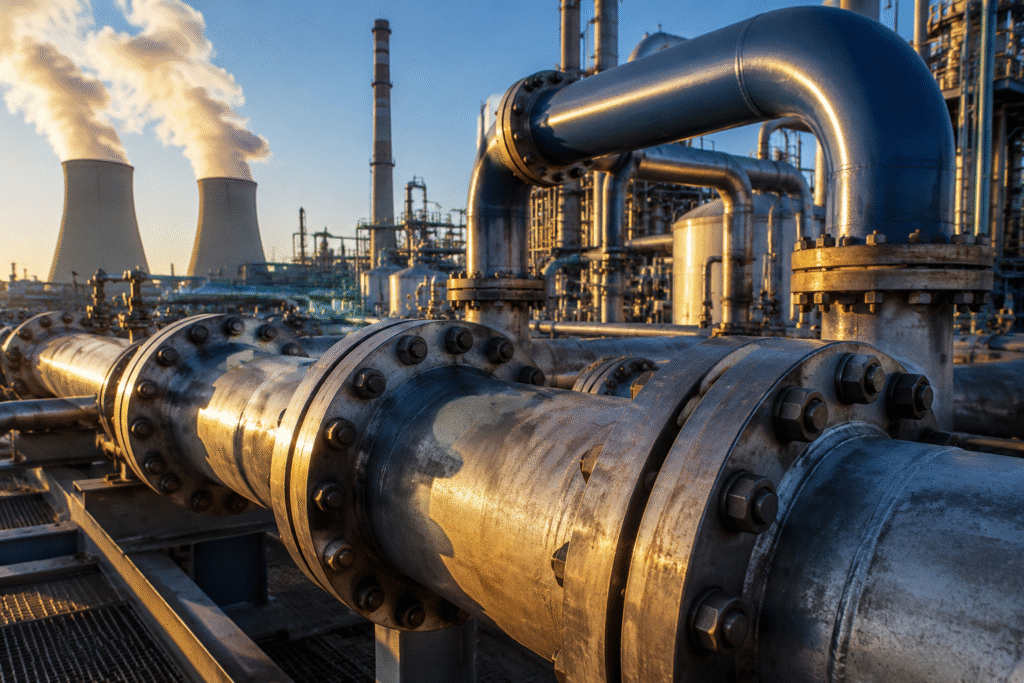
Paslanmaz Çelik Boru Flanş Kılavuzu: 7 Veriye Dayalı Avantajlar, Türler, Kullanım Alanları ve Seçim Kriterleri
Endüstriyel operatörlerin korozyon direncine öncelik vermesi nedeniyle paslanmaz çelik boru flanşı talebi artmaya devam ediyor, yaşam döngüsü değeri, ve kritik boru sistemlerinde uyumluluk. Grand View Araştırmasına göre (2024), küresel endüstriyel flanş pazarı şu şekilde değerlendi: $5.8 milyar 2023 ulaşılması öngörülüyor ve $7.2 milyar tarafından 2030, which makes material selection more strategic than ever.
Mühendisler ve satın alma ekipleri için, the intriguing value of stainless solutions is no longer hidden. The advantages of stainless steel pipe flange products now extend beyond durability into traceability, basınç bütünlüğü, and long-term operating efficiency.
Why Stainless Steel Pipe Flange Demand Is Growing Across Industrial Markets
Industrial buyers are choosing stainless steel pipe flange products because plant uptime depends on leak-tight, korozyona dayanıklı bağlantılar. Dahası, modern projects demand components that meet ASME, ASTM, DIN, and EN requirements without adding excessive maintenance risk.
IBISWorld'e göre (2024), Asya-Pasifik'in hesapları 45% küresel flanş üretimi, Çin'in en büyük üretici olduğu. Öyleyse, global sourcing strategies increasingly focus on qualified Chinese manufacturers that can combine scale, işleme hassasiyeti, ve dokümantasyon kontrolü.
Statista'ya göre (2024), Petrol ve gaz endüstrisi yaklaşık olarak 35% küresel flanş tüketiminin. Sonuç olarak, the market strongly favors materials such as 304, 316, 316L, 2205, Ve 2507 ekşi servis için, açık deniz, rafineri, ve kimyasal işleme uygulamaları.
Stainless grades remain attractive because they balance mechanical strength and corrosion resistance in chloride, nemli, and high-purity environments. Tersine, lower-alloy materials may require more frequent coating, denetleme, or replacement in aggressive service.
ASME B16.5 Ve ASME B16.47 govern key dimensional and pressure-temperature requirements for many industrial flanges, sırasında ASTM A182 defines forged stainless and alloy flange material requirements (ASME, 2023; ASTM, 2023). Sonuç olarak, buyers should evaluate both the material grade and the governing dimensional standard before placing an order.
The hidden procurement risk often lies in incomplete quality documentation rather than the flange itself. Öyleyse, reputable suppliers should provide mill test reports, ısı izlenebilirliği, boyutsal muayene, Ve EN 10204 3.1 documentation when required.
Malzeme mühendisi Dr.. Helen Morris belirtiyor: “Flanş sadece bir konnektör değildir; it is a pressure boundary component, so alloy selection and standard compliance directly influence reliability.” That insight is especially relevant in petrochemical, açık deniz, and power generation systems where flange failure can shut down an entire line.
SASA FLANGE serves industrial customers in Oil & Gaz, Petrokimya, Güç Üretimi, Gemi yapımı, Su Arıtma, ve İnşaat. İle ISO 9001:2015 ve PED 2014/68/EU sertifikaları, the company supports global buyers seeking compliant stainless steel flanges and fittings from a factory-direct source.
Ek olarak, sourcing from an experienced manufacturer helps buyers align design intent with actual production capability. For more supplier details, alıcılar inceleyebilir company background and explore available categories at ürün sayfaları.
Paslanmaz Çelik Boru Flanş Çeşitleri, Materials and Hidden Advantages in Real Service
The versatility of a stainless steel pipe flange comes from the range of flange types, basınç sınıfları, and metallurgy available for different services. Fakat, choosing correctly requires understanding how type, seviye, and application interact.
Mordor İstihbaratına göre (2024), industrial infrastructure upgrades in energy and water sectors are accelerating demand for corrosion-resistant piping components worldwide. Üstelik, buyers increasingly request premium materials that reduce total cost of ownership rather than only minimizing purchase price.
Borulama danışmanı Mark Ellison olarak, PE, eyaletler: “The best flange selection starts with the process fluid, then temperature, then pressure class, and only after that with price.” This sequence helps engineers avoid short-term cost decisions that create long-term maintenance failures.
The most common stainless steel pipe flange materials include ASTM A182 F304, F304L, F316, F316L, F904L, F51, ve F53. Ek olarak, specialized projects may specify Inconel, Monel, Hastelloy, or Titanium when standard stainless grades cannot handle the environment.
- 304 / 304L: Good general corrosion resistance for water, gıda işleme, and moderate industrial service.
- 316 / 316L: Improved molybdenum-bearing resistance to chlorides and many chemical media.
- 904L: Stronger performance in reducing acids and severe corrosion environments.
- 2205 Dubleks: Higher strength and strong pitting resistance for offshore and process systems.
- 2507 Süper Dubleks: Premium solution for high chloride and high-pressure service.
In many specifications, 316L remains the default choice for process plants that require better chloride resistance than 304L. Tersine, duplex and super duplex are often chosen when higher strength allows thinner wall design or improved resistance to stress corrosion cracking.
Pazar Araştırması Geleceğine Göre (2024), demand for duplex stainless components in energy and marine systems is growing at over 5% annually. Öyleyse, procurement teams should evaluate duplex options earlier in the design stage instead of treating them as late substitutions.
The main flange Types used in industrial piping include weld neck, giymek, kör, soket kaynağı, dişli, ve kucak eklemi. Each Flange configuration has different benefits for alignment, bore continuity, kurulum hızı, ve denetim erişimi.
- Kaynak boyunlu flanş: Yüksek basınç için en iyisi, termal bisiklet, ve kritik servis çünkü konik göbek stres konsantrasyonunu azaltır.
- Flanş üzerinde kayma: Common for lower-pressure systems where installation efficiency and cost control matter.
- Kör flanş: Sonlandırmak için kullanılır, izole etmek, or future-proof piping systems.
- Dişli flanş: Useful where welding is restricted or field conditions are difficult.
- Soket kaynak flanşı: Genellikle küçük çaplı için seçilir, yüksek basınçlı borular.
- Bindirme flanşı: Suitable when frequent dismantling is required.
For engineers comparing stainless steel flange types, the hidden advantages often appear during maintenance cycles. Weld neck designs can lower fatigue risk, while blind flanges simplify line isolation and hydrotest management.
Pressure class also matters. Ortak ASME sınıfları şunları içerir: 150, 300, 600, 900, 1500, Ve 2500, and the allowable pressure decreases as temperature rises according to ASME pressure-temperature ratings (ASME, 2023).
That is why a 4 inch stainless steel pipe flange for steam service may require a very different class and facing than the same nominal size in a water line. Aynı şekilde, a Stainless Steel Threaded Pipe Flange may fit utility service but not a severe cyclic process unit.
SASA FLANGE flanşlar üretmektedir 304, 316, 316L, 904L, 2205, 2507 ve diğer birinci sınıf kaliteler, gelişmiş CNC işleme ve kapsamlı kalite testleri ile desteklenir. Dahası, şirket özel boyutlar sunuyor 1/2 inç ila 60 inch with competitive factory-direct pricing for export projects.
Buyers looking to Choose the right product should match material grade, flanş kaplama, sınıf derecelendirmesi, and inspection requirements before RFQ release. Project teams can discuss custom specifications directly through SASA FLANGE contact support.
Standartlar, Certification and Compliance for Stainless Steel Flanges and Fittings
Compliance is essential because stainless steel flanges and Fittings often serve as pressure boundary components in regulated environments. Öyleyse, every purchase order should reference the exact manufacturing standard, malzeme standardı, muayene kapsamı, and document package.
Key dimensional and manufacturing references include ASME B16.5 NPS için 1/2 başından sonuna kadar 24, ASME B16.47 daha büyük çaplar için, Ve ASME B16.9 alın kaynak bağlantı parçaları için. Ek olarak, international buyers often request DIN, JIS, GOST, veya TR 1092 dimensions for plant compatibility.
Malzeme standartları da aynı derecede önemlidir. ASTM A182 covers forged or rolled alloy and stainless flanges, dövme bağlantı parçaları, ve yüksek sıcaklıkta servis için valfler, sırasında ASTM A240 covers stainless plate products used in some flange and fitting-related applications (ASTM, 2023).
NACE MR0175 / ISO 15156 becomes critical when sour service is involved because sulfide stress cracking can quickly compromise unsuitable materials (NACE, 2023). Aynı şekilde, PED 2014/68/EU requirements can apply for equipment supplied into the European market.
- ASME B16.5: Boyutlar, toleranslar, basınç-sıcaklık değerleri, kaplamalar, ve işaretleme.
- ASME B16.47: Large-diameter flanges for major line sizes.
- ASTM A182: Material chemistry and mechanical requirements for forged stainless flanges.
- EN 1092: Common European flange dimensional standard.
- NACE MR0175: Material guidance for H2S-containing environments.
- EN 10204 3.1: Inspection document often requested by procurement teams.
ISO'ya göre (2023), documented quality systems reduce variation in manufacturing and inspection processes across serial production. Sonuç olarak, ISO 9001:2015 certification remains a meaningful baseline for industrial flange suppliers serving multinational customers.
Tedarikçileri karşılaştıran alıcılar için, certifications should be matched with actual process control. A certificate alone does not confirm machining accuracy, PMI yeteneği, hidrotest desteği, ferrit kontrolü, or packaging discipline for export shipments.
That is why leading procurement teams request dimensional reports, PMI sonuçları, hardness checks where applicable, and full traceability from raw material to final marking. Dahası, export projects often require third-party inspection by SGS, BV, TUV, or similar agencies before shipment.
SASA FLANGE ile çalışır ISO 9001:2015, PED 2014/68/AB, ve AD 2000 credentials to support demanding industrial supply chains. Üstelik, the company can provide EN 10204 3.1 certification and coordinate inspection requirements for international EPC and MRO buyers.
The following comparison helps clarify common standard selection logic:
- ASME sistemi: Preferred for North America, global EPC, petrol ve gaz, and refinery projects.
- EN / DIN system: Preferred for European industrial plants and equipment integration.
- JIS system: Common in Japanese standards environments and some Asian installations.
- Custom drawings: Required for OEM skids, packaged units, and retrofit dimensions.
Procurement managers should also verify flange facing requirements such as RF, FF, RTJ, or custom serration patterns. Kritik hizmette, a mismatch between gasket type and flange facing can cause leakage even when the metallurgy is correct.
For authoritative standard details, buyers should consult the relevant organization directly, içermek ASME. Internal coordination with an experienced manufacturer shortens review cycles, especially when mixed standards or special materials are involved.
Petrol için Paslanmaz Çelik Boru Flanş Çözümleri Nasıl Seçilir, Gaz, Güç, Marine and Water Systems
Seçim hizmet koşullarıyla başlamalıdır, not with price alone. Örneğin, akışkan kimyası, klorürler, sıcaklık, basınç, cycling frequency, and inspection requirements all influence the correct flange specification.
Yağda & Gas projects, stainless steel pipe flange selection often focuses on sour service, offshore corrosion, and high-integrity bolted joints. Öyleyse, 316L, 2205, Ve 2507 are commonly reviewed depending on chloride level and design pressure.
Açık deniz sistemleri için DNV kılavuzuna göre (DNV, 2023), material performance in chloride-rich marine environments is a major design factor for long service life. Sonuç olarak, duplex or super duplex may outperform standard austenitic grades in many offshore skid and seawater applications.
Petrokimya tesislerinde, material compatibility with acids, çözücüler, and chlorides becomes decisive. Dahası, low-carbon grades like 304L and 316L help reduce sensitization risk after welding in many process lines.
Enerji üretimi için, thermal cycling and pressure transients often drive flange type selection. Sonuç olarak, weld neck designs are frequently preferred in steam, yoğunlaşma, and high-temperature auxiliary systems.
Marine and shipbuilding projects require strong resistance to salt-laden atmospheres and splash-zone exposure. Öyleyse, 316L, 2205, Ve 2507 are often considered for deck piping, balast sistemleri, fire lines, ve tuzdan arındırma üniteleri.
Water treatment systems also benefit from stainless flange durability because chemical dosing and variable water quality can accelerate corrosion in coated carbon steel components. Ek olarak, clean finish and low maintenance support lifecycle savings in municipal and industrial treatment plants.
- Check the medium: Confirm chloride content, pH, sülfürler, ve temizlik kimyasalları.
- Check pressure and temperature: Match ASME class and material limits to operating and upset conditions.
- Flanş tipini kontrol edin: Select weld neck, giymek, kör, dişli, soket kaynağı, or lap joint by service severity.
- Check facing: RF'yi doğrulayın, FF, or RTJ against gasket design.
- Check documentation: Request MTC, PMI, boyutlu raporlar, Ve EN 10204 3.1 gerekirse.
- Check installation constraints: Consider weld access, alignment tolerance, and future maintenance.
As corrosion specialist James Ortega notes: “Many flange failures start as specification shortcuts rather than manufacturing defects.” That is why the best Guide for procurement teams is to evaluate total installed risk, not simply the unit price of a Flange.
Lead time and supply continuity are also major purchasing variables. Statista'ya göre (2024), energy infrastructure expansion continues to support high demand for piping components, which can tighten delivery windows for special alloys and large diameters.
SASA FLANGE supports custom manufacturing for flanges and fittings including elbows, tişört, redüktörler, and caps in stainless, karbon çeliği, alaşım, and nickel-based grades. Gelişmiş CNC işleme ve kapsamlı kalite testleri ile desteklenmektedir, şirket hizmet veriyor 50+ Petrol genelindeki ülkeler & Gaz, Petrokimya, Güç, ve Denizcilik endüstrileri.
For projects needing custom drawings, karma standartlar, or urgent export packing, buyers can coordinate directly through iletişim sayfası. This approach is especially helpful when evaluating stainless steel pipe flange sizes, special bore schedules, or project-specific marking requirements.
Paslanmaz Çelik Boru Flanş Tedarikinde Geleceğe Bakış ve Stratejik Satın Alma Önerileri
Paslanmaz çelik boru flanşı talebine yönelik görünüm olumlu olmaya devam ediyor, çünkü enerji, su, ve endüstriyel modernizasyon projeleri dünya çapında devam ediyor. Grand View Araştırmasına göre (2024), pazarın bundan sonra büyümesi bekleniyor $5.8 milyar 2023 ile $7.2 milyar tarafından 2030, indicating steady long-term demand.
Aynı zamanda, Satın alma davranışı değişiyor. Buyers now compare not only stainless steel pipe flange price, but also lifecycle cost, dokümantasyon kalitesi, country-of-origin risk, and response speed for technical clarification.
Digital procurement is also reshaping vendor evaluation. Pazar Araştırması Geleceğine Göre (2024), B2B industrial sourcing platforms and direct manufacturer engagement are reducing reliance on purely local inventory channels, especially for specialized flange grades and custom dimensions.
Öyleyse, strategic buyers should build approved vendor lists around measurable capability. That includes material breadth, işleme kapasitesi, muayene desteği, ihracat tecrübesi, and responsiveness during deviation review.
- 304L gibi onaylı kaliteleri standartlaştırın, 316L, 2205, Ve 2507 hizmet kategorisine göre.
- Prequalify suppliers against ASME, ASTM, PED, ve belge gereksinimleri.
- Request pricing in parallel with lead time, MTC biçimi, ve denetim kapsamı.
- Use total cost evaluation for replacement frequency, downtime risk, and maintenance labor.
- Plan early for large-diameter or special alloy orders because mill availability can vary.
The most intriguing opportunity for buyers is hidden in lifecycle optimization. A slightly higher initial investment in the correct stainless material can reduce shutdowns, gasket failures, and replacement frequency over many years of operation.
For engineering-led organizations, the smart path is to align specification discipline with reliable supply partnerships. Companies seeking compliant, export-ready stainless steel pipe flange solutions can review available product ranges or connect with SASA FLANGE for project-specific support.
Sıkça Sorulan Sorular
Paslanmaz çelik flanşlar ne için kullanılır??
●Boruları bağlamak için paslanmaz çelik flanşlar kullanılır, vanalar, pompalar, ve korozyon direnci gerektiren sistemlerde basınçlı kaplar, mekanik dayanım, ve basınç altında güvenilir sızdırmazlık.
●Statista'ya göre (2024), Petrol ve gaz endüstrisi yaklaşık olarak 35% küresel flanş tüketiminin, which shows how important flanged joints are in critical process piping.
●Petrokimya tesislerinde yaygın olarak kullanılırlar., açık deniz platformları, su arıtma tesisleri, elektrik santralleri, deniz boruları, and food-grade systems because stainless materials resist rust, klorürler, and frequent cleaning cycles better than many coated alternatives.
●Common applications include line connection, ekipman izolasyonu, bakım erişimi, ve gelecekteki genişleme noktaları, especially when operators need dismantling capability that welded joints alone cannot provide.
●For projects requiring certified materials and full traceability, gibi yerleşik üreticilerle çalışmak SASA FLANGE helps ensure compliance with ASME, ASTM, and EN documentation expectations.
Paslanmaz çelik boru bağlantı parçaları yapıyorlar mı?
●Evet, üreticiler dirsek gibi paslanmaz çelik boru bağlantı parçaları üretiyor, tişört, redüktörler, büyük harfler, and stub ends for both welded and threaded piping systems.
●ASME B16.9 is one of the key standards for factory-made wrought butt-welding fittings, while ASTM material grades such as 304, 316, and duplex variants support different corrosion and temperature requirements (ASME, 2023; ASTM, 2023).
●These fittings are commonly paired with stainless steel flanges to create complete piping assemblies for chemical processing, enerji üretimi, denizcilik hizmeti, and high-purity utility lines.
●pratikte, buyers should match fitting grade, duvar kalınlığı, and end preparation to the same piping specification as the flange to avoid weld mismatch or corrosion imbalance.
●For integrated flange and fitting supply, gibi yerleşik üreticiler SASA FLANGE can simplify sourcing, denetleme, and export documentation in one package.
Hangi flanşlar paslanmaz çelikten yapılmıştır??
●Many flange designs are made of stainless steel, kaynak boynu dahil, giymek, kör, dişli, soket kaynağı, and lap joint flanges in grades such as 304, 316, 316L, 904L, 2205, Ve 2507.
●ASTM A182 is a widely referenced material standard for forged stainless flanges, Ve ASME B16.5 defines the dimensions and pressure-temperature framework for many of these products (ASTM, 2023; ASME, 2023).
●Material choice depends on fluid chemistry, çalışma sıcaklığı, klorüre maruz kalma, basınç sınıfı, and whether the service involves offshore, ekşi gaz, or hygienic conditions.
●Örneğin, 316L is often chosen for chloride-bearing environments, while duplex stainless can offer higher strength and stronger resistance to pitting in seawater or aggressive process media.
●For projects needing guidance on grades, flange facings, or custom sizes, experienced suppliers like SASA FLANGE can help align the flange design with actual operating conditions.
Üç tip flanş nedir?
●Temel endüstriyel tartışmalarda en sık başvurulan üç flanş tipi kaynak boyunludur, giymek, ve kör flanşlar.
●Weld neck flanges are preferred for high-pressure and high-temperature service because their tapered hub improves stress distribution, while slip on flanges are valued for easier alignment and lower fabrication cost in less severe service.
●Blind flanges are used to close the end of a piping system or vessel nozzle, which makes them essential for isolation, hidrotest, ve gelecekteki sistem genişletmesi.
●Although these three are the most familiar, many projects also use threaded, soket kaynağı, and lap joint designs depending on maintenance access, small-bore service, or welding restrictions.
●As a practical rule, engineers should select flange type by pressure, sıcaklık, fatigue exposure, and maintenance needs rather than by initial price alone.
What is the ASME code for stainless steel pipe flange?
●ASME B16.5 is the most common dimensional standard for stainless steel pipe flange products from NPS 1/2 başından sonuna kadar 24, sırasında ASME B16.47 covers many larger diameters.
●Material requirements are typically specified separately through ASTM standards such as ASTM A182 dövme paslanmaz flanşlar için, so buyers must reference both the dimensional and material standard on purchase documents.
●ASME'ye göre (2023), basınç-sıcaklık değerleri malzeme grubuna ve flanş sınıfına göre değişir, which means the same nominal size can have different allowable limits at different temperatures.
●That is why complete specifications should include flange type, sınıf, karşı karşıya, standart, ASTM notu, test gereksinimleri, and certificate format instead of only naming the pipe size.
●For regulated projects or export orders, confirming ASME compliance with an experienced manufacturer reduces the risk of mismatch during inspection and installation.
arasında nasıl seçim yapabilirim? 304 Ve 316 paslanmaz çelik flanşlar?
●Seçmek 304 stainless flanges for general industrial service with moderate corrosion exposure, ve seç 316 veya klorürler olduğunda 316L, coastal conditions, or more aggressive chemicals are present.
●The addition of molybdenum in 316 improves pitting and crevice corrosion resistance, which is why many marine, kimyasal, and water treatment projects specify 316L over 304L.
●Grand View Araştırmasına göre (2024), industrial buyers are increasingly prioritizing lifecycle value, and that favors materials that reduce replacement and maintenance costs in corrosive service.
●Pratik açıdan, 304 may be fully suitable for indoor utility lines or mild process conditions, sırasında 316 is often the safer long-term option for outdoor, kıyı, or chloride-bearing systems.
●When service conditions are uncertain, buyers should review process chemistry and operating limits with a qualified supplier before finalizing the flange grade.
İlgili Mesajlar
Flanş Yüzü Kaplaması: Eşmerkezli ve Spiral Tırtıkların Açıklaması
Eşmerkezli ve spiral tırtılların her ikisi de işlenmiş flanş yüzeyidir…
Dubleks 2205 316L Flanşlara Karşı: Hangi Malzemeyi Seçmelisiniz?
Hızlı cevap: Dubleks 2205 flanşlar genellikle daha güçlü adaydır…

Orifis Flanşı Tanımı, Ayrıntılar ve ASME B16.36 Flanşlara Genel Bakış: Piyasa Verileri, Seçim Kılavuzu ve Uyumluluk Bilgileri
Küresel endüstriyel flanş pazarı şu şekilde değerlendi: $5.8 milyar…

Siyah Bertaraf Flanşı Pazar Rehberi: Malzemeler, 3.5″ Uyumluluk, Mutfak Lavabo Flanşları için B2B Kaynak Verileri
Mutfak armatürü alıcıları nedeniyle siyah atık flanş talebi artıyor…