
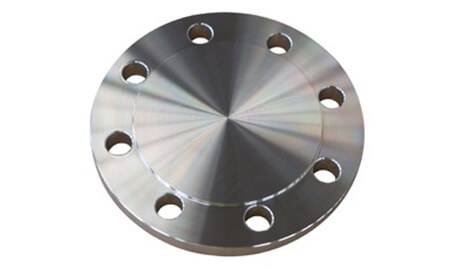
What is a stainless steel flange used for?
Quick Answer
A stainless steel flange is used to create a bolted, separable connection between pipe sections, valves, pumps, vessels or other equipment. It can provide maintenance access, terminate a line with a blind flange, connect dissimilar equipment interfaces or form part of a gasketed pressure-boundary joint. The flange, gasket, bolting, alignment and assembly procedure work as a system; the flange alone does not guarantee a leak-free joint.
See flange functions and applications
What a Stainless Steel Flange Actually Does
| Function | Typical use | Important boundary |
|---|---|---|
| Connect pipe to pipe | Creates a removable joint between piping sections. | Both mating flanges must match the required standard, size, class/PN, facing and bolt pattern. |
| Connect equipment | Joins piping to pumps, valves, vessels, heat exchangers or instruments with flanged nozzles. | Nozzle loads, alignment and equipment requirements must be checked by the system designer. |
| Provide maintenance access | Allows a joint to be opened for inspection, cleaning or component replacement. | Isolation, depressurization and a controlled reassembly procedure remain necessary. |
| Close a line | A blind flange terminates or isolates an opening. | Blind-flange thickness and pressure-temperature rating must suit the design conditions. |
| Accommodate a selected connection method | Weld-neck, slip-on, socket-weld, threaded and lap-joint arrangements address different fabrication or maintenance needs. | Type selection does not replace piping-code, welding, corrosion or fatigue review. |
Why Stainless Steel Is Selected
Stainless steel is often considered when the piping system needs a combination of corrosion resistance, mechanical properties, cleanability or temperature capability. The correct grade depends on the service fluid, chloride content, contaminants, design temperature, fabrication route, cleaning chemicals and project specification.
Material choice is not a universal ranking. 304-family grades may suit many general environments; molybdenum-bearing 316-family grades are often considered for improved resistance to localized corrosion; higher-alloy or duplex grades may be evaluated for more demanding duties. The engineering basis and ordered material standard must control the decision.
Where Stainless Steel Flanges Are Commonly Used
- Chemical and process piping: for selected corrosive fluids where the grade is compatible with the chemistry and temperature.
- Water and wastewater systems: where corrosion resistance, maintenance access and material compatibility are important.
- Food, beverage and pharmaceutical utilities: when the selected flange design, finish, gasket and cleaning procedure meet the hygienic system requirements.
- Marine and offshore services: only after evaluating seawater exposure, crevice conditions and galvanic compatibility.
- Power and energy equipment: where the ordered grade and flange standard meet pressure-temperature and fabrication requirements.
- Pumps, valves and heat exchangers: to create removable equipment connections for installation and maintenance.
How Standards Divide the Work
ASME B16.5 covers pressure-temperature ratings, materials, dimensions, tolerances, marking and testing for pipe flanges and flanged fittings within its stated size and class scope. The ordered edition matters. It also includes joint-related requirements and recommendations for bolting and gaskets.
ASTM A182/A182M covers forged or rolled alloy and stainless-steel piping components for pressure systems, including flanges. Its public scope addresses material grades, chemistry, heat treatment and mechanical properties. A complete order normally identifies both the material specification and the dimensional flange standard rather than treating them as interchangeable.
Common Flange Types and Their Uses
- Weld neck: butt-welded connection with a hub; often evaluated for demanding pressure, temperature or cyclic service.
- Slip-on: slides over the pipe and is welded; fit-up and welding details must follow the approved procedure.
- Socket weld: compact connection used within its applicable size and service limits.
- Threaded: avoids a butt weld at the flange but introduces thread and service limitations.
- Lap joint: backing flange used with a stub end; useful where rotation or material separation is part of the design.
- Blind: closes an opening and must be selected for the pressure-temperature duty.
Product Starting Points
These are real product pages for quotation review. They do not establish suitability for a specific fluid or design condition without the complete RFQ.
Information to Include in an RFQ
- flange type, NPS/DN and quantity;
- class or PN and dimensional standard/edition;
- material specification, grade and required condition;
- facing, bore or matching pipe schedule;
- service fluid, design pressure and temperature;
- gasket/bolting interface requirements when known;
- MTC, marking and supplementary inspection requirements.
Frequently Asked Questions
Do flanges make a joint automatically leak-proof?
No. Joint performance depends on compatible flanges, gasket, bolting, alignment, surface condition and controlled assembly.
Can any two flanges with the same nominal size be bolted together?
No. Standard, class/PN, facing, bolt pattern and dimensional compatibility must be checked.
Why use a blind flange?
A blind flange closes or isolates a flanged opening while allowing future access after the system is safely depressurized.
Primary References
- ASME B16.5-2025 — public scope for pipe flanges and flanged fittings.
- ASTM A182/A182M-26 — public scope for forged or rolled alloy and stainless-steel piping components.
Need a Stainless Steel Flange for a Specific Service?
Send the standard, size, class/PN, material grade, facing, bore, quantity, service conditions and document requirements.
Related Posts
Flange Face Finish: Concentric vs Spiral Serrations Explained
Concentric and spiral serrations are both machined flange face finishes…
Duplex 2205 vs 316L Flanges: Which Material Should You Choose?
Quick answer: Duplex 2205 flanges are usually the stronger candidate…

Orifice Flange Definition, Details and ASME B16.36 Flanges Overview: Market Data, Selection Guide and Compliance Insights
The global industrial flange market was valued at $5.8 billion…

Black Disposal Flange Market Guide: Materials, 3.5″ Compatibility, and B2B Sourcing Data for Kitchen Sink Flanges
Black disposal flange demand is rising as Kitchen fixture buyers…
No Comments