
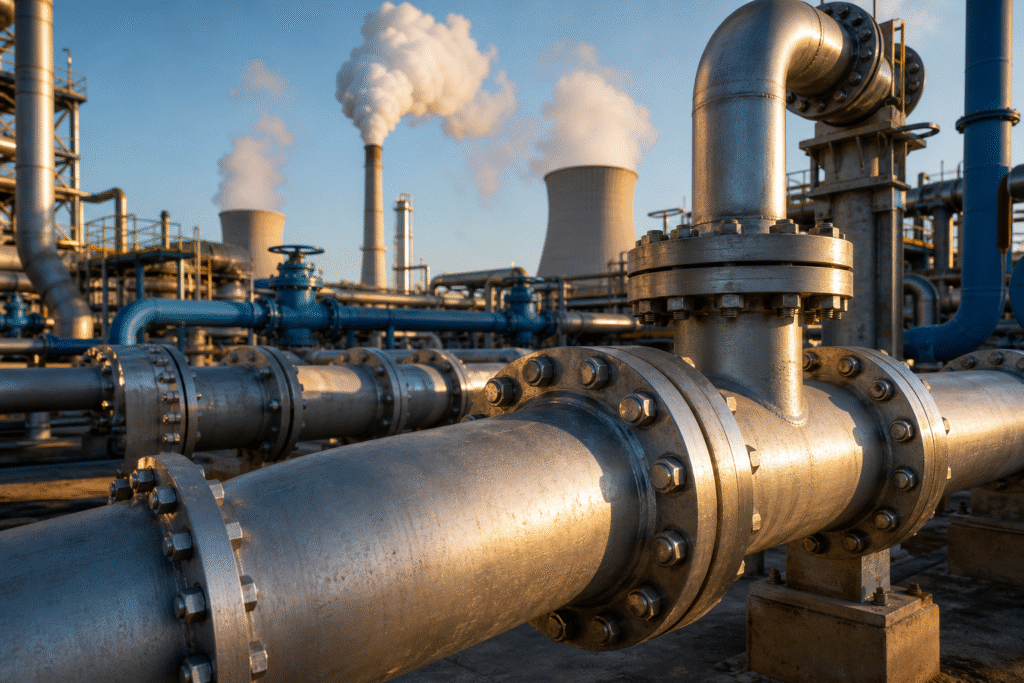
ステンレス鋼管フランジ市場、72億ドルに達する見通し 2030: 隠れた利点, 種類, 用途と ASME B16.5 選択ガイド
の ステンレス鋼管フランジ market is expanding as process industries demand higher corrosion resistance, より長い耐用年数, より厳格なコードコンプライアンス. グランドビューリサーチによると (2024), 世界の工業用フランジ市場は次のように評価されました。 $5.8 億で 2023 に達すると予測されています $7.2 10億まで 2030.
That growth reflects the Hidden Advantages of Stainless Steel Flanges in critical Pipe systems. エンジニアと調達チーム向け, 本当の決定は価格だけではありません, but also about durability, ライフサイクル価値, 材質グレード, そして ASME B16.5 コンプライアンス.
ステンレス鋼管フランジ需要の市場要因
Industrial buyers are increasingly shifting from commodity carbon steel options to higher-performance stainless solutions. IBISWorldによると (2024), アジア太平洋地域が占める割合は超過 45% 世界のフランジ生産量の, 中国が最大の製造国である.
That regional concentration matters for supply chain planning. リードタイムに影響する, mill availability, alloy sourcing, and factory-direct pricing for standard and custom forged products.
同時に, end-use demand remains strongly tied to energy and process sectors. 統計局によると (2024), 石油・ガス産業が約 35% 世界のフランジ消費量の.
しかし, stainless steel pipe flange demand now extends well beyond upstream energy. 水処理, 海洋システム, 製薬工場, 食品加工, and power generation all require Stainless, 衛生的な, and corrosion-resistant connection points.
This shift has increased interest in 304, 316, 316l, 904l, 2205, そして 2507 成績. In aggressive chloride service, buyers often move from 304 to molybdenum-bearing 316L or duplex grades to improve pitting resistance.
モルドール情報局によると (2024), industrial infrastructure spending in emerging markets continues to support demand for pipe connection components with longer design life. したがって, buyers increasingly evaluate total installed cost rather than only initial unit price.
That is one reason the keyword Intriguing appears in many online searches, even if engineers would describe the topic differently. The more practical point is that the Versatility and durability of stainless steel pipe flange products make them suitable for both general utility systems and severe process conditions.
として SASA FLANGE supports buyers across Oil & ガス, 石油化学, 発電, 造船 & 海兵隊, 水処理, と建設, material selection is treated as a project risk decision. と ISO 9001:2015 および PED 2014/68/EU 認証, the company aligns manufacturing control with the documentation expectations of EPC contractors and global distributors.
Procurement managers also care about supply flexibility. 高度な CNC 加工と包括的な品質テストに裏付けられています, SASA FLANGE ステンレス鋼フランジを供給します, 炭素鋼フランジ, 合金フランジ, エルボなどの配管継手, ティー, 減速機, そしてキャップ.
マーケットリサーチの将来によると (2024), demand for corrosion-resistant piping components is growing faster in desalination, オフショア, and chemical processing segments than in general industrial applications. 結果として, stainless steel flange types with tighter metallurgy control and traceable certification are gaining share.
プロジェクト購入者向け, that means a stainless steel pipe flange is no longer a generic commodity. It is a specification-driven component linked to pressure class, 対面タイプ, 腐食代, 溶接手順, および検査要件.
Technical Advantages, 種類, Uses and Material Selection Criteria
The Hidden Advantages of a stainless steel pipe flange start with corrosion resistance, but they do not end there. Stainless materials also support cleaner service conditions, better oxidation resistance, and more stable long-term sealing performance in many systems.
ASTM および ASME の材料慣行に準拠, 鍛造ステンレスフランジは通常、以下の場所で供給されます。 ASTM A182 with dimensions governed by ASME B16.5と ASME B16.47 該当する場合. したがって, a buyer must match chemistry, 鍛造品質, フランジクラス, and dimensional standard together.
ジョン・バターフィールド役, 上級配管エンジニア, 州: “A flange failure rarely starts at the drawing stage alone; it usually begins with a mismatch between material grade, プロセス化学, and bolt load assumptions.” That is why experienced sourcing teams review service media, 温度, 圧力サイクル, and maintenance access before they Choose a flange type.
According to NACE guidance for sour and corrosive environments, alloy selection must consider chlorides, H2S, CO2, 温度, そして隙間露出. 対照的に, many low-risk water or air systems can use 304 or 304L economically when contamination and corrosion loads remain moderate.
The most common Stainless grades for a stainless steel pipe flange include the following:
- 304 and 304L for general industrial service, きれいな水, 空調設備, 軽い化学薬品の使用.
- 316 and 316L for chloride-bearing service, 海洋大気, and more aggressive chemical lines.
- 904L for strong corrosion resistance in severe acidic environments.
- 2205 duplex for higher strength and improved chloride stress corrosion resistance.
- 2507 オフショア用スーパーデュプレックス, 脱塩, and highly corrosive process systems.
- インコネルなどのニッケル合金, モネル, and Hastelloy for specialized high-temperature or corrosive duties.
Material selection also depends on flange Types. Each design offers different fabrication, 検査, and service advantages.
- Weld neck flanges support high pressure, 循環ロード, 重要なプロセスライン.
- Slip on flanges reduce fabrication cost for lower-pressure service and easier fit-up.
- Blind flanges terminate lines, 機器を隔離する, and support hydrotest activities.
- Socket weld flanges suit smaller bore high-pressure piping.
- Threaded flanges work where welding is restricted or undesirable.
- Lapped joint flanges help systems that require frequent dismantling and alignment flexibility.
によると ASME B16.5, standard flange pressure-temperature ratings vary by material group and class designation. したがって, クラス 150, 300, 600, 900, 1500, そして 2500 selection must always be verified against operating temperature.
Engineers also evaluate facing style because gasket interaction drives sealing performance. 盛り上がった顔, 平らな面, and ring type joint options each serve different service levels and bolting requirements.
博士として. Emily Carver, 材料科学者, 州: “The best stainless choice is rarely the highest alloy by default; it is the grade that delivers the required corrosion margin at the lowest total lifecycle cost.” That principle is especially important when comparing 304 対 316L, or 316L versus duplex grades.
例えば, 304 remains widely used because it offers a strong cost-to-performance balance. しかし, 316L often becomes the better option in marine, 化学薬品, and higher chloride environments because molybdenum improves pitting resistance.
In practical B2B sourcing, buyers should compare these technical factors:
- 材料規格など ASTM A182 F304, F304L, F316, F316L, F51, またはF53.
- Dimensional standard such as ANSI B16.5, ANSI B16.47, DIN, JIS, ゴスト, またはEN 1092.
- パイプのスケジュールとボアの一致, Sch 10Sを含む, 40S, and heavier wall combinations.
- RFを含むフェーシングタイプ, FF, RTJ, or custom machined facings.
- Testing documents such as EN 10204 3.1, PMI, 水圧試験, 硬度, and ultrasonic inspection.
- トレーサビリティ, 熱数制御, およびマーキング要件.
According to ISO manufacturing quality practice, process repeatability strongly influences sealing reliability and fit-up accuracy. したがって, CNC machining quality, forging control, and final inspection matter as much as raw material chemistry.
SASA FLANGE でフランジを製造します 304, 316, 904l, 2205, 2507 その他のプレミアムグレード. 1/2からのカスタムサイズを提供します" 60まで" 競争力のある工場直販価格, the company supports project and distributor requirements across standard and non-standard dimensions.
Buyers looking for stainless steel pipe flange products often search by size, のような 2 インチまたは 4 インチステンレス鋼管フランジ, or by application, such as marine, APIフランジ, and water treatment service. それぞれの場合において, the engineering answer depends on media composition, フランジクラス, corrosion margin, ガスケットの設計, および製造方法.
For deeper project support or quotations, engineering and procurement teams can 接触 SASA FLANGE for material recommendations and technical documentation. This is particularly useful when a project requires mixed standards, カスタム穴あけ, or urgent replacement parts.
ASME B16.5, ASTM A182, DIN and EN Compliance Requirements
Standards compliance is one of the most important buying criteria for any stainless steel pipe flange. A flange may appear dimensionally correct, yet fail project acceptance if documentation, マーキング, 冶金, or testing does not align with contract requirements.
ASME B16.5 次元を支配する, 公差, 圧力温度定格, マーキング, and materials references for pipe flanges and flanged fittings up to NPS 24. より大きな直径の場合, ASME B16.47 通常は適用されます, especially in heavy industrial and pipeline projects.
ASTM A182 鍛造または圧延合金およびステンレス鋼の管フランジをカバーします。, 鍛造継手, バルブ, および高温サービス用部品. 実際に, buyers frequently specify ASTM A182 F304/F304L, F316/F316L, F904L, F51, or F53 depending on process duty.
European projects may instead call for EN 1092 フランジと PED のドキュメント. したがって, suppliers must understand both dimensional differences and documentation differences across ASME, DIN, およびENシステム.
Key standards and compliance points include:
- ASME B16.5 for dimensions and pressure classes up to NPS 24.
- ASME B16.47 大径フランジ用.
- ASME B16.9 for stainless steel butt weld fittings used with flange assemblies.
- ASTM A182 鍛造ステンレスおよび合金フランジ材料用.
- EN 1092 ヨーロッパのフランジ寸法と圧力指定に対応.
- PED 2014/68/EU for pressure equipment compliance in applicable EU projects.
- NACE MR0175 for sour service material selection in oil and gas environments.
The following comparison helps procurement teams align specifications:
- ASME systems commonly use NPS sizing and pressure classes such as 150 そして 300.
- EN and DIN systems often use DN sizing and PN designations such as PN16 or PN40.
- Facing dimensions, ボルトパターン, and drilling can vary between ASME and EN standards.
- Material naming can differ even when corrosion performance is similar.
欧州委員会の PED 枠組みによると, pressure equipment supplied into the EU often requires traceable technical files and conformity procedures. したがって, exporters must coordinate material certificates, 寸法検査報告書, and marking records from the start of production.
マーク・ジェンセン役, Global Procurement Analyst, 州: “The most expensive flange in a project is the one that arrives without acceptable certification.” That observation reflects a common reality in EPC sourcing, where missing EN 10204 3.1 certificates or incomplete heat traceability can delay site release.
SASA FLANGE supports these compliance needs with ISO 9001:2015, PED 2014/68/EU, とAD 2000 認証. 給仕 50+ 石油を巡る国々 & ガス, 石油化学, 力, 海洋産業, the company integrates quality documentation into the manufacturing workflow instead of treating it as an afterthought.
加えて, buyers should verify inspection scope before ordering. Typical requirements may include PMI for alloy confirmation, 硬さ試験, 二相グレードのフェライト試験, 超音波検査, and dimensional inspection against approved drawings.
For special service, gasket compatibility also deserves attention. Even a correctly manufactured stainless steel pipe flange can underperform if the gasket material, 表面仕上げ, or bolt load is unsuitable for process conditions.
According to DNV and offshore project practice, marine and offshore systems often impose stricter documentation and corrosion requirements than general industrial installations. 結果として, duplex and super duplex flange packages often include more extensive testing and traceability than standard 304 または 316 utility flanges.
油用ステンレス鋼管フランジ製品の選び方, ガス, Power and Marine Service
Application-based selection is the fastest way to reduce procurement risk. Instead of starting with a catalog alone, engineers should begin with service conditions, 検査要件, and lifecycle expectations.
石油およびガスシステムにおいて, ステンレス鋼管フランジの選択は塩化物に依存することが多い, 酸っぱいサービスの暴露, 圧力クラス. 統計局によると (2024), this sector accounts for approximately 35% 世界のフランジ消費量の, so reliability expectations are high.
For upstream and petrochemical service, common selection rules include:
- Use weld neck flanges for high-pressure and cyclic service.
- レビュー NACE MR0175 where H2S or sour conditions exist.
- Consider duplex grades where chlorides and strength demands exceed 316L capability.
- リクエスト EN 10204 3.1 certification and PMI for critical alloys.
化学処理において, the main concern is media compatibility. A strong acid, chloride-rich stream, or oxidizing environment may require 316L, 904l, ハステロイ, or another corrosion-resistant alloy instead of standard 304.
発電において, steam conditions and thermal cycling often drive the design choice. したがって, weld neck and socket weld configurations frequently offer better long-term integrity than lower-cost alternatives in critical lines.
Marine and shipbuilding applications demand resistance to salt spray, 海水暴露, and difficult maintenance conditions. For these Uses, 316L and duplex grades are commonly preferred because they provide a stronger corrosion margin.
Water treatment and desalination projects add another layer of complexity. マーケットリサーチの将来によると (2024), corrosion-resistant piping components show stronger growth in desalination infrastructure than in many general industrial segments.
When buyers compare suppliers, they should use a structured checklist:
- Confirm material grade and forging standard.
- Confirm dimensional standard such as ASME B16.5 またはEN 1092.
- Match pressure class to design temperature.
- Check face type, ボアスケジュール, そして壁の厚さ.
- Verify testing scope and certificate package.
- リードタイムの見直し, 梱包, および輸出書類.
- Ask about custom drilling, special machining, and non-standard sizes.
Stainless steel pipe flange price also varies for practical reasons. ニッケル含有量, 鍛造サイズ, 加工時間, テスト範囲, and certificate requirements all influence landed cost.
したがって, the lowest quoted price may not represent the best commercial option. A competitively priced flange without proper PMI, 寸法精度, or packing protection can create much higher downstream cost.
SASA FLANGE supports custom manufacturing for standard and special projects, including stainless steel flanges and fittings for multi-industry installations. Buyers can also review broader capabilities through the product portfolio and discuss project details through the お問い合わせページ.
混合パッケージの場合, coordination between flanges and fittings is essential. Pipe elbows, ティー, 減速機, and caps must align with the same metallurgy, スケジュール, and documentation level as the mating flange assembly.
That is why many B2B buyers prefer a supplier that can support both flange and fitting requirements. It simplifies inspection, export paperwork, and technical communication across the full package.
今後の展望, Procurement Strategy and Long-Term Value
The flange market outlook remains positive because process industries continue investing in replacement, expansion, and reliability upgrades. グランドビューリサーチによると (2024), 市場は到達すると予想されます $7.2 10億まで 2030, reflecting sustained demand across energy, 水, and industrial infrastructure.
同時に, buyers face tighter control on total cost, not just purchase cost. したがって, procurement strategy must balance raw material volatility, fabrication lead times, およびコンプライアンス文書.
Several trends will shape stainless steel pipe flange buying decisions over the next five years:
- Greater demand for duplex and high-alloy materials in corrosive environments.
- More documentation requirements for export and EPC projects.
- Shorter project schedules and stronger preference for reliable factory-direct partners.
- Higher use of digital traceability, PMI, and quality reporting.
IBISWorldによると (2024), China remains the largest manufacturing base within a region that accounts for over 45% 世界のフランジ生産量の. 結果として, strategic sourcing from qualified Chinese manufacturers can offer both scale and cost efficiency when quality systems are verified.
調達チーム向け, the best practice is clear. Standardize approved flange specifications, qualify suppliers by certification and inspection capability, and compare total delivered value instead of nominal unit price alone.
Engineers should also avoid overspecification where it adds no measurable benefit. 逆に, they should not underspecify corrosion resistance, ドキュメント, or machining quality in critical systems.
That balanced approach reveals the real Hidden Advantages of using a well-selected stainless steel pipe flange. Better durability, fewer shutdowns, easier compliance, and lower maintenance often outweigh a modest upfront premium.
For organizations seeking dependable supply, カスタムサイズ, and technical support across ASME, DIN, JIS, ゴスト, およびEN規格, との議論 SASA FLANGE 仕様を調整するのに役立ちます, 予算, and lead-time targets. In competitive project environments, that kind of early technical coordination often creates the strongest commercial result.
よくある質問
ステンレス鋼フランジは何に使用されますか?
●パイプセクションの接続にはステンレス鋼のフランジが使用されます, バルブ, パンプス, 耐食性が必要なシステム内の機器など, clean service, and reliable sealing under pressure.
●統計局によると (2024), 石油・ガス産業が約 35% 世界のフランジ消費量の, which shows how critical flanges are in energy infrastructure.
●They are also widely used in chemical processing, 海洋システム, 水処理, 発電所, 医薬品, and food-grade installations because stainless materials resist rust, スケーリング, and contamination better than many carbon steel options.
●Common Uses include line assembly, 機器の絶縁, メンテナンスアクセス, and pressure boundary integrity in both low-pressure utility systems and high-pressure process lines.
●For best results, buyers should match material grade, フランジクラス, 対面タイプ, そして次のような標準 ASME B16.5 to the actual service environment.
ステンレス鋼の管継手を製造していますか?
●はい, メーカーはエルボなどのステンレス鋼管継手を製造しています, ティー, 減速機, キャップ, and stub ends to work with flange and welded piping systems.
●によると ASME B16.9, butt weld fittings are standardized for dimensions and tolerances, which helps engineers maintain fit-up consistency across piping assemblies.
●These fittings are commonly available in 304, 316, 316l, 904l, 2205, そして 2507 depending on corrosion risk, 圧力クラス, and process media.
●多くのプロジェクトで, flanges and fittings should be sourced with the same metallurgy and certification level to simplify inspection and avoid mixed-documentation issues.
●For projects requiring stainless steel flanges and Fittings with EN 10204 3.1 certificates or custom dimensions, のような確立されたメーカーと協力する SASA FLANGE helps reduce procurement risk.
ステンレス鋼フランジにはどのような種類がありますか?
●メインステンレスフランジタイプはウェルドネックです, スリップオン, 盲目, ソケット溶接, ねじ切りされた, そしてラップジョイント, and each one suits different pressure, 製造, およびメンテナンス状況.
●ASME B16.5 covers most common flange dimensions and pressure classes up to NPS 24, making it the core standard for many industrial buyers.
●Weld neck flanges are preferred for severe service and cyclic loading, while slip on flanges are often selected for easier alignment and lower fabrication cost in moderate duty.
●Blind flanges close line ends, threaded flanges help where welding is restricted, and lap joint flanges support systems that need frequent dismantling.
●The right choice depends on pressure rating, 温度, media corrosivity, パイプスケジュール, 検査範囲, とメンテナンス戦略.
3種類のフランジとは何ですか?
●The three most commonly referenced flange types in general industrial discussion are weld neck, スリップオン, ブラインドフランジ.
●These three cover many typical applications because weld neck supports critical service, slip on offers economical installation, and blind provides positive line closure.
●によると ASME B16.5, each type must still be selected by matching pressure-temperature rating, 対面スタイル, and material group rather than by shape alone.
●実際に, engineers may also use socket weld, ねじ切りされた, and lap joint flanges where project conditions require them.
●重要なシステム向け, the safest approach is to review piping stress, サービス化学, and gasket design before final selection.
ステンレス鋼フランジの ASME コードとは何ですか?
●The primary ASME dimensional standard for a stainless steel pipe flange is ASME B16.5, その間 ASME B16.47 is commonly used for larger diameters.
●Material requirements are often linked to ASTM A182 for forged stainless steel grades such as F304, F304L, F316, とF316L.
●ASME の慣例によると, 圧力温度定格, 寸法, 公差, マーキング, and flange classes must all be checked together during specification review.
●Buyers should also note that European projects may call for EN 1092 instead of ASME dimensions, so interchangeability is not automatic.
●For export or EPC projects, always request dimensional compliance records and material certificates before shipment release.
どちらかを選択するにはどうすればよいですか 304 そして 316 ステンレス鋼フランジ?
●選ぶ 304 stainless steel flanges for general service and lower-corrosion environments, そして選択してください 316 塩化物の場合は 316L, 海洋暴露, or harsher chemicals are present.
●The key difference is molybdenum content in 316 成績, which improves resistance to pitting and crevice corrosion in aggressive media.
●According to corrosion engineering practice and common ASTM A182 材料の選択, 316L is frequently preferred for marine, 化学薬品, and higher-purity process systems.
●しかし, 304 often remains the more economical solution when service conditions do not justify the added alloy cost.
●When the application is uncertain, a supplier with technical experience and documented quality systems such as SASA FLANGE can help evaluate the most cost-effective grade.
関連投稿

オリフィスフランジの定義, 詳細と ASME B16.36 フランジの概要: 市場データ, 選択ガイドとコンプライアンスに関する洞察
世界の工業用フランジ市場は次のように評価されました。 $5.8 十億…

ブラックディスポフランジ市場ガイド: 材料, 3.5″ 互換性, キッチン シンク フランジの B2B 調達データ
キッチン設備の購入者として黒色の使い捨てフランジの需要が高まっています…