
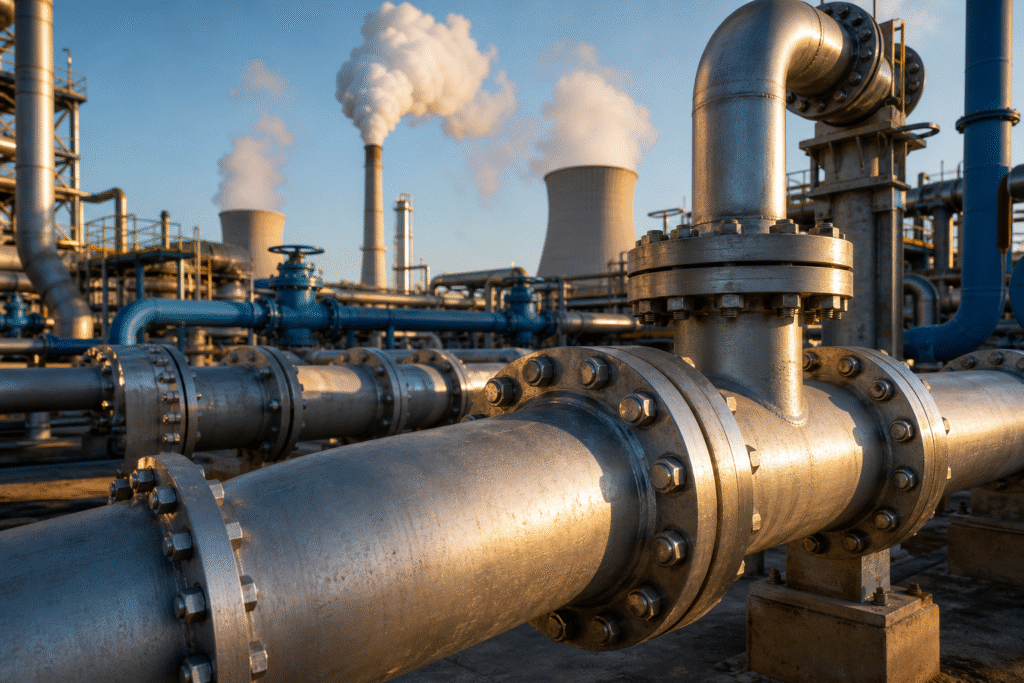
Рынок фланцев для труб из нержавеющей стали достигнет $7,2 млрд. 2030: Скрытые преимущества, Типы, Использование и руководство по выбору ASME B16.5
The фланец трубы из нержавеющей стали market is expanding as process industries demand higher corrosion resistance, более длительный срок службы, и более строгое соблюдение норм. По данным исследования Grand View (2024), мировой рынок промышленных фланцев оценивался в $5.8 миллиард в 2023 и, по прогнозам, достигнет $7.2 миллиард на 2030.
That growth reflects the Hidden Advantages of Stainless Steel Flanges in critical Pipe systems. Для инженеров и отделов закупок, реальное решение касается не только цены, but also about durability, ценность жизненного цикла, сорт материала, и ASME B16.5 согласие.
Market Drivers Behind Stainless Steel Pipe Flange Demand
Industrial buyers are increasingly shifting from commodity carbon steel options to higher-performance stainless solutions. По данным IBISWorld (2024), На долю Азиатско-Тихоокеанского региона приходится более 45% мирового производства фланцев, при этом Китай является крупнейшим производителем.
That regional concentration matters for supply chain planning. Это влияет на сроки выполнения, доступность мельницы, alloy sourcing, and factory-direct pricing for standard and custom forged products.
В то же время, end-use demand remains strongly tied to energy and process sectors. По данным Статистики (2024), на долю нефтегазовой отрасли приходится около 35% мирового потребления фланцев.
Однако, stainless steel pipe flange demand now extends well beyond upstream energy. Очистка воды, морские системы, фармацевтические заводы, пищевая промышленность, and power generation all require Stainless, гигиенический, and corrosion-resistant connection points.
This shift has increased interest in 304, 316, 316л, 904л, 2205, и 2507 оценки. In aggressive chloride service, покупатели часто переезжают из 304 to molybdenum-bearing 316L or duplex grades to improve pitting resistance.
По данным Мордорской разведки (2024), industrial infrastructure spending in emerging markets continues to support demand for pipe connection components with longer design life. Поэтому, buyers increasingly evaluate total installed cost rather than only initial unit price.
That is one reason the keyword Intriguing appears in many online searches, even if engineers would describe the topic differently. The more practical point is that the Versatility and durability of stainless steel pipe flange products make them suitable for both general utility systems and severe process conditions.
Как SASA FLANGE supports buyers across Oil & Газ, нефтехимическая, Производство электроэнергии, Судостроение & Морской, Очистка воды, и строительство, material selection is treated as a project risk decision. С ISO 9001:2015 и сертификаты PED 2014/68/ЕС., the company aligns manufacturing control with the documentation expectations of EPC contractors and global distributors.
Procurement managers also care about supply flexibility. Благодаря передовой обработке с ЧПУ и всестороннему тестированию качества., SASA FLANGE поставляет фланцы из нержавеющей стали, фланцы из углеродистой стали, фланцы из сплава, и фитинги для труб, такие как колена, тройники, редукторы, и шапки.
По данным Market Research Future (2024), demand for corrosion-resistant piping components is growing faster in desalination, оффшорный, and chemical processing segments than in general industrial applications. Как результат, stainless steel flange types with tighter metallurgy control and traceable certification are gaining share.
Для покупателей проекта, that means a stainless steel pipe flange is no longer a generic commodity. It is a specification-driven component linked to pressure class, тип облицовки, допуск на коррозию, процедура сварки, и требования к проверке.
Technical Advantages, Типы, Uses and Material Selection Criteria
The Hidden Advantages of a stainless steel pipe flange start with corrosion resistance, but they do not end there. Stainless materials also support cleaner service conditions, better oxidation resistance, and more stable long-term sealing performance in many systems.
В соответствии с практикой материалов ASTM и ASME., forged stainless flanges are commonly supplied under ASTM A182 с размерами, определяемыми ASME В16.5 и ASME B16.47 где это применимо. Поэтому, a buyer must match chemistry, качество ковки, класс фланца, and dimensional standard together.
В роли Джона Баттерфилда, Старший инженер по трубопроводам, государства: «Выход из строя фланца редко начинается только на этапе чертежа.; it usually begins with a mismatch between material grade, химия процесса, and bolt load assumptions.» That is why experienced sourcing teams review service media, температура, циклическое давление, and maintenance access before they Choose a flange type.
According to NACE guidance for sour and corrosive environments, alloy selection must consider chlorides, H2S, СО2, температура, and crevice exposure. В отличие, many low-risk water or air systems can use 304 or 304L economically when contamination and corrosion loads remain moderate.
The most common Stainless grades for a stainless steel pipe flange include the following:
- 304 и 304L для общепромышленного обслуживания., clean water, ОВиК, и легкая химия.
- 316 and 316L for chloride-bearing service, морская атмосфера, and more aggressive chemical lines.
- 904L for strong corrosion resistance in severe acidic environments.
- 2205 duplex for higher strength and improved chloride stress corrosion resistance.
- 2507 супер дуплекс для оффшора, опреснение, and highly corrosive process systems.
- Никелевые сплавы, такие как Инконель, Монель, and Hastelloy for specialized high-temperature or corrosive duties.
Material selection also depends on flange Types. Each design offers different fabrication, инспекция, and service advantages.
- Weld neck flanges support high pressure, циклическая загрузка, и критические технологические линии.
- Slip on flanges reduce fabrication cost for lower-pressure service and easier fit-up.
- Blind flanges terminate lines, изолировать оборудование, and support hydrotest activities.
- Socket weld flanges suit smaller bore high-pressure piping.
- Threaded flanges work where welding is restricted or undesirable.
- Lapped joint flanges help systems that require frequent dismantling and alignment flexibility.
В соответствии с ASME B16.5, standard flange pressure-temperature ratings vary by material group and class designation. Поэтому, Сорт 150, 300, 600, 900, 1500, и 2500 selection must always be verified against operating temperature.
Engineers also evaluate facing style because gasket interaction drives sealing performance. Поднятое лицо, плоское лицо, and ring type joint options each serve different service levels and bolting requirements.
Как доктор. Emily Carver, Материаловед, государства: «The best stainless choice is rarely the highest alloy by default; it is the grade that delivers the required corrosion margin at the lowest total lifecycle cost.» Этот принцип особенно важен при сравнении 304 против 316Л, or 316L versus duplex grades.
Например, 304 remains widely used because it offers a strong cost-to-performance balance. Однако, 316L often becomes the better option in marine, химический, and higher chloride environments because molybdenum improves pitting resistance.
In practical B2B sourcing, buyers should compare these technical factors:
- Стандарт материала, такой как ASTM A182 F304, F304L, Ф316, F316L, F51, или F53.
- Dimensional standard such as ANSI B16.5, АНСИ Б16.47, DIN, JIS, ГОСТ, или RU 1092.
- Сортировка труб и диаметр отверстия, в том числе Щ 10С, 40С, and heavier wall combinations.
- Тип облицовки в том числе RF, ФФ, РТЖ, or custom machined facings.
- Testing documents such as EN 10204 3.1, PMI, гидроиспытание, твердость, and ultrasonic inspection.
- Прослеживаемость, контроль количества плавок, и требования к маркировке.
According to ISO manufacturing quality practice, process repeatability strongly influences sealing reliability and fit-up accuracy. Поэтому, CNC machining quality, forging control, and final inspection matter as much as raw material chemistry.
SASA FLANGE производит фланцы в 304, 316, 904л, 2205, 2507 и другие премиум-классы. Предлагаю нестандартные размеры от 1/2." до 60" с конкурентоспособными ценами напрямую с завода, the company supports project and distributor requirements across standard and non-standard dimensions.
Buyers looking for stainless steel pipe flange products often search by size, такой как 2 дюйм или 4 дюймовый фланец трубы из нержавеющей стали, or by application, such as marine, Фланцы API, and water treatment service. В каждом случае, the engineering answer depends on media composition, класс фланца, corrosion margin, конструкция прокладки, и способ изготовления.
For deeper project support or quotations, engineering and procurement teams can контакт SASA FLANGE for material recommendations and technical documentation. This is particularly useful when a project requires mixed standards, индивидуальное бурение, or urgent replacement parts.
ASME B16.5, ASTM A182, DIN and EN Compliance Requirements
Standards compliance is one of the most important buying criteria for any stainless steel pipe flange. A flange may appear dimensionally correct, yet fail project acceptance if documentation, маркировка, металлургия, or testing does not align with contract requirements.
ASME B16.5 управляет размерами, допуски, номинальные значения давления и температуры, маркировка, and materials references for pipe flanges and flanged fittings up to NPS 24. Для больших диаметров, ASME B16.47 обычно применяется, especially in heavy industrial and pipeline projects.
ASTM A182 покрывает фланцы труб из кованых или катаных сплавов и нержавеющей стали., кованые фитинги, клапаны, и детали для работы при высоких температурах. На практике, buyers frequently specify ASTM A182 Ф304/Ф304Л, Ф316/Ф316Л, F904L, F51, or F53 depending on process duty.
European projects may instead call for EN 1092 flanges and PED documentation. Поэтому, suppliers must understand both dimensional differences and documentation differences across ASME, DIN, и системы EN.
Key standards and compliance points include:
- ASME B16.5 for dimensions and pressure classes up to NPS 24.
- ASME B16.47 для фланцев большего диаметра.
- ASME B16.9 for stainless steel butt weld fittings used with flange assemblies.
- ASTM A182 for forged stainless and alloy flange materials.
- EN 1092 для европейских размеров фланцев и обозначений давления.
- PED 2014/68/EU for pressure equipment compliance in applicable EU projects.
- NACE MR0175 for sour service material selection in oil and gas environments.
The following comparison helps procurement teams align specifications:
- ASME systems commonly use NPS sizing and pressure classes such as 150 и 300.
- EN and DIN systems often use DN sizing and PN designations such as PN16 or PN40.
- Facing dimensions, шаблоны болтов, and drilling can vary between ASME and EN standards.
- Material naming can differ even when corrosion performance is similar.
В соответствии с рамками Европейской комиссии для PED, pressure equipment supplied into the EU often requires traceable technical files and conformity procedures. Поэтому, exporters must coordinate material certificates, отчеты о проверке размеров, and marking records from the start of production.
As Mark Jensen, Global Procurement Analyst, государства: «The most expensive flange in a project is the one that arrives without acceptable certification.» That observation reflects a common reality in EPC sourcing, where missing EN 10204 3.1 certificates or incomplete heat traceability can delay site release.
SASA FLANGE supports these compliance needs with ISO 9001:2015, ПЭД 2014/68/ЕС, и АД 2000 сертификаты. Обслуживание 50+ страны по нефти & Газ, нефтехимическая, Власть, и морская промышленность, the company integrates quality documentation into the manufacturing workflow instead of treating it as an afterthought.
Кроме того, buyers should verify inspection scope before ordering. Typical requirements may include PMI for alloy confirmation, испытание на твердость, ferrite testing for duplex grades, ультразвуковое исследование, and dimensional inspection against approved drawings.
For special service, gasket compatibility also deserves attention. Even a correctly manufactured stainless steel pipe flange can underperform if the gasket material, обработка поверхности, or bolt load is unsuitable for process conditions.
According to DNV and offshore project practice, marine and offshore systems often impose stricter documentation and corrosion requirements than general industrial installations. Как результат, duplex and super duplex flange packages often include more extensive testing and traceability than standard 304 или 316 utility flanges.
Как выбрать фланцы для труб из нержавеющей стали для масла, Газ, Power and Marine Service
Application-based selection is the fastest way to reduce procurement risk. Instead of starting with a catalog alone, engineers should begin with service conditions, требования к инспекции, and lifecycle expectations.
В нефтегазовых системах, stainless steel pipe flange selection often depends on chlorides, воздействие кислого сервиса, и класс давления. По данным Статистики (2024), this sector accounts for approximately 35% мирового потребления фланцев, so reliability expectations are high.
For upstream and petrochemical service, common selection rules include:
- Use weld neck flanges for high-pressure and cyclic service.
- Обзор NACE MR0175 where H2S or sour conditions exist.
- Consider duplex grades where chlorides and strength demands exceed 316L capability.
- Запрос EN 10204 3.1 certification and PMI for critical alloys.
В химической обработке, the main concern is media compatibility. A strong acid, chloride-rich stream, or oxidizing environment may require 316L, 904л, Хастеллой, or another corrosion-resistant alloy instead of standard 304.
В производстве электроэнергии, steam conditions and thermal cycling often drive the design choice. Поэтому, weld neck and socket weld configurations frequently offer better long-term integrity than lower-cost alternatives in critical lines.
Морское и судостроительное оборудование требует устойчивости к соляному туману., воздействие морской воды, and difficult maintenance conditions. For these Uses, 316L and duplex grades are commonly preferred because they provide a stronger corrosion margin.
Water treatment and desalination projects add another layer of complexity. По данным Market Research Future (2024), corrosion-resistant piping components show stronger growth in desalination infrastructure than in many general industrial segments.
When buyers compare suppliers, they should use a structured checklist:
- Confirm material grade and forging standard.
- Confirm dimensional standard such as ASME B16.5 или RU 1092.
- Match pressure class to design temperature.
- Check face type, график бурения, и толщина стенки.
- Verify testing scope and certificate package.
- Review lead time, упаковка, и экспортная документация.
- Ask about custom drilling, special machining, and non-standard sizes.
Stainless steel pipe flange price also varies for practical reasons. Содержание никеля, forging size, machining time, объем тестирования, and certificate requirements all influence landed cost.
Поэтому, the lowest quoted price may not represent the best commercial option. A competitively priced flange without proper PMI, точность размеров, or packing protection can create much higher downstream cost.
SASA FLANGE supports custom manufacturing for standard and special projects, including stainless steel flanges and fittings for multi-industry installations. Buyers can also review broader capabilities through the product portfolio and discuss project details through the страница контактов.
Для смешанных пакетов, coordination between flanges and fittings is essential. Pipe elbows, тройники, редукторы, and caps must align with the same metallurgy, расписание, and documentation level as the mating flange assembly.
That is why many B2B buyers prefer a supplier that can support both flange and fitting requirements. It simplifies inspection, export paperwork, and technical communication across the full package.
Перспективы на будущее, Procurement Strategy and Long-Term Value
The flange market outlook remains positive because process industries continue investing in replacement, expansion, and reliability upgrades. По данным исследования Grand View (2024), ожидается, что рынок достигнет $7.2 миллиард на 2030, reflecting sustained demand across energy, вода, и промышленная инфраструктура.
В то же время, buyers face tighter control on total cost, not just purchase cost. Поэтому, procurement strategy must balance raw material volatility, fabrication lead times, и документация о соответствии.
Several trends will shape stainless steel pipe flange buying decisions over the next five years:
- Greater demand for duplex and high-alloy materials in corrosive environments.
- More documentation requirements for export and EPC projects.
- Shorter project schedules and stronger preference for reliable factory-direct partners.
- Higher use of digital traceability, PMI, and quality reporting.
По данным IBISWorld (2024), China remains the largest manufacturing base within a region that accounts for over 45% мирового производства фланцев. Как результат, strategic sourcing from qualified Chinese manufacturers can offer both scale and cost efficiency when quality systems are verified.
Для отделов закупок, the best practice is clear. Standardize approved flange specifications, qualify suppliers by certification and inspection capability, and compare total delivered value instead of nominal unit price alone.
Engineers should also avoid overspecification where it adds no measurable benefit. Наоборот, they should not underspecify corrosion resistance, документация, or machining quality in critical systems.
That balanced approach reveals the real Hidden Advantages of using a well-selected stainless steel pipe flange. Better durability, меньше отключений, easier compliance, and lower maintenance often outweigh a modest upfront premium.
For organizations seeking dependable supply, нестандартные размеры, and technical support across ASME, DIN, JIS, ГОСТ, и стандарты EN, дискуссия с SASA FLANGE can help align specification, бюджет, and lead-time targets. In competitive project environments, that kind of early technical coordination often creates the strongest commercial result.
Часто задаваемые вопросы
Для чего используются фланцы из нержавеющей стали?
●Фланцы из нержавеющей стали используются для соединения секций труб., клапаны, насосы, и оборудование в системах, требующих коррозионной стойкости, clean service, и надежная герметизация под давлением.
●По данным Статистики (2024), на долю нефтегазовой отрасли приходится около 35% мирового потребления фланцев, which shows how critical flanges are in energy infrastructure.
●They are also widely used in chemical processing, морские системы, очистка воды, электростанции, фармацевтика, and food-grade installations because stainless materials resist rust, масштабирование, and contamination better than many carbon steel options.
●Common Uses include line assembly, изоляция оборудования, доступ для обслуживания, and pressure boundary integrity in both low-pressure utility systems and high-pressure process lines.
●For best results, buyers should match material grade, класс фланца, тип облицовки, и стандартные, такие как ASME B16.5 to the actual service environment.
Делают ли они фитинги для труб из нержавеющей стали??
●Да, производители производят фитинги для труб из нержавеющей стали, такие как колена, тройники, редукторы, кепки, and stub ends to work with flange and welded piping systems.
●В соответствии с ASME B16.9, butt weld fittings are standardized for dimensions and tolerances, which helps engineers maintain fit-up consistency across piping assemblies.
●These fittings are commonly available in 304, 316, 316л, 904л, 2205, и 2507 depending on corrosion risk, класс давления, and process media.
●Во многих проектах, flanges and fittings should be sourced with the same metallurgy and certification level to simplify inspection and avoid mixed-documentation issues.
●For projects requiring stainless steel flanges and Fittings with EN 10204 3.1 certificates or custom dimensions, работа с известными производителями, такими как SASA FLANGE helps reduce procurement risk.
Какие существуют типы фланцев из нержавеющей стали??
●The main stainless steel flange Types are weld neck, надеть, слепой, раструбная сварка, резьбовой, и коленный сустав, and each one suits different pressure, изготовление, и условия обслуживания.
●ASME B16.5 covers most common flange dimensions and pressure classes up to NPS 24, making it the core standard for many industrial buyers.
●Weld neck flanges are preferred for severe service and cyclic loading, while slip on flanges are often selected for easier alignment and lower fabrication cost in moderate duty.
●Blind flanges close line ends, threaded flanges help where welding is restricted, and lap joint flanges support systems that need frequent dismantling.
●The right choice depends on pressure rating, температура, media corrosivity, график труб, объем проверки, и стратегия обслуживания.
Какие три типа фланцев существуют??
●В общепромышленной дискуссии чаще всего упоминаются три типа фланцев: приварная шейка., надеть, и глухие фланцы.
●These three cover many typical applications because weld neck supports critical service, slip on offers economical installation, and blind provides positive line closure.
●В соответствии с ASME B16.5, each type must still be selected by matching pressure-temperature rating, стиль облицовки, and material group rather than by shape alone.
●На практике, engineers may also use socket weld, резьбовой, and lap joint flanges where project conditions require them.
●Для критических систем, the safest approach is to review piping stress, сервисная химия, and gasket design before final selection.
Что такое код ASME для фланцев из нержавеющей стали??
●The primary ASME dimensional standard for a stainless steel pipe flange is ASME B16.5, пока ASME B16.47 is commonly used for larger diameters.
●Material requirements are often linked to ASTM A182 for forged stainless steel grades such as F304, F304L, Ф316, и F316L.
●Согласно практике ASME, номинальные значения давления и температуры, размеры, допуски, маркировка, and flange classes must all be checked together during specification review.
●Buyers should also note that European projects may call for EN 1092 instead of ASME dimensions, so interchangeability is not automatic.
●For export or EPC projects, always request dimensional compliance records and material certificates before shipment release.
Как мне выбрать между 304 и 316 фланцы из нержавеющей стали?
●Выбирать 304 stainless steel flanges for general service and lower-corrosion environments, и выбери 316 или 316L, когда хлориды, морское воздействие, or harsher chemicals are present.
●The key difference is molybdenum content in 316 оценки, which improves resistance to pitting and crevice corrosion in aggressive media.
●According to corrosion engineering practice and common ASTM A182 выбор материала, 316L is frequently preferred for marine, химический, and higher-purity process systems.
●Однако, 304 often remains the more economical solution when service conditions do not justify the added alloy cost.
●When the application is uncertain, a supplier with technical experience and documented quality systems such as SASA FLANGE can help evaluate the most cost-effective grade.
Связанные Посты
Отделка торцевой поверхности фланца: Объяснение концентрических и спиральных зубцов
Концентрические и спиральные зубцы представляют собой обработанную поверхность фланца.…
Дуплекс 2205 по сравнению с фланцами 316L: Какой материал выбрать?
Быстрый ответ: Дуплекс 2205 flanges are usually the stronger candidate…

Определение фланца с диафрагмой, Подробности и обзор фланцев ASME B16.36: Рыночные данные, Руководство по выбору и анализ соответствия требованиям
Мировой рынок промышленных фланцев оценивался в $5.8 миллиард…

Руководство по рынку черных сливных фланцев: Материалы, 3.5″ Совместимость, и данные о поставщиках B2B для фланцев для кухонной мойки
Спрос на черные фланцы для утилизации растет благодаря покупателям кухонной техники…