
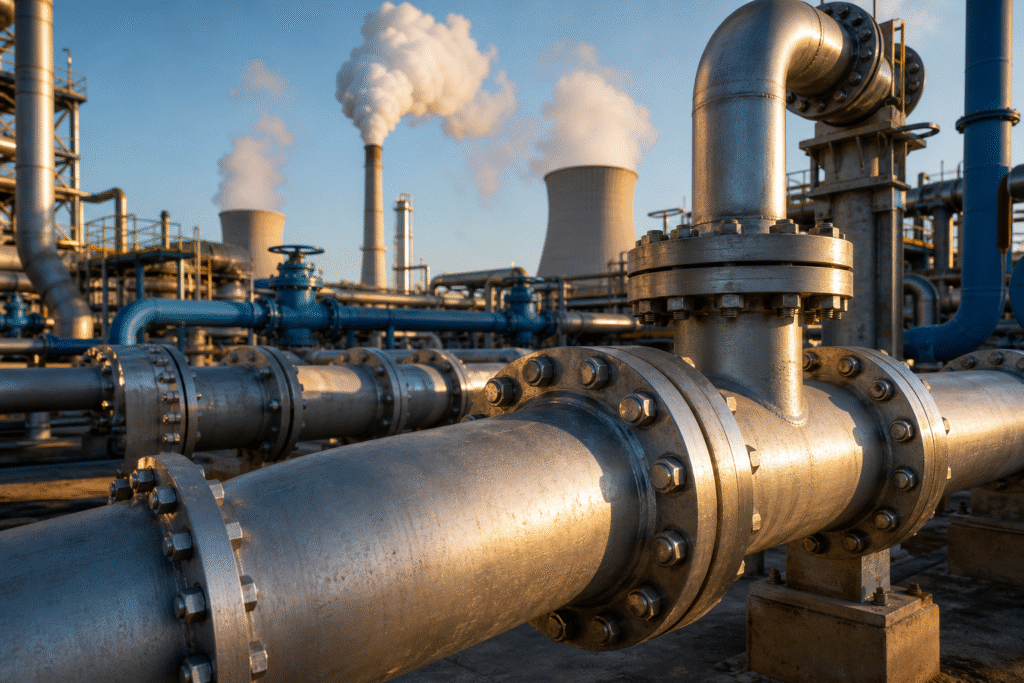
ตลาดหน้าแปลนท่อสแตนเลสมีมูลค่าถึง 7.2 พันล้านเหรียญสหรัฐ 2030: ข้อดีที่ซ่อนอยู่, ประเภท, การใช้และคู่มือการเลือก ASME B16.5
ที่ หน้าแปลนท่อสแตนเลส market is expanding as process industries demand higher corrosion resistance, อายุการใช้งานยาวนานขึ้น, และการปฏิบัติตามรหัสที่เข้มงวดยิ่งขึ้น. จากการวิจัยของแกรนด์วิว (2024), ตลาดหน้าแปลนอุตสาหกรรมทั่วโลกมีมูลค่าอยู่ที่ $5.8 พันล้านใน 2023 และคาดว่าจะไปถึง $7.2 พันล้านโดย 2030.
That growth reflects the Hidden Advantages of Stainless Steel Flanges in critical Pipe systems. สำหรับวิศวกรและทีมงานจัดซื้อ, the real decision is not only about price, but also about durability, มูลค่าวงจรชีวิต, เกรดวัสดุ, และ ASME B16.5 การปฏิบัติตาม.
Market Drivers Behind Stainless Steel Pipe Flange Demand
Industrial buyers are increasingly shifting from commodity carbon steel options to higher-performance stainless solutions. อ้างอิงจาก IBISWorld (2024), บัญชีเอเชียแปซิฟิกมีมากกว่า 45% ของการผลิตหน้าแปลนทั่วโลก, โดยจีนเป็นผู้ผลิตรายใหญ่ที่สุด.
That regional concentration matters for supply chain planning. มันส่งผลต่อระยะเวลารอคอย, mill availability, alloy sourcing, and factory-direct pricing for standard and custom forged products.
ในเวลาเดียวกัน, end-use demand remains strongly tied to energy and process sectors. ตามสถิติของสตาติสต้า (2024), อุตสาหกรรมน้ำมันและก๊าซมีสัดส่วนประมาณ 35% ของการบริโภคหน้าแปลนทั่วโลก.
อย่างไรก็ตาม, stainless steel pipe flange demand now extends well beyond upstream energy. การบำบัดน้ำ, ระบบทางทะเล, โรงงานเภสัชกรรม, การแปรรูปอาหาร, and power generation all require Stainless, ถูกสุขลักษณะ, and corrosion-resistant connection points.
This shift has increased interest in 304, 316, 316ล, 904ล, 2205, และ 2507 เกรด. In aggressive chloride service, ผู้ซื้อมักจะย้ายจาก 304 to molybdenum-bearing 316L or duplex grades to improve pitting resistance.
ตามข้อมูลของ Mordor Intelligence (2024), industrial infrastructure spending in emerging markets continues to support demand for pipe connection components with longer design life. ดังนั้น, buyers increasingly evaluate total installed cost rather than only initial unit price.
That is one reason the keyword Intriguing appears in many online searches, even if engineers would describe the topic differently. The more practical point is that the Versatility and durability of stainless steel pipe flange products make them suitable for both general utility systems and severe process conditions.
เช่น SASA FLANGE supports buyers across Oil & แก๊ส, ปิโตรเคมี, การผลิตไฟฟ้า, การต่อเรือ & มารีน, การบำบัดน้ำ, และการก่อสร้าง, material selection is treated as a project risk decision. กับ ISO 9001:2015 และการรับรอง PED 2014/68/EU, the company aligns manufacturing control with the documentation expectations of EPC contractors and global distributors.
Procurement managers also care about supply flexibility. ได้รับการสนับสนุนจากเครื่องจักร CNC ขั้นสูงและการทดสอบคุณภาพที่ครอบคลุม, SASA FLANGE จำหน่ายหน้าแปลนสแตนเลส, หน้าแปลนเหล็กคาร์บอน, หน้าแปลนโลหะผสม, และอุปกรณ์ท่อเช่นข้อศอก, เสื้อยืด, ตัวลด, และหมวกแก๊ป.
ตามการวิจัยตลาดอนาคต (2024), demand for corrosion-resistant piping components is growing faster in desalination, นอกชายฝั่ง, and chemical processing segments than in general industrial applications. ส่งผลให้, stainless steel flange types with tighter metallurgy control and traceable certification are gaining share.
สำหรับผู้ซื้อโครงการ, that means a stainless steel pipe flange is no longer a generic commodity. It is a specification-driven component linked to pressure class, หันหน้าไปทางประเภท, ค่าเผื่อการกัดกร่อน, ขั้นตอนการเชื่อม, และข้อกำหนดในการตรวจสอบ.
ข้อดีทางเทคนิค, ประเภท, Uses and Material Selection Criteria
The Hidden Advantages of a stainless steel pipe flange start with corrosion resistance, but they do not end there. Stainless materials also support cleaner service conditions, better oxidation resistance, and more stable long-term sealing performance in many systems.
ตามแนวทางปฏิบัติของวัสดุ ASTM และ ASME, หน้าแปลนสแตนเลสปลอมแปลงมักมีจำหน่ายภายใต้ ASTM A182 โดยมีมิติที่ควบคุมโดย ASME B16.5 และ ASME B16.47 ในกรณีที่เกี่ยวข้อง. ดังนั้น, a buyer must match chemistry, คุณภาพการปลอม, คลาสแปลน, and dimensional standard together.
ดังเช่น จอห์น บัตเตอร์ฟิลด์, วิศวกรท่ออาวุโส, รัฐ: “ความล้มเหลวของหน้าแปลนแทบจะไม่เริ่มต้นที่ขั้นตอนการดึงเพียงอย่างเดียว; มักจะเริ่มต้นด้วยความไม่ตรงกันระหว่างเกรดวัสดุ, เคมีกระบวนการ, and bolt load assumptions.” That is why experienced sourcing teams review service media, อุณหภูมิ, การปั่นจักรยานด้วยแรงดัน, and maintenance access before they Choose a flange type.
According to NACE guidance for sour and corrosive environments, alloy selection must consider chlorides, H2S, คาร์บอนไดออกไซด์, อุณหภูมิ, และการสัมผัสรอยแยก. ในทางตรงกันข้าม, many low-risk water or air systems can use 304 or 304L economically when contamination and corrosion loads remain moderate.
The most common Stainless grades for a stainless steel pipe flange include the following:
- 304 และ 304L สำหรับบริการอุตสาหกรรมทั่วไป, น้ำสะอาด, เครื่องปรับอากาศ, และหน้าที่เคมีเบา.
- 316 and 316L for chloride-bearing service, บรรยากาศทางทะเล, and more aggressive chemical lines.
- 904L for strong corrosion resistance in severe acidic environments.
- 2205 duplex for higher strength and improved chloride stress corrosion resistance.
- 2507 ซูเปอร์ดูเพล็กซ์สำหรับนอกชายฝั่ง, การแยกเกลือออกจากน้ำ, and highly corrosive process systems.
- โลหะผสมนิกเกิล เช่น อินโคเนล, โมเนล, and Hastelloy for specialized high-temperature or corrosive duties.
Material selection also depends on flange Types. Each design offers different fabrication, การตรวจสอบ, and service advantages.
- Weld neck flanges support high pressure, โหลดแบบวน, และสายกระบวนการที่สำคัญ.
- Slip on flanges reduce fabrication cost for lower-pressure service and easier fit-up.
- Blind flanges terminate lines, แยกอุปกรณ์, and support hydrotest activities.
- Socket weld flanges suit smaller bore high-pressure piping.
- Threaded flanges work where welding is restricted or undesirable.
- Lapped joint flanges help systems that require frequent dismantling and alignment flexibility.
ตาม ASME B16.5, standard flange pressure-temperature ratings vary by material group and class designation. ดังนั้น, ระดับ 150, 300, 600, 900, 1500, และ 2500 selection must always be verified against operating temperature.
Engineers also evaluate facing style because gasket interaction drives sealing performance. เงยหน้าขึ้น, หน้าแบน, and ring type joint options each serve different service levels and bolting requirements.
ในฐานะดร. Emily Carver, นักวิทยาศาสตร์วัสดุ, รัฐ: “The best stainless choice is rarely the highest alloy by default; it is the grade that delivers the required corrosion margin at the lowest total lifecycle cost.” That principle is especially important when comparing 304 เทียบกับ 316L, or 316L versus duplex grades.
ตัวอย่างเช่น, 304 remains widely used because it offers a strong cost-to-performance balance. อย่างไรก็ตาม, 316L often becomes the better option in marine, เคมี, and higher chloride environments because molybdenum improves pitting resistance.
In practical B2B sourcing, buyers should compare these technical factors:
- Material standard such as ASTM A182 F304, F304L, F316, F316L, F51, หรือ F53.
- Dimensional standard such as ANSI B16.5, ANSI B16.47, DIN, JIS, GOST, หรือภาษาอังกฤษ 1092.
- ตารางท่อและการจับคู่เจาะ, รวมถึง Sch 10S, 40ส, and heavier wall combinations.
- ประเภทการหันหน้ารวมถึง RF, เอฟเอฟ, RTJ, or custom machined facings.
- Testing documents such as EN 10204 3.1, พีเอ็มไอ, ไฮโดรทดสอบ, ความแข็ง, and ultrasonic inspection.
- การตรวจสอบย้อนกลับ, heat number control, และข้อกำหนดการทำเครื่องหมาย.
According to ISO manufacturing quality practice, process repeatability strongly influences sealing reliability and fit-up accuracy. ดังนั้น, CNC machining quality, forging control, and final inspection matter as much as raw material chemistry.
SASA FLANGE ผลิตหน้าแปลนใน 304, 316, 904ล, 2205, 2507 และเกรดพรีเมี่ยมอื่นๆ. เสนอขนาดที่กำหนดเองตั้งแต่ 1/2" ถึง 60" ด้วยราคาที่แข่งขันได้จากโรงงานโดยตรง, the company supports project and distributor requirements across standard and non-standard dimensions.
Buyers looking for stainless steel pipe flange products often search by size, เช่น 2 นิ้วหรือ 4 หน้าแปลนท่อสแตนเลสนิ้ว, or by application, such as marine, หน้าแปลน API, และบริการบำบัดน้ำเสีย. ในแต่ละกรณี, the engineering answer depends on media composition, คลาสแปลน, corrosion margin, การออกแบบปะเก็น, และวิธีการประดิษฐ์.
For deeper project support or quotations, engineering and procurement teams can ติดต่อ SASA FLANGE for material recommendations and technical documentation. This is particularly useful when a project requires mixed standards, การเจาะแบบกำหนดเอง, or urgent replacement parts.
ASME B16.5, ASTM A182, DIN and EN Compliance Requirements
Standards compliance is one of the most important buying criteria for any stainless steel pipe flange. A flange may appear dimensionally correct, yet fail project acceptance if documentation, การทำเครื่องหมาย, โลหะวิทยา, or testing does not align with contract requirements.
ASME B16.5 ควบคุมมิติ, ความคลาดเคลื่อน, การจัดอันดับความดันอุณหภูมิ, การทำเครื่องหมาย, and materials references for pipe flanges and flanged fittings up to NPS 24. สำหรับเส้นผ่านศูนย์กลางที่ใหญ่ขึ้น, ASME B16.47 โดยทั่วไปจะใช้, especially in heavy industrial and pipeline projects.
ASTM A182 ครอบคลุมโลหะผสมปลอมแปลงหรือรีดและหน้าแปลนท่อสแตนเลส, อุปกรณ์ปลอมแปลง, วาล์ว, และชิ้นส่วนสำหรับงานบริการที่อุณหภูมิสูง. ในทางปฏิบัติ, buyers frequently specify ASTM A182 F304/F304L, F316/F316L, F904L, F51, or F53 depending on process duty.
European projects may instead call for EN 1092 flanges and PED documentation. ดังนั้น, suppliers must understand both dimensional differences and documentation differences across ASME, DIN, และระบบ EN.
Key standards and compliance points include:
- ASME B16.5 for dimensions and pressure classes up to NPS 24.
- ASME B16.47 สำหรับหน้าแปลนที่มีเส้นผ่านศูนย์กลางใหญ่ขึ้น.
- ASME B16.9 for stainless steel butt weld fittings used with flange assemblies.
- ASTM A182 สำหรับวัสดุหน้าแปลนสแตนเลสและโลหะผสมปลอมแปลง.
- EN 1092 สำหรับขนาดหน้าแปลนยุโรปและการกำหนดแรงดัน.
- PED 2014/68/EU for pressure equipment compliance in applicable EU projects.
- NACE MR0175 for sour service material selection in oil and gas environments.
The following comparison helps procurement teams align specifications:
- ASME systems commonly use NPS sizing and pressure classes such as 150 และ 300.
- EN and DIN systems often use DN sizing and PN designations such as PN16 or PN40.
- Facing dimensions, รูปแบบสายฟ้า, and drilling can vary between ASME and EN standards.
- Material naming can differ even when corrosion performance is similar.
ตามกรอบของคณะกรรมาธิการยุโรปสำหรับ PED, pressure equipment supplied into the EU often requires traceable technical files and conformity procedures. ดังนั้น, exporters must coordinate material certificates, รายงานการตรวจสอบมิติ, and marking records from the start of production.
ดังเช่นมาร์ค เจนเซ่น, Global Procurement Analyst, รัฐ: “The most expensive flange in a project is the one that arrives without acceptable certification.” That observation reflects a common reality in EPC sourcing, where missing EN 10204 3.1 certificates or incomplete heat traceability can delay site release.
SASA FLANGE supports these compliance needs with ISO 9001:2015, พีอีดี 2014/68/สหภาพยุโรป, และโฆษณา 2000 การรับรอง. เสิร์ฟ 50+ ประเทศทั่วน้ำมัน & แก๊ส, ปิโตรเคมี, พลัง, และอุตสาหกรรมทางทะเล, the company integrates quality documentation into the manufacturing workflow instead of treating it as an afterthought.
นอกจากนี้, buyers should verify inspection scope before ordering. Typical requirements may include PMI for alloy confirmation, การทดสอบความแข็ง, การทดสอบเฟอร์ไรต์สำหรับเกรดดูเพล็กซ์, การตรวจอัลตราโซนิก, and dimensional inspection against approved drawings.
For special service, gasket compatibility also deserves attention. Even a correctly manufactured stainless steel pipe flange can underperform if the gasket material, การตกแต่งพื้นผิว, or bolt load is unsuitable for process conditions.
ตามแนวทางปฏิบัติของ DNV และโครงการนอกชายฝั่ง, marine and offshore systems often impose stricter documentation and corrosion requirements than general industrial installations. ส่งผลให้, duplex and super duplex flange packages often include more extensive testing and traceability than standard 304 หรือ 316 utility flanges.
วิธีการเลือกผลิตภัณฑ์หน้าแปลนท่อสแตนเลสสำหรับน้ำมัน, แก๊ส, บริการด้านไฟฟ้าและทางทะเล
Application-based selection is the fastest way to reduce procurement risk. Instead of starting with a catalog alone, engineers should begin with service conditions, ข้อกำหนดการตรวจสอบ, and lifecycle expectations.
ในระบบน้ำมันและก๊าซ, การเลือกหน้าแปลนท่อสแตนเลสมักขึ้นอยู่กับคลอไรด์, การสัมผัสบริการที่มีรสเปรี้ยว, และระดับความกดดัน. ตามสถิติของสตาติสต้า (2024), this sector accounts for approximately 35% ของการบริโภคหน้าแปลนทั่วโลก, so reliability expectations are high.
For upstream and petrochemical service, common selection rules include:
- Use weld neck flanges for high-pressure and cyclic service.
- ทบทวน NACE MR0175 where H2S or sour conditions exist.
- Consider duplex grades where chlorides and strength demands exceed 316L capability.
- ขอ EN 10204 3.1 certification and PMI for critical alloys.
ในการแปรรูปทางเคมี, the main concern is media compatibility. A strong acid, chloride-rich stream, or oxidizing environment may require 316L, 904ล, ฮาสเตลลอย, or another corrosion-resistant alloy instead of standard 304.
ในการผลิตไฟฟ้า, steam conditions and thermal cycling often drive the design choice. ดังนั้น, weld neck and socket weld configurations frequently offer better long-term integrity than lower-cost alternatives in critical lines.
Marine and shipbuilding applications demand resistance to salt spray, การสัมผัสกับน้ำทะเล, and difficult maintenance conditions. For these Uses, 316L and duplex grades are commonly preferred because they provide a stronger corrosion margin.
Water treatment and desalination projects add another layer of complexity. ตามการวิจัยตลาดอนาคต (2024), corrosion-resistant piping components show stronger growth in desalination infrastructure than in many general industrial segments.
เมื่อผู้ซื้อเปรียบเทียบซัพพลายเออร์, they should use a structured checklist:
- Confirm material grade and forging standard.
- Confirm dimensional standard such as ASME B16.5 หรือภาษาอังกฤษ 1092.
- Match pressure class to design temperature.
- Check face type, ตารางเจาะ, และความหนาของผนัง.
- Verify testing scope and certificate package.
- ตรวจสอบระยะเวลารอคอย, บรรจุภัณฑ์, และเอกสารการส่งออก.
- Ask about custom drilling, special machining, and non-standard sizes.
Stainless steel pipe flange price also varies for practical reasons. ปริมาณนิกเกิล, ขนาดการปลอม, เวลาเครื่องจักร, ขอบเขตการทดสอบ, and certificate requirements all influence landed cost.
ดังนั้น, the lowest quoted price may not represent the best commercial option. A competitively priced flange without proper PMI, ความแม่นยำของมิติ, or packing protection can create much higher downstream cost.
SASA FLANGE supports custom manufacturing for standard and special projects, including stainless steel flanges and fittings for multi-industry installations. Buyers can also review broader capabilities through the product portfolio and discuss project details through the หน้าการติดต่อ.
สำหรับแพ็คเกจแบบผสม, coordination between flanges and fittings is essential. Pipe elbows, เสื้อยืด, ตัวลด, and caps must align with the same metallurgy, กำหนดการ, and documentation level as the mating flange assembly.
That is why many B2B buyers prefer a supplier that can support both flange and fitting requirements. It simplifies inspection, export paperwork, and technical communication across the full package.
แนวโน้มในอนาคต, กลยุทธ์การจัดซื้อจัดจ้างและมูลค่าระยะยาว
The flange market outlook remains positive because process industries continue investing in replacement, การขยายตัว, and reliability upgrades. จากการวิจัยของแกรนด์วิว (2024), คาดว่าจะถึงตลาด $7.2 พันล้านโดย 2030, reflecting sustained demand across energy, น้ำ, และโครงสร้างพื้นฐานทางอุตสาหกรรม.
ในเวลาเดียวกัน, buyers face tighter control on total cost, not just purchase cost. ดังนั้น, procurement strategy must balance raw material volatility, fabrication lead times, และเอกสารการปฏิบัติตามข้อกำหนด.
Several trends will shape stainless steel pipe flange buying decisions over the next five years:
- Greater demand for duplex and high-alloy materials in corrosive environments.
- More documentation requirements for export and EPC projects.
- Shorter project schedules and stronger preference for reliable factory-direct partners.
- Higher use of digital traceability, พีเอ็มไอ, and quality reporting.
อ้างอิงจาก IBISWorld (2024), China remains the largest manufacturing base within a region that accounts for over 45% ของการผลิตหน้าแปลนทั่วโลก. ส่งผลให้, strategic sourcing from qualified Chinese manufacturers can offer both scale and cost efficiency when quality systems are verified.
สำหรับทีมงานจัดซื้อ, the best practice is clear. Standardize approved flange specifications, qualify suppliers by certification and inspection capability, and compare total delivered value instead of nominal unit price alone.
Engineers should also avoid overspecification where it adds no measurable benefit. ในทางกลับกัน, they should not underspecify corrosion resistance, เอกสารประกอบ, or machining quality in critical systems.
That balanced approach reveals the real Hidden Advantages of using a well-selected stainless steel pipe flange. Better durability, ปิดเครื่องน้อยลง, easier compliance, and lower maintenance often outweigh a modest upfront premium.
For organizations seeking dependable supply, ขนาดที่กำหนดเอง, and technical support across ASME, DIN, JIS, GOST, และมาตรฐาน EN, การสนทนากับ SASA FLANGE สามารถช่วยจัดสเปคได้, งบประมาณ, and lead-time targets. In competitive project environments, that kind of early technical coordination often creates the strongest commercial result.
คำถามที่พบบ่อย
หน้าแปลนสแตนเลสใช้ทำอะไร?
●หน้าแปลนสแตนเลสใช้สำหรับเชื่อมต่อส่วนท่อ, วาล์ว, ปั๊ม, และอุปกรณ์ในระบบที่ต้องการความต้านทานการกัดกร่อน, clean service, และการปิดผนึกที่เชื่อถือได้ภายใต้แรงกดดัน.
●ตามสถิติของสตาติสต้า (2024), อุตสาหกรรมน้ำมันและก๊าซมีสัดส่วนประมาณ 35% ของการบริโภคหน้าแปลนทั่วโลก, which shows how critical flanges are in energy infrastructure.
●They are also widely used in chemical processing, ระบบทางทะเล, การบำบัดน้ำ, โรงไฟฟ้า, ยา, and food-grade installations because stainless materials resist rust, การปรับขนาด, and contamination better than many carbon steel options.
●Common Uses include line assembly, การแยกอุปกรณ์, การเข้าถึงการบำรุงรักษา, and pressure boundary integrity in both low-pressure utility systems and high-pressure process lines.
●For best results, buyers should match material grade, คลาสแปลน, หันหน้าไปทางประเภท, และมาตรฐานเช่น ASME B16.5 to the actual service environment.
พวกเขาทำข้อต่อท่อสแตนเลสหรือไม่?
●ใช่, ผู้ผลิตผลิตอุปกรณ์ท่อสแตนเลสเช่นข้อศอก, เสื้อยืด, ตัวลด, หมวกแก๊ป, and stub ends to work with flange and welded piping systems.
●ตาม ASME B16.9, butt weld fittings are standardized for dimensions and tolerances, which helps engineers maintain fit-up consistency across piping assemblies.
●อุปกรณ์เหล่านี้มีจำหน่ายทั่วไปใน 304, 316, 316ล, 904ล, 2205, และ 2507 ขึ้นอยู่กับความเสี่ยงต่อการกัดกร่อน, ระดับความดัน, and process media.
●ในหลายโครงการ, flanges and fittings should be sourced with the same metallurgy and certification level to simplify inspection and avoid mixed-documentation issues.
●For projects requiring stainless steel flanges and Fittings with EN 10204 3.1 certificates or custom dimensions, ทำงานร่วมกับผู้ผลิตที่จัดตั้งขึ้นเช่น SASA FLANGE helps reduce procurement risk.
หน้าแปลนสแตนเลสมีกี่ประเภท??
●หน้าแปลนสแตนเลสหลักประเภทคือคอเชื่อม, ลื่นบน, ตาบอด, เชื่อมซ็อกเก็ต, เกลียว, และข้อต่อตัก, and each one suits different pressure, การประดิษฐ์, และเงื่อนไขการบำรุงรักษา.
●ASME B16.5 covers most common flange dimensions and pressure classes up to NPS 24, making it the core standard for many industrial buyers.
●Weld neck flanges are preferred for severe service and cyclic loading, while slip on flanges are often selected for easier alignment and lower fabrication cost in moderate duty.
●Blind flanges close line ends, หน้าแปลนเกลียวช่วยในกรณีที่จำกัดการเชื่อม, and lap joint flanges support systems that need frequent dismantling.
●The right choice depends on pressure rating, อุณหภูมิ, media corrosivity, กำหนดการท่อ, ขอบเขตการตรวจสอบ, และกลยุทธ์การบำรุงรักษา.
หน้าแปลนสามประเภทคืออะไร?
●ประเภทหน้าแปลนที่มีการอ้างอิงมากที่สุดสามประเภทในการอภิปรายทางอุตสาหกรรมทั่วไปคือคอเชื่อม, ลื่นบน, และหน้าแปลนตาบอด.
●These three cover many typical applications because weld neck supports critical service, slip on offers economical installation, and blind provides positive line closure.
●ตาม ASME B16.5, each type must still be selected by matching pressure-temperature rating, หันหน้าไปทางสไตล์, and material group rather than by shape alone.
●ในทางปฏิบัติ, engineers may also use socket weld, เกลียว, and lap joint flanges where project conditions require them.
●สำหรับระบบที่สำคัญ, the safest approach is to review piping stress, เคมีบริการ, and gasket design before final selection.
รหัส ASME สำหรับหน้าแปลนสแตนเลสคืออะไร?
●The primary ASME dimensional standard for a stainless steel pipe flange is ASME B16.5, ในขณะที่ ASME B16.47 มักใช้สำหรับเส้นผ่านศูนย์กลางที่ใหญ่กว่า.
●Material requirements are often linked to ASTM A182 for forged stainless steel grades such as F304, F304L, F316, และเอฟ316แอล.
●ตามแนวทางปฏิบัติของ ASME, การจัดอันดับความดันอุณหภูมิ, ขนาด, ความคลาดเคลื่อน, การทำเครื่องหมาย, and flange classes must all be checked together during specification review.
●Buyers should also note that European projects may call for EN 1092 instead of ASME dimensions, so interchangeability is not automatic.
●For export or EPC projects, always request dimensional compliance records and material certificates before shipment release.
จะเลือกยังไงระหว่าง. 304 และ 316 หน้าแปลนสแตนเลส?
●เลือก 304 stainless steel flanges for general service and lower-corrosion environments, และเลือก 316 หรือ 316L เมื่อคลอไรด์, การสัมผัสทางทะเล, or harsher chemicals are present.
●The key difference is molybdenum content in 316 เกรด, which improves resistance to pitting and crevice corrosion in aggressive media.
●According to corrosion engineering practice and common ASTM A182 การเลือกใช้วัสดุ, 316L is frequently preferred for marine, เคมี, and higher-purity process systems.
●อย่างไรก็ตาม, 304 often remains the more economical solution when service conditions do not justify the added alloy cost.
●When the application is uncertain, a supplier with technical experience and documented quality systems such as SASA FLANGE can help evaluate the most cost-effective grade.
โพสต์ที่เกี่ยวข้อง
หน้าแปลนเสร็จสิ้น: อธิบาย Serrations แบบศูนย์กลางและแบบเกลียว
ฟันปลาแบบศูนย์กลางและแบบเกลียวมีทั้งการตกแต่งผิวหน้าแปลนด้วยเครื่องจักร…
ดูเพล็กซ์ 2205 เทียบกับหน้าแปลน 316L: คุณควรเลือกวัสดุใด?
ตอบด่วน: ดูเพล็กซ์ 2205 หน้าแปลนมักจะเป็นตัวเลือกที่แข็งแกร่งกว่า…

คำจำกัดความหน้าแปลนปาก, รายละเอียดและภาพรวมหน้าแปลน ASME B16.36: ข้อมูลการตลาด, คู่มือการคัดเลือกและข้อมูลเชิงลึกด้านการปฏิบัติตามข้อกำหนด
ตลาดหน้าแปลนอุตสาหกรรมทั่วโลกมีมูลค่าอยู่ที่ $5.8 พันล้าน…

คู่มือการตลาดหน้าแปลนการกำจัดสีดำ: วัสดุ, 3.5″ ความเข้ากันได้, และการจัดหาข้อมูล B2B สำหรับหน้าแปลนอ่างล้างจาน
ความต้องการหน้าแปลนกำจัดสีดำเพิ่มขึ้นเนื่องจากผู้ซื้ออุปกรณ์ติดตั้งในครัว…