
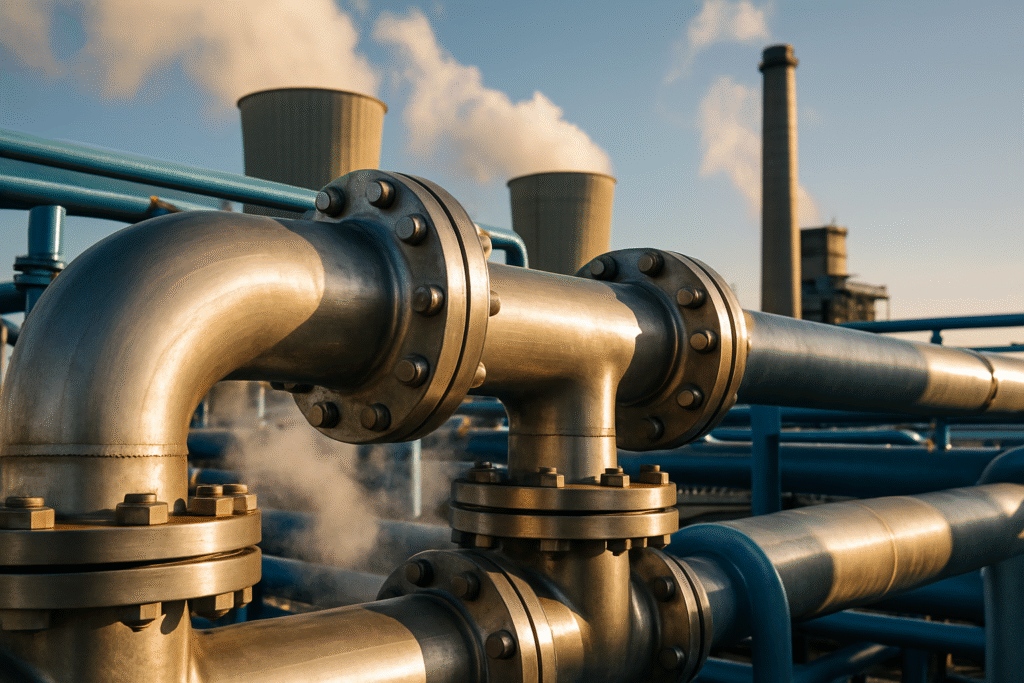
스테인레스 스틸 파이프 플랜지 시장 2024: 숨겨진 장점, 유형, 용도, 다양한 플랜지를 선택하는 방법
그랜드뷰 리서치에 따르면 (2024), 전 세계 산업용 플랜지 시장의 가치는 다음과 같습니다. $5.8 10억 2023 도달할 것으로 예상됩니다. $7.2 10억 단위로 2030. That growth is one reason the stainless steel pipe flange remains a critical component for industrial use, especially where reliability, 내식성, and code compliance drive procurement decisions.
엔지니어와 구매자를 위한, the hidden advantages of stainless steel pipe flange selection go beyond corrosion performance alone. 다양한 플랜지 유형, 압력 등급, alloys, and manufacturing controls directly affect lifecycle cost, 폐쇄 위험, and long-term pipe system safety.
Why the Stainless Steel Pipe Flange Market Keeps Expanding Across Industrial Sectors
Industrial demand for stainless steel pipe flange products continues to rise because operators need longer service life in aggressive media. 스태티스타에 따르면 (2024), 석유 및 가스 산업은 대략적으로 35% 글로벌 플랜지 소비량, which shows how strongly energy projects shape flange demand.
게다가, regional manufacturing concentration matters for sourcing strategy. IBISWorld에 따르면 (2024), 아시아 태평양 계정은 이상입니다. 45% 글로벌 플랜지 생산량의, 중국이 가장 큰 제조사이기 때문에.
That production scale gives buyers wider access to ASTM A182 forged stainless grades, larger size ranges, and shorter replenishment cycles. 하지만, procurement teams still need to verify traceability, heat treatment control, PMI 테스트, and dimensional compliance against ASME B16.5, ASME B16.47, DIN, JIS, 고스트, 그리고 EN 1092 요구 사항.
The stainless steel pipe flange is widely specified in Oil & 가스, 석유화학, 선박, 수처리, and power generation because stainless grades perform well in humid, 염화물 함유, and cyclic-temperature environments. 대조적으로, lower-cost carbon steel options may require coating systems, more frequent maintenance, or replacement in corrosive duty.
모르도르 정보국에 따르면 (2024), industrial processing investments in energy, 물 인프라, and chemicals continue to support steady demand for corrosion-resistant piping components. 그러므로, buyers increasingly compare total installed cost rather than only initial flange price.
As material engineer Dr. 헬렌 모리스, Corrosion Specialist, 주: “The most economical flange is rarely the cheapest forged piece; it is the component that minimizes leakage risk, maintenance exposure, and unplanned shutdown over the asset life.” That view is especially relevant when comparing 304, 316엘, 904엘, 듀플렉스 2205, 그리고 슈퍼 듀플렉스 2507 for different media.
실용적인 측면에서, different flanges serve different mechanical and maintenance priorities. Weld neck flange designs handle severe cyclic service well, slip-on flanges support less critical systems economically, and blind flanges isolate lines safely during testing or maintenance.
Buyers also look beyond material to supplier capability. SASA FLANGE, serving 50+ 석유를 건너는 나라들 & 가스, 석유화학, 힘, 해양산업, supports projects requiring forged stainless steel flanges, 합금 플랜지, and matching pipe fittings in standards such as ANSI B16.5, ANSI B16.47, ASME B16.9, DIN, JIS, 고스트, 그리고 EN 1092.
와 함께 ISO 9001:2015 및 PED 2014/68/EU 인증, manufacturers can better align with documentation-heavy projects in Europe and export markets. 추가적으로, EN 10204 3.1 재료 인증서, 수압 테스트 기록, PMI 보고서, and dimensional inspection reports help reduce approval delays.
소싱 관점에서, the hidden advantages of a high-quality stainless steel pipe flange include reduced corrosion allowance, more predictable maintenance planning, stronger resale value of plant assets, and easier compliance with owner specifications. 결과적으로, technical procurement teams increasingly prioritize qualified suppliers over spot-price vendors.
기술 심층 분석: Intriguing Stainless Steel Pipe Flange Advantages, 유형, 및 재료 선택
The stainless steel pipe flange family includes many forged and plate-based configurations, each suited to different pipe layouts and pressure classes. 에 따르면 ASME B16.5, 플랜지 치수, 직면 유형, 교련, and pressure-temperature ratings must match the designated class and material group (ASME, 2023).
In engineering practice, material choice usually begins with media, 염화물 농도, 작동 온도, and expected maintenance interval. 하지만, designers must also consider gasket compatibility, 볼트 하중, external vibration, and whether the joint will be disassembled frequently.
As piping consultant James Ortega, 수석 배관 엔지니어, 주: “Most flange failures begin with a mismatch between service conditions and selection assumptions, not with the forging itself.” 그러므로, the best way to choose different flanges is to align alloy, 깃 달기, 수업, and connection type with the actual process envelope.
Common stainless steel grades used in a stainless steel pipe flange include 304, 304엘, 316, 316엘, 321, 347, 904엘, 듀플렉스 2205, 그리고 슈퍼 듀플렉스 2507. ASTM A182 covers many forged or rolled alloy and stainless steel pipe flanges, 단조 피팅, 밸브, 및 고온 서비스용 부품 (ASTM, 2024).
Among these grades, 304 and 304L are popular for general industrial use because they balance cost, 성형성, 및 내식성. 대조적으로, 316 and 316L include molybdenum, which improves pitting resistance in chloride-bearing environments.
For higher chloride content or sour service, duplex and super duplex alloys often provide better strength-to-weight ratio and stronger resistance to stress corrosion cracking. NACE MR0175 그리고 ISO 15156 should guide material acceptance for H2S-containing environments where sulfide stress cracking risks increase (NACE, 2023).
- 304/304엘: general utility systems, mild chemical service, 식품 가공, and indoor water lines.
- 316/316엘: 선박, 연안, 제약, and chloride-exposed piping.
- 904엘: stronger resistance in sulfuric and aggressive chemical environments.
- 2205 듀플렉스: higher strength and improved chloride stress corrosion cracking resistance.
- 2507 슈퍼 듀플렉스: severe offshore and high-salinity applications.
Different flange types also influence fatigue performance and assembly efficiency. The most common types include weld neck, 슬립온, 눈이 먼, 소켓 용접, 스레드, 및 랩 조인트 플랜지.
- 웰드 넥 플랜지: 고압에 선호, 고온, and cyclic service.
- 슬립온 플랜지: easier alignment and lower fabrication cost for moderate duty.
- 블라인드 플랜지: used for line blanking, 테스트, and maintenance isolation.
- 소켓 용접 플랜지: common in small-bore, 고압 시스템.
- 스레드 플랜지: useful where welding is impractical or restricted.
- 랩 조인트 플랜지: supports systems requiring frequent dismantling.
시장 조사 미래에 따르면 (2024), corrosion-resistant alloys are gaining share in process industries because operators seek longer maintenance intervals and lower leak probability. 뿐만 아니라, alloy upgrades can reduce replacement frequency in lines exposed to seawater, caustics, or mixed chemical streams.
Pressure class is another key variable. ~ 안에 ASME B16.5 시스템, common ratings include Class 150, 300, 600, 900, 1500, 그리고 2500, while larger diameters may fall under ASME B16.47 Series A or B depending on project specification.
Procurement managers should not assess price by diameter alone. 에이 4 inch stainless steel pipe flange in 316L Class 300, RF finish, ~와 함께 EN 10204 3.1 certification and PMI testing, differs significantly in cost from a 304 slip-on flange of the same nominal size.
고급 CNC 가공 및 포괄적인 품질 테스트를 통해 뒷받침됨, SASA FLANGE 플랜지를 제조합니다. 304, 316, 316엘, 904엘, 2205, 2507, A105, A182, 인코넬, 모넬, 하스텔로이, 그리고 티타늄. That range helps EPC contractors consolidate sourcing across both corrosion-resistant and high-temperature alloy systems.
많은 프로젝트에서, buyers also need elbows, 티셔츠, 감속기, and caps from the same source to avoid dimensional mismatch. 부터 ASME B16.9 governs many butt weld fitting dimensions, pairing flanges and fittings from a supplier familiar with the same tolerances simplifies fit-up on site.
ISO에 따르면 (2023), quality management discipline lowers nonconformance risk when production, 점검, and documentation follow controlled procedures. 따라서, a certified system such as ISO 9001:2015 often matters as much as nominal material grade.
Another hidden advantage of the stainless steel pipe flange is cleanliness. Stainless surfaces are easier to maintain in pharmaceutical, 음식, 초순수, and high-spec process systems where contamination control matters.
As metallurgist Dr. Aaron Patel, 재료 과학자, 주: “Selecting a stainless flange is an exercise in balancing chemistry, 야금, 압력 설계, and fabrication practicality.” That is why experienced manufacturers evaluate not just different flanges, but the whole piping envelope.
표준, 테스트, and Compliance Requirements for Stainless Steel Pipe Flange Procurement
Compliance is often the difference between a smooth project release and a delayed shipment. For a stainless steel pipe flange, the most referenced standards include ASME B16.5, ASME B16.47, ASTM A182, ASTM A240, EN 1092-1, DIN 표준, and project-specific specifications from API, 노르웨이, DNV, or end users.
ASME B16.5 covers flanges and flanged fittings for NPS 1/2 ~을 통해 24. ASME B16.47 applies to larger steel flanges from NPS 26 ~을 통해 60, depending on series and pressure class (ASME, 2023).
ASTM A182 addresses forged or rolled alloy and stainless steel components for high-temperature service. ASTM A240, 대조적으로, is usually referenced for chromium and chromium-nickel stainless plate, 시트, and strip used for vessels and general applications (ASTM, 2024).
European projects may require EN 1092-1 dimensional compliance and PED 2014/68/EU documentation. 그러므로, manufacturers supplying to EU-regulated pressure equipment markets must maintain material traceability and conformity assessment records carefully.
- 치수기준: ASME B16.5, ASME B16.47, EN 1092-1, DIN, JIS, 고스트.
- 재료 표준: ASTM A182, ASTM A240, ASTM A276, customer-approved MDS.
- Testing and documentation: PMI, 경도, 수압시험, 페라이트 체크, intergranular corrosion test, EN 10204 3.1.
- Service-specific requirements: NACE MR0175, ISO 15156, PED 2014/68/EU, 광고 2000.
Below is a practical comparison used by many buyers during technical review.
| 기준 | Main Focus | 일반적인 사용 |
|---|---|---|
| ASME B16.5 | 치수, 평가, 깃 달기 | NPS 1/2 에게 24 프로세스 배관 |
| ASME B16.47 | Large diameter flange dimensions | NPS 26 에게 60 파이프라인 |
| ASTM A182 | Forged stainless and alloy materials | Forged flange procurement |
| EN 1092-1 | 유럽 플랜지 치수 및 PN 등급 | EU projects and PED scope |
| NACE MR0175 | Sour service material suitability | H2S-containing environments |
DNV에 따르면 (2023), offshore and marine projects increasingly demand stricter documentation, 추적성, and corrosion-resistance validation due to lifecycle safety requirements. 게다가, many owners request positive material identification for all critical alloy flanges before installation.
When buyers compare different flanges, they should verify both manufacturing and inspection scope. A compliant flange should meet dimensional tolerances, 마무리를 향함, bolt-hole alignment, marking rules, and required test frequency.
와 함께 ISO 9001:2015, PED 2014/68/EU, 그리고 광고 2000 신임장, SASA FLANGE supports projects that require controlled quality systems and export documentation. 플랜지 제조 304, 316, 904엘, 2205, 2507 그리고 다른 프리미엄 등급, the company serves buyers who need certified materials for energy, 물, 선박, 및 화학 서비스.
중요한 애플리케이션용, documentation should include heat number traceability, raw material certificates, 치수 검사 보고서, 그리고 EN 10204 3.1 인증서. 게다가, 표면 상태, serration finish, and flange facing type must match gasket design to ensure leak-tight assembly.
Buyers should also confirm whether the supplier can produce custom sizes from 1/2 인치에서 60 인치, 비표준 드릴링, and special alloy combinations. That flexibility is valuable when revamps must interface with legacy DIN, ANSI, and mixed-spec piping systems.
For formal code reference, engineers can review current requirements at ASME. That step is helpful when project documents cite the latest edition rather than a generic standard name.
신청안내: How to Choose Different Flanges for Oil, 가스, 화학적인, 힘, 해양 시스템
Choosing the right stainless steel pipe flange starts with service conditions rather than catalog habit. Engineers should define pressure, 온도, 유체화학, 부식 허용량, 유지보수 빈도, and installation method before selecting a type.
기름에 & 가스, flange selection often prioritizes pressure containment, 신 서비스 적합성, and fatigue performance. 그러므로, weld neck designs in ASTM A182 F316L, F51, or higher-alloy materials are common in upstream, 내의 한복판, and refinery process units.
스태티스타에 따르면 (2024), 약 35% of global flange consumption comes from oil and gas. That share explains why API-aligned project documentation, mill traceability, and NACE compatibility frequently shape purchasing requirements.
석유화학 및 화학 처리 분야, the hidden advantages of stainless and duplex flanges appear in corrosive media handling. 316L may suit moderate chloride and solvent service, 904L 동안, 하스텔로이, or duplex alloys are often chosen for stronger acid or mixed-chemistry exposure.
Power generation applications focus on thermal cycling, 스팀 서비스, and shutdown reliability. 결과적으로, engineers often specify forged flange materials with stable mechanical properties and verified heat treatment records.
Marine and shipbuilding systems need strong pitting resistance in saline environments. 그러므로, 316엘, 2205 듀플렉스, 그리고 2507 super duplex often outperform standard materials in seawater-adjacent pipe systems, 밸러스트 라인, and deck utility services.
- For corrosive water lines, prioritize 316L or duplex over 304 where chlorides are elevated.
- For high-pressure cyclic service, choose weld neck over slip-on whenever design permits.
- For shutdown blinds and hydrotest points, specify blind flanges with correct facing and bolt load.
- For small-bore high-pressure service, evaluate socket weld flanges carefully.
- For maintenance-intensive systems, lap joint assemblies may simplify dismantling.
Procurement teams should also compare fabrication and field installation cost. Although slip-on flanges can reduce initial machining and fit-up complexity, weld neck flanges often provide better long-term performance in demanding service.
Different flange faces affect gasket choice and leak integrity. Raised face is common in process plants, ring type joint is used in higher-pressure critical service, and flat face appears in certain low-pressure or cast equipment connections.
When buyers ask how to choose a pipe flange for industrial use, these criteria usually matter most.
- Material grade and corrosion resistance.
- Pressure class and temperature rating.
- Flange type and connection method.
- Applicable standards and project approvals.
- Testing scope, 인증서, 및 추적성.
- 리드타임, MOQ, and logistics capability.
맞춤형 크기 제공 1/2 인치에서 60 경쟁력 있는 공장 직접 가격의 인치, SASA FLANGE supports standard and custom production for EPC contractors and distributors. 게다가, 회사에서 팔꿈치를 공급합니다., 티셔츠, 감속기, and caps to simplify package procurement for complete pipe systems.
예를 들어, a water treatment plant may use 304L slip-on flanges in non-chlorinated utility lines, while specifying 316L or duplex flanges in higher-chloride process areas. 비슷하게, an offshore skid may require 2205 용접 목 플랜지, ASME B16.5 수업 600, NACE-compliant, ~와 함께 EN 10204 3.1 and PMI records.
If your project requires mixed materials, custom drilling, or rapid technical review, 연락하다 SASA FLANGE early can shorten approval cycles. Early supplier engagement also helps avoid mismatches between pipe schedule, bore dimension, and flange hub geometry.
Future Outlook for Stainless Steel Pipe Flange Sourcing and Strategic Recommendations for Buyers
The outlook for stainless steel pipe flange demand remains positive because industrial operators continue investing in resilience, 부식 제어, and longer asset life. 그랜드뷰 리서치에 따르면 (2024), 시장은 다음과 같이 성장할 것으로 예상됩니다. $5.8 10억 2023 에게 $7.2 10억 단위로 2030.
That trend is reinforced by infrastructure modernization, water treatment expansion, and energy transition projects that still require robust pipe connections. 게다가, stricter leakage prevention and documentation expectations favor qualified manufacturers with established testing systems.
IBISWorld에 따르면 (2024), Asia-Pacific maintains over 45% 글로벌 플랜지 생산량의, so supply chain strategy should combine cost advantage with quality verification. 그러므로, buyers should prequalify suppliers based on certification, alloy capability, inspection resources, and export experience.
전략적으로, B2B buyers should standardize flange selection logic across sites. A clear matrix for media, 온도, 압력 등급, and approved materials reduces engineering variation and simplifies inventory planning.
They should also request lifecycle-based comparisons instead of unit-price-only quotes. 많은 경우, the hidden advantages of upgraded stainless or duplex flanges include fewer failures, lower coating cost, and reduced downtime exposure.
Recommended actions for procurement and engineering teams include the following.
- Create an approved materials list tied to service conditions and standards.
- Require EN 10204 3.1 certificates and PMI for critical alloys.
- Confirm dimensional standard, 직면 유형, and schedule compatibility before PO release.
- Review supplier capability for both flanges and matching ASME B16.9 피팅.
- Assess total cost across maintenance, 대사, and outage risk.
For buyers evaluating different flanges, a capable manufacturing partner should offer metallurgical depth, 가공 정확도, and documentation discipline. That is why many global projects prefer suppliers that can combine stainless, 듀플렉스, 니켈 합금, and custom flange production under one controlled system.
For upcoming tenders involving stainless steel flanges and fittings, early technical coordination with an experienced manufacturer can improve bid accuracy and delivery confidence. For projects requiring certified materials, 맞춤 측정기준, or export-ready documentation, 함께 일하다 SASA FLANGE 실용적인 다음 단계입니다.
자주 묻는 질문
스테인레스 스틸 플랜지는 무엇에 사용됩니까??
●파이프 연결에는 스테인레스 스틸 플랜지가 사용됩니다., 밸브, 슬리퍼, and pressure equipment in systems that require corrosion resistance, 서비스 가능성, and pressure-tight sealing.
●스태티스타에 따르면 (2024), 석유와 가스는 약 35% 글로벌 플랜지 소비량, which shows how common these components are in critical process lines.
●They are widely used in petrochemical plants, 해양 배관, 수처리 스키드, food processing systems, and power generation units because grades such as 304, 316엘, 그리고 2205 handle moisture, 약, and temperature changes better than many coated carbon steel options.
●Common use points include pump suction and discharge nozzles, 탱크 연결, instrument branches, 유틸리티 헤더, and removable spool joints where maintenance access matters.
●Engineers usually select the flange by matching material, 압력 등급, 깃 달기, and type to the process fluid and piping code, ~와 같은 ASME B16.5 또는 EN 1092-1.
●For projects requiring corrosion-resistant forged flanges with EN 10204 3.1 선적 서류 비치, 다음과 같은 기존 제조업체와 협력 SASA FLANGE helps ensure dimensional consistency and traceability.
그들은 스테인레스 스틸 파이프 피팅을 만드나요??
●예, manufacturers make stainless steel pipe fittings such as elbows, 티셔츠, 감속기, 모자, 커플링, and stub ends for both welded and threaded piping systems.
●에 따르면 ASME B16.9, many butt weld fittings follow standardized dimensions that help maintain fit-up consistency across process piping systems (ASME, 2023).
●These fittings are commonly produced in grades like 304, 304엘, 316, 316엘, 904엘, 2205, 그리고 2507, depending on corrosion level, 압력, 온도, 및 소유자 사양.
●실제로, buyers often source flanges and fittings together because mixed suppliers can create tolerance conflicts, weld-end mismatch, or documentation gaps during inspection and site assembly.
●Industries such as petrochemical, 선박, 의약품, and water treatment typically require stainless fittings where corrosion control, 위생, or long service life matter more than the lowest initial purchase price.
●For buyers who need coordinated supply of stainless steel flanges and fittings under one quality system, 같은 제조업체 SASA FLANGE can simplify procurement and inspection planning.
What is the strongest type of piping flange?
●The weld neck flange is generally considered the strongest type of piping flange for high-pressure, 고온, and cyclic service.
●Its tapered hub improves stress distribution between the flange and pipe, which is why it is widely specified in refinery units, 근해 스키드, and power plant systems where vibration or pressure cycling is severe.
●ASME B16.5 includes weld neck flanges across multiple pressure classes, including Class 150 ~을 통해 2500, and that range supports both moderate and very demanding process conditions.
●Blind flanges can also be very robust for line closure, but they serve a different function because they isolate the end of a piping run rather than connect two piping components.
●Strength still depends on more than flange style because material grade, 벽 두께, 볼트 하중, 직면 유형, 개스킷 선택, and operating temperature all affect joint integrity.
●중요한 애플리케이션용, engineers should verify design conditions and choose forged code-compliant products from experienced suppliers such as SASA FLANGE.
What is the difference between MS flange and SS flange?
●The main difference is that an MS flange is made from mild steel, while an SS flange is made from stainless steel with chromium-based corrosion resistance.
●Stainless steel typically contains at least 10.5% 크롬, which forms a passive film that helps protect the surface in wet or chemically active environments (ASTM, 2024).
●MS flanges usually cost less at the start, but they often need painting, 아연 도금, or other corrosion protection in outdoor or process service where rusting can occur quickly.
●SS flanges such as 304 or 316L cost more initially, yet they often deliver lower lifecycle cost in marine, 화학적인, 위생, and water-treatment systems because they need less maintenance and replacement.
●Another practical difference is cleanliness because stainless steel is often preferred where contamination control, washdown durability, or aesthetic appearance matters.
●For buyers comparing lifecycle performance instead of unit price alone, 다음과 같은 기존 공급업체 SASA FLANGE can help evaluate the right option by media, 압력 등급, 및 프로젝트 표준.
What is the ASME code for stainless steel flanges?
●The most common ASME dimensional code for stainless steel flanges is ASME B16.5, while large-diameter steel flanges are commonly covered by ASME B16.47.
●ASME B16.5 applies to NPS 1/2 ~을 통해 24 and defines dimensions, 압력 온도 등급, 외장, 공차, and marking for many flanged connections (ASME, 2023).
●Material itself is usually specified separately under ASTM standards, 그리고 ASTM A182 is one of the most common specifications for forged stainless steel pipe flanges and forged fittings.
●That means a complete purchase order often references both a dimensional standard and a material standard, ~와 같은 ASME B16.5 plus ASTM A182 F316L.
●European projects may instead reference EN 1092-1, and mixed-standard systems must be reviewed carefully because bolt patterns, 두께, and pressure ratings may differ.
●For technical procurement, it is best to confirm the latest code edition and project note set with a qualified flange manufacturer before finalizing production.
올바른 스테인레스 스틸 파이프 플랜지를 선택하는 방법?
●You should choose the right stainless steel pipe flange by matching material grade, 플랜지형, 압력 등급, 깃 달기, and inspection scope to the actual process conditions.
●그랜드뷰 리서치에 따르면 (2024), 산업용 플랜지 시장은 다음과 같이 성장할 것으로 예상됩니다. $7.2 10억 단위로 2030, which reflects how much industrial spending depends on reliable and application-specific flange selection.
●예를 들어, 304 may suit general utility service, 316L is often preferred for chloride exposure, 그리고 2205 또는 2507 may be better for offshore or high-salinity systems where stronger corrosion resistance is required.
●Weld neck flanges are usually chosen for high-pressure or cyclic service, while slip-on and threaded designs may suit less severe duties or installation constraints.
●Buyers should also review ASME B16.5 또는 EN 1092-1 규정 준수, request EN 10204 3.1 인증서, and confirm pipe schedule compatibility to avoid fit-up errors in fabrication.
●For projects with custom dimensions, special alloys, or strict documentation requirements, experienced suppliers like SASA FLANGE can provide practical selection support.
관련 게시물

오리피스 플랜지 정의, 세부 정보 및 ASME B16.36 플랜지 개요: 시장 데이터, 선택 가이드 및 규정 준수 통찰력
전 세계 산업용 플랜지 시장의 가치는 다음과 같습니다. $5.8 10억…
