
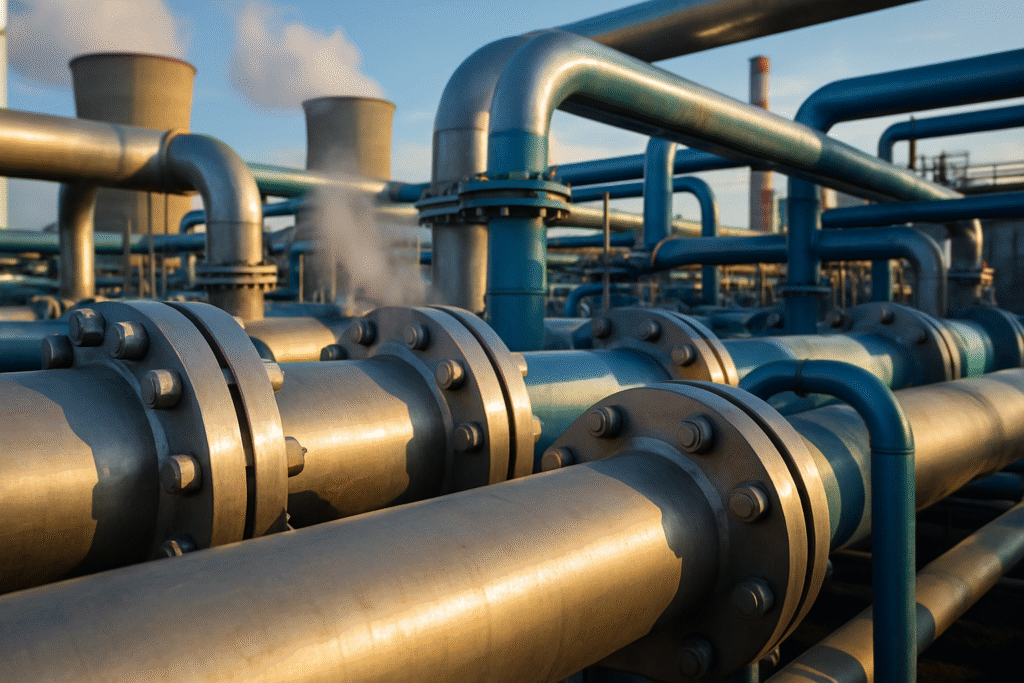
스테인레스 스틸 파이프 플랜지 시장 가이드: 7 유형에 대한 데이터 포인트, 용도, ASME B16.5 & B16.47 선택
그랜드뷰 리서치에 따르면 (2024), 전 세계 산업용 플랜지 시장의 가치는 다음과 같습니다. $5.8 10억 2023 도달할 것으로 예상됩니다. $7.2 10억 단위로 2030. That growth makes the stainless steel pipe flange a priority component for engineers and procurement teams that need corrosion resistance, 코드 준수, 그리고 긴 서비스 기간.
게다가, buyers are no longer comparing only price. They now assess material traceability, ASME dimensional compliance, pressure class accuracy, 그리고 다음과 같은 문서 EN 10204 3.1 certificates before placing orders.
Industrial Demand Trends Shaping Stainless Steel Pipe Flange Procurement
The flange market remains tightly linked to energy, 물, 및 공정 산업. 스태티스타에 따르면 (2024), 석유 및 가스 산업은 대략적으로 35% 글로벌 플랜지 소비량, which explains why pressure integrity and corrosion performance dominate purchase decisions.
병렬로, Asia-Pacific has become the center of supply. IBISWorld에 따르면 (2024), 아시아 태평양 계정은 이상입니다. 45% 글로벌 플랜지 생산량의, 중국이 가장 큰 제조사이기 때문에.
That production concentration benefits international buyers seeking competitive lead times and broader material availability. 하지만, it also increases the need to qualify suppliers on machining tolerance, PMI 테스트, heat treatment control, and documentation accuracy.
For stainless applications, the cost of failure is often far higher than the initial component price. A leaking flange joint in a refinery, desalination unit, or offshore skid can trigger unplanned shutdowns, 개스킷 교체, labor costs, 안전 노출.
결과적으로, procurement teams increasingly prefer suppliers with stable quality systems. 와 함께 ISO 9001:2015 및 PED 2014/68/EU 인증, SASA FLANGE supports industrial buyers who require compliant stainless steel flanges and fittings for export projects.
Market demand also reflects a broader shift toward higher-alloy materials. 모르도르 정보국에 따르면 (2024), corrosion-resistant alloys and duplex grades are gaining share in seawater, chloride-rich, and sour-service applications because lifecycle costs often outperform low-grade alternatives.
That trend is especially relevant when comparing 304, 316엘, 2205, 그리고 2507. 하지만 304 remains widely used, many EPC contractors now standardize molybdenum-bearing or duplex grades in aggressive environments to reduce maintenance frequency.
Standards continue to shape this buying behavior. ASME B16.5 governs dimensions and tolerances for pipe flanges and flanged fittings in NPS 1/2 ~을 통해 24, ~하는 동안 ASME B16.47 NPS의 대구경 강철 플랜지를 커버합니다. 26 ~을 통해 60 (ASME, 2023).
그러므로, a buyer sourcing a 4 inch stainless steel pipe flange and a 36 inch ring flange is often working under different dimensional frameworks. Selecting the correct standard at the RFQ stage prevents rework, mismatch, and costly project delays.
Material specifications matter just as much as dimensions. ASTM A182 일반적으로 단조 또는 압연 합금 및 스테인레스 스틸 파이프 플랜지를 포함합니다., 단조 피팅, 및 고온 서비스용 밸브, ~하는 동안 ASTM A240 addresses plate, 시트, 압력 용기 및 일반 응용 분야용 스트립 (ASTM, 2023).
In practical sourcing terms, that means the word Flange on a quotation is not enough. Buyers should specify grade, 수업, 깃 달기, 기준, 테스트 범위, 수량, and required certificates at the start.
고급 CNC 가공 및 포괄적인 품질 테스트를 통해 뒷받침됨, SASA FLANGE 플랜지를 제조합니다. 304, 316, 316엘, 904엘, 2205, 2507, A182, 인코넬, 모넬, 하스텔로이, 그리고 티타늄. 추가적으로, 회사는 석유를 제공합니다 & 가스, 석유화학, 발전, 조선, 수처리, and Construction markets in 50+ 국가.
스테인레스 스틸 파이프 플랜지 유형, 숨겨진 장점, 및 재료 선택 논리
Choosing among stainless steel flange types requires more than matching pipe size. Engineers must balance pressure class, 온도, 미디어 화학, 순환 로딩, 용접 절차, 검사 범위, 및 총 설치 비용.
존 레이놀즈처럼, corrosion specialist and former API chairman, 주: “Materials selection should always be based on the real operating environment, not simply on nominal alloy category.” That principle is especially important when a stainless steel pipe flange will face chlorides, 틈새 부식, 열 순환, or intermittent chemical cleaning.
시장 조사 미래에 따르면 (2024), industrial stainless component demand is rising steadily in water treatment and chemical processing because corrosion failures can increase maintenance costs by more than 20% over asset life. 그러므로, the Hidden Advantages of properly selected stainless flanges include lower leakage risk, cleaner service conditions, and longer replacement intervals.
Not all Stainless grades perform the same way. 하는 동안 304 and 304L suit general service, 316 and 316L provide better pitting resistance because of molybdenum additions, and duplex grades such as 2205 deliver higher strength with improved chloride performance.
박사로서. David Browne, materials engineer, 주: “A flange joint is only as reliable as the interaction between metallurgy, 탈당, 틈 메우는 물건, and operating conditions.” 다시 말해서, even premium Flanges? can underperform if the grade is right but the face finish, 볼트 하중, or gasket compatibility is wrong.
The most common stainless steel flange Types and Uses include the following:
- 고압용 웰드 넥 플랜지, 고온, and cyclic service.
- Slip on flange for lower pressure systems where cost and easy alignment matter.
- 라인 절연용 블라인드 플랜지, 테스트, 및 향후 시스템 확장.
- 소구경용 소켓 용접 플랜지, 고압 배관.
- Threaded flange for non-welded connections in specific maintenance-sensitive systems.
- 빈번한 분해가 필요한 시스템을 위한 랩 조인트 플랜지.
Each design offers specific advantages. 예를 들어, weld neck flanges provide better stress distribution through the tapered hub, while blind flanges simplify hydrotesting and future tie-ins.
압력 등급 선택도 마찬가지로 중요합니다.. ASME B16.5 stainless steel pipe flange products are generally supplied in Class 150, 300, 600, 900, 1500, 그리고 2500, and each class must align with design pressure, 온도, and material group rules under ASME calculations.
Large diameter applications call for ASME B16.47. Buyers handling terminal piping, offshore seawater headers, or cooling water systems often Choose B16.47 Series A or Series B based on bolt circle, 무게, and compatibility with existing plant standards.
Below is a practical material comparison for common stainless flange grades:
- 304/304엘: Cost-effective and widely available for mild corrosive service.
- 316/316엘: Better chloride resistance for chemical, 선박, 및 프로세스 시스템.
- 904엘: Superior resistance in strong corrosive environments including certain acids.
- 2205 듀플렉스: High strength and strong resistance to stress corrosion cracking.
- 2507 슈퍼 듀플렉스: Preferred for aggressive offshore and desalination duties.
According to NACE guidance for corrosive service, 염화물 농도, 온도, oxygen content, and crevice geometry can sharply influence stainless performance (NACE, 2023). 그러므로, material selection should always consider the full operating envelope rather than only nominal media description.
조달팀용, the key data set should include:
- 재료 등급 및 ASTM 사양.
- 크기 범위, ~와 같은 1/2 인치에서 60 인치.
- Pressure rating or class.
- 직면 유형, including RF, FF, RTJ.
- Wall schedule and mating pipe data.
- Testing requirements, PMI를 포함한, 수압시험, 경도, and NDE if needed.
- 선적 서류 비치, including MTC and EN 10204 3.1.
맞춤형 크기 제공 1/2 인치에서 60 경쟁력 있는 공장 직접 가격의 인치, SASA FLANGE supports standard and custom orders for weld neck, 미끄러지다, 눈이 먼, 스레드, 랩 조인트, 및 소켓 용접 설계. 게다가, the company can supply matching elbows, 티셔츠, 감속기, and caps to reduce sourcing complexity.
Many buyers also compare Stainless and carbon steel on total cost. Although stainless can carry a higher upfront price, it often reduces painting, corrosion monitoring, 교체 빈도, and contamination risk in long-life process systems.
According to ISO-aligned lifecycle costing studies summarized by industry analysts, corrosion management can represent 3% 에게 5% of GDP in industrialized economies. 결과적으로, the right stainless steel pipe flange often delivers value beyond purchase price alone.
ASME B16.5, B16.47, ASTM, DIN, 스테인레스 스틸 플랜지에 대한 EN 준수
Compliance is not a marketing feature. It is a project requirement that directly affects fit-up, 압력 무결성, site acceptance, and export approval.
글로벌 프로젝트의 경우, buyers often work across multiple code systems. ASME and ASTM dominate many oil, 가스, and petrochemical specifications, while DIN and EN standards remain common in Europe, 선박, and equipment exports.
The most relevant standards for stainless steel pipe flange sourcing include:
- ASME B16.5 for flanges and flanged fittings NPS 1/2 에게 24.
- ASME B16.47 for large diameter steel flanges NPS 26 에게 60.
- ASME B16.9 맞대기 용접 피팅의 경우.
- ASTM A182 for forged or rolled alloy and stainless steel flanges.
- ASTM A240 for stainless plate and sheet material references.
- EN 1092 for European flange dimensions and ratings.
- DIN flange standards for regional industrial systems.
- EU의 압력 장비 규정 준수를 위한 PED 2014/68/EU.
There are also critical differences between ASME and EN systems. 압력 등급, 플랜지 두께, 세부 사항에 직면, and bolt patterns can differ, so a stainless steel flange 2 inch under EN 1092 may not interchange with an ASME equivalent.
That is why RFQs should never use only the phrase stainless steel flange for sale. A complete specification should define standard, 공칭 크기, 평가, 재료, 깃 달기, 수량, 및 검사 요구 사항.
When export documentation is required, buyers should verify both manufacturing and quality systems. 와 함께 ISO 9001:2015, PED 2014/68/EU, 그리고 광고 2000 신임장, SASA FLANGE provides a stronger compliance basis for regulated projects.
Quality documentation typically includes mill test certificates, 열 숫자, 치수 검사 보고서, 그리고, 지정된 곳에, PMI or third-party witness records. For higher-risk service, many end users also request hardness testing, 페라이트 검사, and NDE confirmation.
The following comparison helps clarify common compliance paths:
- Oil and gas upstream: ASME, ASTM, API references, and sometimes NACE MR0175 신맛 서비스를 위해.
- Petrochemical process lines: ASME B16.5 ~와 함께 ASTM A182 F304/F316 materials is common.
- European equipment export: EN 1092 and PED documentation may be mandatory.
- 해양 및 해양: DNV or owner specifications may supplement ASME and ASTM requirements.
유럽연합 집행위원회 PED 프레임워크에 따르면, pressure-retaining components entering the EU market must meet conformity assessment obligations under PED 2014/68/EU. 그러므로, supplier documentation quality can be as important as manufacturing quality itself.
Buyers should also review surface finish and facing. 올려진 얼굴, 평평한 얼굴, and ring type joint configurations each suit different gasket systems and pressure conditions, and mismatched faces remain a common source of leakage during installation.
For authoritative standard references, engineers should always review the issuing bodies directly, 포함 ASME. That step helps confirm the latest edition year, dimensional tables, and rating notes before purchase release.
In contrast to generic traders, manufacturers with machining and inspection depth can control tolerances more consistently. That advantage becomes important for B16.47 large diameter flanges where bolt alignment and flatness can affect field assembly time.
추가적으로, integrated sourcing reduces mismatch risk. Buyers ordering flanges and fittings from the same qualified source can simplify material traceability, paperwork review, and shipping coordination across project packages.
오일에 적합한 스테인레스 스틸 파이프 플랜지를 선택하는 방법, 가스, 화학적인, 힘, 해양 프로젝트
선택은 서비스 조건으로 시작됩니다, 카탈로그 사진이 아닌. Procurement teams should first define media, 작동 온도, 설계압력, line size, 부식 위험, and required standard.
석유 및 가스 분야, the major concern is often pressure integrity combined with corrosive media. 스태티스타에 따르면 (2024), 이 부문은 약 35% 글로벌 플랜지 소비량, so proven compliance and traceability are essential for contractor approval.
For upstream and refinery systems, engineers often Choose weld neck designs in 316L, 듀플렉스 2205, 또는 슈퍼 듀플렉스 2507 염화물이 있는 곳, H2S, or cyclic stresses are present. If sour service applies, NACE MR0175 compatibility should be checked against the exact process conditions.
화학 처리 중, corrosion data usually governs material choice. 316L works well for many moderate chemical duties, 904L 동안, 하스텔로이, or titanium may be necessary for stronger acids or mixed corrosive streams.
Power generation projects present a different logic. 열 순환, 진동, and steam service can make forged flange quality, bolt load control, and gasket compatibility more important than nominal alloy cost.
Marine and shipbuilding applications often face salt spray, 바닷물 노출, and space limitations. 그러므로, 316엘, 2205, 그리고 2507 are common candidates, especially where long maintenance intervals justify higher initial material cost.
Water treatment and desalination projects have become a major growth area. According to industry analyses summarized by Mordor Intelligence (2024), corrosion-resistant alloy demand is increasing in desalination because chloride-rich environments quickly expose material weaknesses.
Use the following checklist to Choose the correct Flange:
- Confirm the governing standard: ASME B16.5, B16.47, DIN, 또는 EN 1092.
- 재료 등급 확인: 304, 316엘, 904엘, 2205, 2507, 또는 니켈 합금.
- Match pressure class and design temperature.
- Select flange type: 용접 목, 미끄러지다, 눈이 먼, 스레드, 랩 조인트, 또는 소켓 용접.
- 직면 정의: RF, FF, 또는 RTJ.
- Request testing: PMI, 치수검사, 경도, 수력, or third-party witness as needed.
- 문서 지정: MTC, 열 추적성, 그리고 EN 10204 3.1.
예를 들어, 에이 4 inch stainless steel pipe flange in a clean water skid may use ASME B16.5 수업 150 slip on 304L. 하지만, the same size in an offshore chemical injection line may require ASME B16.5 수업 600 용접 목 2205 with PMI and full traceability.
Lead time also influences specification strategy. 기준 304 그리고 316 sizes are usually easier to source quickly, 904L 동안, 2507, 인코넬, and custom B16.47 sizes may require longer production planning and stricter raw material control.
That is where supplier capability matters. 고급 CNC 가공으로 뒷받침됨, broad grade coverage, 그리고 포괄적인 품질 테스트, SASA FLANGE supports custom manufacturing for stainless steel flanges, 팔꿈치, 티셔츠, 감속기, and caps across multiple international standards.
Engineers should also consider mating components. A premium flange cannot solve problems caused by incorrect gasket material, poor bolt lubrication, 잘못 정렬된 배관, or inconsistent torque sequence during installation.
결과적으로, strong suppliers add value by helping customers align technical data before production. That support reduces NCR risk, site delays, and the hidden costs often ignored in simple unit-price comparisons.
Future Outlook for Stainless Steel Pipe Flange Supply Chains and Strategic Buying Decisions
The market outlook remains positive. 그랜드뷰 리서치에 따르면 (2024), 산업용 플랜지 시장은 다음과 같이 성장할 것으로 예상됩니다. $5.8 10억 2023 에게 $7.2 10억 단위로 2030, supported by energy investment, 물 인프라, and process plant modernization.
게다가, regional supply patterns are unlikely to change quickly. Since Asia-Pacific already accounts for over 45% 글로벌 플랜지 생산량의 (IBIS월드, 2024), procurement teams will continue to rely on qualified Chinese manufacturers for volume, 비용 효율성, and broad alloy availability.
하지만, buyers are becoming more selective. They increasingly ask for shorter lead times, third-party inspection readiness, PED 문서, and full traceability rather than accepting generic commodity supply.
Digital procurement is also reshaping the process. Engineers now search terms such as stainless steel pipe flange sizes, stainless steel flange types, Stainless Steel Threaded Pipe Flange, and Api weld neck flange before issuing formal RFQs.
그러므로, the most effective sourcing strategy combines technical clarity with supplier qualification. Buyers should standardize their RFQ templates, define testing scope early, and compare offers on lifecycle value rather than unit price alone.
Recommended actions for B2B buyers include:
- Prequalify suppliers against ISO 9001:2015, 소아과, and project-specific standards.
- Use complete technical descriptions rather than short product names.
- Separate critical-service items from general-service items for better cost control.
- Request documentation samples before placing first orders.
- Consolidate flanges and fittings with one capable manufacturer where possible.
For projects requiring stainless steel pipe flange supply in 304, 316엘, 904엘, 2205, 2507, 그리고 다른 프리미엄 등급, working with an experienced manufacturer can reduce sourcing risk and improve consistency. Buyers comparing compliance, 맞춤화, and factory-direct pricing can review capabilities at SASA FLANGE 제품 그리고 회사 배경 SASA FLANGE 우리에 대해.
궁극적으로, the most Intriguing advantage in today’s market is not simply material choice. It is the ability to align engineering standards, 제조 품질, and delivery reliability from the first inquiry onward.
자주 묻는 질문
어느 것이 더 낫습니까? 304 또는 420 스테인레스 스틸?
●304 stainless steel is generally better for stainless steel pipe flange applications because it offers stronger corrosion resistance and broader use in process piping.
●ASTM and industry practice favor 304 그리고 316 series grades for flanges, ~하는 동안 420 is a martensitic grade more often used where hardness matters.
●For industrial piping projects requiring ASME B16.5 or B16.47 compliance, 다음과 같은 기존 제조업체와 협력 SASA FLANGE helps ensure the chosen grade matches the service environment.
스테인레스 스틸 플랜지에 대한 ASME 코드는 무엇입니까?
●The primary ASME dimensional code for stainless steel flanges is ASME B16.5 NPS용 1/2 ~을 통해 24 그리고 ASME B16.47 NPS용 26 ~을 통해 60.
●Material specification is commonly covered by ASTM A182 for forged stainless steel flanges rather than by ASME dimensional standards alone.
●Buyers should specify both the ASME standard and the ASTM grade on every RFQ to avoid dimensional or material mismatch.
온도는 얼마나 될까요? 304 스테인레스 스틸 견딜?
●304 stainless steel can handle elevated temperatures, but exact limits depend on continuous or intermittent service, 압력, 부식 조건.
●In many industrial references, 304 performs well in general high-temperature service, although stabilized or higher-temperature grades may be preferred above about 800°F.
●Engineers should verify temperature limits against the project code, 미디어 화학, and flange class before final material approval.
What are the stainless steel flange types?
●주요 스테인레스 스틸 플랜지 유형은 용접 넥입니다., 미끄러지다, 눈이 먼, 소켓 용접, 스레드, 그리고 랩 조인트.
●Each type serves a different duty, with weld neck preferred for severe service and slip on often selected for lower-pressure applications.
●For mixed projects involving standard and custom sizes, sourcing from a manufacturer with broad machining capability improves fit-up consistency.
스테인레스 스틸 파이프 플랜지 가격에 영향을 미치는 것은 무엇입니까??
●Stainless steel pipe flange price depends mainly on grade, 크기, 압력 등급, 깃 달기, 테스트 요구 사항, 및 주문량.
●그랜드뷰 리서치에 따르면 (2024), sustained market growth and alloy demand continue to influence raw material and supply-chain pricing.
●견적을 정확하게 비교하려면, buyers should align standards, 인증범위, and documentation requirements before reviewing unit cost.
다음 중에서 어떻게 선택하나요? ASME B16.5 and B16.47 flanges?
●ASME B16.5 usually applies to smaller sizes from NPS 1/2 에게 24, ~하는 동안 ASME B16.47 covers larger sizes from NPS 26 에게 60.
●B16.47 is often used for large bore pipelines, marine headers, and terminal systems where bolt patterns and dimensions differ from B16.5.
●주문하기 전에, confirm the plant standard, 크기 범위, and mating flange details so the selected flange will assemble correctly in the field.
관련 게시물

오리피스 플랜지 정의, 세부 정보 및 ASME B16.36 플랜지 개요: 시장 데이터, 선택 가이드 및 규정 준수 통찰력
전 세계 산업용 플랜지 시장의 가치는 다음과 같습니다. $5.8 10억…
