
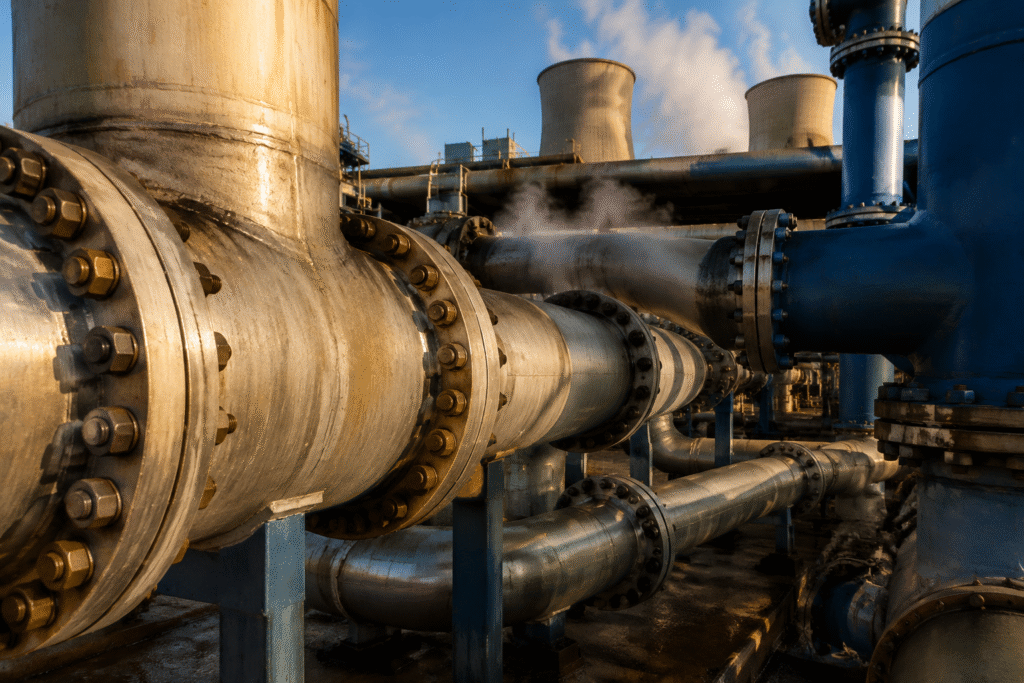
스테인레스 스틸 파이프 플랜지 시장 가이드: 7 유형에 대한 데이터 기반 통찰력, 용도, ASME B16.5 & B16.47 선택
그만큼 스테인레스 스틸 파이프 플랜지 remains a critical component in industrial piping because reliability, 내식성, 표준 준수는 가동 시간에 직접적인 영향을 미칩니다. 그랜드뷰 리서치에 따르면 (2024), 전 세계 산업용 플랜지 시장의 가치는 다음과 같습니다. $5.8 10억 2023 도달할 것으로 예상됩니다. $7.2 10억 단위로 2030, which shows why buyers are looking more closely at the hidden advantages, 종류, and uses of the right flange.
조달팀 및 배관 엔지니어용, intriguing stainless steel flange selection is no longer only about base material. It also depends on pressure class, 직면 유형, ASME B16.5 or B16.47 dimensional compliance, 내열성, welding performance, 및 문서 품질.
Industrial Demand Trends Shaping Stainless Steel Pipe Flange Procurement
Global demand for industrial piping connections is rising across energy, 담수화, 힘, 및 화학 처리. IBISWorld에 따르면 (2024), 아시아 태평양 계정은 이상입니다. 45% 글로벌 플랜지 생산량의, 중국이 가장 큰 제조사이기 때문에.
That production concentration matters for global sourcing strategy. It affects lead times, pricing competitiveness, 합금 가용성, and quality assurance workflows for buyers managing EPC and MRO projects.
End-use demand also remains concentrated in severe-service sectors. 스태티스타에 따르면 (2024), 석유 및 가스 산업은 대략적으로 35% 글로벌 플랜지 소비량, which keeps stainless steel, 듀플렉스, and alloy flange demand structurally strong.
게다가, refinery upgrades and offshore corrosion-control requirements continue to favor stainless and high-performance alloys. 결과적으로, flange buyers increasingly compare not only 304 그리고 316 성적, but also 904L, 2205, 2507, 모넬, 하스텔로이, and Inconel options.
모르도르 정보국에 따르면 (2024), industrial infrastructure investment in water treatment and process industries is supporting steady growth in corrosion-resistant piping systems. 그러므로, engineers now prioritize lifecycle cost over lowest initial purchase price.
That shift explains why stainless steel pipe flange procurement often includes requests for EN 10204 3.1 인증, PMI, hydro testing, 및 추적성. 대조적으로, lower-spec sourcing may create hidden costs through premature leakage, 재작업, and shutdown risk.
ASME and ASTM standards remain the technical backbone of specification discipline. ASME B16.5 covers pipe flanges and flanged fittings typically from NPS 1/2 ~을 통해 24, ~하는 동안 ASME B16.47 addresses larger diameter steel flanges, 일반적으로 NPS 26 ~을 통해 60 (ASME, 2023).
For buyers evaluating supply partners, manufacturing capability also matters as much as nominal compliance. 와 함께 ISO 9001:2015 및 PED 2014/68/EU 인증, SASA FLANGE supports projects that require documented quality systems, export readiness, 및 재료 추적성.
추가적으로, procurement teams increasingly want one source for flanges and fittings. 플랜지 제조 304, 316, 904엘, 2205, 2507 그리고 다른 프리미엄 등급, alongside elbows, 티셔츠, 감속기, 그리고 모자, helps shorten sourcing cycles on complete piping packages.
시장 조사 미래에 따르면 (2024), industrial flow-control and connection components are benefiting from modernization spending in petrochemical and power sectors. 뿐만 아니라, buyers are asking for factory-direct pricing with dependable machining tolerances and surface finish consistency.
These market drivers make stainless flange selection more technical than many competitor pages suggest. Instead of broad claims about corrosion resistance, serious B2B buyers need dimensional standards, material comparison data, and application-specific selection guidance.
How to Choose a Stainless Steel Pipe Flange: 유형, 재료, 평가, 그리고 숨겨진 장점
The best way to choose a 스테인레스 스틸 파이프 플랜지 is to match material grade, 플랜지형, 압력 등급, and corrosion mechanism to the service condition. 하지만, many failures occur because teams focus on price first and overlook chloride levels, 순환 로딩, 열팽창, 및 용접성.
존 브린으로서, 수석 배관 엔지니어, 주: “A flange is rarely the most expensive line item in a piping system, but it can become the most expensive mistake if the material or facing is wrong.” That observation reflects what most plant reliability teams already know from shutdown analysis.
Common stainless grades each solve a different problem. 304 and 304L suit general industrial service, ~하는 동안 316 and 316L offer better pitting resistance in chloride-containing environments.
Higher-performance grades extend service limits. 예를 들어, 904L improves resistance in aggressive chemical processing, 이중으로 하는 동안 2205 그리고 슈퍼 듀플렉스 2507 provide higher strength and stronger chloride stress corrosion cracking resistance.
According to ASTM and industry material practice, low-carbon “엘” grades typically improve weldability and reduce sensitization risk after welding in many fabricated systems (ASTM, 2023). 그러므로, 304L and 316L are often preferred for welded process piping, 탱크, and offshore skids.
Flange type selection is equally important because geometry affects assembly, stress distribution, 및 유지 보수. A wrong type can increase leak risk even when the base alloy is correct.
- 용접 목 플랜지: 고압에 가장 적합, 열 순환, and critical process service.
- 슬립온 플랜지: Cost-effective and easy to align for moderate pressure applications.
- 블라인드 플랜지: 종료하는 데 사용됨, 격리하다, or test piping systems.
- 소켓 용접 플랜지: 작은 구멍에 적합, 고압 라인.
- 스레드 플랜지: Used where welding is impractical or restricted.
- 랩 조인트 플랜지: 빈번한 분해가 필요한 곳에 유용.
Facing type also changes sealing performance. Raised Face remains the most common in industrial service, while Ring Type Joint is preferred in high-pressure and high-integrity applications, particularly in upstream oil and gas systems.
ASME에 따르면 (2023), dimensional and pressure-temperature requirements under ASME B16.5 and B16.47 are essential for interchangeability and safe bolting performance. 실제로, that means engineers must verify class ratings such as Class 150, 300, 600, 900, 1500, 또는 2500 against actual design conditions.
박사로서. Elena Markovic, 재료 과학자, 주: “The hidden advantages of duplex and high-alloy flanges appear over time, because reduced corrosion rates and higher strength lower total ownership cost.” That is especially relevant in seawater, 신맛이 나는 서비스, and chemically aggressive media.
Below is a simplified material comparison for common industrial uses.
- 304/304엘: 범용 내식성. 좋은 성형성. Economical for non-chloride service.
- 316/316엘: Better resistance to chlorides and process chemicals. Common in marine-adjacent and pharmaceutical systems.
- 904엘: Strong resistance in acidic and highly corrosive environments. Often selected for chemical processing.
- 2205 듀플렉스: Higher strength than austenitic grades. Excellent balance of corrosion resistance and mechanical performance.
- 2507 슈퍼 듀플렉스: Superior chloride resistance and high strength for offshore and desalination service.
Buyers should also review manufacturing route and inspection scope. Forged flanges made to ASTM A182 generally provide the mechanical integrity expected for demanding process lines, while testing may include PMI, 유타, 경도, 치수 검사, and pressure-related verification depending on project requirements.
ISO에 따르면 (2015) quality management principles, documented process control improves repeatability and traceability in industrial manufacturing. 고급 CNC 가공 및 포괄적인 품질 테스트를 통해 뒷받침됨, SASA FLANGE supports flange and fitting supply for EPC, OEM, and distributor requirements.
Typical buyer checkpoints should include the following before placing an order.
- 적용규격: ASME B16.5, ASME B16.47, DIN, JIS, 고스트, 또는 EN 1092.
- 재료 등급: 304, 316엘, 904엘, A105, A182 F316L, 2205, 2507, or special alloy.
- Pressure class and schedule compatibility.
- 직면 유형: RF, FF, RTJ, or custom.
- 필수서류: MTC EN 10204 3.1, PMI, 소아과, hydro test, NACE compliance where applicable.
- 코팅, 마킹, 포장, and export requirements.
These details separate a basic quotation from a project-ready offer. 게다가, they help engineers choose a flange that performs reliably over years, not just during initial commissioning.
ASME B16.5, B16.47, ASTM, DIN, and EN Standards That Define Flange Compliance
Standards are the language that connects design, procurement, 제작, 및 검사. 그러므로, any serious stainless steel pipe flange purchase order should clearly specify the governing dimensions, 재료 사양, 테스트, 및 인증 요구 사항.
ASME B16.5 is the most recognized standard for steel pipe flanges in common industrial sizes. It covers dimensions, 공차, 압력 온도 등급, materials references, 마킹, and testing expectations for NPS 1/2 에게 24.
ASME B16.47 extends standardization to larger diameters. It covers NPS 26 에게 60 and is particularly relevant for large-bore pipeline, 물 전달, and process installations (ASME, 2023).
Material selection often references ASTM standards. ASTM A182 단조 또는 압연 합금 및 스테인레스 스틸 파이프 플랜지에 일반적으로 사용됩니다., 단조 피팅, 및 고온 서비스용 밸브, ~하는 동안 ASTM A240 typically applies to plate, 시트, and strip products used in related fabricated components (ASTM, 2023).
European projects frequently require EN standards and PED alignment. EN 1092 defines circular flanges for pipes, 밸브, 피팅, 및 액세서리, while PED 2014/68/EU governs pressure equipment placed on the EU market.
For corrosive or sour service, NACE requirements may also apply. In oil and gas environments containing H2S, material restrictions and hardness controls can be essential to prevent sulfide stress cracking.
- ASME B16.5: Standard flange dimensions and ratings for NPS 1/2 에게 24.
- ASME B16.47: Large-diameter flange dimensions and ratings for NPS 26 에게 60.
- ASTM A182: Forged stainless and alloy materials for flanges and forged fittings.
- ASME B16.9: Factory-made wrought buttwelding fittings such as elbows and reducers.
- EN 1092: 유럽 플랜지 치수 표준.
- NACE MR0175/ISO 15156: 열악한 서비스 환경에 대한 자재 지침.
For authoritative dimensional reference, engineers should always verify the latest edition directly from ASME. This step prevents revision mismatches during fabrication and inspection.
실제로, standards compliance should also include documentation review. Buyers should confirm heat number traceability, 재료 테스트 인증서, wall-thickness compatibility, bolt hole orientation, 마무리를 향함, and marking format before shipment.
The comparison below helps clarify when each standard usually applies.
- Process plant piping: 자주 ASME B16.5 ~와 함께 ASTM A182 material callout.
- Large diameter utility or transmission lines: 자주 ASME B16.47.
- EU-regulated pressure systems: EN 1092 plus PED documentation.
- General industrial exports: Mixed requests including DIN, JIS, 고스트, and EN based on destination.
와 함께 ISO 9001:2015, PED 2014/68/EU, and AD 2000-related quality expectations in mind, suppliers should provide not just compliant products but auditable process control. That is why many international buyers prefer manufacturers with established export documentation routines and material verification systems.
SASA FLANGE supports this requirement through documented manufacturing and inspection workflows across stainless steel, 탄소강, 합금 플랜지, 및 파이프 피팅. 1/2부터 맞춤형 크기 제공" 60까지" 경쟁력 있는 공장 직거래 가격으로, the company serves customers across Oil & 가스, 석유화학, 힘, 해양산업.
결과적으로, engineers can align sourcing with both design code and commercial practicality. That combination is often the difference between an easy FAT review and a delayed project release.
신청안내: Best Uses for Stainless Steel Pipe Flange in Oil, 가스, 화학적인, 힘, 해양 프로젝트
A stainless steel pipe flange is not selected in isolation. 대신에, it must be evaluated within the full piping system, including fluid chemistry, 설계압력, 작동 온도, insulation strategy, 및 유지 보수 액세스.
Oil and gas projects usually prioritize pressure integrity, 신 서비스 적합성, and resistance to offshore corrosion. 그러므로, 316엘, 듀플렉스 2205, 그리고 슈퍼 듀플렉스 2507 frequently appear in topside, produced-water, and seawater service depending on exact chloride and H2S conditions.
According to DNV guidance and offshore materials practice, chloride-rich and marine environments demand careful alloy and fabrication control to avoid localized corrosion and stress-related failures (DNV, 2023). That requirement often makes higher-grade stainless or duplex a strategic choice rather than a premium upgrade.
Chemical processing plants focus more heavily on media compatibility. 산, 용매, 상승된 온도, and cyclic cleaning procedures can quickly expose weaknesses in generic material selection.
In these services, 316L may be sufficient for moderate conditions, 904L 동안, 하스텔로이, or Monel can be required in aggressive streams. Engineers should also account for gasket compatibility, crevice corrosion risk at the flange face, and bolting material selection.
Power generation applications often involve steam, 응축수, 냉각수, and flue-gas-related systems. 여기, weld neck flange designs are widely preferred in high-temperature or higher-pressure lines because they distribute stress more smoothly than lower-integrity connection forms.
Shipbuilding and marine systems place strong emphasis on corrosion resistance, compact maintenance, and long service intervals. 결과적으로, 316L and duplex grades are commonly evaluated for ballast, 바닷물, 화주, 및 유틸리티 라인.
The following selection criteria help buyers choose the right flange for each application.
- 공정 유체 화학 확인, 염화물을 포함하여, 황 화합물, and cleaning agents.
- Match pressure class and temperature rating to actual design conditions.
- 응력에 따라 플랜지 유형 선택, 진동, 유지보수 빈도.
- Specify the correct facing type for gasket seating and leak integrity.
- Verify material certification, PMI, and traceability before shipment.
- Check compatibility with pipe schedule, fitting dimensions, and bolt materials.
Water treatment and desalination plants deserve special attention because chloride exposure accelerates pitting and crevice attack. 시장 조사 미래에 따르면 (2024), infrastructure spending in water systems continues to support strong demand for corrosion-resistant piping components.
That demand is increasing interest in duplex grades. 많은 경우, the higher upfront cost is offset by longer service life and reduced maintenance intervention.
Custom manufacturing also matters in project execution. Many EPC buyers need mixed orders that combine standard ASME flange sizes with custom drilling, 특별한 외장, or project-specific markings.
피복재 50+ 석유를 건너는 나라들 & 가스, 석유화학, 힘, 해양산업, SASA FLANGE supports custom manufacturing for flanges and fittings in 304, 316, 316엘, 904엘, 2205, 2507, A105, A182, 인코넬, 모넬, 하스텔로이, 그리고 티타늄. This breadth helps buyers consolidate sourcing while maintaining technical alignment with project specifications.
예를 들어, a marine skid package may require 316L slip on flanges for utility lines, duplex weld neck flanges for seawater duty, 그리고 ASME B16.9 stainless elbows and reducers in matching schedules. A supplier that can produce and document the entire package reduces interface risk across procurement, QC, and site installation.
게다가, lead time can influence design choices during project execution. When buyers engage early with SASA FLANGE, they can often align material availability, 가공 범위, and inspection planning before fabrication bottlenecks appear.
스테인레스 스틸 플랜지에 대한 향후 전망 및 전략적 구매 권장 사항
The market outlook for stainless steel pipe flange demand remains positive because process industries continue to invest in reliability, emissions control, and water infrastructure. 그랜드뷰 리서치에 따르면 (2024), 산업용 플랜지 시장은 다음과 같이 성장할 것으로 예상됩니다. $7.2 10억 단위로 2030.
That growth will not benefit all suppliers equally. Buyers increasingly prefer manufacturers that combine standards compliance, 추적성, multi-alloy capability, and consistent machining quality.
As Rachel Tan, Industrial Components Analyst, 주: “Procurement teams are moving toward total-cost evaluation, where documentation quality, delivery confidence, and corrosion performance outweigh marginal unit-price differences.” This trend is particularly visible in export projects and regulated industries.
추가적으로, carbon reduction and asset-life extension are influencing material decisions. 그러므로, stainless and duplex flanges may gain share in applications where operators want fewer replacements and lower lifecycle leakage risk.
전략적으로, buyers should take several steps when sourcing. 첫 번째, define the governing standard and material grade precisely. 두번째, request documentation scope upfront. 제삼, compare suppliers on delivery reliability, testing capability, and engineering responsiveness rather than price alone.
It is also wise to standardize approved flange types and materials across similar plants. This approach simplifies spare parts planning, reduces specification drift, and shortens future purchasing cycles.
For distributor, OEM, and EPC buyers, the most efficient sourcing model often combines factory-direct production with technical review before order release. When those projects require custom sizes, 프리미엄 합금, or PED-related documentation, working with an established manufacturer can reduce commercial and technical risk.
For teams reviewing their next flange package, a practical step is to discuss dimensions, 압력 등급, 합금 선택, and certification scope early in the RFQ stage through SASA FLANGE. That early alignment often improves both lead time predictability and specification accuracy.
자주 묻는 질문
다양한 유형의 스테인레스 스틸 플랜지는 무엇입니까?
●주요 스테인레스 스틸 플랜지 유형은 용접 넥입니다., 미끄러지다, 눈이 먼, 소켓 용접, 스레드, 그리고 랩 조인트, 그리고 ASME B16.5 commonly governs these designs up to NPS 24.
●Each type serves a different purpose, with weld neck flanges favored for high-pressure service and slip on flanges often chosen for easier installation in moderate-duty pipe systems.
●For projects requiring accurate type selection, pressure-class review, and certified materials such as 304, 316엘, 2205, 또는 2507, 다음과 같은 기존 제조업체와 협력 SASA FLANGE helps reduce installation and leakage risk.
어느 것이 더 낫습니까? 304 또는 420 스테인레스 스틸?
●대부분의 플랜지 적용 분야, 304 stainless steel is usually better than 420 because it offers stronger corrosion resistance and is more widely used for industrial piping components.
●등급 420 경도가 더 높은 마르텐사이트계 스테인리스강입니다., but it is generally less suitable for corrosive process piping and standard stainless steel pipe flange service.
●When the application involves chemical exposure, 수분, or welded pipe systems, 구매자는 일반적으로 우선순위를 정해야 합니다. 304, 304엘, 316, or 316L and confirm the exact ASTM material specification before purchase.
세 가지 유형의 플랜지는 무엇입니까?
●기본 산업 논의에서 가장 일반적으로 언급되는 세 가지 플랜지 유형은 용접 넥입니다., 미끄러지다, 및 블라인드 플랜지, although several other important types are also used.
●Weld neck flanges handle higher stress and temperature cycling well, slip on flanges support easier alignment and lower fabrication cost, and blind flanges close or isolate a piping line.
●중요한 서비스용, engineers should not stop at three categories and should instead verify type, 깃 달기, 압력 등급, 그리고 다음과 같은 표준 ASME B16.5 or B16.47 before finalizing a flange order.
스테인레스 스틸 플랜지에 대한 ASME 코드는 무엇입니까?
●ASME B16.5 is the primary dimensional standard for most stainless steel flanges from NPS 1/2 에게 24, ~하는 동안 ASME B16.47 NPS의 더 큰 직경을 포괄합니다. 26 에게 60.
●Material specification is usually referenced separately through ASTM standards such as ASTM A182 for forged stainless steel flanges used in pressure piping systems.
●Buyers should always specify both the ASME dimensional standard and the ASTM material grade on the purchase order to avoid dimensional mismatch or certification issues.
스테인레스 스틸 파이프 플랜지 가격에 영향을 미치는 것은 무엇입니까??
●스테인레스 스틸 파이프 플랜지 가격은 주로 합금 등급에 따라 다릅니다., 크기, 압력 등급, 플랜지형, 가공 복잡성, and required inspection documents such as EN 10204 3.1.
●그랜드뷰 리서치에 따르면 (2024), 산업용 플랜지 시장 진출 $5.8 10억 2023, and that scale keeps pricing sensitive to raw material volatility, energy cost, and project demand cycles.
●To obtain an accurate quotation, buyers should provide the material grade, 기준, 치수, 깃 달기, 수량, and documentation scope so the supplier can quote the true project requirement rather than a generic unit price.
How do I choose a stainless steel pipe flange manufacturer or vendor?
●A reliable flange manufacturer or vendor should demonstrate compliance with standards such as ASME B16.5, ASME B16.47, ASTM A182, 그리고 EN 1092, along with quality certifications like ISO 9001:2015.
●IBISWorld에 따르면 (2024), 아시아 태평양 계정은 이상입니다. 45% 글로벌 플랜지 생산량의, so global buyers should compare suppliers on traceability, testing capability, 수출 문서, and delivery performance rather than location alone.
●For projects needing custom sizes, 프리미엄 합금, and factory-direct technical support, buyers should shortlist suppliers that can provide material traceability, PED-related documentation, and responsive engineering review before order release.
관련 게시물

오리피스 플랜지 정의, 세부 정보 및 ASME B16.36 플랜지 개요: 시장 데이터, 선택 가이드 및 규정 준수 통찰력
전 세계 산업용 플랜지 시장의 가치는 다음과 같습니다. $5.8 10억…
