
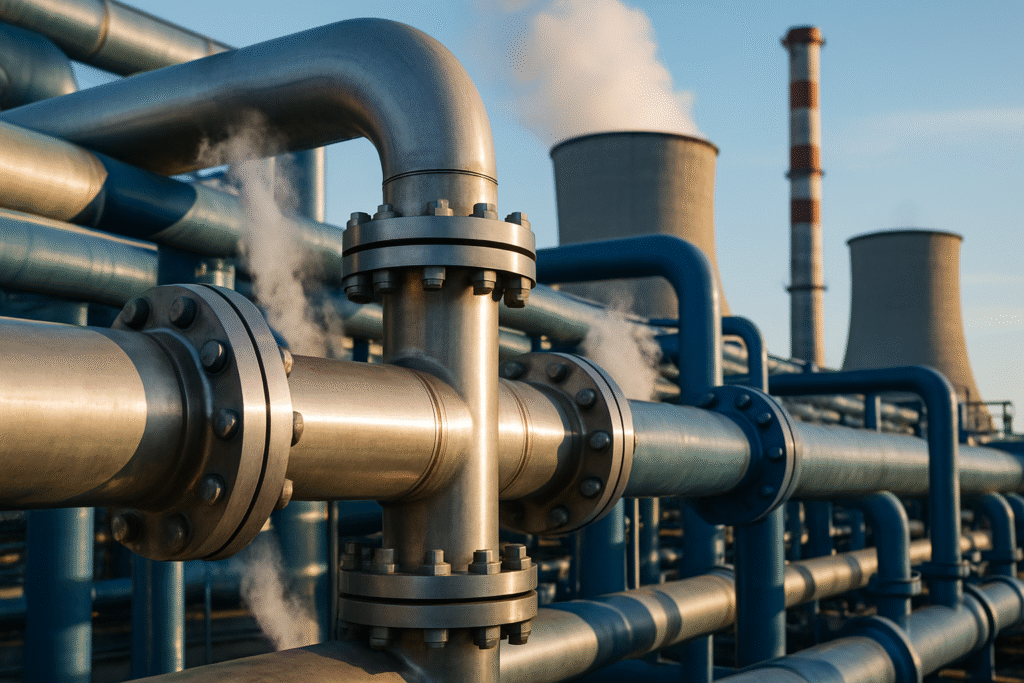
Paslanmaz Çelik Boru Flanşı Piyasa Verileri: Gizli Avantajlar, Yaygın Türler, Kullanım Alanları, ve Flanş Nasıl Seçilir
Paslanmaz çelik boru flanşı pazarı güvenilirlik nedeniyle genişliyor, korozyon direnci, ve yaşam döngüsü değeri endüstriyel boru tedarikinde merkezi hale geliyor. Grand View Araştırmasına göre (2024), küresel endüstriyel flanş pazarı şu şekilde değerlendi: $5.8 milyar 2023 ulaşılması öngörülüyor ve $7.2 milyar tarafından 2030, which makes stainless steel pipe flange selection a strategic purchasing decision rather than a routine commodity buy.
Mühendisler ve satın alma yöneticileri için, the most intriguing aspect is not only price. The hidden advantages of stainless steel pipe flange solutions include lower maintenance frequency, broader media compatibility, and better long-term performance in corrosive and high-temperature service.
Paslanmaz Çelik Boru Flanş Talebinin Arkasındaki Endüstriyel Piyasayı Etkileyen Etkenler
Demand for stainless steel pipe flange products is closely tied to energy, petrokimya, deniz, and water infrastructure investment. Statista'ya göre (2024), Petrol ve gaz endüstrisi yaklaşık olarak 35% küresel flanş tüketiminin, which confirms why flange specification has direct implications for plant uptime and safety.
Bölgesel üretim kapasitesi kaynak bulma stratejisini de şekillendiriyor. IBISWorld'e göre (2024), Asya-Pasifik'in hesapları 45% küresel flanş üretimi, Çin'in en büyük üretici olduğu, giving buyers access to high-volume output and competitive lead times.
These numbers explain why procurement teams compare not only flange types, but also manufacturing quality systems, inspection traceability, ve ihracat tecrübesi. In contrast to generic supply, project buyers increasingly require EN 10204 3.1 malzeme sertifikaları, PMI doğrulaması, and dimensional compliance with ASME and EN standards.
As projects become more international, standard harmonization matters more than ever. ASME B16.5 remains the core reference for NPS 1/2 başından sonuna kadar 24 flanşlar, sırasında ASME B16.47 covers large-diameter flanges, ve TR 1092 provides a widely used European framework (ASME, 2023; EN, 2024).
Pratik açıdan, stainless steel pipe flange procurement often involves balancing corrosion resistance, basınç sınıfı, yüz tipi, and fabrication schedule. Öyleyse, buyers need suppliers that can manufacture weld neck, bağcıksız, kör, soket kaynağı, dişli, and lap joint designs in 304, 316, 316L, 904L, 2205, Ve 2507 notlar.
SASA FLANGE serves this need with ISO 9001:2015 ve PED 2014/68/EU sertifikaları, geniş malzeme kapsamı, and export support for Oil & Gaz, Petrokimya, Güç, Deniz, ve Su Arıtma sektörleri. Buyers evaluating supply options can review capabilities through SASA FLANGE şirket bilgileri and product scope through its industrial flange and fitting portfolio.
Another market factor is lifecycle economics. Mordor İstihbaratına göre (2024), corrosion-related downtime and maintenance remain among the largest avoidable costs in process industries, which is why stainless materials continue gaining share in aggressive service systems.
Dahası, stainless steel offers measurable value in environments exposed to chlorides, kimyasallar, buhar, and repeated cleaning cycles. For many users, the most common reason to choose flanges in 304 veya 316 grades is not simply corrosion resistance, but predictable service life under variable operating conditions.
That is especially relevant in projects with strict inspection plans. ASTM A182 forged stainless flanges and ASTM A240 plate-derived materials are commonly specified because traceable chemistry and mechanical properties improve consistency in fabrication and operation (ASTM, 2024).
Sonuç olarak, a well-specified stainless steel pipe flange package can reduce replacement intervals, simplify maintenance planning, and support safer operating margins. This is one of the hidden advantages often missed when decisions focus only on the lowest initial unit price.
Paslanmaz Çelik Boru Flanş Çeşitleri, Notlar, ve Hizmette Gizli Avantajlar
Understanding stainless steel pipe flange types is essential because geometry affects stress distribution, kaynak bütünlüğü, and installation cost. Weld neck flanges remain the preferred choice for high-pressure and cyclic service, while slip-on flanges are often selected for lower-pressure systems where fabrication simplicity matters.
John Breen olarak, Kıdemli Boru Mühendisi, eyaletler: “Flange selection is never only about material grade; göbek geometrisi, karşı karşıya, delik hizalaması, and pressure class often determine long-term joint reliability.” That view aligns with ASME design practice, where the flange type must match service severity, sıcaklık, and assembly requirements.
Pazar Araştırması Geleceğine Göre (2024), industrial demand for corrosion-resistant alloy and stainless flange products is increasing at over 4% CAGR in line with stricter reliability and emissions targets. Ek olarak, Statista'ya göre (2024), process industries continue prioritizing durable piping components as maintenance budgets shift toward predictive asset management.
The most common stainless grades for industrial flange applications are 304, 304L, 316, ve 316L. Fakat, dubleks 2205, süper dubleks 2507, 904L, Monel, Hastelloy, and Inconel become important when chloride stress corrosion cracking, ekşi servis, or highly oxidizing media are present.
Grade selection should follow the actual medium, çalışma sıcaklığı, ve korozyon toleransı felsefesi. Örneğin, 304 is widely used in general water, yiyecek, ve hafif kimyasal servisi, halbuki 316 or 316L is often preferred for chloride-bearing environments because molybdenum improves pitting resistance.
Dr. olarak. Elena Markoviç, Malzeme Bilimcisi, eyaletler: “Flanş uygulamalarında, the hidden advantages of higher alloy content appear over time, because resistance to pitting, yarık saldırısı, and heat tint degradation directly influences leak risk.” That is particularly true in offshore, deniz, and aggressive washdown systems.
- 304/304L: economical and widely available for general industrial service.
- 316/316L: improved corrosion resistance for chlorides, seawater splashes, and harsher chemical exposure.
- 904L: stronger resistance in sulfuric and highly corrosive environments.
- 2205 dubleks: higher strength and better chloride resistance than austenitic 316L.
- 2507 süper dubleks: selected for severe offshore and high-chloride applications.
- A105 and A182 alloy options: used where carbon steel or alloy steel is required by service design.
Type selection matters just as much as alloy selection. The most common flange configurations each solve a different piping problem, and procurement teams should map them to process conditions rather than habit.
- Kaynak boyunlu flanşlar: yüksek basınç için en iyisi, titreşim, termal bisiklet, ve kritik süreç hatları.
- Geçmeli flanşlar: lower fabrication cost and easier alignment in non-critical service.
- Kör flanşlar: used to terminate lines, sistemleri izole et, veya gelecekteki genişlemeye izin verin.
- Soket kaynaklı flanşlar: küçük çaplı için uygun, yüksek basınçlı borular.
- Dişli flanşlar: practical where welding is restricted.
- Bindirmeli flanşlar: useful when frequent dismantling or alignment flexibility is needed.
Face design also affects sealing performance. Yükseltilmiş yüz proses tesislerinde yaygındır, ring type joint is used in high-pressure critical service, and flat face is often specified for cast iron or lower-stress mating equipment (ASME B16.5, 2023).
ASME rehberliğine göre, pressure-temperature ratings depend on material group and flange class, so buyers cannot compare Class 150 ve Sınıf 300 products by dimensions alone. Öyleyse, proper flange selection must integrate rating class, conta tipi, cıvata yükü, ve çalışma sıcaklığı.
Kaynak açısından bakıldığında, manufacturing capability matters because dimensional accuracy drives fit-up and sealing success. SASA FLANGE flanşlar üretmektedir 304, 316, 316L, 904L, 2205, 2507 ve diğer birinci sınıf kaliteler, backed by advanced CNC machining and comprehensive quality testing for export projects.
Custom requirements are also common in B2B procurement. Many EPC buyers need non-standard bores, özel kaplama, drilled patterns, NACE MR0175-compatible material options, or combined flange-and-fitting packages for complete piping systems.
SASA FLANGE supports this model with custom sizes from 1/2 inç ila 60 inch and factory-direct supply for flanges, dirsekler, tişört, redüktörler, ve büyük harfler. For technical discussions on drawings, basınç sınıfları, veya özel alaşımlar, buyers can connect directly through SASA FLANGE teknik satış desteği.
Nihayetinde, the intriguing question is not just which stainless flange is available. The better question is how to choose flanges that minimize total installed cost while preserving joint integrity for 10, 20, hatta 30 years of service.
Standartlar, Test, Paslanmaz Çelik Flanşlara Uygunluk ve Uyumluluk
Industrial buyers should anchor every stainless steel pipe flange purchase to recognized standards. ASME B16.5 Ve ASME B16.47 boyutları tanımla, derecelendirmeler, toleranslar, ve karşılaşılan gereksinimler, sırasında ASTM A182 commonly governs forged stainless steel flanges and ASTM A240 supports plate material requirements for related products (ASTM, 2024).
Avrupa ve uluslararası projeler sıklıkla EN gerektirir 1092, DIN, or JIS compliance in addition to ASME. Öyleyse, global suppliers must understand dimensional interchange limits, drilling differences, and marking requirements before production starts.
ISO'ya göre (2023), traceability and documented quality management remain essential in pressure-containing components because nonconforming materials increase both safety and legal risk. Bu yüzden ISO 9001:2015 sistemler, mill test reports, and positive material identification are now routine requirements in many tenders.
For corrosive upstream and chemical applications, NACE MR0175 veya ISO 15156 may also become relevant where sulfide stress cracking is a concern. Ek olarak, PED 2014/68/EU compliance is important when products enter regulated European pressure equipment supply chains.
- ASME B16.5: pipe flanges and flanged fittings for NPS 1/2 ile 24.
- ASME B16.47: NPS için geniş çaplı çelik flanşlar 26 ile 60.
- ASTM A182: forged or rolled alloy and stainless steel flanges and forged fittings.
- ASME B16.9: factory-made wrought buttwelding fittings for elbows, tişört, redüktörler, ve büyük harfler.
- EN 1092: European flange standard covering dimensions and pressure designations.
- NACE MR0175 / ISO 15156: material requirements for H2S-containing environments.
Inspection planning should be equally disciplined. Most project specifications require dimensional inspection, görsel muayene, material traceability checks, and marking verification, while higher criticality orders may add PMI, sertlik testi, ferrit kontrolleri, hidrostatik test desteği, or third-party witness inspection.
As Michael Tan, Endüstriyel Pazar Analisti, eyaletler: “Quality documentation has become a commercial differentiator because EPC firms increasingly score suppliers on traceability, sertifikasyon, ve yanıt verme yeteneği, not only on price.” That trend is especially visible in energy and offshore projects.
Documentation requirements usually include heat number traceability, EN 10204 3.1 certificate packages, and standard marking on each stainless steel pipe flange. Üstelik, flange buyers should verify bore finish, serration, bakan tip, and drilling accuracy because these details affect gasket seating and bolt stress distribution.
SASA FLANGE integrates these compliance needs into export manufacturing with ISO 9001:2015, PED 2014/68/AB, ve AD 2000 aligned quality processes. Servis 50+ Petrol genelindeki ülkeler & Gaz, Petrokimya, Güç, ve Denizcilik endüstrileri, the company supports both standard and project-specific documentation packages.
When evaluating vendors, procurement teams should compare more than nominal specification claims. They should confirm whether the supplier can provide ASTM-compliant raw material, CNC-machined tolerances, test records, and packaging methods that protect serrated sealing surfaces during shipment.
It is also wise to verify whether the supplier can combine flanges with ASME B16.9 fittings in the same project lot. That reduces inspection complexity and supports material consistency across elbows, tişört, redüktörler, büyük harfler, and flange components.
For detailed project requirements, buyers can discuss specifications and certification needs at SASA FLANGE iletişim sayfası. Paralel olarak, engineers can review dimensional baseline requirements directly from the ASME official website before final approval.
Başvuru Kılavuzu: Yağ İçin Flanş Nasıl Seçilir, Gaz, Kimyasal, Güç, ve Deniz Sistemleri
Choosing the right stainless steel pipe flange begins with operating conditions. Basınç, sıcaklık, akışkan kimyası, satır boyutu, korozyon mekanizması, and inspection class should all be defined before a grade or flange type is selected.
Oil and gas systems often prioritize pressure containment, sour service compliance, and resistance to chloride exposure. Öyleyse, 316L'de kaynak boyunlu flanşlar, dubleks 2205, veya süper dubleks 2507 may be preferred depending on produced water chemistry, açık deniz sıçrama bölgeleri, and pipeline stress levels.
Statista'ya göre (2024), petrol ve gaz hesapları yaklaşık 35% küresel flanş talebinin, so field-proven reliability is critical in this sector. In many upstream and midstream applications, buyers also require material traceability and third-party inspection as standard purchasing conditions.
Chemical processing plants focus more heavily on media compatibility. 316L is common for moderate chemical service, ama 904L, Hastelloy, Monel, or titanium may be required where acids, klorürler, or mixed aggressive media make standard austenitic stainless insufficient.
Power generation projects often deal with temperature cycling, buhar, and pressure fluctuation. Sonuç olarak, weld neck flanges with carefully matched metallurgy are often selected to reduce stress concentration at the hub-to-pipe transition.
Marine and shipbuilding applications must consider salt exposure, çatlak korozyonu, and washdown conditions. Bu ortamlarda, 316L is frequently a baseline, while duplex grades offer a stronger strength-to-weight ratio and better chloride resistance for severe duty.
- Check fluid composition, klorürler dahil, sülfürler, ve asit konsantrasyonu.
- Match flange class to design pressure and operating temperature.
- Confirm compatibility between gasket, cıvata malzemesi, and flange face finish.
- Select forged or plate-based product according to project specification.
- Review whether ASME, DIN, JIS, or EN dimensions are required.
- Specify certificates, PMI, and third-party inspection before purchase order release.
Another practical issue is size range. Buyers searching for stainless steel pipe flange sizes, 4 inç paslanmaz çelik boru flanşı seçenekleri, or stainless steel threaded pipe flange products should verify bore schedule, flanş kalınlığı, delme deseni, and face type rather than relying on nominal size descriptions alone.
Örneğin, A 4 inch flange may differ significantly depending on Class 150, 300, veya 600 rating and whether it follows ASME B16.5 veya TR 1092. Sonuç olarak, dimensional checks should always reference the exact standard and pressure designation.
Procurement teams should also evaluate total package availability. Flanges rarely ship alone on major projects, and integrating elbows, tişört, redüktörler, and caps from the same approved supplier can simplify quality control and logistics.
SASA FLANGE offers custom manufacturing for stainless steel flanges and related fittings in a broad material portfolio, içermek 304, 316, 316L, 904L, 2205, 2507, A105, A182, İnkonel, Monel, Hastelloy, ve Titanyum. This is useful when projects require mixed metallurgy packages or non-standard drilling and facing details.
Lead time and cost should be assessed alongside reliability. A lower-priced stainless steel pipe flange can become more expensive if poor tolerances, missing documents, or surface damage delay installation and force reinspection.
Öyleyse, the most effective way to choose flanges is to align engineering criteria with supplier capability. Buyers who do this consistently reduce field fit-up issues, improve sealing performance, and gain better control over lifecycle cost.
Geleceğe Bakış, Satın Alma Stratejisi, and Commercial Recommendations
Altyapının yenilenmesi nedeniyle paslanmaz çelik boru flanşı talebine yönelik görünüm olumlu olmaya devam ediyor, enerji geçiş projeleri, and industrial resilience programs continue to support investment. Grand View Araştırmasına göre (2024), pazarın bundan sonra büyümesi bekleniyor $5.8 milyar 2023 ile $7.2 milyar tarafından 2030, reflecting steady long-term demand.
Ek olarak, IBISWorld'e göre (2024), Asia-Pacific already accounts for more than 45% küresel flanş üretimi, which means sourcing strategies will continue to emphasize qualified Asian manufacturers with proven export quality systems. Fakat, buyers will increasingly favor suppliers that combine cost efficiency with traceability and engineering support.
One clear trend is specification tightening. EPC contractors and end users now expect faster document turnaround, PED and project certification support, and stronger material verification protocols than they did five years ago.
Another trend is bundled procurement. Instead of purchasing flanges, dirsekler, tişört, redüktörler, ve birden fazla satıcının kapakları, many buyers prefer integrated packages to reduce quality variation and simplify expediting.
Commercially, the most common buying mistakes remain under-specifying corrosion requirements, ignoring documentation scope, and treating all stainless grades as interchangeable. Tersine, successful procurement teams define media chemistry, sınıf derecelendirmesi, boyutlar, sertifikalar, and inspection expectations before RFQ release.
Stratejik kaynak kullanımı için, buyers should compare vendors on five criteria. These include material range, standartlara uygunluk, işleme hassasiyeti, dokümantasyon kalitesi, and delivery responsiveness.
- Standardize approved flange types by service category.
- Pre-qualify suppliers with ISO 9001:2015 and PED support.
- Rica etmek EN 10204 3.1 kritik dereceler için sertifikalar ve PMI.
- Bundle flange and fitting procurement when material consistency matters.
- Evaluate lifecycle cost rather than initial unit price alone.
For companies seeking a dependable partner, SASA FLANGE combines broad grade coverage, project documentation support, and custom production for industrial piping systems. Buyers planning current or future flange packages can use SASA FLANGE to discuss technical drawings, standartlar, and delivery requirements with an experienced export team.
Sıkça Sorulan Sorular
Hangisi daha iyi 304 veya 420 paslanmaz çelik?
●Çoğu paslanmaz çelik boru flanşı uygulaması için, 304 is the better choice because it offers stronger corrosion resistance, daha iyi kaynaklanabilirlik, and wider acceptance under industrial flange standards such as ASTM A182 Ve ASME B16.5.
●Grand View Araştırmasına göre (2024), endüstriyel flanş pazarına ulaştı $5.8 milyar 2023, and a significant share of demand comes from corrosive process systems where austenitic grades like 304 Ve 316 are preferred over hardenable martensitic grades such as 420.
●The main technical difference is microstructure and service intent. Seviye 304 is an austenitic stainless steel with roughly 18% krom ve 8% nikel, so it performs well in general chemical handling, su arıtma, gıda işleme, ve mimarlık hizmeti. Seviye 420 is a martensitic stainless steel with higher carbon and lower corrosion resistance, and it is typically selected for hardness, aşınma direnci, and edge retention rather than flange fabrication.
●In practical piping terms, 420 is not the most common flange material because its weldability is poorer and its corrosion performance is weaker in wet or chloride-containing environments. Engineers usually avoid 420 for process flanges unless a very specific mechanical requirement exists and corrosion exposure is limited.
●As materials specialists often note, flange materials must be selected for sealing reliability over time, not only for hardness. Öyleyse, if your system handles water, buhar, hafif kimyasallar, or washdown service, 304 is generally the more reliable and economical choice, sırasında 316 or duplex grades may be even better where chlorides are present.
●For projects requiring certified forged stainless flanges, traceable chemistry, ve boyutsal uyumluluk, gibi yerleşik üreticilerle çalışmak SASA FLANGE helps ensure the grade matches the real service conditions and standard requirements.
Paslanmaz çelik olup olmadığını nasıl anlarım? 304 veya 316?
●You usually cannot confirm whether a stainless steel pipe flange is 304 veya 316 by visual inspection alone because both grades look very similar after machining, dekapaj, veya pasivasyon.
●According to ISO and common industrial QA practice, the most reliable identification methods are mill test certificates, pozitif malzeme tanımlama, and laboratory chemical analysis, especially when the part is pressure-containing or used in regulated projects.
●The key compositional difference is molybdenum. Seviye 316 normally contains about 2% ile 3% molibden, sırasında 304 does not, and that extra alloying gives 316 better resistance to pitting and crevice corrosion in chloride environments. Portable PMI devices based on XRF technology can often detect this difference quickly in warehouses, fabrication shops, and project sites.
●Procurement teams should not rely on spark tests, magnets, or color differences because those methods are inaccurate for distinguishing austenitic stainless grades in flange service. Even stamped markings can be misleading if parts were mixed after machining or if traceability was lost during storage.
●According to industry analysts, documentation control is becoming more important across piping supply chains because wrong-grade installation can lead to expensive rework and corrosion failure. That is one reason EPC firms frequently require EN 10204 3.1 sertifikalar, ısı numarası izlenebilirliği, and PMI for 316L, dubleks, and other critical materials.
●If you need certainty before installation, request MTC review and PMI verification from a qualified supplier or third-party inspector. For projects that require traceable 304, 316, 316L, 2205, veya 2507 flanşlar, iletişim kurmak SASA FLANGE is a practical way to secure documented material conformity and project-level QA support.
Neler var? 5 paslanmaz çelik türleri?
●Beş ana paslanmaz çelik ailesi östenitiktir, ferritik, martensitik, dubleks, ve çökelmeyle sertleşen paslanmaz çelikler, and each group serves different industrial flange and piping requirements.
●According to ASTM and common materials engineering classifications, östenitik kaliteler 304 Ve 316 are the most widely used in flange production because they combine corrosion resistance, süneklik, ve iyi kaynaklanabilirlik.
●Austenitic stainless steels include 304, 304L, 316, 316L, 321, Ve 347, and they dominate process piping because they perform well across many chemical and temperature conditions. Ferritic grades contain chromium but little or no nickel, so they offer moderate corrosion resistance and lower cost, yet they are less common in critical flange applications. Martensitic grades such as 410 Ve 420 can be heat treated for hardness, but they are not usually the first choice for corrosion-focused flange service.
●Duplex stainless steels such as 2205 Ve 2507 combine austenitic and ferritic structures, delivering higher strength and strong resistance to chloride stress corrosion cracking. Precipitation-hardening grades are used where very high strength is required, but they are more specialized and less common in standard pipe flange procurement.
●Pazar Araştırması Geleceğine Göre (2024), demand for higher-performance corrosion-resistant materials is growing as asset owners target longer service life and lower maintenance costs. That trend supports greater use of duplex and super duplex alloys in offshore, tuzdan arındırma, and aggressive chemical systems.
●For most common industrial stainless steel pipe flange orders, buyers choose between austenitic and duplex grades based on corrosion severity, basınç sınıfı, ve maliyet hedefleri. If you need help selecting among 304, 316L, 904L, 2205, veya 2507 for a project-specific application, an experienced supplier like SASA FLANGE can align material family choice with standards, hizmet koşulları, ve muayene gereklilikleri.
Paslanmaz çelik flanşlar için ASME Kodu nedir?
●The primary ASME standards for stainless steel pipe flange dimensions and ratings are ASME B16.5 NPS için 1/2 başından sonuna kadar 24 Ve ASME B16.47 for large diameters from NPS 26 başından sonuna kadar 60.
●ASTM A182 is also commonly specified because it covers forged or rolled alloy and stainless steel flanges, dövme bağlantı parçaları, ve yüksek sıcaklıkta servis için valfler, making it one of the most important material standards for stainless flanges.
●Buyers should understand that ASME and ASTM play different but complementary roles. ASME B16.5 and B16.47 define dimensional requirements, basınç-sıcaklık değerleri, yüzleşme ayrıntıları, toleranslar, ve cıvata desenleri, sırasında ASTM A182 defines material chemistry, mekanik özellikler, ısıl işlem, ve test gereksinimleri. In many project documents, both standards appear together because one controls geometry and the other controls material compliance.
●Other relevant standards may include ASME B16.9 for buttweld fittings, EN 1092 Avrupa flanş boyutları için, Ve NACE MR0175 veya ISO 15156 ekşi servis malzemeleri için. Öyleyse, the full specification for a stainless flange package often includes more than one code or standard reference.
●ASME uygulamasına göre, pressure class selection must consider both material group and temperature, yani bir sınıf 300 flange cannot be evaluated only by nominal size. This is a critical point for procurement teams comparing quotations across different mills or international suppliers.
●The best approach is to specify the exact standard, seviye, karşı karşıya, sınıf, delik, and documentation package in the RFQ. For ASME-compliant stainless steel pipe flange supply with supporting certificates and export documentation, üreticiler beğeniyor SASA FLANGE can provide clearer compliance alignment from quotation through shipment.
En yaygın paslanmaz çelik flanş türleri nelerdir??
●En yaygın paslanmaz çelik flanş türleri kaynak boyunludur, bağcıksız, kör, soket kaynağı, dişli, ve kucak eklemi, and each type is designed for a different balance of strength, installation effort, ve bakım erişimi.
●Statista'ya göre (2024), petrol ve gaz sektörü yaklaşık olarak temsil etmektedir 35% küresel flanş tüketiminin, and that helps explain why weld neck flanges remain especially common in high-pressure and cyclic service.
●Weld neck flanges are favored where stress concentration must be minimized, such as refinery lines, güç boruları, and critical process systems. Slip-on flanges are often selected for lower-pressure service because they are easier to fit and typically less expensive to install. Blind flanges are used to close the end of a pipe, isolate a section of line, or allow future modifications.
●Socket weld flanges are widely used in smaller bore, yüksek basınçlı uygulamalar, while threaded flanges are useful where welding is undesirable or restricted. Bindirmeli flanşlar, used with stub ends, are helpful in systems that require frequent dismantling or rotational alignment during assembly.
●Face type is also important. Raised face is the most common for industrial process service, while ring type joint faces are used in higher-pressure applications requiring metal-to-metal gasket engagement under controlled bolt load.
●Doğru seçmek için, buyers should match flange type to process pressure, titreşim seviyesi, sıcaklık döngüsü, inspection class, ve bakım stratejisi. For projects involving stainless steel flange types, bağlantı parçaları, and custom drilling or facing details, a supplier like SASA FLANGE can help standardize selection across entire piping packages.
How do I select stainless steel pipe flange sizes, boyutlar, ve flanşların azaltılması?
●Stainless steel pipe flange sizes and dimensions must be selected by referencing the exact standard, nominal pipe size, basınç sınıfı, bakan tip, and bore schedule rather than by nominal diameter alone.
●ASME B16.5 governs most common sizes from NPS 1/2 ile 24, sırasında ASME B16.47 daha büyük çapları kapsar, and dimensional differences between Class 150, 300, 600, and higher ratings can be substantial even for the same nominal size.
●Örneğin, A 4 inch stainless steel pipe flange can vary in outside diameter, kalınlık, cıvata dairesi, and hub dimensions depending on its class and type. Buyers searching for stainless steel flange dimensions or stainless steel flange for sale should therefore verify whether the product is weld neck, bağcıksız, kör, dişli, or socket weld and whether the bore matches Schedule 10S, 40S, or another wall thickness. This is also important for gasket fit and bolt selection.
●Reducing flanges deserve special attention because they connect a larger flange size to a smaller pipe bore. They can save space and reduce the number of fittings, but engineers must check turbulence, velocity change, and stress effects before using them in critical service.
●According to industry best practice, dimensional errors remain one of the most common causes of site installation delays because bolt misalignment and wrong bore schedules prevent direct fit-up. Sonuç olarak, many procurement teams now request approval drawings and detailed dimensional inspection reports before shipment.
●The most effective purchasing method is to submit your line size, takvim, sınıf, yüz tipi, and standard together with any reducing flange requirement. If you need stainless steel pipe flange sizes from 1/2 inç ila 60 inch with project documentation and custom machining, SASA FLANGE can support both standard and non-standard dimensional requirements.
İlgili Mesajlar
Flanş Yüzü Kaplaması: Eşmerkezli ve Spiral Tırtıkların Açıklaması
Eşmerkezli ve spiral tırtılların her ikisi de işlenmiş flanş yüzeyidir…
Dubleks 2205 316L Flanşlara Karşı: Hangi Malzemeyi Seçmelisiniz?
Hızlı cevap: Dubleks 2205 flanşlar genellikle daha güçlü adaydır…

Orifis Flanşı Tanımı, Ayrıntılar ve ASME B16.36 Flanşlara Genel Bakış: Piyasa Verileri, Seçim Kılavuzu ve Uyumluluk Bilgileri
Küresel endüstriyel flanş pazarı şu şekilde değerlendi: $5.8 milyar…

Siyah Bertaraf Flanşı Pazar Rehberi: Malzemeler, 3.5″ Uyumluluk, Mutfak Lavabo Flanşları için B2B Kaynak Verileri
Mutfak armatürü alıcıları nedeniyle siyah atık flanş talebi artıyor…