
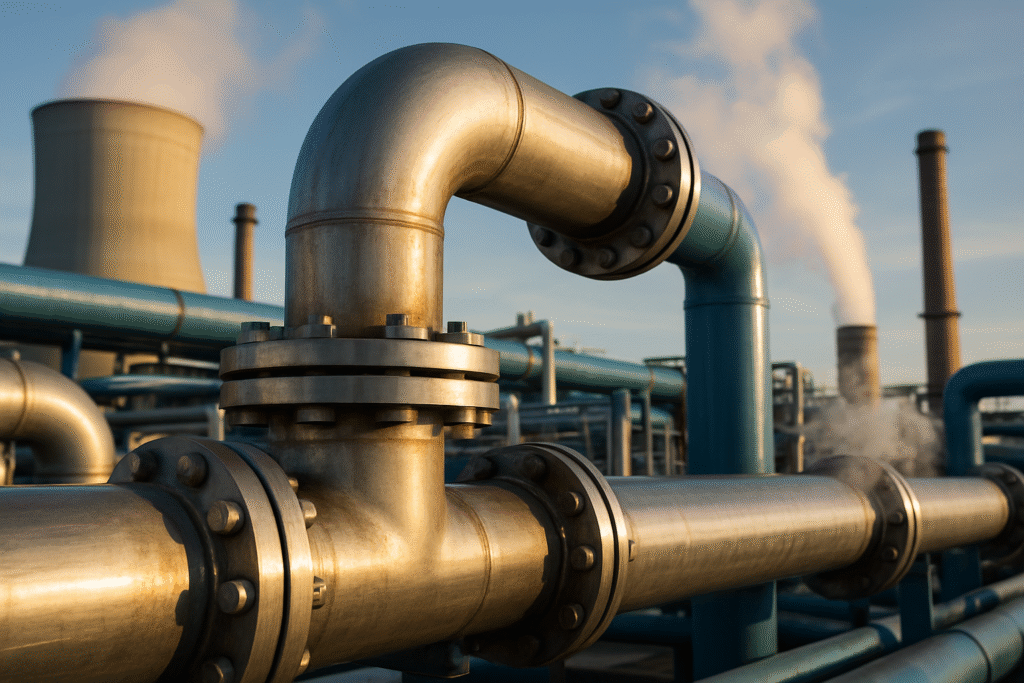
스테인레스 스틸 파이프 플랜지 시장에 도달 $7.2 10억 단위 2030: 흥미로운 숨겨진 장점, 유형, 용도, 다양한 플랜지를 선택하는 방법
스테인레스 스틸 파이프 플랜지는 공정 배관에서 가장 사양이 높은 연결 구성 요소 중 하나로 남아 있습니다., 글로벌 산업 투자로 인해 그 중요성이 계속 커지고 있습니다.. 그랜드뷰 리서치에 따르면 (2024), 전 세계 산업용 플랜지 시장의 가치는 다음과 같습니다. $5.8 10억 2023 도달할 것으로 예상됩니다. $7.2 10억 단위로 2030.
조달 관리자 및 배관 엔지니어용, 성장은 실제 현실을 반영한다. 스테인레스, 부식 방지, pressure-rated flanges are still the most common choice for critical services across oil and gas, 석유화학, 힘, 선박, 및 수처리 시스템.
Global demand trends shaping stainless steel pipe flange procurement
Industrial buyers are purchasing more engineered flange solutions because project specifications are becoming stricter. IBISWorld에 따르면 (2024), 아시아 태평양 계정은 이상입니다. 45% 글로벌 플랜지 생산량의, 중국이 가장 큰 제조사이기 때문에.
That regional concentration matters for sourcing strategy. It affects lead times, raw material access, 가공능력, and factory-direct pricing for standard and custom stainless steel pipe flange orders.
End-use demand also remains strong in heavy industry. 스태티스타에 따르면 (2024), 석유 및 가스 산업은 대략적으로 35% 글로벌 플랜지 소비량, which explains why ASME-rated forged flanges dominate many project specifications.
게다가, corrosion management is now a board-level concern in refining, 난바다 쪽으로 부는, 및 화학 처리. NACE guidance continues to influence material selection where chloride attack, 신맛이 나는 서비스, or crevice corrosion can shorten asset life (NACE, 2023).
결과적으로, buyers increasingly compare not only price, 추적성도, 인증, 야금학. A stainless steel pipe flange may look simple, yet the wrong grade or facing can cause leakage, bolt relaxation, or accelerated corrosion.
Many EPC contractors now favor suppliers that combine broad standards coverage with documented quality systems. 와 함께 ISO 9001:2015 및 PED 2014/68/EU 인증, SASA FLANGE supports these requirements with controlled manufacturing and inspection procedures.
추가적으로, buyers need suppliers that can support global standards without delaying project schedules. SASA FLANGE manufactures flanges in ANSI B16.5, ANSI B16.47, DIN, JIS, 고스트, 그리고 EN 1092 configurations for diverse plant and export requirements.
Market growth is also linked to infrastructure modernization. 모르도르 정보국에 따르면 (2024), global investment in water and wastewater treatment equipment continues to rise at more than 6% CAGR, increasing demand for stainless steel flanges and fittings in corrosion-prone systems.
Procurement teams therefore need a supplier that can align metallurgy, 압력 등급, 및 문서. 고급 CNC 가공 및 포괄적인 품질 테스트를 통해 뒷받침됨, SASA FLANGE serves projects requiring EN 10204 3.1 선적 서류 비치, PMI, hydrostatic verification, 그리고 치수 확인.
In contrast to generic traders, qualified manufacturers can also advise on hidden advantages such as service life, maintenance reduction, 결합 부품과의 호환성. That technical support often reduces total installed cost even when the unit price is not the lowest.
Intriguing stainless steel pipe flange types, 재료, and hidden performance advantages
The most common flange materials are 304, 304엘, 316, and 316L because they balance corrosion resistance, 용접성, and commercial availability. 하지만, different services demand different grades, and engineers should never assume that all stainless flanges perform the same.
According to ASTM and ASME material practice, forged stainless flanges are commonly supplied to ASTM A182 requirements for pressure parts, while related plate products may reference ASTM A240 for chemistry and mechanical properties (ASTM, 2024). 그러므로, buyers should verify whether the project calls for forged or plate-derived components.
존 브린으로서, 수석 배관 엔지니어, 주: “A flange failure is rarely just a flange issue; it is usually a mismatch between material, 압력 등급, 깃 달기, and actual process conditions.” That is why technical review should precede every bulk purchase.
The hidden advantages of a properly specified stainless steel pipe flange include lower maintenance frequency, stronger oxidation resistance, better compatibility with hygienic cleaning, and improved reliability in wet or chloride-laden service. In many plants, those gains outweigh initial material premiums within one shutdown cycle.
Material selection usually begins with corrosion mechanism and temperature range. 304 and 304L are widely used in general industrial, 음식, and water applications, ~하는 동안 316 and 316L add molybdenum for improved resistance in chloride-containing environments.
Higher-alloy grades serve more demanding conditions. 예를 들어, 904엘, 2205, 그리고 2507 are selected for aggressive media, 바닷물 노출, or higher strength demands, while nickel alloys such as Inconel, 모넬, and Hastelloy support severe chemical and thermal service.
- 304/304엘: economical and widely available for general corrosion service.
- 316/316엘: better pitting resistance in chloride-bearing environments.
- 904엘: stronger resistance to reducing acids and severe corrosion.
- 2205 듀플렉스: higher strength and improved chloride stress corrosion resistance.
- 2507 슈퍼 듀플렉스: preferred for marine, 난바다 쪽으로 부는, and high-chloride systems.
Flange type matters as much as material. Weld neck flanges perform best in cyclic pressure and temperature service because the tapered hub distributes stress more evenly.
Slip-on flanges are easier to align and often cost less to install, although they are generally less fatigue-resistant than weld neck designs. Threaded flanges suit low-pressure systems where welding is undesirable, while blind flanges close off line ends or vessel nozzles.
Socket weld flanges are often chosen for smaller bore, higher-pressure piping. 랩 조인트 플랜지, by comparison, help where frequent dismantling or expensive alloy stub ends justify easier alignment.
- 웰드 넥 플랜지: 고압에 가장 적합, 고온, and vibration service.
- 슬립온 플랜지: common for utility lines and moderate service conditions.
- 블라인드 플랜지: 격리에 사용, 유지 보수 액세스, and hydrotesting.
- 스레드 플랜지: useful where welding is restricted or impractical.
- 소켓 용접 플랜지: suitable for small-bore high-pressure systems.
- 랩 조인트 플랜지: preferred for systems requiring frequent inspection or disassembly.
시장 조사 미래에 따르면 (2024), corrosion-resistant alloy components are seeing above-average growth in offshore and chemical processing segments due to stricter lifecycle cost analysis. That trend supports broader use of duplex and high-alloy flange grades in new projects.
박사로서. Elena Markovic, 재료 과학자, 주: “The true value of stainless selection lies in matching alloy chemistry to the process environment, not simply choosing the highest chromium number.” 다시 말해서, intelligent specification delivers better economics than over-specification.
Dimensions and pressure classes must also match the code design basis. ASME B16.5 covers many flanges from NPS 1/2 ~을 통해 24, ~하는 동안 ASME B16.47 addresses larger diameters typically from NPS 26 ~을 통해 60 (ASME, 2024).
Face type directly affects sealing performance. Raised face remains the most common in industrial service, while ring type joint is preferred for high-pressure and high-temperature applications that require a metal-to-metal seal.
For hygienic or low-pressure systems, flat face or specific gasket arrangements may be more appropriate. 그러므로, flange selection should always be evaluated together with gasket material, 볼트 등급, torque procedure, and flange finish.
Manufacturing quality is another differentiator. SASA FLANGE manufactures stainless steel flanges in 304, 316, 316엘, 904엘, 2205, 그리고 2507, along with carbon steel and alloy grades, 1/2부터 맞춤형 크기 제공" 60까지" 경쟁력 있는 공장 직거래 가격으로.
추가적으로, serious buyers should assess machining tolerances, 베벨 준비, PMI 기능, and heat number traceability. These details become critical when supplying refinery shutdowns, 근해 스키드, 담수화 플랜트, or PED-governed export projects.
ASME, ASTM, DIN, and EN requirements for stainless steel pipe flange compliance
Standards are not optional in industrial procurement. They define dimensions, 압력 온도 등급, 공차, 재료, 마킹, and inspection requirements that protect safety and interchangeability.
For North American and many international projects, ASME B16.5 그리고 ASME B16.47 remain the key dimensional standards for flanges. Material compliance often references ASTM A182 단조 스테인리스 및 합금강 플랜지용, while pipe fittings commonly follow ASME B16.9.
European projects frequently reference EN 1092 for flange dimensions and pressure designations. German and broader continental applications may also require DIN-based practices, while marine and project export packages can include DNV, 소아과, or AD 2000 선적 서류 비치.
유럽연합 집행위원회 PED 프레임워크에 따르면, pressure equipment placed on the EU market must meet essential safety requirements and conformity assessment obligations (PED 2014/68/EU). 그러므로, documentation discipline is as important as machining accuracy for international shipments.
- ASME B16.5: flange dimensions and ratings for smaller nominal pipe sizes.
- ASME B16.47: larger diameter flange dimensions and ratings.
- ASTM A182: forged or rolled alloy and stainless steel pipe flanges and fittings.
- ASME B16.9: 공장에서 만든 단조 맞대기 용접 피팅.
- EN 1092: European flange system with PN designations.
- NACE MR0175: material guidance for sour service environments where applicable.
Engineers should also review corrosion-service requirements when hydrogen sulfide or chlorides are present. NACE MR0175 and related project specifications can limit hardness, 합금 선택, and heat treatment route for wetted components.
That is especially important in upstream oil and gas, where sour service can rapidly expose poor material decisions. 스태티스타에 따르면 (2024), oil and gas still accounts for roughly 35% 글로벌 플랜지 소비량, which keeps NACE and ASME compliance central to purchasing decisions.
기준을 비교할 때, buyers should understand that pressure classes and PN ratings are not directly interchangeable without engineering review. A클래스 150 ASME flange is not simply the same as a PN16 or PN20 flange in every duty case.
The following comparison points help clarify specification logic:
- ASME Class system uses ratings such as 150, 300, 600, 900, 1500, 그리고 2500.
- EN systems use PN designations such as PN10, PN16, PN25, and PN40.
- Facing forms, 드릴링 패턴, and thicknesses vary by standard.
- Material naming conventions differ between ASTM, EN, and DIN systems.
Quality documents should also be checked before order release. Typical requirements include EN 10204 3.1 밀 테스트 인증서, 차원 보고서, PMI 결과, 경도 검사, hydrotest records where applicable, and coating or marking verification.
와 함께 ISO 9001:2015, PED 2014/68/EU, 그리고 광고 2000 인증, SASA FLANGE supports customers that require traceable documentation for global projects. 게다가, its production scope includes stainless steel flanges, 탄소강 플랜지, 합금 플랜지, 엘보와 같은 파이프 피팅, 티셔츠, 감속기, 그리고 모자.
Authoritative standard references should always be consulted during specification review, especially for critical lines. Buyers can verify current dimensional and code requirements directly through ASME and related standards bodies before issuing purchase orders.
How to choose the right stainless steel pipe flange for different industrial uses
The right flange choice depends on fluid chemistry, 온도, 압력 등급, piping code, 유지 관리 철학, 및 총 설치 비용. 따라서, engineers should evaluate the full operating envelope instead of focusing only on material price.
석유 및 가스 서비스 분야, 316L의 용접 넥 플랜지, 듀플렉스, or specified alloy grades are often preferred for vibration resistance and stronger fatigue performance. Sour service or offshore duty may require NACE review, higher alloy content, and stricter testing protocols.
석유화학공장에서, media compatibility drives selection. 염화물, 황 화합물, 유기산, and elevated temperatures can quickly eliminate lower-grade materials from consideration.
발전용, thermal cycling is often the dominant factor. 그러므로, 플랜지형, bolt loading, and creep or oxidation behavior become as important as baseline corrosion resistance.
In marine and shipbuilding systems, seawater exposure often pushes engineers toward 316L, 2205, 또는 2507 depending on chloride concentration and design life targets. According to DNV practice, seawater systems require careful corrosion management and material pairing to reduce galvanic and pitting risks (DNV, 2023).
Water treatment and desalination projects also demand careful alloy selection. Duplex and super duplex options often deliver better lifecycle performance in brine handling, 역삼투 스키드, and coastal installations.
- 공정유체 확인, 염화물 수준, and pH before selecting grade.
- Match flange standard to piping code and mating component standard.
- Choose pressure class based on design pressure and temperature.
- Verify facing type with gasket design and bolt load requirements.
- Review welding method, PWHT needs, 및 설치 제약.
- Specify documentation such as EN 10204 3.1, PMI, and hardness testing.
Size availability is another practical consideration, especially for shutdown work and OEM production schedules. Buyers often search for stainless steel pipe flange sizes, 4 인치 스테인레스 스틸 파이프 플랜지 옵션, and stainless steel threaded pipe flange configurations because project timing depends on stock and machining responsiveness.
Custom manufacturing can solve unusual specification challenges. 예를 들어, plants may need non-standard drilling, reducing flanges, 특별한 외장, long weld necks, or mixed-material packages that include matching elbows, 티셔츠, 감속기, 그리고 모자.
SASA FLANGE supports these requirements through flexible production and broad material coverage. 피복재 50+ 석유를 건너는 나라들 & 가스, 석유화학, 힘, 해양산업, the company also provides support for forged stainless, 탄소강, 합금, 니켈 합금, and titanium flange requirements.
Procurement teams should also compare inspection capability when reviewing stainless steel pipe flange suppliers. Competitive offers are valuable, yet rework, nonconformance, and late documents can erase any apparent savings.
A disciplined sourcing process usually includes supplier qualification, 도면 검토, raw material verification, sample approval where needed, and final release documentation. Buyers can review manufacturing scope and product categories at SASA FLANGE 제품 그리고 회사 배경 SASA FLANGE 우리에 대해.
Future outlook for stainless steel pipe flange buyers and strategic sourcing recommendations
The future of the stainless steel pipe flange market is closely tied to energy transition, 물 인프라, petrochemical upgrades, and regional reshoring strategies. 그랜드뷰 리서치에 따르면 (2024), 시장은 내년부터 확대될 것으로 예상된다. $5.8 10억 2023 에게 $7.2 10억 단위로 2030.
That trajectory means procurement pressure will remain high. Buyers should expect continued volatility in stainless input costs, longer lead times for premium alloys, and greater emphasis on traceable quality records.
IBISWorld에 따르면 (2024), Asia-Pacific already accounts for more than 45% 글로벌 플랜지 생산량의, so supplier diversification and early scheduling are becoming more important. 게다가, material demand from oil and gas, 선박, and water treatment remains resilient across many regions.
전략적으로, the most effective buyers standardize specifications where possible and reserve exotic alloys for truly demanding services. This approach reduces unnecessary cost while protecting reliability in the lines that matter most.
- Prequalify suppliers with ISO 9001:2015 and relevant export certifications.
- Request clear compliance to ASME, ASTM, DIN, EN, and project-specific standards.
- 플랜지 정렬, 틈 메우는 물건, 탈당, and pipe materials during technical review.
- Plan long-lead alloy purchases earlier than commodity stainless items.
- 수명주기 비용 사용, 단가만이 아닌, for final vendor evaluation.
As industrial systems become more data-driven, sourcing decisions are becoming more evidence-based as well. 그러므로, manufacturers that combine technical advice, broad standards coverage, and dependable documentation will gain a stronger share of global project business.
For buyers comparing different flange suppliers, the most practical next step is a technical-commercial review with an experienced manufacturer. For projects requiring certified stainless steel flanges, 맞춤 크기, and responsive export support, 함께 일하다 SASA FLANGE can simplify qualification and procurement.
자주 묻는 질문
어느 것이 더 낫습니까? 304 또는 420 스테인레스 스틸?
●304 stainless steel is generally better for a stainless steel pipe flange because it offers stronger corrosion resistance and broader industrial acceptance than 420 in wet and chemical environments.
●According to ASTM material practice and common industrial usage, 304 is the most common austenitic stainless grade for general piping components, ~하는 동안 420 is a martensitic grade used more often where hardness and wear resistance are priorities.
●Engineers should choose 304 for most flange applications and request expert support from established manufacturers like SASA FLANGE when corrosion resistance, 용접성, and code compliance are required.
스테인레스 스틸 플랜지에 대한 ASME 코드는 무엇입니까?
●스테인레스 스틸 플랜지에 대한 주요 ASME 치수 표준은 다음과 같습니다. ASME B16.5 그리고 ASME B16.47, while material requirements are commonly linked to ASTM A182 단조 플랜지용.
●ASME B16.5 typically covers NPS 1/2 ~을 통해 24 그리고 ASME B16.47 더 큰 직경을 커버, so buyers must match the correct standard to the project size range and pressure class.
●Procurement teams should verify dimensions, 깃 달기, 압력 등급, and material compliance before purchase, especially for export projects that also require EN 1092 or PED documentation.
스테인레스 스틸 플랜지는 무엇에 사용됩니까??
●파이프 연결에는 스테인레스 스틸 플랜지가 사용됩니다., 밸브, 슬리퍼, and equipment in systems that require leak-tight assembly, 유지 보수 액세스, and pressure-rated performance.
●스태티스타에 따르면 (2024), 석유 및 가스 부문이 약 35% 글로벌 플랜지 소비량, which shows how important flanges are in critical process industries.
●Buyers should select flange type, 재료 등급, and pressure class based on media, 온도, and maintenance requirements to achieve safe long-term performance.
무엇입니까? 5 스테인레스 스틸의 종류?
●다섯 가지 주요 스테인리스강 계열은 오스테나이트계입니다., 페라이트계, 마르텐사이트, 듀플렉스, and precipitation-hardening stainless steel.
●다음과 같은 오스테나이트계 등급 304 그리고 316 are the most common for industrial flange applications because they combine corrosion resistance, 인성, 및 용접성.
●For chloride-rich or high-strength service, engineers should evaluate duplex or higher-alloy options and confirm the final choice against project standards and process data.
What are the most common stainless steel flange types?
●가장 일반적인 스테인레스 스틸 플랜지 유형은 용접 넥입니다., 슬립온, 눈이 먼, 스레드, 소켓 용접, 및 랩 조인트 플랜지.
●Weld neck and slip-on designs are the most common in industrial piping because they balance performance, installation practicality, and market availability across many sizes.
●Engineers should match flange type to pressure, 순환 로딩, 유지 관리 필요, and fabrication method before placing an order.
How do I choose stainless steel pipe flange sizes and pressure ratings?
●Stainless steel pipe flange sizes and ratings should be selected by matching nominal pipe size, 일정, 설계압력, 설계 온도, and the governing dimensional standard.
●ASME B16.5 pressure classes commonly include 150, 300, 600, 900, 1500, 그리고 2500, and each class has different pressure-temperature limits depending on the material group.
●중요한 프로젝트의 경우, buyers should confirm dimensional compatibility, 개스킷 좌석, and certification requirements with a qualified manufacturer before final approval.
관련 게시물

오리피스 플랜지 정의, 세부 정보 및 ASME B16.36 플랜지 개요: 시장 데이터, 선택 가이드 및 규정 준수 통찰력
전 세계 산업용 플랜지 시장의 가치는 다음과 같습니다. $5.8 10억…
