
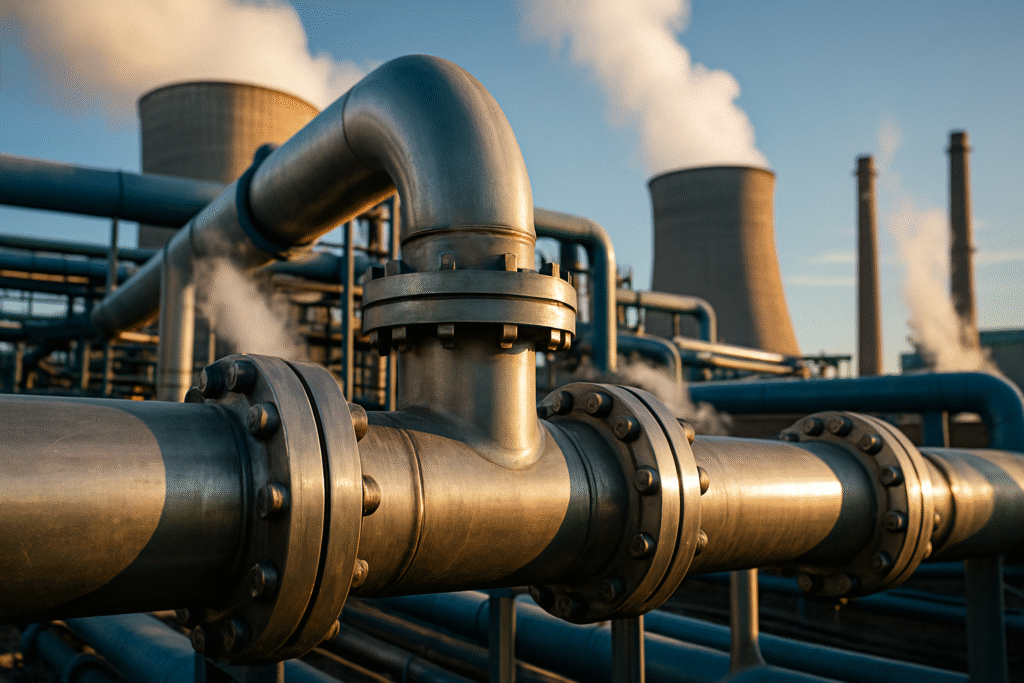
스테인레스 스틸 파이프 플랜지 가이드: 7 데이터 기반 이점, 유형, 용도, 및 선택 방법
스테인레스 스틸 파이프 플랜지 시장은 부식 제어로 인해 계속 확장되고 있습니다., 압력 무결성, 수명주기 비용이 산업 구매자의 최우선 과제가 됩니다.. 그랜드뷰 리서치에 따르면 (2024), 전 세계 산업용 플랜지 시장의 가치는 다음과 같습니다. $5.8 10억 2023 도달할 것으로 예상됩니다. $7.2 10억 단위로 2030, which highlights the Hidden Advantages and long-term Versatility of Stainless Steel Flanges in modern Pipe systems.
엔지니어 및 조달 관리자용, the question is no longer whether stainless materials perform well. 대신에, the practical issue is how to Choose the right Flanges, 성적, 표준, and facing configurations for demanding process conditions.
Market Drivers Behind Stainless Steel Pipe Flange Demand
Demand for stainless steel pipe flange products is rising because process industries now evaluate total installed cost, 유지보수 빈도, and outage risk together. 스태티스타에 따르면 (2024), 석유 및 가스 산업은 대략적으로 35% 글로벌 플랜지 소비량, which makes material durability and code compliance central to project success.
추가적으로, regional supply capability matters. IBISWorld에 따르면 (2024), 아시아 태평양 계정은 이상입니다. 45% 글로벌 플랜지 생산량의, 중국이 가장 큰 제조사이기 때문에, so buyers increasingly source from qualified producers with traceable quality systems.
This trend supports manufacturers that combine global standards with efficient production. SASA FLANGE, 예를 들어, 스테인레스 스틸을 공급합니다, 탄소강, 합금, 듀플렉스, 니켈 합금, and titanium flange products for Oil & 가스, 석유화학, 발전, 선박, 수처리, 및 건설시장.
Procurement teams also expect more than catalog stock. They want EN 10204 3.1 선적 서류 비치, PMI, hydrostatic testing support, 치수 확인, and material traceability from raw forging to finished machining.
결과적으로, suppliers must offer much more than commodity parts. They must deliver ASTM-compliant raw materials, ASME dimensional accuracy, and project-specific machining for weld neck, 미끄러지다, 눈이 먼, 소켓 용접, 스레드, and lap joint Types.
모르도르 정보국에 따르면 (2024), industrial infrastructure investment in energy and water sectors remains a major growth driver for piping components worldwide. 그러므로, buyers increasingly prioritize suppliers that can support both replacement maintenance and greenfield EPC packages.
The stainless category remains especially attractive because it balances corrosion resistance, 기계적 강도, 가공성, and clean-service suitability. In contrast to coated carbon steel, stainless steel flange assemblies often reduce repainting, contamination risk, and maintenance interventions over long service periods.
재료공학 박사로서. 헬렌 모리스, Corrosion Specialist, 주: “When chloride exposure, 습기, and cyclic shutdowns combine, stainless flanges often deliver lower lifecycle cost than lower-priced alternatives.” That insight is highly relevant for offshore, 화학적인, 및 수처리 응용 분야.
Buyers also compare sourcing risk. 와 함께 ISO 9001:2015 및 PED 2014/68/EU 인증, SASA FLANGE aligns manufacturing control with international project requirements while serving customers across 50+ 국가.
게다가, product breadth affects bid competitiveness. 플랜지 제조 304, 316, 316엘, 904엘, 2205, 2507, A182 등급, 인코넬, 모넬, 하스텔로이, and Titanium gives project teams flexibility when media chemistry, 설계 온도, or corrosion allowance changes late in specification review.
Intriguing Stainless Steel Pipe Flange Technical Guide: 등급, 평가, 그리고 숨겨진 장점
The most Intriguing aspect of a stainless steel pipe flange is its ability to combine leak-tight connection performance with service-specific alloy selection. 하지만, the best result depends on matching flange class, 깃 달기, 야금, 벽 두께, and service environment.
시장 조사 미래에 따르면 (2024), corrosion-resistant alloy demand in industrial processing continues to grow as operators seek longer service life and lower unplanned downtime. 그러므로, stainless and duplex Flanges are no longer niche selections in many aggressive media systems.
ASME B16.5 covers dimensions and pressure-temperature ratings for flanges from NPS 1/2 ~을 통해 24, ~하는 동안 ASME B16.47 더 큰 직경을 다룹니다 (ASME, 2023). ASTM A182 commonly applies to forged stainless and alloy Steel flanges, 반면 ASTM A240 relates to plate products used in some fabricated components (ASTM, 2024).
배관 컨설턴트인 Michael Trent, 수석 배관 엔지니어, 주: “A flange failure is rarely caused by one variable alone; 재료 등급, 볼트 하중, 개스킷 선택, and alignment all matter equally.” This is why experienced buyers review the full joint assembly rather than only the flange material.
Among austenitic grades, 304 and 304L remain common for general industrial service because they provide good weldability and cost efficiency. 하지만, 316 and 316L offer enhanced pitting resistance through molybdenum addition, so they are often preferred for chloride-bearing environments.
보다 엄격한 서비스를 위해, 904엘, 2205, 그리고 2507 offer higher resistance to localized corrosion and stress corrosion cracking. 게다가, 인코넬과 같은 니켈 합금, 모넬, and Hastelloy support applications where standard stainless grades may not provide adequate durability.
- 304/304엘: 일반 공정 라인, 물 시스템, food-grade service, moderate corrosion exposure.
- 316/316엘: Marine atmospheres, 화학물질 전달, 근해 스키드, 염화물 함유 매체.
- 904엘: Stronger resistance in acidic and high-corrosion environments.
- 2205 듀플렉스: High strength plus improved chloride resistance for offshore and process plants.
- 2507 슈퍼 듀플렉스: Severe seawater and high-chloride duties.
- 티탄: Outstanding corrosion resistance for specialized chemical and marine systems.
압력 등급 선택도 마찬가지로 중요합니다.. Standard classes include 150, 300, 600, 900, 1500, 그리고 2500 아래에 ASME B16.5, and each class must be checked against service temperature because allowable pressure decreases as temperature rises (ASME, 2023).
Facing style influences sealing. Raised face suits many industrial systems, ring type joint is common in high-pressure and high-temperature service, and flat face is often specified for cast iron or mating equipment where flange stress must remain controlled.
Common Stainless Steel Flange Types include:
- Weld neck flange for high-pressure, 고온, and cyclic duty.
- Slip on flange for easier installation and lower initial cost.
- Blind flange for line isolation and pressure boundary closure.
- 소구경용 소켓 용접 플랜지, 고압 애플리케이션.
- Threaded flange where welding is undesirable or restricted.
- Lap joint flange for systems needing frequent dismantling.
Dimensions and tolerances must match the connected Pipe specification. 그러므로, 구매자는 명목상 크기를 확인해야 합니다, 일정, 구경, flange width, 마무리를 향함, 드릴링 패턴, and metallurgy before purchase.
According to ISO guidance and European practice, EN 1092 flanges remain common in multinational projects where metric dimensions and PN ratings are specified (EN, 2023). 대조적으로, North American process plants often standardize around ASME ratings and inch-based nominal sizing.
Quality assurance should include more than a visual check. 고급 CNC 가공 및 포괄적인 품질 테스트를 통해 뒷받침됨, SASA FLANGE can support PMI, 치수검사, chemical and mechanical verification, and documentation packages for export projects.
Buyers also ask about stainless steel pipe flange price. Price depends on alloy grade, 압력 등급, 단조 루트, raw material volatility, 가공 복잡성, 테스트 요구 사항, 수량, and delivery schedule, so technical alignment early in RFQ preparation helps avoid costly revision cycles.
예를 들어, 에이 4 inch stainless steel pipe flange in 316L Class 150 may be straightforward, 동안 4 인치 2507 RTJ Class 600 flange requires more specialized forging and inspection. 따라서, the commercial gap between apparently similar parts can be significant.
The Hidden Advantages of stainless solutions become clearer over the full asset life. Reduced corrosion maintenance, cleaner service performance, lower replacement frequency, and better reliability often offset higher upfront material cost.
As industry analyst Rachel Dunn states: “In process equipment procurement, the lowest purchase price is not the lowest ownership cost.” That statement reflects the reality of shutdown economics in refinery, LNG, and chemical processing operations.
표준, 규정 준수, and Inspection Requirements for Stainless Steel Flanges
Standards provide the technical language that allows EPC firms, 재고 판매업자, and end users to buy with confidence. 그러므로, every stainless steel pipe flange order should reference material standard, 치수기준, 압력 등급, 깃 달기, 테스트, 및 문서 수준.
The most frequently specified standards include ASTM A182 for forged stainless and alloy flanges, ASME B16.5 for dimensions up to NPS 24, ASME B16.47 더 큰 크기의 경우, ASME B16.9 for buttweld fittings, 그리고 EN 1092 for European pressure classes. DIN, JIS, and GOST standards also remain important in regional and legacy systems.
- ASTM A182: Forged or rolled alloy and stainless Steel pipe flanges, 피팅, 밸브, 및 부품.
- ASME B16.5: Pipe Flanges and flanged fittings, NPS 1/2 에게 24.
- ASME B16.47: Large diameter steel flanges, NPS 26 에게 60.
- ASME B16.9: 공장에서 제작한 단조 맞댐용접 피팅.
- EN 1092-1: European flanges with PN designations.
- NACE MR0175 / ISO 15156: Material suitability guidance for sour service environments.
ASME에 따르면 (2023), flange pressure-temperature ratings depend on both material group and design temperature, so the same class number does not carry the same allowable pressure across all materials. This is a critical detail when engineers compare carbon steel and stainless alternatives.
In sour service or chloride-rich applications, NACE requirements may affect material selection and hardness control. 뿐만 아니라, offshore and marine projects may impose additional owner specifications from DNV or NORSOK depending on geography and service severity.
Typical compliance documents requested by professional buyers include EN 10204 3.1 재료 인증서, 열수 추적성, 차원 보고서, PMI 기록, and marking photographs. PED 2014/68/EU documentation may also be required for equipment entering the European Economic Area.
조달팀용, the comparison below helps clarify common specification checkpoints:
- 재료 등급: 304, 316엘, 904엘, 2205, 2507, 티탄, 또는 니켈 합금.
- 기준: ASTM A182, ASME B16.5, ASME B16.47, DIN, JIS, 고스트, EN 1092.
- 크기 범위: 일반적으로 1/2 인치에서 60 inch depending on design standard.
- 압력 등급: 수업 150 에게 2500 or PN series under EN standards.
- 깃 달기: RF, FF, RTJ, or special finish on request.
- 선적 서류 비치: EN 10204 3.1, 소아과, 검사 보고서, third-party witness if required.
ISO에 따르면 (2023), certified quality management systems reduce process variability and improve traceability in manufacturing environments. This is one reason major projects prefer suppliers with established quality frameworks and auditable procedures.
와 함께 ISO 9001:2015, PED 2014/68/EU, 그리고 광고 2000 신임장, SASA FLANGE supports project requirements that demand documented process control and export-ready compliance. 게다가, 사용자 정의 크기 1/2 인치에서 60 inch with factory-direct pricing help buyers consolidate sourcing across standard and special orders.
For technical verification, engineers should still review the original standards directly through authoritative sources such as ASME. Doing so ensures the specified stainless steel pipe flange matches the latest dimensional and rating requirements before final release.
Application-Specific Selection: How to Choose Stainless Steel Flanges for Critical Industries
Selection should begin with service conditions rather than with catalog habit. 미디어 구성, 염화물 함량, 압력 사이클링, 설계 온도, 절연상태, and maintenance philosophy all influence the best stainless steel pipe flange choice.
석유 및 가스 분야, flange leakage can trigger major safety and environmental consequences. 섹터가 약을 나타내기 때문에 35% Statista에 따른 전 세계 플랜지 소비량 (2024), operators often prioritize weld neck, RTJ, 듀플렉스, and higher-class flange configurations in upstream and process units.
For petrochemical service, 316엘, 904엘, and selected nickel alloys often appear where aggressive chemicals or mixed process streams create corrosion risks. 그러므로, material review should include both normal operating chemistry and upset conditions.
Power generation projects often focus on temperature, 압력, and fatigue. 이들 시스템에서는, forged flanges with precise machining, controlled metallurgy, and strong QA records help maintain joint integrity through thermal cycling.
Marine and shipbuilding environments introduce seawater, salt spray, 그리고 습도. 결과적으로, 316엘, 듀플렉스 2205, 그리고 슈퍼 듀플렉스 2507 frequently offer stronger durability than basic austenitic grades in exposed service.
Water treatment facilities also rely heavily on corrosion resistant flanges because chemical dosing, 소독제, and wet atmospheres accelerate material degradation. 게다가, stainless solutions often support cleaner service and lower maintenance in potable or process-water infrastructure.
- Choose 304/304L for general service with moderate corrosion exposure and budget sensitivity.
- Choose 316/316L for marine, 염화물 함유, or more aggressive industrial environments.
- Choose duplex 2205 for higher strength and improved chloride resistance.
- 선택하다 2507 or nickel alloys for severe corrosion, 난바다 쪽으로 부는, or critical process lines.
- Choose titanium for highly specialized chemical and marine exposure where exceptional corrosion resistance is required.
Selection should also consider connection and maintenance strategy. 예를 들어, threaded stainless steel pipe flange designs may suit low-pressure utility lines where welding must be avoided, while weld neck flanges fit critical process piping with higher stress concentration concerns.
Here is a practical industry guide for common Uses:
- 기름 & 가스: 웰드넥 RTJ, 316엘, 2205, 2507, 수업 600 and above where required.
- 화학 처리: 316엘, 904엘, 하스텔로이, Monel depending on media compatibility.
- 발전소: Forged weld neck or blind flanges with elevated pressure-temperature review.
- 선박: 316엘, 듀플렉스, titanium for seawater and deck exposure.
- 수처리: 304L or 316L depending on chemistry and cleanliness requirements.
- Construction and General Industry: Slip on and blind flanges for utility and equipment tie-ins.
Custom manufacturing remains essential because many projects require special bores, nonstandard drilling, unique facing, 또는 혼합 표준 패키지. For projects requiring tailored dimensions, 구매자는 할 수 있습니다 연락하다 SASA FLANGE for custom forged and machined solutions across stainless, 합금, and special materials.
Lead time should be reviewed as early as technical selection. Although standard 304 그리고 316 items may be available quickly, 슈퍼 듀플렉스, 티타늄 플랜지, F11 flanges, and heavy-section large diameters usually require longer manufacturing cycles and more inspection stages.
Procurement teams should also confirm whether the supplier can provide associated elbows, 티셔츠, 감속기, 그리고 밑에 모자 ASME B16.9. Bundling flanges and fittings from one qualified source can simplify logistics, 검사 계획, and documentation control.
미래 전망, 전략적 구매 권장사항, and Long-Term Value
The future of the stainless steel pipe flange segment looks positive because energy, 물, 선박, and process industries continue to upgrade infrastructure. 그랜드뷰 리서치에 따르면 (2024), 시장은 다음과 같이 성장할 것으로 예상됩니다. $5.8 10억 2023 에게 $7.2 10억 단위로 2030, which signals steady demand for high-performance connection components.
동시에, buyers face more scrutiny on lifecycle cost, emissions, 신뢰성. 그러므로, materials that deliver better durability and lower maintenance interruptions should remain strategically important.
Procurement managers can improve outcomes by standardizing technical review before RFQ release. This includes confirming grade, flange chart reference, 수업, 깃 달기, 크기, flange width, 수량, 선적 서류 비치, and project-specific compliance needs.
Engineers should also compare more than unit price. A lower-cost flange that requires earlier replacement or causes sealing issues can create larger shutdown losses than a premium-grade component.
Recommended sourcing practices include:
- Specify exact material and standard, not only a generic stainless description.
- Match pressure class and facing to the full joint design.
- 요구 EN 10204 3.1 certificates and traceability for critical service.
- Confirm machining capability for custom bores and nonstandard dimensions.
- Evaluate supplier certifications, 수출 경험, and response speed.
IBISWorld에 따르면 (2024), China remains the largest manufacturing base within a region responsible for over 45% 글로벌 플랜지 생산량의. 따라서, selecting a technically strong and quality-focused manufacturer in this supply chain can improve both project economics and delivery flexibility.
For companies seeking a reliable source of stainless steel, 듀플렉스, 합금, and titanium flange products, SASA FLANGE offers engineering support, broad material coverage, and documented quality systems for international B2B projects. That combination helps buyers turn specification clarity into procurement confidence.
자주 묻는 질문
어느 것이 더 낫습니까? 304 또는 420 스테인레스 스틸?
●304 stainless steel is generally better for stainless steel pipe flange applications because it offers stronger corrosion resistance and weldability than 420 in most industrial piping environments.
●According to ASTM material usage patterns in process industries, 304 and 304L are far more common for fabricated piping components, ~하는 동안 420 is usually selected for hardness-focused parts rather than corrosion-critical flange joints.
●실용적인 측면에서, 420 is a martensitic stainless grade with higher carbon content, so it can achieve greater hardness after heat treatment, but it does not match 304 for resistance to wet service, 약, or atmospheric corrosion in typical plant conditions.
●조달팀용, the selection should follow service exposure rather than generic grade popularity, because moderate water, 음식, 공익사업, and clean process duties often favor 304, while wear-oriented mechanical parts may justify 420.
●For projects requiring corrosion resistance, 코드 준수, and stable supply in ASTM A182 forged flange materials, 다음과 같은 기존 제조업체와 협력 SASA FLANGE supports a more reliable specification decision.
스테인레스 스틸 플랜지는 무엇에 사용됩니까??
●파이프 연결에는 스테인레스 스틸 플랜지가 사용됩니다., 밸브, 슬리퍼, 압력 용기, and inline equipment while allowing assembly, 점검, 유지, and safe disassembly.
●스태티스타에 따르면 (2024), 석유와 가스는 대략적으로 35% 글로벌 플랜지 소비량, which shows how critical flanged joints remain in high-value industrial piping systems.
●These components are widely used in petrochemical plants, 해양 플랫폼, 발전소, 조선, 수처리 시설, 식품 가공 라인, and general manufacturing because stainless materials provide corrosion resistance and dependable sealing performance.
●Common applications include process piping tie-ins, tank nozzles, skid connections, isolation points with blind flanges, and maintenance-intensive systems where bolted joints are preferred over permanent welded connections.
●For systems that demand 304, 316엘, 듀플렉스, or titanium materials with traceable certification and custom machining, sourcing through experienced suppliers like SASA FLANGE helps reduce operational and documentation risk.
스테인레스 스틸 플랜지에 대한 ASME 코드는 무엇입니까?
●The main ASME standards for stainless steel flanges are ASME B16.5 NPS용 1/2 에게 24 그리고 ASME B16.47 더 큰 직경의 경우, while material is often specified under ASTM A182.
●ASME에 따르면 (2023), pressure-temperature ratings depend on flange class, 소재 그룹, 및 서비스 온도, so engineers must verify the full rating table rather than relying on class number alone.
●In project documentation, buyers typically reference ASME B16.5 or B16.47 for dimensions, 깃 달기, 교련, and rating, then combine that with ASTM A182 grade requirements such as F304, F304L, F316, 또는 F316L.
●Additional requirements may include ASME B31.3 for process piping design, NACE MR0175 신맛 서비스를 위해, 또는 EN 1092 where European metric systems are specified.
●중요한 주문의 경우, buyers should confirm the exact standard edition and inspection package with qualified manufacturers like SASA FLANGE before issuing a purchase order.
세 가지 유형의 플랜지는 무엇입니까?
●The three most widely recognized flange types in basic industrial discussion are weld neck flanges, 플랜지에 미끄러짐, 및 블라인드 플랜지.
●Weld neck flanges are preferred for high-pressure or cyclic service because their tapered hub improves stress distribution, while slip on flanges are easier to align and are often chosen for lower-pressure systems.
●Blind flanges are used to close the end of a piping system, vessel nozzle, 또는 향후 확장 지점, and they are critical for testing, 격리, and maintenance planning in industrial plants.
●하지만, engineers should remember that socket weld, 스레드, and lap joint flanges are also standard Types under ASME systems, so actual selection depends on line size, 압력 등급, welding approach, 및 유지 보수 액세스.
●For buyers who need guidance on flange chart interpretation, 직면 옵션, or custom bores across stainless, 합금, 듀플렉스, and titanium grades, an experienced producer such as SASA FLANGE can provide application-specific support.
What factors affect stainless steel pipe flange price?
●스테인레스 스틸 파이프 플랜지 가격은 주로 합금 등급에 영향을 받습니다., 크기, 압력 등급, forging cost, 가공 복잡성, 테스트 범위, 및 주문 수량.
●그랜드뷰 리서치에 따르면 (2024), the broader industrial flange market reached $5.8 10억 2023, and that scale reflects how raw material volatility and energy costs can influence pricing across the supply chain.
●에이 2 인치 또는 4 인치 스테인레스 스틸 파이프 플랜지 304 or 316L Class 150 may be relatively standard, but larger sizes, RTJ facings, 이중 등급, 티타늄 플랜지, and urgent delivery requirements usually increase unit cost substantially.
●Documentation requirements such as EN 10204 3.1 인증서, PMI, 제3자 검사, and PED compliance can also add measurable value and cost, especially for export or regulated projects.
●The most effective buying strategy is to submit a complete RFQ with size, 일정, 수업, 깃 달기, 기준, 수량, and certificate requirements so the quoted price reflects the real technical scope.
How do I choose the right stainless steel pipe flange sizes and flange chart reference?
●You should choose flange size by matching nominal pipe size, 벽 일정, 구경, 압력 등급, and dimensional standard such as ASME B16.5, ASME B16.47, 또는 EN 1092.
●ASME에 따르면 (2023), dimensional compatibility across bolt circle, 구경, 깃 달기, and thickness is essential for sealing integrity, which is why flange chart verification remains a basic engineering control step.
●실제로, buyers should confirm whether the project uses inch or metric standards, then review the correct flange chart for outside diameter, 볼트 구멍, flange width, 얼굴 높이를 높인, and pressure-temperature class.
●This step becomes especially important when ordering stainless steel flange types for mixed-standard facilities, replacement maintenance, or custom fabrication involving threaded pipe flange or large-diameter blind flange configurations.
●For projects that require exact chart matching and custom manufacturing from 1/2 인치에서 60 인치, consulting a specialized supplier such as SASA FLANGE helps avoid fit-up delays and costly field rework.
관련 게시물

오리피스 플랜지 정의, 세부 정보 및 ASME B16.36 플랜지 개요: 시장 데이터, 선택 가이드 및 규정 준수 통찰력
전 세계 산업용 플랜지 시장의 가치는 다음과 같습니다. $5.8 10억…
