
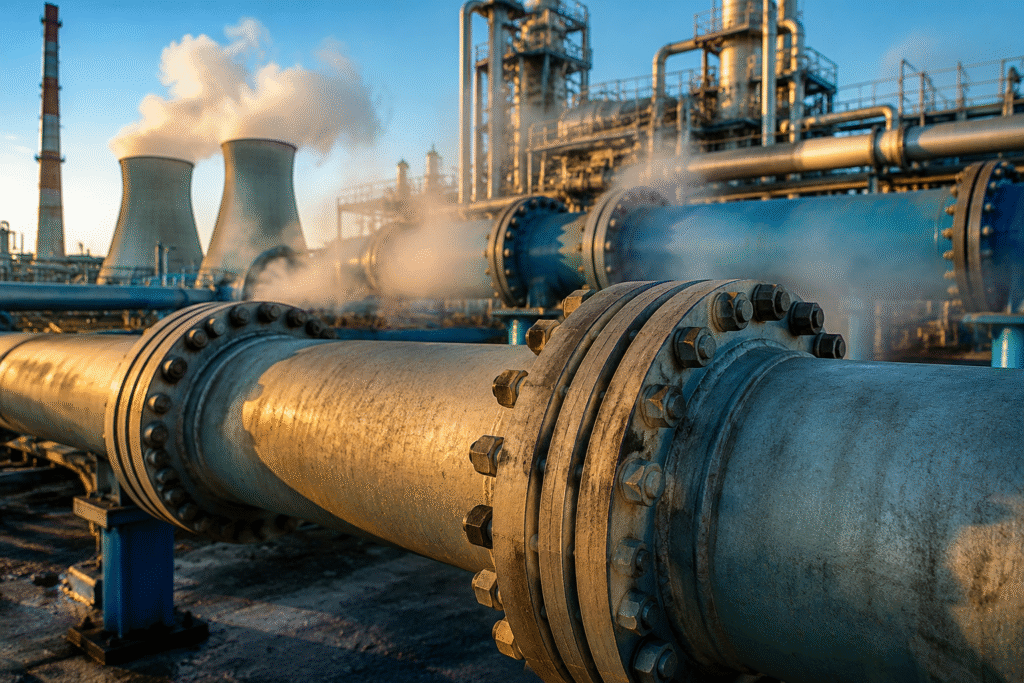
스테인레스 스틸 파이프 플랜지 시장은 72억 달러에 달할 것입니다. 2030: 숨겨진 장점, 유형, 용도, 산업용 플랜지 선택 방법
그랜드뷰 리서치에 따르면 (2024), 전 세계 산업용 플랜지 시장의 가치는 다음과 같습니다. $5.8 10억 2023 도달할 것으로 예상됩니다. $7.2 10억 단위로 2030. That growth explains why the stainless steel pipe flange remains a critical component in the industrial pipe world, where buyers must balance corrosion resistance, 압력 등급, 수명주기 비용, 및 표준 준수.
엔지니어 및 조달 팀용, understanding the hidden advantages, 종류, 용도, and how to choose flanges is now a strategic purchasing task. 게다가, buyers want suppliers that combine technical depth with certified manufacturing, fast documentation, and stable quality across global projects.
Market Drivers Shaping the Stainless Steel Pipe Flange World
산업용 플랜지 시장이 확대되고 있는 이유는 에너지, 물, and process industries continue to invest in resilient piping infrastructure. 스태티스타에 따르면 (2024), 석유 및 가스 산업은 대략적으로 35% 글로벌 플랜지 소비량, which makes upstream, 내의 한복판, and refining projects major demand centers.
Regional manufacturing concentration also matters for global sourcing decisions. IBISWorld에 따르면 (2024), 아시아 태평양 계정은 이상입니다. 45% 글로벌 플랜지 생산량의, 중국이 가장 큰 제조사이기 때문에, therefore buyers increasingly evaluate factory capability, 추적성, and export experience before placing orders.
This demand trend favors manufacturers with broad material coverage and international certifications. SASA FLANGE, 뒷받침되는 ISO 9001:2015 및 PED 2014/68/EU 인증, 스테인레스 스틸 플랜지 공급, 탄소강 플랜지, 합금 플랜지, 오일용 및 파이프 피팅 & 가스, 석유화학, 힘, 선박, 수처리, 및 건설 부문.
In today’s procurement environment, cost alone is not enough. Buyers also compare EN 10204 3.1 선적 서류 비치, PMI 가용성, heat treatment control, 치수 공차, and machining consistency across slip on, 용접 목, 눈이 먼, 소켓 용접, 랩 조인트, 및 스레드 플랜지.
모르도르 정보국에 따르면 (2024), industrial process upgrades and maintenance demand are increasing aftermarket purchases across refining and power sectors. 결과적으로, replacement flanges, custom drilling, and mixed-grade project packages are becoming more common than single-SKU orders.
That shift rewards suppliers that offer flexibility rather than commodity-only supply. 을 통해 https://sasaflange.com/about-us/, 구매자가 검토할 수 있습니다. SASA FLANGE’s manufacturing background and export orientation, which are especially relevant for EPC contractors and OEMs managing multi-standard projects.
Another important trend is material upgrading in corrosive service. 시장 조사 미래에 따르면 (2024), corrosion-resistant alloy demand in process industries is rising as operators target longer maintenance intervals and lower total installed cost.
그러므로, 다음과 같은 스테인레스 등급 304, 316, 316엘, 904엘, 듀플렉스 2205, 그리고 슈퍼 듀플렉스 2507 are no longer niche choices in many applications. They are increasingly selected where chloride exposure, aggressive media, or temperature cycling would shorten the service life of lower-grade materials.
As Mark Reynolds, 수석 배관 엔지니어, 주: “A flange selection error often appears inexpensive at purchase, but it becomes expensive during shutdown, leakage investigation, and replacement.” That perspective reflects a core industrial reality: lifecycle performance usually outweighs the unit price difference between standard and upgraded stainless grades.
이러한 이유로, a qualified stainless steel pipe flange supplier must deliver more than products. It must deliver standards compliance, dimensional reliability, metallurgical consistency, and practical application guidance across the full industrial pipe world.
Understanding Stainless Steel Pipe Flange Types, 평가, 그리고 숨겨진 장점
When buyers search for intriguing stainless steel flange types, they usually want straightforward selection logic. 실제로, the best approach is to match flange design, 재료 등급, 압력 등급, 직면 유형, and operating environment to the actual service conditions.
The most common stainless steel pipe flange types include weld neck, 미끄러지다, 눈이 먼, 스레드, 소켓 용접, 및 랩 조인트 디자인. Each type solves a different mechanical or maintenance problem, therefore understanding geometry is just as important as understanding chemistry.
에 따르면 ASME B16.5, standard flange dimensions and pressure-temperature ratings are defined for NPS 1/2 ~을 통해 24. 더 큰 직경의 경우, ASME B16.47 applies, which is especially relevant for transmission pipelines, storage terminals, and large-bore process systems (ASME, 2023).
Slip on flanges remain popular because they are economical and easier to align during fabrication. 하지만, weld neck flanges are generally preferred for high-pressure, 고온, 순환, or critical service because the tapered hub reduces stress concentration at the weld transition.
Blind flanges are used to isolate, inspect, or future-expand a piping system. Threaded flanges can be useful in lower-pressure service where welding is impractical, while socket weld flanges are often used on smaller bore, 고압 라인.
박사로서. 일레인 포터, 재료 과학자, 주: “The hidden advantages of stainless steel flanges are not only corrosion resistance but also predictable fabrication behavior and strong performance in hygienic or cyclic environments.” That is especially true for 304/304L and 316/316L, which remain the most widely specified grades for general industrial service.
From a material standpoint, 304 and 304L offer good corrosion resistance and weldability for many water, 음식, 공조, 일반 산업 시스템. 대조적으로, 316 and 316L include molybdenum, which improves resistance in chloride-containing and more aggressive chemical environments.
Higher alloy choices support more demanding applications. 예를 들어, 904L improves resistance in sulfuric and reducing media, 이중으로 하는 동안 2205 delivers stronger mechanical properties and better chloride stress corrosion cracking resistance than austenitic 304 in many services.
- 304/304엘: 일반 내식성, good formability, common for water, 음식, 경화학 서비스.
- 316/316엘: Better pitting resistance in chlorides, suitable for marine, 난바다 쪽으로 부는, and chemical applications.
- 904엘: Enhanced resistance to strong corrosives, often selected for severe chemical duty.
- 2205 듀플렉스: 더 높은 강도, strong chloride resistance, often chosen for offshore and process systems.
- 2507 슈퍼 듀플렉스: Very high pitting and crevice corrosion resistance for aggressive chloride service.
힘, 하지만, is not the only variable. Pressure class selection must align with actual design conditions, 클래스와 같은 150, 300, 600, 900, 1500, 또는 2500 under ASME systems.
Facing type also matters because sealing integrity depends on gasket compatibility and assembly practice. 올려진 얼굴, 평평한 얼굴, and ring type joint configurations each serve different operating and maintenance requirements.
- 제기된 얼굴: The most common industrial configuration for standard process piping.
- 편평한 얼굴: Often used with cast iron equipment or where low bolt stress is required.
- RTJ: Preferred for high-pressure and critical sealing duty, 특히 석유 및 가스 시스템에서.
NACE 지침에 따르면, material performance in sour or chloride-rich service must be evaluated against cracking and corrosion risks rather than nominal strength alone (NACE, 2023). 그러므로, the strongest type of piping flange in practice depends on both design form and alloy suitability.
Manufacturing quality remains equally important. 고급 CNC 가공 및 포괄적인 품질 테스트를 통해 뒷받침됨, SASA FLANGE 1/2부터 사용자 정의 크기 제공" 60까지" across stainless, 듀플렉스, 니켈 합금, 티탄, and forged carbon steel grades.
For buyers comparing stainless steel flange 2 inch items, 4 inch stainless steel pipe flange products, or large-diameter project packages, dimensional repeatability reduces installation delays. 게다가, consistent drilling, 마무리를 향함, and bevel preparation improve field fit-up and welding productivity.
에 따르면 ASTM A182, forged stainless and alloy flanges must meet defined chemical and mechanical requirements for pressure service (ASTM, 2023). That is why professional buyers routinely request MTCs, PMI, hardness data, hydrotest records when applicable, and full traceability from heat number to finished flange.
ASME, ASTM, DIN, and EN Standards That Govern Stainless Steel Pipe Flange Compliance
Compliance is central to industrial procurement because a stainless steel pipe flange is only as reliable as its standard conformity. 글로벌 프로젝트에서, buyers often need ASME dimensional compliance, ASTM material compliance, and EN or DIN alternatives for European or mixed-standard installations.
The most common standards framework includes ASME B16.5 그리고 ASME B16.47 for dimensions and ratings, ASME B16.9 맞대기 용접 피팅의 경우, ASTM A182 단조 플랜지용, 그리고 ASTM A240 for plate products used in some flange-related components. 게다가, EN 1092 and DIN flange systems remain common in Europe, 수처리, 선박, and equipment export projects.
According to the Pressure Equipment Directive, pressure-retaining components entering many EU-regulated applications must satisfy documented conformity procedures (PED 2014/68/EU). 그러므로, certificate package quality can be as important as machining quality for cross-border procurement.
The following comparison helps engineers and buyers map common standards:
- ASME B16.5: 파이프 플랜지 및 플랜지 피팅, NPS 1/2 에게 24, pressure classes and dimensions.
- ASME B16.47: Large diameter steel flanges, NPS 26 에게 60.
- ASTM A182: Forged or rolled alloy and stainless steel flange material specification.
- ASME B16.9: 공장에서 제작한 단조 맞댐용접 피팅, relevant when flanges and fittings are sourced together.
- EN 1092-1: European flange specification widely used in industrial and utility systems.
- DIN / JIS / 고스트: Regional dimensional systems required in specific legacy or export markets.
Material certification should also reflect the intended service. For corrosive oil and gas conditions, buyers may request NACE MR0175 조정, while offshore projects can add DNV or NORSOK expectations depending on end use.
As Peter Holm, Global Piping Market Analyst, 주: “The difference between approved and rejected flanges is often documentation discipline, not machining capability.” That is a useful reminder for EPC and procurement teams managing multi-country compliance requirements.
Reputable manufacturers support this process with EN 10204 3.1 검사 증명서, 열수 추적성, 육안 검사, 치수검사, and optional PMI or third-party witness testing. 와 함께 ISO 9001:2015, PED 2014/68/EU, 그리고 광고 2000 신임장, SASA FLANGE supports buyers who need documented quality assurance rather than generic supply.
For technical review, buyers can also cross-check requirements directly with the official ASME resource. That extra step is useful when projects involve mixed ratings, unusual facing combinations, or client-specific purchase specifications.
추가적으로, integrated sourcing can reduce procurement complexity. 을 통해 https://sasaflange.com/products/, buyers can source stainless steel flanges and fittings together, which helps maintain material consistency across elbows, 티셔츠, 감속기, 모자, 및 플랜지 어셈블리.
실용적인 측면에서, compliance protects installation schedules. If bolt holes, 플랜지 두께, 마무리를 향함, or bevel geometry deviate from standard tolerances, field correction becomes expensive and may delay hydrotesting or commissioning.
That is why experienced buyers do not treat standards as paperwork only. They treat ASME, ASTM, DIN, and EN alignment as a direct control on leakage risk, rework cost, and project approval timelines.
오일용 플랜지를 선택하는 방법, 가스, 화학적인, 힘, 해양 용도
Choosing the correct stainless steel pipe flange starts with service data rather than catalog convenience. Engineers should first define fluid chemistry, 설계압력, 작동 온도, 순환 부하, insulation conditions, and required maintenance access.
For oil and gas uses, weld neck and RTJ flanges are commonly preferred in higher pressure service. 스태티스타에 따르면 (2024), 석유와 가스는 약 35% 글로벌 플랜지 소비량, therefore this sector strongly influences preferred designs, documentation practices, and material upgrades.
For petrochemical and chemical plants, 316엘, 904엘, 듀플렉스 2205, or nickel alloys may be necessary depending on chlorides, 산, and cleaning cycles. In these services, corrosion allowance alone is not enough; alloy selection and gasket compatibility must work together.
발전용, thermal cycling and pressure fluctuation often favor forged flanges with strong dimensional control and consistent metallurgy. Engineers also pay close attention to high-temperature grade selection, bolt load retention, and shutdown maintenance intervals.
For shipbuilding and marine projects, chloride exposure makes alloy selection especially important. 그러므로, 316/316L and duplex grades are often chosen where atmospheric salt, 바닷물이 튀다, or deck process exposure can accelerate corrosion.
- 기름 & 가스: Favor weld neck or RTJ flanges for pressure integrity and cyclic service.
- 화학 처리: Prioritize corrosion resistance, PMI, 개스킷 호환성.
- 발전소: Evaluate temperature cycles, 압력 등급, and forged quality consistency.
- 선박: Select chloride-resistant grades such as 316L or duplex materials.
- 수처리: 내식성 균형, 예산, and long service intervals.
Procurement teams should also evaluate these selection criteria before issuing a PO:
- 적용규격: ASME B16.5, B16.47, EN 1092, DIN, JIS, 또는 GOST.
- 재료 등급: 304, 304엘, 316, 316엘, 904엘, 2205, 2507, A105, A182, or CRA alloys.
- Pressure class and schedule compatibility with mating pipe.
- 직면 유형: RF, FF, 또는 RTJ.
- 검사범위: EN 10204 3.1, PMI, 경도, 임사체험, third-party witness.
- 코팅, 마킹, and export packing requirements.
- 리드타임, batch consistency, and partial shipment planning.
Price evaluation should be equally practical. Stainless steel pipe flange price depends on alloy cost, 단조 루트, 가공 복잡성, 압력 등급, 수량, 테스트 범위, and current nickel or molybdenum market conditions.
According to World Bank metals trend reporting summarized by industry analysts in 2024, alloy surcharges can shift stainless component pricing materially over short periods. 결과적으로, project buyers often request validity windows on quotations and separate line items for testing or special documentation.
SASA FLANGE supports this procurement model with custom manufacturing capability, broad material coverage, 공장직접 공급. 피복재 50+ 석유를 건너는 나라들 & 가스, 석유화학, 힘, 해양산업, the company can support standard and non-standard drilling, 깃 달기, and material combinations through https://sasaflange.com/contact-us/.
예를 들어, a buyer sourcing stainless steel flanges and fittings for a desalination skid may specify 316L or duplex 2205 플랜지, ASME B16.5 치수, ASME B16.9 피팅, EN 10204 3.1 인증서, 및 PMI. 대조적으로, a utility water package may prioritize 304L slip on flanges with moderate pressure class and shorter lead time.
These distinctions show why choosing flanges is not just a catalog exercise. It is an engineering and commercial decision that directly affects installability, 신뢰할 수 있음, and total ownership cost.
스테인레스 스틸 파이프 플랜지 조달에 대한 향후 전망 및 전략적 구매 권장 사항
The future of the stainless steel pipe flange market looks favorable because infrastructure replacement, 에너지 전환 프로젝트, offshore upgrades, and water treatment expansion all support demand. 그랜드뷰 리서치에 따르면 (2024), 시장이 상승할 것으로 예상됨 $5.8 10억 2023 에게 $7.2 10억 단위로 2030, indicating a sustained procurement pipeline.
동시에, buyers will face tighter technical and commercial expectations. Documentation quality, corrosion-resistant alloy sourcing, and supplier responsiveness are becoming more important as projects globalize and quality audits become stricter.
IBISWorld에 따르면 (2024), Asia-Pacific already contributes more than 45% 글로벌 플랜지 생산량의, so supplier qualification in the region will remain a strategic purchasing priority. 하지만, the best sourcing outcomes will come from manufacturers that combine price competitiveness with real engineering support and export documentation discipline.
B2B 구매자의 경우, several actions are recommended. 첫 번째, standardize your approved flange specifications by service category, because that reduces engineering ambiguity and speeds RFQ comparison.
두번째, request full traceability and certificate requirements early in the RFQ process. 제삼, compare suppliers not only on price but also on CNC capability, 자재 가용성, tolerance control, and response time for custom items.
네번째, align flanges and fittings procurement where possible. That approach improves consistency across the industrial pipe package and can reduce inspection complexity, logistics fragmentation, and project risk.
마지막으로, work with manufacturers that can support both standard and custom production in stainless, 듀플렉스, and alloy grades. For projects requiring certified supply, 프리미엄 소재, 반응형 엔지니어링 커뮤니케이션, buyers can connect with SASA FLANGE to discuss specifications, 리드타임, and documentation needs in a more targeted way.
자주 묻는 질문
스테인레스 스틸 플랜지는 무엇에 사용됩니까??
●파이프 연결에는 스테인레스 스틸 플랜지가 사용됩니다., 밸브, 슬리퍼, and pressure equipment in systems that require strength, 내식성, and leak-controlled assembly.
●스태티스타에 따르면 (2024), 석유와 가스는 대략적으로 35% 글로벌 플랜지 소비량, which shows how critical flanges are in high-demand industrial service.
●They are widely used in petrochemical plants, 해양 시스템, water treatment lines, 식품 가공 시설, and power stations because stainless grades such as 304L and 316L offer strong durability and good fabrication performance.
●Engineers select them to simplify maintenance, allow disassembly, and match standardized pressure classes under ASME B16.5 또는 EN 1092-1 요구 사항.
●For projects requiring corrosion-resistant materials and documented quality, 다음과 같은 기존 제조업체와 협력 SASA FLANGE helps ensure traceability, proper standards compliance, and suitable grade selection.
스테인레스 스틸로 만들어진 플랜지?
●일반적인 스테인레스 스틸 플랜지 유형에는 용접 넥이 포함됩니다., 미끄러지다, 눈이 먼, 스레드, 소켓 용접, and lap joint flanges in grades such as 304, 304엘, 316, 316엘, 904엘, 2205, 그리고 2507.
●에 따르면 ASME B16.5 (2023), these flange forms are standardized by size, 깃 달기, and pressure-temperature rating for a wide range of industrial applications.
●Slip on flanges are often chosen for easier alignment and lower cost, while weld neck flanges are preferred for higher stress, 온도, and pressure service.
●Blind flanges isolate sections for testing or maintenance, and threaded flanges support specific non-welded service conditions in smaller or lower-pressure lines.
●For industrial buyers sourcing stainless steel flanges and fittings together, selecting a supplier with broad product coverage improves consistency across the complete piping package.
그들은 스테인레스 스틸 파이프 피팅을 만드나요??
●예, 제조업체는 엘보우와 같은 스테인레스 스틸 파이프 피팅을 생산합니다., 티셔츠, 감속기, and caps to match stainless steel piping and flange systems.
●ASME B16.9 defines dimensional requirements for factory-made buttwelding fittings, which is why engineers often source fittings and flanges under a coordinated specification set (ASME, 2023).
●Typical materials include 304, 304엘, 316, 316엘, 904엘, 듀플렉스 2205, 그리고 슈퍼 듀플렉스 2507 depending on corrosion risk, strength needs, 및 작동 온도.
●Using matching metallurgy across flanges and fittings reduces galvanic mismatch concerns and simplifies welding procedures, 점검, 및 재료 추적성.
●For projects with custom wall thickness, 혼합 표준, 또는 EN 10204 3.1 certificate requirements, 같은 경험이 풍부한 제조업체 SASA FLANGE can provide more reliable package support.
What is the strongest type of piping flange?
●In many pressure applications, the weld neck flange is considered the strongest standard piping flange because its tapered hub distributes stress more effectively than flat-hub designs.
●According to ASME design practice and ASTM A182 재료 사양, strength depends not only on flange type but also on alloy grade, 압력 등급, 및 서비스 조건.
●예를 들어, a weld neck flange in duplex 2205 또는 슈퍼 듀플렉스 2507 can outperform a lower-grade flange in chloride-rich service where corrosion affects long-term reliability.
●하지만, the strongest practical choice is the flange that matches the full service envelope, 압력을 포함하여, 온도, 부식 노출, 피로하중, and gasket system.
●Engineers should evaluate flange geometry and material together rather than assuming the highest nominal alloy or pressure class always provides the best field performance.
스테인레스 스틸 플랜지에 대한 ASME 코드는 무엇입니까?
●The main ASME standards for stainless steel flanges are ASME B16.5 NPS용 1/2 에게 24 그리고 ASME B16.47 for larger diameters from NPS 26 에게 60.
●Material requirements are commonly specified through ASTM A182 단조 스테인레스 스틸 플랜지용, which works alongside ASME dimensional and rating requirements.
●ASME에 따르면 (2023), buyers should also confirm pressure class, 직면 유형, 구경, and bolt drilling because code compliance involves more than just nominal size.
●In mixed-standard projects, EN 1092-1 or DIN requirements may apply instead of or in addition to ASME, especially in European or equipment-export applications.
●중요한 주문의 경우, procurement teams should request MTCs, EN 10204 3.1 인증서, and clear marking to verify full compliance before shipment and installation.
다음 중에서 어떻게 선택하나요? 304 그리고 316 stainless steel pipe flange grades?
●304 stainless steel pipe flange grades are usually selected for general service, ~하는 동안 316 grades are preferred when chloride exposure or more aggressive corrosion conditions are present.
●According to materials guidance widely used across industry, 316 includes molybdenum, which improves pitting and crevice corrosion resistance compared with 304 in many marine and chemical environments.
●304 or 304L often offers a more economical solution for water systems, 식품 가공, 공조, and general industrial pipe applications with moderate corrosion demand.
●316 or 316L is commonly recommended for offshore systems, 해안 시설, 프로세스 스키드, and chemical services where longer service life justifies the higher alloy cost.
●For projects that require exact grade selection based on media, 온도, 및 압력 등급, a qualified supplier can review the specification and recommend the most cost-effective compliant option.
관련 게시물

오리피스 플랜지 정의, 세부 정보 및 ASME B16.36 플랜지 개요: 시장 데이터, 선택 가이드 및 규정 준수 통찰력
전 세계 산업용 플랜지 시장의 가치는 다음과 같습니다. $5.8 10억…
