
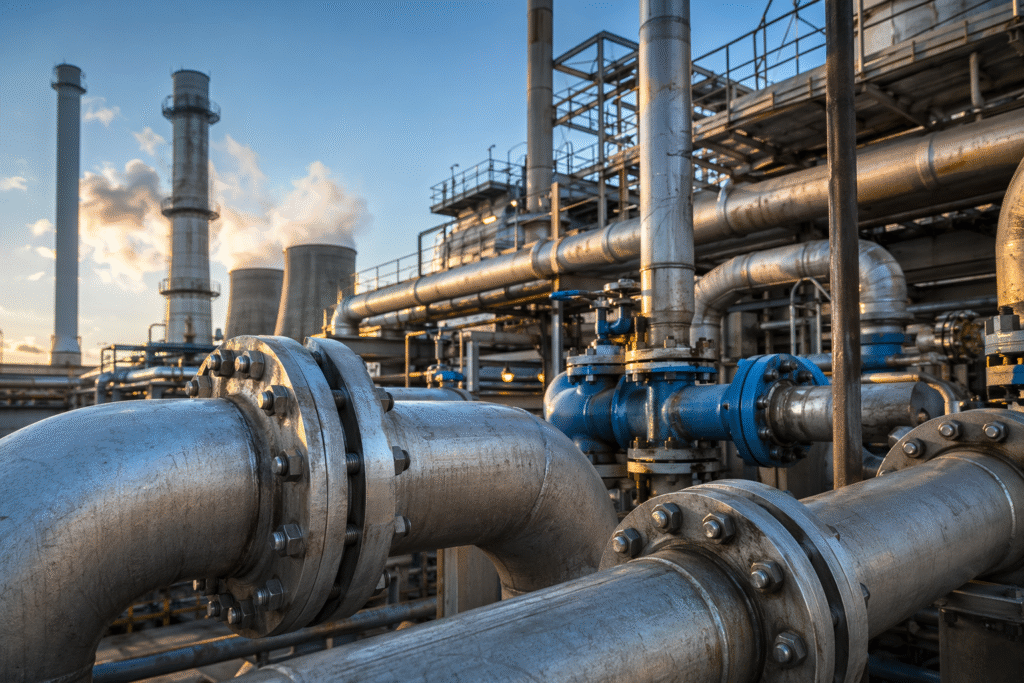
스테인레스 스틸 파이프 플랜지 시장: 7 숨겨진 장점, 유형, 용도, ASME B16.5를 선택하는 방법 & B16.47 플랜지
그랜드뷰 리서치에 따르면 (2024), 전 세계 산업용 플랜지 시장의 가치는 다음과 같습니다. $5.8 10억 2023 도달할 것으로 예상됩니다. $7.2 10억 단위로 2030. 이러한 성장은 왜 스테인레스 스틸 파이프 플랜지 엔지니어에게는 여전히 중요한 구성 요소입니다., EPC 계약자, and procurement teams seeking corrosion resistance, 압력 무결성, 그리고 긴 서비스 기간.
산업용 구매자를 위한, the most intriguing factor is not only price, but also the hidden advantages of selecting the right flange material, 압력 등급, 표준. 그러므로, this guide explains flange types, 용도, ASME requirements, and practical selection criteria for demanding pipe systems.
Industrial Demand for Stainless Steel Pipe Flange in Global Process Markets
IBISWorld에 따르면 (2024), 아시아 태평양 계정은 이상입니다. 45% 글로벌 플랜지 생산량의, 중국이 가장 큰 제조사이기 때문에. 결과적으로, sourcing strategies increasingly focus on qualified Chinese exporters that can deliver ASME, DIN, JIS, 고스트, and EN compliant products with full material traceability.
스태티스타에 따르면 (2024), 석유 및 가스 산업은 대략적으로 35% 글로벌 플랜지 소비량. 게다가, 석유화학 가공, 발전, 조선, and water treatment continue to drive demand for stainless steel pipe flange products in 304, 316, 듀플렉스, 및 니켈 합금 등급.
These numbers matter because flange failure can shut down an entire line. 대조적으로, a correctly specified flange improves joint integrity, reduces maintenance intervals, and supports safer operation under thermal cycling, 진동, 부식성 매체.
모르도르 정보국에 따르면 (2024), industrial infrastructure investments in energy and water sectors continue to support steady growth in piping components across emerging markets. 뿐만 아니라, buyers now prioritize suppliers that can combine machining precision, EN 10204 3.1 선적 서류 비치, 그리고 짧은 리드타임.
The hidden advantages of stainless steel are especially relevant in facilities handling chlorides, 산, 증기, and high-purity fluids. 예를 들어, 316L stainless steel flange products usually outperform 304 in chloride exposure because molybdenum improves pitting resistance, while low carbon content helps reduce sensitization during welding.
As John Martinez, 수석 배관 엔지니어, 주: “A flange is a small component in cost share, but it is a major component in reliability strategy.” That insight reflects procurement reality, because flange quality often influences inspection frequency, leak risk, and lifecycle cost more than buyers expect.
SASA FLANGE 이 환경에서 작동 ISO 9001:2015 및 PED 2014/68/EU 인증. 추가적으로, 회사는 스테인레스 스틸을 공급합니다, 탄소강, 합금, 듀플렉스, and special material flanges and fittings for clients across Oil & 가스, 석유화학, 힘, 선박, 및 수처리 분야.
고급 CNC 가공 및 포괄적인 품질 테스트를 통해 뒷받침됨, SASA FLANGE 에서 제품을 제조합니다. 304, 316, 316엘, 904엘, 2205, 2507, A105, A182, 인코넬, 모넬, 하스텔로이, 및 티타늄 등급. 그러므로, buyers can align corrosion performance, 압력 등급, and budget with actual service conditions instead of relying on generic substitution.
시장 조사 미래에 따르면 (2024), industrial stainless component demand is rising as operators seek longer asset life and lower maintenance costs. 따라서, flange sourcing has become a technical purchasing decision rather than a simple commodity buy.
숨겨진 장점, Flanges Types, and Technical Factors Engineers Should Evaluate
The most intriguing aspect of a stainless steel pipe flange is its ability to combine strength, 내식성, and maintainability in one connection point. 하지만, those benefits only appear when engineers match flange type, 깃 달기, 평가, and metallurgy to the pipe system.
에 따르면 ASME B16.5, 플랜지 치수, 공차, 압력 온도 등급, 마킹, and materials are standardized for NPS 1/2 ~을 통해 24. 병렬로, ASME B16.47 covers larger diameter flanges from NPS 26 ~을 통해 60, 전송에서 흔히 볼 수 있는 것, 선박, and large process pipelines (ASME, 2023).
박사로서. Helen Zhou, 재료 과학자, 주: “The best flange selection is a corrosion and temperature decision first, and a price decision second.” 그러므로, selecting 304, 316엘, 904엘, 2205, 또는 2507 should follow fluid chemistry, 염화물 수준, 온도 범위, 및 제작방법.
실제로, engineers often evaluate the following flange types for industrial pipe systems:
- 고압용 웰드 넥 플랜지, 열 순환, and critical services.
- Slip-on flange for moderate pressure applications with easier alignment and lower fabrication cost.
- 라인 절연용 블라인드 플랜지, hydrotesting, 그리고 향후 확장 포인트.
- Socket weld flange for small bore, 고압 배관.
- Threaded flange for low-pressure systems where welding is undesirable.
- 빈번한 분해가 필요한 시스템을 위한 랩 조인트 플랜지.
Each flange type has hidden advantages. 예를 들어, weld neck designs distribute stress more evenly at the hub-to-pipe transition, while blind flanges provide strong end closure for pressure testing and maintenance isolation.
재료 선택도 마찬가지로 중요합니다. ASTM A182 일반적으로 단조 스테인레스 및 합금강 플랜지를 관리합니다., ~하는 동안 ASTM A240 covers plate materials used in related components and fabrication (ASTM, 2024).
For most chemical and utility systems, common stainless choices include:
- 304/304L for general corrosion resistance and cost-effective performance.
- 316/316L for chloride-bearing media and better pitting resistance.
- 321 그리고 347 grades for elevated temperature stabilization.
- 904L for aggressive acidic environments.
- 2205 이중 및 2507 super duplex for high strength and chloride stress corrosion resistance.
According to NACE guidance used widely in sour service selection, chloride and H2S exposure can rapidly narrow acceptable alloy options (NACE, 2023). 결과적으로, duplex and high-alloy stainless flange products are increasingly chosen for offshore, 생산된 물, and desalination lines.
Pressure class also changes the buying decision. ASME classes such as 150, 300, 600, 900, 1500, 그리고 2500 define flange strength and sealing capability under temperature-related derating.
조달 관리자용, the practical comparison often includes these factors:
- Pressure-temperature rating by ASME class.
- RF와 같은 외장형, RTJ, 또는 FF.
- Dimensional standard such as ASME B16.5, ASME B16.47, DIN, 또는 EN 1092.
- Material standard such as ASTM A182 F304, F316L, F51, or F53.
- Inspection documents including EN 10204 3.1 MTC.
- NDT requirements such as PMI, PT, 유타, and hardness testing.
According to ISO requirements referenced by many EPC specifications, traceability and documented inspection are essential for pressure equipment quality systems (ISO, 2023). 그러므로, a low initial unit price may become expensive if reinspection, rejection, or unplanned downtime occurs.
A well-chosen stainless steel pipe flange also simplifies maintenance planning. 게다가, stainless flanges generally support repeated disassembly better than lower-grade alternatives in clean service, 식품 가공, 및 수처리 시스템, where contamination control and surface condition matter.
SASA FLANGE 1/2부터 사용자 정의 크기 제공" 60까지" 경쟁력 있는 공장 직거래 가격으로. 추가적으로, the company supports RF, FF, RTJ, 스레드, 소켓 용접, 눈이 먼, and weld neck configurations manufactured to ANSI B16.5, ANSI B16.47, DIN, JIS, 고스트, 그리고 EN 1092 요구 사항.
피복재 50+ 석유를 건너는 나라들 & 가스, 석유화학, 힘, 해양산업, SASA FLANGE aligns supply with real project documentation needs. 예를 들어, buyers often request PMI, 치수검사, hydrostatic support data, 수출물류에 적합한 포장 및 포장.
마크 엘리슨으로서, 산업 시장 분석가, 주: “Procurement leaders now value certified documentation nearly as much as they value delivered price.” That trend is especially clear in PED projects, offshore packages, and owner-approved vendor lists.
그랜드뷰 리서치에 따르면 (2024), capital investment in industrial processing equipment remains a major support factor for connection components and maintenance demand. 따라서, stainless flange buyers should focus on specification accuracy, 수명주기 비용, and supplier consistency instead of comparing only quote totals.
ASME, ASTM, DIN, and EN Requirements for Stainless Steel Flanges Compliance
Standards compliance is where many flange projects succeed or fail. 그러므로, engineers should distinguish clearly between dimensional standards, material standards, 검사 요구 사항, and regional regulatory requirements.
ASME B16.5 NPS용 파이프 플랜지 및 플랜지 피팅을 커버합니다. 1/2 ~을 통해 24. 대조적으로, ASME B16.47 applies to large diameter steel flanges from NPS 26 ~을 통해 60, with Series A and Series B dimensional differences that affect bolt patterns and compatibility (ASME, 2023).
ASTM A182 specifies forged or rolled alloy and stainless steel flange materials for high-temperature service. 추가적으로, ASTM material designations such as F304, F304L, F316, F316L, F51, and F53 help engineers define chemistry and mechanical properties more precisely.
유럽 프로젝트에는 EN이 필요한 경우가 많습니다. 1092 dimensional compliance and PED 2014/68/EU documentation. 비슷하게, DIN legacy references remain common in maintenance and retrofit environments, especially where older installed systems must match existing components.
The following summary helps clarify the main standards landscape:
- ASME B16.5: 치수, 공차, 압력 등급, and marking for NPS 1/2 에게 24.
- ASME B16.47: NPS의 대구경 플랜지 치수 26 에게 60.
- ASME B16.9: 팔꿈치와 같은 공장에서 제작된 단조 맞대기 피팅, 티셔츠, 감속기, 그리고 모자.
- ASTM A182: Forged stainless and alloy steel materials for flanges and fittings.
- EN 1092: 유럽 플랜지 치수 및 압력 지정.
- NACE MR0175/ISO 15156: 열악한 서비스 환경에 대한 자재 지침.
유럽연합 집행위원회 PED 프레임워크에 따르면, pressure equipment compliance requires technical documentation, conformity assessment, and appropriate material traceability for applicable equipment categories (소아과, 2014). 결과적으로, project buyers should verify not just the flange standard, but also the complete documentation package.
For corrosion-critical services, standards alone do not guarantee field performance. 하지만, they create the baseline for interchangeability, qualification, and quality consistency across global supply chains.
실제 조달 측면에서, buyers should confirm these documentation points before purchase:
- Material test certificate to EN 10204 3.1.
- Heat number traceability on each flange.
- 치수검사 보고서.
- PMI report for stainless, 듀플렉스, 및 니켈 합금 등급.
- Surface finish and facing inspection.
- Packing and marking requirements by project specification.
According to DNV expectations in many marine and offshore supply chains, traceability and inspection records significantly reduce non-conformance risk during audits and installation reviews (DNV, 2023). 그러므로, consistent QA systems matter as much as machining capacity.
SASA FLANGE 다음을 통해 이러한 요구 사항을 지원합니다. ISO 9001:2015, PED 2014/68/EU, 그리고 광고 2000 인증. 게다가, the company manufactures stainless steel flanges and pipe fittings under documented quality procedures suited to EPC, 살수 장치, and end-user sourcing models.
공급 업체를 비교하는 구매자의 경우, one useful hidden advantage is standard flexibility. A supplier capable of ASME, DIN, JIS, 고스트, and EN execution can simplify global projects, spare parts planning, and mixed-site maintenance programs.
Engineers should also review sealing face compatibility. 예를 들어, RF flanges dominate general industrial service, while RTJ flanges are preferred in higher pressure and critical hydrocarbon duties because the metal ring gasket offers robust sealing under severe service conditions.
For official dimensional and code references, 구매자는 상담할 수 있습니다 ASME. That step is valuable when project teams need to verify class ratings, 치수, or code cross-references during design review.
오일용 스테인레스 스틸 파이프 플랜지를 선택하는 방법, 가스, 화학적인, 힘, 해양 용도
Choosing the right stainless steel pipe flange begins with the service environment, 카탈로그 페이지가 아닌. 그러므로, engineers should define media composition, 작동 압력, 설계 온도, 부식 허용량, and maintenance frequency before selecting a flange type or grade.
Oil and gas systems often require strong performance under pressure cycling, 진동, and corrosive exposure. In these lines, weld neck and RTJ flange options are common, while duplex or super duplex materials may be preferred for seawater, injection, and offshore splash-zone duties.
스태티스타에 따르면 (2024), 석유와 가스는 약 35% 글로벌 플랜지 소비량. 따라서, project specifications in this sector tend to be highly detailed, often requiring NACE compliance, PMI, 경도 검증, and strict MTC control.
Chemical processing lines usually demand corrosion resistance first. 예를 들어, 316엘, 904엘, 하스텔로이, or Monel flange products may be specified depending on chlorides, 산, 온도, and concentration.
Power generation projects focus heavily on thermal cycles and pressure integrity. 그러므로, engineers may select higher class flanges, stabilized stainless grades, or alloy materials for steam, 응축수, and high-temperature auxiliary lines.
Marine and shipbuilding applications present a different challenge because saltwater exposure accelerates pitting and crevice corrosion. 결과적으로, 316엘, 2205, 그리고 2507 often become more attractive than 304 in deck piping, 안정기, 가스 세정기, 및 해수 시스템.
The following checklist helps procurement teams choose more effectively:
- Confirm pipe size, 벽 두께, and matching schedule.
- Verify design pressure, 온도, and ASME class.
- Select flange type based on service criticality and maintenance needs.
- Match gasket and facing style to sealing requirements.
- Review corrosion data for chlorides, 산, H2S, or seawater.
- Specify required test certificates and inspection scope.
- Check regional standards such as ASME, EN, DIN, 또는 JIS.
Another hidden advantage is total installed cost control. A slightly higher-grade flange can reduce replacement frequency, 셧다운 노출, and leak risk, which often delivers better economics across the asset lifecycle.
예를 들어, 에이 4 inch stainless steel pipe flange used in a water treatment skid may only need ASME Class 150 and 316L material. 대조적으로, a similar nominal size in offshore injection service could require duplex material, RTJ facing, stricter NDT, and tighter traceability controls.
시장 조사 미래에 따르면 (2024), water infrastructure upgrades continue to increase demand for corrosion-resistant piping components worldwide. 그러므로, municipal and industrial water projects are becoming important growth segments for stainless and duplex flange procurement.
SASA FLANGE supports custom manufacturing for non-standard drilling, 깃 달기, and material combinations. 추가적으로, the company can supply matching elbows, 티셔츠, 감속기, and caps to simplify package procurement for complete piping systems.
For distributors and EPC contractors, consolidated sourcing can shorten project timelines. 게다가, factory-direct coordination helps reduce dimensional mismatch risk between the flange, 틈 메우는 물건, 볼트, and mating pipe or fitting.
When buyers need guidance on flange types, 재료, or project documentation, early technical review is essential. For projects requiring custom sizes, 프리미엄 합금, or fast delivery, 연락하다 SASA FLANGE early can improve specification accuracy and purchasing efficiency.
Future Outlook for Stainless Flange Procurement and Strategic Buying Recommendations
The outlook for stainless flange demand remains positive as energy, 물, 선박, and process industries continue upgrading aging infrastructure. 그랜드뷰 리서치에 따르면 (2024), 산업용 플랜지 시장은 다음과 같이 성장할 것으로 예상됩니다. $7.2 10억 단위로 2030, which indicates stable long-term procurement activity.
동시에, buyers are becoming more selective. 그러므로, supplier evaluation increasingly includes not only price, but also certification status, 가공능력, 수출 경험, traceability systems, and response speed.
One intriguing shift is the move toward lifecycle-based purchasing. Instead of choosing the lowest initial quote, procurement teams now compare maintenance cost, failure risk, and expected service life across 304, 316엘, 듀플렉스, and high-alloy flange options.
Digital sourcing also changes buyer behavior. 예를 들어, engineers often search terms like stainless steel pipe flange sizes, stainless steel flange types, stainless steel threaded pipe flange, and stainless steel pipe flange price before issuing RFQs.
That search behavior means supplier content must answer technical and commercial questions clearly. 게다가, pages that combine standards guidance, material comparisons, and application advice are more likely to support both SEO performance and conversion quality.
전략적으로, buyers should follow five practical recommendations:
- Standardize approved materials for recurring services.
- Prequalify suppliers with ISO 9001:2015 and PED capabilities.
- 요구 EN 10204 3.1 certificates and PMI for critical grades.
- Compare lifecycle value, 단가뿐만 아니라.
- Use suppliers that can deliver both flanges and fittings for package consistency.
IBISWorld에 따르면 (2024), 중국은 글로벌 플랜지 제조 역량의 중심으로 남아 있습니다.. 결과적으로, working with experienced exporters that understand international standards and documentation can create significant cost and schedule advantages.
For companies balancing quality, 배달, 글로벌 규정 준수, a data-driven sourcing approach is the safest path. When your next project requires ASME B16.5, B16.47, DIN, or EN compliant stainless steel flange solutions, discussing specifications with SASA FLANGE can help align technical needs with reliable factory supply.
자주 묻는 질문
다양한 유형의 스테인레스 스틸 플랜지는 무엇입니까?
●주요 스테인레스 스틸 플랜지 유형은 용접 넥입니다., 슬립온, 눈이 먼, 소켓 용접, 스레드, 그리고 랩 조인트, 그리고 ASME B16.5 defines the dimensional framework for most standard sizes up to NPS 24.
●스태티스타에 따르면 (2024), oil and gas consumes about 35% 글로벌 플랜지의, so weld neck and blind designs are especially common in high-integrity process lines.
●For critical pipe systems, engineers should choose flange types based on pressure class, facing style, 유지 보수 액세스, 부식 환경, and established manufacturers like SASA FLANGE can support matching material and standard selection.
어느 것이 더 낫습니까? 304 또는 420 스테인레스 스틸?
●대부분의 스테인레스 스틸 파이프 플랜지 적용 분야에 적합, 304 일반적으로 다음보다 낫습니다. 420 왜냐하면 304 offers superior corrosion resistance, 용접성, and formability for industrial piping service.
●ASTM A182 flange grades such as F304 and F304L are widely used in pressure systems, ~하는 동안 420 is a martensitic stainless steel more often selected for hardness and wear resistance than for corrosive process piping.
●Buyers should usually select 304 for general flange service and move to 316L or duplex for harsher environments, while consulting experienced suppliers like SASA FLANGE when chloride exposure or elevated temperatures are involved.
세 가지 유형의 플랜지는 무엇입니까?
●The three most commonly referenced flange types in general industry are weld neck, 슬립온, and blind flanges because they cover most pressure connection, 설치, 그리고 격리 요구.
●에 따르면 ASME B16.5, these flange categories are standardized for dimensions, 교련, 및 압력 온도 등급, which helps ensure interchangeability across many pipe systems.
●For most projects, weld neck suits severe service, slip-on suits moderate duty, and blind suits end closure or hydrotesting, so buyers should match the type to service risk and maintenance plans.
스테인레스 스틸 플랜지에 대한 ASME 코드는 무엇입니까?
●The primary ASME standards for stainless steel flanges are ASME B16.5 NPS용 1/2 ~을 통해 24 그리고 ASME B16.47 NPS용 26 ~을 통해 60, ~하는 동안 ASTM A182 commonly defines the forged stainless material grade.
●These standards cover dimensions, 압력 등급, 공차, 외장, and marking, but project compliance may also require PED, EN 1092, 또는 NACE MR0175 응용 프로그램에 따라.
●Procurement teams should specify both the ASME dimensional standard and the ASTM material grade in every RFQ to avoid mismatched flange supply and documentation issues.
How do I choose the right stainless steel pipe flange size and pressure class?
●Flange size must match the pipe NPS and schedule, while pressure class such as 150, 300, 또는 600 must reflect design pressure and temperature according to ASME rating tables.
●그랜드뷰 리서치에 따르면 (2024), the flange market is growing with more complex industrial applications, which makes accurate class and material selection increasingly important for lifecycle cost control.
●Engineers should verify size, 깃 달기, 교련, 재료 등급, and gasket compatibility together before ordering, 특히 2 인치와 4 inch stainless steel pipe flange requirements in mixed-standard systems.
Why are 316L and duplex stainless flanges often chosen over 304 in marine and chemical service?
●316L and duplex stainless flanges are often preferred because they provide better resistance to pitting, 틈새 부식, and chloride stress corrosion cracking than standard 304 in aggressive environments.
●IBISWorld에 따르면 (2024), Asia-Pacific leads global flange production, and marine and water infrastructure projects are increasing demand for higher-performance alloys such as 2205 그리고 2507.
●바닷물용, 염화물, or sour service, buyers should review full process chemistry and request PMI and EN 10204 3.1 certification before final material approval.
관련 게시물

오리피스 플랜지 정의, 세부 정보 및 ASME B16.36 플랜지 개요: 시장 데이터, 선택 가이드 및 규정 준수 통찰력
전 세계 산업용 플랜지 시장의 가치는 다음과 같습니다. $5.8 10억…
